Best Time of Year to Fish Lake Powell
Trying to figure out the absolute best time to hit the legendary waters of Lake Powell can feel like a riddle wrapped in an enigma, especially with its massive size and ever-changing conditions. Many anglers, myself included, have shown up at the wrong time only to find the fish tight-lipped and scattered. This comprehensive guide is here to untangle that mystery, giving you the insider scoop on when to target specific species and what to expect throughout the year, so you can plan your ultimate Lake Powell fishing adventure with confidence.
Understanding Lake Powell's Unique Fishery
Lake Powell isn't just a lake; it's a vast, intricate network of canyons, coves, and open water stretching across the Arizona and Utah border. This reservoir, formed by the Glen Canyon Dam on the Colorado River, boasts nearly 2,000 miles of shoreline when full, making it larger than many states' entire coastlines. Its incredible depth, varied topography, and consistent stocking by wildlife agencies create an incredibly diverse and dynamic fishery, but also one that requires a thoughtful approach to timing. Understanding its unique characteristics is the first step to unlocking its secrets.
Key Fish Species to Target
When you cast your line into Lake Powell, you're entering a world teeming with a variety of sport fish, each with its own preferred habitat and seasonal patterns. The undisputed kings of Lake Powell are the striped bass, known for their aggressive feeding habits and incredible fighting power. You'll also find an excellent population of both largemouth and smallmouth bass, offering thrilling action, especially around rocky structures and submerged timber.
Beyond the bass, Lake Powell is home to respectable populations of walleye, a highly sought-after species for their delicate flavor, often found in deeper, cooler waters. Crappie, though sometimes overshadowed by their larger cousins, offer fantastic light-tackle fun, particularly in the spring. Channel catfish are also abundant, providing consistent action for anglers using cut bait or stink bait, especially in the warmer months and at night. Knowing which species you want to target will significantly influence your "best time" to visit.
Factors Influencing Fish Behavior
Fish behavior in Lake Powell, like any large body of water, is heavily influenced by a few critical environmental factors. Water temperature is paramount; it dictates metabolism, spawning cycles, and where fish choose to hold. As the water warms, fish become more active and move shallower, while colder temperatures send them deeper and slow down their feeding. Lake levels, which fluctuate significantly due to water management and drought conditions, also play a huge role. High water can flood new terrestrial vegetation, creating fresh cover and feeding grounds, while low water concentrates fish in existing channels and structures.
Finally, forage availability is the ultimate driver. Threadfin shad are the primary food source for many of Lake Powell's predatory fish, especially striped bass. When shad schools are abundant and active, the game fish follow suit, leading to explosive feeding frenzies known as "boils." Understanding these interconnected factors helps you predict where the fish might be and what they might be biting on, making your trip far more successful.
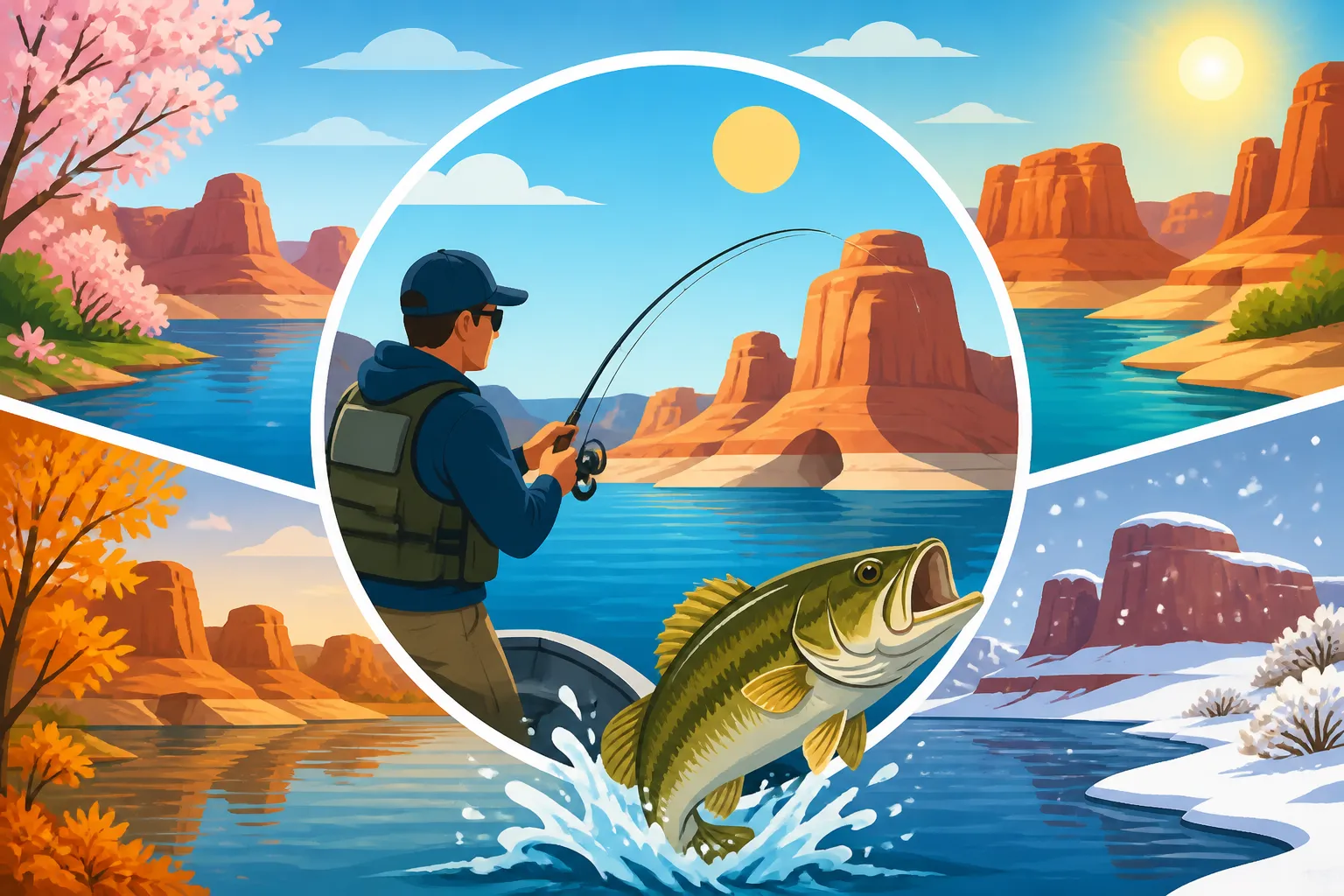
Spring Fishing at Lake Powell March – May
Ah, spring at Lake Powell! It's a time of awakening, not just for the desert landscape but for the fish too. As the days lengthen and the sun's warmth penetrates the vast waters, everything begins to stir. This season, typically from March through May, sees water temperatures steadily climbing from the low 50s into the 60s, triggering a significant increase in fish activity across the board. The cold, sluggish days of winter give way to aggressive feeding and pre-spawn rituals, making it a fantastic time for many species.
The crowds are generally lighter than in summer, offering a more peaceful experience, and the weather, while sometimes unpredictable, is often mild and pleasant. This transition period is particularly exciting because you can often find fish in various stages of their seasonal migration, from deep-water haunts to shallow spawning grounds.
Pre-Spawn Bass Action
For bass anglers, spring is arguably one of the most exciting times to fish Lake Powell, especially during the pre-spawn period. As water temperatures climb into the mid-50s, largemouth and smallmouth bass begin to move out of their deeper wintering holes and stage in shallower areas, looking for rocky points, submerged brush, and sandy flats where they'll eventually spawn. They are actively feeding, trying to pack on calories for the arduous spawning process.
This is a fantastic time for targeting them with crankbaits, jerkbaits, and spinnerbaits in the morning, focusing on transition areas where they move from deep to shallow. As the water creeps into the low 60s, you'll start seeing them on beds, especially the smaller smallmouth bass, which typically spawn earlier than their largemouth cousins. Sight fishing with soft plastics or jigs can be incredibly effective during this window. If you're looking for the "Best Season for Smallmouth Bass at Lake Powell", this is definitely it!
Emerging Striped Bass Activity
While the truly explosive "boils" are more characteristic of summer and fall, striped bass fishing really starts to pick up in a big way during the spring. As the water warms, the threadfin shad, their primary forage, become more active and move into shallower coves and canyon arms. The stripers follow, often congregating in massive schools, chasing these baitfish.
You might not see the surface explosions of later in the year, but the stripers will be hungry. Trolling with deep-diving crankbaits or bucktail jigs in the main channel or around prominent points can be highly effective, especially when you mark schools of bait and fish on your electronics. As the water warms into the mid-60s, you can also find them ambushing bait around rocky shores and submerged structures, making cast-and-retrieve techniques with swimbaits or spoons very productive. The increasing activity means a great chance to catch your personal best, as discussed in "How Big Do Striped Bass Get at Lake Powell."
Summer Fishing at Lake Powell June – August
Summer at Lake Powell is an experience of extremes: extreme heat, extreme beauty, and often, extremely good fishing. From June through August, the desert sun beats down, pushing surface water temperatures well into the 70s and even 80s. This heat can be daunting, but it also triggers some of the most exciting fishing action of the year, particularly for striped bass. The key to success during these months is understanding how fish react to the heat and adjusting your tactics accordingly. Early mornings and late evenings often offer the most comfortable conditions and some of the best fishing opportunities.
The Thrill of Striper Boils
If there's one thing Lake Powell is famous for in the summer, it's the legendary "striper boils." As the immense populations of threadfin shad move into vast, open-water schools, the ravenous striped bass rise to the surface in coordinated attacks, driving the baitfish into a frenzy. These boils manifest as chaotic explosions of splashing water and leaping fish, often signaled by circling seagulls overhead. Witnessing a full-blown striper boil is an unforgettable experience, and catching fish during one can be non-stop action.
To capitalize on boils, you need to be mobile. A good boat, like those often recommended for "Best Boats for Arizona Lakes", with a powerful engine is essential to quickly reach a boil before it disappears. Once there, casting topwater lures, spoons, or small swimbaits into the fracas usually results in an immediate hook-up. Remember, boils are fleeting, so quick reactions are key. This is truly the "Best Season for Striped Bass at Lake Powell".
Deep Water Bass and Walleye
While stripers are often making a ruckus on the surface, other species are retreating to the cooler, deeper confines of the lake. Largemouth and smallmouth bass will seek refuge in shady canyon walls, submerged structures, and depths of 20-50 feet. Targeting them requires different techniques, focusing on vertical presentations or deep-diving crankbaits. Jigs, drop shots, and Carolina rigs worked slowly along rocky ledges, brush piles, or flooded timber can entice strikes from these heat-stressed fish.
Walleye, always preferring cooler temperatures, will be found primarily in deeper water, often 30-60 feet down, concentrating around humps, points, and the main channel. Trolling with bottom-bouncing rigs tipped with worms or deep-diving crankbaits is a popular and effective method for walleye. Using a fish finder to locate schools of baitfish and prominent underwater structure is crucial for success during these warmer months. Don't forget to review "How to Fish Deep Structure in Summer Heat" for detailed tactics.
Fall Fishing at Lake Powell September – November
As the scorching Arizona summer gradually gives way to the milder temperatures of fall, Lake Powell transforms into an angler's paradise. The period from September through November is a transitional phase where the intense heat subsides, water temperatures begin to cool, and fish, sensing the approaching winter, enter a massive feeding frenzy. This season offers some of the most consistent and exciting fishing opportunities of the entire year, combining comfortable weather with aggressive fish.
The crowds thin out considerably after Labor Day, providing a more serene environment to enjoy the breathtaking scenery and incredible fishing action. Many experienced anglers consider fall to be the absolute prime time for a multi-species attack on Lake Powell.
Prime Time for Stripers and Bass
Fall truly is the "Best Time of Year to Fish Lake Powell" for many anglers, especially for striped bass and all species of black bass. The cooling water temperatures invigorate the fish, and they become incredibly active, feeding aggressively to build up fat reserves for the winter. Striper boils continue well into the fall, often becoming more predictable and lasting longer as the shad schools move into shallower, more accessible areas. Watching a sunrise over Lake Powell as a striper boil erupts is a sight you won't soon forget.
For largemouth and smallmouth bass, this is a period of intense feeding. They will be found in a wider range of depths, often shallower than in summer, chasing baitfish in coves, around points, and along rocky banks. Topwater action can be fantastic in the mornings and evenings, while crankbaits, spinnerbaits, and swimbaits become highly effective throughout the day. It's not uncommon to catch multiple species in a single outing during this bountiful season.
Transitioning Techniques
The beauty of fall fishing lies in the versatility it demands and allows. As water temperatures slowly drop from the 70s into the 60s and even 50s by late November, fish patterns will gradually shift. Early fall still allows for many summer techniques like chasing boils with topwater lures and targeting deep structure, but as the season progresses, you'll need to adapt. Look for bass to move into shallower, sun-warmed coves during midday, and then deeper onto points as the day cools.
For stripers, while boils remain a possibility, trolling with larger swimbaits or cut bait can be incredibly effective, especially if you're marking fish suspended at various depths. Pay close attention to your fish finder and experiment with different presentations. You might find "How to Fish a Swimbait for Striped Bass" particularly useful, as swimbaits become a go-to lure in the fall. The transitioning conditions mean staying observant and flexible with your lure and depth choices will yield the best results.
Winter Fishing at Lake Powell December – February
Winter fishing at Lake Powell might not have the same allure as the explosive summer boils, but for the dedicated and patient angler, it offers a unique and often highly rewarding experience. From December through February, the lake's vast waters cool down significantly, typically ranging from the mid-40s to low 50s. This slower pace translates to a different kind of fishing, one that often rewards finesse, precision, and a deep understanding of fish behavior.
The crowds are at their absolute minimum, meaning you often have entire canyon arms or stretches of the lake virtually to yourself – a solitude that many find incredibly appealing. While fish activity slows, they still need to eat, and if you can find them, the rewards can be substantial, often in the form of larger, healthier fish.
Targeting Deep Suspended Fish
In winter, many fish species, particularly striped bass and walleye, suspend in deep water, often congregating in vast schools in the main lake channels or deep canyon arms. They become less active and metabolism slows, meaning they won't chase a lure far. The key is to find these schools using your fish finder and then present your bait directly to them. Vertical jigging with heavy spoons, blade baits, or dropping cut bait (like anchovies or shad) can be incredibly effective.
Fish can be suspended anywhere from 40 to over 100 feet deep, so having the right gear to reach those depths and feel subtle bites is crucial. A slow, methodical presentation is often more successful than aggressive retrieves. Remember, these fish aren't actively hunting; they're conserving energy, so you're trying to put the meal right in front of them. Understanding the "Seasonal Movement Patterns of Arizona Bass" can give you an edge in locating wintering holes.
Overcoming Cold Weather Challenges
Fishing Lake Powell in winter comes with its own set of challenges, primarily related to the cold. While the Arizona sun can still be warm during the day, mornings and evenings can be freezing, and strong winds can make it feel even colder. Dressing in layers is absolutely essential, including thermal underwear, waterproof outer layers, warm hats, and gloves. Hand warmers can be a lifesaver.
Beyond personal comfort, boat maintenance is crucial. Make sure your boat is winterized and that all systems, especially your electronics, are functioning properly. The sheer vastness of Lake Powell means you want to be prepared for any eventuality, even in the coldest months. While it's a quieter time, the solitude and the potential for a trophy catch make winter fishing a unique and often highly cherished experience for those brave enough to embrace the chill.
Lake Powell Fishing Calendar: A Snapshot
To help you visualize the best times to target different species, here's a quick overview. Remember, these are general guidelines, and fish behavior can always vary based on specific conditions like water levels, recent weather, and baitfish patterns.
| Season | Month | Primary Target Species | Secondary Species | Key Techniques | Notes |
|---|---|---|---|---|---|
| Spring | March | Largemouth Bass, Smallmouth Bass | Striped Bass, Walleye | Crankbaits, Jerkbaits, Jigs, Spoons, Trolling | Pre-spawn bass, stripers moving shallower, lighter crowds. |
| April | Largemouth Bass, Smallmouth Bass | Striped Bass, Walleye, Crappie | Crankbaits, Jigs, Soft Plastics, Spoons, Trolling, Sight fishing | Peak bass spawn, increasing striper activity, crappie bite picks up. | |
| May | Striped Bass, Largemouth Bass | Smallmouth Bass, Walleye | Crankbaits, Topwater (late May), Swimbaits, Jigs, Trolling | Boils starting, bass post-spawn, aggressive feeding. | |
| Summer | June | Striped Bass | Largemouth Bass, Walleye | Topwater, Spoons, Swimbaits (Boils), Deep jigs, Trolling | Peak striper boils, bass move deep, hot weather. |
| July | Striped Bass | Walleye, Catfish | Topwater, Spoons (Boils), Deep jigs, Trolling, Cut bait (Catfish) | Intense heat, consistent boils, night fishing for catfish. | |
| August | Striped Bass | Walleye, Catfish | Topwater, Spoons (Boils), Deep jigs, Trolling, Cut bait | Boils continue, bass and walleye deep, monsoon season challenges. | |
| Fall | September | Striped Bass, Largemouth Bass | Smallmouth Bass, Walleye | Topwater, Spoons, Swimbaits, Crankbaits, Jigs, Trolling | Strong post-summer feeding frenzy, comfortable weather, consistent boils. |
| October | Striped Bass, Largemouth Bass | Smallmouth Bass, Walleye | Swimpaits, Crankbaits, Jigs, Trolling, Live bait | Excellent all-around fishing, fish fattening up for winter. | |
| November | Striped Bass, Largemouth Bass | Smallmouth Bass, Walleye | Jigs, Spoons, Swimbaits, Trolling, Live bait, Vertical presentations | Cooling water, fish moving deeper, still aggressive. | |
| Winter | December | Striped Bass, Walleye | Largemouth Bass, Smallmouth Bass | Vertical jigs, Spoons, Cut bait, Live bait, Slow trolling | Fish suspend deep, light crowds, potential for trophy fish. |
| January | Striped Bass, Walleye | Catfish | Vertical jigs, Spoons, Cut bait, Live bait | Slowest period, but can be very rewarding with patience. | |
| February | Striped Bass, Walleye | Largemouth Bass, Smallmouth Bass | Vertical jigs, Spoons, Cut bait, Live bait, Finesse presentations | Fish beginning to stir, preparing for spring, light pressure. |
Planning Your Lake Powell Fishing Trip
Planning a trip to Lake Powell, especially for fishing, involves more than just picking a date. It requires a bit of research, preparation, and sometimes, the willingness to adapt. This massive body of water can be intimidating, but with the right approach, you can have an incredibly successful and memorable experience.
Monitoring Lake Conditions
Lake Powell's water levels are a constant topic of conversation among anglers and locals alike. They fluctuate significantly due to snowmelt, drought, and water releases from Glen Canyon Dam. These changes can dramatically affect fish patterns, shoreline access, and even boat ramp availability. Before your trip, always check the current lake level reports from the National Park Service or credible fishing forums. Low water might mean less flooded cover but can also concentrate fish in specific channels. High water, while less common recently, can open up vast new areas for fish to explore.
Similarly, keeping an eye on water temperatures is crucial, especially if you're targeting specific species like bass during their spawning cycles. Many online resources and fish finder apps can provide real-time water temperature data, helping you fine-tune your approach as you head out. Understanding these dynamics will allow you to make informed decisions about where to fish and what techniques to use.
Considering a Guided Trip
For newcomers to Lake Powell, or even seasoned anglers looking to maximize their time and learn the nuances of this complex fishery, considering a guided fishing trip is an excellent investment. A local guide knows the lake's ever-changing conditions, where the fish are hiding, and what they're biting on – saving you countless hours of searching and experimenting. They often have specialized equipment, from the best bass boats to high-end electronics, and can teach you techniques tailored to Lake Powell's unique environment.
Services like FishingBooker offer a wide selection of experienced Lake Powell fishing guides. You can browse different guides, read reviews, compare prices, and book directly, ensuring you find a professional who specializes in the species or fishing style you're interested in. Whether you're hoping to experience a striper boil, target trophy smallmouth, or simply enjoy a day on the water without the stress of navigating, a FishingBooker guide can provide invaluable expertise and a higher chance of success. Booking a guide, especially through platforms like FishingBooker, means you're tapping into local knowledge that can make or break your trip, helping you understand specific areas like "Lake Powell Arizona Fishing Guide".
Disclaimer
The information provided in this guide is for general informational purposes only. Fishing conditions and regulations in Arizona can change. Always consult the official Arizona Game and Fish Department website and local advisories before planning your fishing trip to ensure compliance with all current rules and to obtain the most up-to-date information on lake conditions.