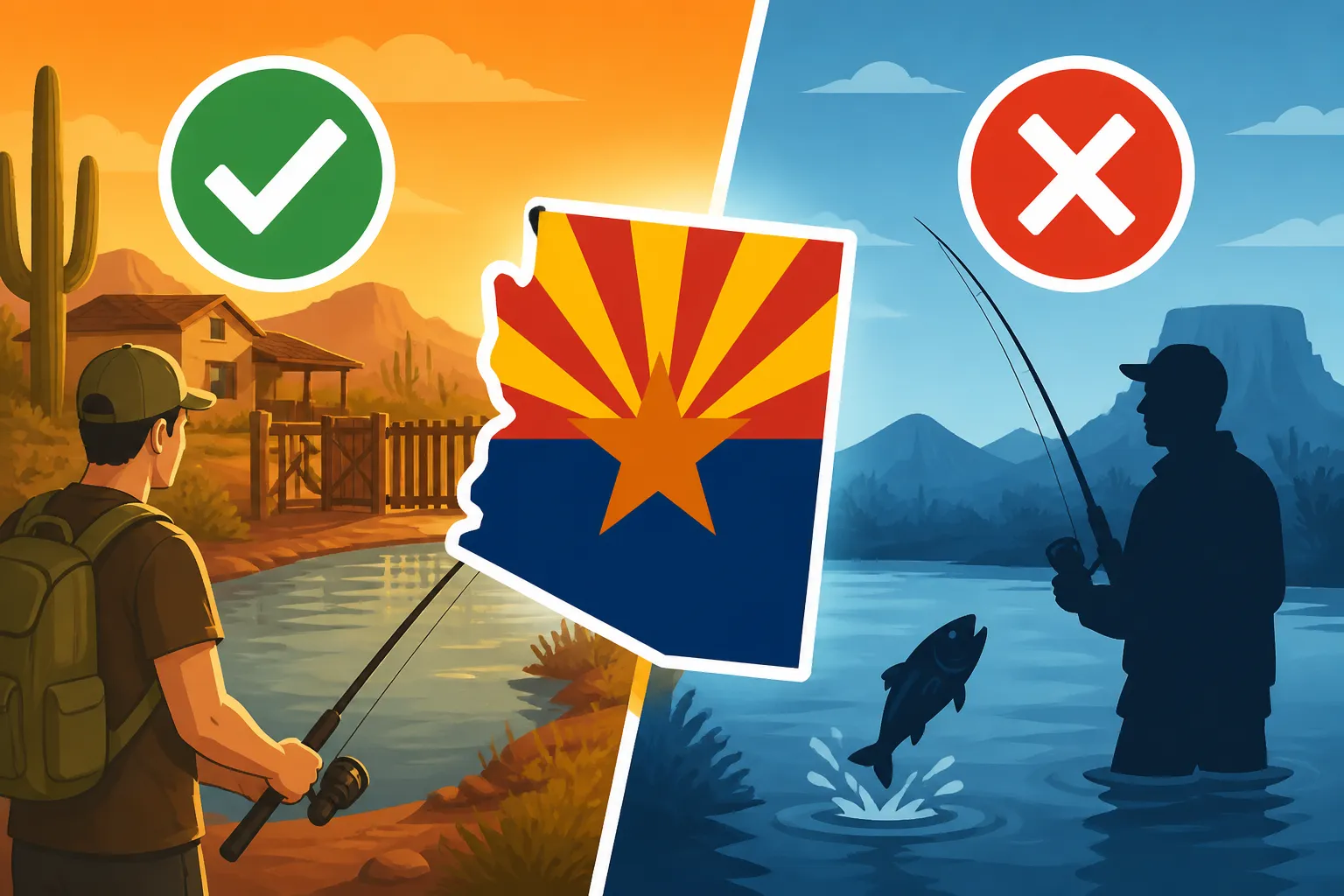
Do You Need a License to Fish on Private Property in Arizona?
It's a common thought for many anglers: "If I'm fishing on my own land, or a friend's private pond, surely I don't need a license, right?" We've all been there, imagining a peaceful day casting lines in a secluded spot, free from the hassle of paperwork. Many assume that private property grants an automatic exemption from statewide fishing regulations. However, in Arizona, the answer isn't always as straightforward as you might hope, and misunderstanding these rules can lead to unnecessary fines and headaches. This comprehensive guide will dive deep into Arizona's fishing license requirements, specifically addressing how they apply to private property, so you can cast your line with confidence and stay on the right side of the law.
Arizona's General Fishing License Requirements
Before we wade into the specifics of private property, it's crucial to understand the baseline: Arizona has a statewide fishing license requirement that applies to most recreational angling. This isn't just about collecting fees; it's a vital part of conserving Arizona's diverse aquatic ecosystems, funding fish stocking programs, and managing populations for sustainable fishing experiences for everyone.
The Arizona Game and Fish Department (AZGFD) is the agency responsible for overseeing all hunting and fishing activities, and their regulations are designed to protect our natural resources. Generally, anyone 10 years of age or older needs a valid Arizona fishing license to fish in any public waters. This includes the vast network of Arizona's Best Fishing Lakes, rivers like the Salt River, and the expansive Colorado River. Even if you're planning a quick trip to one of the urban lakes in Phoenix or Tucson, that license is your ticket to legally wet a line.
This general rule serves as the foundation for all fishing in the state. Without a license, you're not just risking a citation; you're also missing out on contributing to the very programs that make Arizona a fantastic place to fish. The money from licenses helps maintain boat ramps, conduct scientific research on fish populations, and introduce new fish species into various bodies of water, ensuring there are plenty of opportunities for future generations of anglers. You can learn more about the specifics in our detailed Arizona Fishing License Guide.
Understanding What "Private Property" Means for Fishing
This is where things can get a little murky, and it's the source of most confusion for anglers in Arizona. When it comes to fishing, "private property" isn't just about whether you own the land around the water. The critical distinction lies in the nature and origin of the water itself. Is it truly a self-contained, isolated body of water, or is it connected to public waterways? This connection is the hinge upon which Arizona's fishing regulations often swing.
Most people intuitively believe that if they own the land, they own everything on it, including any water. However, under Arizona law, many bodies of water that might appear "private" are actually considered public waters. This usually applies to natural rivers, streams, and lakes that flow through or border private land, or even man-made impoundments that draw their water from such public sources. If the water itself has a connection, however intermittent, to a public water system, it generally falls under AZGFD's jurisdiction, and thus, requires a fishing license.
The key phrase here is "public waters." If a pond or lake is fed by a natural stream that originates outside your property, or if it has an outflow that eventually leads to a public river or lake, then the fish in that water body are generally considered public resources. This is to prevent individuals from claiming ownership of public fish simply because they temporarily reside within the boundaries of private land. The state maintains authority over the wildlife, including fish, regardless of land ownership.
Specific Scenarios: When a License Is or Isn't Needed
Let's break down some common situations to clarify when you will and won't need an Arizona fishing license on private property. This isn't an exhaustive list, but it covers the most frequently encountered scenarios. Understanding these nuances can save you a lot of grief and ensure your fishing trip is always legal and enjoyable.
Truly Isolated, Self-Contained Ponds
If you own a pond on your private property that is entirely man-made, has no natural inlet or outlet connecting it to any public stream, river, or lake, and has been stocked privately, then you generally would not need an Arizona fishing license to fish it. This is the clearest exemption. Think of a small, excavated farm pond that's filled by a well or rain runoff, and you've personally stocked it with catfish or bluegill bought from a private supplier. In this rare instance, because the water body is completely self-contained and the fish are not considered part of the state's public resource, the AZGFD typically does not require a license.
However, even in these cases, it's always a good idea to ensure your pond isn't somehow connected to groundwater systems or if there's any chance of fish escaping into public waters during heavy rains. It's best practice to double-check with the AZGFD if you have any doubts about the isolation of your water body. Most truly isolated ponds are fairly small and specifically designed not to interact with public water flows. You might also find yourself needing to consult local county ordinances, which can sometimes have their own rules regarding private water features, although these usually don't overlap with fishing license requirements.
Waters Connected to Public Systems
This is the most common scenario, and it's where most people get caught. If your private property borders or contains a portion of a river, stream, or a lake that has any connection to public waterways, then an Arizona fishing license is required. This applies even if you own both banks of a stream as it flows through your land, or if your property is on the shore of a large reservoir like Lake Pleasant or Roosevelt Lake. The fish in these waters are considered a public resource, managed by the state for the benefit of all citizens.
Imagine owning a beautiful parcel of land along the Colorado River. While the land itself is private, the river is a public waterway. Therefore, anyone, including the landowner, wishing to fish in that section of the Colorado River would need a valid Arizona fishing license. The same goes for streams flowing down from the White Mountains that might pass through private ranchland before joining larger rivers. The ownership of the adjacent land doesn't grant exclusive fishing rights without a license in such cases. It’s also important to remember that this distinction means even if you're simply passing through private property to access public waters, you usually need permission from the landowner to cross their land, but that's a separate issue from the fishing license itself.
Stocked Ponds and Community Lakes
Another common situation involves private community fishing lakes or ponds, often found within housing developments or private resorts. The rules here can vary significantly. If the lake is stocked by the Arizona Game and Fish Department as part of the Community Fishing Program, then a standard Arizona fishing license (or a special community fishing license, depending on the year's regulations) is definitely required, even if the lake is technically within a private development. AZGFD often stocks these ponds regularly with species like trout and catfish, making them popular spots.
On the other hand, if a private entity, like a homeowners' association or a private club, owns and privately stocks a lake that has no connection to public waterways, they may issue their own permits or have their own rules, and a state fishing license might not be necessary. However, it is absolutely essential to verify this with the specific property management or HOA. Never assume! Always ask for clarification in writing, if possible, to avoid any misunderstandings. For instance, Tempe Town Lake Fishing Permit Requirements used to be distinct, and while it's now covered by a general license, the historical need for specific permits highlights how varied these rules can be depending on the water body's management and origins.
Here's a quick reference table to help visualize these scenarios:
| Water Body Type | Connection to Public Waterways? | Stocked by AZGFD? | Arizona Fishing License Required? |
|---|---|---|---|
| Fully enclosed, man-made pond on private land | No | No (private stock) | No |
| River/Stream flowing through private land | Yes | N/A | Yes |
| Lake within private property (fed by public stream) | Yes | N/A | Yes |
| Community Lake (stocked by AZGFD) | Varies | Yes | Yes |
| Community Lake (privately owned & stocked, no connection) | No | No (private stock) | Unlikely (check HOA/private rules) |
Beyond the License: Other Rules for Private Property Fishing
Even if you find yourself in the rare situation where a fishing license isn't required on truly private, isolated water, that doesn't mean all rules go out the window. Arizona's comprehensive Arizona Fishing Regulations Explained still contain important guidelines that protect fish populations and the environment.
Bag and Possession Limits
For instance, if you're fishing in a private pond that is connected to public waters, you'll still be subject to statewide Fishing Bag and Possession Limits Explained for various species. Just because you're on private land doesn't mean you can keep as many fish as you like, or disregard size limits. These regulations are in place to ensure sustainable fishing and prevent overharvesting, which can severely impact fish populations downstream or in connected lakes. Anglers caught exceeding these limits, even on privately owned stretches of public waters, can face significant penalties.
Furthermore, even in the case of a truly isolated private pond where no state license is needed, it's still good practice to manage your fish populations responsibly. Overstocking or overharvesting can quickly lead to an unhealthy pond ecosystem. Many private landowners choose to implement their own voluntary limits to maintain the health and quality of their fishing. It's about being a good steward of the land and the resources within it.
Species Restrictions and Invasive Species
Arizona has strict rules regarding which fish species can be transported, possessed, and stocked, primarily to prevent the spread of invasive species that can devastate native ecosystems. So, while you might not need a license for your isolated private pond, you can't just introduce any fish you want. For example, using live Minnow Bait Legality in Arizona from one body of water to another without proper permits is generally prohibited due to the risk of spreading disease or invasive species. Always consult AZGFD before introducing any new fish to a private pond.
Accidentally catching a protected native species while fishing, even on a private stretch of a public waterway, still requires adherence to catch-and-release protocols. Arizona has several protected fish, and knowing how to identify them and handle them properly is crucial. Education about local fish species can easily be found in AZGFD publications or online. You don't want to unknowingly harm a protected fish just because you thought you were exempt from all rules.
Ethical Angling and Safety
Regardless of where you're fishing, ethical angling practices remain paramount. This includes proper Catch and Release Rules for Arizona Anglers to minimize harm to fish, disposing of trash properly, and respecting the environment. Remember, even if the land is yours, practicing responsible angling sets a good example and ensures enjoyable fishing for all. On the safety front, especially during Arizona's hotter months, things like staying hydrated and protecting yourself from the sun are just as important whether you're on public or private land. You can find essential gear like quality sun hats, polarized sunglasses, and hydration packs on Amazon to make your fishing experience more comfortable and safe.
If you're fishing on private property that grants access to public waters, always be mindful of trespassing laws. Your fishing license gives you the right to fish in public waters, but it does not grant you the right to cross private land to access those waters without explicit permission from the landowner. Always secure permission beforehand to avoid any legal issues or strained relationships with property owners.
Special Cases: Tribal Lands and Other Permits
Arizona also has significant tribal lands, and fishing on these lands, even if they appear "private," almost always requires specific tribal permits in addition to, or sometimes instead of, a state fishing license. The rules for Tribal Land Fishing Permits in Arizona can vary greatly from one nation to another, so always research and purchase the correct permits well in advance. For example, fishing on San Carlos Lake requires a San Carlos Apache fishing permit, which is separate from the state license.
Similarly, some specific urban lakes or managed bodies of water might have their own local permits or regulations in addition to the state license. While the general Arizona fishing license covers most public waters, it's always wise to check local signage or community websites, especially for smaller, often-managed lakes. A quick search or call to the local parks and recreation department can clear up any ambiguity.
For anglers under a certain age, the rules can also differ. While adults need to be vigilant about licenses, it's worth noting that Youth Fishing License Rules in Arizona provide exemptions for younger anglers, typically those under 10. However, once they hit that age, the license requirement kicks in, whether on public or private waters (if those waters are considered public).
The Takeaway: Always Verify
The most important takeaway for fishing on private property in Arizona is this: always verify the specific rules for the water body you intend to fish. Never assume an exemption, even if the property owner assures you. The responsibility ultimately falls on the angler to ensure they are compliant with all state and local regulations. A brief phone call to the Arizona Game and Fish Department, or a quick check of their official regulations handbook, can save you a potential headache, a hefty fine, and the embarrassment of being caught without the proper authorization. You can also explore options on Amazon for fishing regulations guidebooks, although the most up-to-date information will always come directly from AZGFD.
Remember that the goal of these regulations is to maintain healthy fish populations and ensure that Arizona's incredible fishing opportunities remain vibrant for generations to come. By understanding and adhering to these rules, whether on private or public land, you're contributing to the conservation efforts that make our state a premier fishing destination. So, get your license if needed, grab your gear (perhaps a new tackle box from Amazon), and enjoy your time on the water, knowing you're fishing responsibly and legally.
Disclaimer
The information provided in this guide is for general informational purposes only and does not constitute legal advice. Fishing regulations in Arizona can change, and interpretations may vary. Always consult the official Arizona Game and Fish Department regulations or contact the department directly for the most current and accurate information before fishing.