Do You Need a Landing Net for Trout?
Ah, the trusty landing net! It's one of those pieces of fishing gear that often sparks a bit of debate among anglers, especially when you're targeting beautiful, feisty trout in Arizona's diverse waters. You might be wondering if it's truly a must-have or just another thing to carry. Well, let's dive into whether you absolutely need a landing net for your Arizona trout adventures, and explore the pros and cons so you can make an informed decision for your next outing.
The Core Question: Is a Landing Net Strictly Necessary for Trout?
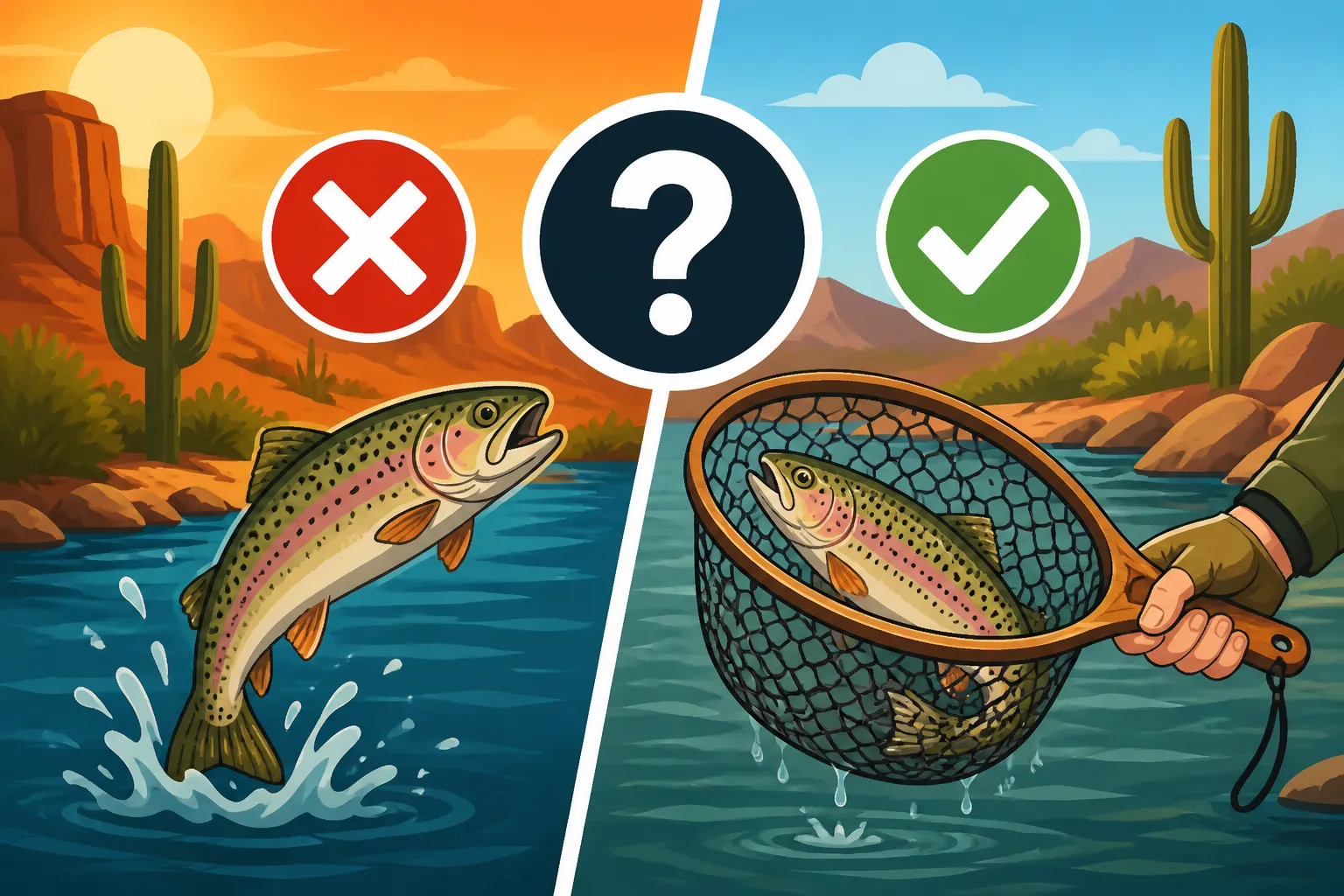
The short answer is: it depends. There are certainly scenarios where a net is an invaluable tool, ensuring both your success and the fish's well-being. But then there are times when it might feel like overkill. Understanding these nuances is key to deciding what's right for your style of fishing and the specific conditions you're facing on Arizona's lakes and streams.
When You Can Probably Go Without a Net
Let's be real, sometimes you just want to keep your gear minimal, especially if you're hiking into a remote spot or just doing a quick outing at a community pond. For certain trout fishing situations in Arizona, leaving the net at home can be perfectly fine.
If you're primarily targeting smaller, pan-sized trout, say those rainbow trout freshly stocked in an urban lake or small creek, a net might not be essential. These fish are generally easier to handle by hand, especially if you're practicing ethical catch and release. Many seasoned anglers can deftly grab a small trout, unhook it, and release it without ever needing a net. This is particularly true if you're using barbless hooks, which makes hook removal incredibly simple and fast. Imagine you're wading a small stream in the White Mountains, perhaps targeting some wild brookies or small rainbows; hand-landing, especially when you can cup the fish in the water, is a common and often preferred method. It reduces the amount of gear you're hauling, making your fishing experience feel more streamlined and connected to the environment.
Another instance where you might forgo a net is if you're exclusively fishing with barbless hooks and intend to quickly release every fish without even touching it. This "no-touch" method is often employed by fly anglers who are highly focused on conservation. They'll simply grab the fly with a pair of hemostats or pliers while the fish is still in the water and let it swim off. This works best when you have clear access to the water's edge and the fish isn't thrashing excessively. However, this method requires a calm fish and quick hands, and isn't always feasible, especially if you've got a lively one on the line.
Situations Where a Net Becomes Highly Recommended
While going net-less has its place, there are many scenarios in Arizona where a landing net transitions from a convenience to a highly recommended, if not essential, piece of equipment. This is especially true when the stakes are higher – a larger fish, tricky conditions, or a strong commitment to fish welfare.
Think about landing a hefty Rainbow Trout Fishing Guide for Arizona on a cold day at one of Arizona's bigger lakes, like Woods Canyon Lake or Big Lake. These trout can reach impressive sizes, often pushing several pounds. Trying to hand-land a slippery, strong fish that's still full of fight, particularly when you're standing on a rocky bank or in a boat with limited maneuverability, can lead to frustration and lost fish. A net provides a secure way to bring the fish in, minimizing the chance of it throwing the hook at the last second or flopping out of your grasp. This is also crucial if you're hoping to get a quick photo before release; a netted fish is a much more cooperative subject than one you're trying to cradle precariously.
Furthermore, if you're fishing in areas with strong currents, like sections of the Colorado River Fishing Guide in Arizona or specific streams, a net gives you a vital advantage. A strong current can make hand-landing a challenge, as the water pressure can work against you, making the fish harder to control. A net allows you to quickly subdue the fish and bring it to calmer waters for hook removal. For those fishing from a boat or kayak, especially on sprawling reservoirs like Lake Powell or Lake Pleasant, a net is almost non-negotiable. Trying to hand-land a fish while managing a boat and potentially a strong wind or choppy water is an invitation for dropped fish and tangled lines. A long-handled net can reach out and scoop up your catch, providing much-needed leverage and control.
Most importantly, if you are committed to catch and release – which many Arizona anglers are, particularly for native species or larger trophy fish – a net significantly improves the fish's chances of survival. We'll delve deeper into this, but a net helps keep the fish in the water, prevents excessive handling, and reduces damage to its delicate slime coat and fins.
Benefits of Using a Landing Net for Arizona Trout
Beyond just the practical aspects of landing a fish, using a net, especially a properly designed one, offers several significant benefits that contribute to both responsible angling and a more enjoyable fishing experience.
Better Fish Handling and Conservation
For many of us, fishing isn't just about catching fish; it's about the experience and ensuring the health of the fisheries for future generations. When it comes to trout, which can be quite delicate, a landing net is a fantastic tool for conservation.
One of the biggest advantages is minimizing stress and injury to the fish. When you hand-land a trout, especially if it's thrashing, it can injure itself by flopping against rocks, boat decks, or hard ground. This can lead to internal injuries, scale loss, and fin damage. The delicate slime coat on a fish, its primary defense against disease and parasites, can also be easily wiped off by human hands or rough surfaces. A net, particularly one with a rubberized or knotless mesh, cradles the fish, keeping it contained and often partially submerged in the water, which helps reduce stress and preserves that vital slime coat. This is particularly critical for fish you intend to release, giving them the best possible chance of survival and recovery. Imagine catching a beautiful Gila trout in a high-country stream; ensuring its safe release is paramount to the species' recovery.
With a net, you can often keep the fish in the water while you remove the hook. This is ideal, as it keeps the fish breathing and minimizes its exposure to air, which can be detrimental. You can quickly unhook the fish with pliers or forceps, snap a quick photo if you like, and then gently release it without ever really lifting it out of its natural element. This respectful approach aligns perfectly with modern catch and release ethics and is a practice many anglers in Arizona strive for, especially when fishing for wild or protected species. Choosing the right Best Fishing Rods for Bass in Arizona (even if it's a trout rod) and paired with the right net can make all the difference in these situations.
Increased Landing Success and Safety for Anglers
Let's face it, losing a fish at the boat or at your feet is a gut-wrenching feeling. It happens to everyone, but a landing net dramatically increases your chances of actually bringing that trophy trout to hand.
Trout are notorious for their last-minute antics. Just when you think you've got them beat, they'll make one more powerful run, a head shake, or a jump, and often that's when the hook pulls free. A net acts as a safety blanket, allowing you to quickly secure the fish before it has a chance to make that final escape. Once the fish is in the net, the fight is essentially over, and you can take your time to properly unhook it. This is a huge confidence booster, especially when you've been working hard all day to hook that one big one. For example, if you're targeting big brown trout in the Lees Ferry section of the Colorado River, known for its strong currents and large fish, a reliable net is almost a requirement to ensure you land those hard-fighting fish.
Beyond securing the fish, a net also offers a layer of safety for the angler. Fishing hooks are sharp, and a flailing fish can easily embed a hook into your hand, arm, or even face. This is particularly true if you're dealing with treble hooks or trying to remove a deeply set hook. By netting the fish, you gain control over it, making hook removal much safer and easier. This also protects your gear; a thrashing fish can tangle your line, damage your leader, or even break the tip of your rod if it swings wildly. Keeping the fish contained in the net minimizes these risks, allowing for a smoother and more controlled interaction with your catch. For an Essential Tackle Box Setup for Arizona Beginners, including a net is often a wise choice for both fish and angler safety.
Types of Landing Nets and What to Look For
Just like there are different rods for different species or different lures for different conditions, landing nets come in various forms, each with its own advantages and disadvantages. Choosing the right one for your Arizona trout fishing can make a real difference.
Material Matters: Rubber vs. Nylon Meshes
When it comes to landing nets, the mesh material is perhaps the most critical feature, especially if you're serious about catch and release. You'll primarily encounter two types: rubber (or rubberized) and nylon.
Rubber or Rubberized Mesh Nets: These are the gold standard for catch and release, and highly recommended for trout fishing in Arizona.
- Fish Protection: The soft, pliable rubber is incredibly gentle on fish. It minimizes the removal of the protective slime coat, reduces scale damage, and is less likely to injure fins or gills. This directly contributes to higher survival rates for released fish.
- Tangle-Free: Hooks rarely get snagged in rubber mesh. This is a massive time-saver, preventing frustration and allowing for quicker hook removal and release. You won't spend precious minutes trying to untangle a treble hook from fine netting.
- Odor and Water Absorption: Rubber doesn't absorb fish odors or water like nylon, making it easier to clean and preventing it from getting heavy.
- Durability: High-quality rubber nets are very durable and resistant to tears.
- Downsides: They tend to be heavier and bulkier than nylon nets, and often come with a higher price tag. However, the benefits for trout conservation often outweigh these drawbacks. You can find excellent options at Bass Pro Shops or browse a wide selection on Amazon to compare models.
Nylon Mesh Nets: These are more traditional and still very common, though they have some significant drawbacks for trout fishing.
- Cost and Weight: Nylon nets are generally lighter and more affordable, making them attractive to budget-conscious anglers or those who prioritize minimal weight for long hikes.
- Portability: Some nylon nets can fold down quite compactly.
- Downsides: The biggest issue is their impact on fish. The knots and rough texture of nylon mesh can strip off a fish's protective slime coat, damage scales, and even fray fins, particularly for delicate trout. Hooks also notoriously get tangled in nylon, leading to frustration and extended handling time, which further stresses the fish. If you must use a nylon net, look for knotless or fine-mesh options, though they still aren't as fish-friendly as rubber.
For any kind of trout fishing in Arizona, where conservation and the well-being of the fish are often priorities, a rubber or rubberized mesh net is the superior choice.
Size, Shape, and Handle Considerations for Trout Fishing
Once you've decided on the mesh material, you'll need to consider the physical attributes of the net. The size and shape of the hoop, as well as the length and type of handle, should align with the size of the trout you expect to catch and your fishing environment.
- Hoop Size:
- Small Streams & Pan-Sized Trout: For small mountain streams or urban ponds where you're catching pan-sized trout (8-14 inches), a smaller hoop (around 10-14 inches wide) is perfectly adequate. It's less cumbersome to carry and maneuver.
- Larger Lakes & Trophy Trout: If you're targeting larger trout, like those big rainbows or brown trout in places like Lee's Ferry, Big Lake, or the larger Salt River chain lakes, you'll want a larger hoop. A hoop size of 16-24 inches across will comfortably accommodate a larger fish without having to cram it in. Remember, it's always better to have a slightly larger net than one that's too small.
- Hoop Shape:
- Round/Teardrop: These are common and versatile shapes. Teardrop shapes can be a bit more ergonomic for scooping fish.
- Rectangular/Square: Less common for trout, but sometimes found on boat nets for larger fish. For trout, the round or teardrop shapes are generally preferred.
- Handle Length:
- Short Handle (Fixed): Ideal for wading in streams or fishing from the bank where you can get close to the water. A shorter handle means less bulk and easier maneuverability. Many fly fishing nets have very short, fixed handles.
- Long Handle (Fixed or Extendable): Essential for fishing from a boat, float tube, or high bank where you need extra reach. An extendable handle offers the best versatility, allowing you to shorten it for transport and extend it when a fish is on. For fishing large Arizona lakes from a boat, like Lake Pleasant Arizona Fishing Guide or Roosevelt Lake Arizona Fishing Guide, a net with a good reach is invaluable.
- Hybrid: Some nets have a handle that's long enough for most bank fishing but still manageable, often around 18-24 inches. This can be a good all-around choice.
When choosing, consider how you'll be carrying the net. Will it be clipped to your vest, slung over your back, or lying in the boat? Portability is a key factor. If you're backpacking to a remote high-country lake, a lightweight, compact net will be favored over a bulky, heavy one. For Fishing Gear Checklist for Desert Lakes, thinking about sun exposure and keeping your net out of direct, intense sun can also prolong its life.
Best Practices for Using a Landing Net
Having the right net is only half the battle; knowing how to use it effectively and ethically is just as important. A poorly used net can still stress or harm a fish, defeating the purpose of choosing a fish-friendly model.
Approaching and Netting the Fish
Successfully landing a fish with a net involves a bit of technique and patience. Rushing the process can easily lead to a lost fish or an injured one.
First and foremost, tire the fish out as much as possible before attempting to net it. Don't try to scoop a fish that's still making strong runs or thrashing wildly. Keep pressure on the line and let your rod and reel do the work. Once the fish is alongside your position and seems to be nearing exhaustion – often signified by it turning on its side – that's your cue.
Next, position the net correctly. The net should be in the water, positioned slightly downstream from the fish if you're in a current, or just ahead of its anticipated path if you're in still water. Don't chase the fish with the net; instead, lead the fish into the net. This means gently guiding the fish, head-first, over the rim of the net. As the fish's head enters the net, scoop quickly but smoothly upwards. The goal is to get the fish completely into the net in one fluid motion, minimizing any chance for a last-minute escape. If you're having trouble, check out articles on Best Trout Fishing Techniques for Arizona Waters to improve your fighting and landing skills. Always ensure you are on steady footing if bank fishing, as reaching for a fish can cause you to lose balance, especially on slippery Arizona riverbanks.
Handling the Fish in the Net and Release
Once the fish is in the net, the work isn't over. This crucial step determines the fish's survival chances, especially if you plan on releasing it.
Keep the fish in the water as much as possible. If you're wading, keep the net submerged or partially submerged while you work. If you're in a boat, try to keep the net over the side with the fish still in the water, if feasible. This significantly reduces stress and air exposure. With the fish secured in the net, you now have the time to carefully remove the hook. Use long-nosed pliers or forceps to extract the hook quickly and cleanly. If the hook is deeply set and causing excessive bleeding, it might be more humane to cut the line as close to the hook as possible, rather than prolonging the struggle to remove it.
After hook removal, if you plan to release, take any photos quickly and gently. Support the fish horizontally with wet hands, ensuring not to squeeze its internal organs or rub off its slime coat. For trout, supporting the belly and tail is often the best approach. Avoid holding the fish vertically by its jaw or tail alone. Once you're ready to release, place the fish back into the water, still cradled in the net. Gently hold it upright, facing into any current if there is one. Allow it to regain its strength, moving its gills back and forth until it can swim off under its own power. Sometimes, a fish needs a minute or two to revive. Don't just toss it back; ensure it's strong enough to swim away vigorously. Following Catch and Release Rules for Arizona Anglers ensures you're practicing responsible fishing.
Landing Net Comparison for Arizona Trout Anglers
To help you visualize the differences, here's a quick comparison of the two main types of landing net meshes you'll encounter, keeping Arizona trout fishing in mind.
| Feature | Rubber/Rubberized Mesh Net | Nylon Mesh Net |
|---|---|---|
| Fish Safety | Excellent (preserves slime, minimizes scale/fin damage) | Poor to Fair (strips slime, damages scales/fins) |
| Hook Tangle Risk | Very Low (hooks rarely snag) | High (hooks often get tangled, especially trebles) |
| Odor/Cleanliness | Low odor retention, easy to rinse clean | High odor retention, absorbs water, harder to clean |
| Weight | Heavier | Lighter |
| Durability | High (resistant to tears) | Varies (can fray/tear) |
| Price | Higher | Lower |
| Ideal Use for Trout | All trout fishing, especially catch & release and larger fish | Very small trout, not recommended for catch & release |
| Common Purchase Spot | Bass Pro Shops, Amazon | Most sporting goods stores |
Final Thoughts on Your Trout Net Decision
So, do you need a landing net for trout in Arizona? While you can certainly get by without one for small, pan-sized fish, if you're serious about protecting the resource, consistently landing larger trout, or frequently fishing from a boat or high bank, a landing net is an indispensable piece of gear. Investing in a good quality rubberized net is one of the best decisions an ethical Arizona trout angler can make. It protects the fish, makes your life easier, and ultimately enhances your entire fishing experience. Consider it an investment in both your angling success and the health of Arizona's stunning trout fisheries. When you're packing your gear, from your Best Line for Trout Fishing to your waders, make room for a well-chosen net!
Disclaimer
This article is for general informational purposes only and does not constitute professional advice. Laws, prices and regulations vary by location and change over time. Consult a qualified professional for guidance on your specific situation.