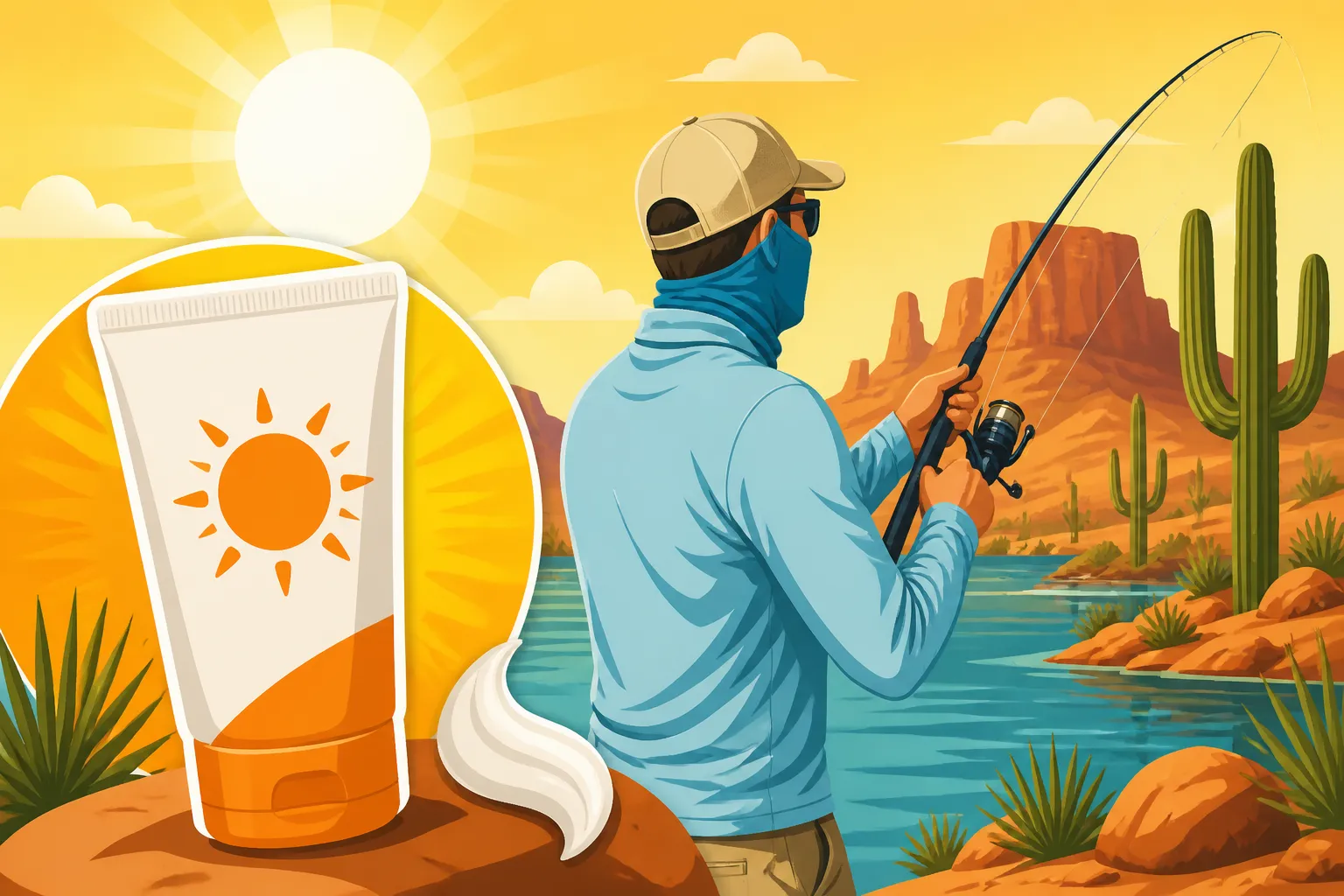
Best Sunscreen for All-Day Desert Fishing
Oh, Arizona! The sunshine state, right? It's glorious, but let's be real, that desert sun can be relentless when you're out fishing all day. Finding the right sunscreen isn't just about avoiding a nasty burn; it's about protecting your skin long-term and actually enjoying your time on the water without feeling greasy, sticky, or getting absolutely fried. This comprehensive guide will walk you through what truly works for those long days chasing bass or trout under a blazing Arizona sky, ensuring your focus stays on the fish, not on your sunburn.
Why Sunscreen is Absolutely Non-Negotiable for Arizona Anglers
Let's start with a dose of reality: the Arizona sun is no joke. The UV index here, especially during peak fishing seasons, can reach extreme levels. It's not just about getting a little red; we're talking about serious skin damage that accumulates over time, leading to premature aging, sunspots, and, most concerningly, an increased risk of skin cancer. Many anglers, myself included, have fallen into the trap of thinking, "Oh, it's just a few hours," or "I'm under my hat, I'll be fine." But the truth is, even on an overcast day, a significant amount of UV radiation can penetrate the clouds, and the reflection off the water intensifies your exposure dramatically.
The frustration is real when you spend money on a sunscreen that feels like grease, washes off as soon as you start sweating, or leaves a ghostly white residue. It makes you less likely to use it, and that's exactly where the danger lies. You're out there on Lake Pleasant, Roosevelt, or even a smaller community pond, focused on landing that big one, and the last thing you want is a chemical soup dripping into your eyes or making your rod slip. But ignoring protection isn't an option. Think of sunscreen as essential tackle, just like your favorite lure or a reliable fishing rod. It's an investment in your health and your ability to keep doing what you love for years to come.
Understanding the specific challenges of Arizona's climate is key. The dry air means your skin can dehydrate quickly, and the intense heat combined with direct sunlight creates an environment where subpar sunscreens simply won't hold up. You need something engineered to stick, protect, and ideally, feel comfortable enough that you forget you're even wearing it. Heat Safety Tips for Summer Fishing in Arizona is another vital read to pair with your sun protection strategy, because staying cool and hydrated goes hand-in-hand with protecting your skin.
Essential Features to Look for in Desert Fishing Sunscreen
When you're standing in the aisle at a sporting goods store, or scrolling through countless options on Amazon, the sheer volume of choices can be overwhelming. How do you pick the right one for fishing in the Arizona desert? It's not just about the highest SPF number; it's about a combination of factors that ensure robust, lasting protection against our intense sun. Let's break down what truly matters.
SPF Rating and Broad-Spectrum Protection
First up, SPF (Sun Protection Factor). This number indicates how well the sunscreen protects against UVB rays, which are the primary cause of sunburn. For all-day desert fishing, an SPF of 30 or higher is the absolute minimum you should consider. Many seasoned anglers opt for SPF 50 or even higher, especially during the scorching summer months. While higher SPF numbers offer incrementally more protection (SPF 30 blocks about 97% of UVB, SPF 50 blocks about 98%), the most critical factor is consistent and correct reapplication, which we'll get to shortly.
Equally important, perhaps even more so, is "broad-spectrum" protection. This means the sunscreen protects against both UVA and UVB rays. UVA rays penetrate deeper into the skin and contribute to aging and skin cancer, even if they don't cause an immediate burn. Always look for that "broad-spectrum" label prominently displayed. If it doesn't have it, put it back. You need defense against the full spectrum of the sun's damaging radiation.
Water Resistance and Durability
This is where many sunscreens fall short for anglers. You're sweating, splashing, maybe even taking a quick dip to cool off. A sunscreen that claims to be "sport" or "water-resistant" is crucial. However, pay close attention to the time frame specified on the label – usually 40 or 80 minutes. This indicates how long the sunscreen remains effective while swimming or sweating heavily. For those long days out on Lake Havasu or the Colorado River, you'll need the 80-minute variety as a baseline, knowing you'll still need to reapply frequently.
Beyond just water resistance, consider its durability against rubbing. Wiping sweat, adjusting your hat, or handling gear can all degrade your protection. Some formulations create a more robust barrier that adheres better to the skin, even under friction. These are the ones you want for truly demanding conditions. You’ll find some great heavy-duty options at your local Bass Pro Shops, often designed specifically for outdoor enthusiasts.
Mineral vs. Chemical Formulas
This is a hot topic in the sunscreen world, and both types have their pros and cons for fishing.
- Mineral Sunscreens (Physical Blockers): These typically use zinc oxide and/or titanium dioxide. They work by sitting on top of your skin and physically blocking UV rays.
- Pros: Generally considered better for sensitive skin, as they are less likely to cause irritation. They also start protecting immediately upon application. Many are considered "reef-safe," though this is more relevant in ocean environments, it speaks to a general environmental consciousness.
- Cons: Historically, they've been thicker and could leave a white cast, especially on darker skin tones. While formulations have improved dramatically, some can still feel a bit heavier. They might also transfer onto clothing or gear more readily if not fully absorbed.
- Chemical Sunscreens: These absorb UV rays through a chemical reaction that converts them into heat, which is then released from the skin. Common active ingredients include oxybenzone, avobenzone, octinoxate, and octisalate.
- Pros: Often thinner, easier to rub in, and less likely to leave a white cast. They tend to feel lighter on the skin.
- Cons: Some individuals experience skin irritation or allergic reactions to certain chemical ingredients. They need about 15-20 minutes to become fully effective after application. There have also been ongoing discussions about the environmental impact of certain chemicals, particularly oxybenzone, though again, this is primarily a concern for marine environments.
For a long day on an Arizona lake, the choice often comes down to personal preference for feel and any skin sensitivities. I've personally found some fantastic, non-greasy options available that stand up to the desert heat, often stocking up when I see a good deal on Amazon or during a trip to Bass Pro Shops for new tackle.
Here's a quick comparison of key sunscreen types:
| Feature | Mineral Sunscreen (e.g., Zinc Oxide, Titanium Dioxide) | Chemical Sunscreen (e.g., Oxybenzone, Avobenzone) |
|---|---|---|
| How it Works | Physically blocks/reflects UV rays | Absorbs UV rays and converts to heat |
| Onset of Action | Immediate upon application | ~15-20 minutes after application |
| Feel on Skin | Can be thicker, may leave white cast (improving) | Usually lighter, rubs in clear |
| Skin Sensitivity | Generally better for sensitive skin | Can cause irritation in some individuals |
| Water Resistance | Available in water-resistant formulas | Available in water-resistant formulas |
| Environmental | Often marketed as "reef-safe" (check ingredients) | Some ingredients (like oxybenzone) have concerns |
Application Strategies for Uninterrupted Protection
Having the best sunscreen won't do you any good if you don't apply it correctly and consistently. This is where most anglers, including myself sometimes, fall short. It's easy to get caught up in the excitement of the morning bite or the challenge of finding that perfect spot. But making sunscreen application a ritual is non-negotiable for all-day protection in the Arizona sun.
The "Before You Go" Rule
The single most important tip: apply sunscreen before you even step foot out the door or onto the boat ramp. For chemical sunscreens, this gives the active ingredients time to bind to your skin and become fully effective (around 15-20 minutes). Even for mineral sunscreens, applying indoors ensures you get thorough, even coverage without battling wind, sweat, or the glare off your boat's deck. Make it part of your pre-fishing routine, right alongside checking your tackle box and filling your water bottles. Don't wait until you're already feeling the sun's intensity.
Think about it: you wouldn't head out without your fishing license, right? Applying sunscreen should be the same kind of non-negotiable step. For those who frequently fish, check out Arizona Fishing License Validity Period to ensure your paperwork is always in order.
The "Shot Glass" Method and Full Coverage
Many people don't use enough sunscreen. A general guideline is to use about a shot glass full (approximately 1 ounce or 30 ml) for your entire body, or at least for all exposed skin. Don't skimp! Apply a generous layer. This isn't lotion; it's a protective barrier.
And speaking of coverage, don't forget those often-missed spots:
- Ears: The tops and lobes are highly susceptible to sunburn.
- Neck: Especially the back of the neck, even if you wear a collared shirt.
- Top of your hands: Constantly exposed while casting and handling gear.
- Lips: Use a lip balm with SPF.
- Forehead and hairline: Underneath your hat, your forehead can still get burned by reflection or if the hat shifts.
- Feet/ankles: If you're wearing sandals or barefoot on the boat.
A thorough, thick application is your first line of defense. Really rub it in to ensure even coverage, but don't over-rub to the point where you're just wiping it off.
The Reapplication Schedule: Your Skin's Best Friend
This is the big one. No matter how high the SPF or how "water-resistant" the label, sunscreen wears off. Sweat, water, wiping your face, or even just the natural breakdown of the ingredients in the sun will diminish its effectiveness.
The general rule for reapplication, even with water-resistant formulas, is every two hours. If you've been swimming, had a significant catch-and-release struggle that worked up a sweat, or been splashed heavily, you should reapply immediately after. Set a timer on your phone, or better yet, make it a habit every time you take a break for a snack or to switch lures.
One practical tip: keep a small, easy-to-access tube or stick sunscreen in your tackle box or boat console. This makes reapplication less of a hassle and ensures you're more likely to do it. You can find convenient travel-size options that fit perfectly into your Essential Tackle Box Setup for Arizona Beginners.
Beyond Sunscreen: A Layered Approach to Sun Protection
While choosing the best sunscreen is paramount, it's just one piece of the puzzle for total sun safety during a long day of Arizona fishing. To truly protect yourself from the relentless desert sun, you need a layered approach that combines various methods. Think of it as putting together the ultimate tackle system – you wouldn't rely on just one lure, would you?
Protective Clothing: Your Wearable Shade
This is perhaps the most underrated aspect of sun protection. High-quality sun-protective clothing, often labeled with a UPF (Ultraviolet Protection Factor) rating, can be far more effective and consistent than sunscreen alone.
- Long-Sleeved Shirts: Look for lightweight, breathable, moisture-wicking shirts with a UPF rating of 30+. Many fishing-specific shirts from brands like Columbia, Huk, or Simms offer UPF 50+. These keep you cooler by wicking sweat and providing a physical barrier against the sun. Best Sun Protection for Desert Fishing goes into more detail on specific clothing options.
- Fishing Pants/Convertible Pants: Just like your arms, your legs need protection, especially when seated in a boat or wading. Lightweight, quick-drying pants with UPF are ideal.
- Neck Gaiters/Buffs: These are a game-changer for protecting your neck, ears, and even your face. They can be pulled up over your nose and mouth, offering critical coverage that sunscreen alone can't always maintain, particularly when you're moving around. They also help keep you cool when wet.
The beauty of protective clothing is that it doesn't wash off, sweat off, or need reapplication. It's a constant, reliable shield against UV rays.
Headwear and Eyewear: Critical Coverage
Your head, face, and eyes are extremely vulnerable to sun exposure.
- Wide-Brimmed Hats: A standard baseball cap only protects your scalp and forehead. For comprehensive protection, choose a wide-brimmed hat that shades your ears, neck, and face. Hats with an integrated neck flap are even better. Check out Best Hat for Sun Protection While Fishing for some excellent recommendations tailored for Arizona's harsh conditions.
- Sunglasses: This isn't just about reducing glare; it's about protecting your eyes from harmful UV rays, which can contribute to cataracts and other eye damage. Invest in a good pair of polarized sunglasses that block 100% of UVA and UVB rays. Polarized lenses also have the added fishing benefit of cutting through water glare, allowing you to see deeper into the water.
Seek Shade and Hydrate Frequently
Sometimes, the simplest solutions are the best.
- Seek Shade: Whenever possible, position your boat under a rock outcropping, an available tree, or use a bimini top if your boat has one. Even short breaks in the shade can make a big difference in reducing your overall exposure and preventing overheating.
- Hydration: Intense sun and high temperatures lead to rapid dehydration. Sunburn itself can contribute to dehydration. Make sure you're consistently drinking water or electrolyte-rich beverages. Carry a Best Hydration Pack for a Fishing Kayak or a large cooler filled with drinks. Staying hydrated helps your body regulate temperature and can even reduce the severity of a sunburn if you do get one. For general safety on the water, remember your Boating Safety Gear Requirements in Arizona, which includes having enough water on board.
By combining a high-quality, water-resistant, broad-spectrum sunscreen with protective clothing, a wide-brimmed hat, UV-blocking sunglasses, and smart hydration habits, you create a formidable defense against the Arizona sun. This multi-pronged strategy allows you to enjoy your fishing adventures safely and comfortably, season after season.
Disclaimer
This article is for general informational purposes only and does not constitute professional advice. Laws, prices and regulations vary by location and change over time. Consult a qualified professional for guidance on your specific situation.