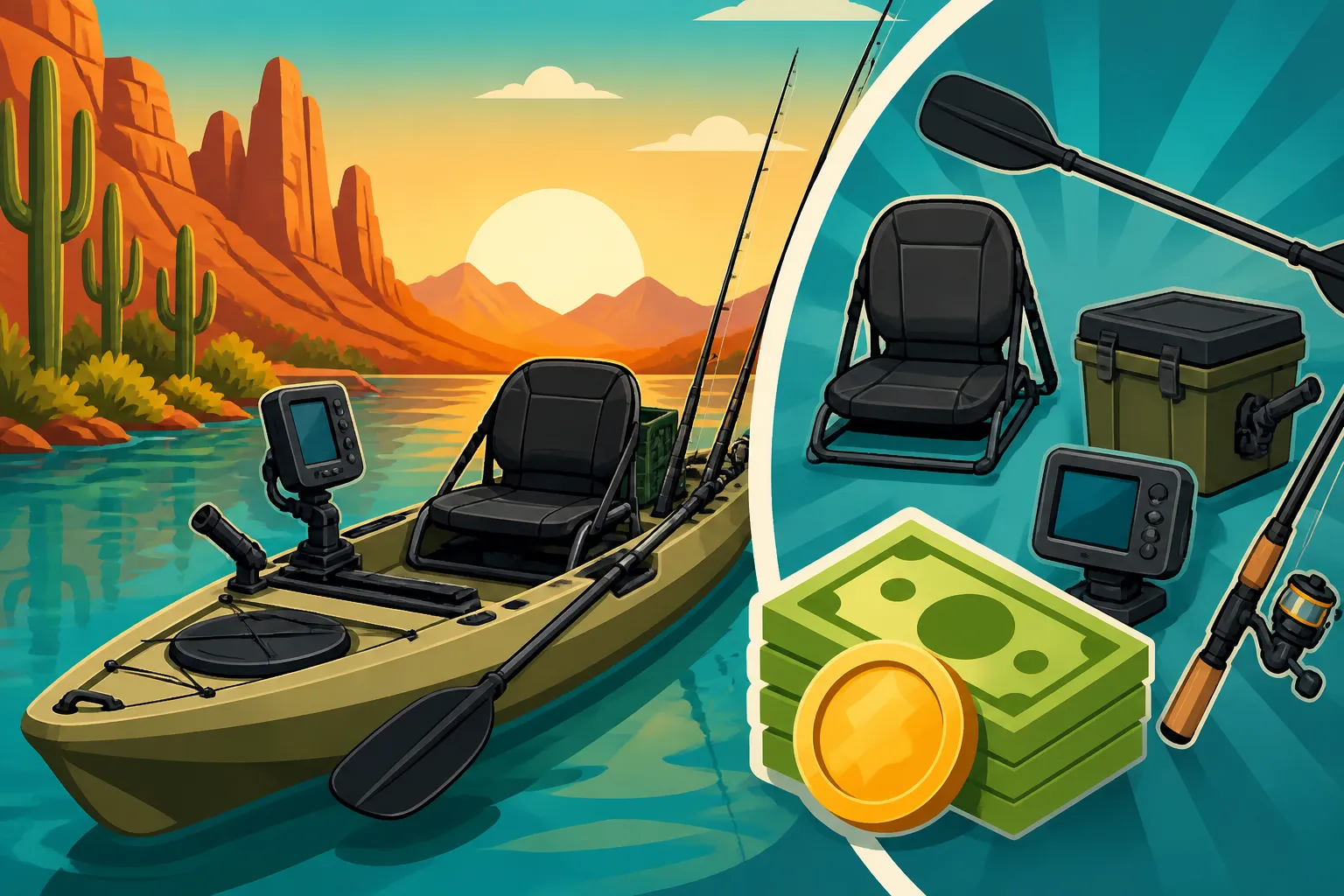
Cost of a Kayak Fishing Setup
You’ve been dreaming of the tranquility of gliding across an Arizona lake, casting your line from the perfect vantage point a kayak offers. It’s an incredibly appealing idea, blending physical activity with the joy of fishing, but that dream often bumps up against the very real question: "How much is this going to set me back?" The cost of getting into kayak fishing, especially in a place like Arizona where the gear needs to stand up to our unique conditions, can feel a bit overwhelming if you don't know where to start. This guide is here to break down the different cost levels for a kayak fishing setup, helping you understand what to expect whether you're looking for a simple start or a fully loaded angling machine.
The Bare Bones: Entry-Level Kayak Fishing Setup
Getting started in kayak fishing doesn't have to empty your wallet. Many anglers, myself included, began with a very basic setup, proving that you don't need all the bells and whistles to enjoy the sport. This entry-level approach focuses on the essentials to get you on the water safely and effectively.
The Kayak Itself: Simple and Stable
For your first fishing kayak, stability and ease of use are key, often more so than speed or advanced features. You'll typically be looking at recreational kayaks or basic sit-on-top models that are designed for casual paddling but can be adapted for fishing. These often lack integrated rod holders or extensive gear tracks, but they get the job done. Think about models that are between 9 and 11 feet long. They're usually manageable to transport and store, and their price point is generally the most accessible. You might find great deals on these during seasonal sales or even used from reputable outdoor gear marketplaces. Retailers like Bass Pro Shops often have beginner packages or open-box deals that can save you a bit, and Amazon can be a treasure trove for discovering entry-level kayaks.
When considering an entry-level kayak for Arizona's waters, focus on designs that handle well on calmer lakes like those in the Best Urban Fishing Lakes in Arizona network, rather than turbulent rivers. A wider hull usually means more stability, which is fantastic when you’re learning to cast from a seated position or just enjoying the view without feeling tippy. Remember, the goal here is to get you fishing, not to win a race.
Essential Paddling and Safety Gear
Beyond the kayak, you'll need a few non-negotiable items for safety and propulsion. These are costs you absolutely cannot skimp on, regardless of your budget.
Paddle
A decent paddle is crucial. While some entry-level kayaks might come with a basic paddle, investing in a slightly better, lighter paddle can significantly improve your experience. Cheaper paddles can be heavy and less efficient, making a long day on the water feel like a grueling workout rather than a relaxing escape. Look for a two-piece paddle for easier transport and storage. The material often dictates the cost, with aluminum being the most budget-friendly, and fiberglass or carbon fiber increasing in price.
Personal Flotation Device PFD
A PFD, or life jacket, isn't just a recommendation; it's often a legal requirement and always a smart choice for safety. For fishing, look for a PFD designed with anglers in mind – they often have extra pockets for small tackle, tool attachment points, and a cut designed to allow for a full range of motion while casting. Brands offer a wide array of options, from basic vest styles to more advanced inflatable models. Always try one on to ensure a comfortable fit, especially important during a long day under the Arizona sun. Boating Safety Gear Requirements in Arizona can offer more insights into legal necessities.
Basic Fishing Tackle and Accessories
You probably already have some fishing gear, but a few specific items might make kayak fishing more enjoyable.
Rod and Reel Combo
A simple spinning rod and reel combo that you already own, or an inexpensive new one, will suffice. A medium-light to medium action rod, around 6.5 to 7 feet long, is versatile enough for many of Arizona's common species, from bass to trout. Focus on durability and ease of use. You don't need a specialized kayak fishing rod right away. Just make sure your reel is spooled with reliable line. If you're looking for a new setup, Best Fishing Reels for Beginner Anglers in Arizona can help you choose wisely.
Basic Tackle Box and Tools
Keep your tackle minimal and organized. A small tackle box or bag with a few essential lures, hooks, weights, and some basic tools like pliers and line clippers will be enough. Consider a dry bag to keep your phone, keys, and wallet safe from splashes, which are inevitable on a kayak. For general tackle ideas, consider reading up on Essential Tackle Box Setup for Arizona Beginners.
Transportation and Storage
How you get your kayak to the water and where you keep it are often overlooked costs.
Vehicle Transportation
For an entry-level kayak, a simple roof rack system (foam blocks, straps) can be a cost-effective solution. If you have a truck, a bed extender might be all you need. More robust roof rack systems or utility trailers will increase the initial outlay but offer greater convenience and security.
Storage
Your garage, shed, or even a protected spot in your yard will work for storage. Just ensure it’s out of direct sunlight to prevent UV damage, especially in Arizona's intense climate, and off the ground to prevent warping. Wall-mounted kayak racks or simple sawhorses are inexpensive storage solutions.
Estimated Entry-Level Setup Cost Components:
| Component | Description | General Cost Shape |
|---|---|---|
| Kayak | Basic recreational or sit-on-top, 9-11 ft, stable | More accessible, budget-friendly |
| Paddle | Basic aluminum or fiberglass, two-piece | Modest, but worth a slight upgrade |
| PFD (Life Jacket) | Type III recreational or basic fishing-specific vest | Essential, varying options available |
| Rod & Reel | Existing combo or an inexpensive new spinning setup | Minimal to moderate, depending on new purchase |
| Basic Tackle & Tools | Small box, essential lures, hooks, weights, pliers, line clippers | Relatively low, often built on existing supplies |
| Dry Bag | Small, waterproof bag for essentials | Modest, high value for protection |
| Transportation | Foam blocks/straps, truck bed extender (if applicable) | Low to moderate, depending on vehicle compatibility |
| Storage | Wall hooks, sawhorses, designated garage space | Very low, often just space |
Stepping Up: Mid-Range Kayak Fishing Setup
Once you've tested the waters (pun intended!) with a basic setup, you might find yourself craving a bit more comfort, convenience, and capability. A mid-range kayak fishing setup is where many serious recreational anglers settle, offering a significant upgrade without the professional-level price tag.
The Kayak Itself: Purpose-Built for Anglers
This is where you start looking at kayaks specifically designed for fishing. These "fishing kayaks" will be more stable, often wider, and feature thoughtful additions like molded-in rod holders, track systems for mounting accessories, and comfortable seating. Lengths might range from 11 to 13 feet, offering better tracking and storage capacity. You'll find sit-on-top models with raised seats for better visibility and drier rides, which is a huge plus on a long day chasing bass at Roosevelt Lake Arizona Fishing Guide.
Brands like Perception, Wilderness Systems, and even some models from Bass Pro Shops often have excellent options in this category. They balance features, durability, and cost effectively. The materials will generally be more robust, and the designs will be more hydrodynamic, making paddling less of a chore.
Enhanced Paddling and Safety
While the core items remain, the mid-range budget allows for significant comfort and performance upgrades.
Upgraded Paddle
A lighter, more efficient paddle made from fiberglass or a blend will make a noticeable difference in your stamina and speed. Adjustable length paddles are also a fantastic investment, allowing you to fine-tune your paddle stroke for various conditions or seating positions. This small upgrade pays dividends on larger bodies of water where you might need to cover more ground.
Comfortable PFD
You might opt for a higher-end fishing PFD with more pockets, better ventilation for Arizona's heat, and perhaps a slimmer profile for less bulk. Inflatable PFDs, which only inflate when needed, become a more common choice at this level for their comfort and freedom of movement, though they require specific maintenance.
Specialized Tackle and Electronics
This is where you start to integrate gear that truly enhances your fishing experience, making you more efficient and successful.
Dedicated Kayak Rods
You might add a rod or two specifically designed for kayak fishing. These often have shorter handles to avoid snagging on your PFD or the kayak itself, and actions optimized for different techniques. Having a rod for plastics and another for topwater lures can be incredibly beneficial.
Fish Finder
A basic fish finder becomes a game-changer. These devices help you locate fish, identify underwater structure, and monitor water temperature – all vital information for finding those elusive Arizona lunkers. Entry-level models that mount easily to a kayak, often with portable transducer setups, are perfect for this price point. Brands like Lowrance and Garmin have offerings that fit the bill. A fish finder can be indispensable when exploring new waters or trying to understand fish movements at places like Lake Pleasant Arizona Fishing Guide.
Rod Holders and Storage
Aftermarket rod holders that can be mounted to your kayak's track system are a big upgrade from just stashing your rod between your legs. They keep your rods secure while paddling or fighting a fish, and allow you to troll effectively. Additional dry storage, either integrated into the kayak or as external dry bags and crates, becomes more important as your gear collection grows.
Improved Transportation and Storage
At this level, convenience starts to play a larger role.
Roof Rack System
A dedicated roof rack system from brands like Thule or Yakima provides a more secure and easier way to transport your kayak. J-cradles or stackers make loading and unloading much simpler, and they protect your kayak during travel.
Cart/Trolley
A kayak cart or trolley is a lifesaver for getting your kayak from your vehicle to the water, especially at launch points where you can't back your car right to the edge. This small investment can save your back and energy, allowing you to focus on fishing.
Estimated Mid-Range Setup Cost Components:
| Component | Description | General Cost Shape |
|---|---|---|
| Kayak | Purpose-built fishing kayak, 11-13 ft, better stability, integrated features | Moderate investment, good feature set |
| Paddle | Lightweight fiberglass or blend, adjustable length | Moderate, noticeable performance improvement |
| PFD (Life Jacket) | Fishing-specific, comfortable, good ventilation, possibly inflatable | Moderate to higher, focused on comfort/functionality |
| Dedicated Rods | 1-2 kayak-specific rods, matched to techniques | Moderate, targeted for better performance |
| Fish Finder | Entry-level model, portable transducer | Significant, but provides invaluable intel |
| Mounts/Rod Holders | Track-mounted rod holders, accessory mounts | Modest, enhances convenience and versatility |
| Improved Dry Storage | Larger dry bags, milk crate system for tackle | Modest, keeps more gear organized and safe |
| Transportation | Dedicated roof rack system (J-cradles, stackers) | Moderate, for security and ease of use |
| Kayak Cart/Trolley | Heavy-duty cart for easy transport to water | Modest, saves effort and back strain |
The Ultimate Rig: Advanced/Pro Kayak Fishing Setup
For the dedicated angler who spends countless hours on the water, who participates in tournaments, or simply demands the best performance and technology available, an advanced or "pro" kayak fishing setup is the pinnacle. This level involves significant investment but offers unparalleled capability, comfort, and cutting-edge features.
The Kayak Itself: Performance and Innovation
High-end fishing kayaks in this category are often pedal-driven or even motor-ready, freeing up your hands for casting and fighting fish. They are typically longer (13-16+ feet) for superior tracking and speed, extremely stable, and packed with features like advanced seating systems, integrated wiring channels, massive storage, and robust track systems. Models from Hobie, Old Town, and Native Watercraft are prominent here. These kayaks are designed for serious anglers venturing into larger bodies of water, perhaps even crossing state lines to fish the Colorado River Fishing Guide in Arizona.
Many advanced kayaks incorporate pedal drives (like Hobie's MirageDrive or Old Town's PDL Drive) or are optimized for mounting a trolling motor. These propulsion systems are a game-changer, allowing for hands-free fishing, precise boat positioning, and covering vast distances with less effort.
Premium Paddling and Safety Gear
While paddling might be less frequent with pedal or motor propulsion, you'll still carry a high-quality paddle as a backup, and your safety gear will be top-tier.
Lightweight, High-Performance Paddle
A premium carbon fiber paddle is often chosen for its extreme lightness and efficiency. Even if you're primarily using a pedal drive or motor, a high-quality backup paddle is essential.
Advanced PFD
You'll likely opt for an ultra-comfortable, low-profile, and highly functional PFD, possibly an automatic inflatable one. These are designed for maximum comfort during long days on the water, with ample storage and tool attachment points.
Professional-Grade Tackle and Electronics
This is where technology and specialized gear truly shine, giving you an edge on the water.
Multiple Specialized Rods and Reels
A full quiver of rods and reels, each specifically chosen for different techniques and target species, is common. Think heavy-action rods for large flathead catfish on the Salt River Arizona Fishing Guide, medium-heavy for big bass, and lighter setups for crappie or trout. High-performance baitcasting and spinning reels are standard.
Advanced Fish Finder and GPS
You'll invest in a larger, more powerful fish finder/chartplotter with advanced features like side imaging, down imaging, and detailed GPS mapping. These units can cost as much as some entry-level kayaks. They are often networked with other electronics and power systems. Best Fish Finders for Bass Fishing in Arizona is a good resource if you're exploring these options.
Trolling Motor
For many advanced kayak anglers, a trolling motor is a must-have. It provides silent, precise propulsion and positioning, which is critical for fishing structure or holding against wind and current. This also necessitates a marine battery and a charging system, adding to the overall cost.
Power and Lighting Systems
Integrated wiring, battery boxes, and charging systems are common to power fish finders, trolling motors, and navigation lights for early morning or night fishing excursions. Some even include USB charging ports for phones or other devices.
Robust Transportation and Storage
At this level, protecting your significant investment and ensuring ease of transport is paramount.
Dedicated Trailer
For larger, heavier pedal or motor kayaks, a small utility trailer or a dedicated kayak trailer is often necessary. This allows for easy loading and unloading, secure transport, and often includes storage solutions for other gear.
Garage Storage System
A robust garage storage system, possibly an overhead hoist or a sturdy wall-mounted rack, will keep your premium kayak safe and organized when not in use.
Estimated Advanced/Pro Setup Cost Components:
| Component | Description | General Cost Shape |
|---|---|---|
| Kayak | High-end, pedal or motor-ready, 13-16+ ft, supreme stability & features | Substantial, premium investment |
| Paddle | Lightweight carbon fiber, high-performance backup | Higher, for ultimate efficiency |
| PFD (Life Jacket) | Automatic inflatable, ultra-comfortable, highly functional | High, for top-tier safety and comfort |
| Multiple Pro Rods & Reels | Full quiver of specialized rods/reels for various techniques/species | Significant, for peak performance |
| Advanced Fish Finder/GPS | Large screen, side/down imaging, detailed mapping, networked | Very high, cutting-edge technology |
| Trolling Motor & Battery | Kayak-specific motor, marine battery, charger | Substantial, adds propulsion and control |
| Power/Lighting Systems | Integrated wiring, battery box, navigation lights, USB charging | Moderate to higher, for extended functionality |
| Dedicated Trailer | Small utility or kayak-specific trailer | Significant, for easy and secure transport |
| High-Quality Storage | Overhead hoist or robust wall-mounted system | Moderate, to protect investment |
Hidden Costs and Long-Term Considerations for Your Kayak Fishing Setup
It’s easy to focus on the big-ticket items like the kayak and fancy electronics, but there are several other costs that, while seemingly small, can add up and should be factored into your budget. Overlooking these can lead to frustration down the line.
Registration and Permits
In Arizona, while kayaks typically don't require registration if they are solely paddle-powered, adding a trolling motor changes things. If your kayak has any mechanical propulsion, even a small electric motor, it usually needs to be registered with the Arizona Game and Fish Department. There's an initial registration fee and renewal costs to consider. Furthermore, certain lakes or tribal lands might require special permits beyond your standard Arizona Fishing License Guide. For example, fishing on San Carlos Lake requires a separate tribal permit, and sometimes Tribal Land Fishing Permits in Arizona have their own cost structure. Always check local regulations before you go!
Maintenance and Repairs
Kayaks, especially those used regularly in the harsh Arizona environment, require maintenance. Paddles can break, seats can wear out, and fishing kayaks with pedal drives or motors have moving parts that need occasional servicing. Even simple hull repairs from scraping against rocks at a launch can cost you time and money. Factoring in a small annual budget for these possibilities is a wise move.
Gear Upgrades and Replacements
It's a natural progression for anglers to want to upgrade their gear over time. That entry-level rod might get replaced by a more sensitive one, or you might decide you need a better anchor system for windy days on Lake Pleasant. Fishing line needs to be replaced regularly, lures get lost, and hooks get dull. These ongoing consumables and the inevitable desire for better gear will contribute to your long-term costs.
Fuel and Travel Expenses
While kayak fishing is more fuel-efficient than powerboating, you still need to get your kayak to the water. Arizona's lakes can be a bit of a drive, whether you're heading up to the White Mountains or down to Lake Havasu. The cost of gas, especially if you're traveling frequently, should be considered. Plus, some popular launch points might have day-use fees or boat ramp fees, adding a small but consistent expense.
Sun Protection and Hydration
Fishing in Arizona means dealing with intense sun and heat. While not a direct "fishing setup" cost, investing in good quality sun protection—wide-brimmed hats, UV-protective clothing, polarized sunglasses, and sunscreen—is absolutely crucial for your health and comfort. Similarly, you'll need a reliable cooler and plenty of water or electrolyte drinks to stay hydrated. These aren't luxuries; they're necessities for safe and enjoyable fishing in our desert climate. Consider products from brands like Bass Pro Shops for quality outdoor apparel designed for anglers, and Amazon offers a wide selection of performance gear. Best Coolers for Hot-Weather Fishing in Arizona might be a useful read.
Insurance
For higher-value kayaks and extensive gear, especially if you're transporting them on a trailer, looking into insurance coverage might be a smart move. Your homeowner's policy might cover some small items, but a dedicated rider or separate policy could be necessary for significant investments against theft or damage.
Long-Term Cost Considerations:
| Category | Examples of Costs | Importance in Arizona |
|---|---|---|
| Registration & Permits | Kayak registration (if motor present), special lake permits, tribal permits | High, legal requirement for motor-equipped kayaks |
| Maintenance & Repairs | Hull patch kits, spare parts for pedal/motor drives, general wear/tear | Moderate, critical for longevity, especially in rough terrain |
| Gear Upgrades | Better rods, reels, anchors, nets, specialized lures | Ongoing, driven by angler progression and desires |
| Consumables | Fishing line, hooks, weights, lures, bait | High, essential for every fishing trip |
| Fuel & Travel | Gas for transport, launch fees, parking fees | High, given distances to many prime Arizona fishing spots |
| Sun Protection | UV clothing, hats, polarized sunglasses, sunscreen | EXTREMELY HIGH, essential for health and safety |
| Hydration | Water, electrolyte drinks, insulated coolers | EXTREMELY HIGH, vital for avoiding heat-related illness |
| Insurance | Policy rider or separate coverage for high-value gear/kayak | Moderate to High, depending on investment level |
As you can see, the cost of a kayak fishing setup in Arizona can range from quite affordable for a basic entry-level kit to a substantial investment for a fully-equipped, high-performance rig. The key is to be realistic about your needs, budget, and how often you plan to fish. Start simple, prioritize safety, and upgrade as your passion and experience grow. The joy of being on the water, silently chasing fish from your kayak, is truly priceless.
Disclaimer
This article is for general informational purposes only and does not constitute professional advice. Laws, prices and regulations vary by location and change over time. Consult a qualified professional for guidance on your specific situation.