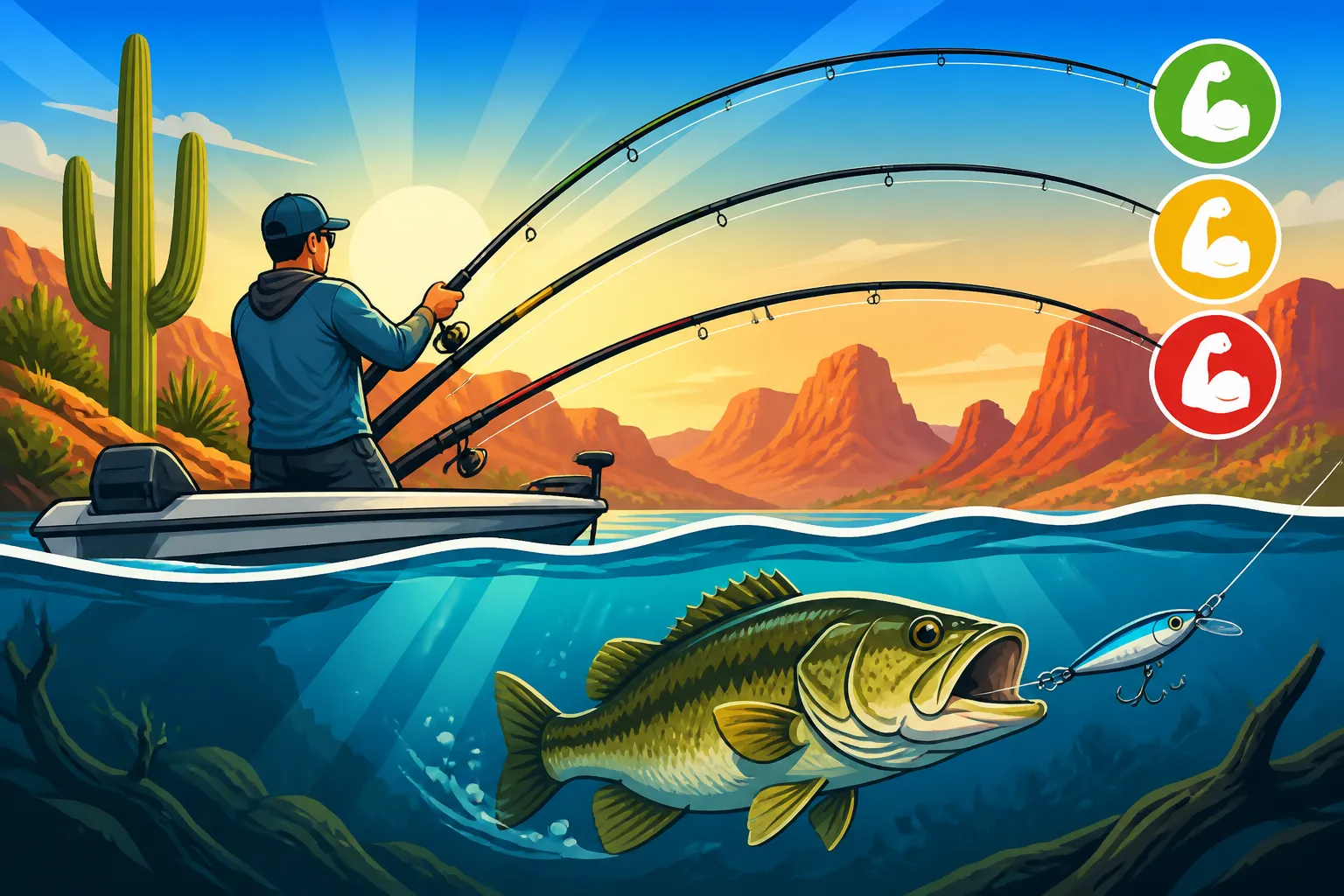
Best Rod Power for Trolling
If you've ever spent a long day on the water, trolling for elusive fish across one of Arizona's stunning reservoirs, you know the frustration of having the wrong gear. Maybe your rod felt too stiff, muffling every subtle hit, or perhaps it felt like it was going to snap under the strain of a heavy lure and a strong current. Choosing the perfect rod power for trolling isn't just about comfort; it's about maximizing your feel, ensuring proper lure presentation, and giving you the best chance to land that trophy. This guide will help you decipher rod power and select the ideal rod to conquer Arizona's diverse trolling opportunities.
Understanding Rod Power: Why It Matters for Trolling
When you’re out on the water, especially in a state like Arizona where fish can range from pan-sized trout to monster striped bass, having the right equipment is paramount. Rod power is one of those critical, yet often misunderstood, specifications that can make or break your trolling success. It's more than just a marketing term; it dictates how the rod performs under load.
What is Rod Power, Really?
At its core, "rod power" refers to the amount of pressure required to bend the rod blank. Think of it as the rod's lifting strength or its resistance to bending. It's often categorized in terms like ultra-light, light, medium-light, medium, medium-heavy, heavy, and extra-heavy. A common frustration among new anglers is confusing power with the stiffness you feel just by wiggling the rod in your hand. While related, power is specifically about how the rod handles a weighted load – be it a lure, a fish, or simply the drag of your line through the water.
For example, an ultra-light rod will bend significantly with very little weight, making it ideal for tiny lures and small fish. A heavy power rod, on the other hand, requires substantial pressure to bend, designed to handle large, heavy baits and powerful, hard-fighting fish. This rating is typically correlated with the recommended line weight and lure weight listed on the rod blank itself. For trolling, where your lure is constantly pulling against the rod, understanding this power rating is crucial because it affects everything from your lure's action to your ability to fight a fish.
The Trolling Challenge: Constant Pressure and Unexpected Strikes
Trolling presents a unique set of challenges that demand a specific consideration of rod power. Unlike casting and retrieving, where the lure is only under load during the retrieve, trolling means your rod is constantly under tension from the drag of your lure or bait through the water. If you're using a large plug or a heavy spoon, that constant drag can put significant strain on a rod that's too light. Not only will it keep your rod perpetually bent, making it hard to detect subtle strikes, but it can also wear out you and your equipment faster.
Then there's the strike itself. When a fish hits a trolled lure, especially at speed, the impact can be jarring. A rod with insufficient power might struggle to absorb this shock, leading to snapped lines or pulled hooks. Conversely, a rod that's too heavy might not allow the fish to take the lure deep enough for a solid hookset, or it could rip the hook right out of a smaller fish's mouth. Finding that sweet spot where the rod handles the constant load of the lure and has enough backbone to absorb a powerful strike, all while offering good sensitivity, is the angler's quest. It’s a delicate balance, and using the wrong power can turn an exciting day on the water into a series of missed opportunities and equipment struggles.
Matching Rod Power to Your Trolling Target in Arizona
Arizona's diverse fisheries mean you could be trolling for anything from panfish in a community pond to monster striped bass on Lake Powell. Understanding which rod power is best suited for your target species and the size of your lures is key to success.
Light to Medium-Light Power for Panfish and Smaller Trout
When your goal is to catch smaller fish like sunfish, bluegill, or stocked rainbow trout in Arizona's cooler lakes or urban ponds, a light to medium-light power rod is often your best bet for trolling. These rods are sensitive enough to detect the lighter bites of smaller fish, yet still have enough backbone to handle the modest drag of tiny spoons, spinners, or small crankbaits.
Imagine you're trolling a small Rooster Tail or a tiny Rapala along the weed lines of Woods Canyon Lake or even one of Phoenix's community fishing program lakes. A light power rod, typically rated for 2-6 lb test line and 1/16 to 1/4 oz lures, will allow these small baits to work effectively without overpowering the rod. It'll bend gracefully, transmitting every little wobble of your lure and every soft nibble from a curious trout. This type of rod also makes fighting smaller fish incredibly fun, as every head shake feels amplified. Just remember, these rods aren't built for heavy lures or battling big lunkers, so stick to appropriate tackle and targets. For targeting these species, you might also find useful information in our guide on Best Trout Fishing Techniques for Arizona Waters.
Medium to Medium-Heavy Power for Bass and Average Stripers
This is often the sweet spot for many Arizona anglers targeting the most popular sport fish. A medium to medium-heavy power rod is incredibly versatile and excels when trolling for largemouth bass, smallmouth bass, and even average-sized striped bass found in many of Arizona's premier lakes. These rods offer a fantastic balance of sensitivity and backbone, typically rated for 8-17 lb test line and 1/4 to 3/4 oz lures.
Consider trolling for largemouth bass with crankbaits or swimbaits on Roosevelt Lake or Lake Pleasant. A medium-heavy rod provides the power needed to pull these larger lures through the water with minimal effort from the angler. When a bass decides to strike, the rod has enough strength to absorb the initial shock, drive the hooks home, and then provide the leverage needed to steer the fish away from cover. For smallmouth bass in the rocky canyons of Lake Powell, a medium power rod can effectively troll smaller crankbaits or tubes, allowing you to feel every subtle change in bottom structure or a light bite from a wary smallmouth. This power range is truly the workhorse for diverse trolling applications, allowing for good control over your lure and the muscle to handle a spirited fight. Learning more about Best Bass Fishing Techniques for Arizona Lakes can further enhance your success.
Heavy to Extra-Heavy Power for Trophy Stripers and Catfish
When you're chasing the giants of Arizona's waters, like trophy-sized striped bass or massive flathead catfish, you need a rod that means business. Heavy to extra-heavy power rods are designed for substantial loads, hefty lures, and powerful fish. These rods are typically rated for 15-40 lb test line (or more) and lure weights often exceeding 1 ounce, sometimes much more depending on the specific application.
Imagine the thrill of trolling for giant striped bass in the deep waters of Lake Powell or the Colorado River. You're likely pulling large umbrella rigs, substantial swimbaits, or heavy bucktail jigs. A heavy power rod provides the brute strength required to maintain proper lure depth and action against the considerable drag of these setups. When a powerful striper slams your lure, the rod won't flinch; instead, it will set the hook firmly and give you the leverage to battle a fish that could easily weigh twenty, thirty pounds, or more. Similarly, for those who troll for channel or flathead catfish with large cut baits or live baits, an extra-heavy rod is essential. These rods have the backbone to control powerful runs and turn the heads of truly enormous fish. These aren't subtle rods, but they are absolutely necessary when targeting the biggest and strongest fish Arizona has to offer. Dive deeper into techniques for these monsters with our guide on How to Fish for Striped Bass or Catfish Fishing Guide for Arizona.
Here's a quick reference table for choosing rod power for trolling in Arizona:
| Rod Power Category | Target Species (Arizona) | Typical Lure/Bait Weights | Trolling Application | Key Benefit |
|---|---|---|---|---|
| Ultra-Light | Very small panfish, micro trout | < 1/8 oz | Small streams, tiny ponds, light tackle enthusiasts | Maximum sensitivity, thrilling fight for small fish |
| Light | Panfish, stocked trout, small bass | 1/16 – 1/4 oz | Urban ponds, mountain lakes, smaller lures | Good sensitivity, enjoyable fight for average fish |
| Medium-Light | Larger trout, smaller bass | 1/8 – 3/8 oz | Versatile for many common species and small to medium lures | Balanced feel, versatile performance |
| Medium | Largemouth/Smallmouth Bass, Crappie, average Stripers | 1/4 – 5/8 oz | Most desert lakes, general bass/crappie trolling | All-around versatility, good hookset power |
| Medium-Heavy | Larger Bass, Stripers, Channel Catfish | 3/8 – 1 oz | Deeper trolling, larger lures, powerful fish | Strong backbone, effective for larger game |
| Heavy | Trophy Stripers, Flathead Catfish, Muskie (rare) | 3/4 oz – 2 oz+ | Lake Powell, Colorado River, large and heavy baits | Extreme power, handles heavy drag and big fish |
| Extra-Heavy | Monster Catfish, deep-diving large lures | 2 oz+ | Specialized big game trolling | Unmatched lifting power, for serious trophy hunters |
Rod Action vs. Rod Power: A Crucial Distinction for Trolling
It's easy to confuse rod power with rod action, but they are two distinct characteristics that work together to define a rod's performance. Understanding their differences is key to optimizing your trolling setup. While power is about the overall strength of the rod, action describes where the rod bends.
The Role of Rod Action in Trolling Performance
Rod action refers to how much of the rod bends and how quickly it returns to its straightened position. Common actions are slow, moderate (or parabolic), moderate-fast, fast, and extra-fast.
- Extra-Fast Action: These rods bend primarily in the tip section. They are incredibly sensitive and transmit even the lightest bites. For trolling, an extra-fast tip can be great for detecting subtle strikes, but it might not provide the shock absorption needed for constant lure drag or a hard-hitting fish at speed. Hooksets are often quick and powerful with these rods.
- Fast Action: Similar to extra-fast, but the bend extends a bit further into the blank. Still very sensitive, offering a good balance of feel and some give. It's a popular choice for many bass techniques, and can work for trolling if paired with the right power.
- Moderate-Fast Action: The rod bends through the upper third to half of the blank. This action provides a good blend of sensitivity and flex. It's often a preferred action for trolling because it allows the lure to work naturally, offers decent shock absorption during a strike, and still provides enough leverage for a solid hookset.
- Moderate (or Parabolic) Action: These rods bend deeply into the blank, often through the lower half or even two-thirds. They excel at absorbing shock and preventing hooks from tearing out, which can be a huge benefit when a fish hits a trolled lure at speed. The deeper bend also loads up nicely, making it easier to fight a powerful fish by letting the rod do the work. The downside is less sensitivity and slower hooksets.
- Slow Action: Bends almost from the handle. While excellent for casting light lures or for certain live bait applications, slow action rods are generally not ideal for most trolling scenarios due to their lack of immediate power for hooksets and sometimes insufficient backbone for continuous drag.
For example, a fast action rod might be great for jigging, but for trolling heavy crankbaits across Lake Havasu, a moderate or moderate-fast action will often be more forgiving and effective.
Finding the Right Balance: Power and Action Synergy
The magic truly happens when you pair the right rod power with the appropriate rod action for your trolling technique and target species. For most trolling applications in Arizona, a rod with a medium to medium-heavy power combined with a moderate to moderate-fast action is often the sweet spot.
Here’s why:
- Moderate Action + Medium-Heavy Power: This combination is fantastic for big, hard-fighting fish like striped bass or large flathead catfish. The moderate action provides superb shock absorption, allowing the fish to really engulf the lure without ripping it away, and then acts as a powerful spring during the fight. The medium-heavy power gives you the necessary backbone to control and land these strong species. This setup is forgiving and less prone to pulled hooks, especially with larger, trebled lures often used for stripers. For more on specific gear, check out Best Rods for Striped Bass.
- Moderate-Fast Action + Medium Power: This is a highly versatile setup for trolling crankbaits or swimbaits for bass, walleye (where present), and even smaller striped bass. The moderate-fast action offers a good blend of sensitivity to detect bumps and light bites, while still providing enough flex to absorb the initial strike. The medium power is ideal for setting hooks effectively and battling average-sized fish without them overwhelming your tackle. This combination ensures good lure presentation and a responsive feel without being overly stiff.
Ultimately, your choice will depend on the specific type of trolling you do most often. If you prioritize maximum sensitivity and quick hooksets for lighter-biting fish, lean towards a faster action within your chosen power. If you need maximum shock absorption and leverage for big, aggressive fish or heavy lures, a more moderate action will serve you better. Don't be afraid to try different combinations to see what feels best for your personal fishing style, whether you're browsing the options at Bass Pro Shops or comparing specs on Amazon.
Practical Considerations and Gear Recommendations
Choosing the right rod power and action for trolling is a significant step, but there are other practical factors that will improve your overall experience on Arizona's waters. From physical characteristics of the rod to where you acquire it, these details can make a big difference.
Length, Material, and Handle Ergonomics for Trolling Rods
Beyond power and action, the physical attributes of a trolling rod play a vital role in its effectiveness and your comfort:
- Rod Length: Trolling rods tend to be longer than typical casting or spinning rods, often ranging from 7 to 10 feet. Longer rods help spread out multiple lines, preventing tangles. They also provide more leverage when fighting a fish, which is particularly beneficial when a fish hits a trolled lure and needs to be brought in from a distance or through current. If you're running multiple rods from a boat, varying the lengths can help create a wider lure spread. For specific boat considerations, you might want to review Best Boats for Arizona Lakes.
- Rod Material: Most trolling rods are made from either fiberglass, graphite, or a composite blend.
- Fiberglass rods are incredibly durable and flexible, offering excellent shock absorption. They tend to have a slower action, which is often desirable for trolling as it helps prevent hooks from tearing out. However, they are heavier and less sensitive than graphite.
- Graphite rods are lighter and much more sensitive, transmitting subtle bumps and bites more effectively. They typically have faster actions. While excellent for detecting light strikes, pure graphite can be less forgiving under sudden, heavy loads, which can be an issue with hard-hitting trolled fish.
- Composite rods offer a blend of both, aiming to provide the durability and shock absorption of fiberglass with some of the lightness and sensitivity of graphite. Many dedicated trolling rods will be composite.
- Handle Ergonomics: Trolling often involves long hours holding a rod, or at least having it in a rod holder where you need to quickly grab it for a strike. A comfortable, durable handle is essential. EVA foam and cork are common materials. Look for handles that provide a good grip, even when wet, and have enough length to comfortably tuck under your arm or provide leverage during a fight. A sturdy reel seat is also non-negotiable for trolling, ensuring your reel stays locked in during prolonged battles.
Where to Find Your Ideal Trolling Rod
Once you've got a good idea of the rod power and action you need, it's time to start looking! You have a couple of great options for finding your next trolling rod:
- Dedicated Fishing Retailers: Stores like Bass Pro Shops are fantastic because they often have a wide selection of rods specifically designed for various trolling applications. You can go in, physically hold different rods, feel their balance, and get a sense of their action and power. The staff at these stores are usually very knowledgeable and can offer personalized advice based on your target species and preferred Arizona fishing spots. This hands-on experience is invaluable, especially when you're making a significant investment in your gear.
- Online Marketplaces: Websites like Amazon offer an enormous selection and often competitive pricing. You can read countless customer reviews, compare specifications side-by-side, and find brands that might not be available in local stores. The key here is to do your homework. Pay close attention to the detailed product descriptions regarding power, action, length, and material. Look for brands known for quality in trolling rods and cross-reference reviews to ensure you're getting a reliable product. While you can't feel the rod, the sheer variety and convenience can be a major plus.
No matter where you choose to shop, remember that investing in a quality trolling rod suited to your specific needs will significantly enhance your fishing experience. Pairing it with a suitable reel, perhaps a Best Rod and Reel Combo for Bass if you're targeting those species, will complete your effective trolling setup.
Disclaimer
This article is for general informational purposes only and does not constitute professional advice. Laws, prices and regulations vary by location and change over time. Consult a qualified professional for guidance on your specific situation.