Best Trolling Motors for Small Boats
Navigating Arizona's vast and often windy lakes in a small fishing boat can be a real challenge if you're relying solely on your main outboard or, heaven forbid, just a paddle. Precision boat control, especially when you're trying to stay on a brush pile or follow a contour line, feels impossible, leading to frustration and fewer fish in the livewell. This comprehensive guide is here to untangle the complexities of choosing the best trolling motor for your small boat, ensuring you gain the control and confidence needed to make your Arizona fishing trips more productive and enjoyable.
Understanding Trolling Motors for Small Boats
When you're out on the water, battling the elements and trying to coax a stubborn bass from its cover, the last thing you want is a boat that won't cooperate. Trolling motors are designed to give you that critical edge, offering silent, precise propulsion that traditional outboards simply can't match at low speeds. For small boat owners, this piece of equipment isn't just a luxury; it's often a necessity that transforms a chaotic fishing experience into a finely tuned operation.
Why a Trolling Motor is Essential for Arizona Anglers
Imagine a typical day on Lake Pleasant or Roosevelt Lake. The sun is blazing, a gentle breeze is starting to pick up, and you've finally found a promising submerged point. With your main outboard, you'd be constantly feathering the throttle, trying to maintain a slow speed, creating noise that could spook fish, and struggling against the wind to stay on course. It's exhausting, inefficient, and often leads to drifting past your target before you can even make a cast. A trolling motor changes all of that. It allows you to silently creep along, adjust your position with micro-movements, and effectively work structure without disturbing the fish below. This stealth factor is particularly crucial in Arizona's often clear waters, where fish can be more sensitive to boat noise and shadows.
Beyond stealth, a trolling motor provides unparalleled maneuverability. Think about trying to fish a tight coves on Apache Lake or slowly work your way down a steep canyon wall at Lake Powell. Your big engine is great for getting there, but once you arrive, it's cumbersome. A trolling motor gives you immediate, directional thrust, letting you spin on a dime, back into tight spots, or hold against a current without a struggle. This level of control opens up entirely new fishing opportunities and makes every cast more intentional, less frantic.
Key Considerations for Small Boat Owners
When you're dealing with a smaller vessel – maybe a john boat, a small aluminum fishing boat, or even a larger kayak that warrants one – you have a unique set of factors to weigh. The weight of the motor itself, the battery bank required to power it, and the overall footprint on your limited deck space are all critical. You don't want a motor that's so heavy it throws off your boat's balance or consumes so much space that it interferes with your casting or gear storage. It’s a delicate balance between getting enough power and not overwhelming your craft.
Furthermore, the type of water you typically fish plays a huge role. Are you primarily on small, calm community lakes, or do you brave the expansive, wind-swept surfaces of Canyon Lake or Lake Havasu? The conditions dictate the necessary thrust, shaft length, and battery endurance you'll need. A short shaft might work for a flat-bottomed john boat in shallow water, but it will cavitate wildly on a choppier lake. Likewise, a minimal battery setup won't cut it for a full day of fighting heavy winds. It's all about matching the tool to the job and your specific boat.
Bow Mount vs. Transom Mount: Which is Right for You?
This is one of the foundational decisions you'll make when picking a trolling motor, and each type has its distinct advantages and disadvantages, particularly for smaller boats. Understanding the difference will profoundly impact your fishing experience.
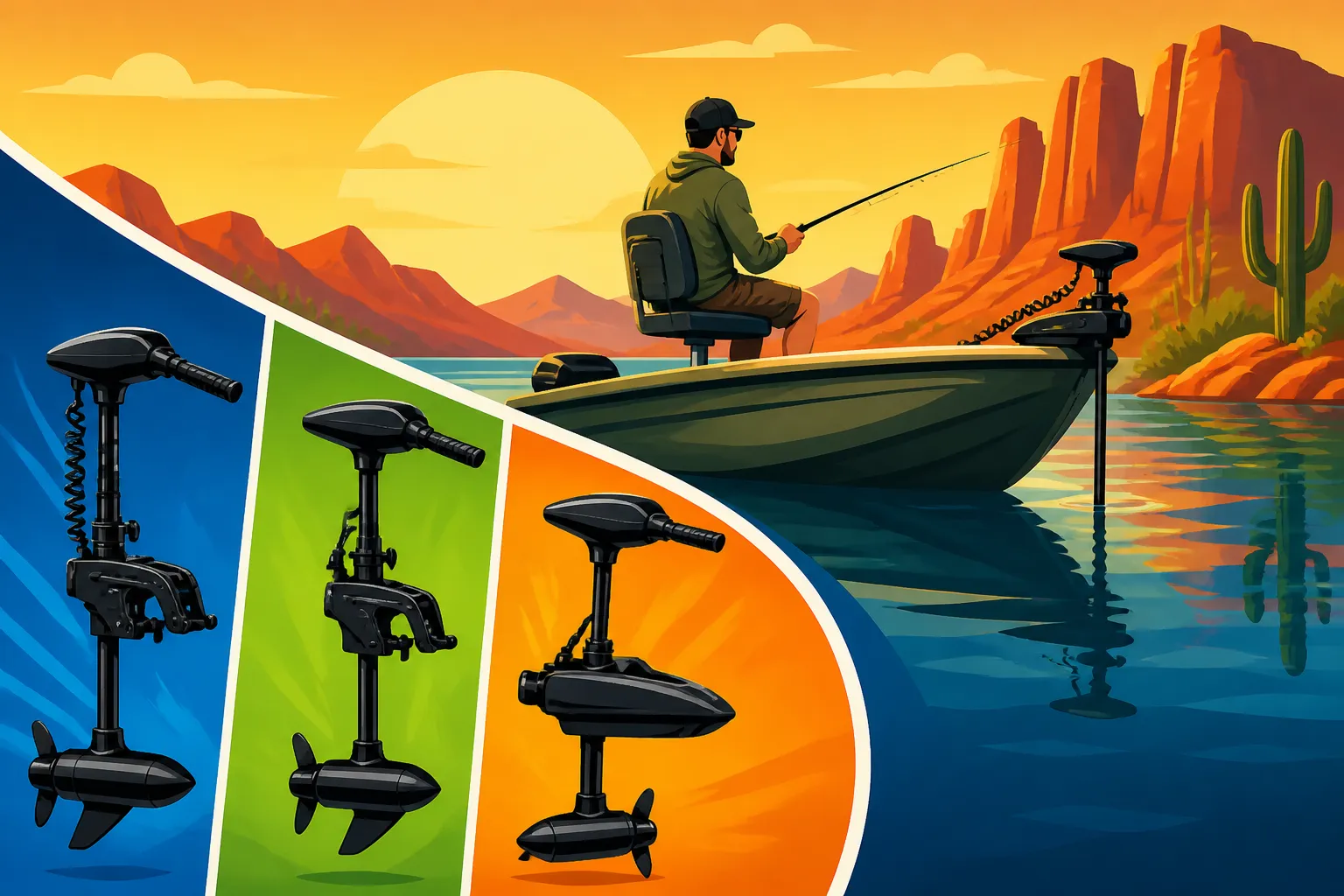
Bow Mount Trolling Motors: These motors attach to the front (bow) of your boat. The propeller pulls the boat through the water, offering superior control and maneuverability. When you pull a boat rather than push it, it tracks much straighter and is far easier to steer, especially in windy conditions or when trying to navigate complex structure like submerged trees. Most bow mount motors come with foot pedals or wireless remote controls, allowing you to operate them hands-free while you're actively fishing. This is a huge benefit for serious anglers who need both hands on the rod. However, bow mounts generally require more space on the deck for mounting and can be a bit more involved to install. They also tend to be more expensive than their transom-mounted counterparts and require a dedicated mounting plate. For many small fiberglass or aluminum V-hull boats, a bow mount is the preferred choice for maximum control.
Transom Mount Trolling Motors: These motors attach to the back (transom) of your boat, just like a small outboard. They push the boat through the water. Transom mount motors are typically less expensive, easier to install (often just clamping onto the transom), and take up less valuable deck space, making them a popular choice for very small boats, canoes, inflatable boats, or kayaks where a bow mount isn't feasible or practical. They are usually controlled by a tiller handle, which means you'll be operating it with your hand, often while sitting in the back of the boat. While they are simple and effective for basic propulsion and steering, they don't offer the same precise control as a bow mount, particularly in wind, because pushing a boat makes it less responsive to steering inputs. If you’re just looking to slowly move across a pond or navigate a calm river, a transom mount can be perfectly adequate. For a more serious angler on bigger waters, the control offered by a bow mount is usually worth the extra investment and installation effort.
Types of Trolling Motors and Their Power
Beyond how they attach, trolling motors come in various configurations, primarily defined by their power source and the amount of thrust they can generate. Understanding these differences is key to ensuring you have enough juice to get you through a full day on the water and to confidently fight wind and current.
Electric Trolling Motors: The Quiet Workhorses
The vast majority of trolling motors you'll encounter are electric, powered by marine deep-cycle batteries. These are the unsung heroes of quiet propulsion, allowing you to sneak up on wary fish without the tell-tale rumble of a gasoline engine. They emit no exhaust fumes, operate with minimal noise, and are incredibly efficient at low speeds. For Arizona's many no-wake zones and urban community fishing lakes, electric trolling motors are often the only permissible form of powered propulsion, making them indispensable.
The innovation in electric trolling motor technology has been incredible over the years. We've moved from simple on/off switches to variable speed controls that allow for seamless adjustments, optimizing battery life and providing incredibly smooth operation. Many modern electric motors are also highly integrated with other fishing electronics, offering GPS-guided features and sophisticated automation that we’ll delve into shortly. While their range is limited by battery capacity and charge, for most day trips, a properly sized battery bank will easily last from dawn till dusk.
Thrust Ratings: How Much Power Do You Really Need?
Trolling motor power is measured in pounds of thrust, not horsepower. This is a common point of confusion for new boat owners. A higher thrust rating means more power to move your boat, to hold it against wind, and to cut through chop. The general rule of thumb is to have at least 2 pounds of thrust for every 100 pounds of fully loaded boat weight. So, if your small boat (plus gear, passengers, and batteries) weighs in at 1,500 pounds, you'd want a minimum of 30 pounds of thrust. However, for fishing on Arizona's larger, windier lakes like Lake Havasu or Alamo Lake, you'll want to err on the side of more thrust, potentially closer to 3-4 pounds per 100 pounds, to ensure you can maintain control in adverse conditions.
Consider the length of your boat as well. For boats 14-16 feet, 40-55 pounds of thrust is a good starting point. For longer boats up to 18 feet, or those that are heavier, you might be looking at 70-80 pounds of thrust. Don't skimp here; an underpowered trolling motor will lead to endless frustration when you can't hold your position or move effectively. It's far better to have a bit more power than you think you'll need rather than constantly wishing you had more. Checking out guides like Best Trolling Motors for Small Boats can help you visualize these power needs.
Battery Systems: Keeping Your Motor Running
The heart of any electric trolling motor system is its battery bank. These aren't your car's starting batteries; trolling motors require deep-cycle marine batteries, which are designed to deliver a steady amount of power over a long period and be discharged deeply and recharged many times without damage. A typical 12-volt trolling motor will run on one deep-cycle battery. However, as thrust ratings increase, so does the voltage requirement:
- 12-volt motors: Usually 30-55 pounds of thrust, run on one 12V deep-cycle battery.
- 24-volt motors: Usually 70-80 pounds of thrust, require two 12V deep-cycle batteries wired in series.
- 36-volt motors: Often 100+ pounds of thrust, require three 12V deep-cycle batteries wired in series.
For a small boat, managing the weight and space of multiple batteries can be a challenge. Two 12V batteries for a 24V system can add significant bulk and pounds to your boat, impacting performance and storage. Lithium-ion batteries are becoming increasingly popular for trolling motors because they are significantly lighter, offer a more consistent power output throughout their discharge cycle, and have a longer lifespan, but they come with a considerably higher upfront cost. Whichever type you choose, investing in a good quality marine battery charger is paramount to maintaining battery health and ensuring you're ready for every fishing trip. Remember, proper battery care is just as important as the motor itself; otherwise, you'll be dead in the water, literally.
Features to Look for in a Small Boat Trolling Motor
Modern trolling motors are far more than just a motor on a stick. They come packed with advanced features that can drastically improve your fishing efficiency and enjoyment. For anglers fishing Arizona's varied waters, these technologies can be game-changers.
Integrated GPS and Spot-Lock Technology
If there's one feature that has revolutionized boat control, it's integrated GPS with spot-lock (or anchor mode) technology. Brands like Minn Kota's i-Pilot and MotorGuide's Pinpoint GPS have led the charge in this area. Imagine you're fishing a submerged hump at Lake Powell, and you hit a hot bite. Instead of constantly adjusting the motor manually or dropping a physical anchor, you simply press a button, and the motor uses its internal GPS to automatically hold your boat in that exact spot, even in wind or current. It's like having a virtual anchor.
This technology is incredibly useful when you're working a specific piece of structure, waiting for a bite, or even taking a quick break. It frees up your hands to focus entirely on fishing, rigging baits, or retying knots. Beyond spot-lock, these GPS systems often include features like route recording, where you can follow a pre-recorded path, and cruise control, which maintains a consistent speed and direction. For small boat owners who might be fishing solo or without a dedicated co-angler, these automated features are invaluable, allowing one person to effectively control the boat and fish simultaneously. It truly elevates the fishing experience, especially on sprawling lakes where precise positioning can make all the difference.
Remote Control and Foot Pedal Options
How you control your trolling motor directly impacts your comfort and efficiency on the water. For small boats, the choice often comes down to a foot pedal or a wireless remote.
Foot Pedals: Most bow-mount trolling motors come with a wired foot pedal. These allow for hands-free operation, which is critical when you're casting, setting hooks, or battling a fish. The learning curve for a foot pedal can be a bit steep initially, as it requires some coordination to steer and control speed with your feet. However, once mastered, it becomes second nature, giving you incredibly responsive and precise control. For serious bass anglers who spend hours on the deck, a foot pedal is often the preferred choice. Make sure the pedal's cable is long enough for comfortable placement in your boat, and that it's durable enough to withstand constant use and exposure to the elements.
Wireless Remotes: Many modern trolling motors, especially those with integrated GPS, offer wireless remote controls, either as the primary control method or as a supplementary option. These small, often waterproof remotes can be worn on a lanyard, clipped to your belt, or simply kept in a pocket. They offer ultimate freedom of movement around your small boat, allowing you to operate the motor from anywhere – the bow, the stern, or even when you step onto the bank for a moment. They are fantastic for transom-mount motors where a foot pedal isn't practical. The main drawback is the reliance on batteries for the remote itself, and the potential for losing it overboard. However, the convenience and flexibility they offer are undeniable, particularly for multi-species anglers or those who enjoy varied fishing styles.
Durability and Freshwater vs. Saltwater Use
Arizona is a landlocked state, so you might think saltwater corrosion isn't a concern. And for the vast majority of fishing you'll do in places like Lake Roosevelt or the Colorado River, you'd be right. Most standard trolling motors are designed for freshwater use and are built to withstand the rigors of lakes and rivers. They typically feature composite shafts, stainless steel components, and durable housings. However, it's worth noting that "freshwater" doesn't mean "bulletproof." These motors are exposed to sun, heat, impacts, and occasional dunkings. Look for robust construction, reliable brands, and strong warranties, which can speak volumes about a motor's expected lifespan.
While saltwater trolling motors aren't strictly necessary for Arizona, some anglers might venture to coastal regions for trips. If you foresee using your small boat in brackish or saltwater environments, even occasionally, it is absolutely critical to invest in a saltwater-specific model. These motors feature enhanced corrosion protection, including special coatings, stainless steel hardware, and sealed electronics designed to resist the damaging effects of salt. Using a freshwater motor in saltwater, even once, can drastically shorten its life and void its warranty due to rust and component failure. Always consider your potential future fishing destinations when making this investment.
Top Trolling Motor Brands and Models for Small Boats
When it comes to trolling motors, a few names consistently rise to the top, having earned reputations for innovation, reliability, and performance. While there are many options on the market, understanding the leaders can help you narrow down your choices and feel confident in your purchase.
Minn Kota: A Tried and True Favorite
Minn Kota is arguably the most well-known and respected brand in the trolling motor industry. For decades, they have been synonymous with quality, durability, and groundbreaking technology. Their motors are a common sight on bass boats and small fishing craft across Arizona, and for good reason. They offer a huge range of products suitable for everything from tiny jon boats to large offshore vessels, including excellent options for small boat owners.
For small boats, popular Minn Kota lines like the Endura Max (transom mount) are fantastic choices for their ruggedness, variable speed control, and affordability. For bow-mount applications, the Minn Kota Edge offers solid performance without breaking the bank, providing reliable thrust and a tough composite shaft. When you step up to integrated GPS, the Terrova and Ultrex series are revered for their i-Pilot and i-Pilot Link systems, offering features like Spot-Lock, AutoPilot, and seamless integration with Humminbird fish finders. While these advanced models might be a significant investment, especially for a smaller boat, the control and convenience they offer are unparalleled. You'll often find a wide selection of Minn Kota motors at major retailers like Bass Pro Shops, or with convenient home delivery from Amazon, making it easy to compare models and features.
MotorGuide: Innovation on the Water
MotorGuide is another powerhouse in the trolling motor world, often seen as Minn Kota's primary competitor. They've built a strong reputation for performance, innovative design, and robust construction. MotorGuide motors are known for their strong thrust and often favored by anglers who prefer their specific control systems or the feel of their foot pedals.
For small boat owners, MotorGuide offers excellent transom-mount options in their R3 and R5 series, providing reliable power and durability for those who prefer stern mounting. For bow-mount solutions, the X3 and Xi3 models are excellent choices. The Xi3, in particular, is a strong contender for small to medium boats, offering wireless control and their impressive Pinpoint GPS system, which provides spot-lock, route recording, and heading lock capabilities. The Xi3 often comes at a slightly more accessible price point than some comparable Minn Kota models, making it a very attractive option for those looking for advanced features without the top-tier cost. MotorGuide also has a strong presence at Bass Pro Shops and on platforms like Amazon, offering great availability for anglers looking to explore their offerings.
Entry-Level and Budget-Friendly Options
Not every angler needs or wants to invest in the top-of-the-line models, especially when outfitting a starter boat or fishing only occasionally. Fortunately, there are many excellent entry-level and budget-friendly trolling motors that still deliver reliable performance for small boats. Brands like Newport Vessels, Haswing, and even some lesser-known brands available on Amazon, offer solid alternatives.
These motors typically focus on core functionality: variable speed control, durable shafts, and reliable electric motors. They might lack the integrated GPS or wireless remote features of the premium brands, but they more than get the job done for basic trolling and boat positioning. For instance, a simple 12-volt transom-mount motor with 30-40 pounds of thrust might be perfect for a 12-foot john boat on a calm community lake. These are often easier to install, lighter, and require only a single deep-cycle battery, minimizing the overall investment and complexity. When considering these options, pay close attention to user reviews and warranty information to ensure you're getting a dependable product. They may not have all the bells and whistles, but they’ll certainly help you silently pursue fish on your favorite Arizona waters without breaking the bank.
Installation, Maintenance, and Troubleshooting Tips
Getting your new trolling motor set up correctly and keeping it running smoothly is almost as important as choosing the right one in the first place. A little care and attention can prevent headaches on the water and extend the life of your investment significantly.
Simple Installation for Beginners
Installing a transom-mount trolling motor is usually a straightforward affair. Most models simply clamp onto the transom of your boat. The key is to ensure the clamps are tight and secure, preventing any wiggling or potential loss of the motor while operating. Adjusting the shaft length is also crucial so that the propeller is submerged sufficiently below the waterline, typically 12-18 inches, to prevent cavitation (the propeller spinning in air, losing efficiency) but not so deep that it constantly hits the bottom. Routing the power cables cleanly and securely to your battery is the next step, ensuring all connections are tight and protected from the elements.
Bow-mount installations are a bit more involved, often requiring drilling holes into your boat's bow to secure the mounting plate. If you're not comfortable with this, a marine technician at a Bass Pro Shops service center or a local boat shop can often handle the installation for you. It's critical that the mounting plate is securely bolted through the deck with appropriate backing plates to distribute the load, especially on larger, heavier motors. Wiring for bow-mount motors often involves running heavier gauge wire from the bow back to the battery compartment, sometimes under the deck. Always use marine-grade wiring and connectors, and consider installing a circuit breaker or fuse inline near the battery for safety, especially if you're exploring Boating Safety Gear Requirements in Arizona.
Essential Maintenance for Longevity
Regular maintenance will keep your trolling motor performing at its best for years. After every use, especially if you've been in dusty or muddy water, rinse the lower unit and prop thoroughly with fresh water to remove any debris or grit. Inspect the propeller for nicks, dents, or fishing line wrapped around the shaft. Even a small piece of line can wear down seals and lead to water intrusion into the motor. Regularly check all electrical connections for corrosion – a common issue in any marine environment. Use dielectric grease on connections to prevent rust and ensure good conductivity.
It's also a good idea to periodically check the mounting hardware on both transom and bow mount motors to ensure everything remains tight and secure. For motors with moving parts, such as steering cables or pivot points, a light application of marine-grade lubricant can help keep things running smoothly. And don't forget your batteries! Keep them charged, especially during extended periods of non-use, to prevent sulfation and prolong their lifespan. A trickle charger is excellent for maintaining them when your boat is stored. Adhering to these simple steps will prevent most common issues and extend the life of your motor.
Common Issues and Quick Fixes
Even the most reliable trolling motors can encounter issues, but many can be quickly diagnosed and fixed on the water or at home.
Loss of Power or Intermittent Operation: The most common culprit here is a low or dead battery. Always check your battery charge first. If the battery is charged, inspect all electrical connections from the battery terminals to the motor itself. Loose or corroded connections can cause significant voltage drops. Sometimes, a tripped circuit breaker or a blown fuse is the issue; check and reset/replace as needed.
Motor Runs but No Propeller Spin: This usually indicates a sheared propeller pin. This small pin is designed to break if the prop hits an obstruction, protecting the motor's internal gears. Carrying spare shear pins and the tools to replace them (often a screwdriver or wrench) is crucial. Simply remove the prop nut, slide off the old prop, replace the broken pin, and reattach the prop and nut.
Excessive Noise or Vibration: This could be a bent propeller blade, which can happen from hitting rocks or submerged objects. Even a minor bend can cause imbalance and vibration. Carefully inspect the prop and replace it if it's damaged. Alternatively, fishing line wrapped around the prop shaft can cause drag and noise; remove it carefully to avoid cutting any seals.
Steering Problems (Bow Mount): For cable-steered foot pedals, check for kinks or fraying in the steering cable. Sometimes, debris can get lodged in the steering mechanism. For electric steer models, check the remote's battery or look for any obstructions in the motor's pivot points. While more complex internal issues might require professional service, many common problems are surprisingly simple to resolve with a bit of troubleshooting. This kind of problem-solving can keep your day on the water going, especially when you're far from the ramp.
Choosing the Right Trolling Motor for Your Arizona Fishing Adventures
Selecting the ideal trolling motor for your small boat is a significant decision that will impact your fishing success and enjoyment. It’s not just about raw power; it’s about finding the right balance of features, thrust, and budget that perfectly aligns with your specific needs on Arizona's diverse waterways.
Matching Motor to Boat Size and Fishing Style
Start by being honest about your boat. Is it a lightweight 12-foot aluminum jon boat for tranquil urban ponds, or a 16-foot V-hull built for tackling the bigger waters of Lake Pleasant? The smaller and lighter your boat, the less thrust you generally need, which can save you money and battery weight. A 30-55 pound thrust 12-volt motor might be perfect for a really small craft. If you have a heavier, longer small boat (like a 17-foot aluminum bass boat), or you frequently face strong winds, consider a 24-volt system with 70-80 pounds of thrust for ample power and control. Remember, it's always better to have a little more thrust than not enough. For insights on larger vessels, you might find information in Best Boats for Arizona Lakes helpful to contrast.
Next, think about your fishing style. Do you primarily cast to visible structure, needing precise spot-holding capabilities? Then a bow-mount with GPS spot-lock, like a Minn Kota Terrova or MotorGuide Xi3, is going to be a game-changer, even if it’s a stretch for a small boat. If you’re more into slow trolling for crappie or just need to get across a small lake, a simpler, more affordable transom-mount might suffice. If you're a serious bass angler, a hands-free foot pedal is likely paramount. Consider how much you value stealth, maneuverability, and the ability to multitask while fishing. Your personal fishing approach should heavily influence your feature list.
| Feature Category | Transom Mount (Basic) | Bow Mount (Standard) | Bow Mount (GPS Enabled) |
|---|---|---|---|
| Control | Tiller Handle | Foot Pedal | Foot Pedal / Wireless Remote |
| Maneuverability | Good for basic movement | Excellent, directional pulling | Superior, precise positioning |
| Installation | Easy (Clamp-on) | Moderate (Drilling may be required) | Moderate (Drilling may be required) |
| Cost | Lower | Moderate | Higher |
| Best For | Very small boats, canoes, calm waters, general propulsion | Small-to-medium boats, active casting, working structure | Small-to-medium boats, solo fishing, windy conditions, spot holding |
| Key Advantage | Simplicity, affordability | Hands-free operation, better boat control | Virtual anchoring, automated control |
What to Expect in Terms of Cost
The price tag for a trolling motor can vary wildly, from a couple of hundred dollars to well over two thousand, depending on the brand, thrust, and features.
- Entry-Level (Transom Mount): For a basic 12-volt transom-mount motor (e.g., a Minn Kota Endura C2 or similar generic brands), you can expect to pay between $150 and $400. These are excellent for smaller budgets and very light-duty applications.
- Mid-Range (Standard Bow Mount): A solid, non-GPS bow-mount motor (like a Minn Kota Edge or MotorGuide X3) with 45-55 pounds of thrust will typically run from $400 to $800. This is a great sweet spot for many small boat owners who want good control without all the bells and whistles.
- High-End (GPS-Enabled Bow Mount): If you're eyeing the advanced features like Spot-Lock on a Minn Kota Terrova or MotorGuide Xi3, be prepared for a significant investment. These motors usually range from $1,200 to $2,500+, depending on thrust and shaft length. While expensive, many serious anglers consider them worth every penny for the capabilities they provide.
Beyond the motor itself, remember to factor in the cost of batteries (one to three deep-cycle marine batteries can add $100-$300 each, more for lithium), a quality battery charger ($50-$200), and any necessary wiring, circuit breakers, or mounting hardware. It’s an investment, but a well-chosen and maintained trolling motor will pay dividends in fishing success and enjoyment. Consider your options carefully from trusted sources like Bass Pro Shops or various online retailers, ensuring you factor in shipping and potential installation costs.
Final Thoughts on Making Your Decision
Ultimately, the "best" trolling motor for your small boat isn't a one-size-fits-all answer. It's a personal decision based on a careful evaluation of your boat, your fishing habits, the waters you frequent, and your budget. Don't be swayed by features you don't need, but also don't underestimate the value of technology that truly enhances your time on the water. For Arizona anglers, who often contend with heat, wind, and expansive lakes, the ability to quietly, precisely, and effortlessly control your boat can be the difference between a frustrating day and a memorable one. Take your time, do your research, and choose a motor that will reliably power your next great fishing adventure. You'll thank yourself when you're holding steady on a prime fishing spot, watching your buddies drift by. For more detailed insights into specific techniques, you might want to look into articles like Trolling Techniques for Striped Bass or Best Setup for Trolling for Striped Bass. Remember also that maintaining your gear is key, as is understanding Fishing License Renewal Rules in Arizona and Boating Safety Gear Requirements in Arizona.
Disclaimer
This article is for general informational purposes only and does not constitute professional advice. Laws, prices and regulations vary by location and change over time. Consult a qualified professional for guidance on your specific situation.