Best Lures for a Bass Tackle Box
One of the biggest head-scratchers for any Arizona bass angler, new or seasoned, is standing in front of a wall of lures, wondering which ones truly deserve a spot in their tackle box. With so many options out there, it’s easy to feel overwhelmed and end up with a collection that doesn't quite match the unique challenges and opportunities our desert lakes and rivers present. This guide is all about cutting through that noise, helping you build a versatile and effective bass tackle box specifically tailored for the Arizona fishing scene.
The Arizona Bass Angler's Dilemma: Why Lure Selection Matters
Arizona isn't your typical bass fishing destination. We don't have endless miles of murky, weed-choked bayous like some states. Our lakes are often deep, clear, and surrounded by stark desert landscapes, with unique structures and rapidly changing conditions. Because of this, what works wonders elsewhere might just sit untouched in your tackle box here. Choosing the right lures isn't just about having a variety; it's about having the right variety that responds to our specific environments and the behaviors of Arizona's bass.
Understanding Arizona's Unique Bass Habitats
Arizona’s bass fishing truly is a creature of its environment, and that environment is unlike many others across the country. We’re primarily talking about vast, clear desert reservoirs like Lake Pleasant, Roosevelt Lake, and Lake Havasu, alongside some smaller urban fisheries and stretches of the mighty Colorado River. These bodies of water are characterized by deep, often crystal-clear water, steep canyon walls, submerged timber, rocky points, and sparse vegetation, especially compared to the dense cover found in more humid climates.
The clarity of the water means bass here can be more sight-oriented, making lure color, profile, and action critically important. They often feed on threadfin shad, crawfish, and various sunfish, so lures that mimic these forage species are usually a good bet. Knowing whether you're fishing a relatively shallow, brushy cove or a deep, rocky main lake point will dictate whether a shallow-running crankbait or a football jig is the smarter choice. Understanding these habitats is the first step in building a tackle box that truly performs.
The Impact of Seasons on Lure Choice
Just like anywhere else, bass behavior in Arizona is heavily influenced by the changing seasons, but our desert climate puts its own spin on things. We have scorching summers where bass go deep, and surprisingly active spring and fall periods where they move shallower to feed and spawn. Even our winters can offer fantastic fishing, especially in the warmer, southern lakes. Arizona Fishing Seasons Explained provides a great overview of these shifts.
During the pre-spawn in early spring, bass are often aggressive and looking for substantial meals, making spinnerbaits and crankbaits effective. As spawning begins, soft plastics like Texas-rigged worms or jigs fished around beds become king. In the brutal heat of summer, bass retreat to deeper, cooler waters, often congregating around submerged structure or thermoclines, where deep-diving crankbaits, jigs, and drop-shot rigs shine. Fall brings another feeding frenzy as fish fatten up for winter, and topwater action can be incredible during the cooler morning and evening hours. Matching your lure to the season's typical bass behavior is non-negotiable for consistent success.
Essential Hard Baits for Your Arizona Bass Tackle Box
Hard baits are the workhorses of many bass anglers, known for their distinct actions, durability, and ability to cover water efficiently. In Arizona's diverse waters, having a selection of these can make all the difference, whether you're trying to locate active fish or entice a reaction strike from a wary lunker.
Crankbaits: Diving Deep and Calling Them Up
Crankbaits are fantastic search baits, allowing you to cover vast amounts of water quickly and determine where bass are holding. They come in various dive depths, from shallow-runners that barely skim the surface to deep-diving models that can reach depths of 20 feet or more. For Arizona, you'll want a good mix. Shallow square-bill crankbaits are excellent for bumping off rocks and submerged timber in coves and along shorelines, especially in the spring and fall at lakes like Roosevelt or Apache. Crankbait Fishing Techniques for Bass can guide you on the best retrieves.
Medium-diving crankbaits are versatile for targeting points and ledges in that 8-15 foot range, while deep-diving crankbaits are indispensable for summer fishing when bass are hunkered down in cooler, deeper water. Think about bright, flashy colors like chartreuse and orange for murky or stained water, and more natural patterns like shad or crawfish for the clearer waters of Lake Pleasant or Canyon Lake. The key is to match the lure's dive depth to the depth the bass are holding and to keep that lure bouncing off structure.
Jerkbaits: Erratic Action for Finicky Fish
Jerkbaits are phenomenal for generating strikes from bass that might be a bit more hesitant or less aggressive, often after a cold front or in clear water conditions. Their erratic, darting action mimics a dying baitfish, a meal few bass can resist. The typical retrieve involves a series of jerks or twitches, followed by a pause. The length of that pause is often the critical factor, sometimes just a second or two, other times up to ten seconds or longer.
For Arizona, suspended jerkbaits that hang enticingly in the water column during those pauses are particularly effective. They're excellent in cooler water, during the spring pre-spawn or late fall, especially around rocky points and main lake humps. Natural shad patterns are usually winners in our clear lakes, but don't shy away from some translucent or chrome finishes, especially on sunny days. You'll find them particularly effective on clearer lakes like Canyon Lake or sections of the Colorado River.
Topwater Lures: The Thrill of the Strike
If there’s one type of lure that gets an angler’s heart pumping, it’s a topwater. The explosion of a bass on a surface lure is an unforgettable experience. While they're not a year-round staple, topwater lures are incredibly effective during specific times in Arizona. Early mornings and late evenings, or on overcast days, are prime times when bass are willing to come up for a meal.
Your topwater arsenal should include poppers, which create a splashing disturbance; walk-the-dog baits like a Zara Spook, known for their side-to-side gliding action; and frog imitations, which are deadly when fished over matted vegetation or lily pads, common in some of our shallower backwater areas. Even though we have less dense vegetation than some regions, a good hollow-body frog can be a game-changer in those specific spots. Natural colors for shad or sunfish are good starting points, but don't overlook bright, contrasting patterns, especially for drawing attention on choppy water. Topwater Fishing Techniques for Bass offers more insights into mastering these exciting baits.
Soft Plastics: Versatility for Every Situation
Soft plastics are, without a doubt, the most versatile category of bass lures. They can be rigged in countless ways, mimic almost any forage, and be fished in nearly every type of cover and depth. If you could only have one type of lure in your Arizona bass tackle box, it would probably be soft plastics due to their adaptability.
Worms and Senkos: The Old Reliables
Plastic worms, in various shapes and sizes, have probably caught more bass than any other lure. For Arizona, the ubiquitous Texas rig is a must-have for fishing through brush, rocks, and submerged timber without snagging. This is crucial in lakes like Roosevelt, which are known for their standing timber. Senkos, or stick baits, are another phenomenal choice. Their simple, subtle fall has an irresistible shimmy that bass absolutely crush, especially when wacky-rigged with an O-ring.
Consider colors like green pumpkin, watermelon red, and junebug for most Arizona waters, as they mimic crawfish or darker baitfish. Lighter, more translucent colors can work well in very clear conditions. Worms are effective year-round, but they really shine when bass are finicky or during the post-spawn and summer months when fish are seeking cover. You can fish them slow and methodical, letting the fish find them in dense cover or along deep ledges. Best Lures for Largemouth Bass in Arizona Lakes will often highlight these classic soft plastics.
Jigs and Creature Baits: Heavy Cover and Bottom Bouncing
Jigs, especially skirted bass jigs, are incredible for punching through heavy cover, flipping into tight spots, or dragging along the bottom. Pair them with a soft plastic creature bait or a chunk trailer to add bulk and action. Football jigs, with their wide heads, are perfect for dragging over rocky bottom and ledges, making them ideal for the deep, clear lakes like Pleasant or Powell, where bass relate to rock structure. Flipping jigs are designed to penetrate dense cover like submerged mesquite trees or cattail clumps.
Creature baits themselves, often rigged Texas-style or as a jig trailer, offer a unique profile that can imitate crawfish, small frogs, or even a fleeing baitfish. Their appendages create a lot of subtle movement, which can entice strikes from pressured bass. Darker colors like black and blue, brown, or green pumpkin are staples, as they often imitate crawfish, a primary food source for bass in many Arizona lakes. Jig Fishing Techniques for Bass goes into great detail about how to effectively present these baits.
Swimbaits: Mimicking Forage for Bigger Bites
Swimbaits have exploded in popularity for a good reason: they catch big fish. These lures are designed to accurately mimic baitfish like shad, which are abundant in many Arizona reservoirs. You can find hard-body jointed swimbaits that look incredibly realistic, or soft plastic paddle-tail swimbaits that can be rigged on a jig head or a weighted hook.
For Arizona, focusing on shad imitations in silver, white, or light blue patterns is a smart move. Larger soft swimbaits are excellent for targeting trophy bass, especially when fished around schools of baitfish or deep points. Retrieve them with a steady retrieve, or vary it with pauses and twitches to make them appear injured. While many anglers associate swimbaits with striped bass, they are equally effective for tempting a large largemouth or smallmouth. Remember to consider the size of the forage in the lake you're fishing; matching the hatch is key.
Spinnerbaits and Chatterbaits: Vibration and Flash for Active Bass
When you need to cover water, cut through wind, or tempt bass that are responding to flash and vibration, spinnerbaits and bladed jigs (often called Chatterbaits, though that's a brand name) are indispensable tools. These lures excel at attracting attention and triggering reaction strikes, even from fish that aren't actively feeding.
Spinnerbaits: Flash and Movement in Murky Water
Spinnerbaits are true classics in the bass fishing world, renowned for their ability to produce strikes in a wide range of conditions. The pulsating skirt and spinning blades create both flash and vibration, making them highly visible and detectable to bass even in stained water or low light. For Arizona, where water clarity can vary from crystal clear to muddy after a rain, a good selection is crucial.
You'll want spinnerbaits with different blade configurations:
- Colorado blades: Rounder, create maximum vibration and lift, excellent for slow retrieves and stained water.
- Willowleaf blades: Longer, thinner, create less vibration but more flash, good for faster retrieves and clear water.
- Tandem (Colorado/Willowleaf combo): A versatile choice that offers a balance of flash and vibration.
Colors typically range from white and chartreuse for shad imitations to darker patterns like black and blue for crawfish. Experiment with blade sizes and colors based on water clarity and light conditions. Spinnerbaits are fantastic for bumping off submerged timber, working along rocky banks, or fishing over sparse vegetation, especially during spring and fall on lakes like Bartlett or San Carlos. Consider what Best Bass Fishing Techniques for Arizona Lakes suggests for using these effectively.
Chatterbaits (Bladed Jigs): Unique Vibration and Weedless Design
Bladed jigs, often referred to by the popular brand name Chatterbait, combine the flash of a spinnerbait with the weedless characteristics and action of a jig. The unique blade attached to the jig head causes the lure to vibrate erratically, creating a distinct "chattering" action that bass find incredibly enticing. This vibration is different from a spinnerbait and often triggers strikes when other lures fail.
They're particularly effective for fishing around grass lines, through sparse brush, or along riprap. The single, up-front blade allows them to come through cover remarkably well, reducing snags. Adding a soft plastic trailer, such as a paddle-tail swimbait or a crawfish imitation, enhances the action and provides a larger profile. Chartreuse, white, green pumpkin, and black and blue are all excellent color choices for Arizona. These lures are a must-have for covering water and tempting active bass, especially in lakes with emergent vegetation or shallower rocky areas.
Building Your Tackle Box: A Strategic Approach
Putting together a tackle box isn't just about throwing in a bunch of random lures. It's about a strategic collection that equips you for the varying conditions, seasons, and bass behaviors you'll encounter on Arizona's waters. Think of it as your portable problem-solving kit. When you’re at Best Fishing Spots Near Phoenix, Arizona, you want to be prepared.
Starting with a Core Selection
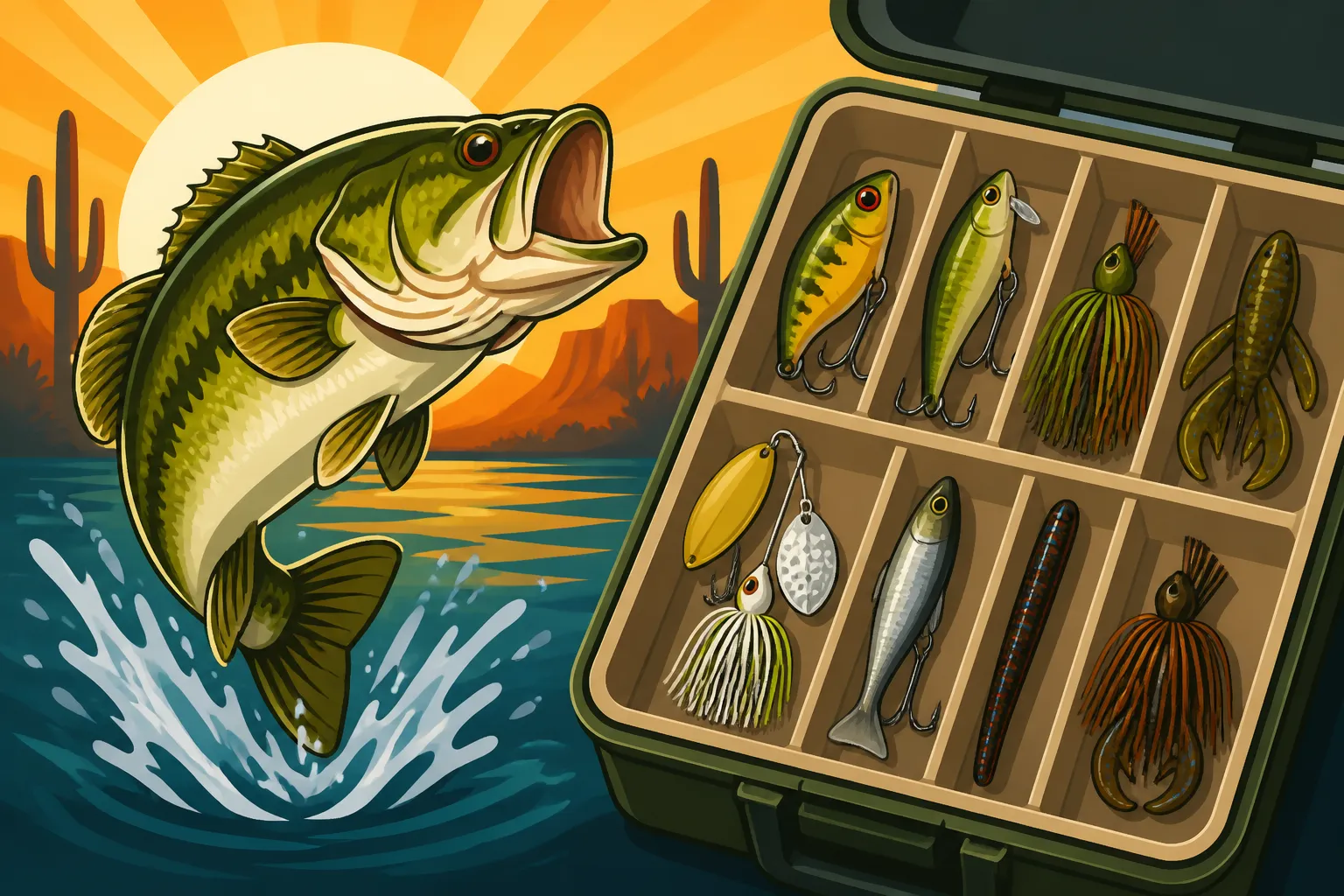
For anyone starting out or looking to refine their setup, a core selection of versatile lures is key. You don't need hundreds of baits, but you do need reliable options that cover different depths and retrieve styles. Here's a quick rundown of some must-haves for your initial Arizona bass tackle box:
- Soft Plastic Worms (e.g., Senkos, ribbon-tail worms): Green pumpkin, watermelon red.
- Jigs (football and flipping): Black/blue, green pumpkin, brown.
- Crankbaits (shallow, medium, deep divers): Shad patterns, crawfish patterns, some chartreuse/firetiger.
- Spinnerbaits: White/chartreuse combo, white.
- Topwater (popper, walk-the-dog): Shad patterns, frog patterns.
- Creature Baits: Green pumpkin, black/blue.
Don't forget the terminal tackle! Hooks (EWG, straight shank), weights (tungsten preferred for sensitivity), swivels, and line are just as important as the lures themselves. Remember, Essential Tackle Box Setup for Arizona Beginners will often suggest these fundamental components for a reason—they simply work.
Seasonal and Situational Adjustments
Once you have your core, the next step is to adapt your tackle box based on the time of year and the specific lake you're fishing. Before heading out, consider:
- Season: Is it pre-spawn, spawn, post-spawn, summer, or winter? This will dictate whether bass are shallow, deep, or somewhere in between.
- Water Clarity: Is the water clear or stained? Clearer water often calls for more natural colors and subtle presentations, while stained water can warrant brighter colors and more vibration.
- Forage: What are the bass eating? Shad, crawfish, sunfish? Match your lure profile and color to the prevalent baitfish.
- Structure: Are you fishing rocks, submerged timber, or sparse vegetation? This will influence your choice of weedless baits versus open-water lures.
You might carry a larger selection of deep-diving crankbaits and jigs in the summer, and more topwater and shallow cranks in the spring and fall. Always check the current fishing reports for the specific lake you're visiting to get an idea of what's working. Many anglers also find it useful to keep a separate "tournament box" or "current conditions box" with their most productive baits for that day or season. When you’re ready to stock up, popular online retailers like Bass Pro Shops and Amazon are great places to browse a wide array of lures and tackle to fill out your collection. Remember, while having a great selection is important, understanding What Is the Best Bait for Bass in Arizona? for your specific conditions is what truly leads to success.
Here's a comparison of common bass lure types and their typical applications in Arizona:
| Lure Type | Best Application in AZ | Key Advantages | Ideal Season | Common Forage Mimicked |
|---|---|---|---|---|
| Crankbaits | Covering water, targeting depths, bouncing off structure | Excellent search baits, diverse dive depths | Spring, Fall, Summer (deep divers) | Shad, Crawfish |
| Jerkbaits | Clear water, cooler temperatures, suspending bass | Erratic action for finicky fish, effective pause | Pre-spawn, Late Fall, Winter | Shad |
| Topwater Lures | Low light, calm conditions, matted vegetation | Exciting strikes, draws fish from cover | Summer, Spring, Fall (morning/evening) | Frogs, Shad, Insects |
| Plastic Worms | Versatile, finesse presentations, heavy cover | Highly adaptable, subtle action, weedless rigging | Year-round, especially Summer, Post-spawn | Worms, Eels |
| Jigs | Heavy cover, deep structure, bottom presentations | Weedless, mimics crawfish, triggers reaction | Year-round, especially Winter, Pre-spawn, Summer | Crawfish, Baitfish |
| Creature Baits | Jig trailers, punching mats, subtle action | Unique profiles, great for heavy cover | Year-round, especially Summer, Post-spawn | Crawfish, Insects |
| Swimbaits | Targeting larger bass, mimicking large baitfish | Realistic profile, attracts trophy fish | Year-round, particularly for active predators | Shad, Panfish |
| Spinnerbaits | Covering water, windy conditions, stained water | Flash and vibration, weedless over sparse cover | Spring, Fall, Post-spawn | Shad, Panfish |
| Bladed Jigs | Vibrating through cover, active bass | Unique vibration, good weedless option | Spring, Fall, Post-spawn | Shad, Crawfish |
Ultimately, a well-rounded tackle box is dynamic. It evolves as you learn more about the lakes you fish and as the seasons turn. Don't be afraid to experiment, but also trust in the tried-and-true lures that have proven their worth in Arizona's unique fishing environments. Having a solid Best Rod and Reel Combo for Bass will also make a huge difference in how effectively you can present these various lures.
Disclaimer
This article is for general informational purposes only and does not constitute professional advice. Laws, prices and regulations vary by location and change over time. Consult a qualified professional for guidance on your specific situation.