Best Coolers for Hot-Weather Fishing in Arizona
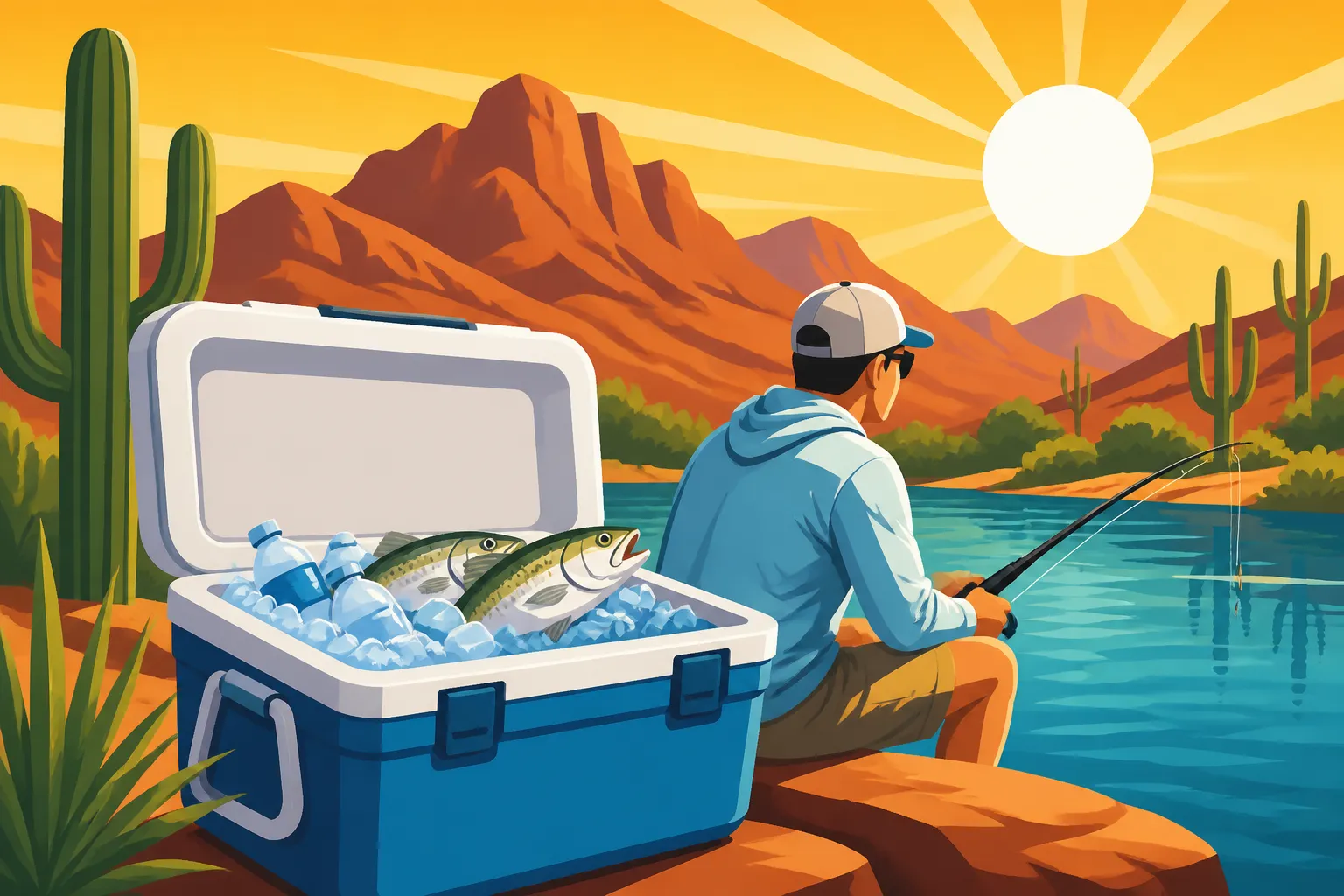
There’s nothing quite like the thrill of reeling in a big one under the Arizona sun, but let's be honest, that same sun can quickly turn your prized catch into a sad, warm mess if you’re not prepared. Keeping your fish fresh, your drinks ice-cold, and your lunch from turning into a science experiment in the scorching desert heat is a unique challenge, and that's where a truly great cooler becomes your best friend. This guide is all about helping you navigate the world of coolers to find the absolute best one for your hot-weather fishing adventures here in Arizona, ensuring your efforts on the water pay off at the dinner table.
The Unforgiving Reality of Arizona's Heat on Your Catch
Arizona's beauty is undeniable, but so is its intense heat. Summer temperatures regularly soar past 100 degrees Fahrenheit, and even in spring and fall, the sun beats down relentlessly. This isn't just about feeling a little uncomfortable; it's about physics and biology working against you, especially when you're trying to preserve your catch or keep yourself hydrated. A cheap, flimsy cooler might work fine for a backyard barbecue in cooler climates, but here, it's a recipe for disappointment.
Why Standard Coolers Just Don't Cut It
Many anglers start with a basic cooler, perhaps one picked up on a whim from a big box store, only to find their ice has melted into a lukewarm puddle within a couple of hours. The frustration is real – you've spent your time, effort, and money getting out on the water, only to have your hard-won bass or catfish start to spoil before you even get off the lake. Standard coolers typically have thin plastic walls, minimal foam insulation, and flimsy lids that don't seal well. They're designed for short-term use in mild conditions, not for battling the extreme radiant heat and ambient temperatures that define Arizona summers.
Think about it: the moment you pull that beautiful largemouth bass from the waters of Lake Pleasant Arizona Fishing Guide, its body temperature immediately begins to rise, and bacteria start to multiply rapidly. Without proper, immediate cooling, the quality of the meat degrades quickly, affecting both taste and safety. You need a cooler that acts more like a portable refrigerator, capable of holding temperature, not just holding ice for an hour or two. The difference between a fresh, firm fillet and a soft, questionable one often comes down to the quality of your cooler.
Beyond Fish Storage: Keeping Yourself Hydrated and Fed
While keeping your catch fresh is paramount, let's not forget about your own well-being on the water. Fishing in Arizona's heat can be physically demanding and even dangerous if you're not careful. Dehydration and heat exhaustion are serious risks, and your cooler plays a critical role in preventing them. You need constant access to ice-cold water, sports drinks, and snacks that won't melt or spoil.
Imagine being out on Roosevelt Lake Arizona Fishing Guide all day, casting for bass, only to reach for your water bottle and find it's bathwater warm. Not only is it unrefreshing, but it does little to bring down your core body temperature. A reliable cooler ensures your hydration stays on point, keeping you cool and alert. For longer trips, it’s also crucial for keeping your sandwiches and other perishable foods safe to eat. No one wants to end a great fishing day with a bout of food poisoning. It's not just about preserving the fish; it's about sustaining the angler. You can find more tips on keeping safe in the heat by checking out Heat Safety Tips for Summer Fishing in Arizona.
Understanding Cooler Technology: More Than Just a Box
When you're shopping for a cooler that can stand up to Arizona's intense heat, you'll quickly realize that not all coolers are created equal. The days of simply buying a plastic box with a handle are long gone if you want true performance. Modern coolers, especially those designed for extreme outdoor conditions, incorporate advanced materials and construction methods to maximize ice retention and durability. Let's dive into the different types you'll encounter.
Rotomolded Coolers: The Gold Standard for Extreme Conditions
If you've heard people rave about "high-performance coolers," they're most likely talking about rotomolded models. "Rotomolding" refers to a manufacturing process where plastic is spun in a mold, creating a single, seamless, incredibly durable piece. This means no weak points, no seams to leak or crack under stress. These coolers typically feature thick, insulated walls (often several inches of pressure-injected polyurethane foam) and a lid that boasts the same robust insulation.
The benefits of rotomolded coolers are significant, especially in Arizona. They offer unparalleled ice retention, often keeping ice for several days, even in triple-digit temperatures. Their rugged construction means they can withstand being tossed around in a truck bed, used as a casting platform on a boat, or dragged across rocky shorelines. Brands like YETI, RTIC, and Pelican are popular examples, and you can often find a wide selection of these robust coolers at Bass Pro Shops or through online retailers like Amazon. The downside? They are heavier and generally come with a higher price tag. However, many anglers consider them a worthwhile investment for the peace of mind they offer in hot environments.
Soft-Sided Coolers: Portability Meets Performance
While rotomolded coolers are champions of ice retention, their bulk and weight can be a drawback for certain fishing styles. Enter the soft-sided cooler. These coolers are built with flexible, insulated materials, often featuring closed-cell foam insulation, which provides a good balance of thermal performance and portability. They're much lighter than their hard-sided counterparts and are easier to carry over distances or fit into tight spaces.
Soft-sided coolers are fantastic for shorter trips, when you're hiking to a secluded fishing spot, or for kayak fishing where space and weight are at a premium. They usually have comfortable shoulder straps or handles, making transport much easier. While they won't hold ice for as long as a premium rotomolded cooler, many high-quality soft-sided options can keep ice for 24-48 hours, which is often sufficient for a day trip on the Salt River Arizona Fishing Guide or a quick outing to one of the Best Urban Fishing Lakes in Arizona. Look for models with durable, waterproof exteriors and leak-proof zippers or roll-top closures. Brands like Engel and YETI (their Hopper line) offer excellent soft-sided choices, and these are readily available through retailers like Bass Pro Shops and Amazon.
Electric Coolers: The Power Option
For some anglers, especially those who primarily fish from a boat with a power source or go on multi-day road trips, an electric cooler can be an intriguing alternative. These units don't require ice at all; instead, they plug into a 12V outlet (like a car's cigarette lighter) or a standard 120V AC outlet and cool their contents actively. There are two main types: thermoelectric and compressor.
Thermoelectric coolers are generally less expensive and lighter, but they typically only cool to a certain number of degrees below the ambient temperature (e.g., 40 degrees below ambient). In 100-degree Arizona heat, this means your "cold" drinks might still be around 60 degrees. They're better for keeping already-cold items cold. Compressor-based electric coolers, on the other hand, function much like a miniature refrigerator, capable of reaching and maintaining specific temperatures regardless of the outside heat, even freezing items if desired. They are more efficient and powerful but also significantly more expensive and heavier. The main advantage is never having to buy ice, but the primary drawback is the constant need for a reliable power source, which might not be practical for every fishing trip.
Key Features to Prioritize for Arizona Fishing Coolers
Choosing the best cooler for Arizona's relentless heat isn't just about picking a type; it's about scrutinizing the features that truly matter when the mercury climbs. You need more than just a box; you need a system designed to fight the heat, hold up to abuse, and perform flawlessly trip after trip.
Insulation Thickness and Type: The Core of Ice Retention
This is arguably the single most important factor. The thicker and denser the insulation, the better the cooler will perform. Most high-performance coolers use pressure-injected polyurethane foam. The key here isn't just the overall thickness of the walls and lid, but also the quality and density of that foam. A cooler with 2-3 inches of high-density foam on all sides, including the lid, will drastically outperform one with thin, low-density foam.
Imagine your cooler as a fortress against the heat. Each inch of insulation is like another layer of defense. In Arizona, where the sun's radiant heat can penetrate quickly, this dense insulation is what slows down the transfer of heat from the outside to your precious ice and catch on the inside. Don't forget the lid! A well-insulated lid is crucial, as heat naturally rises, and a weak lid becomes a major escape route for cold air. Some premium coolers even feature a freezer-grade gasket and an insulated lid, creating an almost impenetrable seal against external temperatures.
Gasket and Latch System: Sealing the Cold In
Even with the thickest insulation, a cooler is only as good as its seal. This is where the gasket and latch system come into play. Look for coolers with a heavy-duty, freezer-grade gasket, typically made of durable rubber or silicone. This gasket creates an airtight and watertight seal between the lid and the cooler body, preventing precious cold air from escaping and hot air from seeping in. Without a good gasket, heat convection will rapidly melt your ice, regardless of how thick the walls are.
Complementing a robust gasket is a reliable latch system. Flimsy plastic latches are prone to breaking and often don't provide enough compression to create a tight seal. High-quality coolers use heavy-duty rubber latches or cam-style latches that pull the lid down firmly and securely. These not only ensure a tight seal but also stand up to the rigors of outdoor use. Imagine trying to keep a refrigerator cold if its door didn't seal properly; the same principle applies to your cooler, especially when it’s baking in the Arizona sun.
Durability and Construction: Built for the Desert
Arizona's rugged landscape and intense UV radiation demand a cooler that's built to last. You're not just dealing with heat; you're dealing with sharp rocks, abrasive sand, and the constant battering of transport. This means looking beyond just the shell.
First, UV resistance is non-negotiable. The sun's ultraviolet rays can degrade plastics over time, causing them to become brittle and discolored. Quality coolers are often treated with UV inhibitors to prevent this. Next, consider the overall construction. Rotomolded coolers excel here due to their seamless design. Beyond the body, inspect the hardware: heavy-duty, corrosion-resistant hinges (often integrated or made of stainless steel) are crucial. Drain plugs should be large, easy to open, and securely attached (often with a chain) to prevent loss. Handles should be robust, comfortable, and well-secured, capable of bearing the weight of a fully loaded cooler. A cooler that cracks or falls apart after a few trips is not saving you money in the long run.
Size and Portability: Matching Your Fishing Style
The "best" size cooler depends entirely on your specific needs and fishing style. A huge, 100-quart cooler might be fantastic for a multi-day trip with friends on Lake Powell Arizona Fishing Guide, but it's completely impractical for a solo kayak angler on a smaller lake.
Consider your typical trip duration and the number of people. Are you keeping trophy fish, or just a few panfish? For a solo day trip, a 20-30 quart cooler might be plenty. For a weekend camping and fishing trip with family, you might need a 45-65 quart cooler, or even two coolers – one for drinks and food, and one exclusively for fish. Also, think about portability. If you'll be carrying your cooler long distances from the car to the water, a lighter soft-sided option or a hard-sided cooler with sturdy wheels might be a better choice. For boat fishing, you might prioritize a larger capacity and a cooler that doubles as an extra seat or casting platform. It’s all about finding the right balance between volume, weight, and ease of transport for your particular adventures.
Maximizing Ice Retention in Blazing Arizona Temperatures
Even the best cooler in the world won't perform at its peak if you don't use it correctly. In Arizona's extreme heat, a few smart strategies can significantly extend your ice life, turning a "good" cooler into a "great" one. It's about working with your cooler, not just relying on its inherent design.
Pre-Chilling Your Cooler: A Game Changer
This is perhaps the most overlooked, yet most effective, trick for maximizing ice retention. Most coolers are stored at ambient room temperature, which, in Arizona, can be anywhere from 80 to 100+ degrees Fahrenheit. If you throw a bag of ice into a warm cooler, a significant portion of that ice will immediately melt just bringing the cooler walls down to temperature. This "sacrificial" ice is wasted before you even leave the driveway.
To pre-chill, simply load your cooler with a sacrificial bag of ice or several large ice packs the night before your trip. Let it sit overnight, absorbing all that latent heat from the cooler's insulation and interior walls. In the morning, dump out the melted water and add your fresh ice for the trip. You'll be amazed at how much longer your main ice supply lasts. For those longer trips, you can even put an empty cooler in a freezer or air-conditioned space for several hours to achieve the same effect. It's a small step that makes a huge difference in fighting the desert heat.
The Right Ice, The Right Way
Not all ice is created equal when it comes to longevity. Cubed ice, while convenient, has a lot of surface area and melts relatively quickly. Block ice, on the other hand, has a smaller surface area to volume ratio, making it much more resistant to melting. A good strategy is to use a combination: lay down a base layer of block ice, then add your items, and fill the remaining voids with cubed ice to ensure everything is thoroughly chilled.
For even better performance, consider using reusable ice packs, like those often found at Bass Pro Shops or Amazon. These often freeze at a lower temperature than water, providing colder chilling, and they don't add water to your cooler as they melt. You can also make your own block ice by freezing water in plastic milk jugs or two-liter bottles. This keeps the meltwater contained and can be quite cost-effective. Some anglers even swear by adding a handful of rock salt to their ice; salt lowers the freezing point of water, making the ice bath even colder, though this isn't recommended for fish you plan to eat raw, as it can "salt" the meat. Finally, pack your cooler as full as possible, minimizing air pockets, as air spaces allow for more heat transfer.
Strategic Placement and Usage Tips
Once your cooler is packed, how you treat it on your trip is just as important as how you packed it. The goal is to minimize external heat gain and internal cold loss.
- Keep it in the Shade: This seems obvious, but it's crucial. Position your cooler in the shadiest spot available, whether that's under an umbrella, a boat's canopy, or simply under a towel if no shade is available. Direct sun exposure will rapidly accelerate ice melt.
- Minimize Lid Opening: Every time you open the lid, cold air rushes out and hot air rushes in. Plan your grabs! If you're going on a multi-day trip, consider bringing a separate, smaller cooler for frequently accessed drinks and snacks, leaving your main cooler largely sealed for fish and less-frequently-needed items.
- Don't Drain Meltwater (for Ice Retention): If your primary goal is to keep ice as long as possible and your cooler is primarily for drinks/food, leave the meltwater in. The cold water helps insulate the remaining ice. However, if you're using it as a dedicated fish cooler (a "kill bag" or "fish box"), you will want to drain the meltwater regularly and replenish with fresh ice to keep the fish in pristine condition, as standing in lukewarm water will degrade fish quality.
- Keep it Off Hot Surfaces: Don't leave your cooler directly on hot asphalt, sand, or a boat deck. These surfaces can radiate significant heat into the cooler's base. Use a mat, a cooler cushion, or even a piece of cardboard underneath to create a barrier and elevate it if possible.
By following these simple yet effective strategies, you can push the limits of even a mid-range cooler and make a premium cooler perform like a true cold-keeping marvel, helping you get the most out of your Arizona fishing experience.
Cooler Applications for Different Arizona Fishing Scenarios
The "best" cooler isn't a one-size-fits-all solution; it’s about matching the cooler to your specific fishing adventure. Arizona offers a diverse range of fishing opportunities, from vast reservoirs fished by boat to intimate streams accessed by foot. Your cooler choice should align with the demands of your chosen environment and fishing style.
Boat Fishing: Capacity, Stability, and Accessibility
For those who regularly fish Arizona's larger lakes like Lake Pleasant, Lake Havasu, or Roosevelt Lake from a powerboat, your cooler needs are primarily about capacity, stability, and ruggedness. You'll likely have space for a larger, rotomolded cooler, which can serve multiple purposes. These larger coolers can hold a significant amount of fish, drinks, and food for long days or even multi-day excursions.
Look for models with non-slip feet to prevent them from sliding around on a wet deck. Integrated tie-down points are also a huge plus, allowing you to secure the cooler during choppy water or fast runs. Many boat anglers opt for coolers that are sturdy enough to double as an extra seat, a casting platform, or even a cutting board surface on the lid. Accessibility is key – ensure the lid opens easily without obstruction and that the drain plug is convenient for quick cleanouts. When you're spending hours battling striped bass or channel catfish, having a reliable, spacious cooler within reach is invaluable. You might even consider using two: one large one for your prize catches and another, smaller one for personal drinks and snacks, keeping the main cooler sealed. Don't forget to review Boating and Fishing Combo License Requirements if you're combining activities.
Shore and Bank Fishing: Portability and Ruggedness
If your preferred method is fishing from the bank or shore, or if you enjoy exploring various Best Shore Fishing Spots in Arizona or Best Fishing Piers in Arizona, portability becomes a much higher priority. You might not have the luxury of a large boat to transport a heavy rotomolded behemoth.
For shorter distances or light loads, a high-quality soft-sided cooler can be perfect. They're lightweight, easy to carry with a shoulder strap, and can often hold enough ice for a day's worth of drinks and a few smaller fish. If you need more capacity and are facing a longer haul from your vehicle to the fishing spot, a hard-sided cooler with sturdy, oversized wheels and a strong telescoping handle is a lifesaver. These "wheeled coolers" allow you to roll your gear over uneven terrain, sand, or gravel, saving your back. Even a small rotomolded cooler can be carried, but make sure it has comfortable, robust handles that won't dig into your hands when loaded. Durability is still important, as shore fishing often means coolers are placed on rough ground, exposed to sharp rocks, and endure more scuffs and scrapes.
Kayak and Paddleboard Fishing: Compact and Lightweight
Kayakers and stand-up paddleboard (SUP) anglers face the most restrictive constraints when it comes to coolers: size and weight are paramount. Every ounce and inch counts, as it directly impacts your stability, paddling effort, and storage capacity on the vessel.
For these adventurers, a compact soft-sided cooler is often the go-to choice. Look for models designed to fit snugly into kayak hatches, strapped to the deck, or placed behind the seat. They should be lightweight when empty, have excellent insulation for their size, and ideally feature tie-down points or D-rings to secure them to your craft. Waterproof zippers or roll-top closures are essential to protect contents from splashes and unexpected dips. Some compact rotomolded coolers exist, which can be great if space allows, offering superior ice retention for longer paddles. The key is finding that sweet spot between sufficient capacity for your hydration and catch, and minimal impact on your paddling performance and stability. Explore Kayak Fishing Techniques for Desert Lakes for more tips on maximizing your experience.
Multi-Day Trips and Camping: Long-Haul Solutions
For those epic multi-day fishing trips that combine angling with camping at spots like Camping Options Near Roosevelt Lake, your cooler strategy needs to be robust. You'll likely be away from ice resupply points for extended periods, and you'll have more varied storage needs.
This is where large, premium rotomolded coolers truly shine. Their multi-day ice retention capabilities are critical. Many experienced multi-day adventurers opt for a multi-cooler setup:
- Main Food/Drink Cooler: A large rotomolded cooler dedicated to keeping perishable food and drinks ice-cold. This one is often accessed frequently, so the focus is on maintaining its contents.
- Fish Cooler/Kill Bag: A separate, equally robust cooler or a dedicated insulated kill bag specifically for your catch. This keeps fish slime and smell away from your food and allows you to replenish ice for your fish without compromising your food supply.
- Day Cooler: A smaller soft-sided or hard-sided cooler for quick access to drinks and snacks while you're actively fishing, leaving the larger, primary coolers mostly sealed back at camp.
This approach ensures optimal preservation for both your provisions and your hard-earned fish, letting you truly relax and enjoy the extended Arizona wilderness experience.
Top Cooler Considerations for Arizona Anglers
Bringing all these elements together, choosing the perfect cooler for Arizona fishing comes down to a few final, crucial considerations. It’s about making an informed decision that balances performance, budget, and practicality for your specific needs.
Capacity: How Much Do You Really Need?
Over-estimating or under-estimating your cooler capacity can lead to frustration. A cooler that's too small means compromised ice retention because you can't fit enough ice, or worse, spoiled fish because you couldn't cool them adequately. A cooler that's too large, on the other hand, can be cumbersome, heavy, and less efficient at cooling if it's not packed full (remember, air pockets melt ice faster).
A good rule of thumb for general day-tripping for one or two people might be a 20-35 quart cooler for drinks and snacks, plus potentially a few smaller fish. For serious anglers targeting larger species or fishing with a group, a 45-75 quart cooler is often a sweet spot for fish, with a separate smaller cooler for food. For multi-day trips, think 75 quarts or more, often split between two coolers as discussed earlier. Always consider the usable capacity, not just the advertised number, especially with rotomolded coolers that have thick walls. When in doubt, it’s often better to go slightly larger if portability isn't a major issue, as you can always fill extra space with more ice or ice packs.
Investment vs. Value: Don't Skimp on Cold
Let's be realistic: high-performance coolers, especially rotomolded ones from top brands, are an investment. Their upfront cost can be significantly higher than a basic cooler. However, in Arizona, this is an investment that truly pays off. The false economy of a cheap cooler becomes apparent when you're constantly buying bags of ice every few hours, or worse, when your catch spoils.
A premium cooler might cost more initially, but it saves you money on ice in the long run. More importantly, it preserves the quality of your fish, turning your successful outing into a delicious meal instead of a regrettable waste. Consider the durability too: a well-made cooler can last for a decade or more, enduring countless trips and extreme conditions. When you factor in the cost of wasted ice, potentially spoiled food/fish, and the sheer frustration of a poorly performing cooler, the value of a high-quality model quickly becomes apparent. You can compare options and prices across various brands at retailers like Bass Pro Shops and Amazon to find a cooler that fits both your needs and your budget without compromising on the essential "cold-keeping" factor.
Maintenance and Cleaning for Longevity
Finally, even the toughest cooler needs a little love to ensure it performs optimally and lasts for years to come. Proper maintenance and cleaning are simple but essential, especially when dealing with fish.
After every fishing trip, especially if you've had fish in the cooler, empty it completely. Wash the interior thoroughly with warm, soapy water. For stubborn smells or stains, a mixture of baking soda and water or a diluted bleach solution (rinse very thoroughly afterward) can work wonders. Pay attention to the gasket and drain plug, ensuring no debris or fish remnants are trapped there. After washing, prop the lid open and allow the cooler to air dry completely, ideally in a shaded, well-ventilated area. Storing a cooler with the lid closed while damp can lead to mold and mildew growth, creating unpleasant odors and potentially damaging the gasket. Regular cleaning ensures your cooler is ready for its next adventure, keeps your food safe, and maintains the quality of your catch, making it a reliable companion for all your Arizona fishing exploits.
Cooler Type Comparison for Arizona Fishing
To help you make an informed decision, here's a quick comparison of the main cooler types suitable for Arizona's hot-weather fishing:
| Feature | Rotomolded Cooler | Soft-Sided Cooler | Electric Cooler (Compressor) |
|---|---|---|---|
| Ice Retention | Excellent (3-10+ days) | Good (1-3 days) | N/A (active cooling) |
| Durability | Exceptional (impact, UV resistant) | Good (puncture, tear resistant) | Good (mechanical parts can be sensitive) |
| Portability | Heavy, bulky; some have wheels | Lightweight, easy to carry (shoulder strap) | Heavy, requires power source |
| Cost Shape | Higher upfront investment | Moderate | Highest upfront investment, plus power costs |
| Best Use Case | Long trips, boat fishing, car camping, extreme heat | Day trips, kayak/SUP fishing, hiking to remote spots | RVing, long boat trips with consistent power, car travel |
| Maintenance | Simple wash, dry; gasket care | Simple wash, dry; zipper/closure care | Clean interior, check power connections |
| Arizona Suitability | Highly Recommended (especially for fish) | Recommended (for lighter, shorter trips) | Situational (if consistent power is available) |
Disclaimer
This article is for general informational purposes only and does not constitute professional advice. Laws, prices and regulations vary by location and change over time. Consult a qualified professional for guidance on your specific situation.