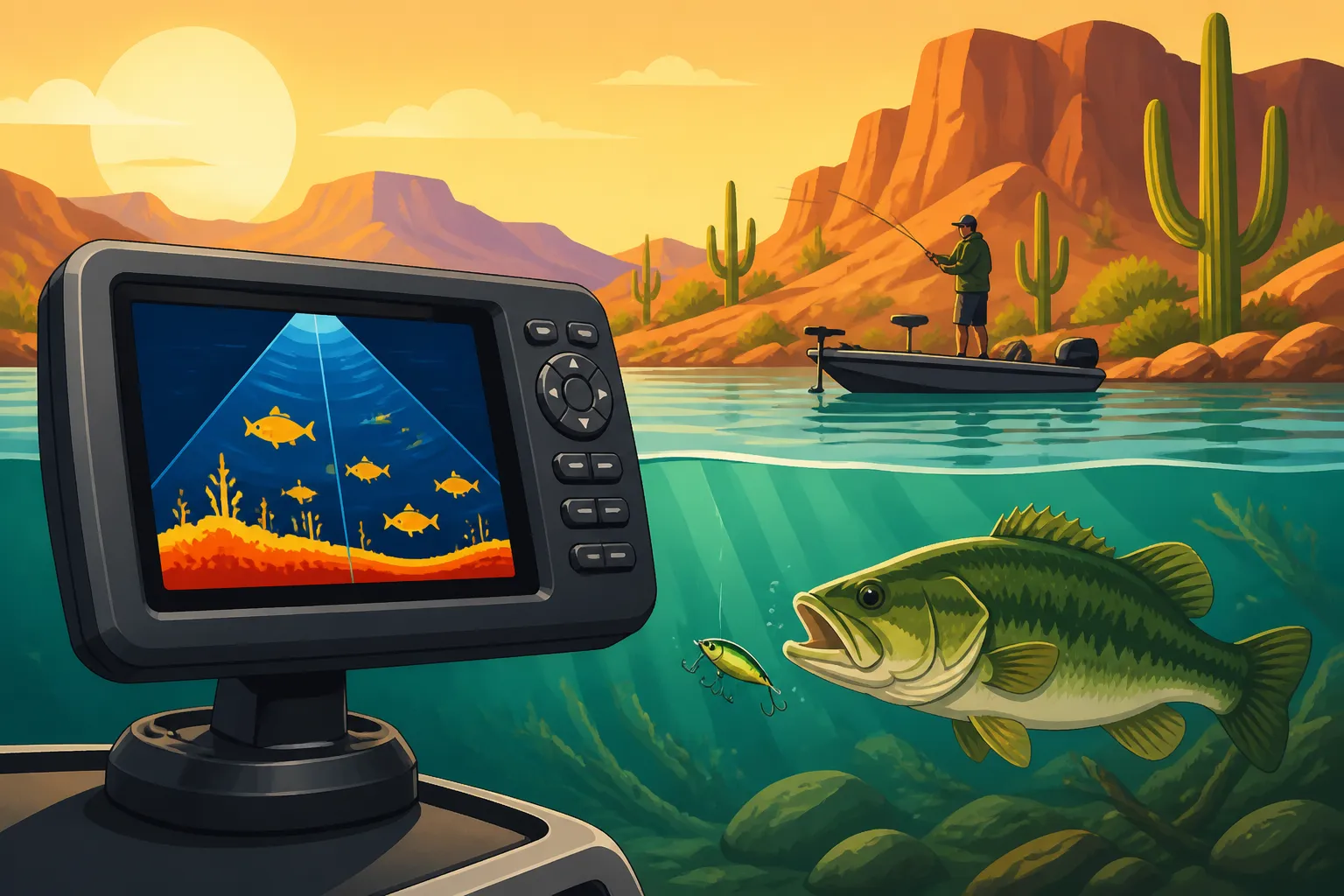
Best Fish Finders for Bass Fishing in Arizona
Let's be honest, Arizona's bass fishing can be incredibly challenging. Our desert lakes are vast, often deep, and the bass aren't always eager to show themselves. You've probably spent countless hours idling over what looks like prime habitat, casting your heart out, only to come up empty-handed. This comprehensive guide is here to turn that frustration into triumph by showing you how the right fish finder can transform your Arizona bass fishing experience, helping you locate those elusive lunkers hiding in plain sight.
Why a Fish Finder is Essential for Arizona Bass Fishing
Fishing in Arizona isn't like fishing in a small, easily readable farm pond back east. Our lakes are reservoirs, carved into canyons and desert landscapes, boasting incredibly diverse and often complex underwater terrains. Without knowing what's below the surface, you're essentially fishing blind, hoping for a lucky cast. A quality fish finder isn't just a luxury; it's a critical tool for success on these challenging waters.
Understanding Arizona's Diverse Bass Habitats
Arizona's major bass fisheries like Lake Pleasant, Roosevelt Lake, and Lake Havasu are sprawling bodies of water with varied underwater structures. You're not just looking for a simple weed line here. Bass in these lakes relate to everything from sheer rock walls and submerged canyon ledges to vast stretches of deep timber and brush piles that are completely invisible from the surface. Think about Lake Pleasant's deep main lake points, or the submerged creek channels in Roosevelt, or the rocky bluffs of Canyon Lake. These are complex environments.
A fish finder allows you to "see" these hidden structures. You can identify the precise depth where a rocky transition meets a softer bottom, or spot individual submerged trees where bass might be holding tight. It gives you the confidence to cast to a specific target you know is there, rather than just fanning casts across an undifferentiated area. This understanding of their habitat is the first step to consistently putting fish in the boat.
Overcoming Environmental Challenges
The Arizona environment presents unique challenges that a fish finder directly addresses. First, the intense summer heat often drives bass into deeper, cooler water. Without a fish finder, locating these thermal refuges can be a guessing game. It also helps you identify the thermocline, that critical depth where warm surface water meets cooler, oxygen-rich deep water – often a key holding zone for bass.
Second, many of our desert lakes experience significant water level fluctuations throughout the year. What was a visible shoreline point last month might be submerged under 20 feet of water today, and vice-versa. A fish finder with good mapping and sonar capabilities helps you adapt to these changes, revealing newly submerged contours or old riverbeds that have become prime structure. Finally, the sheer vastness of lakes like Lake Powell or Lake Havasu can be overwhelming. A fish finder with GPS helps you navigate efficiently, mark productive spots, and return to them with precision, cutting down on wasted time searching aimlessly.
The Edge Over Other Anglers
Let's be honest, competitive fishing or even just friendly bragging rights, often comes down to who can be more efficient on the water. A fish finder provides a significant advantage by allowing you to quickly eliminate unproductive water and focus your efforts on areas where bass are actively feeding or holding. While other anglers might be casting randomly, you'll be identifying specific submerged points, brush piles, or schools of baitfish, knowing exactly where to drop your lure. This isn't just about finding fish; it's about finding active fish.
Moreover, a fish finder helps you develop a deeper understanding of bass behavior in various conditions. By observing how bass relate to structure at different times of day, different seasons, or under varying weather patterns, you'll build invaluable knowledge that no amount of blind casting can provide. This empirical data, gathered through your fish finder, gives you an undeniable edge, helping you adapt your Best Bass Fishing Techniques for Arizona Lakes for maximum success.
Key Features to Look for in a Bass Fishing Fish Finder
When you start looking at fish finders, the options can feel overwhelming. There are so many models, technologies, and price points. For Arizona bass fishing, where clarity, depth, and structure are paramount, certain features rise to the top as "must-haves." Investing in the right technology upfront will save you headaches and improve your fishing experience exponentially.
Display Size and Resolution
Imagine trying to read a detailed map on a tiny, blurry screen while bouncing across the waves on Lake Mead. Not fun, right? The display size and resolution of your fish finder are paramount, especially under the bright Arizona sun. A larger screen, generally 7 inches or more, provides ample real estate to display multiple sonar views simultaneously, such as 2D sonar, Down Imaging, and mapping. This means less toggling between screens and more continuous information.
Resolution, measured in pixels, determines the clarity and detail of the image. A higher pixel count allows for sharper images, making it easier to distinguish individual fish from structure, or to identify subtle changes in bottom composition. Trying to decipher a faint fish arch or a tiny submerged branch on a low-resolution screen is like trying to find a needle in a haystack – frustrating and often fruitless. For serious bass anglers, aiming for a unit with a display of at least 800×480 pixels, or even 1024×600 and higher, will significantly enhance your ability to interpret what you're seeing.
Transducer Technology (2D Sonar, Down Imaging, Side Imaging)
The transducer is the heart of your fish finder, sending and receiving sonar waves. The type of technology it employs dictates what kind of picture you'll get of the underwater world.
- 2D Sonar (Traditional Sonar): This is the classic fish finder view, showing fish as "arches" and structure as abstract shapes. It's excellent for identifying fish directly beneath your boat and for understanding general depth and bottom hardness. While newer technologies exist, a powerful 2D sonar remains foundational for quickly scanning and identifying targets. It's often the first thing you'll look at when cruising a new area.
- Down Imaging (DownScan/ClearVü): This technology provides a more photographic, picture-like view of what's directly beneath your boat. Instead of arches, you'll see clear representations of submerged trees, brush piles, rock formations, and even schools of baitfish. It's invaluable for deciphering what those 2D sonar blobs actually are, allowing you to confidently identify prime bass cover like a specific laydown or a submerged rock pile.
- Side Imaging (SideScan/StructureScan/SideVü): This is arguably the biggest game-changer for bass anglers, especially on vast Arizona lakes. Side Imaging transducers emit beams to the sides of your boat, scanning huge swaths of water (often up to 250 feet or more on each side). This allows you to quickly cover large areas, identify offshore structure, find isolated brush piles, and spot fish holding on ledges or points without having to drive directly over them. If you're looking for Deep Water Structure Fishing Techniques, Side Imaging is your best friend. It significantly reduces searching time and reveals hidden gems that traditional sonar would miss.
GPS and Chartplotting Capabilities
Arizona's lakes are massive, and getting lost or constantly trying to re-find a productive spot can eat up valuable fishing time. This is where integrated GPS and chartplotting come in. A good GPS unit allows you to:
- Mark Waypoints: Found a school of baitfish? Spotted a submerged point holding bass? Mark it! You can precisely return to that spot later, even if conditions change.
- Follow Contours: Many units come pre-loaded with detailed lake maps, showing depth contours, points, and channels. You can also create your own custom maps, recording the precise depth and structure you're seeing. Following these contours is a fantastic way to target bass, especially during seasonal transitions.
- Navigate Safely: Beyond finding fish, GPS is crucial for safe navigation, especially in unfamiliar waters or during low light conditions. You can plot routes, avoid hazards, and know exactly where you are on the lake at all times. This is especially important on lakes like Lake Powell with countless coves and canyons where it's easy to get disoriented.
The ability to integrate your sonar data with a detailed map provides unparalleled situational awareness, making you a more efficient and safer angler.
CHIRP Sonar Technology
CHIRP stands for Compressed High-Intensity Radiated Pulse. While that sounds super technical, what it means for you is vastly improved sonar performance. Unlike traditional sonar, which sends out a single frequency pulse, CHIRP sonar sends a range of frequencies (a "chirp"). When these frequencies return, the fish finder processes them to create an incredibly clear, detailed image.
The benefits of CHIRP are significant:
- Improved Target Separation: With CHIRP, it's much easier to distinguish individual fish within a school, or to tell a fish apart from a piece of submerged structure. This is critical for identifying keeper-sized bass from smaller baitfish or debris.
- Better Definition at Depth: CHIRP maintains excellent clarity even in deeper water, which is a huge advantage on Arizona's deep desert lakes where bass might be holding 40, 60, or even 100 feet down.
- Reduced Noise and Clutter: By processing a wider range of frequencies, CHIRP technology filters out more interference, giving you a cleaner, less cluttered screen.
Most modern fish finders, especially those offering Down Imaging and Side Imaging, now incorporate CHIRP technology. It's a fundamental improvement that elevates the quality of your sonar readings across the board.
Different Types of Fish Finders for Arizona Anglers
Just as there are different types of boats and fishing styles, there are various fish finder configurations designed to meet different needs and budgets. Understanding these categories will help you narrow down your choices and pick the best fit for your specific Arizona bass fishing adventures.
Entry-Level Portable Units
If you're just starting out, fish from a kayak, a small aluminum boat, or even primarily from the bank, an entry-level portable unit might be a fantastic option. These units are typically smaller, often battery-powered, and designed for ease of transport and quick setup. Many of them feature basic 2D sonar, a small color screen, and sometimes even simple GPS for marking waypoints.
Their primary advantages are affordability and versatility. You can clamp the transducer to your kayak or canoe, or use it on a rental boat. For bank anglers, some models even allow you to cast out a small, floatable transducer, connecting wirelessly to your smartphone or a dedicated small display. While they won't offer the hyper-detailed imagery of high-end units, they are perfectly capable of showing you depth, identifying significant structure, and marking obvious fish schools. For example, you can often find a good selection of these portable units on Amazon, making it easy to compare features and prices. They're a great way to dip your toe into the world of sonar without a massive investment.
Mid-Range Console Mount Units
This category represents the sweet spot for most dedicated bass boat owners and serious anglers. Mid-range units are designed to be permanently mounted on your boat's console or bow, offering a robust set of features that provide a significant step up from portable options. You'll typically find larger, higher-resolution color screens (7-10 inches), integrated GPS with detailed mapping, and advanced sonar technologies like CHIRP 2D, Down Imaging, and often Side Imaging.
These units strike a fantastic balance between performance, features, and cost. They provide the clarity and detail needed to effectively scout Arizona's complex underwater terrain, mark precise waypoints, and navigate confidently. They are powerful enough to identify individual bass holding on structure, differentiate species, and understand subtle bottom transitions. Most anglers find that a mid-range unit provides all the tools they need for competitive bass fishing without entering the realm of professional-level expenditure. Brands like Humminbird, Lowrance, and Garmin offer excellent options in this segment, and you'll often see them prominently displayed at Bass Pro Shops.
High-End Networked Systems
For the tournament angler, the professional guide, or simply someone who demands the absolute best technology available, high-end networked systems are the ultimate choice. These setups often involve multiple large-screen units (10-16 inches or more) networked together on the console and bow, sharing data seamlessly. They boast the most advanced sonar technologies, including hyper-resolution Down Imaging and Side Imaging, as well as live sonar systems that show real-time views of fish and lures.
Beyond sonar, these systems integrate with other boat components like trolling motors, engine data, and even radar. They offer incredibly fast processors, custom mapping capabilities, and unparalleled detail. The advantage here is not just seeing fish, but seeing how they react to your bait in real-time, or scanning vast expanses of water with photographic precision. While the investment is substantial, these systems provide a competitive edge that can translate directly into more and bigger bass, especially when fishing for Arizona Largemouth Bass Record contenders on massive lakes like Roosevelt. They are designed for those who want to leave no stone unturned in their pursuit of bass fishing excellence.
Installation and Setup Considerations for Bass Boats
Acquiring a high-quality fish finder is just the first step. Proper installation and setup are absolutely crucial to ensure you're getting the best possible performance out of your investment. A poorly installed transducer or inadequate power supply can lead to frustrating interference, inaccurate readings, and missed fish. Take the time to do it right, or have a professional handle it, especially for complex networked systems.
Transducer Placement and Wiring
The transducer is the "eye" of your fish finder, and its placement directly impacts the quality of your sonar image. For most bass boats, you'll likely have a combination of transducers:
- Transom Mount: This is the most common placement for 2D, Down Imaging, and Side Imaging transducers. It needs to be mounted in a location free of obstructions (like strakes or rivets) that can create turbulent water flow, which causes "dirty" or pixelated images at speed. It should also be just low enough in the water to maintain contact, but not so low that it creates excessive spray or drag.
- Trolling Motor Mount: Many bass anglers also mount a dedicated 2D or live sonar transducer on their trolling motor. This gives you a clear, unobstructed view directly in front of and below your boat when you're on the electric motor, crucial for targeting specific cover or following contours at slow speeds.
- Thru-Hull/In-Hull: For maximum clean water flow at high speeds, some boats use thru-hull or in-hull transducers, though these are less common on typical bass boats and more often seen on offshore vessels.
Wiring is another critical aspect. All cables should be routed cleanly, away from potential sources of electrical interference like engine wiring, bilge pumps, or other electronics. Use appropriate connectors and seals to prevent water intrusion, and always secure cables to prevent snags or damage. Improper wiring is a common cause of frustrating screen clutter and unreliable readings.
Powering Your Fish Finder
Fish finders, especially larger units with advanced sonar, can draw a significant amount of power. Providing a clean, consistent power supply is vital for optimal performance.
- Dedicated Wiring: Ideally, your fish finder should be wired directly to its own power source, or at least to a dedicated fuse block that bypasses other boat electronics. This minimizes voltage drops and electrical interference from other accessories.
- Battery Choice: If you have multiple large units or a live sonar system, consider running them off a dedicated house battery or a separate deep-cycle battery. This prevents draining your cranking battery and ensures a stable power supply for your electronics, especially during long days on the water.
- Voltage Consistency: Check your unit's voltage requirements and ensure your boat's electrical system can consistently deliver the necessary power. Low voltage can cause units to spontaneously shut off, reboot, or display erratic readings. Always use the recommended gauge wire for power connections to minimize resistance and voltage loss.
Mounting Options for the Console and Bow
The physical mounts for your fish finder displays are more important than you might think. You need them to be secure, easily visible, and adjustable for different light conditions or fishing positions.
- Gimbal Mounts: These are standard mounts that come with most units, allowing you to tilt and swivel the screen. They are versatile and relatively easy to install.
- RAM Mounts: Highly popular for their adjustability and strength, RAM mounts use ball-and-socket designs that allow you to precisely position your screen. They are excellent for bow-mounted units where you need to quickly adjust the angle.
- Flush Mounts: For a clean, integrated look, flush mounting involves cutting a hole in your console or bow deck and installing the unit directly into the dash. This provides a very secure and streamlined installation, but it's a more permanent modification.
When choosing a mounting location, consider visibility (avoiding glare from the sun), accessibility (can you reach the controls easily?), and security (will it withstand rough water?). For example, if you spend a lot of time fishing the back of your boat, having a console unit that can pivot might be useful, or even consider adding a smaller, dedicated unit to the stern. The goal is to have your vital information clearly visible and within reach at all times.
Mastering Your Fish Finder for Bass Success
Having the latest and greatest fish finder is only half the battle; the other half is learning how to effectively use and interpret the information it provides. It's not just about seeing pretty colors on a screen; it's about understanding what those colors mean and translating them into actionable fishing decisions. This takes practice, but the rewards are well worth the effort.
Interpreting Sonar Readings
This is where the magic happens! Learning to "read" your screen effectively is a skill that develops over time, but here are the basics:
- 2D Sonar: Fish usually appear as arches or boomerang shapes. The thickness and intensity of the arch indicate the size of the fish. If you see a cluster of small arches, you've likely found a school of baitfish. The bottom line will vary in thickness and intensity; a thick, bright line usually means a hard bottom (rock, gravel), while a thinner, softer line suggests mud or silt. Look for sudden changes in depth or bottom composition – these are often key holding areas for bass. Adjusting sensitivity is crucial here; too high, and you get clutter; too low, and you miss faint returns.
- Down Imaging/DownScan: This view gives you near-photographic clarity. Submerged trees will look like actual trees, brush piles like fuzzy clumps, and rock piles like distinct formations. Bass will often appear as bright "dots" or "streaks" within or directly adjacent to these structures. Pay close attention to bass holding above the bottom, often suspended near vertical structure or bait. How to Read a Fish Finder for Bass becomes much easier with this visual clarity.
- Side Imaging/SideScan: This is your wide-area scout. The transducer sends beams to both sides, painting a detailed picture of the bottom. Look for shadows cast by objects – the longer the shadow, the taller the object. You can spot isolated brush piles, rock formations, creek channels, and even individual fish lying on the bottom or suspended near structure far off to the side of your boat. It's incredibly efficient for covering vast areas on lakes like Roosevelt or Lake Pleasant, identifying potential hotspots before you even drive over them.
Utilizing Side Imaging for Wide Area Scans
Side Imaging is a game-changer for covering vast Arizona lakes. Instead of blindly idling over a potential area, you can make wide passes, scanning hundreds of feet to either side of your boat simultaneously. This allows you to quickly identify key features like:
- Offshore Structure: Ledges, humps, points, and even subtle ditches that are too deep to see with the naked eye.
- Hidden Cover: Brush piles, submerged timber, or old foundations that might be miles from the nearest shoreline. These are often untouched havens for big bass.
- Baitfish Schools: Large schools of baitfish, often indicative of predatory bass nearby, will show up clearly as massive clouds.
- Transitions: The interface where a hard bottom meets a soft bottom, or where one type of rock transitions to another, often holds bass.
When using Side Imaging, set your range appropriately (e.g., 80-120 feet to each side for most situations). Drive at a consistent, slow speed (2-5 mph) to get the clearest image. Once you spot something interesting, mark a waypoint, and then come back to investigate with your 2D and Down Imaging, or even drop a cast directly on the target. This systematic approach is a vastly more effective way to locate Best Bass Fishing Lakes in Arizona hotspots than random casting.
Waypointing and Mapping Strategies
Your fish finder's GPS and mapping capabilities are not just for navigation; they're integral to a strategic fishing approach.
- Mark Every Productive Spot: Whether it's a brush pile where you caught a bass, a school of baitfish you found, or a subtle rock pile that just "looks fishy," mark it as a waypoint. Over time, you'll build a personal database of productive spots.
- Create Custom Contours: If your unit allows, record your sonar logs to create highly detailed, custom maps of the areas you fish most frequently. These maps often show more accurate and granular depth contours than pre-loaded charts, revealing subtle nuances in the bottom structure that hold bass.
- Follow Contour Lines: Bass often relate strongly to specific depth contours, especially during seasonal transitions. Using your map, you can precisely follow a 20-foot contour line around a point, knowing you're keeping your lure in the strike zone. This is especially effective for Seasonal Movement Patterns of Arizona Bass.
- Track Your Routes: Use the track function to see where you've been. This helps you cover water systematically, avoid duplicate passes, and understand how bass are relating to different parts of a structure after you've caught a few.
By actively using your waypoints and mapping features, you transform your fish finder into a powerful data collection and management tool, continually refining your understanding of the lake and increasing your chances of success.
Top Brands and Models Popular in Arizona
When it comes to fish finders, a few brands have consistently earned the trust and loyalty of bass anglers, especially in challenging environments like Arizona. While specific models change frequently with new technology, understanding the core strengths of each brand can help you make an informed decision.
Humminbird Units
Humminbird is a dominant force in the bass fishing world, largely thanks to its pioneering and continuously evolving Side Imaging technology. Their MEGA Side Imaging and MEGA Down Imaging provide incredibly clear, high-resolution views of structure and fish to the sides and directly below the boat. For anglers who spend a lot of time scanning vast areas for offshore structure, brush piles, or schooling fish on lakes like Lake Powell or Lake Havasu, Humminbird units are often the first choice.
Anglers often praise Humminbird for its intuitive user interface, making it relatively easy to navigate through settings and customize displays. Their units often excel at highlighting fish in relation to cover, making it simpler to decipher if that fuzzy blob is just structure or if there are bass tucked into it. Their ecosystem, including features like LakeMaster mapping and integration with Minn Kota trolling motors, creates a seamless experience for finding and staying on fish. If you're a fan of detailed mapping and superior side-scanning capabilities for locating Smallmouth Bass Fishing Guide for Arizona on those deep canyon ledges, Humminbird should definitely be on your radar.
Garmin Units
Garmin has exploded onto the bass fishing scene with its groundbreaking LiveScope and Panoptix live sonar technologies. While their traditional 2D and SideVü/ClearVü (Garmin's version of Down and Side Imaging) are excellent, it's their live-forward and live-down views that have revolutionized how many anglers fish. Imagine seeing fish swimming around a brush pile or chasing your lure in real-time – that's what LiveScope offers. This real-time feedback is an unparalleled advantage for sight fishing, casting precisely to individual fish, and understanding their immediate reactions to your bait.
Beyond live sonar, Garmin units are known for their fast processors, vibrant displays, and robust GPS and mapping capabilities. Their Quickdraw Contours feature allows users to create highly detailed, personalized bathymetric maps on the fly, which is incredibly useful for finding subtle depth changes on Arizona's ever-changing reservoirs. For anglers who value cutting-edge technology and want the most immediate feedback on fish location and behavior, Garmin units are a top contender. They are becoming increasingly popular for targeting specific fish, such as large Striped Bass Fishing Guide for Arizona that might be suspended in open water.
Lowrance Units
Lowrance has a long and storied history in fish finding, known for its powerful traditional 2D sonar and excellent DownScan and StructureScan (their versions of Down and Side Imaging). Lowrance units are often lauded for their exceptional clarity in 2D sonar, providing very distinct fish arches and crisp bottom returns. Their HDS (High Definition System) series has long been a benchmark for high-performance fish finders.
Like Garmin, Lowrance has also entered the live sonar arena with their ActiveTarget Live Sonar, offering real-time views of fish and structure. They also boast powerful mapping solutions, including C-MAP charts and the ability to create custom maps. Lowrance units are frequently chosen by anglers who appreciate deep customization options and a proven track record of reliable sonar performance. You can often find a great selection of Lowrance units, along with expert advice, at your local Bass Pro Shops store or online. Their technology continues to evolve, making them a strong contender for any serious Arizona bass angler looking for powerful and reliable electronics.
Budgeting for Your Arizona Bass Fishing Fish Finder
The cost of a fish finder can range from a couple of hundred dollars to several thousand, making budgeting a crucial step. It's important to understand what you get at each price point and to align your purchase with your fishing goals, frequency, and financial comfort. Remember, a fish finder is an investment, and like any investment, you want it to deliver value.
Entry-Level Options (Typically under $500)
For new anglers, those with smaller boats, or kayak fishermen, entry-level fish finders offer a fantastic starting point without breaking the bank. These units typically feature smaller screens (4-6 inches), basic 2D sonar, and often a simple GPS with limited mapping capabilities. They are excellent for:
- Learning the Ropes: They help you understand how sonar works, identify depth, and locate obvious schools of fish or significant submerged features.
- Portable Use: Many are designed to be easily moved between boats or used for bank fishing.
- Basic Navigation: You can mark waypoints for productive areas and keep track of your location.
While they won't offer the detailed imagery of more expensive units, an entry-level fish finder will still give you a significant advantage over fishing completely blind. You can find many reliable options from brands like Garmin, Humminbird, and Lowrance in this range, often available with good deals on Amazon, especially during sales events. They provide crucial information like identifying the Best Time of Day to Fish in Arizona Heat by helping you locate deeper, cooler water.
Mid-Range Sweet Spot (Typically $500 – $1500)
This is where most dedicated bass anglers find their ideal fish finder. Mid-range units provide a substantial upgrade in features and performance, offering the best "bang for your buck." In this price bracket, you can expect:
- Larger, Higher-Resolution Screens: Typically 7-10 inches, providing much clearer and more detailed images.
- Advanced Sonar Technologies: Integrated CHIRP 2D, Down Imaging, and often Side Imaging, giving you a comprehensive view of the underwater world.
- Detailed GPS and Mapping: Pre-loaded lake maps and the ability to create custom contours, crucial for navigating and understanding Arizona's complex reservoirs.
- Connectivity: Often capable of networking with other units or a trolling motor for enhanced functionality.
These units are robust enough to handle the demands of frequent fishing trips and provide the detailed information needed to effectively target bass on various structures. They allow you to confidently identify individual fish holding on points, ledges, or brush piles, and to efficiently scan large areas. For many anglers, a unit in this category is the perfect tool for improving their bass fishing game on How to Fish Arizona's Desert Lakes.
High-End Investment (Typically $1500 and Up)
The high-end market is where you find the cutting-edge technology and premium features designed for serious competitors and those who demand the absolute best. Investing in a high-end system means:
- Massive Screens: Often 10-16 inches, sometimes with multiple units networked together, providing unparalleled visibility.
- Live Sonar: Technologies like Garmin LiveScope, Lowrance ActiveTarget, or Humminbird Mega Live, offering real-time, video-like views of fish and your lure. This is a game-changer for many.
- Hyper-Resolution Sonar: Even more detailed and clearer Down Imaging and Side Imaging, allowing you to pick out the smallest details.
- Integrated Systems: Seamless networking with trolling motors, engine data, and other accessories for a fully integrated boat control and fish-finding experience.
- Faster Processors: Quicker redraws, smoother zooming, and more responsive controls.
While the cost is significant, these systems offer a competitive edge that can truly elevate your fishing. They are particularly beneficial for tournament anglers who need every possible advantage, or for guides who rely on precision and efficiency. If your passion for Arizona bass fishing leads you to chase trophy fish and explore every technological advantage, a high-end system is a worthwhile, long-term investment. Just be prepared for the sticker shock, and ensure you understand the installation complexities often associated with these advanced setups.
Here’s a quick overview of features you might find across different fish finder types:
| Feature Category | Entry-Level Portable | Mid-Range Console Mount | High-End Networked Systems |
|---|---|---|---|
| Display Size | 3-6 inches | 7-10 inches | 10-16+ inches (often multiple) |
| Display Resolution | Low-to-mid (e.g., 240×160) | Mid-to-high (e.g., 800×480) | High-to-Ultra High (e.g., 1280×800+) |
| 2D Sonar | Basic, single frequency | CHIRP (improved clarity) | Advanced CHIRP, customizable |
| Down Imaging | Often available, basic clarity | Standard, good clarity | Standard, excellent clarity (e.g., MEGA/Ultra) |
| Side Imaging | Rare | Often included, good range | Standard, extreme range & clarity (e.g., MEGA) |
| Live Sonar | No | No, or as an expensive add-on | Integrated standard, multiple views |
| GPS | Basic waypoint marking | Integrated, detailed mapping | Advanced charting, custom maps |
| Mapping | Basic contours, limited detail | Pre-loaded charts, some custom options | Highly detailed, user-generated maps |
| Networking | No | Limited (e.g., trolling motor) | Comprehensive (multiple units, accessories) |
| Power Needs | Low, battery-friendly | Moderate, direct boat power | High, dedicated battery often needed |
| Typical User | Kayak, small boat, bank anglers | Weekend warrior, club tournament | Serious tournament, pro guides |
Disclaimer
This article is for general informational purposes only and does not constitute professional advice. Laws, prices and regulations vary by location and change over time. Consult a qualified professional for guidance on your specific situation.