Sunfish Species Found in Arizona Lakes
Many folks new to fishing in Arizona, or even seasoned anglers who just haven't paid much attention, often lump all those colorful little panfish into one category: "bluegill." And while bluegill are definitely a huge part of the Arizona sunfish family, they're far from the only sunfish species swimming in our desert waters. It's a common oversight, but understanding the different types can really enhance your fishing experience, helping you target specific fish or simply appreciate the diversity you're reeling in. This guide will help you understand the various sunfish species you're likely to encounter in Arizona's lakes and ponds, how to tell them apart, and where to find them.
The Diverse World of Arizona Sunfish
When you talk about "sunfish" in Arizona, you're really talking about a fascinating group of fish that are members of the Centrarchidae family, which also includes the beloved bass and crappie. These smaller panfish are incredibly popular with anglers of all ages, especially beginners and families, because they're abundant, relatively easy to catch, and put up a surprisingly feisty fight on light tackle. But dig a little deeper, and you'll find distinct personalities and preferences among them.
Bluegill: The Ubiquitous Panfish
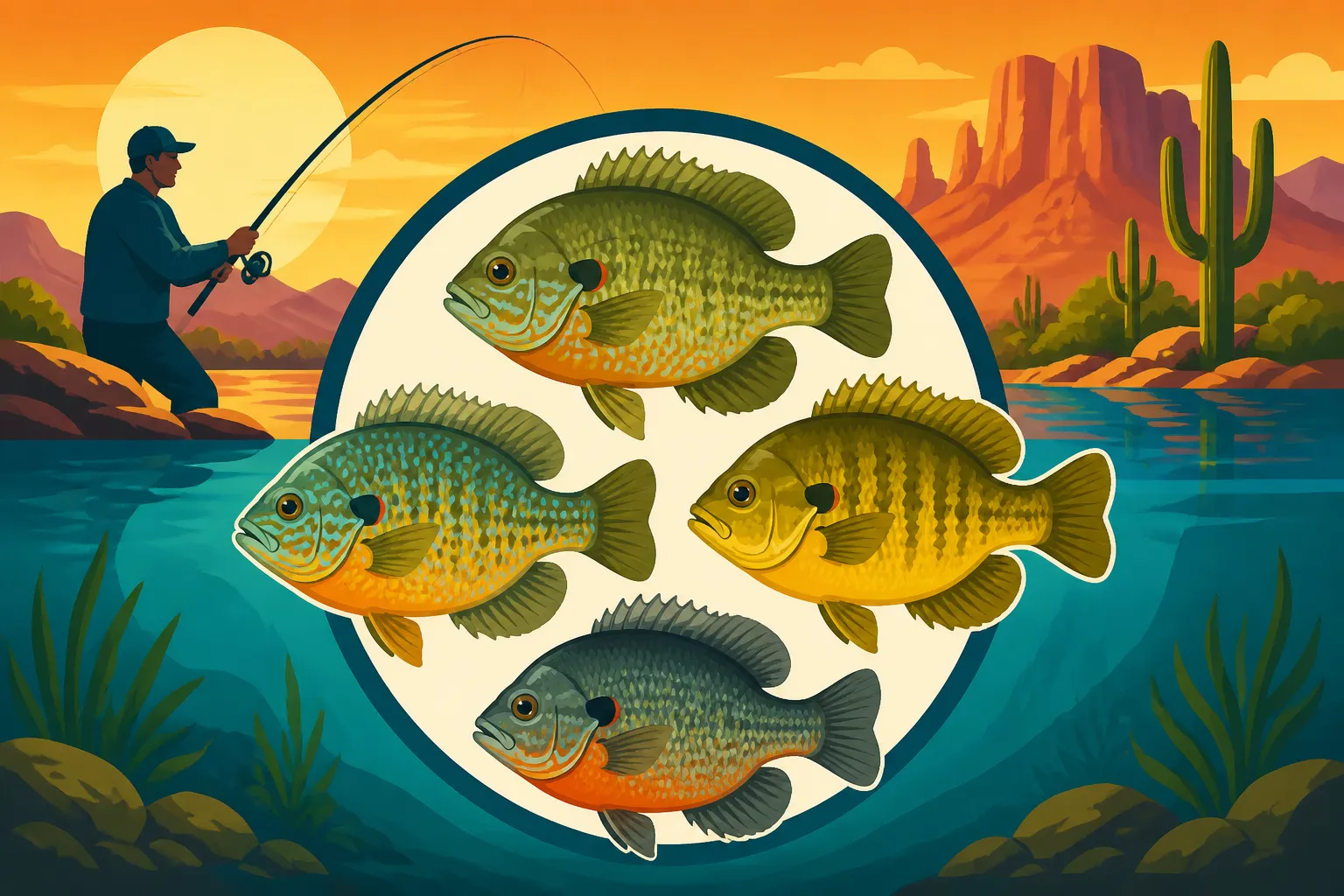
Ah, the bluegill! This is probably the most recognized and widely distributed sunfish in Arizona, and for good reason. They are masters of adapting to various environments, from small urban ponds to massive reservoirs like Lake Pleasant and Roosevelt Lake. Bluegill are typically deep-bodied, almost disc-shaped, with a small mouth and often a distinctive black spot on the posterior edge of their gill cover (operculum). Their coloring can vary wildly depending on water clarity and diet, ranging from olive green to dark blue on their backs, with yellowish or orange bellies and sometimes vertical bars on their sides.
Bluegill are true omnivores, feasting on insects, small crustaceans, and even plant matter. They are gregarious fish, often found in large schools, particularly around submerged structure, weeds, or shaded areas. If you're looking to introduce a child to fishing, a bluegill is often the first fish they'll ever catch, delivering that unforgettable tug on the line. They are an integral part of the food chain, serving as a primary forage species for larger predators like largemouth bass, which is why they are so vital to healthy ecosystems. Bluegill Size Limit at Community Ponds in Arizona covers specific regulations for keeping these tasty little fighters.
Redear Sunfish: The Shellcracker
If you're looking for a slightly larger, often more challenging sunfish to catch, the redear sunfish, affectionately known as the "shellcracker," is your target. These fish get their nickname from their preferred diet: snails and other mollusks. They have specialized pharyngeal teeth in their throats that allow them to crush shells, giving them a unique niche in the aquatic environment. You'll often find them with a more elongated body shape compared to bluegill, and their most distinguishing feature is the bright red or orange spot on the edge of their gill cover, which is especially prominent in males.
Redear sunfish tend to grow larger than bluegill, often reaching impressive sizes for a panfish. They prefer clearer water and are often found in slightly deeper areas or near the bottom where their snail prey resides. While they can be found in many of the same waters as bluegill, their specific dietary habits mean you might need a slightly different approach to entice them. Small jigs or bait presented on the bottom often work wonders. They put up a formidable fight, making them a favorite among panfish enthusiasts. These fish are a fantastic addition to the angling experience in lakes such as those found near Phoenix; for more specific locations, you can check out Community Park Lakes in Phoenix.
Green Sunfish: The Feisty Opportunist
The green sunfish might not be as widely distributed or grow as large as the bluegill or redear in Arizona's more popular fishing lakes, but they are incredibly tough, resilient, and, frankly, a bit aggressive for their size. These guys have a stockier, more elongated body than a bluegill, with a noticeably larger mouth that extends back to or beyond the eye. Their coloring is typically a mottled green-blue with irregular darker spots or bars, and they often have a yellowish or orange margin on their fins. They also possess a black spot on the operculum, similar to bluegill, but it's usually bordered by a lighter, sometimes orange-colored, margin.
Green sunfish are opportunists and survivors. They can thrive in less-than-ideal conditions, including muddy water or areas with lower oxygen levels where other sunfish might struggle. This resilience means you might find them in smaller creeks, canals, or lesser-known ponds where other species aren't as prevalent. Don't let their smaller average size fool you; they are notoriously feisty and will readily strike at almost any small offering, making them great fun on ultra-light tackle. They are often found lurking near cover like rocks, logs, or brush piles, waiting to ambush unsuspecting prey. You'll find a range of sunfish species, including green sunfish, in Arizona's Best Urban Fishing Lakes in Arizona.
Identifying Your Catch: Key Characteristics
It can be tough, especially for beginners, to distinguish between sunfish species when they're all flopping around in your hand, often with similar coloring. However, there are some key visual cues and behavioral patterns that, once you learn them, will make identification much easier. Getting good at this not only satisfies your curiosity but also helps you follow specific regulations that might apply to certain species.
Visual Cues for Identification
The easiest way to tell sunfish apart is to look closely at their physical features. Pay attention to the size and shape of their bodies, the color and markings on their fins and gill covers, and the size of their mouths. It might seem like subtle differences at first glance, but with a bit of practice, you'll be identifying them like a pro. Having a simple fish identification chart handy, perhaps printed and laminated or saved on your phone, can be a great tool when you're out on the water. Many anglers keep a small guide book or even an app on their phone for quick reference while fishing. You can find many useful guides and tackle organizers on platforms like Amazon that can help with this.
Here’s a quick comparison of the most common sunfish you’ll encounter in Arizona:
| Feature | Bluegill | Redear Sunfish (Shellcracker) | Green Sunfish |
|---|---|---|---|
| Body Shape | Deep-bodied, roundish, compressed sides | Slightly more elongated than bluegill | Stockier, more elongated |
| Mouth Size | Small, rarely extending past eye | Small, rarely extending past eye | Larger, typically extends to or past eye |
| Operculum (Gill Cover) | Distinctive black spot on margin | Bright red/orange spot on margin (males more prominent) | Black spot often with a pale/orange border |
| Pectoral Fin | Long and pointed | Long and pointed | Shorter and more rounded |
| General Coloration | Olive to dark blue back, yellowish belly, often vertical bars | Olive-green, sometimes gold speckles on sides | Mottled green-blue, irregular dark spots/bars |
| Habitat Preference | Weeds, submerged structure, varied | Clearer water, near bottom, often targeting snails | Tolerant of poorer conditions, near heavy cover |
Habitat and Behavior Clues
Beyond just looking at the fish, where and how you catch them can also give you hints about their identity. Different species have different preferences for water depth, cover, and even what they eat, which influences where they spend their time. For instance, if you're pulling fish consistently from shallow, weedy banks using a bobber and worms, you're likely into bluegill. However, if you're getting bites on small jigs bumped along a clean, gravelly bottom in slightly deeper water, especially if you know there are snails present, you might be catching redear.
Green sunfish, with their more aggressive nature and tolerance for diverse conditions, can pop up almost anywhere. You might find them in a quiet, shaded creek arm, or under a fallen tree in a pond. Their willingness to strike aggressively sets them apart. Observing the subtle differences in where you find these fish, and what they respond to, adds another layer of fun and learning to your fishing adventures. Understanding Largemouth Bass Habitat in Arizona Lakes can also give you clues, as sunfish are often found in similar areas where they serve as forage for larger game fish.
Where to Find Arizona's Sunfish
Arizona's diverse aquatic landscapes, from high mountain lakes to desert reservoirs and urban ponds, provide homes for various sunfish species. You don't have to venture far to find them, which is part of their appeal. Many of the most accessible fishing spots are brimming with these feisty panfish, making them perfect targets for a casual afternoon outing.
Community Lakes and Urban Ponds
For many families and beginners, the easiest and most consistent places to find sunfish, especially bluegill and occasionally green sunfish, are the numerous community fishing lakes and urban ponds scattered throughout Arizona's major metropolitan areas. Places like Cortez Lake, Encanto Park Lake, and Desert Breeze Park Lake in Phoenix, or Kennedy Lake and Silverbell Lake in Tucson, are regularly stocked and managed to provide excellent bank fishing opportunities. These waters are designed for easy access and often have amenities like paved paths, restrooms, and shaded areas.
The Arizona Game and Fish Department (AZGFD) does an excellent job with its Community Fishing Program, ensuring these urban waters are vibrant fisheries. Bluegill thrive in these environments, often found schooling around docks, bridges, cattails, or any submerged structure that offers cover. These locations are fantastic for teaching kids how to cast a line and experience the thrill of a catch. Plus, the ease of access means you can often squeeze in a quick fishing trip without extensive travel or preparation. To understand more about these managed fisheries, you can look into Arizona Community Fishing Program Rules.
Larger Reservoirs and Natural Waters
Beyond the urban oases, Arizona's larger reservoirs and more natural river systems also host robust populations of sunfish. Lakes like Roosevelt Lake, Lake Pleasant, and Apache Lake are teeming with bluegill, redear sunfish, and sometimes green sunfish. In these expansive waters, sunfish tend to congregate around specific types of structure or habitat. You might find them in vast weed beds, submerged timber, rocky points, or the upper reaches of creek arms where cover and food are abundant.
For redear sunfish, look for areas with hard bottoms, shell beds, or gravelly flats in slightly deeper water, especially in clearer lakes. Their snail-crushing diet means they'll often be found precisely where those mollusks thrive. Green sunfish, being tough and adaptable, might show up in more varied conditions, from the shallow, turbid backwaters of a reservoir to the rocky edges of a mountain stream. Fishing in these larger bodies of water often requires a bit more exploration, either from a boat or by systematically working different shorelines, but the rewards can be bigger fish and a more serene fishing experience. Best Fishing Lakes in Arizona provides a great overview of these prime locations.
Fishing for Sunfish: Techniques and Tackle
One of the beautiful things about sunfish fishing is that you don't need a boatload of expensive gear or highly specialized techniques to have a successful day. Simple, tried-and-true methods are often the most effective, making it an incredibly accessible pastime for everyone. This simplicity is part of their charm and why they're often the gateway fish for budding anglers.
Simple Setups for Success
For sunfish, light tackle is not just a suggestion; it's practically a requirement for maximum fun. A simple ultralight spinning rod and reel combo, spooled with 4 to 6-pound test monofilament line, is absolutely perfect. This setup allows you to feel even the lightest nibbles and makes a small bluegill feel like a trophy fish. You can find excellent entry-level combos on Amazon that are perfectly suited for sunfish.
Your terminal tackle should also be minimalistic. Small hooks, typically size 8 to 12, are ideal for their small mouths. Add a tiny split shot sinker a foot or so above the hook to get your bait down, and a small bobber to suspend your bait at the desired depth and signal bites. Setting your bobber to suspend your bait anywhere from 1 to 4 feet deep is a great starting point, depending on the water depth and where the fish are holding. The goal is to present a small, enticing meal right in their strike zone. Essential Tackle Box Setup for Arizona Beginners will give you more ideas for getting started.
Baits and Lures They Can't Resist
When it comes to bait for sunfish, simplicity reigns supreme. The classic choice is often the best: live worms or pieces of worms. Red wigglers, mealworms, or even small pieces of nightcrawlers are irresistible to all sunfish species. Thread a small piece onto your hook, ensuring the hook point is exposed, and cast it out. Crickets are another fantastic live bait, especially for bluegill and green sunfish, and can be deadly during warmer months when insects are plentiful.
If you prefer artificials, small jigs are incredibly effective. Tiny leadhead jigs, 1/32 to 1/16 ounce, tipped with a small piece of plastic grub, a Gulp! maggot, or even a tiny feather jig, can elicit aggressive strikes. Cast these near cover and retrieve them slowly with a slight jigging motion. For redear sunfish, try bumping those small jigs along the bottom, or even tipping your hook with a small piece of shrimp or corn to mimic their preferred food sources. Many anglers even have success with small spinners, especially rooster tails or similar inline spinners, when casting for more aggressive sunfish. No matter your preference, there's a good chance you'll find something on Amazon to fill your tackle box.
Fishing for sunfish in Arizona is a wonderful way to enjoy the outdoors, hone your angling skills, and appreciate the diverse aquatic life in our beautiful state. By understanding the different species and their preferences, you're not just fishing; you're truly connecting with the environment and making every catch a more informed and rewarding experience.
Disclaimer
This article is for general informational purposes only and does not constitute professional advice. Laws, prices and regulations vary by location and change over time. Consult a qualified professional for guidance on your specific situation.