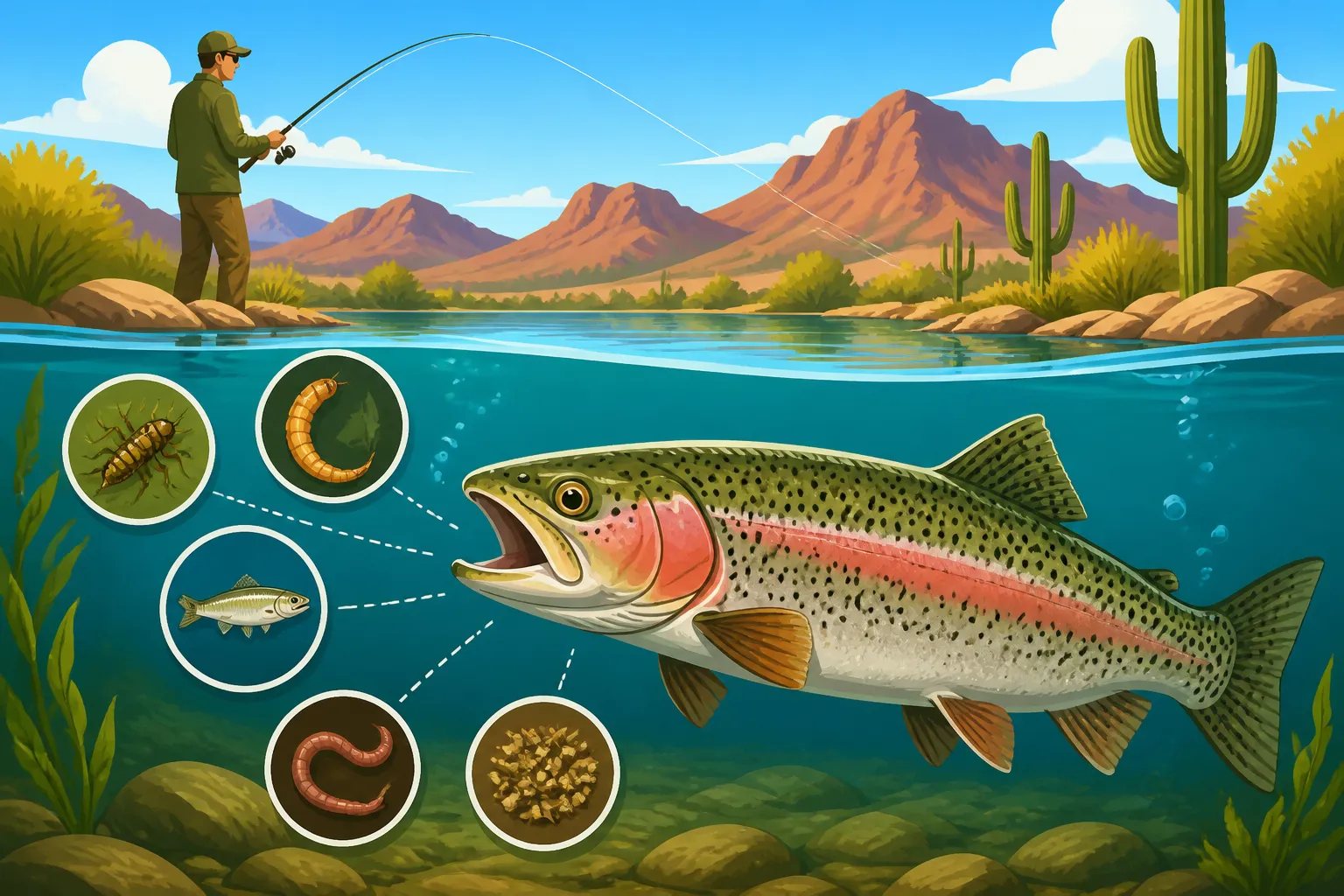
What Rainbow Trout Eat in Stocked Ponds
One of the most common frustrations for anglers, especially those new to Arizona's unique fishing scene, is trying to figure out what those recently stocked rainbow trout actually want to eat. You see them swimming around in our urban lakes and community ponds, sometimes rising, sometimes just cruising, and it can feel like you're throwing everything but the kitchen sink at them with no luck. This guide is here to unravel that mystery, diving deep into the diet of rainbow trout in stocked ponds and arming you with the knowledge to match their menu, helping you turn those frustrating blank days into memorable catches.
The Basics of a Stocked Trout's Diet: What They're Used To
When we talk about stocked rainbow trout, it's crucial to understand that their journey from hatchery to your local pond profoundly influences their initial eating habits. They aren't wild trout that have spent their entire lives foraging in a pristine stream. These fish have a very specific upbringing that shapes their palate, at least for a while.
Life Before the Pond: Hatchery Food
Before they ever see the open water of an Arizona community pond, rainbow trout spend their formative months in a hatchery. Here, they are raised in controlled environments, typically concrete raceways or large tanks, and fed a consistent diet of pelletized fish food. This food is scientifically formulated to provide all the necessary nutrients for rapid growth and health. Think of it like a kid who's only ever eaten a very specific type of cereal – it's what they know, it's what they recognize as food, and it's what they associate with sustenance.
This hatchery experience imprints on them. When these trout are first released, their primary instinct is often to seek out food that looks, smells, or feels similar to those pellets. This is a critical piece of information for anglers because it explains why certain artificial baits, often vibrant in color and infused with strong scents, are incredibly effective immediately after stocking. They're basically hitting the "easy button" for these fish, triggering that learned feeding response.
The Instinctual Switch: Natural Forage
While hatchery food forms their initial comfort zone, rainbow trout are still fish with inherent predatory instincts. Once released into a pond, especially if they survive past the initial flurry of fishing pressure (what we often call "holdover" trout), they begin to adapt. The pond environment, even an urban one, offers a smorgasbord of natural food sources that they quickly learn to recognize and consume. This is where the challenge and the fun truly begin for anglers.
They'll start to key in on aquatic insects, tiny crustaceans, and even smaller baitfish if available. This instinctual switch means that while powerbaits might work initially, as time goes on, mimicking natural forage becomes increasingly important. Anglers who only stick to "hatchery chow" often find their success wanes after a week or two post-stocking, while those who observe and adapt to what the trout are naturally eating tend to have more consistent results. Understanding this transition is key to becoming a more versatile and successful trout angler in Arizona's diverse waters. You can find more information about these stocked fish in our Rainbow Trout Fishing Guide for Arizona.
Common Natural Food Sources in Arizona Stocked Ponds
Even though Arizona's stocked ponds might seem barren compared to a mountain stream, they are teeming with life that rainbow trout quickly learn to exploit. While the water temperatures can get challenging in the warmer months, especially for trout, these fish are incredibly adaptable when it comes to finding a meal.
Aquatic Insects and Larvae
The world beneath the surface of a pond is a busy highway of aquatic insects, and trout are constantly on the lookout for them. These insects represent a consistent and often abundant food source.
Many common aquatic insects, such as midges, mayflies, caddisflies, and damselflies, go through various life stages underwater: eggs, larvae, nymphs, pupae, and finally, adult stages that often emerge from the water. Trout will feed on these at almost any stage. For instance, midge larvae, often called bloodworms due to their reddish color, are tiny, wriggling morsels that live in the silt and mud at the bottom. Trout will actively root them out. Mayfly nymphs and caddisfly larvae cling to rocks and vegetation, offering easy pickings. When these insects begin to "emerge" and swim towards the surface to hatch into adults, they become particularly vulnerable and create exciting feeding opportunities, sometimes leading to visible "rises" on the water's surface. Observing these natural insect patterns can give you a huge advantage in bait and lure selection. Understanding when these insects are most active can be a game-changer for your fishing strategy.
Crustaceans and Worms
Beyond insects, the humble world of crustaceans and worms provides a steady, protein-rich diet for stocked rainbow trout. Smaller crustaceans, like scuds (freshwater shrimp) and sowbugs, are common bottom-dwellers in many ponds and lakes. They are small, often translucent or grayish, and provide a convenient meal as trout cruise the bottom and weed lines. While not always abundant in every stocked urban pond, when present, they become a staple.
Worms, in general, are a trout favorite, particularly those squiggly red wigglers and larger nightcrawlers that find their way into the water from the surrounding soil. Trout instinctively recognize worms as food, and the natural scent and movement of a live worm are often irresistible. Bloodworms, which are the larvae of chironomid midges, are another crucial food source, living in the soft bottom sediments. Trout will graze along the bottom, sucking up these small, protein-packed tidbits. This is why natural baits like earthworms or even imitations are so effective; they perfectly mimic something trout are always on the hunt for.
Small Fish and Minnows
While most stocked trout are not primarily piscivores (fish-eaters) when first introduced, larger or "holdover" rainbow trout in Arizona's ponds will absolutely predate on smaller baitfish and minnows if they are present. Many community fishing lakes contain populations of smaller species like mosquitofish, sunfish fry, or even juvenile tilapia, which become easy targets.
A trout that has survived a few months or even a year in a pond will grow significantly and develop a taste for larger prey. They become more opportunistic hunters, lurking in weed beds or deeper structure, waiting to ambush unsuspecting minnows. For anglers targeting these larger, more established trout, imitating these baitfish with small swimbaits, jerkbaits, or even using live minnows (where legal, always check local regulations as per Arizona Fishing Regulations Explained) can be incredibly effective. It's a different game than targeting newly stocked fish, requiring a bit more patience and a focus on larger, more active presentations. Knowing the average size of the trout you might encounter can help tailor your approach; take a look at our Average Size of Stocked Trout in Arizona guide for more insights.
The Angler's Arsenal: Mimicking Their Diet
Now that we understand what rainbow trout eat, both by habit and by instinct, let's talk about how we, as anglers, can effectively mimic these food sources. The key is to offer something that either reminds them of their hatchery days or looks convincingly like a natural meal.
Best Baits Mimicking Hatchery Food
When trout are fresh out of the hatchery, or even after they've been in the pond for a while, certain baits tap directly into their early feeding experiences. These are often the "go-to" for beginners and seasoned pros alike, especially right after a stocking event, which you can track by checking the Trout Stocking Season in Arizona information.
- PowerBait (Dough, Nuggets, Eggs): This is arguably the most famous and effective bait for stocked trout. Its texture, scent, and vibrant colors are designed to mimic the pellet food trout were raised on. PowerBait comes in various forms – moldable dough, pre-formed nuggets, or even floating "eggs." The trick is often to float it just off the bottom using a small sinker, making it easily visible and accessible to cruising trout. You can find a vast selection of PowerBait products on Amazon, ensuring you have a variety of colors and scents to experiment with.
- Corn: A surprising, yet consistently effective bait, sweet corn works wonders. Its bright yellow color and slightly sweet scent can attract trout, and its small, soft kernels are easy for them to ingest. While it's not a natural part of their diet in the wild, its appearance might trigger a curiosity or even a feeding response similar to hatchery pellets. Just remember to use a few kernels on a small hook.
- Marshmallows: Believe it or not, small marshmallows, especially the mini ones, are another classic. They float, which helps get your bait off the bottom, and can be soaked in various scents to further entice strikes. Like corn, they don't mimic a specific natural food but can be irresistible due to their soft texture and ability to absorb additional flavors.
The common thread here is scent, color, and texture that appeals to a trout's learned behaviors. These baits are often presented still, allowing the scent to disperse and attract fish.
Best Lures Mimicking Natural Forage
Once trout have settled into their new environment, or if you're targeting those clever holdovers, lures that imitate natural prey become incredibly effective. This is where your retrieve, presentation, and choice of lure size and color really matter.
- Spinners: Small inline spinners are phenomenal for trout. Brands like Mepps, Panther Martin, and Roostertail produce a flash and vibration that imitate fleeing baitfish or actively swimming insects. Sizes from 0 to 2 are usually perfect for stocked rainbows. Vary your retrieve speed and depth until you find what triggers a bite.
- Spoons: Casting spoons, such as those from Kastmaster or Little Cleo, offer a wobbling action that perfectly mimics an injured baitfish. Their metallic flash can be seen from a distance, drawing strikes. Again, smaller sizes (1/8 to 1/4 ounce) are typically best. These are excellent for covering water and exploring different depths. You can easily find a wide array of spoons on Amazon, including multi-packs to cover various conditions.
- Small Jigs and Soft Plastics: Tiny grub-style jigs or soft plastic worms (often in colors like white, chartreuse, or natural browns/greens) can imitate a variety of aquatic invertebrates or even very small baitfish. Tipped with a small piece of worm or scented attractant, these can be deadly when fished slowly along the bottom or jigged subtly. Fly anglers will often use small nymphs or wet flies that mimic submerged insects, which translates well to tiny jigging presentations for spin fishing.
The key to lures is action and presentation. Experiment with colors based on water clarity (brighter in murky water, more natural in clear) and retrieve styles until you dial in what the trout want. You might find some of the techniques described in Best Trout Fishing Techniques for Arizona Waters helpful here.
Live Baits That Work
For many anglers, nothing beats the natural appeal of live bait. When legal and used correctly, live baits are often irresistible to hungry trout. Always double-check local regulations on live bait use, as specified in Arizona Fishing Regulations Explained, before heading out.
- Worms: Red wigglers and segments of nightcrawlers are absolute trout magnets. Their natural scent and continuous wiggling action are hard for a trout to ignore. They can be fished on the bottom with a small split shot, or suspended under a bobber.
- Mealworms: These small, chitinous larvae are easy to store and rig. They offer a unique texture and scent that trout often find appealing, mimicking various insect larvae. They're great for tipping small jigs or fishing under a bobber.
- Small Minnows: In ponds where it's legal, small live minnows can be incredibly effective, especially for larger, more predatory trout. These are usually fished on a light wire hook through the back or lips, either suspended under a float or slowly retrieved. Remember, the legality of using live fish as bait varies, so always confirm.
Live baits appeal to the trout's natural instincts, providing a genuine food source. Pairing these with light line and subtle presentations often leads to more bites. For a comprehensive list of bait options, check out Best Baits and Lures for Arizona Fishing.
Strategies for Success: Matching the Menu
Knowing what trout can eat is only half the battle. The real secret to consistent success lies in understanding how to present those options and when the trout are most likely to take them. Arizona's unique environment, with its desert lakes and urban ponds, often requires a bit of specific finesse.
Observe and Adapt
Trout, especially stocked ones, can be finicky. What worked yesterday might not work today, and what works for one angler might not work for another just a few feet away. The most successful anglers are keen observers and masters of adaptation.
Start by paying attention to your surroundings. Are there any visible insect hatches? Are other anglers catching fish, and if so, what are they using? Look for any signs of feeding activity, such as trout rising to the surface to snatch insects, or subtle dimples indicating they're feeding just below the surface. If nothing is happening, don't be afraid to switch things up. If PowerBait isn't working after 15-20 minutes, try a small spinner. If the spinner isn't producing, try a worm or a jig. Experiment with different colors, retrieves, and depths. Sometimes, a slight change in retrieve speed from a slow, steady pull to a subtle stop-and-go twitch can make all the difference. The fish will tell you what they want if you pay close enough attention. You might even discover that the specific lake you're fishing has its own unique patterns, which is why resources like How to Catch Trout at a Stocked Urban Lake are so valuable.
Timing is Everything
Just like us, trout have peak feeding times, and these are heavily influenced by environmental factors in Arizona's climate, especially water temperature and light conditions.
- Water Temperature: Rainbow trout thrive in cooler water, ideally between 45 and 65 degrees Fahrenheit. In Arizona's stocked ponds, especially during the cooler months when stocking typically occurs, the trout are usually most active in the mid-morning and late afternoon as the water warms slightly. During warmer periods, they might become sluggish in the heat, retreating to deeper, cooler water. Conversely, extremely cold water can make them less active overall. Knowing the Arizona Fishing Season Dates and Limits for trout can help you plan your trips around optimal temperatures.
- Time of Day: Early morning and late afternoon/early evening are often prime times. The lower light conditions make trout feel more secure, and these periods often coincide with insect activity. During the bright mid-day sun, trout might move deeper or seek shade, becoming less inclined to chase fast-moving lures. On overcast days, however, they might feed more consistently throughout the day.
- Recent Stocking: Immediately after a stocking event, trout are often disoriented but hungry. This is when baits mimicking hatchery food are exceptionally effective. Over the next few days, they'll begin to spread out and adapt, making the shift to natural imitations more important. Keep an eye on the Urban Lake Trout Season in Arizona schedules to hit the water at the right moment.
Presentation is Key
You can have the perfect bait, but if your presentation is sloppy, you're still likely to go home empty-handed. Trout are visually oriented and can be very line-shy, especially in clearer water found in many Arizona ponds.
- Light Line and Small Hooks: Using light monofilament or fluorocarbon line (2-6 pound test) is crucial. This helps make your bait look more natural and prevents fish from seeing thick, heavy lines. Pair this with small hooks (sizes 10-14, depending on your bait) that are appropriate for the size of a trout's mouth and the bait you're using.
- Stealth: In smaller ponds, noise and commotion on the bank can spook fish. Approach the water quietly, avoid casting long shadows over your fishing spot, and minimize unnecessary movements.
- Rigging: How you rig your bait matters. For floating PowerBait, use a slip sinker above a swivel, with a short leader to your hook, allowing the bait to float a foot or two off the bottom. For worms or jigs, a simple split shot a few inches above the hook is often enough to get it down. When using lures, consider a small, sensitive rod and reel combination that allows for precise casting and feeling those subtle bites. You can explore options for this in our Best Fishing Reels for Beginner Anglers in Arizona guide or Best Tackle for Desert Lake Fishing.
By observing, understanding the timing, and perfecting your presentation, you'll dramatically increase your chances of success with Arizona's stocked rainbow trout, making every trip to the pond a more rewarding experience.
Here's a quick reference table to help match your baits and lures to the trout's diet:
| Trout Diet Component | Best Baits & Lures to Mimic | Presentation Tip | When It Works Best |
|---|---|---|---|
| Hatchery Pellets | PowerBait (Dough, Nuggets, Eggs), Corn, Marshmallows | Still-fished, floating off bottom with split shot; often scented | Immediately post-stocking, or for actively feeding fish |
| Aquatic Insects/Larvae | Small Jigs (grub, midge, nymph patterns), Wet Flies, Small Spoons | Slow retrieve, subtle jigging near bottom or mid-water; focus on imitating movement | When fish are actively feeding on natural insects (e.g., during hatches or emergence) |
| Crustaceans/Worms | Live Worms (Red Wigglers, Nightcrawlers), Mealworms, Scuds | Still-fished on bottom, or slowly drifted; subtle movement | Consistent, reliable bait when trout are foraging bottom |
| Small Fish/Minnows | Small Spinners, Spoons, Small Swimbaits, Live Minnows (if legal) | Moderate to fast retrieve, stop-and-go, erratic movements to imitate injured baitfish | For larger, more aggressive trout, especially holdovers |
Disclaimer
This article is for general informational purposes only and does not constitute professional advice. Laws, prices and regulations vary by location and change over time. Consult a qualified professional for guidance on your specific situation.