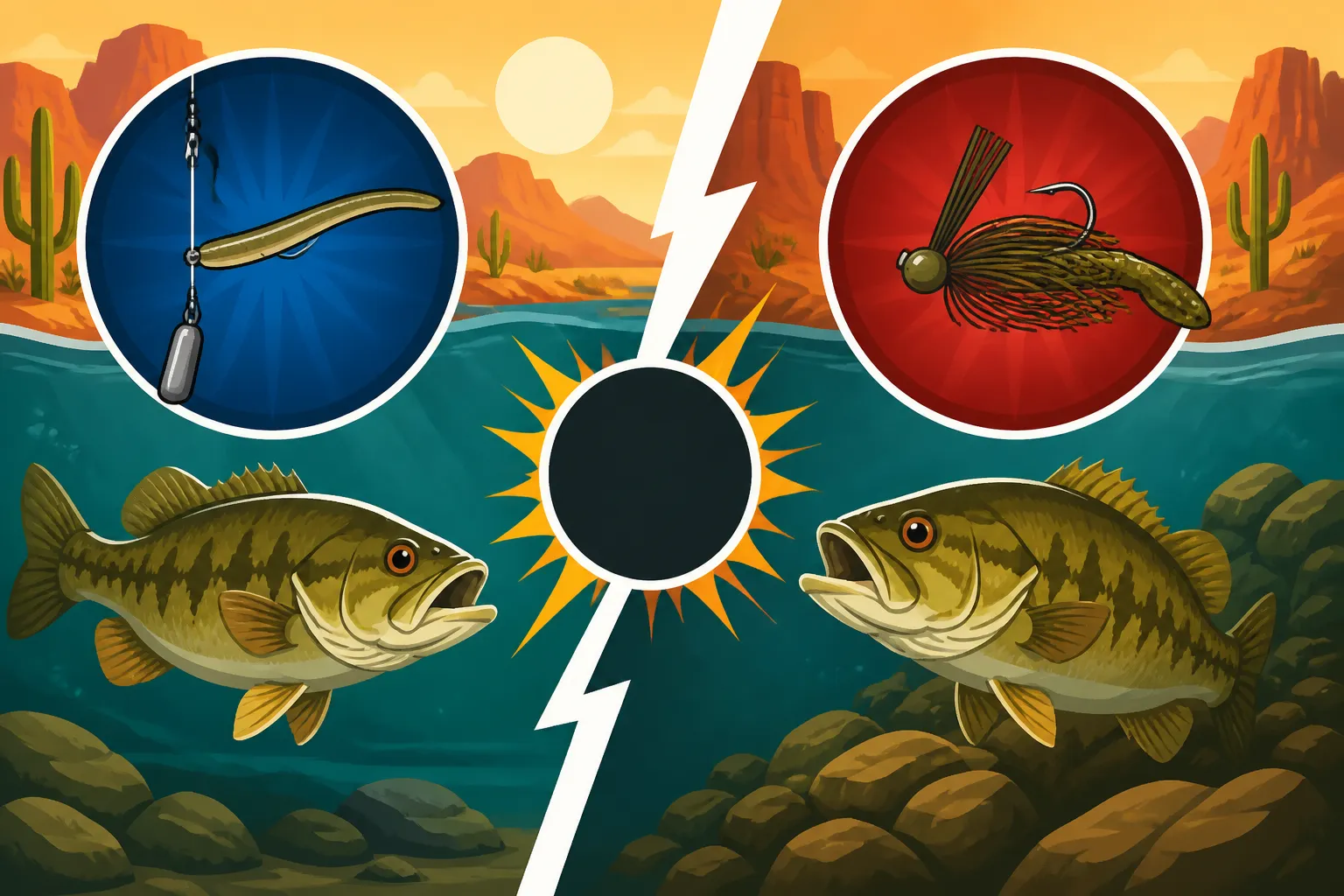
Is Drop Shot Better Than Jig Fishing for Smallmouth?
When you're out on Arizona's stunning, clear-water lakes, staring down into those rocky depths hoping for a smallmouth bass, a common question often pops into an angler's mind: should I be drop-shotting, or should I be jigging? It's a real head-scratcher because both techniques can be incredibly effective, but they excel in different situations. This guide is all about helping you decide which one to tie on, providing a clear comparison so you can approach those elusive Arizona smallmouth with confidence.
Understanding the Smallmouth Bass Challenge in Arizona
Arizona's smallmouth bass fishing is a unique experience, quite different from chasing largemouth in weed-choked ponds. These bronze beauties thrive in specific environments, and truly understanding their habits is the first step to deciding on your technique.
The Elusive Nature of Arizona Smallmouth
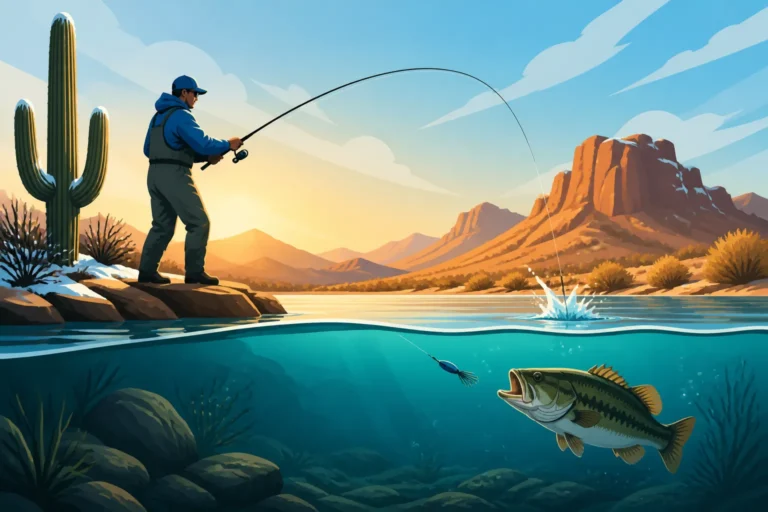
Smallmouth bass in Arizona are often found in cooler, clearer waters, favoring rocky structures like those found in Lake Powell, Apache Lake, or even parts of Lake Pleasant. They love ledges, steep drop-offs, submerged humps, and areas with plenty of rock crevices where they can ambush prey. Unlike their largemouth cousins who might lurk in thick vegetation, smallmouth are structure-oriented. This means your bait needs to get down to them and stay in their strike zone without getting constantly snagged. They can be incredibly finicky, especially when the water is clear and there's a lot of fishing pressure. Sometimes they want an aggressive, reaction bite, and other times they demand a subtle, finesse presentation that almost begs them to eat. This variability is what makes choosing the right technique so crucial.
Their temperament can shift throughout the day and with seasonal changes. In cooler months or during lower light conditions, they might be more apt to chase a moving bait. However, when the sun is high, or they've seen a lot of lures, they can become quite lethargic and require a more patient, enticing approach. If you've ever spent hours casting at a rocky point on Lake Powell without a bite, only to switch to a different presentation and immediately hook up, you know exactly what I'm talking about. Understanding these nuances is key to consistent success. Our comprehensive Smallmouth Bass Fishing Guide for Arizona delves deeper into their habits and preferred habitats.
Key Factors Influencing Technique Choice
Deciding between a drop shot and a jig isn't a random choice; it's a strategic decision based on several environmental and fish behavior factors.
First, consider the water clarity. Arizona is known for its crystal-clear desert lakes. In very clear water, fish have a better chance to scrutinize your bait. Finesse techniques, which often present a more natural, subtle offering, tend to shine here. Conversely, in slightly stained water or low light, a more aggressive jig presentation might be more effective at drawing attention.
Next, depth and structure type play a huge role. Are you fishing 5 feet deep over chunk rock, or are you trying to hit a ledge 40 feet down? Is the bottom littered with snags, or is it relatively clean? A technique that excels at a specific depth or over a certain type of cover will minimize frustration and maximize fishing time. The Smallmouth Bass Habitat in Arizona Lakes article offers great insights into where to find these structures.
Finally, think about the fish activity level. Are the smallmouth actively chasing baitfish, or are they hunkered down and lethargic? Active fish might respond well to a bait that covers water quickly and triggers a reaction strike. Inactive or pressured fish often require a slow, precise presentation that stays in their face longer. This constant evaluation throughout your fishing day is what separates good anglers from great ones.
The Art of Drop Shot Fishing for Smallmouth
The drop shot rig has revolutionized finesse fishing for smallmouth bass, especially in clear-water environments like many of Arizona's premier lakes. It's a technique that demands precision but rewards patience with incredible results.
What Makes Drop Shot So Effective?
At its core, the drop shot rig is deceptively simple: your hook is tied directly to your main line, and a weight is attached to the tag end of the line, anywhere from six inches to several feet below the hook. This unique setup presents your soft plastic bait (often a straight-tail worm, a small minnow imitation, or a creature bait) horizontally and naturally at a specific depth, completely off the bottom. Unlike a jig that falls to the bottom, the drop shot allows your bait to hover tantalizingly in the water column, right in the smallmouth's face.
Its primary strength lies in its ability to keep the bait in the strike zone for extended periods. You can shake your rod tip, imparting subtle action to the bait, while the weight maintains bottom contact. This allows you to really work a piece of structure slowly and thoroughly, which is often crucial when smallmouth are finicky or tightly grouped. The bait’s suspended nature also means it's less likely to get snagged on the rocky bottoms that smallmouth love, saving you time and money on lost tackle. For a deep dive into how to set up and use this rig, check out our guide on How to Fish a Drop Shot for Smallmouth Bass.
When to Reach for Your Drop Shot Rig
The drop shot truly shines in specific scenarios, making it an indispensable tool for Arizona smallmouth anglers.
First and foremost, when fishing deep water, it's hard to beat a drop shot. Whether you're targeting smallmouth hugging steep canyon walls on Lake Powell or suspended over deep humps, the drop shot allows you to precisely deliver your bait to those depths and keep it there. You can watch your fish finder, see the smallmouth, and then drop your bait right down to them.
It's also the go-to technique for highly pressured fish or when the bite is tough. The subtle, natural presentation of a small plastic on a drop shot often elicits strikes when more aggressive baits are ignored. Those days when the fish seem to have lockjaw, a meticulously worked drop shot can be the magic bullet. When you're fishing areas that see a lot of angler traffic, like popular points on Lake Pleasant, a finesse approach can make all the difference.
Another excellent time for the drop shot is when vertical fishing over structure. If you're idling over a submerged rock pile or a timber patch, you can drop your rig straight down, twitch it gently, and entice strikes from fish that might not move far to chase a bait. The minimal snagging risk is a huge bonus here. For success, you’ll typically want light spinning tackle, a sensitive rod, and fluorocarbon line for maximum feel. And don't forget to have a variety of soft plastics ready! You can find a vast selection of these specialized items for drop shot fishing on Amazon, ensuring you have the right bait for any situation.
Mastering Jig Fishing for Aggressive Smallmouth
While drop shotting excels in finesse situations, jig fishing offers a more aggressive, often faster-paced approach that can be incredibly rewarding, particularly when smallmouth are in a chasing mood.
The Appeal of Jig Fishing
Jigs come in a dazzling array of shapes, sizes, and colors, each designed to imitate different forage and trigger specific reactions. For smallmouth, you'll often hear about hair jigs, football jigs, grub jigs, and even swim jigs. Hair jigs, with their pulsating skirts, do an incredible job of mimicking baitfish or even fleeing crawdads. Football jigs are fantastic for dragging across rocky bottoms, as their head shape helps them crawl over snags, feeling just like a scurrying crayfish. Grub jigs offer a consistent swimming action. The versatility of jigs means you can imitate almost anything a smallmouth would eat, from a tiny insect to a full-sized baitfish.
The main appeal of jig fishing for smallmouth lies in its ability to provoke a reaction strike. Instead of gently enticing a bite, a jig, with its erratic fall, hop, or swim, often triggers an aggressive response from even hesitant fish. It's a fantastic technique for covering water more quickly, especially when you're searching for active schools of fish. Once you find them, you can often keep them biting with an aggressive jig presentation. This is where you might find more success searching for bass at different depths, compared to the more targeted approach of a drop shot. Many anglers find the sensation of a powerful strike on a jig to be one of the most exciting parts of smallmouth fishing. Learn more about specific tactics in our guide on Jig Fishing Techniques for Bass.
Optimal Scenarios for Jigging
Jig fishing really shines when the smallmouth are more active and willing to chase.
One prime scenario is in shallower water or when fish are relating to the upper portions of structure. If you see smallmouth busting bait on the surface or know they're holding in 10-20 feet of water around rocky banks, a jig can be cast out, allowed to sink, and then worked back with hops and pauses. This covers a lot more horizontal ground than a typical drop shot presentation.
When smallmouth are actively feeding on crayfish along rocky points or transition areas, a football jig or a skirted jig with a craw imitation trailer is often unbeatable. The way it crawls and hops over the rocks perfectly imitates a crawdad trying to escape, triggering those instinctive predatory strikes. Lakes like Canyon Lake or even the upper reaches of Roosevelt Lake can be prime for this kind of jigging.
Jigging is also an excellent choice for searching for fish. If you're on a new lake or scouting a new area, casting and retrieving jigs can help you quickly locate active smallmouth before you commit to a slower, more deliberate technique. While light spinning gear can be used for smaller jigs, you'll often find anglers reaching for baitcasting tackle with heavier line when jigging, especially with football jigs or swim jigs, to handle the larger baits and potential snags. A good selection of various jig types and colors can be found on Amazon, ensuring you're prepared for whatever the fish are biting.
Drop Shot vs. Jig: Making the Decision on Arizona Waters
So, after all that, is drop shot better than jig fishing for smallmouth? The honest answer, like most things in fishing, is: it depends. Neither is inherently "better" in all situations; they are complementary tools in a smallmouth angler's arsenal.
Direct Comparison: Strengths and Weaknesses
Let's break down how these two popular techniques stack up against each other, helping you make an informed decision on the water.
| Feature | Drop Shot | Jig Fishing |
|---|---|---|
| Presentation | Finesse, subtle, natural, suspended off bottom | Aggressive, erratic, mimics fleeing prey |
| Depth Control | Excellent, precise at specific depths | Good, covers a range of depths on retrieve |
| Fish Activity | Best for finicky, pressured, or inactive fish | Best for active, aggressive fish, reaction bites |
| Snag Resistance | High, weight often hits bottom before hook | Moderate to low, hook and head can snag |
| Speed | Slow, methodical, thorough | Moderate to fast, covers water efficiently |
| Target Zone | Vertical water column, specific structure | Horizontal bottom and mid-column, searching |
| Bite Detection | Often subtle taps, high sensitivity required | Often aggressive thumps, easier to feel |
| Ideal Water | Clear, deep water, vertical structure | Clear to slightly stained, varied structure |
As you can see, the strengths of one often highlight the weaknesses of the other. For instance, the drop shot's precision and subtle presentation make it a dream for finicky fish in deep, clear water. You can literally shake your bait in front of a smallmouth until it can't resist. However, if you're trying to quickly locate fish across a large flat, the slower pace of the drop shot might not be the most efficient approach.
Conversely, jigging excels at covering water and triggering those powerful reaction strikes. When smallmouth are aggressive and hunting, a well-placed jig can be absolutely deadly. But drag that same jig through a dense rock pile that a drop shot could effortlessly float over, and you'll spend more time re-tying than fishing. Thinking about the Best Lures for Smallmouth Bass at Lake Powell or other Arizona lakes, you'll find both categories well-represented for good reason.
Hybrid Approaches and Adaptability
The real secret to consistently catching smallmouth in Arizona isn't choosing one technique over the other, but rather understanding when and how to integrate both into your fishing strategy. Often, it's not an either/or situation but a spectrum of presentations.
Sometimes, a hybrid approach can be incredibly effective. For example, if you find active fish with a jig, but the bite starts to slow down, switching to a drop shot in the same area can pick up those hesitant followers. Or, if you want a faster fall with your drop shot to quickly get to deeper fish, you might use a heavier weight than usual. Similarly, a very light jig can be worked with extreme finesse, almost mimicking the subtle action of a drop shot, especially when fishing rocky ledges.
The ability to adapt on the fly is paramount. Start by observing the conditions: water clarity, depth, wind, and how the fish are behaving on your electronics. Make an educated guess, tie on a presentation, and let the fish tell you if you're right. If they're not biting, don't be afraid to switch. Having a well-stocked tackle box that includes a variety of options for both drop shotting and jigging, easily assembled from the wide range of products available on Amazon, prepares you for any scenario the Arizona waters throw at you.
Ultimately, both drop shot and jig fishing are fantastic techniques for smallmouth bass in Arizona. The question isn't which is "better," but which is "better for the current conditions." Mastering both, and knowing when to deploy each, will undoubtedly elevate your smallmouth game and lead to more unforgettable days on the water. Make sure your reel is spooled with quality line, as described in Best Line for Bass Fishing, and you're ready to tackle whatever the smallmouth decide they want to eat!
Disclaimer
This article is for general informational purposes only and does not constitute professional advice. Laws, prices and regulations vary by location and change over time. Consult a qualified professional for guidance on your specific situation.