Do Bass Bite Better Before a Storm?
You've probably heard the old saying that fishing before a storm is a surefire way to fill your cooler, or maybe you've experienced those magical hours yourself. But is it just an old angler's tale, or is there real science behind the idea that bass bite better when the weather is about to turn? For us Arizona anglers, dealing with sudden, dramatic weather shifts, especially during monsoon season, can make this question even more pressing. This guide will dive deep into the fascinating relationship between barometric pressure, weather fronts, and bass behavior, helping you understand when and why those pre-storm bites often happen, and how to make the most of them safely.
The Barometric Pressure Breakdown: Why Weather Matters to Bass
It might seem strange that something as invisible as air pressure can dictate whether a bass is going to aggressively strike your lure or just lazily stare at it, but it's a huge factor. Think of it like this: just as a change in weather can give us a headache or make us feel sluggish, it has a profound effect on fish and their comfort levels. Understanding these atmospheric shifts is key to predicting when bass will be most active, especially here in Arizona where weather can change on a dime.
The Science Behind the Bite: Pre-Frontal Conditions
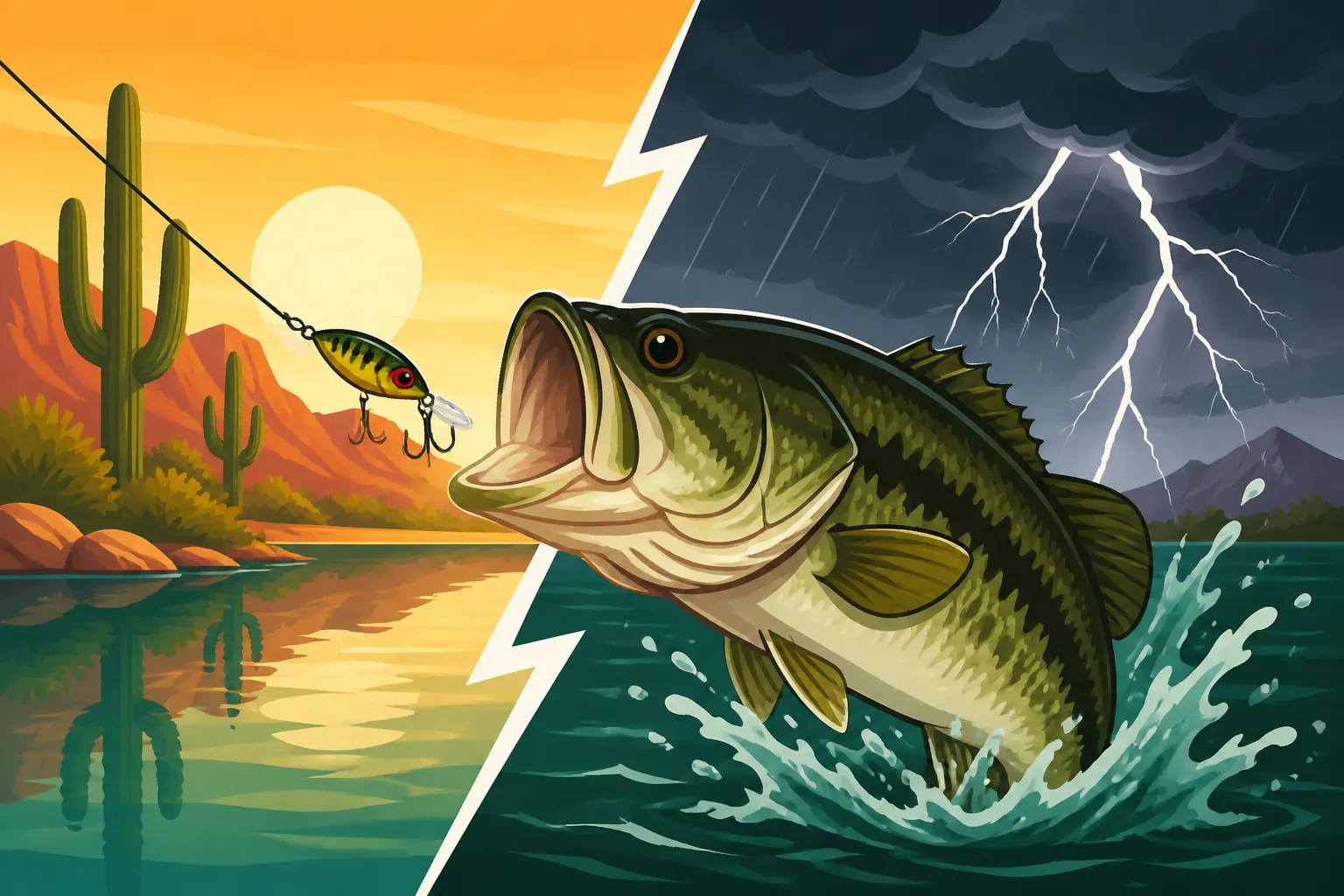
The golden hour for many bass anglers often occurs just before a major weather system moves in, particularly when the barometric pressure starts to drop. This falling pressure signals an approaching storm, and it has a direct impact on a bass's swim bladder. Fish use their swim bladders to regulate buoyancy in the water column, and as the external pressure decreases, the gas in their bladders expands slightly. While this might sound uncomfortable, it often triggers an increased feeding response. It's almost as if they sense the change, instinctively knowing that the calm before the storm is their last good chance to feed actively before potentially unsettled conditions.
During these pre-frontal periods, you'll often find bass moving shallower and becoming more aggressive. They're opportunistic predators, and the dropping pressure seems to flip a switch, telling them to stock up on food. You might see them chasing baitfish more vigorously, becoming less wary of your presentations. This is when those topwater blow-ups or hard strikes on a crankbait become much more common. Anglers who pay attention to weather forecasts, even just a simple look at their phone's weather app, can really capitalize on this window of opportunity. Knowing when that pressure is dropping can make all the difference between a slow day and an epic outing.
Post-Frontal Blues: When the Bite Shuts Down
Conversely, once a cold front has passed and high, stable barometric pressure settles in, the fishing can become incredibly tough. After the storm has moved through, the air pressure often rises sharply and then stabilizes at a higher level. This sudden increase in external pressure can have the opposite effect on a bass's swim bladder, making them feel uncomfortable and often driving them deeper or into heavy cover. They might become lethargic, less inclined to chase, and much more selective about what they'll eat. This is a common frustration for anglers who hit the lake the day after a big storm, expecting the fish to still be fired up.
The post-frontal blues are real, especially in the clear waters of many Arizona lakes. The bass often pull tight to structure, burying themselves in brush piles, under docks, or deep within submerged timber. Their metabolism slows down, and they'll expend minimal energy. When this happens, you often need to slow down your presentation considerably, perhaps switching to finesse techniques like a drop shot or a shaky head, and targeting very specific ambush points. It's a stark contrast to the aggressive feeding frenzy you might have experienced just hours before the storm rolled in. This shift perfectly illustrates why understanding the role of barometric pressure is so crucial for consistent success.
Reading the Arizona Skies: Spotting Pre-Storm Opportunities
Arizona's weather can be dramatic and beautiful, but also intense and unpredictable, especially during certain times of the year. Learning to read the subtle (and not-so-subtle) cues in the sky can give you a significant advantage in timing your fishing trips for those prime pre-storm bites, while also ensuring your safety.
Visual Cues and Atmospheric Signs
Before a storm truly hits, the Arizona sky often puts on a show, offering clues to the observant angler. You might start to notice the sky getting darker, with an increasing density of clouds, particularly towering cumulonimbus clouds, which are the hallmark of developing thunderstorms. The wind often shifts direction and picks up speed, sometimes feeling warm and humid before turning cooler as the front approaches. You might even feel a subtle drop in temperature or a slight increase in humidity in the air. These aren't just aesthetic changes; they're direct indicators of falling barometric pressure and an impending weather event.
Beyond just looking at the clouds, pay attention to the overall "feel" of the day. Is it unusually still and muggy, only for a breeze to suddenly kick up from a different direction? Are birds acting erratically, or are insects becoming more active? All these natural signs can point to a change in the weather. For those of us who spend a lot of time outdoors, developing an instinct for these atmospheric shifts becomes second nature. However, it's always wise to back up your observations with a reliable weather forecast – apps like those found on your smartphone or even a dedicated weather radio can be incredibly helpful for staying informed and safe. Knowing when the pressure starts to fall is key to anticipating that hot bite window.
The Best Windows: Timing Your Attack
The absolute sweet spot for pre-storm bass fishing is typically in the hours leading up to the actual rain or lightning. This isn't usually a day-long affair; it's often a window of a few hours where the barometric pressure is steadily dropping, but the full intensity of the storm hasn't yet arrived. Bass, sensing the impending weather, become more active and venture out from deeper haunts or heavy cover to feed aggressively. This is when you can experience some truly epic fishing, with bass hitting almost anything you throw at them.
The trick is being there during this precise window and then knowing when to pack it up. If the storm system is moving in slowly, you might have a longer period of increased activity. If it's a fast-moving front, that window can be quite short, perhaps only an hour or two. You'll want to be on the water, rigged and ready, as soon as those atmospheric changes become apparent. Keep a close eye on the horizon for lightning, and don't hesitate to head for shore if you see any strikes or hear thunder. Remember, no fish is worth risking your safety. Many anglers find success by targeting lakes known for their active bass populations during these periods, such as those covered in our guide to the Best Bass Fishing Lakes in Arizona
Tactical Adjustments for Pre-Storm Bass Fishing in Arizona
When bass are in that aggressive, pre-storm feeding mood, they often require a different approach than when they're lethargic and hunkered down. Your choice of lures, presentation, and even where you target them can make a world of difference in capitalizing on this exciting window.
Lure and Presentation Choices
During those magical pre-frontal hours, bass are often less finicky and more willing to chase down a meal. This is your chance to use reaction baits that trigger an aggressive strike. Crankbaits are fantastic because they cover water quickly and can elicit a strong response from bass that are actively looking to feed. You can vary your retrieve speed, but often a slightly faster, more erratic retrieve will draw strikes from hungry fish. Consider brighter, more visible colors, or those that mimic local baitfish. A good selection of squarebill and diving crankbaits is a must-have in your tackle box for these conditions.
Spinnerbaits and chatterbaits are also excellent choices. Their flash and vibration can be irresistible to active bass, especially in waters that might be slightly stained or choppy from the building wind. Don't be shy about throwing them near cover or along points where bass might be staging. And let's not forget topwater lures! If the conditions are right – overcast skies, low light, and a bit of chop on the water – a frog, popper, or walking bait can lead to some truly explosive strikes. Imagine a big largemouth blowing up on your lure just as the first drops of rain start to fall; it's an unforgettable experience. For a fantastic selection of these aggressive lures, I often find myself browsing on Amazon, where you can find everything from your trusty crankbaits to the latest topwater innovations. Make sure to check out our Best Lures for Largemouth Bass in Arizona Lakes guide for more detailed recommendations.
Locating Pre-Storm Hotspots
Just before a storm, bass tend to move. Instead of holding tight to deep structure, they often push shallower, becoming more opportunistic hunters. Look for them on points, humps, and secondary structure near deeper water, as these provide excellent ambush points. Bass will often move up onto flats or into coves where baitfish are seeking shelter from the rising wind. Focus on transition areas where different depths or types of cover meet, such as the edge of a weed line or a rocky drop-off. These are prime locations for bass to intercept unsuspecting prey.
If you're fishing from a boat, now is the time to actively use your electronics to scout these areas. A good fish finder can help you quickly identify submerged humps, brush piles, or even schools of baitfish that bass might be pushing. Look for congregations of fish in shallower depths than you might normally target, especially along wind-blown banks where baitfish might be pushed. For shore anglers, focus on prominent points, jetties, or any access to deeper water that bass might utilize as they move. Having a reliable portable fish finder, easily found on platforms like Amazon, can significantly increase your chances of finding those pre-storm hotspots, even if you're not in a boat. This shift in behavior highlights why understanding Seasonal Movement Patterns of Arizona Bass is so critical.
Safety First: Fishing Around Arizona Storms
While those pre-storm bites can be absolutely legendary, it's crucial to remember that safety always comes first, especially when dealing with Arizona's often intense and unpredictable weather patterns. Chasing a fish is never worth putting yourself or others in harm's way.
Monsoon Season Precautions
Arizona's monsoon season, typically running from June to September, brings with it a whole new set of challenges and dangers. These storms can develop rapidly and be incredibly violent, with torrential downpours, high winds, and frequent lightning. Flash flooding is a serious concern, particularly in washes and low-lying areas, and can turn a peaceful fishing trip into a life-threatening situation in minutes. If you're planning on fishing during the monsoon season, even if the forecast looks clear, you need to be constantly vigilant. Keep an eye on darkening skies to the east or south, which is often where these storms brew.
Never take shelter under a lone tree during a lightning storm, and if you're in a boat, get off the water immediately if you hear thunder or see lightning. Cell service can be spotty in remote areas, so don't rely solely on your phone for weather updates or emergencies. Always let someone know where you're going and when you expect to return. Our comprehensive Arizona Monsoon Season Fishing Guide delves deeper into what to expect and how to stay safe during this period, and it's essential reading for anyone fishing here during the summer months. It's truly not worth risking your life for a few extra bites.
Essential Gear for Unpredictable Weather
Being prepared for sudden weather changes is paramount for any Arizona angler. Even if the forecast calls for sunshine, it's always a good idea to pack some essential gear. A lightweight, packable rain jacket is a non-negotiable. Arizona storms can pop up out of nowhere, and getting soaked miles from your vehicle is no fun. Look for one that's breathable but fully waterproof, which you can easily find on Amazon. A waterproof bag for your phone and other electronics is also a wise investment.
Beyond rain gear, consider a basic first-aid kit for minor cuts, scrapes, or insect bites. Sunscreen and a wide-brimmed hat are year-round necessities to protect against the intense Arizona sun. Carry plenty of water – more than you think you'll need – to stay hydrated. A fully charged power bank for your phone can be a lifesaver if you're out longer than expected or need to make an emergency call. A fishing gear checklist for desert lakes would definitely include these items to ensure you're ready for anything Mother Nature throws your way. Remember, preparedness isn't about being paranoid; it's about being responsible and ensuring you can enjoy your time on the water safely.
| Condition | Barometric Pressure | Bass Behavior | Suggested Lures (Examples) | Safety Notes |
|---|---|---|---|---|
| Pre-Frontal (Before Storm) | Falling | Aggressive, moving shallower, actively feeding | Crankbaits, Spinnerbaits, Topwater | Watch for lightning, high winds; have an exit plan |
| Post-Frontal (After Storm) | Rising/Stable High | Lethargic, moving deeper, tight to cover | Finesse jigs, Drop shots, Slow plastics | Clear skies, but fish may be less active |
| During Storm | Active Storm | Unpredictable, usually shut down or seeking shelter | Avoid fishing during active storms! | Immediate safety risk: lightning, flash floods, high winds |
This article is for general informational purposes only and does not constitute professional advice. Laws, prices and regulations vary by location and change over time. Consult a qualified professional for guidance on your specific situation.