How to Anchor a Kayak for Still Fishing
There’s nothing quite as frustrating as finding that perfect fishing spot, the one where you just know the bass or crappie are hiding, only to have the wind or current relentlessly push your kayak away. You cast, you retrieve, you get a bite, and then whoosh, you're off-target, paddling furiously just to stay put. For us Arizona anglers who love the peace and intimacy of kayak fishing, staying anchored for still fishing is absolutely crucial, turning that drift-away dread into a focused, productive angling experience. This guide will walk you through everything you need to know about anchoring your kayak safely and effectively, allowing you to truly enjoy those prime fishing moments.
Understanding the Challenges of Kayak Anchoring in Arizona Waters
Kayaking in Arizona isn't always the placid, calm experience one might imagine. Our desert lakes and rivers, while stunning, present unique challenges that make proper anchoring less of a luxury and more of a necessity for serious still fishing.
Dealing with Wind and Current
Arizona's weather can be notoriously unpredictable, especially when it comes to wind. A calm morning can quickly turn into a breezy, choppy afternoon, particularly on large, open bodies of water like Lake Pleasant, Roosevelt Lake, or Lake Havasu. These expansive reservoirs offer little in the way of natural windbreaks, leaving kayak anglers exposed. The wind doesn't just make casting difficult; it constantly pushes your lightweight vessel, making it impossible to hold position over a submerged brush pile, a deep-water ledge, or a schooling baitfish aggregation. You'll spend more time battling the elements than actually fishing, which defeats the purpose of being out on the water.
Rivers like the Salt River or sections of the Colorado River also introduce the challenge of current. Even seemingly slow-moving sections can exert enough force to drift a kayak downstream, pulling your bait or lure away from the target zone. The key to successful still fishing in these conditions is to neutralize these forces, allowing you to drop anchor and truly focus on the fish below. Without a solid anchoring strategy, you're constantly adjusting, re-casting, and missing opportunities that come with holding steady.
Protecting the Kayak and the Environment
Beyond just staying put, there are practical considerations for your kayak and the aquatic environment. Dragging an anchor improperly can scratch or damage the hull of your kayak, especially if you're pulling it across rocky bottoms common in many Arizona lakes. Similarly, careless anchoring can snag on submerged vegetation, brush, or even old fishing lines, leading to lost gear and potential environmental impact. A good anchoring technique isn't just about functionality; it's about preserving your investment and being a responsible steward of our beautiful fishing spots.
You want to be able to deploy and retrieve your anchor smoothly, without undue strain on your body or risk of capsizing your kayak, which is a very real concern for solo paddlers. This means selecting the right anchor system, understanding how to use it with your kayak's specific features, and practicing safe handling. Considering the often-rocky shores and varying depths of many Arizona lakes, understanding how your anchor interacts with different bottom types is also critical to prevent it from getting hopelessly stuck, which can turn a great day into a frustrating ordeal.
Essential Kayak Anchoring Systems for Still Fishing
Choosing the right anchoring system is crucial for a successful day of still fishing from your kayak. What works best often depends on the type of water you're fishing and the bottom composition. Let's explore some popular options that cater to different Arizona fishing scenarios.
The Stake-Out Pole Method
For many kayak anglers, particularly those fishing in shallower waters, a stake-out pole is a fantastic, simple solution. A stake-out pole is essentially a sturdy, pointed rod, typically made of fiberglass, aluminum, or carbon fiber, that you push directly into the lake or riverbed. It acts like a temporary, personal dock for your kayak. These poles are incredibly lightweight, easy to deploy and retrieve, and make no noise, which is a huge advantage when fishing for skittish species like bass in clear, shallow water. You can often find a good selection of these poles on popular online retailers like Amazon, offering various lengths and materials.
Stake-out poles are ideal for fishing areas with soft, muddy, or sandy bottoms that are less than six or eight feet deep. Think of those shallow coves at Bartlett Lake, the backwaters of the Lower Salt River, or even many of the Community Lake Locations in Phoenix. They're less effective in deep water or on hard, rocky bottoms where they can't penetrate. While a stake-out pole can hold you firmly in place, it offers limited flexibility in terms of repositioning your kayak without pulling it up and re-staking. Many anglers attach a lanyard to their pole and kayak to prevent losing it if it gets pulled out or dropped.
Traditional Anchor Systems: Grapple, Mushroom, Box
When you're dealing with deeper water, strong currents, or variable bottom compositions, a traditional anchor becomes necessary. Each type has its advantages and is suited for different conditions you might encounter across Arizona.
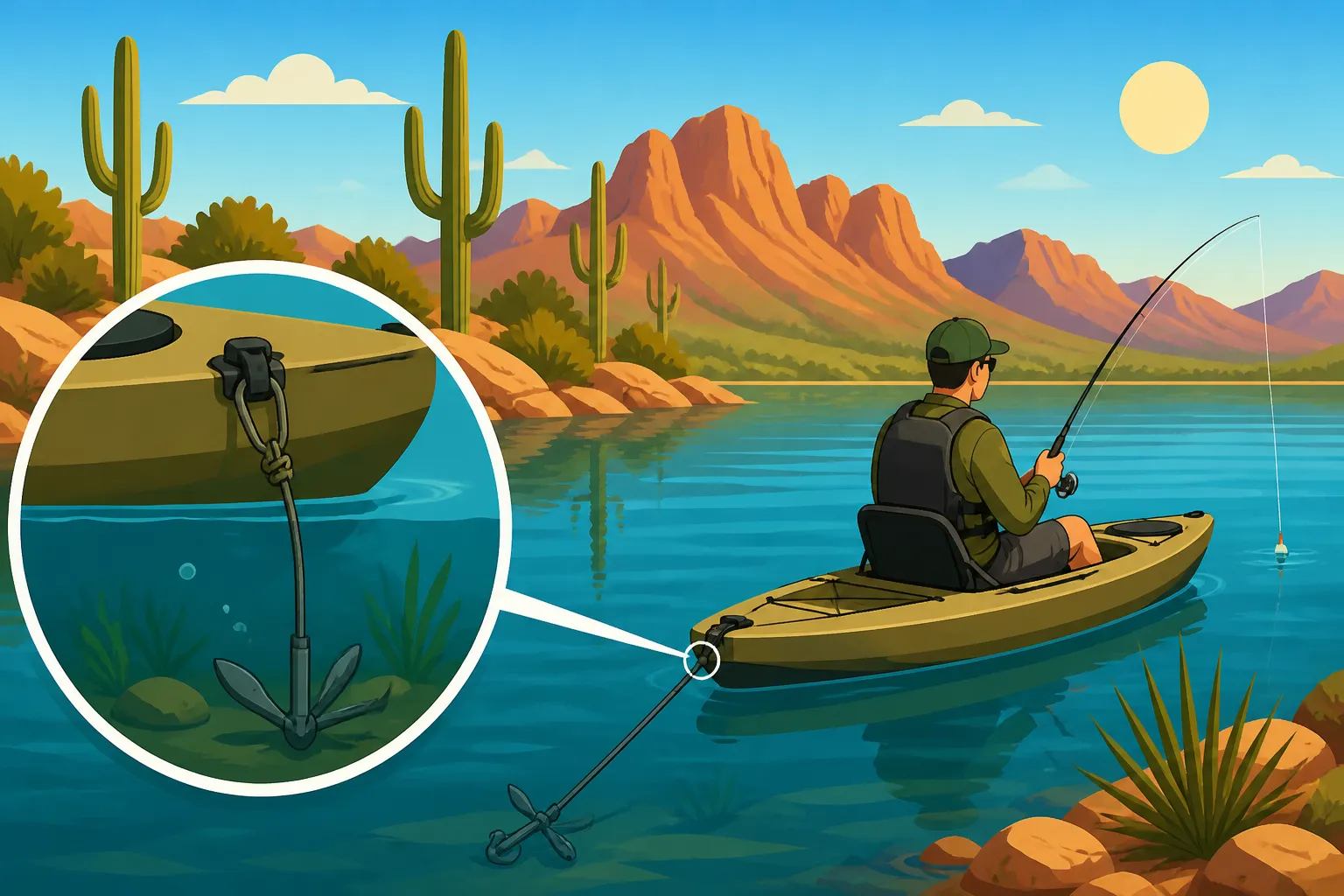
- Grapple (or Grapnel) Anchors: These are perhaps the most popular choice for kayak anglers. They feature four foldable tines that can grab onto rocks, roots, or other underwater structure. They're excellent for rocky bottoms, which are prevalent in many of our desert reservoirs, like Canyon Lake or Apache Lake. The folding design makes them compact for storage, and their ability to hook onto structure makes them surprisingly effective for their weight. A 1.5 to 3-pound grapple anchor is usually sufficient for kayaks, depending on wind and current.
- Mushroom Anchors: These anchors are cup-shaped and rely on suction and weight to hold. They are best suited for soft, muddy, or silty bottoms where they can dig in. They are less effective on rocky or sandy bottoms where they might just slide. While not as versatile as grapple anchors for Arizona's diverse lakebeds, they can be good for certain specific spots if you know the bottom is soft.
- Box Anchors: Also known as "fluke" or "pyramid" anchors, these designs are very effective at digging into sandy or muddy bottoms due to their broad surface area and shape. They can offer excellent holding power for their weight. They are a good all-around choice for many lakebeds, provided there's enough soft material for them to set into.
Regardless of the type, always use appropriate anchor line – typically braided nylon or similar material – and consider adding a short section of chain (about 3-6 feet) between the anchor and the rope. This chain helps the anchor lay horizontally, allowing its flukes or prongs to dig in more effectively, and also provides some shock absorption against waves. When sourcing your anchor line, aim for at least 50 feet for most Arizona lakes, allowing for a proper scope (ratio of line length to water depth) of 5:1 to 7:1. You can find quality anchor lines and small chains on Amazon or at local sporting goods stores.
Advanced Shallow Water Anchors
For the more dedicated kayak angler seeking ultimate convenience and precise positioning, advanced shallow water anchoring systems offer a high-tech solution. Brands like Power-Pole (e.g., the Micro Anchor) and Minn Kota (with their Talon series) offer battery-powered systems that deploy a spike silently into the bottom with the touch of a button. These systems are typically mounted on the transom of the kayak and provide instant, secure anchoring in shallow to moderately shallow water (usually up to 10-15 feet, depending on the model).
While they represent a significant investment compared to a stake-out pole or traditional anchor, their speed, silence, and ease of use are unparalleled. They eliminate the need for manual anchor deployment and retrieval, allowing you to focus completely on fishing. This can be a game-changer when you're working a specific weed line or a small piece of structure where precise boat control is paramount. However, they are heavier, require battery power, and are truly designed for a specific type of shallow water fishing. For many, a simple, well-chosen manual anchor setup is more than sufficient.
Step-by-Step Guide to Anchoring Your Kayak Safely and Effectively
Once you've chosen your anchor system, knowing how to deploy and retrieve it correctly is vital for safety and efficiency. This isn't just about dropping a weight; it's about strategic placement and secure handling.
Pre-Deployment Checks and Positioning
Before you even think about dropping your anchor, take a moment for some crucial preparation. First, scan your chosen fishing spot. Look for any visible hazards like submerged trees, rock piles, or heavy weed beds that could snag your anchor. Think about the direction of the wind and current. You want to position your kayak upwind or upstream of your desired fishing zone. This allows your anchor to set properly as your kayak drifts back, giving you a wider area to fish without moving the anchor.
Ensure your anchor line is free of tangles and knots. A snagged line during deployment can lead to a dangerous situation, especially if you're in moving water or dealing with gusts of wind. Make sure your anchor is easily accessible but secured for transport. If you plan to use an anchor trolley – which we'll discuss next – make sure it's running freely along your kayak's side. Having everything ready before you commit to deploying the anchor will save you headaches and keep you safe on the water. Remember, Boating Safety Gear Requirements in Arizona still apply to kayaks, so always have your PFD on, especially when handling anchors in potentially turbulent conditions.
Proper Anchor Deployment and Retrieval Techniques
Deploying an anchor from a kayak requires a specific technique to prevent capsizing and ensure a good set. Never just throw your anchor straight out from the side of your kayak. The sudden shift in weight and pull on the line can easily destabilize your vessel.
- Deployment: Position your kayak slightly upwind or upstream from your target. Slowly lower the anchor directly from the bow or stern (or from the side if using an anchor trolley, explained below) until it hits the bottom. Do not drop it with a splash; gently place it. Once it's on the bottom, slowly pay out more line as your kayak drifts back, ideally giving you a scope of at least 5:1 (meaning 5 feet of rope for every 1 foot of depth). This angle helps the anchor's flukes or tines dig into the bottom. Once you've paid out enough line, cleat it off securely. Feel for the anchor to "set" – you'll feel a solid tug and your drift will stop. If it's still dragging, pay out more line or try a slightly different spot.
- Retrieval: When it's time to move, paddle or pull your way directly over the top of the anchor. This reduces the scope, causing the anchor to release from the bottom more easily. Slowly and steadily pull the anchor line, bringing the anchor straight up. Once the anchor is free, pull it directly into your kayak, ensuring any mud, weeds, or debris are cleared off before stowing it away. Never wrap anchor line around your body parts or leave it trailing in the water where it could get caught in a prop or snagged. Proper technique minimizes effort and ensures your anchor doesn't get stuck, allowing you to move efficiently to the next productive Best Fishing Spots Near Phoenix, Arizona.
Utilizing Anchor Trolleys and Cleats
An anchor trolley is arguably one of the most indispensable accessories for kayak anglers, especially those who plan to still fish regularly. It's a simple system of pulleys and rope that runs along the length of your kayak from bow to stern. Instead of having to retrieve and redeploy your anchor every time you want to change your fishing angle, an anchor trolley allows you to shift the anchor attachment point along your kayak's side.
Here's why it's a game-changer:
- Precision Positioning: With an anchor trolley, you can deploy your anchor from one end of the kayak (say, the stern) and then, by pulling on the trolley line, move the anchor attachment point all the way to the bow. This allows you to "weather vane" and face into the wind or current, optimizing your casting angle. If the wind shifts, you can adjust the trolley to keep yourself properly oriented.
- Safety: It keeps your anchor line managed and your anchor point always within easy reach, reducing the need to lean precariously over the bow or stern. This is critical for maintaining stability in a kayak.
- Versatility: Whether you're using a grapple anchor in the depths of Lake Powell or a stake-out pole in a shallow coves of Patagonia Lake, an anchor trolley enhances control and makes deployment and retrieval much safer and simpler.
Most anchor trolleys are easy to install and consist of a loop of rope, two pulleys, and a ring or carabiner to attach your anchor line. Cleats, small fixtures typically mounted on the side of your kayak, are where you tie off your anchor line. Ensure they are robust and securely mounted, capable of holding your kayak against wind and current. A well-installed anchor trolley and a sturdy cleat will transform your kayak fishing experience, making Kayak Fishing Techniques for Desert Lakes far more effective and enjoyable.
Troubleshooting Common Kayak Anchoring Problems
Even with the best gear and intentions, you might run into a few snags (literally!) while anchoring. Knowing how to handle these common problems can save your day on the water.
Dealing with Snagged Anchors
It's almost inevitable that at some point, your anchor will get stuck on something underwater – a rock, a sunken tree, or even an old fishing line. This is a common frustration for anglers, especially in Arizona's structure-rich lakes.
- Change Your Angle: The first thing to try is to paddle around your anchor point, creating different angles of pull on the anchor line. Sometimes, pulling from a different direction can free a fluke that's dug in too deep. Paddle in a circle around where you believe the anchor is, maintaining tension on the line.
- The "Pop" Method: Once you're directly over the anchor, pull the line taught and then give it a series of sharp, upward jerks or "pops." The sudden vertical force can often dislodge the anchor from a crevice or snag.
- Anchor Retrieval Ring/System: For grapple anchors, many anglers employ an anchor retrieval ring or "breakaway" system. This involves attaching your main anchor line to the bottom of the anchor shank, then running a weaker line or zip tie from the top of the shank to the main line. If the anchor gets stuck, pulling hard breaks the weaker link, allowing you to pull the anchor out in reverse, freeing it from the snag. These systems are invaluable for rocky Arizona lake bottoms.
- Last Resort: If all else fails, you may have to cut your line. This is why it’s always a good idea to have extra anchor line and a spare anchor, particularly if you’re fishing remote locations where replacing gear is difficult. It’s also a good reminder to be mindful of where you drop your anchor to minimize the chances of snagging. Losing an anchor is a real bummer, but it's part of the game sometimes, especially if you're exploring Deep Water Structure Fishing Techniques.
Anchoring in Strong Winds or Currents
Arizona's weather can change quickly. One moment it's calm, the next you're fighting significant wind or current. Anchoring effectively in these conditions requires a bit more thought.
- Increase Anchor Weight/Holding Power: If your current anchor isn't holding, it might be too light for the conditions, or simply not the right type for the bottom. Consider upsizing your anchor or switching to a grapple anchor with more aggressive tines for rocky areas, or a larger box anchor for soft bottoms. Sometimes, even adding an extra pound or two can make a huge difference.
- Longer Scope: This is perhaps the most critical factor. In strong winds or currents, you need a longer anchor line-to-depth ratio (scope). Instead of 5:1, aim for 7:1 or even 10:1 if you have the line and space. A longer scope creates a shallower angle, allowing the anchor to dig in much more effectively. If you typically only carry 50 feet of line, consider carrying 75-100 feet for those challenging days.
- Dual Anchoring (Bow and Stern): In very windy or strong current situations, using two anchors – one off the bow and one off the stern – can provide maximum stability. This technique locks your kayak into position, preventing any swinging or rotational movement. It’s more involved to set up and retrieve, but when you absolutely need to stay put (for instance, when fly fishing or jigging vertically in a specific spot), it's the most reliable method. Remember to deploy the upwind/upstream anchor first, then drift back and deploy the second.
- Consider a Drift Sock/Sea Anchor: While not an anchoring system for still fishing, a drift sock can be invaluable if you decide to switch tactics or if conditions become too rough for effective still fishing. It slows your drift significantly, allowing you to fish more effectively while moving with the current or wind, making it a great addition to your Essential Tackle Box Setup for Arizona Beginners.
| Anchor Type | Pros | Cons | Ideal Conditions |
|---|---|---|---|
| Stake-Out Pole | Silent, lightweight, easy deployment, no line management | Limited to shallow depths, soft bottoms, less versatile | Shallow (under 8 ft), soft mud/sand, calm coves |
| Grapple Anchor | Folds for storage, excellent for rocky bottoms | Can snag easily, less effective on soft mud/sand | Rocky lakes, varied bottoms, moderate depths |
| Mushroom Anchor | Good holding in soft bottoms due to suction | Ineffective on hard/rocky bottoms, bulky for storage | Very soft mud/silt, calm conditions, limited current |
| Box Anchor | Strong holding in sand/mud, good all-around | Can be bulky, not ideal for severe rocky snags | Sand, mud, mixed bottoms, moderate wind/current |
| Power-Pole/Talon | Instant, silent, push-button deployment, precise | Expensive, heavy, requires battery, limited to shallow depths | Dedicated shallow water fishing, ultimate convenience |
Navigating Specific Arizona Situations
Many of us head to the larger impoundments when we're fishing from a kayak in Arizona. Lakes like Lake Pleasant, Roosevelt Lake, and Lake Havasu are prime examples where proper anchoring will make or break your day.
If you're out on the vast expanse of Lake Pleasant, a grapple anchor combined with a good length of rope and an anchor trolley will be your best friend. The bottom can vary, from rocky points to sandy flats, and a grapple anchor is versatile enough to grab hold. Winds can kick up quickly here, so having enough scope (50-75 feet of line is a good starting point for typical depths) is key. Don't underestimate the afternoon breeze; it can push your kayak surprisingly far.
For river systems like the Colorado River below Davis Dam, where currents are a constant factor, heavier grapple or box anchors, perhaps even a dual anchor system, will be necessary. Pay close attention to current direction and speed. Your anchor line might need to be longer to allow the anchor to set properly against the flow. For those who enjoy How to Fish From a Kayak on a Desert Lake, understanding these specific challenges and adapting your anchoring strategy is paramount to success.
Ultimately, mastering the art of kayak anchoring for still fishing will open up a whole new world of opportunities on Arizona's waters. It allows you to become a more precise, focused, and ultimately, more successful angler.
Disclaimer
The information provided in this guide is for general informational purposes only and does not constitute professional advice. Always prioritize your safety on the water. Consult official Arizona Game and Fish Department regulations and local weather forecasts before any fishing trip. Fishing conditions and regulations can change, so always be prepared and exercise caution.