Heat Safety Tips for Summer Fishing in Arizona
Oh, Arizona summers. They're a beast, aren't they? That relentless sun and searing heat can turn a promising day of fishing into a risky ordeal if you're not prepared. Many of us have felt that dizzying feeling or the onset of a headache when we've pushed it too far, often because we're so focused on the bite. This comprehensive guide is here to walk you through the absolute essentials for staying safe, hydrated, and protected so you can enjoy those incredible summer fishing days without putting your health on the line.
Understanding Arizona's Summer Heat Environment
Fishing in Arizona during the summer isn't like fishing anywhere else. We're not just dealing with high temperatures; we're contending with a unique blend of environmental factors that amplify the risks. It's crucial to really grasp what you're up against before you even think about casting a line under that blazing sun. Ignoring these realities is a quick way to find yourself in a dangerous situation.
How Arizona's Desert Climate Amplifies Heat Risks
The desert environment in Arizona is a beautiful but unforgiving beast, especially from May through September. Daytime temperatures can easily soar past 100°F, and often push into the 110s or even higher in the lower deserts. What many people don't fully appreciate is how the arid conditions, combined with intense solar radiation, create a heat trap. There's often little to no shade available on many of our popular fishing lakes like Lake Pleasant or Roosevelt Lake, leaving you exposed for hours. The air might feel dry, which can sometimes lull you into a false sense of security, making you think you're not sweating as much as you actually are. But that dry air wicks moisture away from your body at an incredibly rapid rate, leading to faster dehydration than in more humid climates.
The low humidity means evaporative cooling is very efficient, but only if you're adequately hydrated. If your body doesn't have enough fluid to sweat, that natural cooling mechanism fails, and your core temperature starts to climb dangerously fast. This is why a 105°F day in Phoenix can feel far more intense and be more dangerous than a 105°F day in a humid region, because your body struggles to keep up.
Humidity vs. Dry Heat: What It Means for Your Body
While Arizona is famous for its "dry heat," we do experience periods of higher humidity, particularly during the monsoon season. This shift dramatically changes how your body reacts to the heat. In dry heat, your sweat evaporates quickly, carrying heat away from your body effectively – as long as you're sweating. This is why many people can tolerate higher temperatures here if they stay hydrated. You might not even realize how much fluid you're losing because your sweat dries almost instantly. This can lead to insidious dehydration, where you're losing critical fluids and electrolytes without obvious signs like dripping sweat.
During the monsoon, when humidity levels spike, the game changes entirely. Your sweat no longer evaporates as efficiently, making it much harder for your body to cool down. You'll feel stickier, more uncomfortable, and you'll likely see and feel more sweat on your skin. This visible sweat might make you feel like you're adequately hydrated, but the impaired evaporative cooling means your body is working much harder to maintain a safe core temperature. Both dry and humid heat pose unique challenges for anglers, but both demand rigorous hydration and sun protection strategies to prevent heat-related illness.
The Dangers of Radiated Heat from Water and Rocks
Beyond the ambient air temperature, anglers in Arizona face significant challenges from radiated heat. Think about standing on a rocky shore at Lake Havasu or motoring across the vast expanse of Lake Powell; the sun beats down on the water and the surrounding rock formations all day long, heating them to incredible temperatures. These surfaces then radiate that heat back up, creating a cooking effect that significantly increases the "feels like" temperature. The water itself, especially in shallower areas of our desert lakes, can get surprisingly warm. While this might feel refreshing to some, it reduces the cooling effect you'd get from being near cooler water, and it can even impact fish behavior.
If you're fishing from the shore, the rocks, sand, or concrete you're standing on will absorb and then emit intense heat, often making the ground beneath you hotter than the air above. From a boat, the deck and seats can become scorching to the touch, and the water surface reflects sunlight, effectively hitting you with a double dose of UV radiation and heat. This constant bombardment from all directions means your body is working overtime to dissipate heat, further accelerating dehydration and increasing your risk of heat exhaustion or heatstroke. It's not just the air temp; it's the entire oven-like environment you're immersed in.
Essential Hydration Strategies
Staying hydrated isn't just about drinking water; it's about a strategic approach to fluid and electrolyte intake that prepares your body for the stress of prolonged exposure to Arizona's summer heat. Many anglers underestimate just how much their bodies lose, leading to significant dips in performance and, more critically, safety.
Beyond Water: Electrolytes and Preventing Hyponatremia
While water is foundational, relying solely on plain water for extended periods in extreme heat can actually be detrimental. As you sweat, you lose essential electrolytes like sodium, potassium, calcium, and magnesium. These minerals are crucial for nerve and muscle function, and for maintaining your body's fluid balance. If you replenish only with plain water, you can dilute the remaining electrolytes in your system, a dangerous condition called hyponatremia. This can lead to symptoms like confusion, nausea, muscle cramps, and in severe cases, seizures or coma.
To combat this, it's vital to incorporate electrolyte-rich beverages or supplements into your hydration plan. Sports drinks like Gatorade or Powerade, electrolyte tablets, or even simply adding a pinch of salt to your water can make a huge difference. You can find a wide variety of electrolyte powders and tablets on online retailers like Amazon, making it easy to stock up before your trip. Aim for a balance: drink plenty of water, but intersperse it with electrolyte solutions, especially during long days on the water.
Calculating Your Fluid Needs for a Day on the Water
It’s easy to say "drink lots of water," but how much is "lots" when you're baking in the Arizona sun? The general recommendation for active individuals in moderate climates is around 8-10 glasses (about 64-80 ounces) per day. In Arizona's summer heat, especially when you're physically active while fishing, you need to drastically increase that. A good rule of thumb is to aim for at least 16-20 ounces of fluid per hour of activity. For a typical 6-hour fishing trip, that means you should be bringing a minimum of a gallon of water, plus your electrolyte drinks.
Remember, this is a minimum. Factors like your individual sweat rate, the intensity of your activity (are you constantly casting and reeling, or just relaxing?), and the specific temperature will all influence your actual needs. It's always better to bring more water than you think you'll need. Start hydrating before you even leave the house, and continue to sip fluids regularly throughout the day rather than chugging large amounts when you finally feel thirsty. Thirst is often a sign that you're already mildly dehydrated.
Practical Tips for Carrying and Storing Water
Carrying enough water can be a challenge, especially if you're shore fishing or kayak fishing where space is limited. Invest in a good quality cooler that can withstand extreme temperatures. Brands like Yeti, RTIC, or even robust options you can find on Amazon, are designed to keep ice frozen for days, ensuring your water stays cold and refreshing. Cold water is not only more palatable, encouraging you to drink more, but it also helps lower your core body temperature. For those longer trips, consider freezing some water bottles or electrolyte drinks overnight; they'll act as extra ice packs and slowly thaw into cold beverages.
If you're fishing from a boat, pack multiple gallons or large jugs. For shore anglers or those who prefer a lighter load, a hydration backpack (like those discussed in our guide on Best Hydration Pack for a Fishing Kayak) can be incredibly useful, allowing you to carry several liters hands-free. Always keep your water out of direct sunlight, even in a cooler, to maximize its cold retention. Bringing a separate, smaller insulated bottle for personal sips can also be effective, refilling it from your main cooler supply.
Sun Protection is Non-Negotiable
The sun in Arizona isn't just hot; it's intense. The UV index frequently hits "extreme" levels during the summer months, making sun protection far more than just a recommendation—it's an absolute necessity for preventing sunburn, long-term skin damage, and heat absorption. You might feel like you're covered, but the Arizona sun has a way of finding any exposed patch of skin.
Layering Up with UPF Clothing
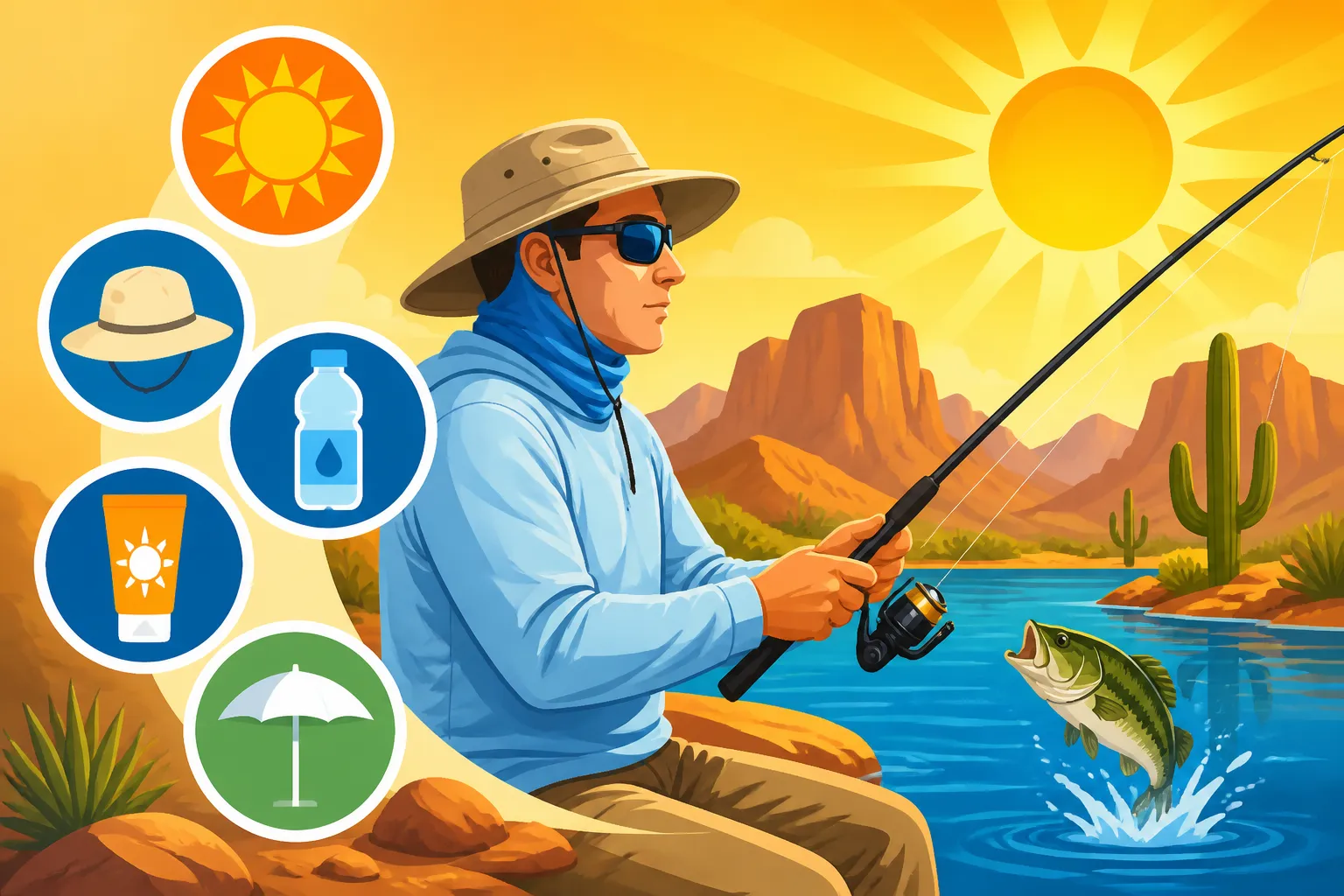
Think beyond traditional cotton t-shirts, which offer minimal UV protection, especially when wet. The best defense against the sun's relentless rays is UPF (Ultraviolet Protection Factor) clothing. This specialized apparel is woven with materials that block a significant percentage of UV radiation, much like SPF in sunscreen, but for fabric. Aim for clothing with a UPF rating of 30 or higher; UPF 50+ is ideal for Arizona's harsh conditions. These garments often come in light colors, which reflect sunlight, and are made from breathable, moisture-wicking fabrics that actually help keep you cooler by promoting evaporative cooling.
Look for long-sleeved shirts, pants, and even gloves designed for fishing. Many brands offer excellent options through retailers like Amazon. Don't worry about looking "too covered up" – this is smart, practical protection. The feeling of a breeze through a UPF shirt is often much cooler than bare skin exposed directly to the sun, which can feel like it's cooking. Pairing these with light-colored shorts or quick-dry pants will give you comprehensive coverage without sacrificing comfort.
High-SPF Sunscreens and Their Application
Even with UPF clothing, some skin will inevitably be exposed – your face, neck, ears, and hands. This is where high-SPF (Sun Protection Factor) sunscreen comes in. Always choose a broad-spectrum sunscreen with an SPF of 30 or higher that protects against both UVA and UVB rays. For extended time on the water, SPF 50+ is your best friend. Don't skimp on application; apply a generous amount to all exposed skin at least 15-30 minutes before you head out, allowing it to absorb properly.
Reapply frequently, especially if you're sweating heavily, splashing water, or wiping your face. Every two hours is a good baseline, but in extreme conditions or after a particularly intense fishing fight, reapply sooner. Pay special attention to often-forgotten areas like the tops of your ears, your scalp (if not fully covered by a hat), the back of your neck, and the tops of your feet if you're wearing sandals. A good stick sunscreen is handy for quick touch-ups on the face and neck, ensuring you don't miss a spot. Consider a waterproof formula for fishing to ensure it lasts through sweat and splashes. For more on general sun protection, check out our guide on Best Sun Protection for Desert Fishing.
Hats, Sunglasses, and Neck Gaiters: Your First Line of Defense
These accessories aren't just for style; they're critical components of your sun protection arsenal. A wide-brimmed hat is non-negotiable. It protects your face, ears, and neck from direct overhead sun, areas highly susceptible to sun exposure. Choose one made from a breathable, quick-drying material with a dark underside to reduce glare. Many fishing hats also come with UPF ratings, adding an extra layer of defense.
High-quality polarized sunglasses are also essential. They protect your eyes from harmful UV rays, reduce glare off the water (which can cause eye strain and make it harder to spot fish), and prevent long-term damage like cataracts. Look for lenses that block 100% of UVA and UVB rays. Finally, a neck gaiter (or "buff") is an incredibly versatile piece of gear. Worn around your neck and pulled up over your face, it protects your neck, cheeks, and nose from direct sun, and can even be dampened for a cooling effect. These three items, combined with UPF clothing and sunscreen, create a formidable barrier against the Arizona sun.
Timing Your Fishing Trips for Cooler Conditions
Successfully fishing in Arizona's summer often means outsmarting not just the fish, but the sun itself. Planning your trip around the cooler parts of the day can drastically improve your comfort, safety, and even your catch rates. Fish, like anglers, often become lethargic when temperatures soar.
Dawn Patrol and Dusk Delights: The Best Times to Fish
Without a doubt, the early morning hours, right at dawn, and the late evening leading into dusk are the prime times for summer fishing in Arizona. The air temperature is at its lowest, the sun is less intense, and the water temperatures are more comfortable for both you and the fish. Many species, especially bass, will move into shallower waters to feed during these cooler periods, making them more accessible. This is when you'll experience those exciting topwater bites or find fish actively chasing bait. Getting on the water before the sun fully clears the horizon can feel early, but it's often the difference between a productive, comfortable outing and a sweltering, frustrating one.
Similarly, fishing into the evening can be incredibly rewarding. As the sun dips below the horizon, the radiated heat from the land and water begins to diminish, and the air starts to cool. This can trigger another feeding window for various species. Just remember to bring adequate lighting if you plan to stay out after dark, as well as being mindful of the unique considerations for night fishing. Our guides on Early Morning Fishing Strategy in Arizona Heat and Evening Fishing Strategy in Arizona Heat delve deeper into these prime times.
Understanding Water Temperature and Fish Behavior
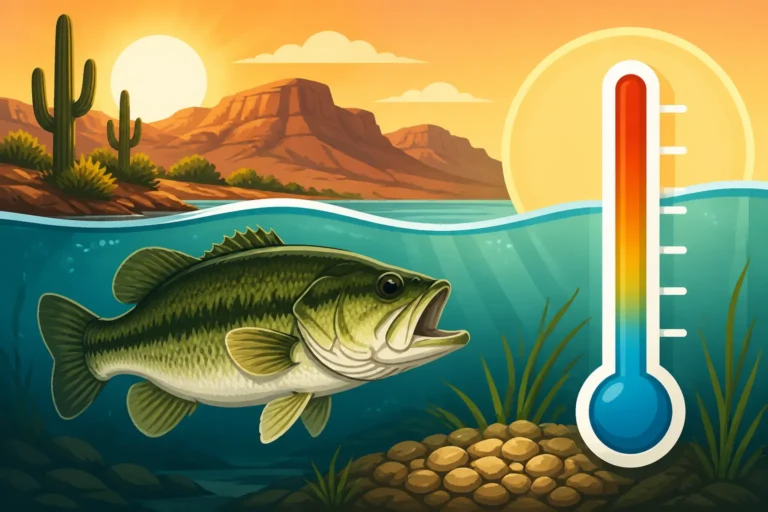
Fish are cold-blooded creatures, meaning their body temperature is regulated by the surrounding water. When water temperatures climb too high, fish become stressed, lethargic, and less likely to bite. Optimal water temperatures vary by species, but generally, most sport fish in Arizona prefer water in the 60s and 70s. Once the surface water approaches 85°F or higher, fish will seek cooler, deeper waters where they can find thermal refuge.
This means that during the peak heat of the day, you'll likely need to adjust your tactics to target fish holding in deeper structures, submerged timber, or shaded areas. Knowing the average water temperatures of your chosen lake (which can often be found through local fishing reports or using a fish finder) can give you a significant advantage. If you see surface temps soaring, don't waste your time shallow – focus on deep drops, main lake points, and canyon ledges where cooler water persists.
Targeting Shaded Areas and Cooler Waters
When the sun is relentless, actively seek out shade, both for yourself and where fish might be holding. This is critical for staying safe and for finding active fish. If you're bank fishing, look for areas with overhanging trees or large rock formations that cast shadows onto the water. These spots can offer a welcome reprieve from the direct sun and often concentrate fish seeking cooler, darker conditions. Fishing around submerged timber or deep structure can also prove productive, as these areas offer both cover and access to cooler water.
From a boat, use your fish finder to locate schools of baitfish and predator fish in deeper water. Look for prominent points, ledges, and channels. If you’re at a larger reservoir like Lake Pleasant, consider fishing the deeper, main lake basin areas rather than shallow coves. On the Colorado River, shaded cliff walls and deeper channels can be hotspots. Remember, even a slight drop in water temperature or a patch of shade can make a significant difference to a fish's willingness to bite and your own ability to fish comfortably.
Recognizing and Responding to Heat-Related Illnesses
Even with the best preparation, the Arizona heat can be unpredictable, and emergencies can happen. Knowing the signs of heat-related illness and how to respond can literally be a lifesaver, both for yourself and for your fishing buddies. Never ignore the subtle warnings your body gives you.
Spotting the Signs of Heat Exhaustion and Heatstroke
Heat-related illnesses exist on a spectrum, from mild heat cramps to life-threatening heatstroke. It's vital to know the difference and act quickly.
Heat Exhaustion Symptoms:
- Heavy sweating
- Cold, pale, and clammy skin
- Fast, weak pulse
- Nausea or vomiting
- Muscle cramps
- Tiredness or weakness
- Dizziness
- Headache
- Fainting
Heat exhaustion is serious, but treatable. If left unaddressed, it can quickly escalate to heatstroke.
Heatstroke Symptoms:
- High body temperature (103°F or higher)
- Hot, red, dry, or damp skin
- Fast, strong pulse
- Throbbing headache
- Dizziness
- Nausea
- Confusion
- Loss of consciousness
- Slurred speech
Heatstroke is a medical emergency. It can cause permanent disability or death if emergency treatment is not provided.
First Aid Steps for Heat-Related Emergencies
Immediate action is crucial if you suspect heat exhaustion or heatstroke.
For Heat Exhaustion:
- Move to a cooler place: Get out of the sun immediately, ideally into shade or an air-conditioned vehicle.
- Lie down and loosen clothing: Help the person relax and allow their body to cool.
- Apply cool, wet cloths: Place cool, damp towels on their skin, particularly the forehead, neck, armpits, and groin.
- Sip water or electrolyte drink: If the person is conscious and not nauseated, encourage them to slowly sip cool water or a sports drink.
- Monitor: Stay with the person and monitor their symptoms. If they worsen or don't improve within an hour, seek medical help.
For Heatstroke (Call 911 immediately! This is an emergency!):
- Call 911 or your local emergency number right away.
- Move to a cooler place: Get the person out of the sun.
- Reduce body temperature quickly: Use any means available—immerse them in cool water (if safe), spray them with a garden hose, apply ice packs to the armpits and groin, or cover them with cool, wet sheets.
- Do NOT give fluids: A person experiencing heatstroke may be unconscious or unable to swallow safely.
- Stay with the person until emergency medical services arrive.
It's a scary thought, but being prepared means you can respond effectively. Keep a well-stocked first-aid kit that includes cooling towels and pain relievers for headaches, in a good quality Best Coolers for Hot-Weather Fishing in Arizona or tackle bag.
When to Call for Professional Help
The decision to call for professional medical help should never be delayed when dealing with potential heatstroke. If you or someone you're with exhibits any signs of heatstroke, such as confusion, loss of consciousness, a very high body temperature, or hot, dry skin, call 911 immediately. Don't try to drive them to a hospital yourself, as their condition could worsen rapidly, and they might need medical intervention on the way.
For heat exhaustion, if symptoms don't improve after about an hour of rest, cooling, and hydration, or if they start to worsen, it's time to seek professional medical attention. This could indicate a more severe condition or an underlying issue. Always err on the side of caution when it comes to heat-related illness in Arizona. A simple call can prevent a minor incident from escalating into a major emergency.
Gear and Apparel Choices for Extreme Heat
Your choice of fishing gear and apparel can make a world of difference in your comfort and safety when battling Arizona's summer temperatures. It's about selecting items that not only protect you but actively help your body regulate its temperature.
Lightweight, Breathable Fabrics for Comfort
Forget heavy denim or thick cotton. For summer fishing in Arizona, you need lightweight, breathable fabrics that allow air circulation and wick moisture away from your skin. Materials like polyester, nylon, and specialized synthetic blends are designed for this purpose. Look for shirts and pants specifically labeled as "performance fishing wear." These often feature vent systems, mesh panels, and quick-dry properties that are invaluable. As mentioned earlier, prioritize UPF-rated clothing to get dual benefits of sun protection and heat management.
The goal is to create a microclimate around your body that encourages sweat evaporation without allowing excessive sun exposure. Light colors, like white, light blue, or sage green, are also preferred because they reflect sunlight rather than absorbing it. Many reputable fishing apparel brands, easily found on Amazon, specialize in this type of clothing, designed by anglers for anglers who face challenging environments like ours.
Footwear and Headwear Designed for Heat
Just as with your clothing, your footwear choices are critical. Open-toed sandals or water shoes that allow your feet to breathe are often preferable to closed-toe shoes and socks, which can trap heat and moisture, leading to discomfort and blisters. If you prefer closed-toe shoes for protection, opt for lightweight, quick-drying materials with good ventilation. Many fishing-specific shoes are designed with drainage ports to shed water quickly, which also helps with breathability.
For headwear, a wide-brimmed hat is paramount, not just a baseball cap. A full brim protects your ears, neck, and face much more effectively. Look for hats made from breathable materials, some even have built-in ventilation or neck flaps for extra coverage. The interior of the brim should be dark to reduce glare, which can significantly reduce eye strain. Think of your headwear as the roof over your personal shaded oasis – the bigger the better.
Cooling Towels and Personal Misting Devices
For an extra edge against the heat, consider integrating personal cooling accessories. Cooling towels, often made from advanced synthetic fibers, can be soaked in water, wrung out, and then draped around your neck or over your head. They stay cool for hours through evaporative cooling, providing a direct, refreshing sensation that can help lower your core body temperature. They're compact, reusable, and you can usually find multi-packs on Amazon for a reasonable price.
Personal misting fans or spray bottles are another fantastic tool. A fine mist of water on your skin, especially in Arizona's dry heat, can create a powerful evaporative cooling effect. Pair a small, battery-operated misting fan with your cooling towel, and you'll be significantly more comfortable. Even a simple spray bottle filled with cool water can offer immediate relief when you start to feel overheated. These small additions can make a monumental difference in your endurance and enjoyment during those scorching summer days. For more general advice on staying comfortable, check out our broader guide on How to Beat the Heat Fishing in Arizona Summer.
Staying Safe and Maximizing Your Experience
Fishing in Arizona during the summer truly presents a unique set of challenges, but with the right mindset and preparation, it can still be incredibly rewarding. Remember that every decision you make, from what you wear to how often you hydrate, directly impacts your safety and enjoyment. Don't let the quest for that trophy fish overshadow your well-being. Prioritize your health, and you'll find yourself making more memories on the water.
It's all about respecting the environment and understanding its power. Be smart, stay cool, and those Arizona waters will continue to offer up some of the most exciting fishing experiences you can imagine. Check out other useful resources like Arizona Fishing Seasons Explained to plan your trips, or learn more about Night Fishing Techniques and Safety for an alternative to daytime heat. Always be ready to adapt to the conditions, and your summer fishing adventures will be much more successful and, most importantly, safe.
| Heat-Related Illness | Key Symptoms | Immediate Action / First Aid | When to Seek Professional Help |
|---|---|---|---|
| Heat Cramps | Muscle cramps (legs, abdomen) | Rest, cool down, drink water/electrolytes, gently stretch. | If cramps last over an hour, or person has heart problems. |
| Heat Exhaustion | Heavy sweating, clammy skin, nausea, dizziness, headache, weakness, fast weak pulse, fainting. | Move to cool place, lie down, loosen clothing, apply cool wet cloths, sip water/electrolytes. | If symptoms worsen, last over an hour, or vomiting occurs. |
| Heatstroke | EMERGENCY! Hot/red/dry/damp skin, high temp (>103°F), confusion, throbbing headache, dizziness, loss of consciousness, slurred speech. | CALL 911 IMMEDIATELY! Move to cool place, cool body rapidly (ice packs, wet cloths), do NOT give fluids. | ALWAYS CALL 911 IMMEDIATELY. It is a medical emergency. |
Disclaimer
The information provided in this guide is for general informational purposes only and does not constitute medical advice. Always consult with a qualified healthcare professional for any health concerns or before making any decisions related to your health or medical care. In case of a medical emergency, call 911 immediately.