Topwater Fishing Techniques for Bass
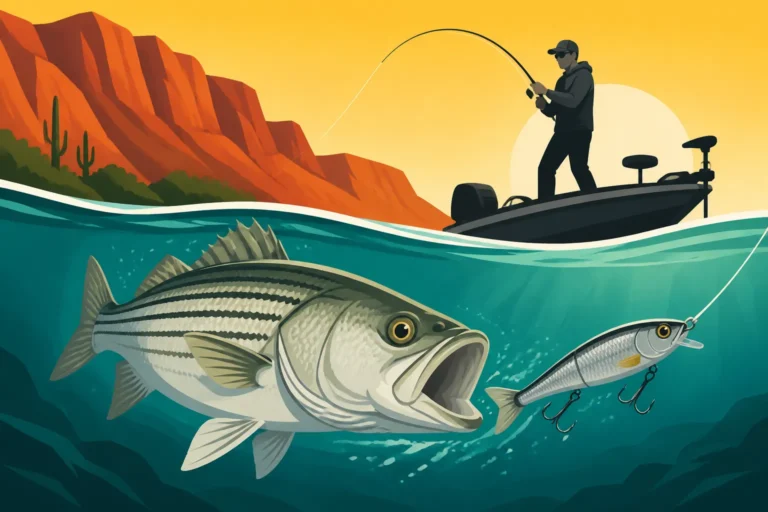
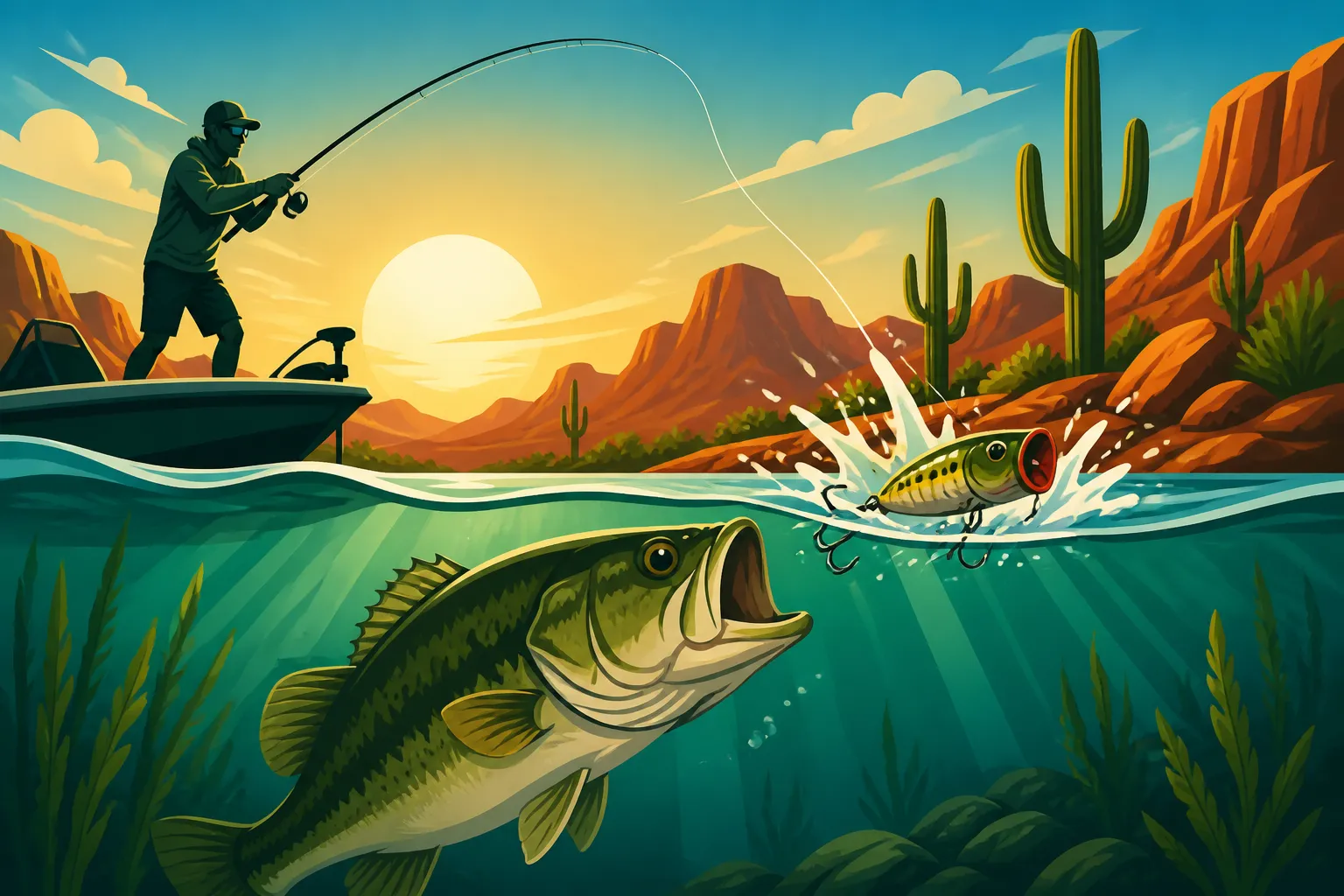
There’s nothing quite like it – that heart-stopping moment when the water explodes, and a bass absolutely annihilates your lure right on the surface. For many anglers in Arizona, especially when the bass seem shut down or just plain finicky, getting them to commit to a topwater strike can feel like a rare, magical occurrence. But what if I told you that mastering a few key topwater techniques could turn those elusive blow-ups into a regular, exhilarating part of your fishing adventures? This guide is all about equipping you with the knowledge and confidence to make those explosive topwater strikes a consistent reality on Arizona's beautiful lakes and rivers.
Why Topwater Fishing is a Game Changer for Arizona Bass
Arizona's diverse fisheries, from our desert reservoirs to high-country lakes, present unique challenges. Bass can be deep, shy, or simply unresponsive to traditional subsurface presentations. Topwater fishing isn't just a technique; it's an experience that often ignites otherwise dormant fish, leading to some of the most memorable battles you'll ever have.
The Thrill of the Surface Strike
Let's be honest: the pure adrenaline rush of a topwater strike is unmatched. You see the lure, you see the wake, you anticipate the hit, and then BAM! The water explodes, your rod loads up, and the fight is on. It's not just about catching fish; it's about witnessing the raw, aggressive instinct of a bass. In the often clear waters of Arizona's lakes, watching a big largemouth or smallmouth track your lure before it commits is an incredible sight. It's this visual, visceral aspect that keeps so many anglers hooked on topwater, even when other techniques might be producing more numbers. It turns fishing into an active, engaging hunt where you're constantly aware of every ripple and shadow.
Ideal Conditions for Topwater Success
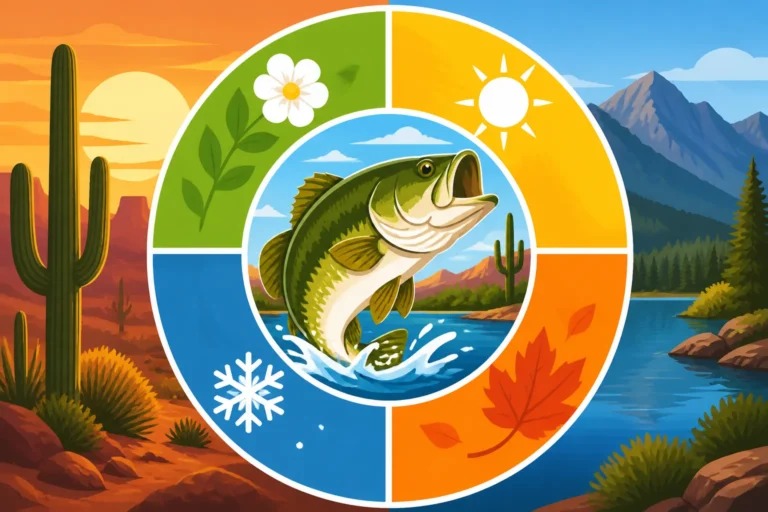
While topwater can work in a variety of conditions, there are certainly times when it truly shines, especially in the Arizona heat. Generally, low light conditions are prime. Think early morning, just as the sun peeks over the horizon, or late evening as it dips below the mountains. These cooler periods often bring bass closer to the surface to feed, and they're less spooky in the dim light. Overcast days can extend the topwater bite throughout the day, as the diffused light helps bass feel more secure.
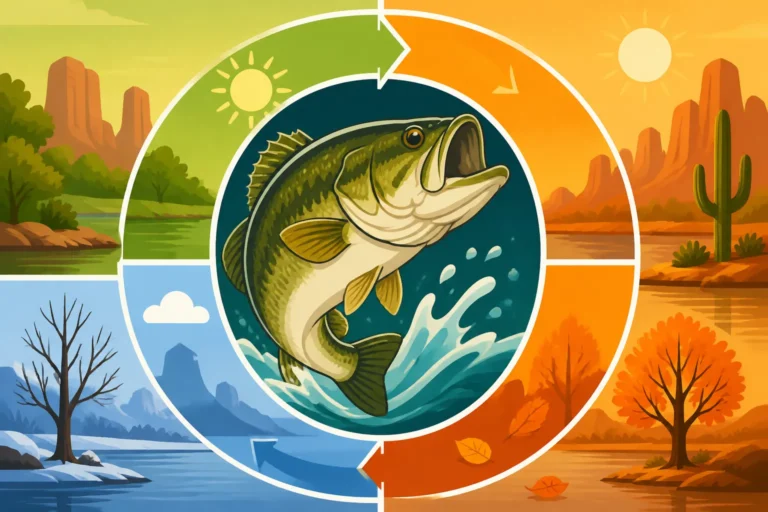
Water temperature also plays a significant role. Topwater bites tend to pick up once water temperatures are consistently above 60 degrees Fahrenheit, and they can remain strong well into the high 80s or even 90s, particularly during the low-light hours. You'll find these conditions in full swing during our spring, summer, and fall seasons. If you're wondering about the "Best Time of Day to Fish for Bass in Summer", topwater in the first hour of daylight is almost always a solid bet. Even during the intense summer heat, a subtle topwater can trigger strikes from bass that are otherwise holding deep during the day. Don't forget our famous Arizona monsoon season. While it might sound counterintuitive, fishing during or immediately after a summer storm can be incredibly productive, as the cooler temperatures and disturbed surface can stimulate an aggressive topwater bite. Check out our guide on the Arizona Monsoon Season Fishing Guide for more on this exciting time.
Essential Topwater Lures for Arizona Waters
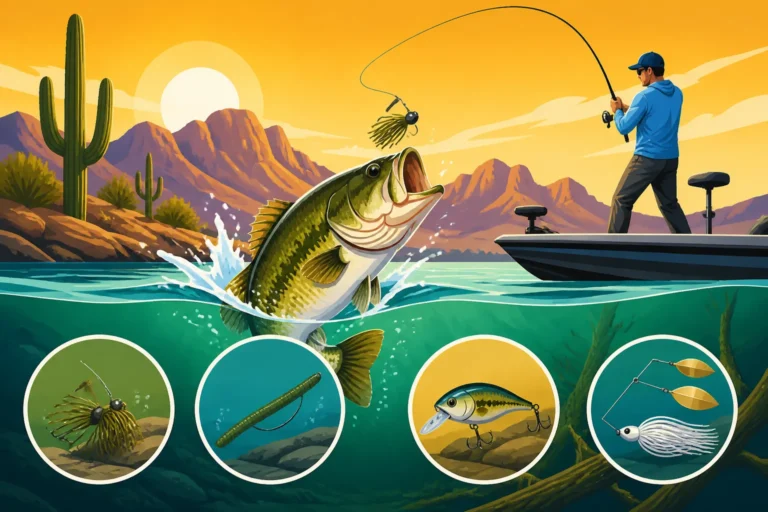
Navigating the seemingly endless array of topwater lures can be overwhelming. But for Arizona's unique environments, a few categories consistently prove their worth. Each has its own rhythm and appeal, designed to mimic different types of prey or elicit specific reactions from bass.
Poppers and Chuggers
These are perhaps the most iconic topwater lures, instantly recognizable by their concave or cupped faces. When retrieved, they create a distinct "pop" or "chug" sound by pushing water forward, mimicking a struggling baitfish, a frog jumping off a lily pad, or even a smaller creature falling into the water. Poppers are fantastic for drawing attention from a distance, especially in calm or slightly choppy water. The key with poppers is often in the pause. Cast them near cover like submerged timber, rock piles, or weed lines, let the ripples dissipate, then give a sharp twitch or two, followed by another pause. Experiment with the length of your pauses; sometimes bass want a quick, erratic retrieve, other times a long, tantalizing pause is what triggers them.
Popular popper and chugger brands like Heddon's Pop'n Image or Rebel's Pop-R are staples in many Arizona anglers' tackle boxes. You can often find a wide selection of these versatile lures on Amazon, making it easy to stock up for your next trip. They're especially effective around dawn and dusk, or in areas where bass are actively feeding on the surface.
Walk-the-Dog Baits and Spooks
"Walking the dog" is a retrieve technique, and lures like Heddon Spooks or Rapala Skitter Walks are designed specifically for it. These slender, cigar-shaped baits don't have a lip; their action comes entirely from the angler's rod work. When retrieved correctly, they glide from side to side across the surface in a mesmerizing, rhythmic sashay. This serpentine motion is incredibly realistic, mimicking an injured baitfish struggling on the surface, making them irresistible to predatory bass.
The action of a walk-the-dog bait can draw fish from surprising distances. They excel in open water, along points, over submerged humps, and parallel to boat docks. Unlike poppers, which are more about aggressive sound, spooks are about subtle, continuous movement. They’re a fantastic choice when bass are less aggressive or when the water is very clear, like in parts of Lake Havasu or Canyon Lake. Learning to impart the "walk" can take a bit of practice, but once you get the rhythm down, it's one of the most rewarding topwater techniques out there.
Prop Baits and Buzzbaits
If you're looking to create a commotion, prop baits and buzzbaits are your go-to. Prop baits typically feature one or more propellers, either on the front, back, or both ends of a slender body. When reeled, these propellers churn water, creating spray and a gurgling sound that can imitate an injured baitfish struggling or a fleeing rodent. They offer a good middle ground between the subtle walk of a spook and the abrupt splash of a popper, providing continuous noise and visual disturbance.
Buzzbaits, on the other hand, are designed for one thing: speed and extreme surface disturbance. They consist of a wire form with a lead head, a skirt, and a large, often asymmetrical propeller blade that spins rapidly as it's retrieved. This creates a loud, clattering, and splashing commotion that screams "easy meal" to hungry bass. Buzzbaits are fantastic for covering large areas quickly, especially over shallow flats, around flooded timber, or along weed edges. They trigger powerful reaction strikes from aggressive fish and are a staple when fishing around features like "Fishing Around Submerged Timber" where bass might be hiding and waiting to ambush prey. The louder the squeak from the buzzbait, often the better, as this high-pitched sound seems to drive bass wild.
Frogs and Toads
When you're dealing with heavy cover – think thick mats of vegetation, lily pads, or dense cattails – nothing beats a weedless frog or toad imitation. These soft plastic lures are designed to glide effortlessly over and through the nastiest stuff where other lures would snag instantly. Their soft, hollow bodies are typically equipped with upward-facing double hooks that are protected by the body of the frog, making them incredibly weedless.
The beauty of frog fishing in Arizona is how perfectly it mimics a natural food source. Many of our lakes have areas with extensive vegetation where frogs and toads are abundant. You can hop, walk, or twitch these baits right across the top of thick mats, pausing them occasionally in open pockets. The key is often patience and a heavy hand on the hookset. When a bass blows up on a frog, resist the urge to set the hook immediately. Wait until you feel the weight of the fish, allowing it to fully engulf the bait. This technique is incredibly effective in places like Alamo Lake or the back coves of Roosevelt Lake where bass often relate to dense cover. They're a truly exciting way to pull big fish out of seemingly impenetrable spots.
| Topwater Lure Type | Primary Action/Sound | Best Conditions | Pros | Cons |
|---|---|---|---|---|
| Poppers/Chuggers | Distinct "pop" or "chug" | Calm to light chop, low light | Attracts from distance, varied retrieve | Can be less weedless, needs pauses |
| Walk-the-Dog Baits | Side-to-side sashay | Calm to light chop, clear water | Mimics injured baitfish, subtle | Requires practice for proper action |
| Prop Baits | Churning water, gurgle | Light chop, stained water | Continuous commotion, varied speed | Less weedless, can twist line |
| Buzzbaits | Loud clatter, heavy splash | Stained to clear, active fish | Fast coverage, triggers reaction | Must be constantly retrieved, less versatile |
| Frogs/Toads | Hop, walk, or glide | Heavy vegetation, mats | Extremely weedless, natural prey | Hookset timing critical, less open water use |
Mastering Topwater Presentation Techniques
Having the right lure is only half the battle; knowing how to work it is where the real magic happens. Each topwater lure requires a specific retrieve to unlock its full potential.
The Art of "Walking the Dog"
This is a signature retrieve for cigar-shaped topwater lures like Heddon Spooks. It's an action that looks complicated but is surprisingly easy to master with a bit of practice. The goal is to make the lure glide from side to side, creating a "walk" across the surface.
Here's how to do it:
- Cast out: Make a long cast to your target area.
- Point your rod tip down: Keep your rod tip pointed towards the water, usually around the 8 o'clock or 9 o'clock position. This helps keep slack out of your line and gives you better control.
- Twitch and reel: Give a short, sharp downward twitch of your rod tip, then immediately drop your rod tip back towards the water to create slack. As you drop the rod, quickly take up the slack with a single turn of your reel handle.
- Repeat the rhythm: The lure will dart to one side with the twitch. When you twitch again, it will dart to the other side. The key is to find a consistent, rhythmic "twitch-reel-twitch-reel" cadence that makes the lure sashay back and forth. You're not pulling the lure, you're twitching it, and the reel is just taking up slack.
Common mistakes include reeling too fast (which pulls the lure straight), not dropping the rod tip enough (which prevents the side-to-side action), or using too stiff of a rod. A medium-heavy rod with a fast tip is ideal for this technique, offering enough backbone for the hookset but enough tip action for precise lure control.
Popping and Pausing Strategies
Poppers are all about sound and vibration, but the pauses are just as crucial, if not more so. The "pop" draws attention, but the "pause" often convinces the fish to strike.
Start by casting your popper near a likely ambush point, such as a submerged brush pile, a rock outcrop, or the edge of a weed line. Let the lure sit motionless until the ripples dissipate. This initial pause often draws bass in for a closer look. Then, give a sharp, downward twitch of the rod to make the lure "pop" or "chug." Depending on the lure's design and how hard you twitch, you can get a subtle sip or a loud splash.
After the pop, let the lure sit again. The duration of this pause is critical and can vary greatly. Sometimes, bass will strike immediately after the pop. Other times, they want a longer, more tantalizing pause, giving them time to commit. On a tough day, I might pause for 10-15 seconds, twitching just once or twice per retrieve. On a more active day, shorter pauses with more frequent pops can be effective. Experiment with the cadence – a "pop-pop-pause" or a "pop-pause-pop-pause" can make all the difference. Remember, you're trying to simulate a struggling or disoriented prey, and that often involves periods of stillness.
Buzzing and Ripping Through Cover
Buzzbaits are confidence lures; they work best when retrieved steadily and with purpose. The constant commotion and high-pitched squeak are designed to trigger aggressive reaction strikes from bass.
The primary technique for a buzzbait is a steady, medium-to-fast retrieve. As soon as the lure hits the water, start reeling to get that blade churning and keep the bait on the surface. You want to make sure the blade is spinning and creating that signature "bloop-bloop-bloop" sound from the very first turn of your reel handle. They are excellent for covering wide areas of shallow water, especially in the early mornings before the sun gets too high or when bass are actively chasing bait.
Don't be afraid to rip a buzzbait through sparse cover like isolated reeds or dying vegetation. The lure's design helps it shed most debris, and the sudden snag-and-release can often provoke an even more violent strike from a lurking bass. The key is to maintain constant tension to keep the blade working. If you feel a momentary snag, a quick pop of the rod tip can often free it without stopping the retrieve. This aggressive, noisy presentation is perfectly suited for exciting early morning action on lakes like Lake Pleasant or Roosevelt Lake.
Skipping and Hopping Frogs
Fishing a weedless frog or soft plastic toad is all about getting into places other lures can't reach. This means targeting the thickest, nastiest cover you can find.
The main retrieve involves casting your frog onto or adjacent to heavy vegetation. Then, you can use a few different actions:
- Hopping: Give short, sharp twitches of your rod tip to make the frog "hop" and "walk" across the mat, pausing it in any open pockets of water.
- Skipping: This advanced casting technique allows you to skip the frog under overhanging branches or docks, just like a skipping stone. It's incredibly effective for reaching shaded areas that bass frequent.
- Swimming: With soft plastic toads, a steady retrieve can make the legs kick wildly, creating a buzzing, swimming action that's great for covering water over sparse vegetation.
The most critical part of frog fishing is the hookset. When a bass explodes on your frog, your natural instinct will be to set the hook immediately. Resist this urge! Bass often "slurp" or "boil" on a frog, pushing water up before they fully engulf the bait. If you set too early, you'll pull the lure away from their mouth. Instead, wait a beat or two until you feel the weight of the fish, or see your line start to move, then lean into a strong, sweeping hookset with a heavy rod. This ensures the bass has the frog firmly in its mouth, allowing the wide-gap hooks to penetrate properly. This strategy is fantastic for pulling big fish out of dense cover, much like how you might approach "How to Fish a Brush Pile for Crappie" by targeting specific structures.
Gear Up for Topwater Domination in Arizona
The right equipment can significantly enhance your topwater success and make the experience more enjoyable. From your rod and reel to your line, each component plays a role in how effectively you can present your lures and land those hard-fighting Arizona bass.
Rod and Reel Selection
Choosing the right rod and reel combination is paramount for topwater fishing. You need a setup that allows for accurate casting, precise lure manipulation, and enough power to handle aggressive strikes and strong fish.
-
Rods: For most topwater techniques, a medium-heavy power rod with a fast or moderate-fast action is ideal. This combination provides the backbone needed for long casts and powerful hooksets, while the sensitive tip allows you to impart subtle twitches for walking baits or accurate splashes with poppers.
- For walking baits and poppers, a 6'6" to 7' medium-heavy, fast-action rod offers excellent control.
- For buzzbaits and prop baits, a slightly longer 7' to 7'3" medium-heavy, moderate-fast action rod can help with longer casts and absorbing strikes from fast-moving fish.
- For frog fishing, you'll want a much heavier setup – a 7' to 7'6" heavy power, fast action rod is almost a necessity. This brute power is needed to cast heavy frogs into dense cover and rip bass out of mats. Many anglers find the "Best Fishing Rods for Bass in Arizona" are versatile enough for several topwater techniques, but specialized rods will certainly improve your game.
-
Reels: A baitcasting reel is generally preferred for most topwater applications due to its power, casting distance, and ability to handle heavier lines.
- For walking baits and poppers, a reel with a mid-range gear ratio (6.1:1 to 7.1:1) is versatile. It allows you to pick up line quickly after a twitch but still maintain control for slower retrieves.
- For buzzbaits, a higher gear ratio (7.1:1 or faster) is beneficial as it allows you to retrieve the lure at the necessary speed to keep it on the surface and quickly cover water.
- For frog fishing, opt for a high-speed reel (7.5:1 or faster). This helps you quickly pick up slack after a strike in heavy cover and maintain pressure on a hooked fish. While our guide on "Best Reel Gear Ratio for Crankbaits" might focus on different aspects, understanding gear ratios is key for topwater too.
Line Choices and Knots
Your fishing line is the direct connection between you and the fish, and selecting the right type can significantly impact your topwater success.
-
Monofilament (Mono): This is a classic choice for many topwater presentations. Its natural buoyancy means it floats, which helps keep your lures on the surface and makes it easier to impart walking or popping actions. Mono also has a good amount of stretch, which can be forgiving on violent topwater strikes, preventing hooks from tearing out of a bass's mouth. However, its stretch can make it harder to get a solid hookset on long casts, and it's less abrasion-resistant than braid. Use 12-17 lb test for most applications.
-
Braided Line (Braid): Braid is a fantastic option for topwater, especially for fishing frogs and buzzbaits in heavy cover. It's incredibly strong for its diameter, has virtually no stretch (providing excellent sensitivity and powerful hooksets), and floats. The lack of stretch is a huge advantage for penetrating thick weed mats with frog hooks. The main downside is that it's highly visible, which can spook fish in clear water, and it can dig into itself on baitcasting reels if not spooled tightly. Use 30-65 lb test braid for frogs, and 20-40 lb for buzzbaits or spooks in heavier cover.
-
Fluorocarbon Leader: If you prefer the benefits of braid but worry about its visibility, tying on a short fluorocarbon leader (12-20 lb test, 18-30 inches long) can be a great compromise. Fluorocarbon is nearly invisible underwater. However, since fluorocarbon sinks, it can slightly hinder the action of some topwater lures, pulling the nose down. This setup is less ideal for true walk-the-dog baits but can work well with poppers or prop baits in clearer waters. For a general understanding of line types, refer to our "Best Line for Bass Fishing" guide.
Essential Accessories for Topwater Anglers
Beyond your core tackle, a few essential accessories can make your topwater adventures in Arizona more comfortable and productive:
- Polarized Sunglasses: These are non-negotiable for topwater fishing. They cut glare from the water's surface, allowing you to see your lure's action more clearly, spot approaching fish, and even identify subtle blow-ups that might otherwise go unnoticed.
- Sun Protection: Arizona's sun is no joke. A wide-brimmed hat, UPF-rated clothing, and high-SPF sunscreen are crucial for protecting yourself during long days on the water.
- Pliers/Forceps: For quickly and safely removing hooks from a bass's mouth, especially when they've inhaled a topwater lure deeply.
- Landing Net: While not always necessary, a quality landing net can be a lifesaver for quickly securing a large, thrashing bass that might throw a hook at the boat.
- Hydration: Always carry plenty of water, especially during Arizona's warmer months. Staying hydrated is key to enjoying your time on the water. You can find excellent quality polarized sunglasses and reliable sunscreens easily on Amazon, ensuring you're well-prepared for any fishing conditions.
Topwater Strategies for Arizona's Unique Lakes
Arizona's lakes each have their own personality, and understanding these nuances can help you tailor your topwater approach for maximum effectiveness.
Targeting Lake Pleasant and Roosevelt Lake
These two massive desert reservoirs are jewels in Arizona's fishing crown, known for producing impressive numbers and sizes of bass. Topwater strategies here often revolve around their extensive coves, rocky points, and submerged structure.
- Lake Pleasant: This lake is famous for its clear water and abundant structure. Early mornings are prime for throwing walk-the-dog baits and poppers along rocky points, across submerged humps, and around the edges of deeper coves. Look for areas with baitfish activity near the surface. The clarity of the water means subtle topwater presentations can often be more effective than extremely loud ones, though a reaction strike from a buzzbait can certainly pull fish from the depths. During the spawn and post-spawn, you'll find bass holding shallower, making them excellent targets for topwater. For more details on this popular spot, check out our Lake Pleasant Arizona Fishing Guide.
- Roosevelt Lake: As Arizona's largest lake, Roosevelt offers vast expanses of fishing grounds, often with more stained water than Pleasant. This slightly stained water can be a huge advantage for topwater, allowing fish to feel more secure feeding at the surface for longer periods. Buzzbaits and prop baits excel here, particularly around flooded timber, brush piles, and shallow flats in the backs of coves. The noise and commotion help bass locate your lure in reduced visibility. Frog fishing in any matted vegetation is also incredibly productive. Focus on targeting shaded areas and transition zones where shallow water drops into deeper channels. Roosevelt is consistently ranked among the "Best Bass Fishing Lakes in Arizona" for a reason, and topwater is a huge part of its allure.
Topwater Tactics for Community Fishing Lakes
Our urban and community fishing lakes, like those in the Arizona Community Fishing Program, are fantastic resources for anglers, often stocked with a variety of species. While many people associate them with trout or catfish, these smaller, often shallower lakes can offer exciting topwater bass action, especially for beginners.
The key here is usually stealth and timing. These lakes can be heavily pressured, making bass a bit warier. Target the lowest light hours – dawn and dusk – when foot traffic is minimal, and the bass are most likely to feel secure feeding near the surface. Smaller walk-the-dog baits, subtle poppers, and even small prop baits can be deadly around docks, park structures, and any visible cover like cattails or submerged branches. Cast accurately, let your lure sit, and work it slowly and deliberately.
Because these lakes are often smaller and relatively uniform in depth, bass might be found patrolling the entire perimeter, not just specific structure. Focus on casting parallel to the banks and perpendicular to any points or corners. Using weedless frogs or toads in any lily pads or emergent vegetation can also produce surprising results. Our guide to the "Best Urban Fishing Lakes in Arizona" highlights many spots perfect for this kind of subtle topwater approach, and if you're new to fishing, learning "How to Fish a Community Lake for Beginners" often includes great tips that apply to surface presentations.
Dealing with Arizona's Heat and Sun
Let's face it, Arizona summers are hot. While midday topwater fishing can be tough, it's not impossible if you adjust your approach. The most effective strategy is to embrace the extremes of the day.
- Early Morning and Late Evening: These are your golden hours. Get to the lake before the sun even thinks about rising, and fish until the light is bright. Similarly, the last hour before sunset and into twilight can be fantastic. The cooler temperatures and lower light levels bring bass to the surface.
- Shade is Your Friend: During brighter, hotter periods, focus your topwater efforts squarely on shaded areas. Overhanging trees, cliffsides (common on our larger reservoirs), boat docks, and even the shadow lines cast by islands or submerged humps can hold bass that are looking for cooler water and ambush points. Bass will often position themselves right on the edge of the shade, waiting.
- Monsoon Magic: As mentioned earlier, the dramatic weather shifts during the monsoon season can sometimes trigger incredible topwater bites. The sudden drop in temperature, cloud cover, and surface disturbance can make bass extremely aggressive. Just be sure to prioritize "Heat Safety Tips for Summer Fishing in Arizona" and be aware of any approaching storms; safety always comes first.
Understanding the specific nuances of each lake and the conditions you're facing will give you the best chance for topwater success. It's about combining your technique with an awareness of the environment, ensuring you're presenting the right lure in the right way at the right time.
Disclaimer
Fishing involves inherent risks. Always prioritize your safety on the water. Be aware of local regulations, weather conditions, and personal limitations. The information provided in this guide is for informational purposes only, and individuals should exercise their own judgment and take appropriate precautions.