Trophy Catfish Spots on the Colorado River
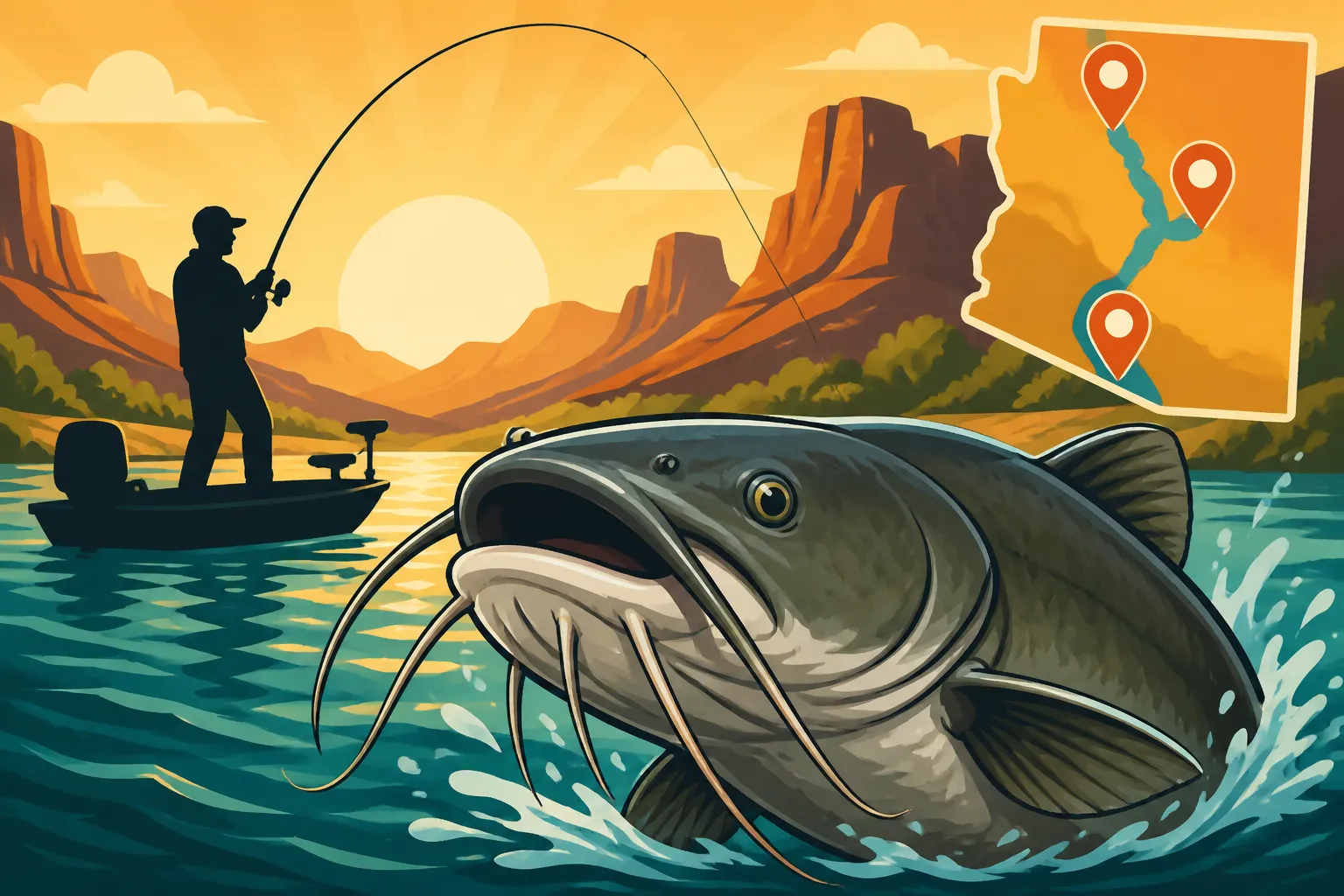
The Colorado River in Arizona is legendary, but sometimes it feels like finding those truly monstrous catfish, especially the flatheads, is like chasing a ghost. Anglers often struggle to pinpoint the exact stretches where the giants lurk, and simply dropping a line anywhere along the vast river isn't going to cut it for a trophy catch. This guide will take you deep into the prime trophy catfish spots on the Arizona side of the Colorado River, giving you the insider knowledge you need to land the fish of a lifetime.
Understanding the Allure of Colorado River Catfish
The Colorado River offers some truly exceptional opportunities for trophy catfish, primarily focusing on two species: the powerful flathead catfish and the abundant channel catfish. These aren't just any fish; the conditions in the Colorado River, with its diverse habitats, rich forage base, and varying currents, allow these whiskered giants to grow to impressive sizes, making it a bucket-list destination for serious catfishermen.
Why the Colorado River Breeds Giants
The sheer size and complexity of the Colorado River system, from the depths of Lake Havasu to the swift currents below dams, provide an ideal environment for catfish to thrive and pack on the pounds. The river's consistent flow, nutrient-rich waters, and abundance of smaller baitfish like carp, tilapia, and various sunfish create a perfect food chain for apex predators like flatheads and large channel cats. Unlike many smaller, landlocked lakes, the river’s vastness means less fishing pressure in certain stretches, giving older, larger fish the chance to mature without constant disturbance.
For flathead catfish, in particular, the rocky structure, submerged timber, and deep holes that characterize many sections of the Colorado River are absolute heaven. These ambush predators love to hide in cover, waiting for an unsuspecting meal to swim by. The dynamic nature of the river also means that these fish are constantly moving, feeding, and growing, making them strong, healthy, and incredibly hard-fighting specimens that truly earn the "trophy" designation. Understanding the seasonal movement patterns of these Arizona bass can also indirectly help locate their predators.
The Thrill of the Chase: What to Expect
Chasing trophy catfish on the Colorado River isn't for the faint of heart or the impatient. These aren't your typical backyard pond catches. When you hook into a 30-pound-plus flathead or a monster channel cat, you're in for a battle. They pull hard, run deep, and use the current to their advantage, testing your gear and your resolve. Many anglers find themselves unprepared for the sheer power of these fish, often underestimating the need for heavy-duty rods, stout reels, and strong line.
The reward, however, is immense. Landing a true trophy catfish, one that can push the scales to 40, 50, or even 70 pounds, is an experience you'll never forget. It's a testament to patience, skill, and persistence. The quiet nights spent on the river, the anticipation of a bite, and the explosive fight that follows all contribute to an addictive angling experience. If you're wondering about the best time of year to fish the Salt River, which is connected to the Colorado River system, it's worth noting that the general principles of catfish activity (feeding heavily in warmer months, moving to deeper holes in colder) often apply across connected waterways.
Prime Locations for Trophy Catfish on the Arizona Colorado River
When it comes to the Colorado River, not all stretches are created equal for trophy catfish. Certain areas offer unique geographical features and ecological conditions that make them hotspots for truly massive flatheads and heavyweight channel cats.
The Lower Colorado River: Laguna Dam to Yuma
This section of the Colorado River, particularly from Laguna Dam down to the Yuma area, is widely renowned for its incredible flathead catfish population. The river here widens, creating a mix of swift channels, slower backwaters, and an abundance of submerged structure.
- Laguna Dam and Below: The area immediately below Laguna Dam is a fantastic starting point. The dam creates significant current breaks and deep scour holes where baitfish congregate and large flatheads lie in wait. The turbulence and constant flow keep the water oxygenated and food readily available, making it a prime feeding zone. Anglers often target the deeper channels and the edges of current seams using large live baits like bluegill, carp, or tilapia. Night fishing is particularly effective here, as flatheads are nocturnal hunters. Remember to check for any special fishing regulations below dams. You might even find it's a great spot to catch a Flathead Catfish Record at Laguna Dam.
- Yuma Backwaters and Channels: As you move closer to Yuma, the river spreads out, forming numerous backwaters, oxbows, and sloughs off the main channel. These calmer, often shallower areas with dense vegetation and submerged timber are perfect nurseries for baitfish, which in turn attract bigger flatheads. Look for areas with current but also plenty of cover. Popular spots include the numerous canals and drainages that feed into the main river, as well as the deeper pools within the main flow. Local knowledge is invaluable here, and sometimes booking a guided trip through services like FishingBooker can give you a significant edge in finding these hidden gems.
Lake Havasu and the Parker Strip
While often thought of for its bass and striper fishing, Lake Havasu and the adjacent Parker Strip (the section of the Colorado River below Parker Dam) hold some enormous channel catfish and impressive flatheads, especially in the deeper, more structured areas.
- Lake Havasu's Deep Coves and Structure: Lake Havasu itself is a sprawling reservoir with vast open waters, but the key to trophy catfish here lies in its numerous deep coves, submerged rock piles, and artificial structures. The famous London Bridge area, with its intricate underwater structure, attracts both baitfish and the catfish that prey on them. Target depths of 20-50 feet during the day, moving shallower at night. Both flatheads and channel cats can be found here. For channel cats, cut bait or prepared stink baits can be highly effective, while flatheads prefer live bait. For deeper insights into the fishing at this location, explore a full Lake Havasu Arizona Fishing Guide.
- The Parker Strip (Below Parker Dam): This stretch of river is characterized by a strong current and colder, clearer water released from Parker Dam. While often associated with trout and stripers, the Parker Strip also hosts robust populations of channel and flathead catfish. The key here is to find current breaks and deeper holes, often near rocky bluffs or points. The channel cats in this section are known for their strong fights due to the constant current. Live bait, especially large worms or small bluegill, are excellent choices for flatheads, while chicken livers or stink baits work wonders for channel cats.
Lake Mohave and Willow Beach Area
Further north, the Colorado River flows through Lake Mohave, an impressive reservoir known for its diverse fishery, including significant trophy catfish potential. The Willow Beach area, specifically, is a hidden gem.
- Lake Mohave's Canyons and Inlets: Lake Mohave is a long, narrow lake with deep canyon walls and numerous inlets. The deeper sections and submerged ledges are excellent for large channel catfish, while flatheads can be found closer to cover in shallower, warmer bays. The lake's vastness means less pressure, allowing catfish to grow large. Trolling with cut bait or slow-drifting live bait along drop-offs can be productive. Understanding the Fishing Conditions at Willow Beach is paramount for success in this region.
- Willow Beach's Unique Conditions: Located within the Black Canyon, Willow Beach offers cold, clear water from the bottom of Hoover Dam. While famed for its rainbow trout, this area also harbors surprisingly large channel catfish that thrive on the abundant trout forage and the powerful current. These channel cats are often mistaken for flatheads due to their size and fighting prowess. Heavy tackle is a must, and baits like chicken livers, anchovies, or even small trout imitation lures can entice a strike. This is a unique environment where catfish behave differently due to the cold, fast water. Many anglers find the challenge of this cold-water fishery rewarding.
Strategies for Landing a Trophy Catfish
Landing a trophy catfish on the Colorado River is a game of patience, preparation, and knowing the right tactics. These fish are powerful and cunning, requiring a different approach than smaller species.
Tackle and Gear Essentials
To effectively target trophy catfish, your gear needs to be up to the task. Skimping on tackle will lead to heartbreak.
- Rods and Reels: Opt for heavy-action or extra-heavy action rods, at least 7 to 9 feet long, capable of handling significant weight. Pairing these with robust baitcasting reels (like those from Abu Garcia or Penn) that have a strong drag system is crucial. Look for reels with a high line capacity to accommodate long runs. You'll want something that can really put the brakes on a hard-charging flathead.
- Line: Monofilament line in the 25-50 lb test range is a good choice for shock absorption and abrasion resistance, especially around rocky structure. Many experienced anglers prefer braided line (50-80 lb test) for its incredible strength, sensitivity, and smaller diameter, which is great for cutting through current. If you're using braid, a fluorocarbon leader (30-60 lb test) can provide stealth and abrasion resistance where the fish might encounter sharp edges. When fishing for these powerful fish, knowing the Best Line for Catfish Fishing can make all the difference.
- Hooks and Sinkers: Large, stout circle hooks (5/0 to 10/0) are generally preferred, especially when using live bait, as they are designed to hook in the corner of the fish's mouth, minimizing harm and making release easier. For sinkers, invest in a variety of weights (from 2 oz to 8 oz or more) to combat the river's current. Sinker slides are excellent for allowing the line to run freely, so the fish doesn't feel resistance when it picks up the bait.
- Essential Accessories: Don't forget a sturdy rod holder, a strong headlamp for night fishing, a large net or lip grippers for landing big fish, and heavy-duty gloves to protect your hands from catfish spines. A good quality cooler is also essential for keeping bait fresh and any keepers on ice.
| Gear Category | Recommended Specifications | Notes |
|---|---|---|
| Rod | Heavy to Extra-Heavy action, 7-9 feet | Fiberglass or composite for durability, strong backbone for leverage. |
| Reel | Robust Baitcasting, High Line Capacity, Strong Drag (e.g., 20+ lbs) | Brands like Abu Garcia Ambassadeur, Penn Squall, or Shimano Tranx are popular. |
| Main Line | 50-80 lb Braided, or 25-50 lb Monofilament | Braid for sensitivity & strength, Mono for stretch & abrasion. Choose based on preference. |
| Leader | 30-60 lb Fluorocarbon or Heavy Monofilament | Abrasion resistance and lower visibility, especially for clear water. |
| Hooks | 5/0 – 10/0 Circle Hooks (for live bait), J-hooks (for cut bait) | Ensure they are sharp and heavy-duty. |
| Sinkers | 2-8 oz (or more), No-Roll or Pyramid Style | Account for current. Sinker slides prevent fish from feeling weight. |
| Rod Holders | Heavy-Duty Bank Rod Holders | Essential for keeping your rods secure against powerful bites. |
| Landing Gear | Large Landing Net (deep hoop, rubberized mesh) or Lip Grippers | Ensure it can handle the size and weight of a trophy catfish. |
| Lighting | Headlamp with Red Light Option | Crucial for night fishing, red light preserves night vision and disturbs less. |
Best Baits and Rigging for Big Cats
Live bait reigns supreme for flathead catfish, while channel cats are more opportunistic and will hit a variety of offerings.
- Live Bait for Flatheads: Flatheads are highly predatory and prefer live, struggling bait. Bluegill, sunfish, small carp, and tilapia (where legal) are excellent choices. Hook them through the back (above the lateral line, avoiding the spine) or through the lips to keep them lively. Ensure your bait is healthy and active. Rigging usually involves a Carolina rig or a three-way swivel rig to keep the bait near the bottom.
- Cut Bait for Channel Cats: For channel catfish, fresh cut bait is king. Pieces of carp, shad, or even smaller sport fish (if legal and caught according to regulations) can be incredibly effective. Chicken livers, shrimp, and commercial stink baits also work very well. The scent trail from cut bait is irresistible to channel cats, drawing them in from a distance.
- Rigging Strategies:
- Carolina Rig: This is a versatile and popular rig for both live and cut bait. A sinker (egg sinker or no-roll) is threaded onto the main line, followed by a bead to protect the knot, and then tied to a swivel. A 12-24 inch fluorocarbon leader is tied to the other end of the swivel, then your hook. This allows the bait to move naturally while the sinker holds it in place.
- Three-Way Swivel Rig: Ideal for heavier currents, this rig uses a three-way swivel. One eye goes to your main line, another to a short leader (6-12 inches) with a sinker, and the third to a longer leader (18-36 inches) with your hook and bait. This keeps your bait elevated off the bottom and allows it to drift enticingly in the current.
- Float Fishing: In certain situations, particularly in slower-moving backwaters or when fishing over submerged snags, a large bobber or float can be used to suspend live bait just above the cover, preventing snags and presenting the bait enticingly.
Timing and Techniques
The "when" and "how" are just as important as the "where" when targeting trophy catfish.
- Night Fishing is Key: Catfish, especially flatheads, are largely nocturnal hunters. While you can catch them during the day, your chances of landing a true trophy skyrocket after the sun sets. The cover of darkness makes them bolder and more active.
- Seasonal Considerations: Catfish activity generally peaks in the warmer months (late spring, summer, early fall) when water temperatures are higher, and their metabolism is in overdrive. During winter, they tend to move to deeper, more stable holes and become less active, though they can still be caught. Understanding Catfish Night Fishing Techniques is essential for summer success.
- Patience and Persistence: Trophy catfishing is not about constant bites. It's often about setting out good baits in prime locations and waiting for that one big bite. Be patient, bring plenty of water and snacks, and be prepared to wait.
- Scouting and Structure: Before you even cast a line, take time to scout the area. Look for current seams, eddies, submerged timber, rock piles, and deep holes. A good fish finder can be invaluable for identifying these underwater structures and locating baitfish schools, which often indicate the presence of predators. If you're looking for guidance, remember that many experienced local guides on FishingBooker specialize in trophy catfish and can put you right on the best spots.
- Anchoring and Boat Positioning: If fishing from a boat, proper anchoring is critical, especially in river current. You want to position your boat upstream of your desired fishing spot, allowing your baits to drift naturally into the zone without your boat drifting over and spooking the fish. Use two anchors, one off the bow and one off the stern, for maximum stability.
Safety and Regulations on the Colorado River
Fishing the Colorado River, especially for trophy fish, requires an understanding of local regulations and adherence to safety protocols. This is particularly true when dealing with powerful currents and extreme weather conditions.
Arizona Fishing Regulations and Licenses
Before heading out, always ensure you have the appropriate licenses and are aware of current regulations.
- Arizona Fishing License: A valid Arizona fishing license is required for anyone 10 years of age and older. These can be purchased online through the Arizona Game and Fish Department website, or from authorized dealers like Walmart or local tackle shops. Make sure you understand the different types of licenses available, whether you're a resident or a nonresident. If you're just visiting, a Arizona Nonresident Fishing License Guide can help you navigate the process.
- Bag and Possession Limits: Be aware of the specific bag and possession limits for catfish on the Colorado River. These limits can vary by species and specific stretches of the river. Always consult the current Arizona Game and Fish Department fishing regulations booklet or their website. For example, the Fishing Bag and Possession Limits Explained document is a must-read.
- Interstate Waters: If you plan to fish parts of the Colorado River that border California or Nevada, you'll need to understand interstate licensing agreements. For instance, an Arizona license typically covers the Arizona side of Lake Havasu, but if you venture into California waters, a California license might be required or a reciprocal agreement may apply. Always verify these details beforehand to avoid fines.
- Tribal Lands: Some parts of the Colorado River pass through tribal lands. Fishing in these areas often requires an additional tribal permit. For example, areas near the Fort Mohave Indian Reservation or the Chemehuevi Indian Reservation may have their own distinct rules and permitting processes.
Boating and Personal Safety
The Colorado River is a major waterway with varying conditions; safety should always be your top priority.
- Life Jackets: Always wear a U.S. Coast Guard-approved personal flotation device (PFD), especially when on a boat or near strong currents. Arizona law requires all children 12 years of age and younger to wear a PFD when on board any vessel. For those interested in the details, see PFD Requirements for Kids in Arizona.
- Weather Monitoring: Arizona weather, especially in the desert, can be unpredictable. Rapid temperature changes, strong winds, and sudden thunderstorms (particularly during monsoon season) can quickly make conditions dangerous. Always check the forecast before you go and be prepared to head for shore if conditions deteriorate.
- Night Fishing Safety: If fishing at night, tell someone where you're going and when you expect to return. Bring extra light sources, fully charged communication devices, and know your surroundings. Navigating the river in the dark requires extreme caution.
- Hydration: The Arizona desert heat is no joke. Bring plenty of water and stay hydrated, even in cooler months. Sun protection – hats, sunglasses, and sunscreen – is also vital.
- Respect the Wildlife: The Colorado River is home to more than just fish. Be aware of snakes, scorpions, and other desert wildlife. Also, give ample space to other boaters and anglers.
By combining the right knowledge, proper gear, and a healthy respect for the river, you'll greatly increase your chances of finding and landing that elusive trophy catfish on the magnificent Colorado River.
Disclaimer
The information provided in this guide is for general informational purposes only and does not constitute legal advice regarding fishing regulations. Arizona fishing regulations are subject to change. Always consult the most current Arizona Game and Fish Department regulations booklet or website before your fishing trip to ensure compliance. Fishing and boating inherently involve risks, and participants should exercise caution and personal responsibility.