Is a Spinning Reel Easier Than Baitcasting for Beginners?
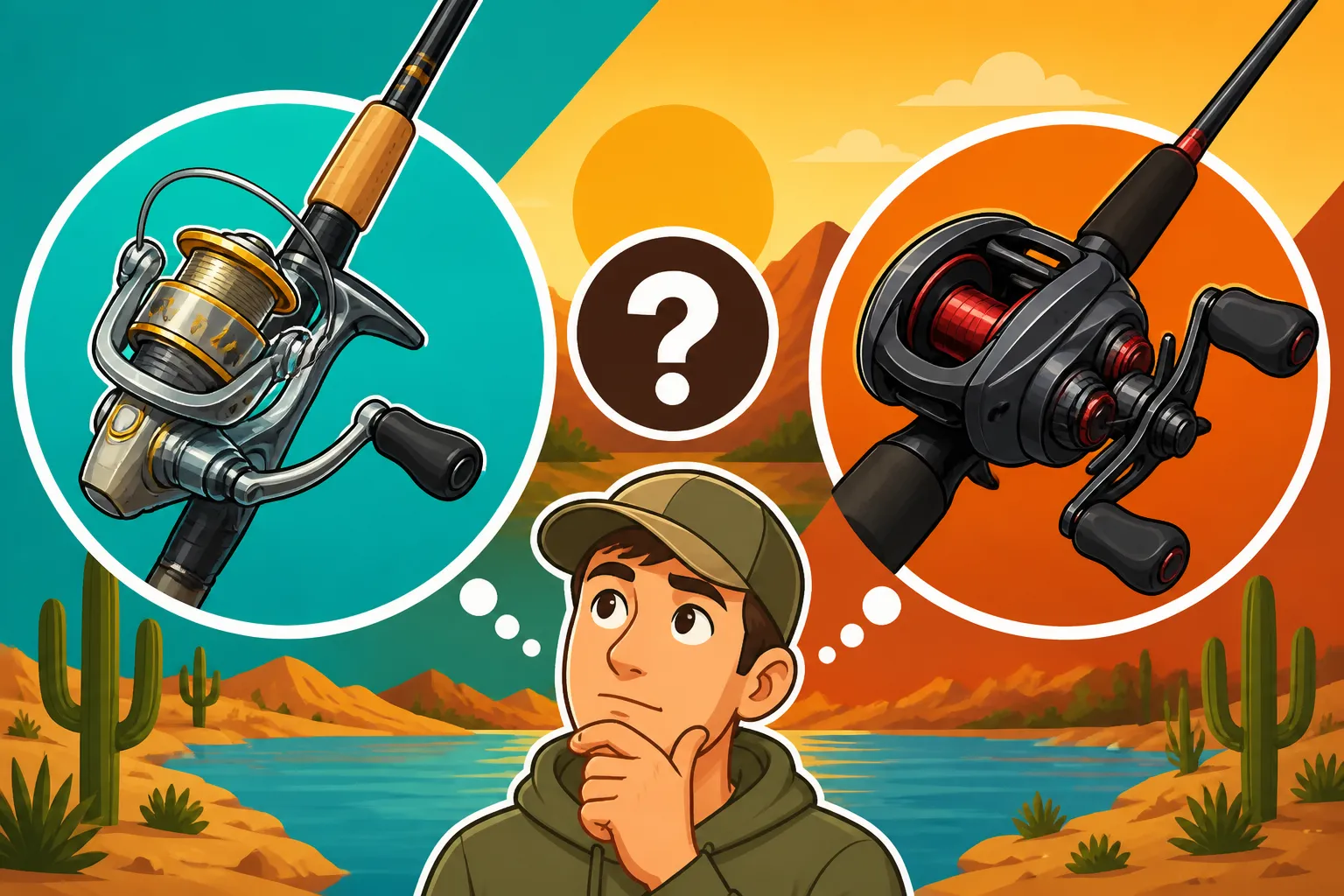
Oh, the age-old question that keeps so many aspiring Arizona anglers from even taking the first plunge into fishing! It's incredibly common to feel overwhelmed when walking into a Bass Pro Shops or browsing online for your first fishing setup, staring at a wall of reels and wondering which one is actually "for you." The truth is, that choice between a spinning reel and a baitcasting reel can feel like learning a foreign language, and many beginners end up frustrated before they even cast a line. This guide is here to untangle that confusion, explaining the core differences, validating the initial hurdles, and ultimately helping you decide which reel will make your first fishing experiences on Arizona's beautiful lakes and rivers much more enjoyable and successful.
Understanding the Basics: Spinning Reels Explained
Let's start with the workhorse of the fishing world for most folks, especially those just getting their feet wet: the spinning reel. If you've ever seen someone casually flick a lure out into a community pond, chances are they were using a spinning reel. They're incredibly user-friendly and forgiving, which is why they often get recommended as the go-to for beginners.
How a Spinning Reel Works
A spinning reel is often called an "open-face" reel because its spool is exposed and doesn't rotate during the cast. Instead, the line comes off the end of a stationary spool. When you reel in, a small metal arm called a "bail" rotates around the spool, neatly winding the line back on. To cast, you simply open this bail, hold the line with your finger, and then release it at the peak of your forward cast. It's a very intuitive motion that feels natural for most people right away. The design minimizes complex mechanics during the cast, which is a huge benefit when you're just starting out.
This design also means that the line flows directly off the spool. You don't have a rotating mass of line that can get tangled up if not managed perfectly, which is the primary cause of headaches with other reel types. Think of it like pulling string off a fixed ball versus unwinding it from a rapidly spinning wheel – the fixed ball is just inherently less prone to tangles. This simplicity in operation means less time untangling knots and more time actually fishing, which is exactly what a beginner needs to stay motivated.
Key Advantages for Beginners
The biggest advantage of a spinning reel, hands down, is its ease of use. You don't need a super fine-tuned touch or hours of practice just to get a decent cast. The mechanics are simple: open the bail, cast, close the bail, reel. This simplicity translates directly into less frustration and a quicker path to actually catching fish. For someone who might only fish a few times a year or is just learning the ropes, this is invaluable. You want to focus on the fish, the bite, and the experience, not on trying to prevent a massive bird's nest of fishing line.
Another huge plus for spinning reels is their ability to cast lighter lures and baits. Many beginner setups start with smaller hooks, lighter lines, and smaller offerings for panfish or stocked trout at local lakes. Spinning reels excel at delicately sending these lighter presentations out into the water. Trying to cast a tiny trout magnet or a small piece of worm with a baitcasting reel is a recipe for an immediate, monumental backlash, even for experienced anglers. Spinning reels handle these feather-light options with grace, allowing you to use a wider range of techniques from the get-go. For targeting species like rainbow trout at Canyon Lake or small bluegill at a community pond, a spinning reel is perfectly suited. How to Catch Trout at a Stocked Urban Lake is much easier with the right gear.
Common Applications in Arizona Fishing
In Arizona, spinning reels are incredibly versatile and can be used for a vast array of fishing scenarios. They are the absolute staple for anyone fishing the popular urban community lakes, where you might be targeting stocked rainbow trout, channel catfish, or feisty panfish. Their ability to cast lighter baits and lures makes them perfect for these environments. Think about those serene mornings at Tempe Town Lake or one of the many Phoenix-area community ponds; a spinning rod and reel combo is what most anglers will be wielding.
Beyond the urban scene, spinning reels shine in many of Arizona's stunning natural waters. If you're heading up to the White Mountains for some trout fishing in lakes like Big Lake or Show Low Lake, or even wading a smaller stream, a spinning setup is ideal for casting small spinners, spoons, or bait. Even for chasing smaller bass species like smallmouth bass in the deeper canyons of Lake Powell, a medium-light spinning setup can be incredibly effective for drop-shotting or throwing light jigs. They're also a great choice for kids and new anglers learning the basics of shore fishing at many of our larger reservoirs like Lake Pleasant or Roosevelt Lake. Learning Shore Fishing Techniques for Beginners becomes much less intimidating with a spinning setup.
Understanding the Basics: Baitcasting Reels Explained
Now, let's talk about baitcasting reels. These reels often carry a certain mystique, sometimes seen as the "pro" option, and for good reason. They offer superior control and power once mastered, but getting to that mastery takes time and a good deal of patience. They look different right away – the reel sits on top of the rod, and the spool is enclosed and rotates during the cast.
How a Baitcasting Reel Works
Unlike a spinning reel where the spool stays put, a baitcasting reel's spool actually revolves as the line comes off it during a cast. This direct line feed, in theory, reduces line friction and allows for longer, more accurate casts with heavier lures. However, here's the catch: the spool rotates at a speed dictated by the weight and trajectory of your lure. If the lure slows down in flight (e.g., due to wind or hitting the water) but the spool keeps spinning at the same rate, you get an instant, explosive tangle of line commonly known as a "backlash" or "bird's nest."
To prevent this, baitcasting reels require precise thumb control on the spool throughout the cast. You literally use your thumb as a brake to manage the spool's rotation, feathering it to match the lure's flight and stopping it completely just as the lure hits the water. This level of manual control is what gives baitcasters their vaunted accuracy and power, but it's also the source of immense frustration for beginners. It's a skill that has to be learned through trial and error, and those errors often involve spending precious fishing time picking out knots from your reel.
Initial Challenges for Beginners
I'm not going to sugarcoat it: baitcasting reels present a steep learning curve for beginners. The "backlash" is real, and it's a rite of passage for every angler who picks one up. Imagine trying to cast a lure, only to have your line explode into an impossible knot, sometimes so bad you have to cut off yards of perfectly good line. This can happen repeatedly if you haven't developed the necessary thumb control, and it's incredibly disheartening. I’ve seen more than one friend almost give up fishing entirely after a particularly bad string of backlashes on a new baitcaster.
Beyond the backlash, the overall mechanics of casting a baitcaster just aren't as intuitive. It requires a smoother, more deliberate casting motion compared to the flick-and-release of a spinning reel. There are also more adjustments to make on the reel itself, like the spool tension knob and the centrifugal or magnetic braking system, which need to be set correctly for different lure weights and wind conditions. For someone who just wants to go fishing, these extra layers of complexity can feel like homework rather than fun. That said, with some guidance from a buddy or even YouTube tutorials from outfitters like Bass Pro Shops, it's a skill that absolutely can be learned.
Why Anglers Eventually Choose Baitcasters
So, if they're such a pain to learn, why do so many experienced anglers swear by baitcasting reels? It boils down to control, power, and precision. Once you've mastered thumbing the spool, you can cast with incredible accuracy, hitting small pockets in cover or placing a lure exactly where you want it. This is crucial for targeted presentations, especially when fishing for elusive largemouth bass around submerged timber or docks in lakes like Saguaro Lake or Apache Lake.
Baitcasters also generally handle heavier lines and lures better, and they offer superior winching power for fighting big, strong fish. The direct drive system and robust gears mean less torque is lost, giving you more leverage when reeling in a trophy largemouth bass or a huge flathead catfish from the lower Colorado River. If you're planning to throw big swimbaits, heavy jigs, or crankbaits to cover a lot of water on a large reservoir, a baitcaster is often the preferred tool. They also offer faster line retrieval rates on many models, which can be advantageous when you need to quickly pick up slack or work a lure with a rapid retrieve. If you are specifically targeting Largemouth Bass Fishing Guide for Arizona, you will eventually find yourself considering a baitcaster.
The Beginner's Dilemma: Spinning vs. Baitcasting for First-Timers
It's a classic fishing quandary: start simple or jump straight into the deep end? For most new anglers, especially those just looking to enjoy the outdoors and catch a few fish, the answer is usually clear.
Why Spinning Reels Are Generally Easier to Start With
Let's cut right to it: spinning reels are undeniably easier for beginners. The learning curve is significantly flatter, which means you'll spend less time troubleshooting and more time enjoying your time on the water. Imagine taking your family out to a community fishing lake like Cortez Lake or Kiwanis Lake for the first time. You want everyone to have a good experience, catch some fish, and feel successful. Handing a spinning reel to a newbie or a child means they can almost immediately cast and start fishing without a lengthy instruction manual or constant fear of a backlash. This immediate gratification is vital for building confidence and fostering a love for the sport.
The simple act of opening the bail, swinging the rod, and releasing the line feels intuitive. There's no complex thumbing required, no intricate brake settings to fiddle with. You can focus on the basics of casting form, hook setting, and reeling in your catch. This foundational success builds a positive association with fishing, which is far more important for a beginner than mastering the most advanced gear right away. Many seasoned anglers still have a trusty spinning setup in their arsenal for certain techniques or just for a relaxing day of fishing without the fuss.
The Steep Learning Curve of Baitcasting
On the flip side, jumping straight to a baitcasting reel as a beginner can be incredibly frustrating. I've seen it happen countless times. A new angler buys a sleek baitcaster, often inspired by fishing shows or friends, only to spend the first few trips in a constant battle with backlashes. This isn't just a minor inconvenience; it can actively deter someone from continuing with the hobby. Clearing a nasty bird's nest takes time, patience, and often results in lost line, which can feel like a waste of both time and money. It can transform a relaxing day into a stressful chore.
The required coordination of thumb control, casting motion, and reel settings often feels like too much all at once. It's a skill that builds over many hours of practice, not just a few casts. While an experienced friend can offer tips, nothing beats the muscle memory developed through repetition. Many anglers suggest practicing in a yard or open field with a practice plug (a weight without hooks) before ever hitting the water with a baitcaster, just to get a feel for it. This extra step highlights that it's not a plug-and-play type of reel for beginners.
When to Consider a Baitcaster (After Mastering Spinning)
So, when is the right time to think about a baitcaster? Generally, it's once you've gained a good amount of experience and confidence with a spinning reel. You should be able to cast accurately, manage your line effectively, and understand basic fishing principles. Once you're consistently catching fish and feel comfortable on the water, you might start noticing limitations with your spinning gear. Perhaps you want to throw heavier baits for bigger bass, or you desire more pinpoint accuracy for specific cover.
This is often the point where anglers naturally gravitate towards a baitcaster. You'll likely have specific species in mind, such as Largemouth Bass Fishing Guide for Arizona or chasing large Catfish Fishing Guide for Arizona, and a better understanding of the techniques that benefit from a baitcasting setup, like flipping and pitching heavy jigs into dense cover. You'll appreciate the power and control, and the inevitable backlashes won't feel as devastating because you have a solid foundation of fishing enjoyment already built. Many anglers maintain both spinning and baitcasting setups, choosing the right tool for the job.
Practical Considerations for Arizona Anglers
Making the right gear choice isn't just about ease of use; it's also about fitting your equipment to the unique fishing landscape of Arizona. Our diverse waters and target species mean that different reels will excel in different situations.
Species and Water Types
Arizona offers an incredible variety of fishing, from high-country trout streams to vast desert reservoirs teeming with bass and catfish. For species like rainbow trout, panfish (bluegill, sunfish), and smaller channel catfish found in urban lakes or mountain streams, a spinning reel is often the perfect choice. Its ability to cast light lures and baits precisely without backlashing is ideal for these scenarios. Imagine trying to gently present a small piece of corn for a trout in a clear mountain creek with a heavy baitcasting setup – it would be an uphill battle!
However, if your passion lies in chasing trophy largemouth bass or robust striped bass in the massive desert lakes like Lake Havasu, Lake Powell, or Roosevelt Lake, or going after huge flathead catfish in the Colorado River, a baitcaster will eventually become a valuable asset. These fish often require heavier lines, larger lures, and the power to pull them out of thick cover. While you can certainly catch big bass on spinning gear, the specialized techniques for landing the biggest ones often favor a baitcaster. For instance, How to Fish for Striped Bass often involves throwing larger lures or trolling, where a baitcaster can offer advantages.
Budget and Initial Investment
Let's be realistic, fishing can be an expensive hobby if you let it be. For beginners, getting into the sport shouldn't break the bank. Generally, a decent quality spinning rod and reel combo can be purchased for a very reasonable price. You can find excellent entry-level combos at stores like Bass Pro Shops or online at Amazon that will serve a beginner well for years. These combos are designed to be forgiving and functional, allowing you to get on the water without a huge financial commitment.
Baitcasting setups, while also available at various price points, often require a slightly higher initial investment for a truly reliable and user-friendly model. A cheap baitcaster with a poor braking system can exacerbate the backlash problem, making the learning process even more frustrating. If you're going to invest in a baitcaster, it's often worth spending a little more for one that has good cast control features. For a true beginner, sticking with a spinning combo first allows you to determine how much you truly enjoy fishing before committing more significant funds to specialized gear. You might find that a simple Budget Rod and Reel Options for Beginners spinning setup is all you ever need for your style of fishing.
Mentoring and Practice
No matter which reel you choose, fishing is a skill that benefits immensely from mentoring and practice. If you have an experienced friend or family member who can teach you the ropes, they can guide you on everything from knot tying to casting techniques. This is particularly helpful if you decide to tackle a baitcaster down the road. A mentor can show you how to set up the reel, demonstrate proper thumb control, and help you troubleshoot those early backlashes without letting frustration take over.
Even without a personal mentor, there are tons of resources available. Local tackle shops are often a treasure trove of information, and many even offer clinics or advice for new anglers. Online videos can walk you through the basics of casting and reel maintenance for both spinning and baitcasting reels. The key is patience. Fishing is a journey, and every cast, every retrieve, and every fish (or missed fish!) is a learning opportunity. Don't be afraid to experiment, but also don't feel pressured to use gear that isn't enjoyable for you. The goal is to have fun, especially when you're just starting out.
Comparing Spinning and Baitcasting Reels for Beginners
To help you visualize the key differences, here's a quick comparison of spinning and baitcasting reels from a beginner's perspective:
| Feature | Spinning Reel | Baitcasting Reel |
|---|---|---|
| Ease of Use | Very Easy: Simple bail operation, minimal tangles. | Difficult: Requires precise thumb control to avoid backlashes. |
| Learning Curve | Gentle, quick to pick up. | Steep, requires significant practice and patience. |
| Casting Light Lures | Excellent, handles small baits with ease. | Poor, very prone to backlashing with light lures. |
| Casting Heavy Lures | Good, but can struggle with very heavy options. | Excellent, designed for heavier lines and lures. |
| Accuracy | Good, sufficient for most casual fishing. | Excellent, pinpoint accuracy once mastered. |
| Power | Good, but less winching power than a baitcaster. | Superior, more leverage for fighting large fish. |
| Backlashes | Very Rare, generally only from poor line management. | Common for beginners, main hurdle to overcome. |
| Cost for Entry-Level | Often more affordable for a good quality setup. | Can be slightly more expensive for a reliable beginner model. |
| Recommended For | Beginners, kids, general purpose, trout, panfish, light bass. | Experienced anglers, heavy bass, striped bass, catfish, specific techniques. |
When you look at it this way, it becomes clear why most experts, myself included, recommend starting with a spinning reel. It removes a significant barrier to entry and lets you focus on the joy of fishing.
Ultimately, the best reel for a beginner in Arizona is the one that makes them want to go fishing again and again. For most, that means a spinning reel. It allows for a less frustrating, more immediate path to success, helping you build confidence and truly fall in love with the sport before you tackle the more advanced techniques and gear. Once you've mastered a spinning setup and find yourself wanting more precision or power for specific species, then, and only then, consider dipping your toes into the world of baitcasting. There's no rush, and plenty of amazing fishing experiences await you with a simple, effective spinning rod and reel.
Disclaimer
This article is for general informational purposes only and does not constitute professional advice. Laws, prices and regulations vary by location and change over time. Consult a qualified professional for guidance on your specific situation.