Best Terminal Tackle for Crappie Fishing
There’s nothing quite as frustrating as heading out to your favorite Arizona crappie spot, full of anticipation, only to find your tackle box isn't quite equipped for those finicky eaters. Crappie, with their subtle bites and often structure-oriented nature, demand a specialized approach, and having the right terminal tackle can make all the difference between a slow day and a cooler full of slabs. This guide is here to unravel the mysteries of crappie terminal tackle, helping you rig up correctly and confidently for success on Arizona’s diverse waters.
Understanding Crappie and Their Feeding Habits
Before we dive into the nuts and bolts of terminal tackle, it’s really helpful to understand the target: crappie. These panfish, whether black or white crappie, are known for their delicious fillets and their schooling behavior. They tend to be found around structure – brush piles, submerged timber, docks, bridge pilings, and even weed lines. They love cover, which offers them both protection and a prime ambush point for their prey.
Crappie are primarily sight feeders, meaning they often hunt by seeing their food. Their mouths are relatively small and papery, which is why aggressive hook sets can lead to lost fish or torn lips. They primarily feed on small baitfish like shad, minnows, and small invertebrates such as insects and crustaceans. This diet preference directly influences the type and size of terminal tackle you’ll want to use. You can learn more about what they eat in our Crappie Diet and Feeding Habits guide. Their subtle bites often feel like a gentle tap or just a slight weight on your line, so sensitivity in your setup is key.
Black Crappie vs. White Crappie Differences
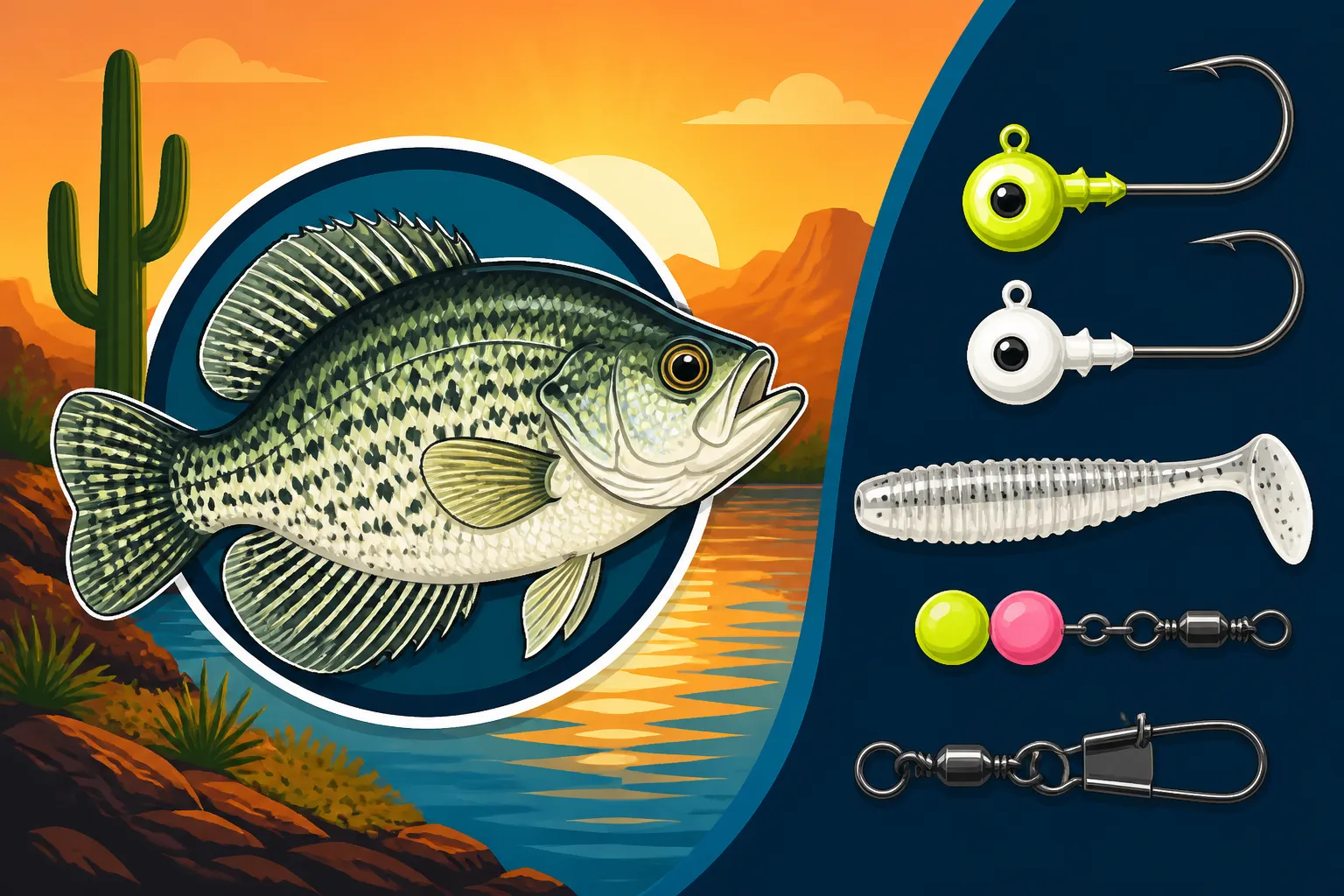
While both are "crappie," there are subtle differences in their appearance and typical habitat that can sometimes influence your approach, even down to terminal tackle. Black crappie typically have irregular black blotches or spots all over their body and seven or eight dorsal spines. They tend to prefer clearer water with more vegetation. White crappie, on the other hand, have vertical bars on their sides and usually six dorsal spines. They are more tolerant of turbid, or murkier, water and are often found in larger rivers and reservoirs.
For the angler, this distinction often means that if you're fishing a clearer, vegetation-rich lake like one of the Mogollon Rim lakes after a stocking, you might encounter more black crappie. If you're on a larger, somewhat less clear reservoir such as Roosevelt Lake, you might find a mix, or lean towards white crappie. The main takeaway here is that both species have similar mouth sizes and feeding habits, so the core terminal tackle principles remain the same, but knowing which species you're likely to encounter can give you a slight edge in understanding their specific hideouts. The general rule of thumb is to use smaller, more subtle presentations for finicky fish in clear water.
Crappie Spawning Season Impact
The crappie spawning season is a fantastic time to target these fish, and understanding it helps you pick your spots and, yes, your tackle. In Arizona, crappie typically spawn in the spring, generally from March through May, when water temperatures climb into the 60s Fahrenheit. During this time, they move into shallower water, usually 2 to 10 feet deep, to build nests and lay eggs. They become more aggressive as they guard their nests, making them more susceptible to a well-presented bait or lure.
When crappie are in the shallows for spawning, they might be found around visible cover like cattails, fallen trees, or shallow brush. This often means you'll be making shorter casts and possibly fishing vertically. Your terminal tackle choices might lean towards lighter weights and smaller bobbers that don't make a big splash. This is also when jigs become incredibly effective, as you can gently drop them into pockets of cover. Knowing the Crappie Spawning Season Tactics can really boost your success during this prime time, and the right tackle makes those tactics sing.
Essential Terminal Tackle Components for Crappie
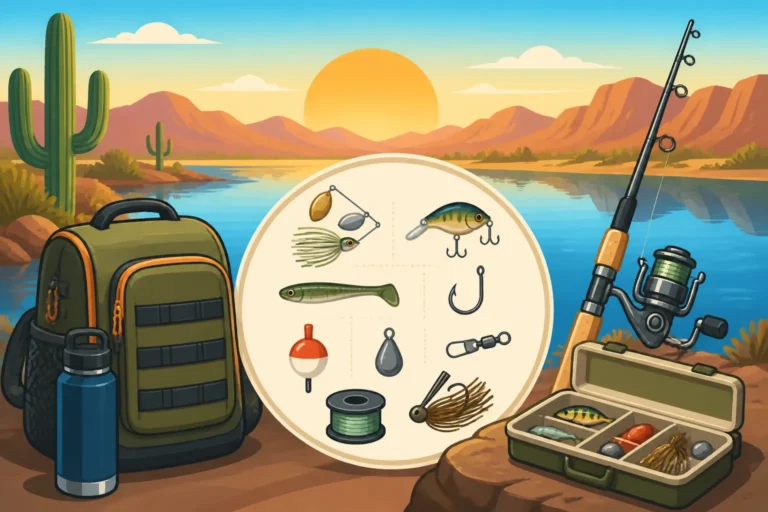
Terminal tackle refers to all the bits and pieces at the "business end" of your fishing line—hooks, sinkers, swivels, and bobbers. For crappie, the mantra is often "small and subtle." You're not looking to overpower these fish, but rather to present your bait or lure in the most natural and enticing way possible. Let's break down the core components.
Hooks: Size, Type, and Material
Crappie have delicate, papery mouths, which means selecting the right hook is paramount. Too large, and they won't get it in their mouth; too thick, and it will tear.
- Size: Generally, crappie hooks range from size #6 down to #10, with #8 being a popular all-around choice. If you're using very small minnows or micro jigs, you might even go down to a #12 or #14. The key is to match the hook size to your bait. A tiny minnow on a #6 hook looks unnatural, while a larger minnow on a #10 might not get you a solid hookup.
- Type:
- Aberdeen Hooks: These are arguably the most popular for crappie fishing. They are thin-wired, which helps them penetrate the crappie's mouth with minimal effort and are less likely to tear out. Their long shank is also a huge plus, making it easier to remove the hook from a crappie's mouth, especially if it's swallowed deeply.
- Jig Hooks: If you're using jigs (which, let's be honest, is most of the time for crappie), you'll be looking at jig heads. These are hooks molded into a lead head. Jig heads for crappie typically range from 1/32 oz to 1/8 oz, though sometimes lighter or heavier are used depending on depth and current. Match the hook size on the jig head (often #4 or #2) to the size of your soft plastic or live minnow.
- Kahle Hooks (Circle Hooks): While less common for crappie, a small Kahle or circle hook can be effective, especially if you're bait fishing and want to ensure better lip hooks for catch and release. The design of a circle hook ensures it usually hooks in the corner of the mouth, minimizing deep hooking. However, you need to resist the urge to set the hook hard; just reel in when you feel a bite.
- Material: Most crappie hooks are made from high-carbon steel, which offers a good balance of strength and sharpness. Some might have a bronze or nickel finish. The most important thing is sharpness. Always check your hooks; a dull hook will miss fish.
When you're out there, whether you're at a local Bass Pro Shops or browsing online on Amazon, you'll find a dizzying array of hooks. Stick to the thin-wire, sharp variety in sizes #6-#10, and you'll be in good shape for crappie.
Bobbers: Fixed, Slip, and Indicators
Bobbers are essential tools for crappie fishing, especially when using live bait or small jigs. They allow you to suspend your offering at a precise depth and give you a visual indicator of a bite.
- Fixed Bobbers: These bobbers attach directly to your line at a fixed point. They're great for fishing in shallower water, typically up to about 5-6 feet deep. Common types include spring clip bobbers (the classic red and white ones) and stick bobbers. Stick bobbers offer more sensitivity and less resistance, which can be crucial for light-biting crappie. The main drawback is that casting with a fixed bobber set to a deep depth can be cumbersome.
- Slip Bobbers: For fishing deeper water (more than 5-6 feet), slip bobbers are a game-changer. They "slip" up and down your line, stopping at a pre-set depth determined by a small bobber stop knot. This allows you to cast your rig easily, even to deep depths, and then the bobber slides down to your desired setting once it hits the water. They offer excellent sensitivity and are fantastic for fishing brush piles or suspended crappie. Most serious crappie anglers have a variety of slip bobbers in their tackle box, often weighted for better casting accuracy.
- Strike Indicators (for Micro-Jigs): For ultra-light presentations or fly fishing styles, you might use very small foam or yarn strike indicators. These are essentially tiny bobbers designed to detect the slightest tap. They offer almost no resistance to the fish and are excellent for those incredibly finicky crappie, especially in clear water or when they're lethargic.
Choosing the right bobber depends on your fishing depth and the crappie's mood. Always opt for the smallest bobber that will effectively float your bait and be visible. Less resistance means more bites!
Sinkers: Split Shot, Bullet, and Mojo Weights
Weights are crucial for getting your bait or lure down to the fish's desired depth, especially when targeting crappie that often hang out deep in structure.
- Split Shot Weights: These are the most common and versatile weights for crappie. They pinch directly onto your fishing line. They come in various sizes, from tiny BB-sized weights to larger ones. For crappie, you'll typically use very small split shot (sizes #7, #5, #3, or even smaller) to slowly drift a minnow or jig. The idea is to add just enough weight to get your bait down, but not so much that it causes it to plummet unnaturally. You can adjust the weight by adding or removing split shot.
- Bullet Weights (Slip Sinkers): While more commonly associated with bass fishing (like a Texas rig), very small bullet weights (1/16 oz to 1/8 oz) can be used for crappie in specific scenarios, especially when fishing around heavier cover. They allow your line to slide through them, meaning the crappie feels less resistance when it picks up the bait. They're usually pegged or allowed to slide freely above a small swivel.
- Mojo Weights: Similar to bullet weights but often cylindrical, these can also be used. They are typically lighter and have a more subtle profile than traditional bullet weights, making them suitable for crappie.
- No-Roll Sinkers: These flat-sided sinkers are good if you're bottom fishing in current, as they are less likely to roll. However, for most crappie applications, they are a bit overkill.
When choosing a sinker, always aim for the lightest weight that will get your bait to the desired depth and keep it there. Crappie are often wary of heavy resistance. Placing your split shot about 6-12 inches above your hook is a good starting point. Our guide on Bottom Fishing Techniques for Catfish might use heavier sinkers, but the principle of matching weight to current and depth holds true for crappie too.
Swivels and Snaps: Reducing Line Twist
Swivels and snaps are often overlooked but can be vital components, especially when fishing live bait or certain lures that cause line twist.
- Barrel Swivels: These are small, simple swivels that allow your line to rotate freely, preventing twist. Line twist can weaken your line and lead to tangles, especially when a lively minnow is spinning or when reeling in a fish. For crappie, use the smallest barrel swivels you can find – sizes #10 or #12 are usually appropriate. Too large, and they become highly visible and can deter fish.
- Snap Swivels: These combine a barrel swivel with a small snap clip. They are incredibly convenient for quickly changing lures or jig heads without retying your entire rig. Again, for crappie, opt for the absolute smallest snap swivels available to maintain a subtle presentation.
- Interlock Snaps (No Swivel): Sometimes, if you're not concerned about line twist (e.g., when jigging vertically with a soft plastic), a tiny interlock snap without a swivel is enough. It provides a quick lure change while being very minimalist.
The general rule for crappie is to use swivels and snaps sparingly, and only when necessary to prevent line twist or for quick lure changes. If you can get away with tying directly to your hook or jig head, that's often the most sensitive and subtle approach.
Rigging Strategies for Different Crappie Scenarios
Now that we know the components, let’s talk about how to put them together. The way you rig your terminal tackle can significantly impact your success, as crappie fishing often requires finesse and adaptation to conditions.
The Classic Bobber and Minnow Rig
This is perhaps the most iconic and effective crappie rig, especially when using live bait. A frisky minnow is almost irresistible to crappie, and a bobber allows you to present it perfectly.
- Setup: You'll typically start with your main line. If you're fishing shallow, attach a fixed bobber a few feet up the line. For deeper water, a slip bobber setup is preferred. First, slide on a bobber stop (a small piece of string or rubber), then a bead, then your slip bobber, another bead, and then tie on a small barrel swivel. Below the swivel, tie on a leader (often 12-18 inches of lighter fluorocarbon or monofilament line). Attach one or two small split shot weights to the leader, typically 6-12 inches above your hook. Finally, tie on your small Aberdeen or crappie hook.
- Application: This rig is fantastic for suspending minnows at a precise depth, whether you're targeting crappie holding at a certain level in a brush pile or along a drop-off. The bobber acts as your strike indicator. A gentle dip or sideways movement usually signals a bite. It's also great for drifting or still fishing from a boat or bank. You can even use this rig to present a small jig or soft plastic under a bobber for a more controlled, slower presentation. This is an excellent technique for shore fishing, or for those new to crappie fishing.
- Key Considerations: Match the bobber size to the weight of your minnow and split shot. You want the bobber to float upright but be sensitive enough to show a subtle bite. Use the lightest leader you can get away with to minimize visibility.
Jigging Rigs for Active Crappie
Jigging is incredibly effective for crappie, especially when they are more active or when you are trying to cover water and locate schools. Jigs mimic small baitfish or insects and can be fished in various ways.
- Single Jig Head Rig: The simplest jigging rig involves tying a small jig head (typically 1/32 oz to 1/8 oz with a #4 or #2 hook) directly to your main line. You can then thread a small soft plastic body (tube jigs, grubs, swimbaits, or crappie minnows) onto the hook.
- Double Jig Rig (or "Tandem Rig"): This rig allows you to present two jigs at once, effectively doubling your chances and helping you experiment with different colors or depths. Tie a small jig head to the end of your line. Then, about 12-18 inches above that, tie another jig to a dropper loop or a short leader off a three-way swivel. This setup helps you determine the crappie's preferred depth.
- Trolling with Jigs: For covering larger areas, especially from a boat, trolling jigs can be highly productive. You might use a heavier jig head (1/8 oz or 1/4 oz) or add a small sinker ahead of your jig. Slow trolling at speeds around 0.5 to 1.5 mph can entice suspended crappie. The ideal approach for this is to use a Best Trolling Motors for Small Boats to maintain consistent speed.
- Application: Jigging rigs are versatile. You can cast them out and retrieve them with a slow, steady retrieve, or a lift-and-drop motion. They are also excellent for vertical jigging directly over brush piles or other structure, often seen in How to Fish a Brush Pile for Crappie. When crappie are tightly schooled, dropping a jig right into the thick of them can result in multiple hookups. Experiment with different colors and sizes until you find what they're hitting. For colder water, a very slow, almost imperceptible jig movement is often key.
Tight-Lining and Spider Rigging
These techniques forgo the bobber entirely, relying on direct line feel to detect bites, which can be essential for deep or very subtle crappie.
- Tight-Lining: This method involves fishing without a bobber, allowing your weight and bait (often a minnow or a jig) to fall directly to the desired depth. You hold your rod and watch the line intently for any twitch or movement, or simply feel for the subtle tap. This is particularly effective when crappie are hugging the bottom or dense structure, or when you're fishing in windy conditions where bobbers are hard to see. It requires a sensitive rod and good feel for your line.
- Spider Rigging: This is a specialized trolling technique, typically done from a boat, where multiple rods are fanned out around the boat, each with a different bait or jig presented at various depths. Often, a heavy sinker is used to keep the line vertical, with several snelled hooks or jigs spaced above it (a "crappie rig"). The rods are placed in holders, and the angler watches the rod tips for the tell-tale bounce or bend. This method is incredibly effective for covering wide areas and finding crappie schools, particularly during the pre-spawn or post-spawn periods when fish are scattered.
| Terminal Tackle Component | Common Crappie Use | Recommended Size/Type | Notes for Arizona Fishing |
|---|---|---|---|
| Hooks | Live bait, jigs | #6 to #10 Aberdeen, thin-wire jig hooks | Match to minnow size, choose sharpest hooks for papery mouths. |
| Bobbers | Live bait, suspended jigs | Slip bobbers (weighted preferred), Small fixed bobbers, Stick bobbers | Slip bobbers for deeper desert lakes, fixed for shallow community ponds. |
| Sinkers | Depth control | #7, #5, #3 Split Shot, 1/32-1/8 oz bullet weights | Lightest weight possible to maintain natural fall and feel subtle bites. |
| Swivels/Snaps | Line twist, lure changes | #10 or #12 Barrel Swivels, Small Snap Swivels | Use sparingly, opt for smallest available to maintain stealth. |
| Jig Heads | Soft plastics, minnows | 1/32 oz – 1/8 oz, #4 or #2 hook | Essential for most crappie presentations; carry various weights/colors. |
Tips for Success and Common Mistakes to Avoid
Crappie fishing, while rewarding, can be challenging. A few smart practices and avoiding common pitfalls will significantly increase your catch rates.
The Importance of Line Selection
Your fishing line is the connection between you and the fish, and for crappie, it needs to be chosen wisely.
- Light Line is Key: Crappie have excellent eyesight, especially in clear Arizona waters. Using heavy line will often spook them. Most crappie anglers use 4 to 6-pound test monofilament or fluorocarbon line. Monofilament offers good knot strength and some stretch, which can be forgiving on a crappie's delicate mouth. Fluorocarbon is nearly invisible underwater, extremely sensitive, and has less stretch, making it excellent for feeling subtle bites in deeper water.
- Braided Line (with a leader): Some anglers prefer braided line for its incredible sensitivity and strength. If you go this route, always tie a fluorocarbon or monofilament leader (4-6 lb test, 3-6 feet long) to the end of your braided main line. The leader provides the necessary invisibility. For general panfish, a 4-pound test monofilament is often a perfect balance of strength and subtlety. Our guide on Best Line for Trout Fishing discusses similar principles of light line for wary fish.
- Leader Material: If you’re using braided line, a fluorocarbon leader is highly recommended. For mono main lines, a fluorocarbon leader can still give you an edge due to its low visibility. Match your leader strength to your main line, or slightly lighter.
Common Terminal Tackle Mistakes
Even experienced anglers can make simple mistakes that cost them crappie.
- Too Heavy of a Line/Leader: As mentioned, this is probably the most common mistake. Crappie are wary. Think light.
- Too Large of a Hook/Jig Head: Crappie have small mouths. A hook that’s too big will result in missed bites or fish that get pricked but don't commit.
- Too Large of a Bobber: A large, resistant bobber makes it easy for crappie to feel resistance and drop the bait before you can set the hook. Opt for the smallest, most sensitive bobber possible.
- Dull Hooks: Always check your hook points. A dull hook simply won't penetrate that papery mouth effectively. Keep a small hook file handy and sharpen them regularly.
- Ignoring Structure: Crappie love structure. If you’re not getting bites, move to a different brush pile, submerged tree, or dock. Your terminal tackle is designed to get your bait into that structure, so don't be afraid to fish tight to it. Don't forget to check out Best Fishing Piers in Arizona for common structure-rich spots.
- Fast Hook Sets: When fishing with live bait for crappie, especially with Aberdeen hooks, a gentle reel-in and sweep-set is usually more effective than a hard, bass-style hook set. This prevents tearing the hook out of their delicate mouths. If you're jigging, a firmer but still controlled upward sweep is typically best.
Where to Stock Up on Your Terminal Tackle
You've got the knowledge, now you need the gear! Finding quality terminal tackle for crappie fishing in Arizona isn't hard, but knowing where to look helps.
Local tackle shops are always a great first stop. They often carry region-specific gear and the staff can provide invaluable local advice. However, for a broader selection, especially of specialized crappie gear, larger retailers are excellent. Places like Bass Pro Shops are fantastic for browsing a massive selection of hooks, bobbers, and jigs designed specifically for panfish. You can physically compare different brands and sizes.
If you prefer the convenience of shopping from home, Amazon offers an unparalleled selection of every type of crappie terminal tackle imaginable. It's a great place to find multi-packs of popular hook sizes, bulk quantities of split shot, or specialized slip bobber kits. Just remember to read reviews to ensure you're getting quality gear. Comparing prices online can also help you find the best deals on your essential crappie tackle.
Ultimately, whether you're heading to Roosevelt Lake Arizona Fishing Guide for some slab crappie or trying your luck at one of the Best Urban Fishing Lakes in Arizona, having the right terminal tackle makes all the difference. By understanding crappie habits and choosing your hooks, bobbers, and weights carefully, you'll be well on your way to a successful and enjoyable day on the water.
Disclaimer
This article is for general informational purposes only and does not constitute professional advice. Laws, prices and regulations vary by location and change over time. Consult a qualified professional for guidance on your specific situation.