Best Line Weight for Flathead Catfish
There’s nothing quite like the heart-stopping thud of a flathead catfish taking your bait. These incredible fish are the true bulldozers of Arizona's waterways, but they're also notorious for finding every submerged snag and testing every inch of your fishing line. If you've ever felt that gut-wrenching snap as a monster flathead makes its escape, you know the frustration. This guide is all about helping you pick the perfect line weight to land those hard-fighting Arizona flatheads, ensuring your next encounter ends with a triumphant photo, not a story of "the one that got away."
Understanding the Flathead Catfish Challenge
Flathead catfish are in a league of their own. Unlike their channel cat cousins, which often school and feed on a variety of baits, flatheads are solitary, ambush predators that prefer live bait and often reside in gnarly, snag-filled environments. This distinct behavior, combined with their sheer power and size, makes selecting the right fishing line paramount.
The Raw Power of a Flathead
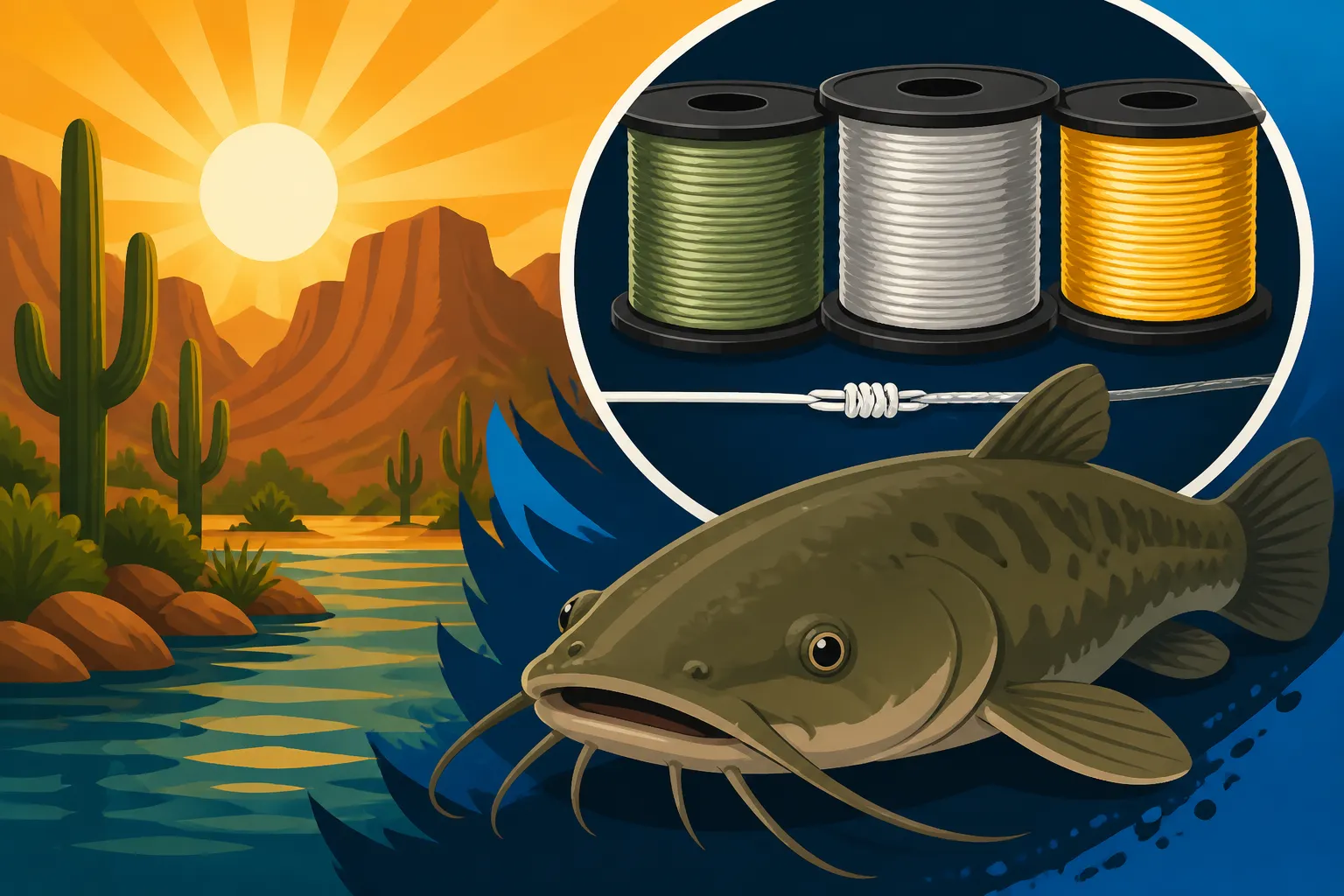
Let's talk about what makes a flathead truly formidable. These aren't dainty fish. They can grow to incredible sizes in Arizona's warmer waters, often reaching weights well over 50 pounds, with some true giants pushing past the 70-pound mark. When hooked, a flathead doesn't typically make long, screaming runs like a striped bass. Instead, they dig deep, using their broad, flat heads and powerful tails to leverage themselves against the current and any underwater structure they can find. It's a relentless, short-range, brutal fight that tests every component of your tackle.
Imagine fishing the deeper, timber-laden sections of the Colorado River near Yuma or the snags of Alamo Lake. You hook into a 40-pound flathead. It immediately dives into a submerged tree, trying to rub your line against sharp branches. This isn't just about raw pulling power; it's about surviving a grinding, abrasive fight in unforgiving conditions. Your line needs to withstand not only the immense pressure of the fish but also the constant friction from rocks, stumps, and debris. This is why having a line that can take a beating is crucial.
Why Line Weight Matters So Much
Choosing the correct line weight isn't just a recommendation for flathead fishing; it's practically a requirement. Go too light, and you're almost guaranteed a break-off when a big flathead decides to dive into a brush pile or surge unexpectedly. You'll spend more time re-rigging and less time actually fishing, and the heartbreak of losing a trophy fish due to inadequate line is something no angler wants to experience repeatedly.
On the other hand, going excessively heavy can also present challenges. While a super-heavy line might give you peace of mind, it can be stiffer, harder to cast accurately, and might even be more visible in clearer water, potentially deterring wary flatheads. It can also reduce the sensitivity you feel from your bait, making it harder to detect subtle takes. There's a delicate balance to strike, and that balance often shifts depending on the specific conditions and location you're fishing. For instance, in an open area of Roosevelt Lake, you might get away with slightly lighter line than in a particularly snaggy section of Bartlett Lake. It's about optimizing your setup for success.
Recommended Line Weights for Flathead Catfish
When it comes to flathead catfish, you really don't want to skimp on line strength. These fish are legendary for their pulling power and their uncanny ability to find the nastiest cover once hooked. Your choice of line type and weight will heavily influence your success, or lack thereof.
Standard Tackle for Average Flatheads (10-30 lbs)
For what many would consider an "average" Arizona flathead – say, anything from 10 to 30 pounds – you'll want a robust setup. We're not talking about ultra-light gear here. If you're using monofilament or fluorocarbon, a good starting point is usually in the 20 to 40-pound test range. This provides enough breaking strength to handle strong runs and some minor abrasion, while still offering decent casting performance. Many anglers find a sweet spot around 30-pound monofilament when fishing in relatively open water with some scattered structure.
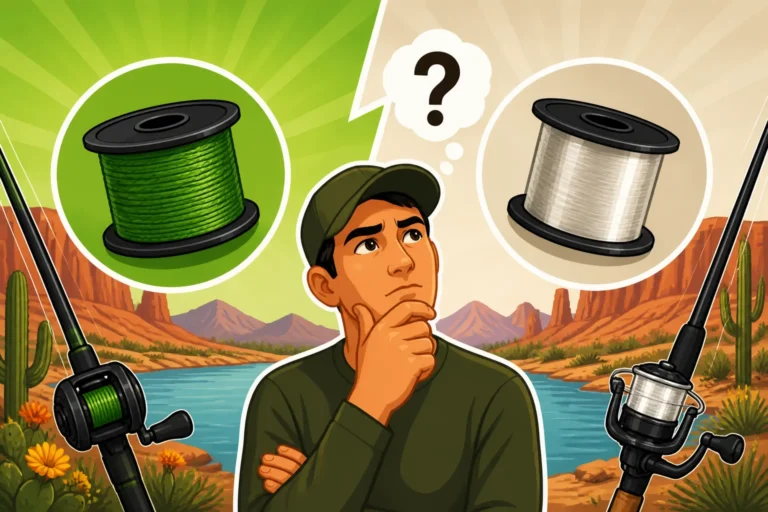
For those who prefer braided line, which offers superior strength-to-diameter ratio and no stretch, you'll want to be in the 50 to 80-pound test range. This might sound like overkill if you're used to bass fishing, but remember, flatheads are different. A 50-pound braid has the diameter of much lighter mono, meaning you can still cast it well, but it provides incredible pulling power and excellent abrasion resistance. It’s particularly effective if you’re fishing an area where you suspect flatheads might not be the absolute largest, but you still want confidence in your line, perhaps in a place like Tempe Town Lake where diverse species live, but you’re specifically targeting bigger cats.
Heavy Tackle for Trophy Flatheads (30+ lbs)
Now, if you're specifically targeting those true Arizona monsters—flatheads pushing 30, 40, or even 50 pounds and beyond—you need to step up your game considerably. This is where you bring out the heavy artillery. For monofilament or fluorocarbon, consider bumping up to 40 to 60-pound test. While stiffer, this strength provides a critical buffer against the immense forces these larger fish can exert, especially if they make a hard dive into structure. Some dedicated trophy hunters even go as high as 80-pound monofilament, particularly for leaders, where abrasion resistance is paramount.
For braided line, the sky's almost the limit. Many serious flathead anglers will spool up with 80-pound, 100-pound, or even 120-pound braided line. While casting can become a bit more challenging with these extreme weights, the sheer confidence you gain in heavily snagged areas like the Salt River chain lakes or Lake Havasu is invaluable. This kind of line allows you to truly lean into a big fish, pulling it away from hazards without fear of snapping your line. It's the kind of line you'd want if you bought your gear from Bass Pro Shops, looking for the absolute strongest stuff on the market, ready for anything a desert lake can throw at you.
Line Material Considerations
The type of line you choose is just as important as its weight. Each material has its own set of characteristics that make it better suited for certain situations or fishing styles.
- Monofilament (Mono): This is the traditional choice for many catfish anglers. It’s relatively inexpensive, has good knot strength, and offers a lot of stretch. The stretch acts as a shock absorber, which can be beneficial during sudden surges from a large flathead, preventing hooks from tearing out or lines from snapping instantly. However, mono has a larger diameter for its breaking strength compared to braid and is more susceptible to abrasion and UV degradation over time. It's great for main lines where you value its forgiving nature and ease of use.
- Fluorocarbon (Fluoro): Often used as a leader material due to its near invisibility underwater and excellent abrasion resistance. Fluorocarbon sinks faster than mono and has less stretch, offering better sensitivity. However, it can be stiffer than mono, and it's generally more expensive. When flatheads are particularly wary in clear water, or you're fishing areas with jagged rocks, a heavy fluorocarbon leader (e.g., 40-60 pound test) can be a game-changer when paired with a braided main line.
- Braided Line (Braid): The preferred choice for many experienced flathead anglers, especially for main lines. Braid boasts incredible strength for its diameter, virtually no stretch (providing superior sensitivity for detecting subtle bites), and excellent cutting power through vegetation. Its main downsides are its visibility in clear water, and its tendency to 'dig in' on the spool if not spooled tightly, which can lead to casting issues. It's also more expensive than mono. For fishing heavy cover or deep water, braid shines.
Here's a quick comparison of these line types for flathead fishing:
| Line Type | Pros | Cons | Ideal Use Case | Recommended Weight Range |
|---|---|---|---|---|
| Monofilament | Good stretch (shock absorption), affordable, good knot strength | Higher diameter, less abrasion resistant, UV degradation, lower sensitivity | All-around general purpose, areas with fewer snags, anglers preferring some stretch | 20-60 lb |
| Fluorocarbon | Nearly invisible, excellent abrasion resistance, sinks well, good sensitivity | Stiffer, more expensive, can be harder to knot, less stretch than mono | Leaders for clear water, snaggy areas, where stealth is critical | 30-80 lb (often as leader) |
| Braided | Extreme strength for diameter, no stretch (high sensitivity), cuts through weeds | Visible, more expensive, can dig into spool, requires careful knot tying | Heavy cover, deep water, trophy hunting, excellent hook sets | 50-120 lb |
Factors Influencing Your Line Weight Choice
Picking the "best" line weight isn't a one-size-fits-all situation. It's a dynamic decision that changes based on where and how you're fishing. Neglecting these factors can quickly turn a potential trophy catch into a frustrating break-off.
Fishing Environment and Structure
Arizona's diverse waters present a wide range of fishing environments, and each one demands a different approach to line weight. If you're fishing the lower Colorado River, which is often rich with submerged timber, rock piles, and discarded debris, you absolutely need a heavier line. A 30-pound flathead can easily rub through a lighter line in seconds if it gets tangled in a submerged mesquite tree. In these conditions, many anglers will opt for braid in the 80-100 pound range, often with a 60-80 pound fluorocarbon leader for maximum abrasion resistance against sharp edges. The brute strength allows you to winch fish out of danger zones before they can completely wrap you up.
Conversely, if you're fishing a more open, sandy-bottomed stretch of Lake Pleasant or a less obstructed community lake, you might be able to scale down slightly. While you still want plenty of power, the immediate threat of snags might be less severe. In these situations, a 50-65 pound braid might be perfectly adequate, perhaps even allowing for slightly longer casts. Always scout your chosen spot or at least have a good understanding of the bottom structure before tying on your gear. A simple depth finder can reveal hidden dangers that necessitate heavier line. How to Read a Fish Finder for Bass is a great read to understand structures.
Size of Target Fish and Fighting Style
This might seem obvious, but it's often underestimated. If you're consistently catching 5-10 pound flatheads, a 20-30 pound monofilament or 50-pound braid might be perfectly fine. However, if your goal is to consistently land 30+ pound flatheads, you need to prepare for their unique fighting style. These larger flatheads don't just pull hard; they perform an incredibly powerful "bulldog" maneuver, digging deep into the bottom or structure, making short, powerful bursts. This puts immense strain directly on your line.
A 50-pound flathead, for instance, can feel like you've hooked a cinder block in a strong current. It will test your rod, reel, and especially your line to their absolute limits. You need line that not only has the breaking strength but also the resilience to handle the sudden shock loads and the sustained pressure. This is why many experienced trophy flathead anglers don't just go "heavy;" they go overkill heavy, often spooling 80-100 pound braid directly onto their reels. It's an investment in landing that fish of a lifetime. The peace of mind alone is worth it, knowing you can wrestle a true giant out of heavy cover.
Rod, Reel, and Knots
Your line selection doesn't exist in a vacuum; it needs to be perfectly matched with your rod, reel, and the knots you tie. A heavy line on a light action rod is a recipe for disaster, as the rod won't have the backbone to leverage a big fish, putting undue stress on the line and potentially breaking the rod. Similarly, your reel needs to have the capacity to hold enough of your chosen line weight and a drag system that can handle the extreme pressures. A reel with a smooth, powerful drag is non-negotiable when targeting big flatheads. Best Fishing Reels for Beginner Anglers in Arizona might be a good starting point to understand reel basics, but for flatheads, you'll need something more robust.
Finally, the strongest line in the world is only as good as the knot holding it to your hook or swivel. Poorly tied knots are a primary cause of break-offs with big fish. For flathead fishing, reliable knots like the Palomar knot, Uni knot, or an improved clinch knot are essential. Practice tying these knots until you can do them blindfolded. Even with strong line, a knot that's only tied to 50% of its breaking strength means you've effectively cut your line weight in half. Always moisten your knots before tightening them to prevent friction damage, and give them a good pull test to ensure they're secure. Remember, every component of your setup works together to bring that fish to the bank, and a weak link anywhere in the chain can cost you the fish.
Tips for Maximizing Your Line's Performance
Even with the perfect line weight, the way you maintain and use your line can make all the difference between landing that trophy flathead and going home with a story of what could have been. These crucial steps ensure your line is always ready for the battle ahead.
Regular Line Inspection and Replacement
This is perhaps one of the most overlooked aspects of heavy-duty fishing, but it's absolutely vital for flathead anglers. Your fishing line, especially if you're battling big, strong fish in snag-filled environments, takes a beating. Each time you snag, or a fish rubs your line against a rock or a log, microscopic nicks and abrasions accumulate. These weak points are exactly where your line will fail under pressure.
Before every fishing trip, and especially after landing a particularly feisty fish or getting snagged, take the time to inspect the first 10-20 feet of your line. Run it between your thumb and forefinger, feeling for any rough spots, kinks, or discoloration. If you find any, don't hesitate: cut off the compromised section and re-tie your tackle. It's far better to lose a few feet of line than to lose a trophy fish. Moreover, line degrades over time from UV exposure and general wear and tear, even if you don't notice obvious damage. As a general rule, many serious anglers respool their primary flathead reels with fresh line at least once a season, or more frequently if they fish often. You can find excellent quality bulk line on Amazon or at your local Bass Pro Shops, making it easy and affordable to keep your reels fresh.
Proper Knot Tying and Testing
As mentioned earlier, a knot is the weakest point in your entire fishing system if not tied correctly. For flathead fishing, where line breaking strength is paramount, this detail cannot be overstated. Even the best 100-pound braided line will snap at 30 pounds if your knot is tied improperly.
Dedicate time to practicing your knots. The Palomar knot is a fantastic choice for braid, offering near 100% breaking strength. For monofilament or fluorocarbon, the Uni knot or an improved clinch knot are excellent, provided they are tied meticulously. Don't rush it on the water; if you're cold, tired, or your hands are shaky, take a break until you can tie a perfect knot. After tying, always moisten the line with saliva before cinching it down slowly and firmly. This lubrication prevents friction from burning and weakening the line. Then, give your knot a good, firm pull-test – not enough to break your main line, but enough to ensure the knot itself is seated properly and won't slip under moderate pressure. It's a small investment of time that pays off immensely when you hook into that Arizona brute. How to Fish a Community Lake for Beginners gives a good overview of basic techniques, but advanced knot tying is a specialized skill for bigger fish.
Drag Setting and Fighting Techniques
Having a super strong line is great, but it won't save you if your drag is set improperly or your fighting technique is off. The drag on your reel is designed to let line out under extreme pressure, preventing your line from snapping when a fish makes a powerful run or surge. For flatheads, you want your drag set tight enough to apply significant pressure and turn the fish away from snags, but loose enough that a sudden, violent pull won't snap your line or break your rod.
A good starting point is to set your drag to about 25-30% of your line's breaking strength. So, if you're using 60-pound braided line, your drag should engage when about 15-18 pounds of pressure are applied. You can test this with a spring scale. When fighting a flathead, resist the urge to crank down your drag completely. Instead, use your rod to absorb the shock and pump the fish, gaining line when it's not pulling, and allowing the drag to work when it is. Keep the rod tip up and pointed towards the fish, maintaining a steady bend that distributes the pressure. If the fish makes a dive for heavy cover, try to apply side pressure with your rod, pulling its head away from danger. This combination of strong line, proper drag, and smart fighting technique is your best strategy for landing those colossal Arizona flatheads.
Disclaimer
This article is for general informational purposes only and does not constitute professional advice. Laws, prices and regulations vary by location and change over time. Consult a qualified professional for guidance on your specific situation.