Why Flathead Catfish Thrive in the Colorado River
For anglers who've spent countless hours on the mighty Colorado River, it's no secret that flathead catfish aren't just present; they absolutely dominate in many stretches. You might wonder why these formidable predators thrive so incredibly well in a system as complex and varied as the Colorado. It's a valid question, especially when you see their sheer size and numbers, and it often comes down to a perfect storm of environmental factors, their biological make-up, and the history of their introduction, all of which we'll explore in this comprehensive guide.
The Colorado River: A Flathead Paradise
The Colorado River, particularly its lower reaches that flow through Arizona, provides an almost tailor-made environment for flathead catfish. It's not just a river; it's a dynamic ecosystem with varying depths, currents, and an abundance of structure that these ambush predators adore. When you think about what makes a species thrive, a key factor is always how well its needs align with the available resources. For the flathead, the Colorado offers an unmatched combination.
Diverse Habitats and Abundant Structure
Flathead catfish are creatures of comfort, and their comfort zone involves plenty of cover and deep, slow-moving water. The Colorado River delivers this in spades. You'll find long, meandering stretches with deep scour holes, submerged rock piles, and dense logjams—all perfect hideouts for a flathead waiting to ambush its next meal. These aren't like some other fish that prefer open water or shallow flats; flatheads want to be tucked away, out of the main current, often lurking near structure where prey fish pass by.
Think about the submerged timber and rocky bluffs you see along the riverbanks near Parker or Yuma. These aren't just scenic views; they're prime flathead real estate. The river's natural erosion and historical flows have created an intricate underwater landscape, full of ledges, drops, and brush piles. Anglers often find success by targeting these specific areas, knowing that a big flathead is likely nestled in a nook or cranny, waiting for dusk. This structural complexity offers not only ambush points but also protection from the harsh sun and strong currents, making it an ideal year-round home.
A Buffet of Prey Fish
A flathead catfish's diet is primarily live fish, and the Colorado River is bursting with them. From various species of sunfish and carp to plentiful gizzard shad and even smaller bass, the river provides an endless smorgasbord for these opportunistic predators. They're not picky; if it swims and it fits in their mouth, it's fair game. This consistent and varied food supply is a major contributor to their robust growth and high population density.
Consider a typical evening on the river. As smaller baitfish move into shallower waters to feed or seek shelter, flatheads, with their superior nocturnal vision and keen sense of smell, are on the prowl. They'll patiently wait near a drop-off or a submerged tree, then surge out to grab an unsuspecting carp or bluegill. This readily available food source means flatheads expend less energy hunting, allowing them to grow larger and reproduce more efficiently. The sheer abundance of various forage fish allows the flathead population to sustain itself without exhausting its food supply, creating a self-perpetuating cycle of growth and dominance.
Tolerant Water Conditions
Unlike some sensitive fish species that require very specific water temperatures or clarity, flathead catfish are remarkably tolerant of a wide range of conditions. The Colorado River, especially downstream of major dams like Parker Dam and Hoover Dam, experiences seasonal fluctuations in temperature and occasional turbidity changes, but these don't seem to deter flatheads. They can adapt to both warmer, slower sections and cooler, deeper pools, making them resilient survivors.
This adaptability is a huge advantage. While some native fish struggle with altered flow regimes or warmer summer temperatures, flatheads seem to take it all in stride. Their ability to tolerate these varied conditions means they can inhabit a broader range of river sections and continue to feed and grow even when other species might be stressed. This resilience, combined with their predatory nature, gives them a significant edge in colonizing and dominating the river system.
Flathead Catfish: Built for the River
Beyond the hospitable environment, the flathead catfish itself is a marvel of evolutionary design for riverine dominance. Its physical characteristics and predatory behaviors are perfectly tuned to exploit the opportunities the Colorado River provides, allowing it to grow to immense sizes and establish itself as a top predator.
Apex Predator Behavior and Nocturnal Hunting
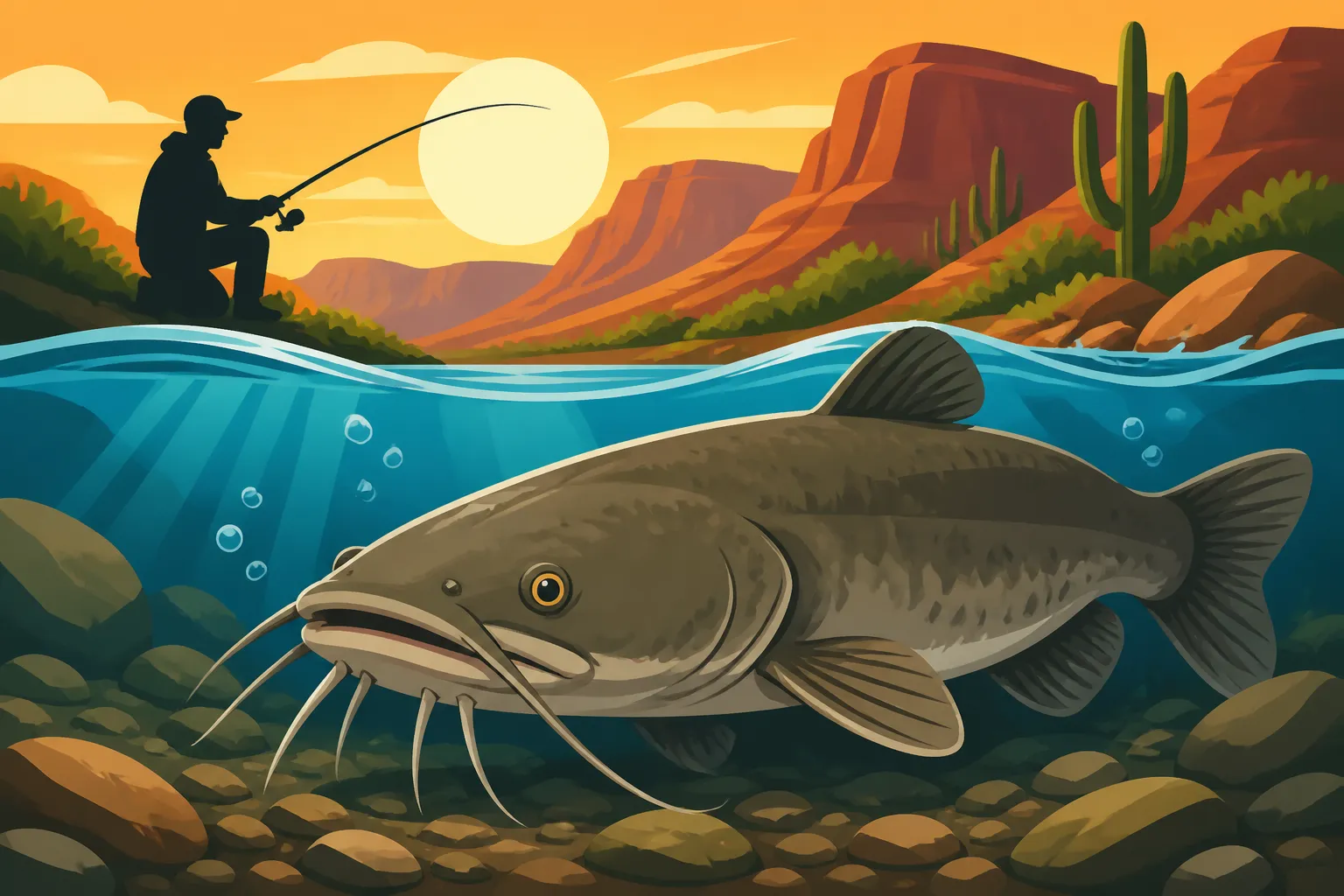
Flathead catfish are true apex predators in their environment. They are primarily ambush hunters, preferring to lie in wait rather than actively chase down prey over long distances. Their broad, flattened heads and wide mouths are perfectly designed for swallowing large fish whole. These behaviors, combined with their largely nocturnal feeding habits, give them a distinct advantage over many other fish species that are more active during the day.
Imagine a large flathead settled deep within a logjam, almost invisible in the dim light. As evening approaches and other fish become less cautious, the flathead's sensory organs—its barbels and lateral line system—come alive, detecting the slightest vibrations and scents in the water. This allows them to effectively hunt in low-light conditions, giving them access to prey that might be less vulnerable during the day. Their efficiency as nocturnal hunters means they can continuously feed, contributing to their impressive growth rates and overall success. When fishing for them, many anglers find that Catfish Night Fishing Techniques are incredibly effective for this very reason.
Impressive Growth and Longevity
One of the most striking aspects of flathead catfish in the Colorado River is their potential for massive size and long lifespans. It's not uncommon to hear tales of flatheads weighing over 50 pounds, and truly monumental fish have been pulled from these waters. This ability to grow large means they have fewer natural predators once they reach a certain size, effectively placing them at the top of the food chain.
The combination of an abundant food supply and relatively stable, long-lived habitats allows these fish to live for many years, sometimes decades. This longevity, coupled with their consistent growth, means that individual fish can become true giants. A longer lifespan allows them more opportunities to spawn and contribute to the population, further solidifying their place in the river. This is why when you hook into one, you really need to know How to Fight a Big Flathead Catfish to land it successfully.
Robust Reproductive Success
Flathead catfish are also highly successful when it comes to reproduction. They build nests, often in secluded, protected areas like undercut banks or hollow logs, where the male guards the eggs and fry aggressively. This parental care significantly increases the survival rate of their offspring compared to species that simply broadcast their eggs and leave them to fend for themselves.
The male's dedication to protecting the nest ensures that a higher percentage of eggs hatch and young fish survive their most vulnerable stage. This robust reproductive strategy, combined with their adaptability and the sheer abundance of suitable nesting sites in the Colorado River, ensures a steady recruitment of new flatheads into the population. It's a key factor in why their numbers remain strong and why they continue to thrive in such an impactful way within the ecosystem.
Historical Context and Ecological Impact
The story of flathead catfish in the Colorado River isn't just about their biology and the river's characteristics; it's also about their history as an introduced species and the ripple effects their presence has had on the ecosystem. Understanding this context helps to fully appreciate why they thrive so dramatically.
Introduction to the Colorado River System
Flathead catfish are not native to the Colorado River system. They were introduced, like many other sport fish, to provide new angling opportunities. These introductions typically occurred in the mid-20th century, with fish being moved from their native range in the Mississippi River basin to various western waterways. The logic at the time was often to stock adaptable, fast-growing fish that could survive and provide recreation.
Once introduced, the flatheads quickly found the Colorado River to be an ideal environment, largely due to the factors we've already discussed. The lack of natural predators that could effectively compete with them, combined with an abundant food source and suitable habitat, allowed them to establish breeding populations and spread rapidly. This historical context is crucial because it highlights that their success isn't just natural evolution in place, but a result of a new species finding an incredibly hospitable, unoccupied niche.
Impact on Native Fish Species
While flatheads are a prized game fish for many anglers, their thriving populations have come at a cost, particularly for some of the Colorado River's native fish species. Being a highly efficient, generalist predator, flatheads can predate on a wide variety of fish, including species that are unique to the Colorado River and are often already struggling due to habitat loss and altered river flows.
This is a realistic and often challenging aspect of their success. When a non-native apex predator thrives, it can put immense pressure on native populations that haven't evolved defenses against such a hunter. It's a complex ecological issue where the benefits for sport fishing sometimes conflict with the goals of native species conservation. While anglers enjoy the challenge of catching a large flathead, it's important to be aware of the broader ecological implications. For those interested in specifics, the Fishing Bag and Possession Limits Explained often reflect efforts to manage these complex interactions.
Current Management Strategies and Angler Ethics
Given their widespread presence and impact, Arizona Game and Fish Department (AZGFD) and other managing agencies actively monitor flathead catfish populations. In many cases, flatheads are encouraged to be harvested, with liberal or no possession limits, particularly in stretches where they pose a threat to sensitive native species. This contrasts sharply with regulations for native species, which often have strict catch-and-release rules.
For anglers, this means that catching a flathead catfish often presents an opportunity to contribute to the health of the ecosystem. While catch and release is a cornerstone of responsible angling for many species, keeping flatheads caught in certain areas can be a positive action. It’s about understanding the specific rules for the waters you're fishing and making informed decisions. Many dedicated catfishermen take pride in harvesting these delicious fish, ensuring they don't simply return a dominant predator to the system. You can easily find suitable Best Coolers to Keep Fish Fresh on Amazon, making it simple to take your catch home responsibly.
Fishing for Flathead Catfish in the Colorado River
If you're an angler looking to experience the thrill of battling a true river monster, the Colorado River's thriving flathead catfish population offers an incredible opportunity. Landing one of these powerful fish requires specific techniques, robust gear, and an understanding of their habits.
Targeting the Giants: Gear and Techniques
Catching a large flathead is no small feat; these fish are incredibly powerful. You'll need heavy-duty tackle that can withstand immense pressure. This means a stout rod, often a medium-heavy to heavy action, paired with a reel capable of holding a significant amount of strong line. Many experienced anglers opt for braided line due to its strength and sensitivity, typically in the 50 to 80-pound test range, to handle the pulling power and the abrasive nature of structure. Do You Need Heavy Line for Flathead Catfish? is a question often asked, and the answer is a resounding yes if you're targeting true trophies.
The best bait for flatheads is almost universally live bait. Sunfish, bluegill, small carp, and even legal-sized suckers are excellent choices. Flatheads are picky; they prefer lively bait that can entice their predatory instincts. Rigging live bait effectively involves using large, strong circle hooks that are less likely to gut-hook the fish if you're practicing catch and release, or simply providing a solid hookset for powerful runs. Look for these specific types of hooks on Amazon, where you'll find a wide selection suitable for large fish. Focus your efforts in the evenings and throughout the night, as this is when flatheads are most active.
Here's a quick comparison of essential flathead gear:
| Gear Item | Recommended Specs | Why it's Important |
|---|---|---|
| Fishing Rod | 7-9 ft, Medium-Heavy to Heavy Action, Fast Tip | Power to set hooks and turn large fish, sensitivity for detecting subtle bites. |
| Fishing Reel | Large Baitcasting Reel (6000-8000 series equivalent) | High line capacity, powerful drag system for sustained fights. |
| Fishing Line | 50-80 lb Braided, with 30-50 lb Fluorocarbon Leader | Superior strength for snags and big fish, abrasion resistance, low visibility leader. |
| Hooks | 5/0 – 9/0 Circle Hooks, Heavy Wire | High hook-up ratio, less likely to gut-hook, strong enough to handle powerful jaws. |
| Weights | 2-6 oz Pyramid or No-Roll Sinkers | Keeps bait on the bottom in current, prevents rolling with live bait. |
| Live Bait | 4-8 inch Bluegill, Carp, Sunfish, Shad | Flatheads prefer lively prey; size attracts larger fish. |
Understanding Regulations and Responsible Angling
Before you even cast a line, always check the current Arizona fishing regulations booklet. While flatheads often have generous limits or no limits at all, specific areas of the Colorado River might have unique rules, especially concerning bait acquisition or special conservation zones. Knowing these rules ensures you're fishing legally and responsibly. You'll find that these guidelines are clearly outlined to help protect the overall health of the fishery.
Being a responsible angler also means understanding the impact of your actions. If you're targeting flatheads in areas where native fish species are a concern, consider harvesting your catch. If you plan to release a fish, handle it with care to minimize stress, especially larger specimens. Using proper landing nets designed for large fish, like the heavy-duty models you can find on Amazon, can make a significant difference in a fish's survival post-release. Ultimately, the goal is to enjoy the incredible fishing the Colorado River offers while also being a good steward of its natural resources. Remember to consult the Arizona Fishing Regulations Explained before heading out.
The Angler's Reward: The Thrill of the Catch
There's a special kind of satisfaction that comes with catching a flathead catfish from the Colorado River. It's not just about the size; it's about the pure, unadulterated power they possess. The initial strike, the relentless tug-of-war, and the sheer challenge of bringing one of these river giants to the bank or boat are experiences that few other fish can offer.
Many anglers view the flathead as the ultimate freshwater game fish due to its strength and the dedication required to consistently catch them. Whether you're a seasoned catfisherman or a curious newcomer, the Colorado River provides some of the best opportunities in Arizona to connect with these impressive creatures. Their thriving presence is a testament to their resilience and adaptability, offering a thrilling challenge and a delicious meal for those willing to put in the effort.
Disclaimer
This article is for general informational purposes only and does not constitute professional advice. Laws, prices and regulations vary by location and change over time. Consult a qualified professional for guidance on your specific situation.