Arizona Rainbow Trout Record
Every angler dreams of that one legendary catch, the fish that pushes the boundaries of what's possible, and for many in Arizona, that dream often involves a magnificent rainbow trout. Chasing the state record can feel like an impossible feat, a challenge fraught with patience, skill, and a good dose of luck, but understanding what it entails is the first step. This comprehensive guide will pull back the curtain on the Arizona rainbow trout record, exploring the fish itself, where these giants might be found, and the tactics that could put you in the record books.
Understanding the Arizona Rainbow Trout Record
The allure of a state record isn't just about bragging rights; it's about connecting with a moment in angling history, a testament to the thriving fisheries and the dedication of an angler. For rainbow trout, a species beloved by many for its beauty and fighting spirit, the Arizona record stands as a benchmark for what these magnificent fish can achieve in our unique desert waters and high-country lakes.
What Defines a State Record?
A true state record isn't just a big fish. It's a fish caught by legal means, weighed on certified scales, and verified by officials, typically from the Arizona Game and Fish Department (AZGFD). The process is meticulous and designed to ensure accuracy and fairness. It's not enough to simply guess the weight or length; precise measurements and clear photographs are crucial. Many anglers, in the excitement of a potential record, forget these vital steps, only to realize later that their incredible catch can't be officially recognized. This is why being prepared, even if you don't expect to catch a record, is part of the serious angler's toolkit. Having a certified scale, a sturdy tape measure, and a camera ready to go could make all the difference when that once-in-a-lifetime fish hits your line.
Beyond the initial catch, there's often paperwork to fill out, witnesses to confirm the details, and sometimes even species identification required if there's any doubt. Imagine landing what you think is a record rainbow, only to find out it was a hybrid or another trout species! That's why understanding the specific criteria and process before you even wet a line is so important. For more on the species, check out our Rainbow Trout Fishing Guide for Arizona.
The Allure of the Rainbow Trout
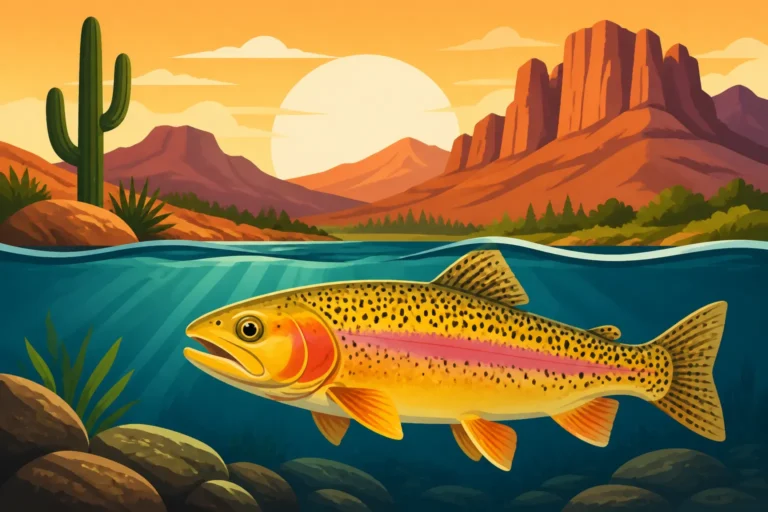
Rainbow trout are iconic. Their vibrant colors, from the iridescent band along their side to the speckled patterns on their backs, make them instantly recognizable and a joy to catch. In Arizona, these fish thrive in a surprising variety of habitats, from the icy clear waters of the high country to the surprisingly cool depths of some desert reservoirs, and even the carefully managed urban community lakes. They're known for their powerful runs, aerial acrobatics, and tenacious fights, making them a favorite target for anglers of all skill levels.
For those dreaming of a record, the rainbow trout presents a unique challenge. While many stocked trout are of pan-size, sustained growth in nutrient-rich waters can lead to truly colossal specimens. These larger trout often become more elusive, wary, and require different tactics than their smaller brethren. The possibility of hooking into one of these giants is what keeps many anglers coming back, casting their lines with renewed hope on every outing. They represent the pinnacle of trout fishing in the state, embodying both beauty and strength in equal measure.
The Legendary Catch: Arizona's Current Rainbow Trout Record
Every state record has a story, a moment of triumph against the odds. While the exact details like specific dates often become blurred over time, the weight and the location etched into the record books stand as a testament to what's achievable.
The Standing Record: Weight and Location
The current Arizona state record for rainbow trout is a truly impressive specimen. It weighed in at a whopping 13 pounds, 10 ounces. This monumental trout was reportedly pulled from Lake Mohave, a vast reservoir on the Colorado River, situated between Arizona and Nevada. It's a place known for producing some truly massive fish, thanks to its deep, clear waters and abundant forage.
Imagine the excitement, the sheer disbelief of the angler who landed such a fish! A trout of this size isn't just big; it's a behemoth, a once-in-a-lifetime encounter that few anglers ever get to experience. It speaks to the health of that fishery and the potential that still exists within Arizona's waters for truly trophy-sized catches.
The Stories Behind the Big Ones
Catching a record fish is rarely a casual affair. More often than not, it's the culmination of years of experience, specific knowledge of a particular body of water, and an unwavering commitment to the pursuit. Think about the angler who caught that 13-pound, 10-ounce rainbow. Chances are, they had spent countless hours on Lake Mohave, studying its depths, understanding its currents, and knowing precisely where and when to present their offering. Perhaps they were trolling a specific lure at a precise depth, or maybe they were drifting bait in a known trout haunt. These fish don't just jump on a hook; they are earned through dedication.
Many trophy trout hunters spend significant time experimenting with different baits, lures, and techniques. They might invest in advanced sonar technology to identify deep-water structure or schools of baitfish. They also understand that patience is a virtue, and that even on the most promising days, a record fish might not bite. It’s the thrill of the chase and the knowledge that every cast holds the potential for history that keeps them going.
Where Record Rainbow Trout Lurk in Arizona
Arizona offers a diverse range of fishing environments, and while smaller rainbow trout are stocked in many places, the true giants tend to favor specific conditions. Understanding these hotspots is key to even having a chance at a record.
High Elevation Havens
When most people think of trout fishing in Arizona, their minds drift to the cool, pristine waters of the White Mountains and other high-elevation areas. Lakes like Big Lake, Crescent Lake, and Lee Valley Lake, or rivers such as the Black River and Little Colorado River, are classic trout fisheries. These spots are regularly stocked with rainbow trout by the AZGFD, ensuring a healthy population. While these areas are fantastic for consistent catches and beautiful scenery, catching a record rainbow here requires a bit more luck and strategic planning. The fish need time and ample food to grow to truly exceptional sizes.
Many of these mountain lakes and streams can hold carryover trout that have survived for multiple seasons, packing on weight. Targeting these older, larger fish often means fishing during cooler months, presenting larger baits, or searching out deeper, less-pressured areas. For a more detailed look at trout spots, check out our guide to Best Trout Fishing Spots in Arizona. The colder water provides optimal conditions for rainbow trout to thrive, but the density of anglers can also make larger fish more wary.
Urban Oasis Opportunities
It might sound counterintuitive, but some urban lakes in Arizona, particularly those managed under the Community Fishing Program, can produce surprisingly large trout. While they're generally stocked with catchable-size rainbows, occasional larger "trophy" trout are often mixed in, especially during the cooler winter months. Lakes such as Tempe Town Lake, Encanto Lake in Phoenix, or Kennedy Lake in Tucson, receive frequent stockings, and these fish have access to an abundance of food sources. While it's rare to catch a state record from these smaller, more heavily fished waters, it's not impossible for a lucky angler to hook into a genuinely impressive trout that has managed to avoid the crowds and grow.
The key to success in urban waters often lies in timing your visit just after a stocking, or targeting less accessible areas of the lake, perhaps from a kayak or by finding quiet coves away from the main walking paths. These fish can also become quite accustomed to specific types of bait and lures, making local knowledge extremely valuable.
Unique Arizona Waters: The Colorado River and Lees Ferry
When it comes to truly massive rainbow trout in Arizona, the conversation invariably turns to the Colorado River system, particularly Lake Mohave and the legendary Lees Ferry section. Lees Ferry, a 16-mile stretch of the Colorado River below Glen Canyon Dam, is world-renowned for its trophy rainbow trout fishery. The constant cold water releases from the dam create an ideal, nutrient-rich environment where trout can grow exceptionally large. This tailwater fishery is a prime location for fly anglers and spin fishermen alike, offering some of the best opportunities in the state for a true monster rainbow. Fish weighing 5-10 pounds are not uncommon here, making it a hotspot for anyone aiming for that record.
Lake Mohave, where the current state record was caught, continues to be a powerhouse for big trout. Its vastness, deep canyons, and connection to the Colorado River provide an incredible habitat for rainbow trout to grow to immense sizes, often feeding on threadfin shad and other abundant forage fish. Targeting these waters often means employing different strategies, sometimes requiring boats, advanced electronics, and specialized gear. The sheer volume of water and the depth can be intimidating, but the rewards are potentially monumental.
Tackling for a Trophy: Gear and Techniques
Catching a record rainbow trout isn't just about finding the right spot; it's about having the right tools and knowing how to use them. These aren't your average pan-sized trout; they demand respect and specialized approaches.
Gear Up for Giants
When targeting trophy rainbow trout, your typical ultralight setup might not cut it. You need a rod with enough backbone to handle a powerful fight and a reel with a smooth, reliable drag system. A medium-light to medium power spinning rod, around 6'6" to 7'6" in length, paired with a 2500- or 3000-size spinning reel, is a good starting point. For line, consider using 6-10 pound test monofilament or fluorocarbon, or a braided line of similar strength with a fluorocarbon leader. Fluorocarbon is especially valuable in clear waters like Lees Ferry or Lake Mohave, as it's nearly invisible underwater.
Don't skimp on terminal tackle either. Strong, sharp hooks are non-negotiable. Whether you're using bait hooks or trebles on a lure, ensure they are high-quality and appropriate for larger fish. Many anglers find excellent deals and a vast selection of these specialized items on Amazon, allowing them to compare brands and read reviews to ensure they're getting the best equipment for their pursuit. Investing in quality gear can significantly increase your chances of landing that trophy once it's hooked. You can find more recommendations in our Best Fishing Rods for Bass in Arizona article, as many bass rods can double as excellent trout rods for bigger fish.
Bait and Lure Strategies
Trophy rainbow trout often feed differently than smaller, recently stocked fish. While power bait, worms, and corn work well for general trout fishing, record-sized fish often key in on larger, more substantial meals. Live bait such as minnows, small shad, or even crayfish can be incredibly effective. Make sure to check local regulations on live bait use, as restrictions can vary. Using a slip sinker rig with live bait, allowing it to drift naturally or sit on the bottom, can entice wary giants.
For artificials, larger spoons, inline spinners, and crankbaits that mimic baitfish are excellent choices. Trolling these lures at varying depths can cover a lot of water, especially in expansive lakes like Mohave or Roosevelt. Fly fishing with streamers that imitate minnows or nymphs can also be devastatingly effective, particularly in river systems like Lees Ferry. Experimentation is key, and having a diverse selection of baits and lures in your tackle box is crucial. Again, for a wide array of options and new tackle innovations, many anglers turn to Amazon for their lure purchases. To get more ideas on what to use, check out Best Baits and Lures for Arizona Fishing.
Techniques for Success
Different Arizona waters call for different techniques. In large reservoirs, trolling is often the most productive method for covering water and finding active fish. Using downriggers or lead core line to get your lures to specific depths can be crucial, especially when trout are holding deep. Pay attention to fish finder readings that indicate baitfish schools or submerged structure.
For river systems like Lees Ferry, fly fishing reigns supreme. Drifting nymphs under an indicator, stripping streamers, or even dry fly fishing during hatches can all yield results. Understanding the water flow, seam lines, and current breaks where trout ambush food is vital. In smaller lakes, casting and retrieving spoons or spinners, or slow-trolling with a small electric motor, can be very effective. Whatever your chosen method, present your bait or lure as naturally as possible, and be prepared for a strong fight! Diving deeper into Fly Fishing Techniques for Trout could give you a significant edge.
| Feature | Typical Stocked Rainbow Trout | Arizona Record Rainbow Trout |
|---|---|---|
| Average Weight | 10 inches to 1.5 pounds | 10+ pounds (current record 13.6 lbs) |
| Typical Length | 10-16 inches | 25-30+ inches |
| Diet | Pellets, insects, small baitfish | Larger baitfish, crayfish, larger insects |
| Habitat | Varied (stocked lakes, streams) | Deep, cold, nutrient-rich waters; less pressured areas |
| Gear Required | Light spinning gear, 4-6 lb line | Medium-light to medium gear, 8-12 lb line, strong hooks |
| Fight Style | Energetic, some jumps | Powerful, deep runs, aerial acrobatics, prolonged fight |
Beyond the Record: Responsible Angling
While the thrill of chasing a state record is undeniable, responsible angling practices are paramount, especially when dealing with rare, large fish that contribute significantly to the fishery's genetic pool.
Proper Documentation for a Potential Record
If you are fortunate enough to hook into what you believe could be a state record rainbow trout, the moments immediately following the catch are critical. First and foremost, land the fish quickly and safely, minimizing its stress. Have your gear ready: a certified scale (many serious anglers carry one, or know where the nearest one is located), a tape measure, and a camera. Get clear photos of the fish, ideally with a ruler for scale, and make sure to capture its identifying features. Take multiple angles.
The fish should be kept alive in a livewell or a large net in the water if possible, especially if you plan to release it. Once weighed on a certified scale and measured by length and girth, document all details, including the exact location, time of catch, and witnesses. Contact the Arizona Game and Fish Department (AZGFD) as soon as possible, as they will guide you through the official verification process. Without proper documentation, even the biggest fish won't make it into the record books.
Catch and Release for Future Generations
Catching a truly massive rainbow trout often means you've landed an older, mature fish that has survived many seasons. These fish are invaluable to the ecosystem and the fishery's genetics. For many trophy anglers, the ultimate goal isn't necessarily to keep the fish, but to experience the fight and then release it, giving other anglers a chance at a similar thrill and allowing the fish to potentially spawn and contribute to future generations of trophy trout.
Practicing careful catch and release involves minimizing the fish's time out of water, handling it with wet hands, using de-hooking tools to remove hooks quickly, and reviving it gently before release. Sometimes, a quick measurement and photograph might be enough for a "trophy" recognition, even if not an official state record. This conservation mindset helps ensure that Arizona's incredible fisheries continue to produce stunning fish for years to come. Remember, the future of our fisheries depends on responsible practices today. For tips on specific regulations regarding keeping fish, look at Fishing Bag and Possession Limits Explained.
Conservation and the Future of Trout Fishing
Arizona's trout fisheries are a precious resource, maintained through careful management by the AZGFD, stocking programs, and the collective efforts of anglers. Protecting these waters and the fish within them is essential for future generations to enjoy the same opportunities we have today.
Protecting Arizona's Trout Habitats
The health of our trout populations is directly linked to the health of their habitats. This means protecting water quality, managing riparian zones, and being mindful of impacts from development, pollution, and climate change. Anglers play a critical role in this by practicing "Leave No Trace" principles, properly disposing of trash, and reporting any environmental concerns to the authorities. Supporting conservation efforts through license purchases and participation in cleanup events helps ensure that the rivers and lakes where these record trout live remain pristine and viable.
Educating ourselves and others about the specific needs of trout species, such as the Life Span of Rainbow Trout in Stocked Lakes, can also help foster a greater appreciation for their environment. Every effort, no matter how small, contributes to the overall well-being of these ecosystems.
The Role of Stocking and Management
The Arizona Game and Fish Department does an incredible job of managing our diverse fisheries. Their extensive stocking programs, particularly for rainbow trout, ensure that there are ample opportunities for anglers across the state, from the high country to the desert lakes. These programs are carefully planned, taking into account water temperatures, forage availability, and angling pressure to maximize success and sustainability. Without these efforts, many of Arizona's trout fishing opportunities simply wouldn't exist.
Beyond stocking, the AZGFD also sets Arizona Fishing Regulations Explained, including bag and possession limits, size restrictions, and gear requirements, all designed to maintain healthy fish populations. Adhering to these regulations isn't just about avoiding fines; it's about being a responsible steward of our natural resources and contributing to the longevity of the sport we love. Understanding the Trout Stocking Season in Arizona can help you plan your trips effectively.
Encouraging the Next Generation of Anglers
The passion for fishing, and for chasing that elusive record, is often passed down from one generation to the next. Introducing children and young people to the joys of fishing is vital for the future of our sport and for conservation efforts. Community fishing programs, youth fishing clinics, and family-friendly events are excellent ways to foster this interest. These experiences teach not only how to fish but also the importance of respecting nature and understanding the delicate balance of aquatic ecosystems.
Imagine a young angler, inspired by the stories of Arizona's record rainbow trout, heading out to their local lake with dreams of their own trophy catch. That enthusiasm is what drives the future of angling and ensures that the pursuit of that magnificent fish continues for many years to come.
Disclaimer
This article is for general informational purposes only and does not constitute professional advice. Laws, prices and regulations vary by location and change over time. Consult a qualified professional for guidance on your specific situation.