Alamo Lake Bass Fishing Conditions
Planning a fishing trip to Alamo Lake and wondering what the bass fishing conditions are really like right now, or what to expect when you get there? It can be incredibly frustrating to drive all the way out to a remote lake only to find the water levels are drastically different than you anticipated, or the fish aren't biting on your usual tactics. This comprehensive guide is designed to cut through the guesswork, giving you an in-depth look at Alamo Lake's bass fishing dynamics, seasonal patterns, and what you need to know to maximize your success on the water.
Understanding Alamo Lake's Unique Environment for Bass
Alamo Lake State Park, nestled in west-central Arizona, truly stands out as a premier bass fishery in the desert. Unlike some of the more urban lakes, Alamo offers a rugged, wild beauty that directly impacts its fishing. The lake is fed primarily by the Big Sandy River and Bill Williams River, bringing in a diverse nutrient base that supports a thriving ecosystem, making it a fantastic destination for anyone interested in a Alamo Lake Arizona Fishing Guide.
Lake Characteristics and Primary Forage
Alamo Lake is a large reservoir, covering thousands of acres, but its size fluctuates dramatically with rainfall and water management. This ebb and flow creates an ever-changing environment, which keeps both the fish and the anglers on their toes. The lakebed is characterized by submerged mesquite trees, palo verde, and creosote bushes that were inundated when the dam was built, creating an immense amount of cover for bass. These standing timbers and brush lines are critical habitat, offering both ambush points and protection for baitfish.
The primary forage for bass in Alamo Lake includes threadfin shad, sunfish (like bluegill and green sunfish), and crayfish. These species form the backbone of the bass diet, influencing their behavior, preferred locations, and the types of lures that are most effective. Knowing what the bass are eating at any given time can drastically improve your chances. For example, if you observe shad flickering on the surface, matching your lure to their size and color can be a game-changer. Conversely, if bass are holding tight to cover, they might be ambushing crayfish crawling along the bottom.
Key Structures and Cover for Bass
The sheer amount of submerged timber is arguably Alamo Lake's most defining feature for bass anglers. Entire forests of mesquite, palo verde, and various desert shrubs stand upright beneath the surface, especially in the upper arms of the lake where the rivers flow in. These areas provide unparalleled cover, ambush points, and shade, which are crucial in the hot Arizona sun. Bass will relate to these submerged trees at various depths, depending on the season, water temperature, and sunlight penetration.
Beyond the visible and submerged trees, Alamo Lake also features rocky points, ledges, and creek channels that wind through the old riverbeds. These structural elements provide deeper water access for bass, especially during colder months or when they need to escape the heat. Understanding how to interpret your electronics to identify these subtle depth changes and submerged structures is key to consistent success. Anglers often find larger bass lurking around the intersections of these natural creek channels and dense timber.
Water Clarity and Temperature Trends
Alamo Lake's water clarity can vary significantly, from relatively clear in the main lake body and deeper coves to stained or muddy in the river arms, especially after heavy rains or significant runoff. Generally, the clarity tends to be better in the cooler months and can become more turbid during the monsoon season. This variation directly impacts lure selection; clearer water might call for more natural colors and subtle presentations, while stained water allows for brighter, more vibrant colors and lures that create more vibration.
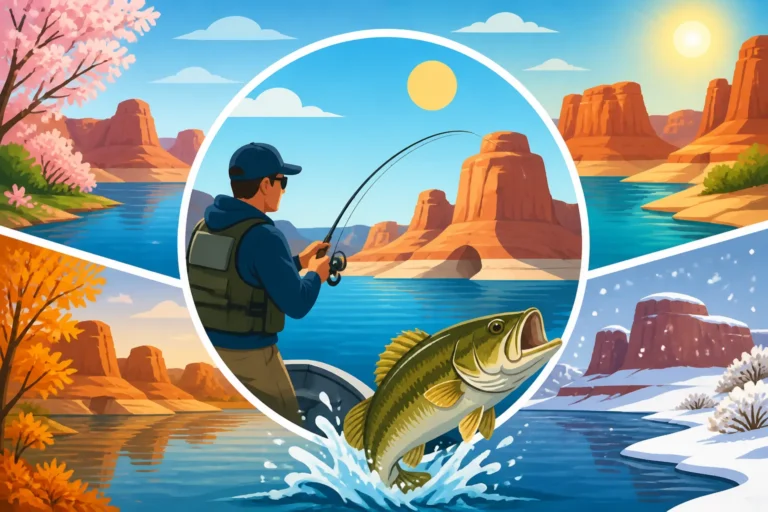
Water temperature is, without a doubt, the single most important factor dictating bass behavior at Alamo Lake. In winter, water temperatures can dip into the 50s, slowing bass metabolism and concentrating them in deeper, more stable thermal zones. Spring sees a rapid rise in temperatures, signaling the pre-spawn and spawning phases when bass move shallow. Summer pushes surface temperatures into the high 80s or even 90s, driving bass to deeper, cooler water or shaded cover. Fall brings a gradual cooling, sparking aggressive feeding as bass prepare for winter. Tracking these temperature shifts is vital for adjusting your Arizona Fishing Seasons Explained approach.
Seasonal Bass Fishing Strategies at Alamo Lake
Fishing Alamo Lake effectively means adapting to its distinct seasonal changes. What works wonders in spring will likely be a bust in summer, and vice-versa. Understanding these patterns is not just about catching fish; it's about connecting with the rhythm of the lake. This insight is what separates a truly successful angler from someone just hoping for a bite.
Spring Spawning and Post-Spawn Action
Spring at Alamo Lake is synonymous with bass fishing excitement. As water temperatures climb into the high 50s and low 60s, typically from March through May, largemouth bass begin their annual migration to the shallow coves and protected pockets to spawn. This is prime time for sight fishing, targeting bass on beds, or casting to actively cruising fish in very shallow water. Focus your efforts in areas with abundant submerged brush, sandy bottoms, or small rocky points that receive good sunlight.
During the pre-spawn phase, bass are feeding heavily to build energy for spawning, making them aggressive and susceptible to a variety of lures. Jerkbaits, crankbaits, and spinnerbaits are excellent choices for covering water and triggering reaction strikes. Once the fish are on beds, soft plastics like Texas-rigged lizards, creature baits, or even wacky-rigged Senkos are incredibly effective. Post-spawn, the bass can be a bit lethargic immediately after spawning, but they quickly transition to a recovery mode, often holding on the first available cover near the spawning areas, making them vulnerable to topwater lures in low-light conditions or plastics fished slowly around structure. Mastering these Spring Bass Fishing Tactics in Arizona can lead to some incredible days on the water.
Summer Heat and Deep Water Tactics
When the scorching Arizona summer arrives, usually from June through September, Alamo Lake's bass retreat from the extreme heat. Surface temperatures can become unbearable for both fish and anglers. The key to summer success is often to target fish during low-light hours – early mornings, late evenings, or even Catfish Night Fishing Techniques. During the bright, hot days, bass will typically move to deeper water, seeking cooler temperatures and stable oxygen levels. This means focusing on main lake points, submerged creek channels, deep timber lines, and ledges.
Vertical presentations become king during the summer. Drop-shot rigs with small worms, deep-diving crankbaits that reach 15-25 feet, and heavy jigs or Carolina rigs fished along ledges are highly productive. Pay close attention to your fish finder to locate schools of baitfish and bass relating to deep structure. Another fantastic summer tactic is to target shaded areas, even if they're shallow. Bass will pack tightly under dense canopies of submerged brush or around large floating debris, especially if there's a thermocline offering cooler water just below the surface. A quiet approach with a weedless frog or punching jig can elicit explosive strikes in these tricky spots.
Fall Transition and Feeding Frenzies
Fall at Alamo Lake, generally October and November, is another fantastic time for bass fishing. As the brutal summer heat finally breaks and water temperatures begin to cool, bass become incredibly active and aggressive. They sense the impending winter and begin to feed heavily, packing on calories. This often leads to widespread baitfish activity, particularly shad, moving into shallower coves and flats. The bass follow suit, creating some of the most exciting fishing of the year.
The fall bite is all about chasing bait. Look for schools of shad flickering on the surface or congregating in coves. Topwater lures like poppers, walking baits, and buzzbaits can be incredibly effective during low-light conditions. Crankbaits and spinnerbaits are excellent for covering water and imitating fleeing baitfish, especially in stained water or around sparse cover. Jerkbaits also become very productive as the water cools, mimicking injured baitfish. Bass will often suspend in open water chasing shad, or hold tight to the edges of creek channels and points where baitfish funnel. This is a prime time for strong reaction bites and catching multiple fish. If you're looking for Fall Bass Fishing Tactics in Arizona, this season offers incredible opportunities.
Winter Patterns and Slow Presentations
Winter fishing at Alamo Lake, from December through February, presents its own unique challenges and rewards. While not as intense as the spring and fall, the lake can offer some truly exceptional fishing for bigger, slower-moving bass. Water temperatures drop into the 50s, causing bass metabolism to slow significantly. They tend to school up and congregate in deeper, more stable areas of the lake, often relating to significant vertical structure like submerged timber on deep points or creek channel bends.
During winter, patience is paramount. Slow, methodical presentations are typically the most effective. Jigs, Texas-rigged soft plastics, and shaky heads fished painstakingly slowly along the bottom can entice sluggish bass. Blade baits and suspending jerkbaits fished with long pauses are also excellent choices for triggering strikes from cold-water bass. Focus your efforts on the warmest parts of the day, usually late morning to mid-afternoon, as a slight increase in water temperature can make a big difference. Don't be afraid to fish deeper than you might expect, sometimes 25-40 feet, and remember that bass will conserve energy, so you need to put your bait right in front of them. Understanding Winter Bass Fishing Tactics in Arizona means embracing finesse and precision.
Current Water Levels and Their Impact on Bass Fishing
Alamo Lake's water levels are notoriously dynamic, fluctuating greatly depending on rainfall, snowmelt upstream, and releases from the dam. These changes, sometimes occurring rapidly, have a profound impact on bass behavior, location, and angler access. Staying informed about the current levels is crucial for a successful trip. The Arizona Game and Fish Department (AZGFD) often provides updates, and local tackle shops or guide services can offer real-time insights.
Low Water Challenges and Opportunities
When Alamo Lake experiences low water levels, several things happen. First, a lot of the shallower, dense brush that provides cover gets exposed, essentially shrinking the available habitat for bass. This concentrates the fish into smaller areas, often pushing them towards the main lake body, deeper channels, or the remaining submerged timber in deeper coves. While it might seem challenging, low water also presents unique opportunities. Exposed timber lines can reveal hidden rock piles, ledges, and old creek beds that are otherwise obscured.
Anglers can take advantage of low water by focusing on these newly revealed structures. Bass will often hold tight to the remaining vertical cover in deeper water, making them susceptible to jigs, dropshots, and deep-diving crankbaits. The downside is that boat launching can become more difficult, with only one or two ramps accessible, and navigation requires extreme caution to avoid submerged hazards. For those seeking a guided experience, services available on platforms like FishingBooker can provide updated information on ramp conditions and help navigate low-water challenges effectively.
High Water Patterns and Flooded Cover
Conversely, high water conditions, often seen after significant winter snowmelt or monsoon rains, transform Alamo Lake into a sprawling, flooded wonderland. The rising water inundates acres of terrestrial vegetation along the shoreline, creating vast new areas of flooded brush and grass. This fresh cover provides an immense amount of new habitat, food, and protection for bass, often spreading them out across a much larger area.
Bass, especially largemouth, absolutely love flooded cover. They will push into these newly submerged bushes and trees, seeking out new forage opportunities and prime ambush points. This is an excellent time for aggressive, weedless presentations. Flipping and pitching jigs, Texas-rigged creature baits, and punching mats of vegetation become highly effective. Topwater lures, particularly frogs and buzzbaits, can also be deadly over flooded grass and brush. While navigation might be easier in terms of depth, finding the concentrated groups of bass in so much new cover can be a challenge. Patience and thoroughly working prime areas are key.
Locating Bass with Varying Water Depths
Regardless of whether the water is high or low, bass at Alamo Lake are always seeking optimal conditions, which typically involve a combination of cover, forage, and comfortable water temperatures. With fluctuating water levels, their depth preferences can shift dramatically throughout the day and across seasons. In general, bass will move shallower during low-light periods or when actively feeding, and deeper when seeking refuge from harsh sunlight, extreme temperatures, or boat pressure.
Using your electronics is indispensable for adapting to these changing depths. A good fish finder can help you identify submerged creek channels, isolated timber, rock piles, and schools of baitfish, all crucial indicators of where bass might be holding. When the water is fluctuating, pay close attention to the "transition zones" – areas where shallow flats meet deeper channels or where flooded timber thins out into open water. These edges are natural highways for bass and often hold concentrations of fish as they move between different depths and cover types. Understanding the bass's vertical movement is a key component to How to Fish Arizona's Desert Lakes successfully.
Essential Gear and Tactics for Alamo Lake Bass
To truly tackle Alamo Lake's bass fishing effectively, you need to be prepared with the right equipment and a versatile set of tactics. This isn't a one-lure-fits-all kind of lake; adaptability is your best friend here. Thinking about the various conditions – from thick timber to open water, and from scorching heat to cool winters – will guide your gear choices.
Top Baits and Lures for Alamo Lake Bass
Alamo Lake offers such a diverse environment that a wide array of baits can be effective, depending on the season and current conditions. For covering water and triggering reaction strikes, especially in spring and fall, crankbaits (both shallow and deep-diving, like those from Strike King or Rapala) and spinnerbaits (½ to ¾ ounce, in white, chartreuse, or shad patterns) are essential. These are great for searching out active fish in or near submerged timber and along points.
When bass are holding tight to cover, particularly in dense brush or deeper wood, jigs are indispensable. A black and blue or green pumpkin jig (½ to ¾ ounce) with a matching creature bait trailer can penetrate heavy cover and entice big bites. For finesse presentations, especially in clear water or during colder months, Texas-rigged soft plastics (worms, lizards, creature baits) and drop-shot rigs are highly effective. Don't forget topwater lures like frogs, poppers, and walking baits (e.g., Heddon Super Spook) for those magical low-light hours or when bass are busting shad in the fall. For a more detailed guide on what to throw, check out Best Lures for Largemouth Bass in Arizona Lakes.
Rod, Reel, and Line Recommendations
Given the varied fishing scenarios at Alamo Lake, having a selection of rod and reel setups can make a huge difference. For pitching jigs and Texas rigs into heavy cover, a heavy or medium-heavy power baitcasting rod (7' to 7'6") paired with a high-speed baitcasting reel (7.1:1 or higher) spooled with 15-20 lb fluorocarbon or 30-50 lb braided line is ideal. The braid offers exceptional strength and sensitivity, while fluorocarbon provides invisibility and abrasion resistance.
For open water presentations like crankbaits and spinnerbaits, a medium-heavy power baitcasting rod (6'6" to 7') with a moderate action is perfect, allowing the rod to load up and absorb the shock of a hard strike. A reel with a retrieve ratio around 6.4:1 is versatile for these lures. For finesse techniques, a medium-light or medium power spinning rod (6'6" to 7') with a matching spinning reel spooled with 8-10 lb fluorocarbon or braided line with a fluorocarbon leader is your best bet. A great resource to dive deeper into this is Best Fishing Rods for Bass in Arizona.
Navigation and Safety Considerations
Alamo Lake's rugged beauty also comes with its challenges, particularly regarding navigation. The vast amounts of submerged timber can pose a significant hazard to boaters, especially in areas outside of the main marked channels. Always exercise extreme caution, particularly when operating at higher speeds or in unfamiliar areas. A reliable GPS unit with detailed mapping is highly recommended to help you stay in safe zones and mark productive fishing spots.
Beyond navigation, personal safety is paramount. The Arizona desert can be unforgiving, with extreme heat in summer, so carry plenty of water, wear appropriate sun protection (wide-brimmed hats, long-sleeved shirts, sunscreen), and let someone know your float plan. Life jackets are mandatory and should always be worn or readily accessible, especially for children. It’s always a good idea to review Boating Safety Gear Requirements in Arizona before heading out. Keep an eye on weather forecasts, as sudden monsoon storms can bring high winds and dangerous conditions. A fully charged cell phone and a basic first-aid kit are also essential items for any trip to Alamo Lake.
Disclaimer
The information provided in this guide is for general informational purposes only and is subject to change. Fishing conditions, regulations, and water levels can vary. Always consult the latest regulations from the Arizona Game and Fish Department (AZGFD) and check local conditions before planning your fishing trip. Fishing carries inherent risks, and it is essential to prioritize safety and responsible angling practices.