Crappie Spawning Season Tactics
There's a special kind of anticipation that builds in Arizona when the days start getting longer and the desert temperatures begin to warm up. For many of us who love to cast a line, this isn't just about escaping the cabin fever; it's about the crappie spawn. Anglers often face the frustrating challenge of finding these elusive fish as they move into their shallow nesting grounds, but with the right tactics, you can turn a slow day into a memorable haul. This guide is dedicated to helping you understand, locate, and successfully catch crappie during their crucial spawning season in the diverse waters of Arizona.
Understanding the Arizona Crappie Spawn Cycle
The crappie spawn is one of the most exciting times of the year for many Arizona anglers, offering some of the best opportunities to catch these delicious panfish. But it's not a static event; it's a dynamic period influenced by a host of environmental factors. Getting a handle on this cycle is the first step to truly mastering crappie fishing during this critical time.
When Crappie Spawn in Arizona Lakes
Crappie, whether you're chasing black crappie or white crappie, are highly temperature-dependent when it comes to their reproductive cycle. In Arizona, this typically means a window from late winter through early spring, but the exact timing can vary significantly from one lake to another, and even year to year. Generally, you'll start seeing signs of crappie moving shallow when water temperatures consistently reach the low to mid-50s Fahrenheit, with the peak spawn hitting when temperatures hover between 60 and 68 degrees Fahrenheit.
For lakes in the warmer, lower desert elevations, like Lake Pleasant or Roosevelt Lake, the crappie spawn can kick off as early as February or March, especially after a mild winter. As you move to higher elevations or cooler northern Arizona lakes, such as those in the White Mountains, the spawn might not really get going until April or even May. It's a dance with Mother Nature, and staying informed about current water temperatures at your chosen fishing spot is crucial. You might find that one side of a large lake warms up faster than the other, offering earlier opportunities.
Ideal Water Conditions for Spawning
Beyond just temperature, crappie are quite particular about where they choose to build their nests and lay their eggs. They prefer stable water conditions, which means a prolonged period without significant cold fronts or drastic temperature drops. A sudden cold snap can send them scurrying back to deeper water, essentially putting the spawn on pause until conditions stabilize again.
Water clarity also plays a significant role. While crappie can tolerate some turbidity, they generally prefer water that's not excessively muddy or silty. Clearer water allows them to better see predators and protect their nests. As for depth, crappie will typically move into very shallow water, often just 1 to 5 feet deep, particularly in areas protected from strong winds and currents. This shallow water warms up faster and provides easier access to sunlight, which aids in egg development. They also seek out specific types of cover, which brings us to our next point.
The Different Phases of the Spawn
Understanding the three main phases of the crappie spawn – pre-spawn, spawn, and post-spawn – is key to adapting your tactics and finding success throughout the entire period. Each phase sees crappie exhibiting different behaviors and congregating in distinct areas.
The pre-spawn phase begins when water temperatures start to rise into the low 50s. During this time, crappie, particularly the larger females, will stage in slightly deeper water adjacent to their eventual spawning grounds. They're often found near creek channels, submerged timber, or deep brush piles in 10-20 feet of water. They're feeding aggressively to build up energy reserves for the strenuous spawning process. This can be an excellent time to catch some of the biggest crappie of the year.
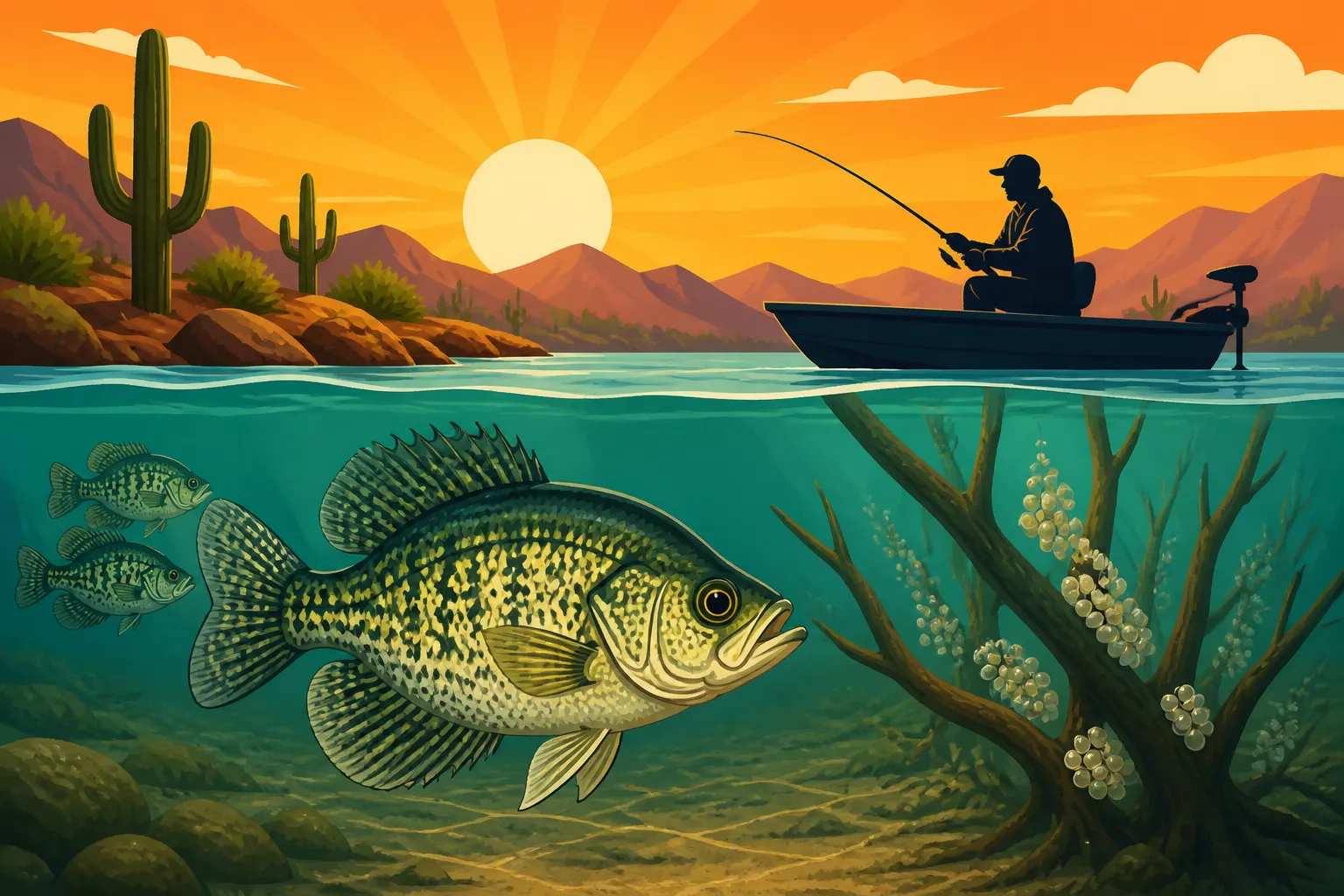
As temperatures climb into the 60-68 degree range, the spawn officially begins. Male crappie will move into the shallows first, fanning out nests on hard bottom areas, typically near protective cover like submerged brush, reeds, or docks. Females then move in to lay their eggs, often returning to deeper water quickly after spawning. The males stay to guard the nests, becoming incredibly territorial. During this peak period, crappie are less interested in feeding aggressively and more focused on reproduction, which can make them finicky but also highly concentrated in specific areas. Sometimes, a well-placed bait can trigger a strike out of aggression rather than hunger.
Finally, the post-spawn phase sees crappie gradually moving back to deeper water as the water continues to warm and their energy reserves are depleted. They'll often linger near the edges of their spawning flats, suspending over submerged structure or moving to cooler, deeper parts of the lake. They become more active feeders again, but their location might be more scattered than during the pre-spawn or peak spawn. Knowing these phases helps you predict fish movement and choose the right areas to target.
Locating Crappie During the Spawn
Finding crappie during the spawn isn't always easy, especially on large Arizona lakes. They can be incredibly concentrated in certain spots, making the search feel like looking for a needle in a haystack. However, with a keen eye for detail, understanding their preferred habitat, and using modern technology, you can significantly increase your chances of stumbling upon a hot crappie bite.
Targeting Shallow Cover and Structure
Crappie are masters of camouflage and love to hide, especially when they're nesting. During the spawn, their prime real estate is shallow water with abundant cover. Think about areas where trees have fallen into the water, creating intricate brush piles beneath the surface. Submerged timber, thick patches of reeds, cattails, or even man-made structures like boat docks, piers, and rip-rap banks are all prime targets. These areas offer protection from predators and currents, as well as surfaces for eggs to adhere to.
On lakes like Roosevelt Lake, look for flooded mesquite trees and thickets along the shoreline, especially in protected coves or backwater areas. Lake Pleasant offers numerous coves with submerged palo verde trees and brush where crappie will move shallow. The Salt River chain lakes, including Canyon Lake and Saguaro Lake, are also fantastic places to explore shoreline vegetation and rocky banks. Pay close attention to any visible cover, but also consider what might be hidden just beneath the surface. Sometimes, the most productive spots are those that aren't immediately obvious from the bank. Getting yourself a good pair of polarized sunglasses, available on Amazon, can make a huge difference in spotting subtle changes in water color or submerged cover.
Identifying Spawning Beds
Once you've narrowed down potential areas, the next step is to identify actual spawning beds. This requires a bit of stealth and observation. Crappie beds aren't as dramatic as bass beds, but they are identifiable. Males will fan out small, circular depressions on the bottom, often in hard-bottom areas like gravel, sand, or even hardened clay, typically near a piece of cover.
From a boat, use your trolling motor to move slowly through likely areas, keeping your eyes peeled. Look for lighter-colored patches on the bottom, which indicate that a male crappie has fanned away sediment to create a nest. The fish themselves might appear as dark shapes hovering over these spots. Be as quiet as possible; sudden movements, loud noises, or casting shadows over the beds can spook these wary fish. A patient approach and keen eyesight are your best allies here. Remember that crappie will often nest in colonies, so if you find one bed, there are likely many more nearby.
Using Electronics and Observation for Scouting
Modern fish finders are invaluable tools for locating crappie during any season, and the spawn is no exception. While crappie are in shallow water, side-imaging and down-imaging technologies can help you pinpoint submerged brush piles, timber, and even individual fish holding tight to cover without disturbing them. You can use these features to scan broad areas, mark productive spots, and then approach them carefully. Learning how to read a fish finder for structure will give you a significant advantage.
Once you identify potential cover on your electronics, switch to your 2D sonar or traditional view to confirm fish presence. Crappie often show up as distinct arches or clusters of dots, especially when suspended around cover. Don't forget the power of simple observation. Look for birds diving, which can sometimes indicate baitfish schools that crappie might be chasing in deeper pre-spawn areas. Also, watch for any signs of surface activity, however subtle, near shallow cover. A slight ripple or a flash of silver could be a crappie moving or feeding. Combining all these methods will significantly cut down your search time and get you to where the fish are.
Top Baits and Lures for Spawning Crappie
When crappie are in their spawning rhythm, their feeding habits can be a bit peculiar. They're often more aggressive due to territorial instincts, but sometimes they can be incredibly finicky. Having a versatile array of baits and lures in your tackle box is key to adapting to their mood swings and finding what triggers a strike.
Live Bait Rigs for Finicky Biters
It's hard to beat live bait when crappie are acting shy, and during the spawn, this is often the case. The natural action and scent of a live minnow or a small worm can be irresistible, even to a crappie that isn't actively feeding. Small golden shiners, fathead minnows, or Missouri minnows are classic crappie baits.
When rigging live minnows, simplicity is often best. A small No. 2 or No. 4 Aberdeen hook, a tiny split shot weight a foot or so above the hook, and a small bobber are all you need. The key is to present the minnow as naturally as possible, allowing it to swim freely near the cover where crappie are holding. Experiment with depth; sometimes they want it right on the bottom, other times suspended a foot or two off the cover. A slip bobber rig is fantastic for setting precise depths and for fishing in heavy cover, as you can retrieve the bobber closer to your rod tip after a cast, minimizing snags. For fishing very tight to brush, some anglers prefer to tight-line, meaning no bobber, just letting the minnow sink slowly on a weighted hook. For those seeking detailed instructions, our guide on how to rig a live minnow for crappie offers more insights.
Jigs and Soft Plastics: Versatility and Effectiveness
If you prefer artificials, jigs and soft plastics are undoubtedly the most effective choices for spawning crappie. Their versatility allows you to mimic various forage and adapt to different water conditions and fish moods.
- Tube Jigs: These are a crappie staple. The soft, hollow body and tantalizing tentacles create a subtle action that crappie love. Experiment with colors; chartreuse, white, black, and various two-tone combinations (like black and chartreuse) are consistent producers. For Arizona's clear desert lakes, natural colors like smoke or pearl can also be very effective.
- Curly Tail Grubs: Another excellent choice, the curly tail provides a lot of action with minimal movement, perfect for slow presentations around spawning beds. Sizes from 1/32 to 1/16 ounce are standard.
- Hair Jigs and Marabou Jigs: These offer a natural breathing action in the water that's often irresistible. They're especially good for cooler water temperatures during the early spawn.
The retrieve is often key with jigs. A slow, subtle twitching motion, allowing the jig to fall slowly through the water column, is frequently more effective than a fast retrieve. Pay close attention to jig head weight – lighter jigs (1/32 or 1/64 ounce) allow for a slower, more natural fall, which can be crucial for enticing finicky crappie in shallow water. You can find a wide assortment of crappie jigs and soft plastics on Amazon, offering endless options to experiment with.
Small Crankbaits and Spinners for Active Fish
While jigs and live bait excel when crappie are holding tight to cover, don't overlook small crankbaits and spinners, especially during the pre-spawn or post-spawn phases when fish are more actively feeding. These lures can be great for covering water and triggering reaction strikes from more aggressive fish.
- Miniature Crankbaits: Look for shallow-diving crankbaits in sizes appropriate for crappie, typically 1 to 2 inches long. Colors that mimic shad or crawfish can be productive. These are best used when crappie are slightly scattered or when you're trying to locate schools of fish staging in slightly deeper water. A slow, steady retrieve or a stop-and-go retrieve can draw strikes.
- Small Inline Spinners: Lures like a Rooster Tail or Panther Martin with a small blade and dressed treble hook can be surprisingly effective, especially in clearer water. The flash and vibration can attract crappie from a distance. Again, a slow retrieve is usually best. They're particularly useful when crappie are moving between shallow and deeper water, or when they're chasing baitfish.
It's about matching the hatch and the mood. Sometimes crappie want a slow, subtle presentation, while other times a little flash and vibration will get their attention. Pay attention to what the fish tell you on any given day.
Effective Fishing Techniques for Arizona's Crappie Spawn
Knowing where crappie are and what baits they prefer is only half the battle. The other half is presenting your offerings in a way that entices them to bite. During the crappie spawn, precision and patience are paramount. Different situations call for different techniques, and being able to adapt will be your greatest asset.
Vertical Jigging and Dropping into Cover
One of the most effective techniques for spawning crappie, especially when they're holding tight to dense cover, is vertical jigging. This method allows you to precisely present your bait exactly where the fish are without getting constantly snagged. This is particularly useful in Arizona's desert lakes where submerged brush and timber are abundant.
To execute this, position your boat or kayak directly over or very near the piece of cover where you suspect crappie are hiding. Using a sensitive rod, slowly drop your jig or live minnow straight down into the cover. Let it sink until you feel it touch the top of the structure, then lift it slightly and gently twitch it. The key is to keep your bait in the strike zone for as long as possible. Many bites will feel like a subtle tap, or simply a weightless feeling, so be ready to set the hook at the slightest indication. This method is incredibly effective for pulling crappie out of deep brush piles where horizontal casts would be impossible. It’s a bit like playing a delicate game of "plinko" with your lure, trying to fall through the branches just right.
Trolling and Slow-Motions for Scattered Fish
While vertical jigging is for precise presentations, sometimes crappie are more scattered, or you need to cover a larger area to find them. This is where trolling, particularly slow-trolling or "spider rigging," comes into play. This method involves using multiple rods (where allowed by regulations) set out around your boat, typically with different depths and baits, as you slowly motor through an area.
Spider rigging is popular among crappie anglers, involving up to eight rods (though check local regulations for rod limits) extending from the bow of the boat. Each rod can have a different jig or live bait, allowing you to cover various depths and find the crappie's preferred offering. Move your boat at a snail's pace, just enough to give your baits action. This technique is excellent for identifying productive depths and patterns when fish are in their pre-spawn staging areas or post-spawn dispersal. For those fishing from a kayak, a simplified version of slow-trolling can still be effective, often using two rods out the front. Understanding the nuances of kayak fishing techniques for desert lakes can really enhance this approach.
Mastering the Bobber and Minnow Technique
The classic bobber and minnow setup might seem simple, but mastering it for spawning crappie requires attention to detail. This technique is fantastic for bank anglers or for keeping a bait in a precise spot near visible cover.
The most critical aspect is setting the correct depth. Crappie will often suspend at a specific depth near cover, so you want your minnow right in their face. Start by setting your bobber to place the minnow about a foot off the bottom in shallower areas, or just above the top of a submerged brush pile. Watch your bobber intently. Crappie bites can be incredibly subtle – sometimes the bobber just twitches, barely dips, or even lays flat on its side. Avoid the urge to immediately reel in if you see movement. Let the fish take the bait for a moment before setting the hook with a gentle, sweeping motion. If you're not getting bites, adjust your depth by a foot at a time until you find the fish. On clear Arizona days, the visual cue of a bobber disappearing can be thrilling, making this a favorite technique for many.
Essential Gear and Tips for a Successful Crappie Spawn Trip
Beyond baits and techniques, having the right gear can significantly improve your crappie fishing success during the spawn. It's not just about what you use, but how you prepare for a day on Arizona's diverse waters, which can range from serene mountain lakes to expansive desert reservoirs. A well-prepared angler is a successful angler.
Rods, Reels, and Line for Spawning Crappie
When targeting crappie, finesse is often the name of the game, especially during the spawn. You'll want tackle that allows you to feel those subtle bites and accurately present small baits.
- Rods: A light to ultralight spinning rod, typically 5 to 7 feet long, is ideal. Look for a rod with a fast or moderate-fast action, which means the tip is sensitive enough to detect light bites but the rod still has enough backbone to handle a good-sized crappie. Many crappie specialists prefer jigging rods that are even longer, up to 10 or 12 feet, particularly for spider rigging or reaching into tight cover from a distance. Sensitivity is key; you need to feel every bump and tick.
- Reels: A small spinning reel (size 500 to 1000) that balances well with your rod is perfect. It should have a smooth drag system, as crappie, despite their delicate mouths, can put up a decent fight, especially larger slabs.
- Line: Light line is crucial for crappie. 4 to 6-pound test monofilament or fluorocarbon is generally recommended. Monofilament offers good knot strength and stretch, which can be forgiving. Fluorocarbon is less visible in clear water and has less stretch, offering more sensitivity. Braided line, typically 6 to 10-pound test with a fluorocarbon leader, provides maximum sensitivity and strength, which can be advantageous when fishing around abrasive cover, but it can be more challenging for beginners to tie knots with. The choice often comes down to personal preference and water clarity.
Crappie Spawn Tackle Box Essentials
Your tackle box for crappie fishing during the spawn should be well-organized and stocked with the essentials. Think small, sharp hooks, a variety of jigs, and bobbers. You can find a comprehensive guide on the best tackle for desert lake fishing, but here's a focused list for crappie:
| Item | Description | Why it's Essential |
|---|---|---|
| Jig Heads | 1/32 oz, 1/16 oz, 1/8 oz in various colors (chartreuse, black, white) | Allows precise depth control and presentation for different conditions and depths. |
| Soft Plastic Jigs | Tube jigs, curly tail grubs (1-2 inches) in assorted colors | Mimics baitfish, versatile for vertical jigging or slow retrieve. |
| Live Bait Hooks | Aberdeen or Kahle hooks (sizes 2-6) | Thin wire for natural minnow presentation, easy hookset, less harm to bait. |
| Split Shot Weights | Assorted sizes | For balancing bobbers, adding weight to live bait rigs, or tight-lining. |
| Bobbers | Small clip-on and slip bobbers | Crucial for suspending live bait at precise depths and indicating subtle bites. |
| Swivels | Small barrel or snap swivels | Prevents line twist, useful for leader connections. |
| Pliers/Forceps | Needle-nose pliers or hemostats | Essential for hook removal, especially from delicate crappie mouths, and cutting line. |
| Line Clippers/Scissors | Small, sharp tool for clean line cuts | Prevents frayed ends and ensures strong knots. |
| Measuring Tape/Scale | To ensure compliance with fishing bag and possession limits explained and track catches | For measuring fish and adhering to regulations. |
Don't forget a small cooler or a livewell if you plan to keep your catch fresh! For those needing to replenish their tackle, Amazon has a vast selection of crappie-specific gear, making it easy to stock up on these essentials.
Navigating Arizona's Lakes During the Spawn
Fishing during the crappie spawn often means sharing the water with many other eager anglers, especially on popular lakes like Lake Pleasant, Roosevelt Lake, and Canyon Lake. Respect for others on the water is paramount. Give other boats and bank anglers plenty of space, especially if they appear to be on fish. A slow, quiet approach to your chosen spot is always appreciated and helps prevent spooking fish.
If you're using a boat, make sure you're familiar with boating safety requirements, including life jackets and other essential equipment. Always check weather conditions before heading out, as Arizona's weather can change rapidly, especially during the spring with strong winds. If you're fishing from the bank or a kayak, be mindful of your surroundings and any local regulations regarding access. Many areas around Arizona's best fishing lakes offer excellent shore fishing opportunities, but always confirm access points. Whether you're in a bass boat, a pontoon, or a fishing kayak, safe and courteous navigation ensures a pleasant experience for everyone.
Crappie fishing during the spawn in Arizona can be incredibly rewarding. With a little knowledge, the right gear, and a patient approach, you'll be well on your way to catching some impressive slabs. Remember to always check the latest regulations before you head out, and consider getting your license ahead of time. Happy fishing!
Disclaimer
Please note that fishing conditions, regulations, and fish behavior can change. Always consult the latest Arizona Game and Fish Department regulations before heading out. The information provided in this guide is for general informational purposes only and should not be considered legal advice or a substitute for official regulations. Be safe and practice ethical angling.