Best Time of Year to Fish Apache Lake
Fishing Apache Lake can be an incredible experience, but it’s also one of Arizona’s more challenging reservoirs. Its deep, clear waters, remote canyon walls, and fluctuating conditions mean that just showing up with a rod and reel might not always lead to success. If you've ever felt frustrated by a slow day on this stunning lake, you're not alone. This guide will help you pinpoint the absolute best times of year to hit Apache Lake, focusing on prime seasons for different species and offering actionable advice to make your next trip a truly memorable one.
Understanding Apache Lake's Unique Fishery
Apache Lake is one of the four reservoirs on the Salt River, nestled amidst the stunning Sonoran Desert landscape. Its rugged beauty is undeniable, but it's also what makes fishing here a bit different from other Arizona lakes. The deep canyons and diverse structure create a complex environment that fish react to intensely throughout the year.
The Rugged Beauty and Tricky Depths
Unlike some of the more accessible urban lakes, Apache Lake is a wild, untamed body of water. Its shoreline is mostly steep cliffs, rocky points, and submerged timber, offering countless hiding spots for various fish species. It's deep, too, reaching depths of over 200 feet in some areas, which means fish can stratify at different levels depending on water temperature and oxygen. This intricate underwater topography is fantastic for fish, providing ample cover and foraging opportunities, but it can be a puzzle for anglers trying to locate them.
The water clarity at Apache Lake is often crystal clear, which is beautiful for sight-seeing but can make fish wary, especially on bright, sunny days. Anglers often need to adjust their presentation, using lighter lines and more subtle baits to entice a strike. Understanding the lake's structure, from submerged rock piles to brushy coves and steep drop-offs, is key to success, as fish will relate to these features differently based on the season. If you're planning an excursion, it's a good idea to research Apache Lake Arizona Fishing Guide for detailed maps and access points.
Key Fish Species You'll Encounter
Apache Lake boasts a healthy population of popular sportfish, each with its own preferred habitat and seasonal patterns. The lake is primarily known for its bass fishing, but other species provide excellent opportunities throughout the year.
- Largemouth Bass: These are the classic bucketmouths, often found relating to submerged timber, brush piles, and rocky points, especially in shallower coves during the spawn.
- Smallmouth Bass: More common in the clearer, rockier main lake and canyon areas, smallmouths are known for their hard fights and preference for deeper, cooler water in the summer. For more on these feisty fighters, check out our Smallmouth Bass Fishing Guide for Arizona.
- Crappie: Both black and white crappie call Apache Lake home, often schooling around brush, submerged trees, and bridge pilings. They are a highly sought-after species, especially during their spring and fall runs. You can learn more about Crappie Fishing Guide for Arizona to improve your chances.
- Catfish: Channel catfish and the occasional flathead thrive in Apache's waters, often found in deeper channels or near incoming creeks, especially when the water warms.
- Yellow Bass: These smaller, schooling fish provide consistent action and are often found chasing baitfish in open water. They are a great target for beginners or when other species are slow.
Understanding what each species prefers at different times of the year is crucial for planning your trip to Apache Lake.
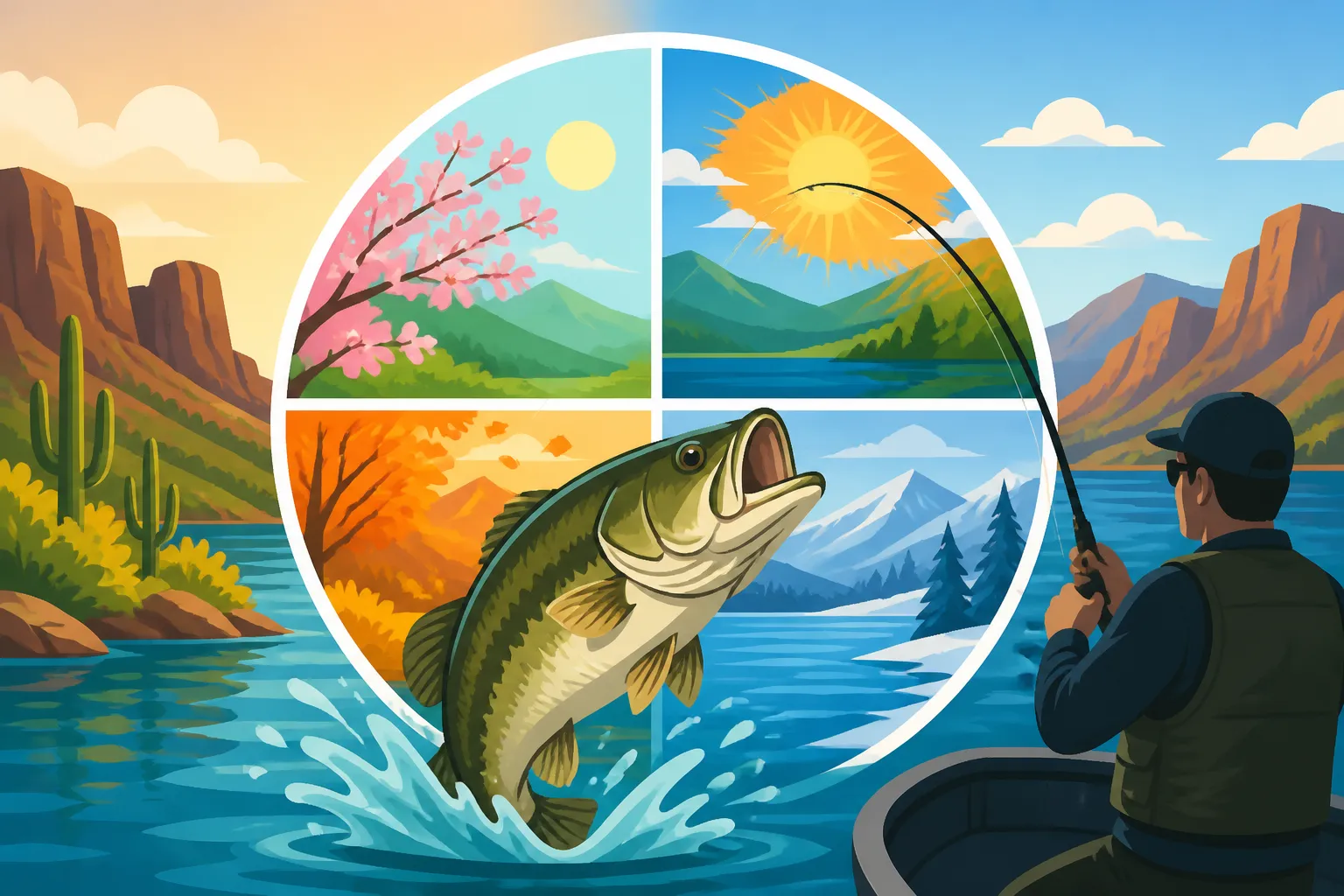
Seasonal Breakdown: When Apache Lake Comes Alive
Apache Lake experiences distinct seasons that dramatically influence fish behavior. What works in spring will likely fail in summer, so tailoring your approach to the calendar is essential for consistent bites.
Spring: The Spawn and Explosive Action
Without a doubt, spring is often considered the prime time to fish Apache Lake, particularly for bass and crappie. As the water temperatures begin to rise, typically from March through May, fish become much more active.
- Largemouth and Smallmouth Bass: This is when bass move into shallower coves and flats to begin their spawning rituals. Water temperatures between 58-68°F are ideal. You'll find them cruising the banks, guarding beds, and aggressively striking at baits. Early spring (March) might see them in pre-spawn, staging in slightly deeper water before moving up. By late spring (April-May), they are on beds or post-spawn, recovering and feeding heavily. Topwater lures, spinnerbaits, jigs, and soft plastics are all highly effective. For specific tactics, our Spring Bass Fishing Tactics in Arizona guide offers excellent advice.
- Crappie: Crappie also follow a similar pattern, moving into shallower brush and submerged timber to spawn as water temperatures rise, usually peaking in March and April. They congregate in large schools, making them relatively easy targets if you can locate them. Small jigs, mini-mites, and live minnows fished around brush piles are incredibly effective.
During spring, the weather can still be a bit unpredictable, with warm days followed by cooler fronts. Pay attention to sudden changes, as this can temporarily push fish deeper. However, the overall trend is toward increasing activity and some of the year's best fishing. The lake can also get quite busy, especially on weekends, so consider a weekday trip if possible.
Summer: Beating the Heat for Deep-Water Bites
Arizona summers are no joke, and Apache Lake is no exception. As air temperatures soar and the surface water warms significantly, fishing transitions to a deep-water game. Don't be fooled into thinking fishing is impossible; you just need to adjust your strategy.
- Bass: Largemouth and Smallmouth bass will retreat to cooler, deeper waters. They’ll often hold on main lake points, ledges, submerged humps, and steep canyon walls, seeking thermal refuge and ambush points. Early mornings and late evenings become prime times for shallow water action, sometimes even a topwater bite if you're out at dawn. During the heat of the day, vertical jigging, drop-shotting, and deep-diving crankbaits become your best friends. Look for submerged timber or rock slides in 20-50 feet of water. Understanding Summer Bass Fishing Tactics in Arizona can really help here.
- Catfish and Yellow Bass: Summer is prime time for catfish, especially at night. They become very active in the warmer water, readily taking cut bait, stink baits, or live worms fished on the bottom in deeper channels or near rocky points. Yellow bass also thrive in the summer heat, often forming large schools and chasing baitfish near the surface during cooler parts of the day or deeper when the sun is high. They provide fantastic, fast-paced action, perfect for keeping kids entertained.
Fishing during summer requires careful planning for both you and the fish. Hydration and sun protection are paramount. Consider fishing at night or during the twilight hours for more comfortable conditions and often more active fish.
Fall: The Feeding Frenzy Before Winter
Autumn at Apache Lake is another fantastic time to fish, often rivaling spring in terms of productivity. As the oppressive summer heat begins to subside and water temperatures gradually cool, fish sense the approaching winter and go on a major feeding binge.
- Bass: Both largemouth and smallmouth bass become incredibly active, pushing baitfish into coves and along main lake points. They are trying to bulk up for the leaner winter months. This is an excellent time for a variety of techniques, including crankbaits, spinnerbaits, jigs, and even topwater lures during low-light conditions. You'll often find them chasing schools of shad, so look for active baitfish on your fish finder. Mid-fall, typically October and November, is particularly strong. For more detailed insights, check out Fall Bass Fishing Tactics in Arizona.
- Crappie: Crappie also experience a resurgence in activity during the fall. They'll often move back into shallower areas, especially around brush and submerged timber, mimicking their spring patterns but without the spawning focus. Small jigs and minnows remain excellent choices. Targeting them can be incredibly rewarding, and like bass, they're aggressively feeding.
Fall offers comfortable weather conditions for anglers and very active fish. The lake is usually less crowded than in spring, making for a more peaceful fishing experience. The key is to find the baitfish, as the predatory species won't be far behind.
Winter: Slow and Steady Rewards
Winter fishing at Apache Lake might not offer the explosive action of spring or fall, but it can provide some of the most rewarding days for patient anglers, especially for trophy-sized fish. The cold weather typically means fewer crowds and a serene environment.
- Bass: Bass slow down significantly in winter. They will typically move to deeper, more stable water, often suspending over deep structure or holding tight to vertical drops and ledges. Slower presentations are key. Jigs, drop-shots, and finesse worms fished meticulously in deeper water can tempt these lethargic giants. Look for fish on your electronics holding close to the bottom or suspended near schools of baitfish in 30-60 feet of water. While the bites may be fewer, they can often be from larger, healthier fish. Our Winter Bass Fishing Tactics in Arizona guide provides more specific approaches.
- Trout: While Apache Lake is not primarily known as a trout fishery, the Arizona Game and Fish Department occasionally stocks rainbow trout in the cooler months, especially in the Salt River chain. These stocked trout provide an alternative target and can be caught with PowerBait, small spoons, or flies.
Winter fishing demands patience, precision, and an understanding of how cold water affects fish metabolism. Dress warmly, bring a thermos of hot coffee, and be prepared for a slower pace, knowing that a big fish could bite at any moment.
Targeting Specific Species at Apache Lake
While we've covered seasonal generalities, let's dive a bit deeper into what makes each species tick at Apache Lake, especially regarding timing and techniques.
Mastering Bass Fishing Throughout the Year
Bass are the undisputed kings of Apache Lake for many anglers, offering diverse challenges and thrilling catches. Their behavior is highly dependent on water temperature and the presence of bait.
- Early Spring (March): Pre-spawn bass are staging. Focus on transition areas: rocky points leading into coves, channel swings, and the mouths of creeks. Slow-rolling spinnerbaits, lipless crankbaits, and jigs are excellent choices.
- Late Spring (April-May): Spawning and post-spawn. Look for visible beds in shallower, protected coves. Soft plastics (lizards, tubes, senkos) worked slowly are deadly for bed-fishing. For post-spawn, faster moving baits like crankbaits and topwater lures can generate strikes as bass recover and feed aggressively.
- Summer (June-September): Deep water and low-light conditions are your best bet. Vertical presentations like drop-shots, shaky heads, and heavy jigs fished on main lake points, submerged humps, and deep ledges from 20 to 60 feet. During dawn and dusk, a brief topwater bite might occur in shaded areas.
- Fall (October-November): Follow the bait! Bass will be chasing shad into coves and across flats. Crankbaits (both shallow and deep divers), jerkbaits, and swimbaits are highly effective for covering water and mimicking baitfish. Spinnerbaits are also excellent, especially on windy days.
- Winter (December-February): Finesse is key. Jigs, drop-shots, and Ned rigs fished slowly on deep structure where fish are grouped up. Look for rock slides, main lake points, and channel edges using your electronics. Remember, these fish aren't actively chasing; you need to put the bait right in front of them. For additional tips, consider reading our Best Bass Fishing Techniques for Arizona Lakes.
Apache Lake's clear water means that line selection is crucial. Fluorocarbon lines are often preferred for their low visibility and sensitivity, especially when fishing finesse techniques.
Crappie: A Springtime and Fall Delight
Crappie are another popular target at Apache Lake, offering excellent table fare and fun fishing. Their patterns are very structure-oriented and seasonal.
- Spring (March-April): This is prime crappie time. They move into shallower brush piles, submerged timber, and around boat docks or bridge pilings to spawn. Tiny jigs (1/32 to 1/16 oz) tipped with a small plastic grub or live minnows suspended under a bobber are incredibly effective. Fish vertically right in the structure.
- Summer (May-September): Crappie move much deeper as the water warms, often suspending in schools over old creek channels, deep timber, or under shade structures like boat docks that extend into deep water. Spider rigging with multiple poles and live minnows, or vertical jigging with heavier jigs, can find them. Night fishing under lights can also be productive as they follow baitfish attracted to the light.
- Fall (October-November): Crappie often have a second surge of activity, mirroring their spring movements but without the spawning. They'll return to brush piles and structure, actively feeding. Again, small jigs and minnows are the go-to baits.
- Winter (December-February): Crappie hold in deep, dense brush piles or suspended in deeper water, similar to bass. They can be caught, but it requires precise jigging and patience.
Finding good Crappie Spawning Season Tactics is essential for maximizing your catch during the prime windows. If you're struggling to locate them, a good fishing guide service can be invaluable. Many local guides listed on platforms like FishingBooker specialize in crappie and can put you on the fish.
Catfish and Other Panfish Opportunities
Apache Lake also offers excellent opportunities for catfish and other panfish like bluegill and green sunfish, which are great for family outings or when other species are finicky.
- Catfish (Year-Round, Best in Summer/Fall): Channel catfish are abundant and can be caught year-round. They become particularly active when the water warms in summer and fall. Focus on deeper channels, the mouths of washes, and any areas with slower current or structure. Cut bait (shad, carp), chicken livers, and prepared stink baits fished on a Carolina rig or a simple bottom rig are highly effective. Night fishing is often best for catfish in the warmer months. Flathead catfish, while less common, are usually caught on large live baits (bluegill, carp) in deep, rocky areas. Our Best Bait for Catfish in Arizona guide has more tips.
- Panfish (Spring-Fall): Bluegill, green sunfish, and yellow bass are prolific in Apache Lake, especially from spring through fall. They provide consistent action and are perfect for introducing kids to fishing. Look for them around any visible cover – docks, submerged trees, weed lines, or rocky shorelines. Small pieces of worm, mealworms, or tiny jigs fished under a bobber are usually all it takes. Yellow bass are particularly fun in schools, often found chasing baitfish in open water or along points.
These species offer a reliable backup plan when the bass or crappie bite is slow, and they're incredibly fun to catch on light tackle.
Maximizing Your Success: Tips and Considerations
Apache Lake, with its stunning scenery and challenging fishing, rewards preparation and adaptability. A few key considerations can significantly impact your success.
Monitoring Water Levels and Clarity
Apache Lake's water levels can fluctuate, especially in response to drought conditions or heavy rainfall events upstream. These fluctuations dramatically affect where fish hold and how they behave. High water might push fish into newly flooded cover, while low water can concentrate them in main lake channels. Before your trip, check the current lake levels through the Arizona Game and Fish Department (AZGFD) or other online resources.
Water clarity also plays a significant role. Apache Lake is generally clear, but post-monsoon runoff can muddy up certain arms or coves temporarily. In clear water, finesse techniques, lighter lines, and natural bait colors are often best. In murkier water, fish might rely more on scent and vibration, so louder baits, darker colors, and scents can be more effective.
Choosing the Right Gear and Techniques
Having the right tackle for Apache Lake's diverse fishery is crucial. Given the clear water and often deep-water tactics, finesse gear is a staple.
- Rods and Reels: Medium-light to medium power spinning rods (6'6" to 7'3") are versatile for most bass and crappie applications. Pair them with 2500-3000 size spinning reels spooled with 8-12 lb fluorocarbon or braided line with a fluorocarbon leader. For heavier applications or casting larger bass lures, a medium-heavy baitcasting setup might be preferred.
- Lures and Baits:
- Bass: Jigs (football, swim jigs), soft plastics (worms, senkos, creature baits), crankbaits (deep and shallow divers), spinnerbaits, jerkbaits, and topwater lures.
- Crappie: Small (1/32-1/16 oz) lead head jigs with tiny plastic bodies (mini-mites, tubes), live minnows.
- Catfish: Cut bait (shad, bluegill), chicken livers, nightcrawlers, prepared stink baits.
- Panfish: Worms, mealworms, small grubs.
- Electronics: A good fish finder with side imaging or down imaging can be invaluable for locating deep structure, baitfish schools, and suspended fish, especially during summer and winter.
Remember to pack plenty of water, sunscreen, and appropriate clothing for the Arizona desert, regardless of the season. Our Fishing Gear Checklist for Desert Lakes can help you prepare.
Considering a Guided Trip or Local Expertise
If Apache Lake feels overwhelming or you're short on time to figure out the patterns, a guided fishing trip can be an excellent investment. Local guides know the lake intimately, understand seasonal patterns, and can put you on fish quickly. They often have specialized equipment and techniques honed over years of experience. Services like FishingBooker can help you find experienced guides who know Apache Lake inside and out, offering everything from bass to crappie trips. They can save you a lot of trial and error, especially if you're targeting a specific species during a tricky time of year.
Talking to local bait shops is another fantastic way to get up-to-date information on what's biting, where, and on what. The folks working there often have their finger on the pulse of the local fishing scene.
Conclusion
Apache Lake offers fantastic fishing opportunities throughout the year, but understanding the seasonal nuances is critical to success. Spring and fall typically provide the most consistent action for bass and crappie, with fish actively feeding and shallower. Summer shifts to a deep-water game, best approached during low-light hours or with specialized deep-fishing techniques, while winter rewards patient anglers targeting fewer, but often larger, fish with finesse presentations. By considering water levels, adapting your gear, and perhaps leveraging local expertise through services like FishingBooker, you can unlock the full potential of this magnificent Arizona fishery any time of year.
Disclaimer
Fishing conditions and regulations in Arizona can change. Always check the latest Arizona Game and Fish Department (AZGFD) regulations before heading out. This guide provides general information and recommendations, but individual fishing success can vary greatly. Stay safe and enjoy your time on the water.