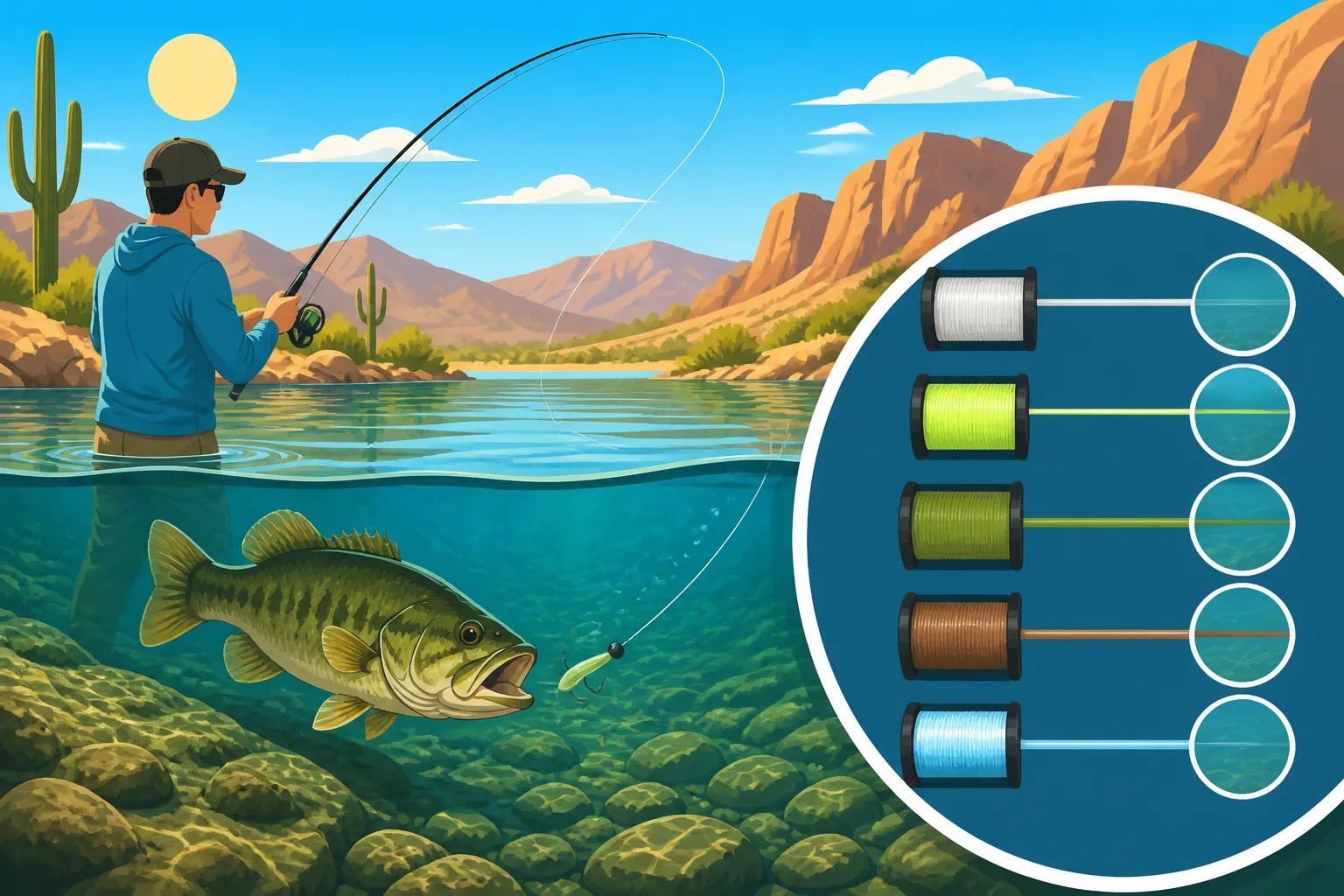
Best Line Color for Clear Desert Lakes
There's nothing quite like the stunning, crystal-clear waters of Arizona's desert lakes. But while beautiful, these pristine conditions can make fish incredibly wary. Anglers often struggle with fish spooking at the sight of their line, turning a promising day into a frustrating one. This guide will dive deep into understanding how fishing line color impacts your success in clear Arizona lakes, helping you choose the perfect stealth setup.
Why Fishing Line Color Matters in Clear Water
Fishing in Arizona, especially on our gorgeous desert reservoirs like Lake Pleasant, Roosevelt Lake, or Canyon Lake, often means dealing with incredibly clear water. It's a double-edged sword: beautiful to look at, but challenging for anglers trying to fool savvy fish. The color of your fishing line might seem like a minor detail, but in these conditions, it can be the difference between a triumphant hook-set and a frustrating refusal.
The Spooky Fish Factor
Imagine you're a bass, cruising the crystal-clear waters of Lake Havasu, on the hunt for a meal. Suddenly, a thick, brightly colored rope appears out of nowhere, descending right near your next potential snack. Would you be eager to bite? Probably not. Fish are incredibly perceptive, especially in clear water where visibility is high. They're not just reacting to vibrations or the movement of your lure; they're seeing the line that connects it to something unnatural.
This "spooky fish factor" is particularly pronounced with species known for their keen eyesight, like smallmouth bass or trout. In places like Lees Ferry, where the trout population thrives in exceptionally clear conditions, even a slightly visible line can send them darting away. It's a common frustration many anglers face – everything else feels right, but the fish just aren't biting. Often, the culprit is right there, a brightly colored line acting as a flashing neon sign, screaming "danger!"
Light Penetration and Water Clarity
Understanding how light behaves underwater is key to choosing the right line color. In clear desert lakes, sunlight penetrates much deeper and with less distortion than in murky or stained waters. This means that colors retain more of their true hue further down, rather than quickly fading to shades of gray or brown. Different colors absorb and reflect light differently, and this optical property changes underwater.
Colors like red tend to disappear quickly at shallow depths, while blues and greens can remain visible much deeper. However, a truly "invisible" line would be one that refracts light similar to water itself. The angle of the sun, cloud cover, and even the depth you're fishing at all play a role in how visible your line appears to a fish. What looks perfectly camouflaged from your perspective above the water might look like a glaring anomaly from below. It's about trying to disrupt light as little as possible.
Popular Line Colors and Their Performance in Clear Lakes
When you're standing on the shore of a beautiful Arizona lake, ready to cast, you're faced with a rainbow of line colors on the tackle shop shelf or online. Each claims its own advantages, but for those pristine, clear desert lakes, some colors definitely stand out above the rest. It's about tricking the fish, not just looking good to us. If you're looking for more general gear advice, check out Essential Tackle Box Setup for Arizona Beginners.
Clear and Fluorocarbon Lines: The Ultimate Stealth
For many seasoned Arizona anglers, when the water is gin-clear, there's one reigning champion: fluorocarbon line, and its close cousin, clear monofilament. Fluorocarbon is often touted as "invisible underwater," and there's a good reason for that claim. Its refractive index is incredibly close to that of water, meaning light bends through it almost the same way it bends through water. This minimizes the visual distortion, making it incredibly difficult for fish to detect.
Think of it like looking through a clean pane of glass versus a cloudy one. Fluorocarbon is that clean pane. This material is a godsend for pressured fish in high-visibility situations, like when you're targeting finicky trout in cold, clear mountain streams or trying to coax a wary bass off a submerged rock pile in Lake Pleasant. It’s also much denser than monofilament, which helps it sink faster, keeping your bait in the strike zone longer. You can find a huge variety of fluorocarbon lines from top brands at Bass Pro Shops, or browse the extensive selection on Amazon to compare options and read reviews.
Green and Blue Lines: Blending with the Environment
While clear and fluorocarbon lines offer maximum stealth, subtle shades of green and blue also have their place in clear water situations. These colors work by mimicking the natural environment. Water itself often has greenish or bluish hues, especially if there's algae, aquatic vegetation, or simply due to the way light scatters. A soft, mossy green or a muted blue line can blend in beautifully with these backgrounds.
These lines can be particularly effective in areas where there's some submerged vegetation or slightly stained clear water, perhaps after a mild rain event or in certain coves of a large reservoir. They don't offer the same near-invisibility as fluorocarbon, but they can be a great compromise, especially if you prefer the handling characteristics of monofilament. Many anglers find these colors to be a solid all-around choice for lakes like Apache Lake or Saguaro Lake, where conditions can vary slightly but generally remain clear. For more specialized techniques like Drop Shot Techniques for Smallmouth Bass, line visibility can be critical.
Low-Visibility White/Mist and Brown Lines
Beyond the standard clear, green, and blue, some manufacturers offer lines in low-visibility white (often called "mist" or "smoke") or brown. These colors have specific applications for clear water. White or mist-colored lines can be surprisingly effective when viewed from below against a bright sky, disappearing into the glare. This can be particularly useful for topwater presentations or when fish are feeding close to the surface.
Brown lines, on the other hand, are designed to blend with natural bottom structures like rocks, sand, or dead vegetation. If you're fishing deep water structure or dragging baits along the bottom in places like Lake Powell, a brown line can offer excellent camouflage. The key is to consider the background against which the fish will most likely see your line.
High-Visibility Lines (Yellow, Orange, Pink): When to Use Them
This might seem counter-intuitive for clear water, but high-visibility lines like bright yellow, orange, or even pink do have a purpose, primarily as a main line when paired with a clear leader. Their main advantage is for the angler: supreme strike detection. You can easily see the slightest twitch or movement of your line, which is crucial for subtle bites or when fishing in windy conditions.
However, using them directly tied to your lure in clear water is generally a recipe for disaster. This is where the leader system comes into play. You spool your reel with a high-visibility braid, and then tie a long (several feet) section of clear fluorocarbon or monofilament to the end. The fish only sees the invisible leader, while you get the benefit of excellent vision for your main line. It's a strategic compromise that many experienced anglers employ.
Choosing the Right Line Material for Clear Water Conditions
The color is only one piece of the puzzle; the material of your fishing line also plays a huge role in its visibility and performance in clear desert lakes. Each type—fluorocarbon, monofilament, and braided—has distinct characteristics that make it suitable for different situations. Understanding these differences will empower you to make smarter choices on the water.
Fluorocarbon: The Gold Standard for Stealth
As we touched on earlier, fluorocarbon is widely regarded as the best choice for stealth in clear water. Beyond its near-invisibility, it offers other significant advantages. It's a denser material than monofilament, which means it sinks faster and helps get your lures down to the desired depth quickly, especially important when fishing deep structure at lakes like Roosevelt Lake. It also has very low stretch, providing excellent sensitivity, allowing you to feel even the most subtle bites.
Fluorocarbon is also incredibly abrasion-resistant, which is a huge plus when fishing around rocky bottoms, submerged timber, or sharp structures common in Arizona lakes. This can save you from frustrating break-offs. While it can be more expensive and sometimes stiffer than monofilament, its benefits in clear water often outweigh these drawbacks. It's perfect for finesse techniques, drop shot rigs, or as a leader material for almost any application. When considering a setup, don't forget Best Fishing Rods for Bass in Arizona and Best Fishing Reels for Beginner Anglers in Arizona.
Monofilament: Versatility with a Catch
Monofilament line, or "mono," is the classic choice for many anglers, known for its versatility and ease of use. It's typically more affordable and has a good amount of stretch, which can be forgiving when fighting fish and prevent hooks from tearing out. When it comes to clear water, clear monofilament is the best option within this category. It's less visible than colored mono, but still more visible than fluorocarbon due to its higher refractive index.
However, monofilament can be a good choice for topwater fishing in clear water, as it floats better than fluorocarbon. It's also excellent for beginners due to its knot strength and ease of handling. If you're on a budget or prioritizing ease of use, a good quality clear monofilament can still get the job done, especially if you're targeting less finicky species or fishing slightly deeper where light penetration is reduced.
Braided Line: Power with a Compromise
Braided line is a powerhouse. It offers incredible strength-to-diameter ratio, no stretch for maximum sensitivity, and fantastic casting distance. These qualities make it a favorite for punching through heavy cover, throwing big swimbaits, or anytime you need to feel everything your lure is doing. However, in clear water, braid's visibility is its biggest drawback. It typically has a thicker diameter for its breaking strength compared to fluorocarbon and is much more opaque, making it highly visible to fish.
This is where the leader system becomes absolutely essential. Spool your reel with braided line for its benefits, then tie on a long section (3-10 feet, depending on conditions and preference) of clear fluorocarbon or monofilament leader. This way, you get the strength and sensitivity of braid, while the fish only sees the nearly invisible leader. Many anglers specifically choose a high-visibility braid (like yellow or green) because they can easily see their line for strike detection, knowing the leader is doing the stealth work. For a huge selection of braided lines and leader materials, Bass Pro Shops and Amazon are excellent places to start your search.
| Line Type | Visibility in Clear Water | Sensitivity | Stretch | Abrasion Resistance | Ideal Use in Clear Lakes |
|---|---|---|---|---|---|
| Fluorocarbon | Very Low (Near Invisible) | High | Very Low | High | Finesse, Drop Shot, Leaders, Spooky Fish |
| Monofilament | Low (Clear Mono) | Medium | Medium | Medium | Topwater, General Purpose (clear only), Beginners |
| Braided (with leader) | High (Main Line) / Very Low (Leader) | Very High | None | High | Deep water, Heavy Cover, Excellent Strike Detection |
Practical Tips for Maximizing Stealth in Arizona's Clear Waters
Even with the best line color and material, there are still a few tricks of the trade that can give you an edge when fishing Arizona's famously clear desert lakes. It's all about minimizing your footprint and presenting your lure as naturally as possible.
Leader Systems: The Best of Both Worlds
If you're using braided line (which is fantastic for sensitivity and strength, especially when How to Fish Deep Structure in Summer Heat), a fluorocarbon leader is non-negotiable in clear water. The high visibility of braid will undoubtedly spook fish. A leader allows you to reap the benefits of braid while still maintaining a stealthy presentation.
The ideal length for a leader can vary. Many anglers opt for a 3 to 6-foot leader, but in extremely clear conditions or when targeting very wary fish like those in some of Arizona's trout streams, a 10-foot leader isn't out of the question. Learn to tie strong, compact knots like the FG knot or a double uni knot to connect your braid to your fluorocarbon leader. These knots maintain line strength and pass smoothly through rod guides. This setup is crucial for diverse fishing, whether you're fly fishing for trout or targeting bass. For more on this, check out Fly Fishing Techniques for Trout.
Matching Line to Conditions
The "best" line color isn't a static choice; it depends on the specific conditions you're facing. On a bright, sunny day in ultra-clear water, fluorocarbon or clear monofilament will be your go-to. If there's a slight stain to the water or you're fishing areas with abundant aquatic vegetation, a moss green or light blue line might blend in perfectly.
Consider the depth you're fishing as well. In shallow, clear water, line visibility is paramount. As you go deeper, light diminishes, and the need for ultimate stealth might slightly decrease, allowing you to use a slightly more visible line, especially if you're using a leader. Always observe the water and the fish's reaction. If you notice fish flaring away from your lure, your line might be too visible.
Observing Fish Behavior
The fish themselves are your best critics. Pay close attention to how they react to your presentation. If you're casting to visible fish in clear water and they consistently shy away or follow your lure without striking, it’s a strong indicator that your line is being detected. This is your cue to switch to a more subtle line color, a thinner diameter, or a longer leader.
Sometimes, it's not just the color, but also the line diameter. Thinner lines are inherently less visible, regardless of color. However, you always need to balance thinness with the breaking strength required for the fish you're targeting. For more on this, consider Best Line for Bass Fishing or Best Line for Trout Fishing.
Line Care and Maintenance
Finally, simple line care can make a big difference. Old, faded, or dirty line becomes much more visible in clear water. Over time, monofilament and fluorocarbon can absorb water, stretch, and degrade, losing their transparency and becoming cloudy. Braid can pick up algae or dirt, making it stand out more.
Regularly check your line for nicks, abrasions, and discoloration. Replace your line periodically, especially if you fish frequently in clear water. Using a line conditioner can help keep monofilament and fluorocarbon supple and reduce memory, which can also help it lay more naturally in the water, further reducing its visibility.
Disclaimer
This article is for general informational purposes only and does not constitute professional advice. Laws, prices and regulations vary by location and change over time. Consult a qualified professional for guidance on your specific situation.