Best Tackle Storage for Boats
There’s nothing quite like hitting the serene waters of an Arizona lake, the sun just beginning to warm the air, and the promise of a great fishing day ahead. But that perfect morning can quickly turn frustrating when you realize your favorite crankbait is buried under a pile of tangled line, or your essential pliers have vanished into the abyss of a disorganized boat compartment. Keeping your tackle organized on a boat isn't just about neatness; it's about efficiency, safety, and ultimately, a more enjoyable and productive day on the water, and this guide will help you sort through the best ways to keep your gear in line.
The Frustration of Disorganized Tackle on the Water
Let's be honest, we've all been there. You're out on Roosevelt Lake, the bass are schooling, and you need to switch lures right now. But instead of a quick swap, you're fumbling through various plastic containers, digging under seats, and untangling hooks from old rags. It’s a scene that plays out on countless Arizona boats every weekend, turning what should be a peaceful pursuit into a frantic search mission. This chaos doesn't just annoy us; it genuinely impacts our fishing success and overall experience.
Lost Lures and Tangled Lines: The Common Angler's Nightmare
Imagine this: you've just spent a good chunk of change on a specific lure, one that's known to work wonders for Striped Bass Fishing Guide for Arizona or Largemouth Bass Fishing Guide for Arizona at Lake Pleasant. You know it's somewhere in the boat. But after a quick run across the lake, it's either fallen out of its tray, become hopelessly entangled with a dozen other lures, or worst of all, gone overboard. This isn't just an inconvenience; it's money literally lost and a prime fishing opportunity potentially ruined. The time spent untangling lines or searching for that one specific bait is time you're not actually fishing, and that's a bitter pill to swallow when the bite is hot.
Safety Hazards and Trip Obstacles
Beyond the frustration of lost gear, a disorganized boat can quickly become a safety hazard. Loose hooks, exposed blades, and sharp tools strewn across the deck are accidents waiting to happen. A sudden wave or a quick turn of the boat can send a tackle box sliding, creating a tripping hazard or, worse, flinging sharp objects around. I've seen more than one angler step on a rogue treble hook or slice a finger on a loose fillet knife because their gear wasn't properly secured. It’s not just about your comfort; it's about preventing injuries to yourself and anyone else on board, especially if you're taking kids out for a day of fishing at one of the Best Family Fishing Spots in Arizona.
Wasted Time and Missed Opportunities
The biggest, most heartbreaking consequence of poor tackle storage is missed opportunities. That brief moment when the fish are actively feeding, the "striper boil" erupts on Lake Powell, or the crappie suddenly turn on at Alamo Lake, often demands a swift response. If you're spending those precious seconds wrestling with tangled lines or searching for the right bait, those moments slip away. A quick change of lure or a rapid re-rig can be the difference between landing a trophy fish and watching the action pass you by. Effective tackle storage means having what you need, exactly when you need it, allowing you to maximize your time actually fishing, not fiddling.
Understanding Different Types of Tackle Storage Systems for Boats
When it comes to keeping your fishing gear in order on the water, there's no one-size-fits-all solution. Different boats, different fishing styles, and different anglers all call for varied approaches. From classic boxes to integrated compartments, understanding the options available is the first step toward finding your perfect setup. It’s about matching the storage to your specific needs and how you typically fish Arizona's diverse waters.
Traditional Tackle Boxes and Bags
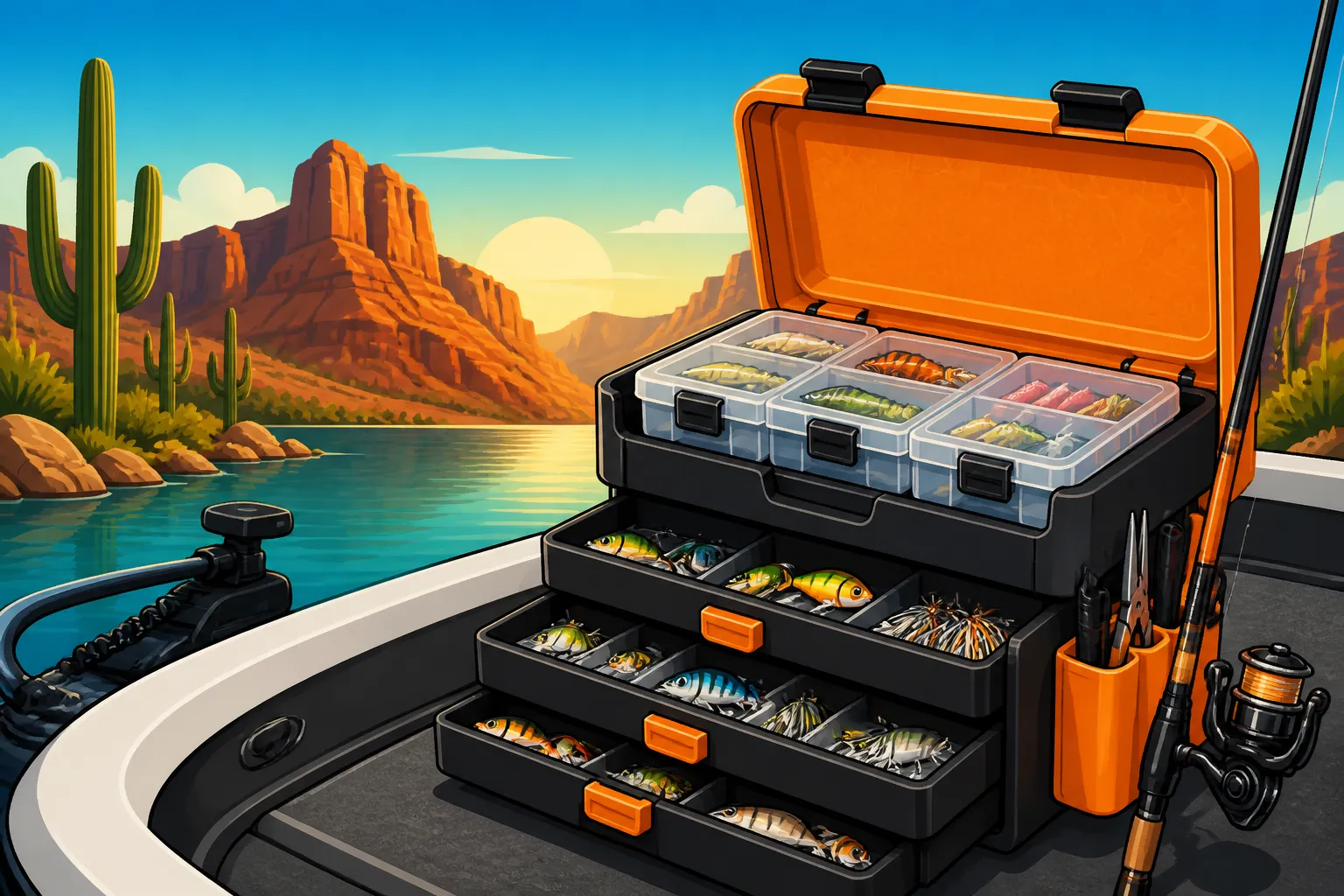
For many, the first image that comes to mind when thinking about tackle storage is the trusty tackle box. These come in a myriad of sizes and configurations, from hard plastic cantilever boxes that open up to reveal multiple trays, to soft-sided bags packed with modular utility boxes. Hard boxes offer great protection for delicate lures and can often withstand a bit more abuse, which is handy when things get bumpy out on the lake. They're also usually waterproof or at least highly water-resistant, a major plus for protecting expensive gear from unexpected splashes or rain.
Soft-sided tackle bags, on the other hand, often provide more flexibility. Many feature external pockets for pliers, leader lines, and other accessories, along with large central compartments designed to hold multiple clear plastic utility boxes (often called 3600 or 3700 series boxes). These clear boxes are fantastic for visible organization, allowing you to quickly grab the one with your Best Lures for Largemouth Bass in Arizona Lakes without rummaging. Brands like Bass Pro Shops offer a wide selection of both hard and soft tackle storage solutions, perfect for various needs and budgets. The portability of these options is also a huge benefit – you can easily transfer your gear from your boat to your truck, or even just take a single box for a quick shore fishing trip.
Built-In Boat Storage Solutions
Many fishing boats, especially those designed for serious angling on larger bodies of water like Lake Havasu or the Colorado River, come equipped with built-in tackle storage. These often include dedicated compartments under seats, within consoles, or in the deck itself. These integrated solutions are generally excellent for maximizing space and keeping gear out of the way. Rod lockers, for instance, keep your rods protected and prevent them from becoming tangled or damaged during transit. Some boats feature specialized drawers or bins designed to hold standard utility boxes, providing a seamless and secure storage system.
While built-in storage is incredibly convenient and often quite robust, it does have its limitations. You're generally stuck with the size and layout the manufacturer decided on, which might not perfectly align with your personal tackle collection. Modifying these can be a big project, so it's important to consider how your gear will fit into these fixed spaces. However, for sheer security and keeping your deck clear, built-in options are hard to beat. They ensure your gear stays put, even during rough water or high-speed runs, which is crucial for both safety and preventing damage.
Specialized Marine Tackle Organizers
Beyond the traditional and built-in options, there's a whole world of specialized marine tackle organizers designed specifically for boat environments. These include things like rod holders that mount to your boat's railings or gunwales, specialized plier and tool holders that keep essential items within arm's reach, and even magnetic strips or suction cup mounts for frequently used lures. Vertical tackle storage systems, which hold utility boxes upright, can be a game-changer for smaller boats or limited spaces, keeping things neat and accessible.
You'll also find specialty caddies for soft plastics, leader spools, or even drink holders that double as lure storage. Many of these items are made from marine-grade materials, meaning they're designed to withstand the harsh conditions of sun, water, and salt (if you happen to be fishing on sections of the Colorado River with higher salinity). Companies like Bass Pro Shops and retailers on Amazon carry a vast array of these specialized products. They might seem like small additions, but these specialized organizers can significantly improve the functionality and efficiency of your boat's overall tackle storage system, making every piece of gear easier to find and use.
Key Features to Look for in Boat Tackle Storage
Choosing the right tackle storage for your boat isn't just about picking something that looks good. It's about investing in solutions that will stand up to the rigors of Arizona's outdoor environment and genuinely make your fishing experience better. When you're sifting through options, whether online or at a local tackle shop, keep these critical features in mind.
Durability and Water Resistance
Arizona's lakes and rivers, while beautiful, can be tough on gear. Intense sun, dust, and unexpected splashes demand robust tackle storage. Look for products made from heavy-duty, marine-grade plastics, thick nylon, or other materials designed to resist UV damage and endure bumps and scrapes. Zippers should be corrosion-resistant, ideally plastic or marine-grade stainless steel. Water resistance is paramount. Even if your boat has a bimini top, gear can still get wet from spray, rain, or simply being placed on a damp deck. Truly waterproof containers, with O-ring seals or robust latching systems, are a wise investment for protecting sensitive items like electronics, spare reels, or even specific lures that are prone to rust. Think about the conditions on a windy day at Lake Powell, for instance; you'll appreciate knowing your tackle is safe and dry.
Accessibility and Organization
What's the point of storage if you can't easily get to your gear? Accessibility means thoughtful design. This includes features like clear lids on utility boxes so you can identify contents without opening every single one. Quick-release latches, ergonomic handles, and non-slip bottoms are also important. For bags, look for well-placed external pockets for quick-grab items like Best Pliers and Tools for Anglers or a small first-aid kit. Internally, adjustable dividers in utility boxes are crucial for customizing compartments to fit different lure sizes and types. Having specific boxes dedicated to Best Baits and Lures for Arizona Fishing or certain types of terminal tackle makes switching gears effortless. The goal is to minimize rummaging and maximize time with your line in the water, especially when targeting active fish.
Portability and Versatility
While some storage might be permanently mounted in your boat, much of your tackle will need to be moved. Portability is key for bringing your gear to and from the boat, or even for transferring essentials to a smaller craft like a kayak or shore-fishing setup. Look for comfortable carrying handles, shoulder straps on bags, and designs that are easy to lift and stow. Versatility means the storage can adapt to different situations. A modular system of utility boxes, for example, allows you to take just what you need for a specific trip – maybe one box for trout, another for bass – without hauling your entire collection. Some boat-mounted systems are designed to be removable, offering the best of both worlds: secure on the boat, yet portable when needed. This is particularly useful if you fish a variety of locations, from the Salt River Arizona Fishing Guide to a small community lake.
| Storage Type | Pros | Cons | Ideal For |
|---|---|---|---|
| Hard Tackle Boxes | Highly durable, often waterproof, good protection for contents | Can be bulky, fixed compartments, may not fit odd-shaped gear | Anglers needing maximum protection, minimal fuss, less customization |
| Soft Tackle Bags | Flexible, many pockets, great for modular utility boxes, portable | Less protection from crushing, may not be fully waterproof | Anglers with diverse tackle, those who value portability & quick access |
| Built-In Boat Storage | Maximizes space, keeps deck clear, secure, seamless integration | Fixed size/layout, can be hard to modify, often boat-specific | Dedicated boat owners, minimalist deck preference, long trips |
| Specialized Organizers | Keeps specific tools/lures accessible, highly customizable | Can add up in cost, may require mounting, often single-purpose | Enhancing existing storage, specific needs (e.g., rod holders) |
Tailoring Storage to Your Arizona Fishing Style
Arizona is a state of diverse fishing opportunities, from the high mountain lakes teeming with trout to the vast desert reservoirs holding trophy bass and stripers. Your tackle storage should reflect not just what you fish for, but how you fish for it. A fly angler on Oak Creek will have very different needs than a bass angler chasing giants on Lake Roosevelt.
Storage for Bass and Striped Bass Enthusiasts
If you're primarily a bass or striped bass angler on lakes like Lake Powell or Lake Pleasant, your tackle collection is likely extensive and varied. These fisheries often demand a wide array of lures: crankbaits, spinnerbaits, jigs, topwaters, and soft plastics. The key here is quick access and high capacity. Look for large tackle bags that can hold numerous 3700-series utility boxes, each dedicated to a specific lure type or color. Many bass boats are already set up with long, under-deck rod lockers for your Best Fishing Rods for Bass in Arizona and ample compartments for these boxes. Vertical storage racks for utility boxes are also fantastic, allowing you to flip through your collection like a filing cabinet rather than stacking and unstacking. Consider specialized soft plastic binders or worm wallets to keep your plastics organized and prevent them from melting or reacting with other baits in hot Arizona weather. Remember, bass and striper fishing often involves rapid lure changes to match conditions, so speed and visibility of your options are paramount.
Solutions for Trout and Panfish Anglers
Trout and panfish fishing, especially in Arizona's cooler mountain streams or community fishing program lakes, often requires a more compact and precise approach. Anglers targeting rainbow trout or bluegill might carry smaller, more delicate lures, a variety of small hooks, and often live bait. For these situations, smaller, more compartmentalized tackle boxes are ideal. Think about fly boxes with magnetic inserts for tiny flies, or small utility boxes with very fine dividers for micro jigs, split shots, and bobbers. You won't need the massive capacity of a bass boat setup.
For those wading streams or bank fishing, a small, portable tackle box or a compact fishing backpack (with a single utility box or two) is perfect. Keeping your essential trout gear like small spoons, spinners, and PowerBait organized in a readily accessible, grab-and-go container ensures you're always ready, whether you're at Big Lake or a local urban pond. A compact solution also makes it easier to navigate tricky terrain or walk along crowded shorelines, as you can see when reading up on Best Shore Fishing Spots in Arizona.
Maximizing Space in Smaller Boats and Kayaks
Fishing from a kayak or a smaller jon boat presents unique storage challenges: limited space and the need for everything to be secure and out of the way. Here, vertical and overhead storage becomes your best friend. Rail-mounted rod holders are a must to keep rods from cluttering the deck. Consider waterproof dry bags or hard cases that can be strapped down or bungee-corded securely to prevent gear from shifting or going overboard. A kayak crate, often made from PVC or a milk crate with modifications, is an excellent way to consolidate multiple utility boxes, a small cooler, and other essentials into one secure, accessible unit. Many come with built-in rod holders as well.
Compact tackle bags with shoulder straps are also fantastic for kayak fishing, as they can be easily stowed behind the seat or between your legs. Magnetic tool holders can keep pliers and line cutters within easy reach without taking up precious deck space. The key is to think vertically and to ensure every item has a designated, secure spot. Less clutter means more room to maneuver, safer casting, and a much more enjoyable experience on lakes like Canyon Lake or Saguaro Lake from your paddle craft.
Maintenance and Long-Term Care for Your Tackle Storage
You've invested time and money in your fishing gear, and that includes your tackle storage. But even the best boxes and bags won't last if they're not properly maintained, especially in Arizona's harsh environment. Proper care not only extends the life of your storage but, more importantly, protects the expensive tackle it holds from rust, corrosion, and deterioration.
Preventing Rust and Moisture Damage
Moisture is the archenemy of fishing tackle, particularly hooks, lures with metal components, and pliers. After every trip, especially if you've been in wet conditions or had lures in the water, it's crucial to address potential moisture. Never store wet lures directly in a closed tackle box. Take them out, rinse them if they've been in silty water, and allow them to air dry completely before returning them to their compartments. Consider using desiccant packets (like silica gel) inside your tackle boxes, particularly in humid months or if you store your boat outdoors. These absorb moisture and can significantly reduce the risk of rust.
For metal tools like pliers or cutters, a light coat of a corrosion-inhibiting spray or oil (like a marine-grade lubricant) can work wonders. Even "waterproof" tackle boxes aren't foolproof; seals can degrade over time, and a small amount of moisture can still find its way in. Regularly check seals and latches on your hard cases. This proactive approach will save you countless dollars in replacing rusted hooks and corroded lures, especially after a Monsoon Season Fishing Guide outing where everything gets a good soaking.
Regular Cleaning and Inspection
Just like your boat and fishing rods, your tackle storage needs regular cleaning. Dirt, sand, bait residue, and fish slime can build up inside and out. For hard boxes, a simple wipe down with a damp cloth and mild soap can keep them looking good and hygienic. For soft bags, follow the manufacturer's instructions, but often a gentle hand wash and air dry is sufficient. Pay attention to zippers, as sand and salt can jam them up quickly. A small brush and some silicone spray can keep zippers running smoothly.
Beyond cleaning, make it a habit to inspect your storage. Look for cracks in plastic boxes, tears in fabric bags, or any signs of wear on latches and straps. Damaged components compromise the integrity of your storage, potentially leading to lost gear or inadequate protection. Addressing minor issues quickly, like patching a small tear or replacing a worn strap, can prevent bigger problems down the line. This routine check is also a good opportunity to declutter any unnecessary items that have accumulated.
Maximizing the Lifespan of Your Gear
The life of your tackle storage is directly linked to the life of your actual tackle. By keeping your storage well-maintained, you're investing in the longevity of your entire fishing arsenal. Proper organization, as we've discussed, prevents damage from tangled lines and hooks. Ensuring lures are dry before storage prevents rust from spreading from one lure to another. Store your tackle boxes and bags in a cool, dry place when not in use, away from direct sunlight, which can degrade plastics and fabrics over time.
For longer-term storage, especially during the off-season for specific species, consider consolidating gear and ensuring everything is meticulously cleaned and protected. Some anglers even remove sensitive items like expensive reels or electronics from the boat for dedicated indoor storage. By treating your tackle storage as an integral part of your valuable fishing equipment – and not just a container – you'll find that your hooks stay sharper, your lures retain their finish, and your overall investment in the sport pays off for many seasons to come.
DIY Solutions and Creative Hacks for Boat Tackle Storage
Sometimes, the best solution isn't found on a store shelf but comes from a little ingenuity and a lot of resourcefulness. Whether you're on a tight budget, have a unique boat layout, or just love a good project, there are plenty of DIY hacks and creative solutions to optimize your boat tackle storage. These ideas can range from simple repurposing to more involved customizations, ensuring your gear is always where you need it on the water.
Repurposing Household Items for Organization
Before you rush out to buy specialized marine organizers, take a look around your house. You might be surprised what everyday items can be repurposed for effective tackle storage. For instance, clear plastic shoe boxes or storage bins with lids can make excellent waterproof containers for soft plastics, spare line, or even smaller utility boxes. They often stack neatly and are easy to see through. Old spice racks or silverware organizers can be mounted on a boat wall or inside a compartment to hold pliers, knives, and other small tools. Velcro strips can be used to secure items like sunscreen or bug spray to the inside of a boat console or cooler, keeping them accessible but out of the way.
Even something as simple as a mesh laundry bag can be repurposed as a quick-drying lure holder for wet baits after a day of fishing, allowing them to air out before proper storage. Think creatively about how items designed for one purpose might serve another on your boat. This approach can be incredibly cost-effective and allow you to tailor solutions precisely to the specific needs of your boat and tackle collection.
Customizing Existing Boat Compartments
Many boats come with built-in compartments that, while useful, might not be perfectly optimized for fishing tackle. This is where customization comes in. Consider adding modular shelving units or dividers to larger, open compartments. You can use marine-grade plywood, plastic sheets, or even heavy-duty foam board to create custom slots for your utility boxes, ensuring they stay put even in choppy water. Tension rods, often used in closets or showers, can be installed horizontally to create temporary barriers or hangers for things like leader spools or small nets.
Another great hack is to line the bottom of compartments with non-slip matting. This prevents tackle boxes from sliding around and reduces noise, which can be crucial when trying to stay stealthy while chasing Smallmouth Bass Fishing Guide for Arizona. For deep, open compartments, consider adding pull-out drawers or trays that sit on glides, allowing you to access items at the back without having to remove everything from the front. Even simple additions like a series of bungee cords stretched across an opening can secure a stack of tackle boxes.
Simple Add-Ons for Enhanced Functionality
Beyond major overhauls, there are many small, easy-to-install add-ons that can significantly enhance your boat's tackle storage functionality. Self-adhesive tool clips or magnetic strips are fantastic for keeping frequently used items like scissors, pliers, or even small jigs within arm's reach on a console or gunwale. Rod holders that mount to railings or even suction cup versions can be added to increase your rod capacity and keep your rods organized. Cup holders with built-in slots for lures or small items are also a clever way to maximize space.
For soft plastic bags, consider using small spring clamps or binder clips to hang them from a rail or line, preventing them from getting crushed or lost in a pile. Many anglers also utilize small, waterproof dry boxes, available at stores or online retailers like Amazon, to hold essential personal items like keys, wallets, or phones, keeping them safe and dry while freeing up tackle space. These seemingly minor additions can collectively make a huge difference in the overall organization and efficiency of your boat's tackle storage, making every fishing trip smoother and more enjoyable.
Disclaimer
This article is for general informational purposes only and does not constitute professional advice. Laws, prices and regulations vary by location and change over time. Consult a qualified professional for guidance on your specific situation.