Best Sun Protection for Desert Fishing
Oh, the Arizona sun! It's a beautiful thing when you're out on the water, feeling that warmth on your skin, but anyone who's spent a long day fishing our desert lakes knows just how brutal it can be. The relentless glare and intense heat can quickly turn a peaceful day into a miserable, and even dangerous, experience. This guide is all about equipping you with the knowledge and gear to protect yourself from the sun's harsh realities, ensuring your next fishing trip is enjoyable, safe, and free from the dreaded sunburn and heat exhaustion.
Understanding the Arizona Sun: Why Protection Isn't Optional
When you're out on an Arizona lake, it's easy to get caught up in the thrill of the chase – watching your line, feeling that tug, enjoying the peace and quiet. But the desert sun, especially when reflecting off the water, is a silent adversary that demands respect. Ignoring its power isn't just uncomfortable; it's genuinely risky for your health.
The Intensity of Desert UV Rays
Arizona is known for its abundant sunshine, and while that's part of its charm, it also means higher levels of ultraviolet (UV) radiation. UV rays come in two main forms that impact us: UV-A and UV-B. UV-A rays contribute to skin aging and wrinkles, while UV-B rays are the primary cause of sunburn and increase your risk of skin cancer. Out on the water, this intensity is compounded. Not only are you exposed to direct sunlight from above, but the water's surface acts like a mirror, reflecting a significant amount of those UV rays right back at you from below. This double whammy means you're absorbing radiation from multiple angles, often without realizing it until it's too late.
Consider a typical summer day on Lake Pleasant or Roosevelt Lake. Even if there's a light breeze, the sun's energy is relentless. The higher altitude of many Arizona fishing spots also means less atmosphere to filter out those harmful rays, further increasing your exposure. Many anglers, myself included, have made the mistake of thinking a cloudy day offers sufficient protection, only to find themselves burnt to a crisp by the end of the afternoon. Those clouds merely diffuse the light; they don't block the UV radiation effectively. So, whether it's clear skies or a hazy day, comprehensive protection is always your best bet.
Common Sun-Related Ailments for Anglers
The immediate consequence of insufficient sun protection is often a nasty sunburn, which can range from mild redness to painful blistering, making it impossible to comfortably wear clothes or even sleep. But the risks extend far beyond just burnt skin. Dehydration is a constant threat in the arid Arizona climate, exacerbated by physical exertion and direct sun exposure. You can start feeling sluggish, dizzy, and even experience headaches, all signs that your body is struggling to cope. If unchecked, dehydration can spiral into heat exhaustion and, in severe cases, life-threatening heatstroke.
Beyond these immediate concerns, long-term exposure can lead to serious health issues. Repeated sunburns significantly increase your risk of various skin cancers, including melanoma. Your eyes are also incredibly vulnerable. Constant exposure to UV radiation without proper eye protection can contribute to cataracts, macular degeneration, and even temporary vision impairment, often referred to as "snow blindness" or "photokeratitis," which is incredibly painful. Imagine your perfect day of reeling in a trophy bass at Lake Havasu being cut short because you're battling a throbbing headache, dizzy spells, or intense eye pain. It's not just about comfort; it's about safeguarding your health and making sure you can keep enjoying those fishing adventures for years to come.
Essential Protective Clothing: Your First Line of Defense
When it comes to battling the Arizona sun, what you wear can make a monumental difference. Think of your clothing as your personal, portable shade, offering a consistent barrier against those relentless UV rays. Investing in specialized fishing apparel is one of the smartest decisions you can make for your comfort and long-term health.
Long-Sleeve UPF Shirts and Pants
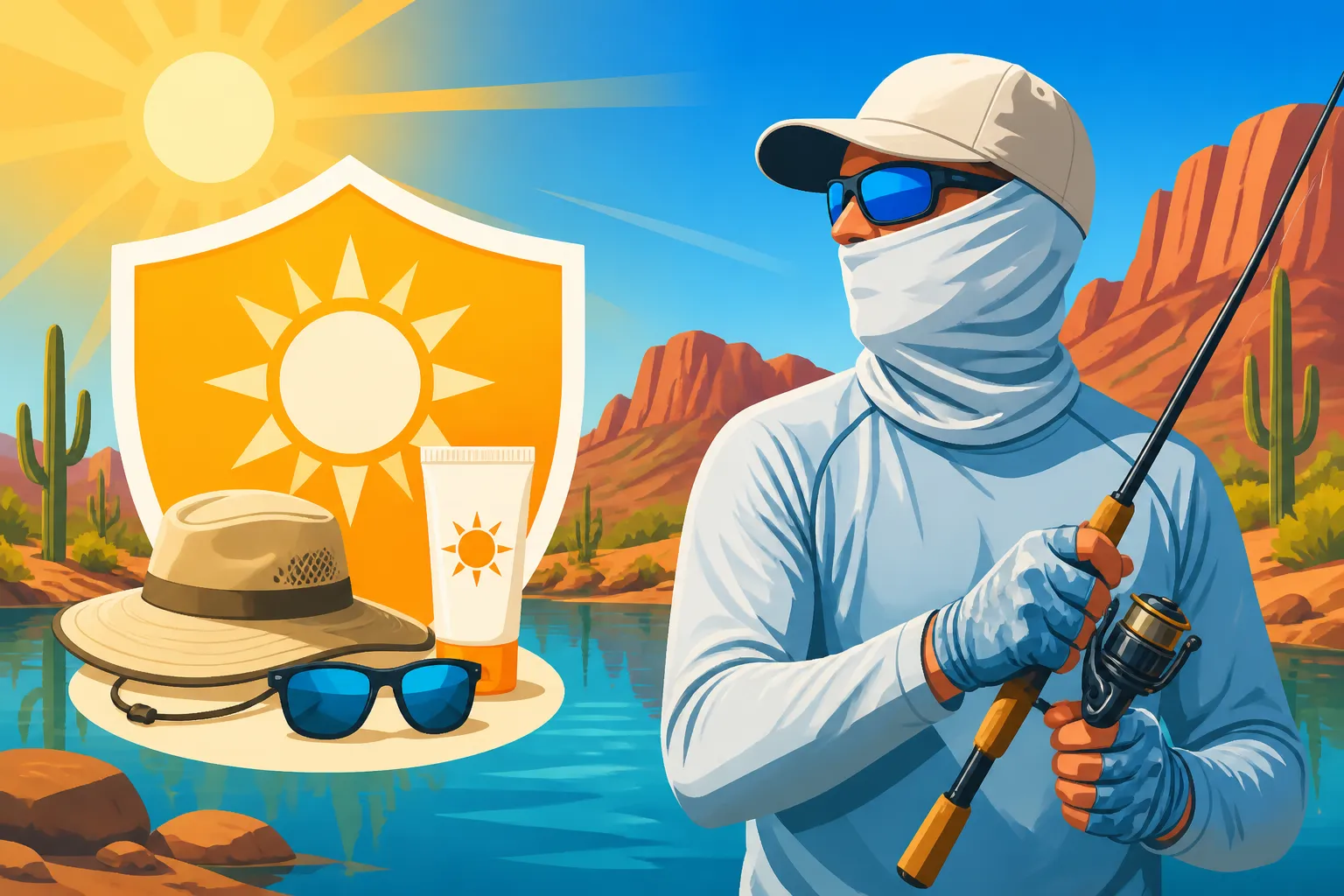
Forget the old cotton t-shirt for fishing; it simply doesn't cut it in the desert. The single most crucial piece of sun protection clothing is a long-sleeve shirt with a high Ultraviolet Protection Factor (UPF) rating. Unlike SPF, which measures a sunscreen's effectiveness against UV-B rays, UPF measures how much UV radiation a fabric blocks. A UPF 30 rating means the fabric allows only 1/30th (about 3.3%) of UV radiation to pass through, while UPF 50+ blocks virtually all of it, letting through less than 2%. Aim for UPF 30 or, even better, UPF 50+ for maximum defense.
These specialized shirts are typically made from lightweight, synthetic materials like polyester or nylon that are designed to wick moisture away from your skin, promoting evaporative cooling. Many come with built-in vents, often under the arms or across the back, to increase airflow and prevent you from overheating. While it might seem counterintuitive to wear long sleeves in hot weather, the right UPF fabric will actually keep you cooler by protecting your skin from direct sun exposure and allowing sweat to evaporate more efficiently. Paired with lightweight, breathable fishing pants or convertible trousers that also offer a high UPF rating, you'll have full arm and leg coverage, protecting those often-forgotten areas that can get seriously burnt. Brands like Columbia PFG, Huk, and Simms are popular choices among serious anglers, and you can find a huge selection of high-quality options at outdoor retailers like Bass Pro Shops, ensuring you get gear specifically designed for fishing conditions.
Wide-Brimmed Hats and Neck Gaiters
Your head, face, and neck are prime targets for the sun's harshest rays, and they often get overlooked or inadequately protected. A simple baseball cap leaves your ears and neck exposed, leading to painful burns that can really spoil a trip. Instead, opt for a wide-brimmed hat, such as a boonie hat or a dedicated fishing hat, that provides 360-degree coverage. Look for hats with a brim that's at least three to four inches wide all the way around to shield your face, ears, and the back of your neck. Many fishing hats also come with a drawstring to keep them secure in windy conditions, which is a common occurrence on larger lakes like Lake Powell.
Complementing your wide-brimmed hat with a neck gaiter (also sometimes called a buff or fishing mask) provides an impenetrable barrier for your face and neck. These versatile pieces of fabric can be pulled up to cover your nose, mouth, and ears, protecting those sensitive areas from direct sun exposure and the reflective glare off the water. They're also excellent for keeping dust and wind off your face. On a scorching summer day, dipping your gaiter in the lake water before putting it on can provide a wonderful, evaporative cooling effect that offers immense relief. You'll thank yourself for this combination when you finish a long day of fishing without the tell-tale lobster red face and ears that scream "I spent too much time in the sun!"
Fishing Gloves and Footwear
It’s easy to forget about your hands and feet when you’re geared up for a day on the lake, but these are incredibly vulnerable areas that often pay the price for neglect. Your hands are constantly exposed to the sun as you cast, retrieve, and handle fish. The tops of your hands, in particular, can accumulate significant sun damage over time. That’s where a good pair of fishing gloves comes in. You can choose fingerless gloves, which offer excellent dexterity for tying knots and handling tackle while protecting the backs of your hands, or full-finger versions for complete coverage, especially if you have sensitive skin or spend truly extended hours under the intense sun. Many fishing gloves are also designed with extra padding in key areas to prevent blisters and improve grip, which is a nice bonus.
For your feet, while many anglers enjoy the freedom of sandals or flip-flops, prolonged exposure on a boat deck or sandy shore can lead to severe sunburn. Plus, the hot surfaces themselves can be uncomfortable. Closed-toe shoes, preferably with good ventilation and a sturdy, non-slip sole, are highly recommended. Water shoes, hiking sandals that offer more coverage, or lightweight sneakers are all good choices. They protect your feet from UV rays, hot surfaces, and also provide better protection against hooks, sharp rocks, or unexpected slips on wet boat ramps or slippery banks. Think about it: a painful burn on the top of your foot or between your toes can make walking, or even standing, a real ordeal, detracting significantly from your overall enjoyment of the trip. Ensure all your primary gear is ready by checking your Fishing Gear Checklist for Desert Lakes before you head out.
| Feature | UPF Fishing Shirt (e.g., Polyester/Nylon) | Regular Cotton T-Shirt |
|---|---|---|
| Sun Protection | High UPF rating (30-50+), blocks 97-98%+ of UV rays | Low UPF (typically 5-7), blocks only 80-86% of UV rays |
| Moisture Mgt. | Wicks sweat away, quick-drying, promotes evaporative cooling | Absorbs sweat, stays wet, can feel heavy and clammy |
| Comfort | Lightweight, breathable, often vented, feels cool and dry | Can feel heavy when wet, less breathable, can chafe |
| Durability | Designed for outdoor use, often resistant to snags and fading | Prone to fading, less durable in outdoor environments |
| Maintenance | Easy to wash and dry, typically wrinkle-resistant | Can wrinkle, may require more care |
Topical Protection: Creams, Balms, and Sprays
While clothing provides an excellent physical barrier, there are always those exposed areas: your face, ears, neck (if not fully covered by a gaiter), and the tops of your hands and feet. This is where sunscreen becomes your essential backup, working in conjunction with your clothing to create a full shield against the sun.
Choosing the Right Sunscreen for Anglers
Selecting the right sunscreen for fishing isn't just about grabbing the first bottle you see. For anglers, two factors are paramount: high SPF and water resistance. You'll want a sunscreen with an SPF (Sun Protection Factor) of at least 30, though SPF 50 or higher offers even better protection. SPF primarily measures protection against UV-B rays, so also look for "broad-spectrum" on the label, which indicates it protects against both UV-A and UV-B. This dual protection is critical for preventing both sunburn and long-term skin damage.
However, the real game-changer for fishing is water resistance. You'll be sweating, getting splashed by the water, and possibly even taking a quick dip to cool off. A standard sunscreen will simply wash away, leaving you vulnerable. Look for sunscreens labeled "water resistant" for 40 minutes or "very water resistant" for 80 minutes. These formulas are designed to adhere to your skin longer through sweat and water exposure. Apply a generous amount to all exposed skin at least 15-30 minutes before heading out, allowing it to properly absorb and create a protective layer. Don't forget often-missed spots like the tops of your ears, your hairline, the back of your neck, and the delicate skin around your eyes. Reapply every two hours, or more frequently if you're sweating heavily or getting wet often. You can find a huge variety of water-resistant, broad-spectrum sunscreens from trusted brands on platforms like Amazon, making it easy to stock up before your next trip.
Lip Balm and Specialized Sunscreens for Sensitive Areas
The skin on your lips is incredibly thin and vulnerable, making them highly susceptible to sunburn and chapping. Anyone who's experienced severely sun-chapped lips after a day on the water knows it's an uncomfortable, even painful, ordeal. Always carry a lip balm with SPF 15 or higher and reapply it regularly throughout the day. Many fishing-specific lip balms also offer moisturizing properties to combat the drying effects of the desert air and wind.
Beyond your lips, there are other sensitive areas on your face that require special attention. The bridge of your nose, the tops of your cheekbones, and around your eye sockets are areas where the skin is often thinner and more prone to burning. Consider using a dedicated sunscreen stick for these spots. These sticks offer targeted application, are less messy than creams, and often provide higher SPF protection in a concentrated form. They're also great for reapplying quickly without getting sunscreen all over your hands. Protecting these areas not only prevents discomfort but also helps reduce the risk of sun damage over time.
Eye Protection: Don't Forget Your Peepers
Your eyes are incredibly delicate and deserve just as much, if not more, protection than your skin when you're out on the dazzling Arizona waters. The combination of direct sunlight and reflective glare from the water can cause significant damage, both short-term and long-term, if you're not properly equipped.
The Crucial Role of Polarized Sunglasses
When it comes to eye protection for fishing, polarized sunglasses are not just a luxury; they are an absolute necessity. Their primary function is to eliminate glare, which dramatically reduces eye strain. Imagine trying to see structure or cruising fish under the surface when the sun is bouncing off the water directly into your eyes – it’s impossible and incredibly fatiguing. Polarized lenses are specifically designed to block horizontal light waves that cause glare, allowing you to see into the water instead of just seeing the reflection on the water. This not only enhances your fishing experience by helping you spot fish or underwater features, but it also significantly improves safety on the boat by making it easier to navigate.
Beyond glare reduction, truly effective fishing sunglasses offer 100% protection against both UVA and UVB rays. This is non-negotiable. Look for lenses that wrap around the sides of your eyes, blocking any peripheral light leakage that can sneak in. While darker lenses might seem more protective, it's the UV rating that truly matters, not just the tint. Common lens colors like gray are excellent for bright, sunny conditions as they provide true color perception. Amber or copper lenses enhance contrast, which can be beneficial in lower light or overcast conditions, helping you differentiate targets from background clutter. Investing in a quality pair of polarized sunglasses is one of the best investments an angler can make for their vision and comfort. For more specific recommendations, check out Best Sunglasses for Sight Fishing.
Preventing Eye Strain and Long-Term Damage
Think about how much you squint on a bright day without proper eyewear. That constant strain causes headaches, fatigue, and can even blur your vision after a few hours on the water. Beyond the immediate discomfort, prolonged and unprotected exposure to UV radiation is a significant risk factor for several serious eye conditions. These include cataracts, a clouding of the eye's natural lens that impairs vision, and macular degeneration, which can lead to irreversible central vision loss. Pterygium, often called "surfer's eye" or "angler's eye," is another common issue where a benign growth develops on the white part of the eye, potentially causing irritation and even obstructing vision.
Choosing cheap, non-UV-rated sunglasses is a false economy. They might dim the light, but if they don't block UV rays, your pupils actually dilate behind the dark lenses, allowing more harmful radiation to enter your eyes. This is why investing in reputable brands with clear UV certifications is so important. Make sure your fishing buddies and family members, especially children, are also equipped with appropriate eye protection. Leading by example ensures everyone on your trip enjoys the beautiful Arizona scenery without compromising their precious eyesight.
Hydration and Shade: The Internal and External Cool Down
Even with the best clothing and sunscreen, the Arizona desert demands an integrated approach to sun protection. It's not just about what you put on your skin or eyes; it's also about what you put into your body and how you manage your environment to beat the heat.
Staying Hydrated in the Desert Heat
In Arizona's dry climate, dehydration can creep up on you quickly and silently. By the time you feel thirsty, you're already starting to become dehydrated. When you're actively fishing, especially casting and reeling, your body is working, and you're sweating, even if you don't feel drenched due to the rapid evaporation. This constant fluid loss needs to be replenished diligently. Water is always your best choice. Aim to drink small amounts frequently throughout the day, rather than chugging a large bottle only when you feel parched.
Electrolyte-rich drinks can also be beneficial, particularly on exceptionally hot days or during extended trips, as they help replace salts and minerals lost through sweat. However, be wary of sugary sports drinks; opt for those with lower sugar content. Avoid excessive caffeine and definitely steer clear of alcohol while fishing in the heat, as both are diuretics and will accelerate dehydration. A good rule of thumb is to carry far more water than you think you'll need. Investing in a high-quality insulated cooler, like those from Yeti or RTIC, and durable water bottles will ensure your drinks stay refreshingly cold all day, making it more appealing to hydrate. Check out Best Coolers for Hot-Weather Fishing in Arizona for some top recommendations. For more extensive guidance on staying safe in the heat, refer to Heat Safety Tips for Summer Fishing in Arizona.
Utilizing Portable Shade Options
Sometimes, the best protection is simply not being in the sun. While natural shade can be scarce on most Arizona lakes, especially open desert reservoirs like Lake Pleasant, you can create your own. If you're fishing from a boat, a bimini top or a similar boat canopy is an invaluable accessory. It provides a large, shaded area where you can retreat to rehydrate, reapply sunscreen, or simply escape the direct sun for a while. Even a few minutes in the shade can help lower your core body temperature and provide much-needed relief.
For bank anglers, especially those targeting community ponds or river stretches like the Lower Salt River where natural shade might be limited, a portable fishing umbrella or a small pop-up canopy can be a lifesaver. These are relatively lightweight and easy to set up, offering a personal oasis of shade. Position it strategically to block the sun during peak hours, usually from 10 AM to 4 PM. If you're fishing a lake with canyons, like Apache Lake or Canyon Lake, pay attention to the sun's angle and plan your fishing spots to take advantage of the natural shadows cast by cliffs in the early morning or late afternoon. Every little bit of shade helps to reduce your overall sun exposure and prevent overheating, allowing you to extend your fishing time safely.
Practical Tips for a Sun-Safe Fishing Trip
Preparation is key for any successful fishing trip, and that goes double for sun protection in the Arizona desert. By incorporating a few smart habits into your routine, you can drastically reduce your risk of sun-related issues and maximize your enjoyment on the water.
Pre-Trip Planning and Packing
Before you even think about loading up the tackle box, take a few moments to plan your sun protection strategy. Start by checking the weather forecast, specifically looking at the predicted UV index for your fishing location. A UV index of 6 or higher signals a high risk of sun damage, and often in Arizona, it can soar into the very high or extreme categories. This information helps you decide just how vigilant you need to be.
Next, lay out all your sun protection gear. Don't just assume it's in your bag from last time. Ensure your UPF shirt and pants are clean and ready. Check that your wide-brimmed hat is accessible, your neck gaiter is packed, and your fishing gloves are accounted for. Critically, confirm you have enough broad-spectrum, water-resistant sunscreen with an SPF of 30 or higher, and that it hasn't expired. Same goes for your SPF lip balm. Pack extra bottles if you're going for an extended trip or with multiple people. A little bit of foresight can prevent a lot of pain and discomfort later. Remembering to include these items in your Essential Tackle Box Setup for Arizona Beginners will make sure you are always prepared.
On-Water Habits for Maximum Protection
Once you're out on the lake or river, consistency is the name of the game. Make sunscreen reapplication a non-negotiable routine. Set a reminder on your phone if you need to, but every two hours is a good baseline, more often if you're sweating profusely, getting wet, or have wiped off sunscreen with a towel. Don't forget those easily missed spots we talked about – ears, nose, neck, and the tops of your feet.
Whenever possible, seek out shade, even for short breaks. This could mean positioning your boat under a bluff, finding a tree on the shoreline, or simply pulling out your fishing umbrella. Taking a few minutes every hour or so to get out of direct sunlight can significantly reduce your overall UV exposure and help regulate your body temperature. And, of course, keep hydrating! Make drinking water a constant, low-level activity throughout the day. Don't wait until you're thirsty to grab a bottle. If you're fishing with others, encourage them to follow suit. Setting a good example, especially if you have kids or new anglers with you, helps everyone stay safe. Consider fishing during the cooler parts of the day, such as early mornings or late evenings, especially during the scorching summer months. You can find more details on ideal timing in Best Time of Day to Fish in Arizona Heat. By being mindful and proactive, you can ensure your Arizona fishing adventures are filled with tight lines and good memories, not sunburns and heat exhaustion.
Disclaimer
This article is for general informational purposes only and does not constitute professional advice. Laws, prices and regulations vary by location and change over time. Consult a qualified professional for guidance on your specific situation.