Essential Tackle Box Setup for Arizona Beginners
So, you're ready to dive into the wonderful world of fishing here in Arizona, but staring at the endless aisles of hooks, lures, and lines at the tackle shop feels like trying to decipher an ancient language? Believe me, you're not alone! It's incredibly easy to get overwhelmed by the sheer volume of choices out there, especially when you're just starting and not quite sure what you even need for our unique desert waters. This guide is going to cut through all that noise and walk you through building an essential tackle box setup specifically designed for beginners tackling Arizona's diverse and often challenging fishing environments.
Understanding Arizona's Diverse Fisheries for Your Tackle Box
Arizona isn't just cacti and scorching sun; it's a surprisingly diverse fishing landscape, from vast desert lakes to cool mountain streams. Before you even think about what goes into your tackle box, it’s helpful to understand the different types of water you might encounter and the primary species that call them home. This insight will prevent you from buying gear that's totally useless for your local hotspots and will help you make smarter choices from the get-go.
Desert Lakes: Bass and Panfish Dominance
When most people think of Arizona fishing, their minds probably go straight to our big desert reservoirs like Lake Pleasant, Roosevelt Lake, and Apache Lake. These are truly incredible fisheries, often holding impressive populations of largemouth and smallmouth bass, stripers, crappie, and various panfish. The key here is often dealing with clear water, submerged brush, rock structures, and, of course, that famous Arizona heat. Your tackle box for these waters needs to reflect these conditions.
You'll find that these lakes can range from incredibly deep canyons to shallow, brushy coves. Bass often relate to structure – anything from rock piles and ledges to submerged trees and brush. Knowing this helps you pick lures that can effectively work through these areas. Crappie tend to suspend around brush or deeper structures, while sunfish and other panfish are usually found in shallower, calmer waters, often near docks or vegetation. The diversity means your basic setup should be versatile, able to handle different depths and presentations. Don't worry, we'll get into the specific baits soon! For more detailed information, check out our guide on Best Bass Fishing Lakes in Arizona.
Mountain Lakes and Streams: The Realm of Trout
Head north or up into the White Mountains, and you'll find a completely different fishing experience. Here, cool, clear waters hold rainbow trout, brown trout, and sometimes even native Apache trout. Lakes like Big Lake, Woods Canyon Lake, and Show Low Lake are popular trout destinations, as are many smaller streams and rivers. This environment demands a more delicate approach compared to the heavy-hitting bass fishing down south.
Trout fishing often involves lighter lines, smaller hooks, and different baits or lures. The clear water means fish can be spooky, so stealth and finesse are often key. You might be casting small spinners in a stream or soaking power bait from the bank of a lake. While a lot of your general tackle will still apply, having a few specialized items for trout will make a huge difference. These cooler, higher-elevation waters offer a refreshing escape during the hot summer months, making them a fantastic option for a change of pace. If you're planning a trip, be sure to read Best Trout Fishing Spots in Arizona.
Community Fishing Program Ponds: Accessibility and Variety
A fantastic resource for beginners and families in Arizona is the Community Fishing Program. These are urban ponds and lakes, often in city parks, that are regularly stocked with catchable fish throughout the year. You'll find rainbow trout in the cooler months, and then channel catfish, sunfish, and sometimes even bass or tilapia when the weather warms up. These locations are super accessible and provide a low-pressure environment to practice your skills.
The beauty of community ponds is their simplicity. You don't need a boat, and often a single, versatile rod and a handful of basic baits and lures will do the trick. The fish here are usually eager to bite, making it perfect for kids and new anglers to experience success. The rules for these ponds can sometimes be a little different from larger lakes, so always check the signage or the Arizona Game and Fish Department (AZGFD) regulations booklet. Understanding these rules, including bag limits and bait restrictions, is crucial. Our article on Community Fishing Program Rules offers a comprehensive overview.
The Absolute Essentials: What Every Beginner Needs
Alright, let's get down to brass tacks. You've got an idea of where you might be fishing. Now, what absolutely has to be in that tackle box (or bag) before you even think about hitting the water? Think of these as your non-negotiables, the foundational pieces of gear that will allow you to actually cast a line and catch a fish.
Rod, Reel, and Line: Your Foundation
This is your primary connection to the fish, and for beginners, keeping it simple and versatile is the golden rule. You don't need a dozen different setups. A single, good quality spinning rod and reel combo is perfect to start.
A medium-light to medium action spinning rod, around 6 to 7 feet long, is incredibly versatile for Arizona fishing. It's sensitive enough for lighter trout bites but has enough backbone to handle a decent-sized bass or catfish. Pair this with a reliable spinning reel in the 2500 to 3000 size range. Many brands offer excellent combos that take the guesswork out of matching components. Places like Bass Pro Shops or even online retailers like Amazon have a huge selection, so you can easily compare options and read reviews. For instance, a good 6'6" medium-light spinning rod paired with a 2500 series reel gives you excellent flexibility. You can cast lighter lures and baits for trout or panfish, but also handle a spirited fight from a 3-pound bass without feeling undergunned. It's the "Swiss Army knife" of fishing setups. Need more guidance? Check out Best Fishing Rods for Bass in Arizona and Best Fishing Reels for Beginner Anglers in Arizona.
When it comes to line, for a beginner in Arizona, 6 to 10-pound test monofilament line is an excellent choice. Monofilament is forgiving, offers good knot strength, and is relatively inexpensive. The slightly heavier end of that range (8-10 lb) is great for desert lakes where you might encounter brush or larger fish, while 6-8 lb is better for the clearer, more finesse-oriented trout waters. You can always have two spools if you plan on doing a lot of both. Fluorocarbon leaders can be added later as you gain experience for extra stealth, but for now, mono is your friend. It's visible, which helps beginners detect bites, and it's easy to tie knots with.
Basic Terminal Tackle: Hooks, Sinkers, and Bobbers
This is the "nuts and bolts" of your tackle box. Terminal tackle refers to all the small items that connect your line to your bait or lure. Don't go overboard; a small selection will cover most situations.
- Hooks: For general Arizona fishing, a variety pack of baitholder hooks (sizes 6, 4, 2, 1, 1/0, 2/0) will serve you well. These have small barbs on the shank to help hold soft baits like worms or PowerBait. For community ponds and trout, you'll mainly use the smaller sizes (6, 4). For catfish or larger bass baits, you'll move into the larger sizes (1, 1/0, 2/0). Having both circle hooks and J-hooks is a good idea. Circle hooks are fantastic for beginners, especially for catch and release, as they usually hook fish in the corner of the mouth, minimizing harm. J-hooks are more versatile for a variety of baits.
- Sinkers: You'll need an assortment of split shot sinkers (small, medium, large) and a few egg sinkers or worm weights (1/8 oz to 1/2 oz). Split shot are easy to pinch onto your line to add a little weight to your bait, while egg sinkers are great for bottom fishing, especially for catfish, as the line can slide freely through them allowing the fish to take the bait without feeling resistance. Worm weights are ideal for Texas-rigging soft plastic baits for bass.
- Bobbers: Both clip-on bobbers and slip bobbers are useful. Clip-on bobbers are easy to attach for shallow water and panfish. Slip bobbers are fantastic for fishing at specific depths, especially in deeper waters or when suspending bait off the bottom, making them invaluable for crappie and deeper trout fishing. A small pack of each will get you started. These items are generally inexpensive and can be found in bulk at most sporting goods stores or through Amazon.
Essential Tools and Safety Items
Beyond the fishing-specific gear, there are a few general tools and safety items that are absolutely critical for a smooth, safe, and enjoyable fishing trip.
- Pliers: A good pair of needle-nose pliers or dedicated fishing pliers is a must-have. They help remove hooks from fish, cut line, crimp split shot, and generally fix things. Look for a pair with a line cutter built-in. This saves your teeth and your knife blade!
- Line Cutters: While pliers often have a cutter, a dedicated pair of small fishing shears or nail clippers can be even better for clean line cuts, especially with braided line if you ever graduate to it.
- Measuring Tape/Scale: Arizona has specific length and weight limits for many species. A small, retractable measuring tape or a simple fish ruler will help you comply with regulations. A portable scale is optional but fun for bragging rights!
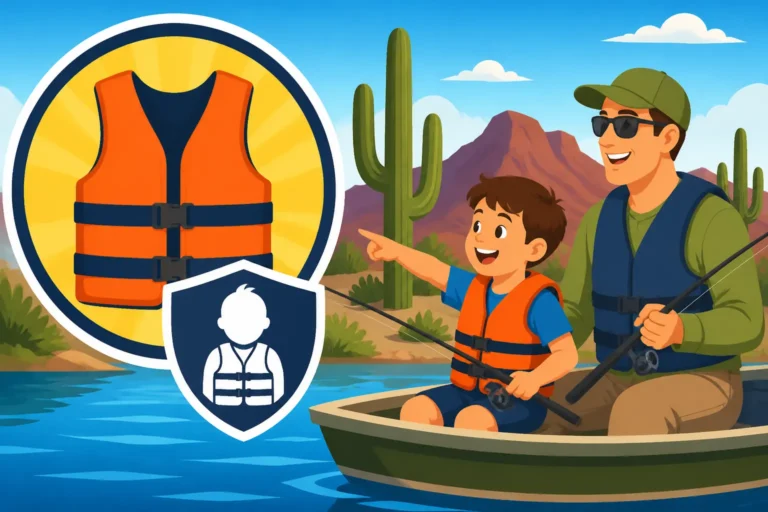
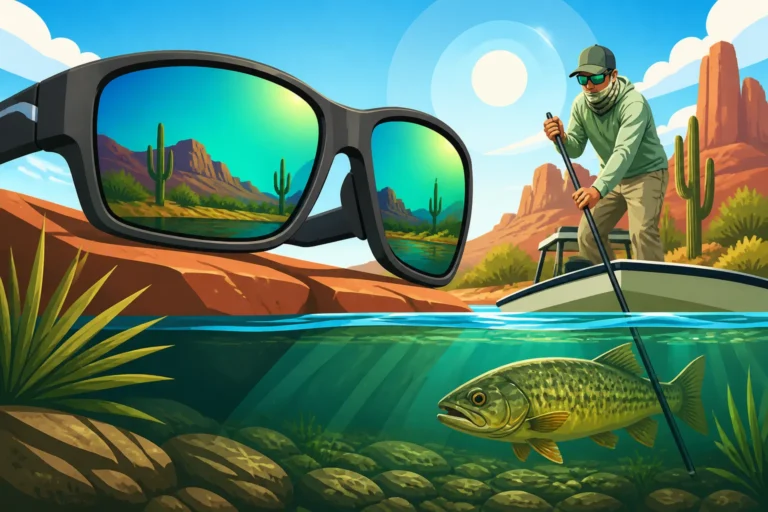
- Sun Protection: This is Arizona, folks! A wide-brimmed hat, sunglasses (polarized are best for seeing into the water), and sunscreen are not optional. Getting a bad sunburn can ruin your day and your week. Always apply generously, even on cloudy days. Check out our Heat Safety Tips for Summer Fishing in Arizona for more essential advice.
- First-Aid Kit: Accidents happen. A small first-aid kit with bandages, antiseptic wipes, and pain relievers is smart for any outdoor excursion. Hooks can get stuck in fingers, not just fish mouths.
- Water: Always bring more water than you think you'll need. Dehydration is a serious risk in Arizona, especially during warmer months. A reusable water bottle or a cooler filled with drinks will make your trip much more comfortable.
Lures and Baits for Arizona's Popular Species
Now for the exciting part – what do you actually use to catch fish? This section will guide you through some beginner-friendly lures and baits for the most common species you'll encounter in Arizona. Remember, presentation often matters more than the specific brand, especially when you're starting out.
Bass Fishing Fundamentals: Go-To Lures
Bass are one of the most popular sport fish in Arizona's desert lakes, and for good reason – they fight hard! While there are countless bass lures, a beginner's tackle box needs a few versatile options.
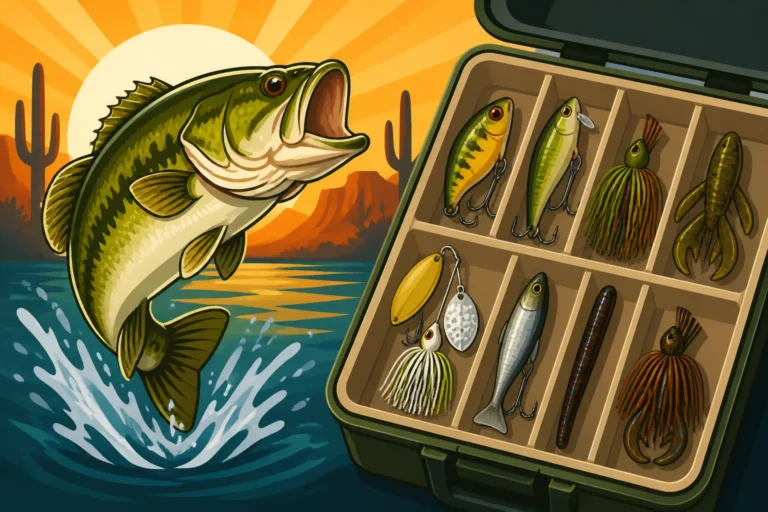
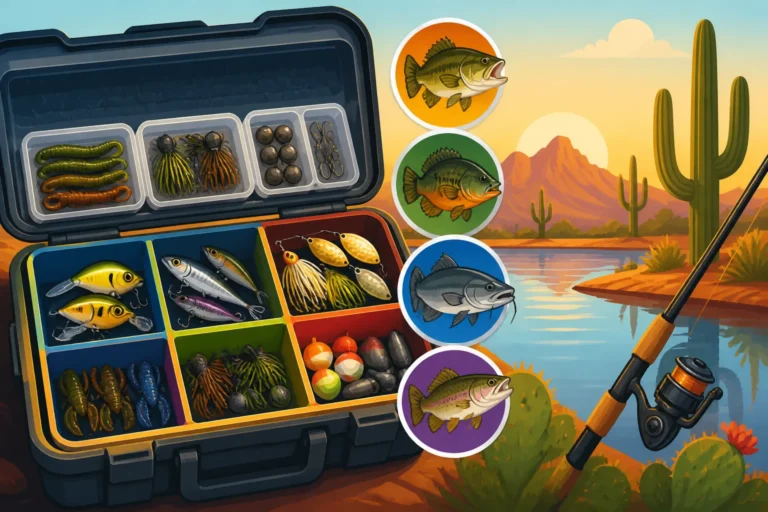
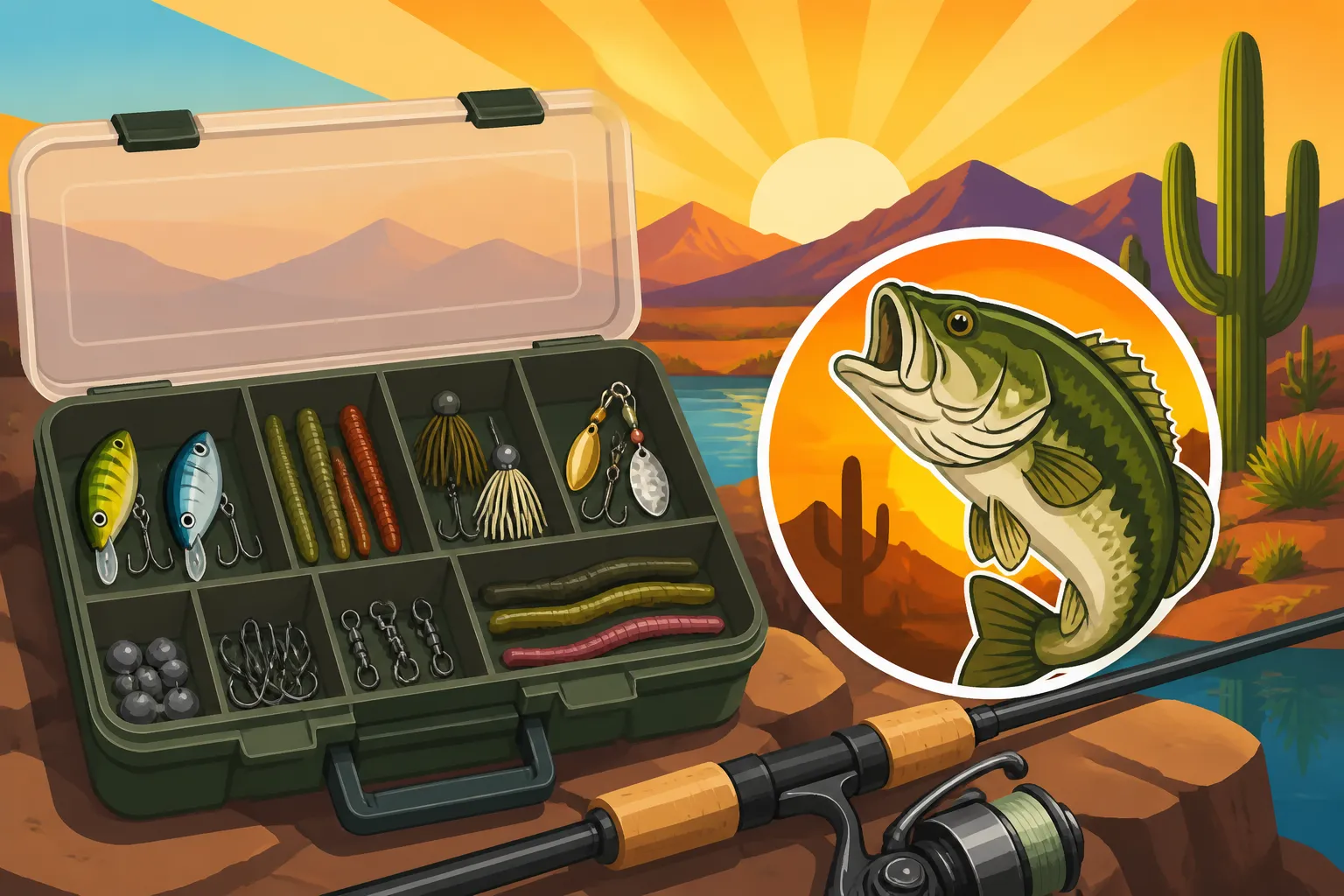
- Soft Plastics (Worms & Senkos): These are absolute bass magnets and incredibly forgiving for beginners. A pack of 5-7 inch plastic worms (like Berkley Power Worms or Gary Yamamoto Senkos) in natural colors (green pumpkin, watermelon red) is essential. Rig them Texas-style with a worm weight and an offset hook. This weedless setup can be cast into brushy areas and retrieved slowly, mimicking a worm or baitfish. The beauty of a Senko is its simple, natural fall; often, all you need to do is cast it out and let it sink slowly, and bass can't resist. You can buy these in various colors and sizes, but start with something natural. For a deeper dive, read Best Lures for Largemouth Bass in Arizona Lakes.
- Spinnerbaits: These are fantastic for covering water and for stained or cloudy conditions. A 1/4 or 3/8 ounce spinnerbait with a gold or silver blade (or a combination) and a white, chartreuse, or natural skirt is a great choice. Bass often strike out of aggression or curiosity. Cast them near submerged cover or along rocky banks and retrieve steadily. The flash and vibration can trigger strikes when other lures fail, especially in Arizona's wind-chopped lakes.
- Crankbaits: A medium-diving crankbait (one that dives 5-10 feet) in a shad or crawfish pattern is another excellent choice. Cast it out and retrieve it at a steady pace, letting it bounce off rocks or wood. The erratic deflections often trigger reaction strikes from bass. Start with one or two reliable colors. These are great for exploring different depths and finding active fish.
Trout Tactics: Baits and Small Lures
Trout in Arizona's mountain lakes and urban ponds are often stocked, making them relatively easy to catch. Your approach will be different from bass fishing.
- PowerBait and Worms: The go-to bait for stocked trout is often PowerBait (the dough-like variety) in bright colors like chartreuse, orange, or rainbow. Mold a small ball onto a #10 or #12 treble hook or a small baitholder hook, add a small split shot or egg sinker a foot or two up the line, and let it float or sink. It's incredibly effective. Live worms (nightcrawlers or mealworms) are also fantastic, either fished under a bobber or on the bottom. These simple, natural presentations are very hard for trout to resist.
- Small Spinners: For actively feeding trout in streams or lakes, a small (1/16 oz to 1/8 oz) inline spinner like a Rooster Tail or Mepps is incredibly effective. Cast it across or upstream and retrieve steadily. The flash and vibration imitate a small baitfish or insect. Silver and gold blades with white, black, or red dressings are usually good starting points.
- Marshmallows/Corn: For community fishing lakes, believe it or not, sometimes simple baits like mini marshmallows or even canned corn can entice trout and panfish. These are often used in combination with PowerBait or worms. It's inexpensive and surprisingly effective!
Catfish and Panfish Favorites
Arizona's lakes and ponds are also home to healthy populations of catfish (channel and flathead) and various panfish (bluegill, sunfish, crappie). These are great targets for beginners, often offering consistent action.
- Catfish Baits: Channel catfish are scavengers and love smelly baits. Prepared stink baits, cut bait (like anchovies or hot dogs), or a simple nightcrawler will often do the trick. Fish these on the bottom with an egg sinker and a 1/0 to 3/0 circle hook. For flathead catfish, live bait like small bluegill or carp is often preferred, but that's a bit more advanced for a beginner's initial setup. Our guide on Best Bait for Catfish in Arizona has more detail.
- Panfish Baits: For bluegill, sunfish, and small crappie, tiny pieces of nightcrawler, mealworms, wax worms, or even small bits of hot dog fished under a small bobber are usually irresistible. Use very small hooks (size 8 to 12). These are often the easiest fish for kids to catch, providing constant entertainment.
- Crappie Jigs: While nightcrawlers work for crappie, a small crappie jig (1/16 oz to 1/8 oz) with a plastic body (tube jig, grub) is a fantastic option. Colors like chartreuse, white, or black are often productive. Fish them under a bobber or slowly retrieved near submerged brush and structures.
Here’s a quick summary table of beginner-friendly tackle for different species:
| Species | Primary Baits/Lures | Hooks (Size) | Sinkers | Bobbers | Retrieval/Presentation |
|---|---|---|---|---|---|
| Largemouth/Smallmouth Bass | Plastic worms/Senkos, Spinnerbaits, Crankbaits | Offset worms (2/0-3/0), J-hooks (1/0-2/0) | Worm weights (1/8-1/2 oz) | N/A (mostly direct contact) | Slow retrieve (plastics), steady retrieve (spinners/crankbaits) |
| Rainbow Trout | PowerBait, Nightcrawlers, Small Spinners | Treble (10-12), Baitholder (8-6) | Split shot, Egg sinkers (1/8-1/4 oz) | Slip, Clip-on | Still fishing (bait), steady retrieve (spinners) |
| Channel Catfish | Stink bait, Cut bait, Nightcrawlers | Circle (1/0-3/0) | Egg sinkers (1/4-1 oz) | N/A (bottom fishing) | Still fishing on the bottom |
| Panfish (Bluegill, Sunfish) | Small worms, Mealworms, Marshmallows | Baitholder (10-8) | Small split shot | Small clip-on | Still fishing under a bobber |
| Crappie | Small jigs, Minnows, Small worms | Jig hooks (1/16-1/8 oz), Baitholder (6-4) | Split shot | Small slip, Clip-on | Slow retrieve/jigging (jigs), still fishing (bait) |
Organizing Your Tackle Box: More Than Just Storage
Having all the right gear is one thing; being able to find it quickly and keep it in good condition is another. A well-organized tackle box or bag can save you immense frustration on the water and extend the life of your gear, especially in Arizona's often dusty and hot conditions.
Choosing the Right Tackle Box or Bag
This is a personal preference, but for a beginner, functionality is key. Don't feel pressured to buy the biggest, most expensive box.
- Traditional Tackle Box: These are classic, hard-sided boxes with trays that fan out. They offer good protection for your gear and are easy to clean. They're great for holding bulkier items and keeping things relatively static. However, they can be a bit cumbersome to carry, especially if you're hiking to a spot. For instance, a basic Plano tackle box with two or three trays is a fantastic starting point. You can find these affordably at Bass Pro Shops or online.
- Soft-Sided Tackle Bag with Utility Boxes: This is often my preferred choice. These bags typically come with several removable plastic utility boxes (often called 3600 or 3700 series boxes, referring to their dimensions). These boxes are amazing for organizing lures, hooks, and sinkers into neat compartments. The bag itself can hold bulkier items, tools, and even your lunch. They are usually more comfortable to carry and often have exterior pockets for quick access to pliers or sunscreen. Many soft-sided bags also have waterproof bottoms, which is a huge plus when fishing from shore or in a kayak.
- Backpack-Style Tackle Bags: If you plan on doing a lot of hiking to reach those pristine fishing spots in the White Mountains or along river banks, a fishing backpack might be your best bet. These combine the utility box storage of a soft-sided bag with the ergonomics of a backpack, allowing you to carry your gear comfortably over longer distances. They free up your hands for carrying your rod or a cooler.
Compartmentalization and Labeling Strategies
Once you have your storage solution, the real magic happens in how you organize it. This is where you prevent the dreaded "tangle disaster" and ensure you can grab what you need in seconds.
- Dedicated Utility Boxes: If using a soft bag, dedicate one utility box to hooks, another to sinkers, and separate boxes for different lure types (bass lures, trout lures). Within each box, use the adjustable dividers to create compartments for specific sizes or colors. For example, one compartment for all your size 6 hooks, another for size 4, and so on. This prevents hooks from getting mixed up and makes selection quick and easy.
- Grouping by Species or Technique: Consider organizing your gear based on the fish you're targeting or the technique you'll be using. For example, one small box could be your "trout fishing kit" with PowerBait, small hooks, split shot, and a couple of small spinners. Another could be your "bass plastics box." This is especially helpful if you often switch between different types of fishing in a single day or season.
- Labeling: This is a simple step that many skip, but it's a game-changer. Use a permanent marker to label the outside of your utility boxes. "Hooks," "Bass Plastics," "Trout Baits," "Weights." This saves you from opening every single box to find what you're looking for. You can also label compartments within the boxes, e.g., "Worms – Green Pumpkin," "Spinnerbaits – White." You'll thank yourself when you're fumbling for a specific lure in low light or while battling a fish!
Maintaining Your Gear in Arizona's Climate
Arizona's dry heat and occasional monsoons can be tough on fishing gear. Proper maintenance is crucial for longevity and performance.
- Dry Your Gear: Never put wet lures or terminal tackle directly back into your tackle box. This is a surefire way to cause rust. After each trip, lay out your wet items to air dry completely before returning them to their compartments. If you fished in saltwater (like parts of the Colorado River where salinity can be higher), rinse your lures with fresh water and dry thoroughly.
- Lubricate Reels: Your spinning reel works hard. Periodically (after every few trips or at least once a season), clean and lubricate your reel according to the manufacturer's instructions. A small amount of reel oil on moving parts and a light grease on gears will keep it running smoothly. Sand and dust are common in Arizona and can get into reel mechanisms, so cleaning is even more important here.
- Check Line: Inspect your fishing line before and after each trip for nicks, abrasions, or twists. Re-tie knots if they look suspect. UV exposure from the sun can degrade monofilament and fluorocarbon over time, so replace your line annually if you fish frequently. Frayed line is a recipe for losing fish.
- Protect from Sun and Heat: Avoid leaving your tackle box or rods baking in direct sunlight or in a hot car for extended periods. Extreme heat can warp plastic utility boxes, melt soft plastics together, and degrade fishing line. Keep a small towel over your tackle box if it's sitting in the sun on the bank.
Expanding Your Arsenal: Next Steps for the Evolving Angler
Once you've mastered the basics and feel confident with your essential tackle box setup, you'll inevitably start to wonder, "What's next?" This is the exciting part of fishing – there's always something new to learn and new gear to try. Evolving your tackle box means tailoring it more specifically to your interests and the challenges you encounter.
Specializing in Specific Techniques or Species
As a beginner, you started with versatile gear. Now, you might find yourself drawn to one particular type of fishing. Maybe you're obsessed with catching big largemouth bass, or perhaps you love the serene beauty of fly fishing for trout in a mountain stream. Specialization will guide your next gear purchases.
- Bass Fishing Deep Dive: If bass are your passion, you might invest in dedicated bass rods for specific techniques, like a heavier rod for flipping into thick cover or a sensitive rod for drop-shotting smallmouth bass in clear waters. Your lure collection will expand to include more advanced options like jigs, topwater baits, swimbaits, and finesse plastics. You'll start learning about Best Bass Fishing Techniques for Arizona Lakes and how different lures excel in different conditions. This might also mean acquiring specific colors of soft plastics that imitate local forage like crayfish or shad, or choosing crankbaits that dive to precise depths.
- Trout Fishing Finesse: For the dedicated trout angler, your tackle box might shift towards ultra-light spinning gear, smaller reels, and a wider array of tiny spoons, spinners, and even fly patterns (if you transition to fly fishing). You might also carry different types of PowerBait or specific brands of scented lures known to work wonders on finicky trout. Understanding how Trout Stocking Season in Arizona impacts fish behavior can help you select the right gear. Waders and wading boots become essential if you're exploring streams.
- Catfish Power: If monster flatheads or consistent channel cat action is your goal, you'll want heavier rods, larger reels with strong drag systems, heavier lines, and specialized rigs for live or cut bait. Landing a big flathead requires different tools than landing a small trout, including larger nets and maybe even sturdy fish grips.
Adding Electronics and Advanced Tools
Modern fishing often involves technology that can give you a significant edge, especially on larger bodies of water. These aren't necessary for beginners but become very useful as you progress.
- Fish Finders/Depth Finders: For boat anglers, a fish finder is an invaluable tool. It helps you locate fish, identify underwater structure (like submerged trees, rock piles, or ledges), and understand depth changes. Basic models are affordable and provide a wealth of information. More advanced units offer side-imaging or down-imaging, giving you a detailed picture of the underwater world. These are not just for finding fish; they're for understanding their habitat. For example, Bass Pro Shops offers a wide range of fish finders, from simple portable units to advanced ones. You can find options at various price points, often with detailed specifications on their website.
- Specialized Nets and Grips: While a small landing net is fine for most beginner catches, a larger, rubberized net can be critical for landing big bass or catfish safely, especially for catch and release. Fish grips are excellent for handling toothy fish or those with sharp fins (like catfish) without hurting yourself or the fish.
- Portable Scales and Release Tools: For those who like to track their catches and practice ethical catch and release, a digital fish scale provides accurate weights, and a de-hooking tool minimizes handling time, reducing stress on the fish. This is especially important for preserving those delicate trout or protected native species.
Understanding Local Regulations and Seasonal Needs
The seasoned angler knows that gear isn't just about what's effective, but also what's legal and what makes sense for the current conditions.
- Arizona Fishing Regulations: Laws change, and they can vary significantly from one body of water to another. Always have a copy of the current Arizona Game and Fish Department fishing regulations (a physical booklet or digital on your phone). This document is your bible. It covers everything from bag limits and size restrictions to bait rules and special regulations for specific lakes or streams. Our Arizona Fishing Regulations Explained guide can help clarify some of the complexities. Don't risk a fine by being ignorant of the rules.
- Seasonal Adjustments: Arizona's seasons can dramatically impact fish behavior. In summer, bass often go deeper or are more active at dawn and dusk. In winter, trout are more prevalent in lower-elevation community lakes. Your tackle box should reflect these changes. You might swap out some deep-diving crankbaits for topwater lures in spring or add more jigging spoons for winter deep-water fishing. Understanding Arizona Fishing Season Dates and Limits will help you plan your trips and optimize your gear.
- Weather Preparedness: Beyond sun protection, consider rain gear for monsoon season, or extra layers for cold mountain mornings. A small dry bag can protect your phone and valuables from splashes or unexpected rain.
Budgeting for Your Beginner Tackle Box
Let's be real, fishing can get expensive if you let it. But as a beginner, you absolutely do not need to break the bank to get a functional and effective tackle box. Smart budgeting means prioritizing your purchases and knowing where you can save without sacrificing quality.
Prioritizing Your Purchases
When you're starting out, focus your budget on the core items that will get you fishing reliably. Think "must-haves" before "nice-to-haves."
- Rod and Reel Combo (The Anchor): This is where you should invest a reasonable amount. A good quality, entry-level spinning combo (rod and reel matched together) will cost more than any single lure, but it’s the heart of your setup. Spending a little more here means better casting, smoother retrieves, and a more durable product that won't fall apart after a few trips. Aim for a combo that feels comfortable in your hands and has a smooth drag system. Many brands offer reliable beginner combos for a fair price point that you can find at sporting goods stores like Bass Pro Shops.
- Basic Terminal Tackle (The Workhorses): Hooks, sinkers, and bobbers are generally inexpensive. Buy small variety packs to start. You don't need a hundred of each; a few dozen assorted sizes will last you quite a while. These are the items you'll use constantly.
- Versatile Lures/Baits (The Catchers): Instead of buying every lure on the shelf, select a few proven, versatile options for the species you plan to target. For bass, start with a pack of soft plastic worms, one spinnerbait, and one crankbait. For trout, some PowerBait and a few small spinners. These will give you confidence and help you learn different presentations without overwhelming you. Resist the urge to buy those flashy, expensive lures until you have more experience and know what truly works for you.
Finding Value Without Sacrificing Quality
"Cheap" doesn't always mean "good value," and "expensive" doesn't always mean "best." It's about finding that sweet spot for a beginner.
- Brand Reputation: Stick to reputable brands for your rod, reel, and line. Companies like Shimano, Daiwa, Pflueger, Berkley, and St. Croix (among many others) consistently produce quality gear at various price points. Even their entry-level products are usually reliable. You can often find great deals on these brands, especially during sales or online at places like Amazon. Always check customer reviews to see what other anglers are saying.
- Sales and Combos: Keep an eye out for sales events at local tackle shops or larger retailers like Bass Pro Shops. End-of-season sales can be a goldmine. As mentioned, rod and reel combos are often priced more attractively than buying components separately and are designed to work well together.
- Bulk Buying for Consumables: For items like hooks, sinkers, and soft plastics, buying in slightly larger packs can often be more cost-effective in the long run. If you know you'll use size 6 hooks often, buying a pack of 50 is usually a better per-hook price than a pack of 10.
- The "One Good One" Rule: Instead of buying three cheap rods, buy one decent, versatile rod. Instead of a dozen obscure lures, buy two or three highly effective, proven lures. Quality over quantity, especially when you're starting. A good quality pair of fishing pliers, for example, will last you years, while a flimsy pair might break after a few uses, leading to frustration and replacement costs.
When to Upgrade Your Gear
Don't feel pressured to constantly upgrade. Your beginner setup should serve you well for quite a while. You'll know it's time to upgrade or add to your gear when you start encountering specific limitations with your current setup.
- Skill Progression: As your casting improves, you might want a rod with a faster action for more precise presentations. As you learn specific techniques, you'll crave a rod designed for that purpose (e.g., a cranking rod, a jigging rod).
- Target Species Evolution: If you start consistently catching larger fish, you might need heavier line, a reel with a stronger drag, or a rod with more backbone. Conversely, if you get into ultra-finesse fishing, you'll want lighter, more sensitive gear.
- Gear Wear and Tear: Eventually, even good gear wears out. A reel might get gritty, or a rod tip might break. When this happens, use it as an opportunity to research and invest in a quality replacement that aligns with your evolved fishing style.
- New Fishing Environments: If you suddenly decide to take up saltwater fishing or chase a completely different species in a new environment, your existing freshwater desert setup might not be ideal. This is a natural point to invest in specialized gear. But until then, embrace your versatile beginner setup and enjoy the learning process!
Fishing in Arizona offers an incredible variety of experiences, from tranquil mornings on a mountain lake to the excitement of battling a bass on a desert reservoir. Starting with a solid, well-thought-out tackle box is your first step towards countless memorable days on the water. Don't let the sheer volume of options intimidate you. Focus on these essentials, learn how to use them, and then gradually expand your arsenal as your passion and skills grow. Tight lines, and welcome to the Arizona fishing family!
Disclaimer
This article is for general informational purposes only and does not constitute professional advice. Laws, prices and regulations vary by location and change over time. Consult a qualified professional for guidance on your specific situation.