How Big Do Striped Bass Get at Lake Powell
One of the most thrilling questions any angler heading to Lake Powell asks themselves is, "Just how big do those striped bass get out there?" It's a completely valid thought, especially when you consider the sheer vastness of this reservoir and the legendary tales of massive stripers it produces. Getting a handle on what you can realistically expect to catch, and what truly constitutes a "trophy," is key to setting your expectations and preparing for an unforgettable battle. This guide will dive deep into the world of Lake Powell's striped bass, exploring their growth, the factors that influence their size, and what it takes to reel in one of these freshwater giants.
Understanding Lake Powell's Striped Bass Population
Lake Powell is an absolute marvel, a colossal body of water carved through the red rock canyons of Arizona and Utah. Its unique environment has fostered one of the most prolific striped bass fisheries in the entire Western United States. For many anglers, the opportunity to target these powerful fish in such breathtaking surroundings is a bucket-list experience. But understanding the ecosystem that allows these fish to thrive is crucial to appreciating the potential for truly massive catches.
The Lake Powell Ecosystem
Imagine a massive, sprawling aquatic landscape – that's Lake Powell. This reservoir, fed by the mighty Colorado River, isn't just a pretty face; it's a dynamic and complex ecosystem. Its deep, clear waters are home to an abundant forage base, primarily threadfin shad, which are the lifeblood of the striped bass population. The sheer volume of water and the intricate canyon structures provide countless hiding spots, ambush points, and schooling areas for both predator and prey. This vastness means fish have ample room to grow, without the intense fishing pressure often found in smaller, more accessible lakes. The unique geological features, from submerged mesas to sheer canyon walls, create diverse habitats that cater to different stages of a striper's life, contributing to a healthy and robust fishery.
What makes Lake Powell particularly special for striped bass is its ability to support an almost self-sustaining population of these otherwise saltwater fish. The lake's size and the consistent influx of nutrient-rich water from the river allow the shad populations to explode, providing an endless buffet for hungry stripers. This rich food source, combined with the lack of natural predators for adult stripers, creates an environment where they can grow at an impressive rate. Anglers often comment on how the fish seem to get bigger every year, or at least how consistently large they are, and it all comes back to this incredible, fertile lake system.
Striped Bass Introduction and Success
Striped bass weren't originally native to the Colorado River system, but their introduction to Lake Powell in the 1970s was a game-changer for the fishery. Initially stocked to help control overpopulated gizzard shad, they quickly found the conditions ideal for explosive growth and reproduction. The vast, open waters and deep canyons mirrored their natural oceanic environments, and the abundant threadfin shad proved to be the perfect high-protein diet. Unlike many landlocked striper fisheries that rely on continuous stocking, Lake Powell's striped bass have managed to establish a naturally reproducing population, which is quite remarkable for a species known for its anadromous (saltwater and freshwater) life cycle.
The success of striped bass in Lake Powell is a testament to the lake's ecological suitability. Their ability to spawn successfully in the riverine sections of the lake and their rapid growth rates have created a fishery that consistently produces large numbers of fish, including true giants. This thriving population means anglers have a fantastic chance not just at catching fish, but at catching big fish. It's truly a unique example of how a species can adapt and flourish when given the right conditions, turning Lake Powell into a premier destination for anyone wanting to experience the power of these incredible fish. For more on the lake, check out our Lake Powell Arizona Fishing Guide.
Factors Influencing Striped Bass Size and Growth
Just like with any species, a variety of factors play into how large a striped bass will ultimately grow in Lake Powell. It’s not just about age; it’s a complex interplay of diet, environment, and even genetics. Understanding these elements can help you appreciate why some stripers are merely good catches, while others become true monsters of the deep.
Abundant Forage Base
The primary driver of striped bass growth in Lake Powell is, without a doubt, the abundance of forage. Stripers are voracious predators, and their growth rate is directly tied to how much they can eat. In Lake Powell, their main food source is the threadfin shad, small, oily baitfish that proliferate in the reservoir's warmer waters. When shad populations are booming, stripers can feed almost constantly, packing on weight quickly. Think of it like a never-ending buffet for them; the more they eat, the bigger they get.
However, the availability of shad isn't always constant. Drought years can impact water levels and shad reproduction, leading to leaner times for stripers. Conversely, years with good snowmelt and higher lake levels often correlate with healthier shad populations and, consequently, fatter stripers. This fluctuation in forage is one reason why the average size of stripers can vary from year to year. Anglers who learn to "match the hatch" by using lures that imitate shad, often found on sites like Amazon, tend to have more success, especially when targeting the larger, more selective fish. Understanding Striped Bass Diet and Feeding Habits can be incredibly helpful here.
Water Quality and Habitat
Lake Powell's vast and generally pristine waters also contribute significantly to the health and growth of its striped bass. Good water quality, including appropriate oxygen levels and temperature ranges, is essential for fish metabolism and overall well-being. Stripers, being a robust species, can tolerate a range of conditions, but optimal conditions allow them to grow without stress. The deep canyons offer thermal refuges in both summer and winter, allowing fish to find comfortable temperatures year-round, which is important for their sustained growth.
Beyond quality, the sheer diversity of habitat in Lake Powell is a huge advantage. From the vast open main channels where schools chase shad, to the intricate side canyons and submerged structures where larger, more solitary fish might lurk, there's always a place for stripers to feed, rest, and ambush prey. The complex underwater topography, with its ledges, drop-offs, and timber, provides critical structure that attracts both baitfish and the stripers that pursue them. This varied environment allows fish of all sizes to find their niche, ensuring a healthy population structure with plenty of opportunities for stripers to grow to impressive dimensions.
Average and Trophy Striped Bass Sizes at Lake Powell
When you head out onto Lake Powell, what kind of striped bass can you realistically expect to encounter? It's a question every angler asks. While there's always the dream of a monster, understanding the typical catch and what truly defines a "trophy" will help manage expectations and celebrate your successes.
Typical Angler Catches
Most anglers fishing Lake Powell for striped bass will consistently encounter fish in the 2 to 5-pound range. These are often strong, healthy fish that put up a great fight and are excellent table fare. You'll likely catch plenty of these "schoolie" stripers, especially when you find a active boil or a good school of fish hugging structure. It's not uncommon to have days where you catch dozens of these fish, making for exciting and fast-paced action. They are powerful for their size, and even a 3-pounder will give you a run for your money.
However, Lake Powell is also well-known for producing fish that are significantly larger than this average. Anglers regularly catch stripers weighing between 8 and 15 pounds. These are the fish that really test your tackle and your stamina. They are powerful, deep-bodied, and often put on incredible runs. While not necessarily a "trophy" in the record book sense, a 10-pound Lake Powell striper is a fantastic catch and something to be truly proud of. The key to finding these larger, but still common, fish often involves targeting deeper water, larger baits, and paying attention to seasonal patterns.
The Pursuit of a State Record
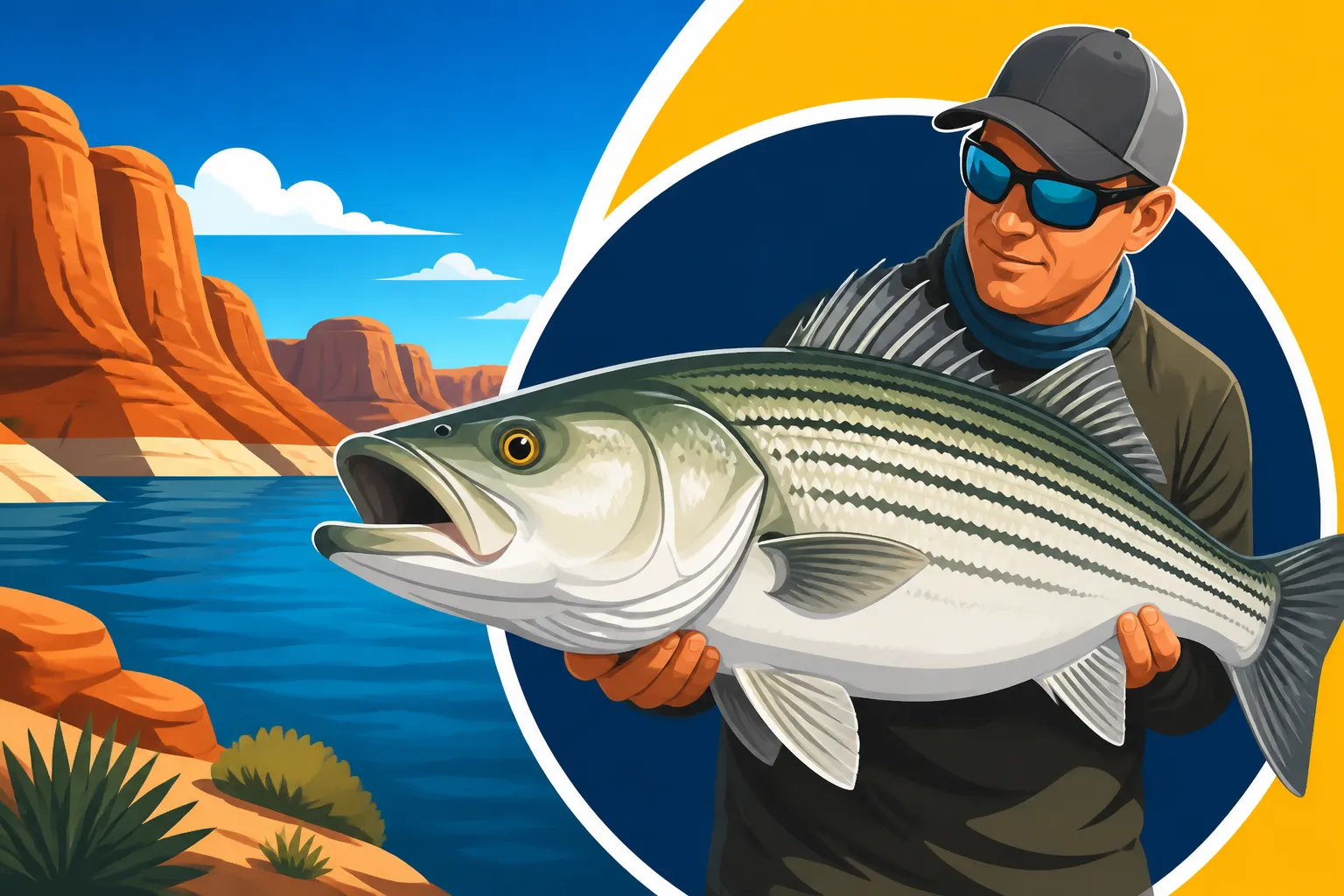
Now, let's talk about the true giants – the trophy striped bass that push into the double digits and beyond. A striper of 20 pounds or more from Lake Powell is considered an exceptional catch and moves into the realm of true trophy fish. These are typically older, more elusive fish that have mastered the art of survival and feeding in the vast reservoir. The Arizona state record for striped bass, a truly monumental fish, was caught right here in Lake Powell, highlighting the incredible potential of this fishery.
Catching a fish of this caliber often requires dedication, specialized techniques like heavy trolling or targeting specific deep-water structures, and a healthy dose of luck. These fish don't get big by being easy to catch! The thrill of the chase, the unknown of what might be lurking in the depths, is what keeps anglers coming back year after year. While not everyone will break a state record, knowing that Lake Powell can produce such giants adds an incredible layer of excitement to every cast. For those chasing these behemoths, having the right gear, perhaps a heavy-duty rod and reel combo available on Amazon, is non-negotiable. If you're curious about the biggest catches, consider looking into Arizona State Record Striped Bass Weight and Location.
Here's a general idea of what you might expect regarding striped bass sizes at Lake Powell:
| Size Category | Typical Weight Range (Pounds) | Fight Intensity | Commonality |
|---|---|---|---|
| Average Schoolie | 2 – 5 | Strong | Very Common |
| Good Catch | 5 – 10 | Very Strong | Common |
| Large Striper | 10 – 20 | Powerful | Less Common |
| Trophy/Giant | 20+ | Extreme | Rare |
The Journey to Catching a Giant Striper
Landing a truly enormous striped bass at Lake Powell isn't just about showing up with a rod and reel; it's a strategic endeavor that combines knowledge, skill, and the right equipment. These larger fish are more wary, often hold in different areas, and demand a different approach than the smaller, more abundant schoolies.
Targeting Big Fish with Specific Techniques
If your goal is to land a truly large striper, you'll need to adjust your tactics. While smaller stripers readily hit a variety of baits and lures, the giants often prefer larger meals and are less inclined to chase small offerings. Trolling large swimbaits, deep-diving crankbaits, or even substantial chunks of cut bait (like shad or anchovies) can be incredibly effective. These baits mimic the larger forage items that big stripers target. Focus your efforts on deep-water ledges, submerged humps, and the mouths of major canyons, especially during the warmer months when stripers move to cooler, deeper water.
Another highly effective technique, particularly when schools of stripers are actively chasing shad near the surface, is to look for "boils." This is when stripers push baitfish to the surface, creating a frothing, chaotic scene. While many fish in a boil will be smaller, persistent casting into the edges of the boil with larger topwater lures or heavy spoons can sometimes entice a bigger fish lurking beneath the fray. Understanding How to Find Striper Boils on Lake Powell and adjusting your lure size and presentation accordingly can make all the difference. Patience is also key; you might get fewer bites, but when you do, it could be the fish of a lifetime.
Essential Gear for Heavyweights
You absolutely cannot skimp on gear when targeting big stripers at Lake Powell. These fish are incredibly powerful, capable of long, drag-screaming runs that will test every component of your setup. A medium-heavy to heavy action rod, usually 7 to 8 feet long, is a good starting point, providing the backbone needed to cast large lures and turn powerful fish. Pair that with a robust baitcasting or large spinning reel spooled with strong braided line, often in the 30 to 50-pound test range, with a fluorocarbon leader. Braided line offers superior sensitivity and strength, crucial for feeling subtle bites in deep water and for battling a large fish.
Having a good quality net, ideally with a rubberized mesh to protect the fish if you plan to release it, is also critical. Don't forget heavy-duty pliers for hook removal and a reliable set of scales if you intend to weigh your catch. Investing in quality gear is an investment in your success and enjoyment on the water. Many reputable fishing brands offer excellent options for heavy-duty setups that can be found with a quick search on Amazon, ensuring you're ready for whatever Lake Powell throws your way. You might want to consider the Best Fishing Rods for Bass in Arizona and Best Fishing Reels for Beginner Anglers in Arizona, keeping in mind that for big stripers, you'll want heavier versions of these.
Conservation and Sustainable Fishing Practices
While the allure of catching a giant striped bass is undeniable, it's equally important to approach fishing at Lake Powell with a mindset of conservation and sustainability. We all want this incredible fishery to thrive for generations to come, and that means adhering to regulations and practicing ethical angling.
Understanding Regulations
The Arizona Game and Fish Department, in conjunction with Utah's Division of Wildlife Resources, manages the Lake Powell fishery, and their regulations are designed to maintain a healthy and balanced ecosystem. For striped bass, there are typically very liberal bag and possession limits, often with no size restrictions. This is because stripers are an introduced species and, at times, can become overpopulated, putting pressure on the primary forage base of threadfin shad. In some years, anglers are even encouraged to keep all the stripers they catch to help manage their numbers.
However, these regulations can change, so it's absolutely vital to always check the most current Arizona Fishing Regulations booklet (or the Utah equivalent, depending on where you're fishing on the lake) before heading out. Ignorance of the law is no excuse, and violating regulations can result in significant fines. Familiarizing yourself with details like Fishing Bag and Possession Limits Explained is essential. Knowing the rules ensures you're contributing to the health of the fishery rather than inadvertently harming it.
Practicing Ethical Angling
Beyond just following the rules, ethical angling practices are paramount, especially when targeting larger fish. If you plan to practice catch and release, especially for those truly massive trophy stripers, it’s crucial to handle the fish with care. Minimize the time the fish is out of the water, support its body horizontally, and use appropriate tools like de-hookers to remove hooks quickly. Revive the fish gently before releasing it, ensuring it swims away strong.
Even if you intend to keep your catch, responsible harvesting is part of being a good steward of the resource. Don't waste fish, and only keep what you and your family will consume. Proper disposal of fishing line, hooks, and other tackle is also incredibly important to protect wildlife and keep the pristine environment of Lake Powell beautiful. By adhering to both the written regulations and the unwritten code of ethical angling, we can all ensure that the thrill of catching a big Lake Powell striper remains a possibility for future generations of anglers.
Disclaimer
This article is for general informational purposes only and does not constitute professional advice. Laws, prices and regulations vary by location and change over time. Consult a qualified professional for guidance on your specific situation.