Best Lures for Largemouth Bass in Arizona Lakes
Figuring out which lures will actually tempt a largemouth bass in Arizona's often challenging desert lakes can feel like a never-ending quest. With scorching summer temperatures, fluctuating water levels, and an array of cover types, what works one day might be useless the next. This guide is all about cutting through the noise, providing you with a detailed breakdown of the best lures that consistently put Arizona largemouth bass in the boat or on the bank, no matter the season or conditions.
Understanding Arizona's Largemouth Bass Habitat and Behavior
Before we even talk about specific lures, it's crucial to understand the unique world Arizona largemouth bass inhabit. These aren't your typical placid Midwestern farm pond dwellers; they're resilient, adaptable fish that navigate some pretty extreme conditions. Knowing their environment and habits is the first step to choosing the right weapon.
The Unique Challenges of Desert Lakes
Arizona's desert lakes, like Roosevelt Lake, Lake Pleasant, or Apache Lake, are characterized by deep, clear waters, steep rock walls, and fluctuating water levels due to irrigation and snowmelt. This means bass often have to suspend in open water, relate to deep structure, or hold tight to sparse cover. The clarity of the water can make bass more wary, requiring subtler presentations or more natural-looking baits. On the flip side, during and after our intense monsoon season, some areas can become muddy, calling for high-vibration and dark-colored lures. It's a constant dance between adapting to crystal-clear depths and sudden, turbid inflows. Unlike river systems, these reservoirs often have limited current, so fish movement is more tied to water temperature, forage availability, and cover, making understanding those factors paramount. For a deeper dive into these unique fishing environments, check out our guide on how to fish Arizona's desert lakes.
Seasonal Movements and Feeding Patterns
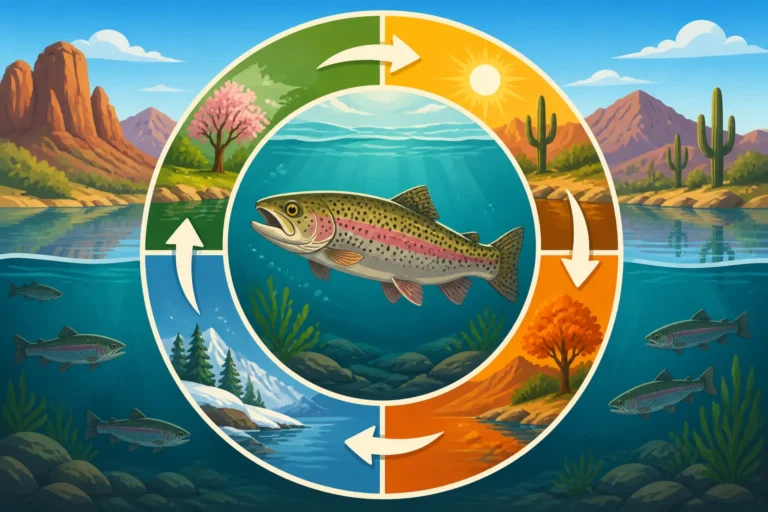
Largemouth bass in Arizona follow predictable, albeit sometimes exaggerated, seasonal patterns. In spring, as water temperatures rise into the 60s, bass move shallow for the spawn. They're aggressive, protecting nests, and will often strike anything that comes too close. This is prime time for reaction baits. During the summer, when surface temperatures soar into the 80s and 90s, bass tend to move to deeper, cooler water, often suspending over deep points, brush piles, or rock ledges. They become more nocturnal feeders or hit during low light periods. This means slow presentations and targeting deeper structure. Fall sees a return to shallower water as temperatures cool, and bass begin to feed heavily, gorging themselves in preparation for winter. This "fall feeding frenzy" can be incredibly productive with a variety of lures. Finally, in winter, bass will again hold to deep structure or slow down significantly, requiring finesse tactics and very slow presentations. Understanding these shifts is absolutely critical to success, and you can learn more by exploring our articles on Spring Bass Fishing Tactics in Arizona and Summer Bass Fishing Tactics in Arizona.
Top Lure Categories for Arizona Largemouth Bass
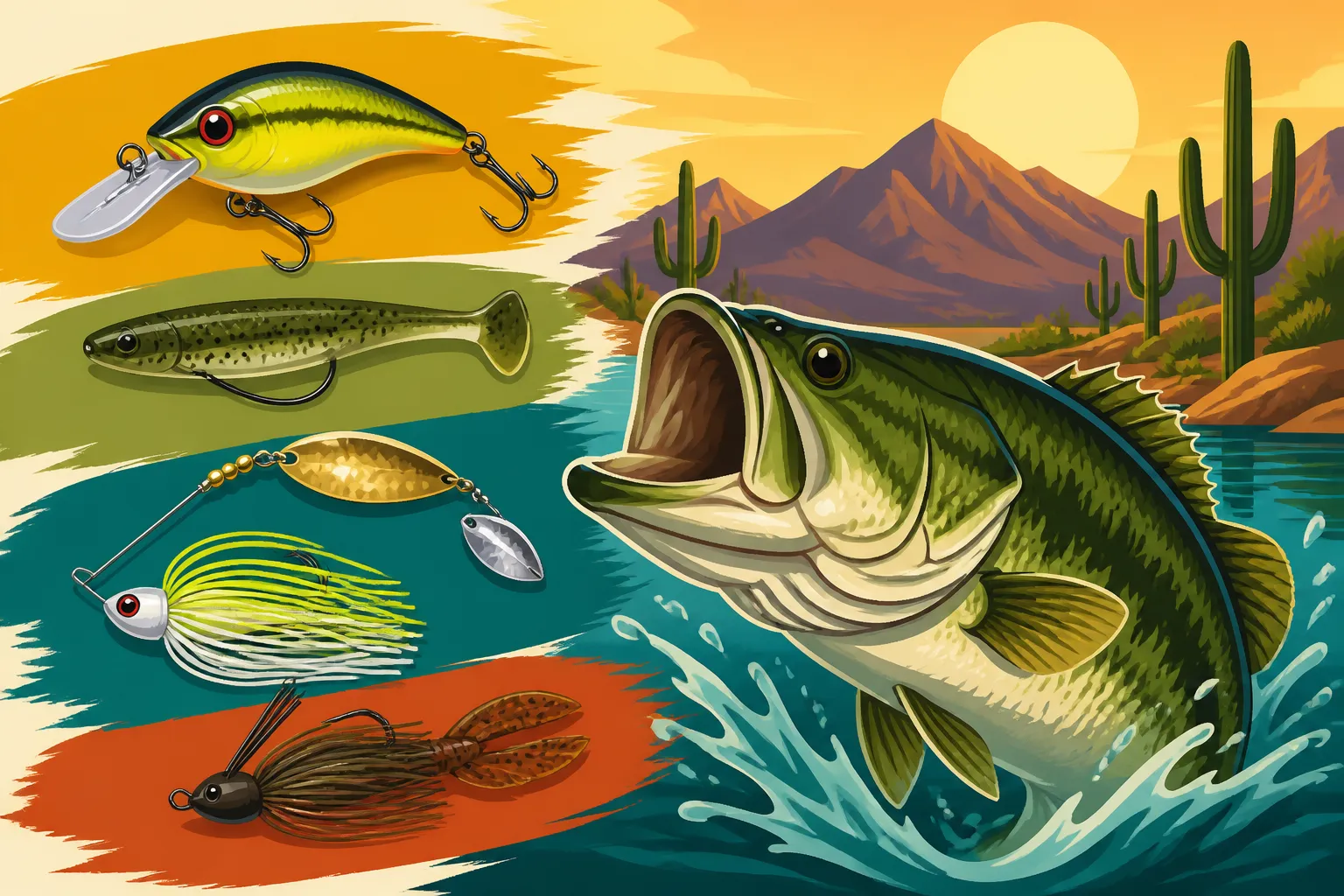
Now that we've got a handle on where and when bass are likely to be, let's talk about the what. Arizona largemouth bass respond well to several core lure categories, each excelling in different situations.
Soft Plastics: Versatility is Key
If there's one category of lure that no Arizona bass angler should be without, it's soft plastics. Their versatility is unmatched, allowing for countless presentations that can imitate everything from crawfish and baitfish to worms and lizards.
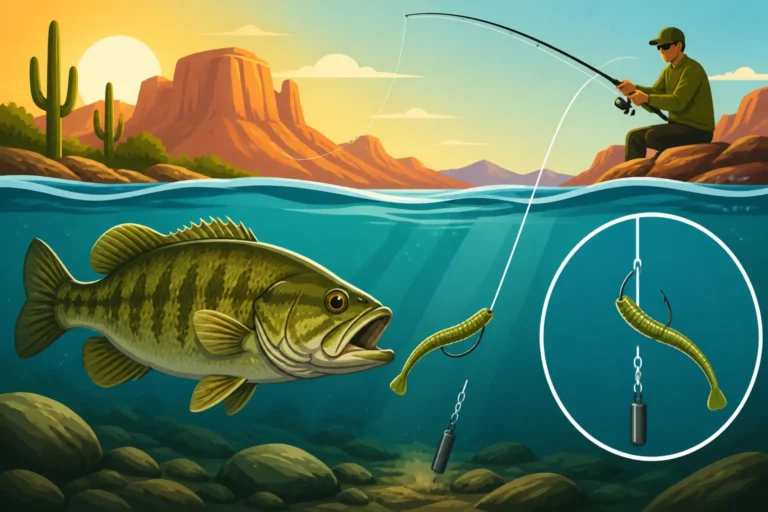
- Creature Baits and Lizards: These are absolute workhorses, especially during the prespawn and spawn. Rigged Texas-style or on a Carolina rig, they mimic crawfish or other critters invading a bass's territory. Popular colors include green pumpkin, watermelon red, and black/blue. Flipping a big creature bait into heavy cover at Roosevelt Lake can be incredibly effective. Many anglers swear by brands like Zoom or Strike King for their creature baits.
- Plastic Worms: From Texas rigs to Ned rigs, shaky heads to drop shots, plastic worms are eternally popular. Long, straight worms (7-10 inches) worked slowly on a Texas rig or Carolina rig can be deadly on deep points and ledges, especially in the clear waters of Lake Mohave or Lake Havasu. Smaller, finesse worms shine on a drop shot or shaky head when bass are finicky or holding deep, like in the winter months at Lake Pleasant. Natural colors like green pumpkin, junebug, or plum are consistently effective. If you're just starting, a solid pack of assorted plastic worms from a brand like Gary Yamamoto or Berkley can be found easily on Amazon. Dive deeper into this technique with our guide on How to Fish a Plastic Worm for Bass.
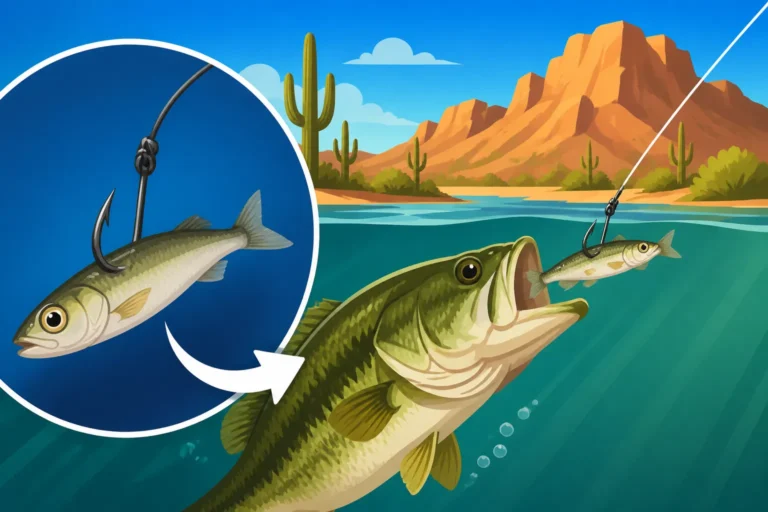
- Swimbaits: Whether soft plastic paddletails or larger boot-tail swimbaits, these excel at imitating baitfish. Rigged on a jig head or with a weighted swimbait hook, they can be cast and retrieved or slow-rolled through suspended schools of bass. Clear lake environments with abundant threadfin shad, like Apache Lake, are perfect for realistic baitfish imitation swimbaits. These are fantastic for targeting bass that are actively chasing bait or holding near submerged structure.
Crankbaits: Diving for Reaction Strikes
Crankbaits are all about covering water and generating reaction strikes. They come in various shapes, sizes, and diving depths, making them incredibly adaptable.
- Shallow-Diving Crankbaits: Perfect for fishing over submerged grass beds, stumps, or rocky points in 2-8 feet of water. These baits deflect off cover, triggering aggressive strikes. Think about targeting the shallow coves of Canyon Lake in the spring. Squarebill crankbaits, in particular, are excellent for banging off wood and rock without getting hung up.
- Medium-Diving Crankbaits: These lures are versatile, reaching depths of 8-15 feet. They're fantastic for ledges, humps, and submerged timber. A common scenario is slow-rolling a medium diver along a channel swing or a submerged island.
- Deep-Diving Crankbaits: When bass move deep in the summer or winter, a big deep-diving crankbait can be the ticket. These lures can reach depths of 15-25+ feet, allowing you to target suspended bass or those hugging deep structure. Imagine grinding a deep diver along a deep rock wall at Lake Powell. For more insights into deep-water cranking, check out our article on How to Fish a Crankbait Around Drop-Offs. Look for natural shad patterns or crawfish colors, especially when fishing rocky bottom.
| Crankbait Type | Diving Depth (Feet) | Best Seasons | Key Situations | Example Colors |
|---|---|---|---|---|
| Shallow-Diving | 2-8 | Spring, Fall | Wood, shallow rocks, grass, prespawn staging | Crawfish, Chartreuse |
| Medium-Diving | 8-15 | All | Ledges, humps, channel swings, submerged timber | Shad, Green Pumpkin |
| Deep-Diving | 15-25+ | Summer, Winter | Deep points, rock walls, suspended bass, cold water | Shad, Bluegill, Grey |
Topwater Lures: Explosive Surface Action
There's nothing quite like the heart-stopping excitement of a largemouth bass blowing up on a topwater lure. While not always the most consistent producer, topwater fishing can be incredibly rewarding, particularly during low-light conditions or when bass are actively feeding on the surface.
- Poppers: These lures create a "plopping" sound and commotion on the surface, drawing bass from nearby cover. Great for calm mornings and evenings, especially around docks, laydowns, or weed edges.
- Walking Baits (Spooks): Designed to "walk the dog" with a side-to-side sashay, these lures are incredibly effective at imitating an injured baitfish. They require a bit of practice but can be devastating when bass are active. This is a favorite technique for calling bass up from deeper water early in the morning at many Arizona lakes.
- Buzzbaits: Propeller-driven baits that create a gurgling, buzzing sound on the retrieve. Excellent for covering water quickly over shallow cover and attracting aggressive bass, particularly during the prespawn or post-spawn periods. These lures can cut through choppy water better than some other topwater options.
- Frogs: Soft plastic frogs are essential for fishing dense vegetation, like lily pads or matted grass. They are virtually weedless and draw violent strikes as bass ambush them from below. While not as prevalent in all Arizona lakes, they can be phenomenal in specific areas with heavy surface cover. For an unforgettable experience, try a frog in the calm coves of Lake Pleasant during early summer mornings.
Spinnerbaits and Chatterbaits: Vibration and Flash
These lures are fantastic for covering water, fishing stained conditions, and generating reaction strikes due to their flash and vibration.
- Spinnerbaits: With their flashing blades and pulsating skirt, spinnerbaits are excellent for imitating baitfish. They can be slow-rolled, burned, or "pumped" through cover. They excel in stained water or around brush piles and flooded timber. When bass are aggressive, particularly in the spring and fall, a white or chartreuse spinnerbait can be hard to beat.
- Chatterbaits (Bladed Jigs): These hybrids combine the vibration of a crankbait with the flash and skirt of a jig. The unique thumping action is irresistible to bass, especially in dirty water or when they're feeding on crawfish. They're also incredibly weedless, making them perfect for fishing through sparse grass or around standing timber. Try a green pumpkin or black/blue chatterbait when fishing around rocky areas at Alamo Lake.
Jigs: Getting Down and Dirty
Jigs are perhaps the most versatile bottom-fishing lure for largemouth bass. They can imitate crawfish, baitfish, or even small panfish, and they excel in a wide range of depths and cover types.
- Football Jigs: Named for their football-shaped head, these jigs are ideal for fishing rocky bottoms, deep ledges, and open points. The head design helps them maintain contact with the bottom and prevents snagging as much as other jig types. A football jig dragged along a deep transition at Lake Havasu can pick off some big bass.
- Flipping and Pitching Jigs: Designed with a more pointed head and weed guard, these are perfect for targeting heavy cover like brush piles, submerged trees, or docks. The idea is to silently present the jig into tight spots where big bass often hide. Black and blue, green pumpkin, and brown are classic colors, often paired with a plastic craw trailer.
- Swim Jigs: Unlike their bottom-bouncing cousins, swim jigs are meant to be retrieved through the water column, often imitating baitfish. They're excellent for fishing around emergent vegetation or over submerged grass. A white or shad-colored swim jig can be deadly in clear water. For more information on fishing with jigs, consider reading our guide on How to Fish a Jig for Winter Bass.
Matching Your Lures to Specific Arizona Conditions
The key to consistent success in Arizona isn't just knowing what lures to use, but when and where to use them. Environmental factors play a huge role.
Clear vs. Murky Water Considerations
Arizona's desert lakes often boast incredibly clear water, especially away from major inflows. In these conditions, bass rely heavily on their sight, so natural colors and subtle presentations are often best. Think green pumpkin, watermelon, shad patterns, and blues. Fluorocarbon line is also a huge advantage due to its invisibility. Conversely, after heavy rains or in areas with muddy inflows, the water can become quite murky. Here, bass rely more on their lateral line (vibration) and smell. This is when high-vibration lures like spinnerbaits, chatterbaits, or large crankbaits in bright or dark, contrasting colors (chartreuse, black/blue) really shine. Noise and disturbance are your friends in murky water.
Adapting to Water Temperature and Depth
Water temperature dictates bass activity levels and where they position themselves.
- Cold Water (Winter): Bass are lethargic and often hold deep. Finesse techniques like drop shots, shaky heads, or slow-dragged jigs and small plastic worms are best. Work lures painstakingly slowly, directly on the bottom. The fish aren't going to chase much.
- Cool/Moderate Water (Spring/Fall): This is when bass are most active. They'll be shallower, feeding aggressively. A wide variety of lures work, from spinnerbaits and crankbaits to jigs and soft plastics. Reaction baits are very effective.
- Warm/Hot Water (Summer): Bass retreat to deeper, cooler water or become nocturnal. Target deep structure with deep-diving crankbaits, heavy jigs, or drop shots. Topwater can still work during early morning or late evening. Understanding the best time of day to fish for bass in summer is crucial during these months.
Best Lures for Different Cover Types
The type of cover bass are relating to will also dictate your lure choice.
- Rocks and Riprap: Football jigs, crankbaits (especially squarebills), and Texas-rigged worms or creature baits are excellent for working along rocky banks, points, and riprap. The hard bottom provides ideal ambush points.
- Brush Piles and Submerged Trees: Flipping and pitching jigs, Texas-rigged creature baits, or punch baits are perfect for getting into the heart of dense wood cover where big bass often hide. These presentations need to be weedless to avoid snags.
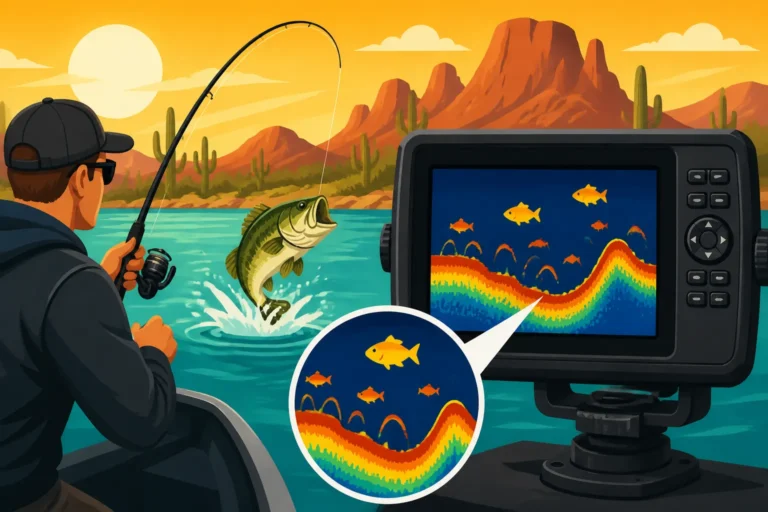
- Open Water / Suspended Bass: When bass are not relating to specific cover but are suspended in the water column (common in clear, deep Arizona lakes), swimbaits, deep-diving crankbaits, or even vertical jigging spoons can be effective. A fish finder is invaluable here to locate these elusive fish.
- Vegetation (Sparse to Moderate): Spinnerbaits, chatterbaits, and weedless soft plastics like a Texas-rigged worm or flukes can be retrieved over or through sparse grass. For thicker mats, weedless frogs or heavy punch rigs are necessary.
Essential Lure Colors and Sizes for Arizona Bass
Choosing the right color and size can sometimes make all the difference, especially on tough days.
Go-To Color Patterns
While there are countless colors available, a few stand out as consistently productive for Arizona largemouth bass:
- Green Pumpkin: This is arguably the most versatile color for soft plastics. It mimics both crawfish and baitfish in many situations, especially in clear to lightly stained water.
- Watermelon Red: Another fantastic soft plastic color, often effective when bass are feeding on crawfish with red accents.
- Shad/White/Pearl: Essential for lures imitating baitfish like shad, which are a primary forage in many Arizona lakes. This includes crankbaits, swimbaits, spinnerbaits, and some topwater lures.
- Black/Blue: An outstanding choice for jigs, creature baits, spinnerbaits, and chatterbaits, particularly in stained water, low light, or when bass are keying on dark crawfish. The silhouette is very visible to the fish.
- Brown/Orange (Crawfish): When bass are feeding heavily on crawfish, especially in rocky areas, these patterns on jigs and crankbaits can be incredibly effective.
Sizing Up Your Presentation
The size of your lure should generally match the forage size and the activity level of the bass.
- Small Lures: When bass are finicky, pressured, or in cold water, downsizing your presentation can be a game-changer. Smaller worms (4-6 inches) on a Ned rig or drop shot, or smaller crankbaits, can entice bites when bigger lures are ignored. This is particularly true in heavily fished urban lakes.
- Medium Lures: For most general fishing, a medium-sized lure (6-7 inch worm, standard crankbait, 3/8-1/2 oz jig) is a good starting point. It's a balanced approach that imitates common forage sizes.
- Large Lures: Don't be afraid to go big when targeting trophy bass or when fish are actively feeding on larger baitfish. Big swimbaits, 10-inch worms, or large jigs can attract the attention of the biggest fish in the lake, especially during the prespawn or fall feeding periods.
Remember, having a varied tackle box that covers these essential lure categories and colors, available from retailers like Amazon, will prepare you for almost any situation you encounter on Arizona's diverse waterways. Equip yourself with a quality fishing rod for bass in Arizona, and you'll be ready to tackle these challenging but rewarding fish.
Disclaimer
Fishing regulations, conditions, and fish behavior can change rapidly. Always consult the latest Arizona Game and Fish Department regulations before heading out. Fishing involves inherent risks; always prioritize safety on the water.