Best Setup for Fly Fishing for Trout
Heading out to the streams and lakes of Arizona with a fly rod can feel like stepping into a whole new world of angling. If you've ever found yourself staring at a wall of fly fishing gear, wondering where to even begin for catching trout in our unique desert and mountain environments, you're not alone. It's easy to get overwhelmed by the jargon and the sheer volume of options. This guide is here to demystify the process, helping you assemble the best fly fishing setup specifically tailored for pursuing trout across the diverse and beautiful waters Arizona has to offer.
Understanding the Core Components: Rod, Reel, and Line for Arizona Trout
The very heart of any fly fishing setup lies in its triumvirate: the rod, the reel, and the line. These three components work in concert to cast your delicate fly, fight the fish, and ultimately bring it to hand. For Arizona's trout, selecting the right combination is key, considering everything from our often clear, sun-drenched waters to the size of the streams and the fish themselves. It's not about having the most expensive gear, but the most appropriate gear for the conditions you'll encounter.
Choosing the Right Fly Rod for Arizona Conditions
The fly rod is your primary tool for casting. Unlike spin fishing, where the lure's weight carries the line, in fly fishing, it's the weight of the fly line itself that loads the rod and propels the fly. This is why fly rods are categorized by "weight" – a number (from 0-14) that corresponds to the weight of the fly line it's designed to cast.
For most trout fishing in Arizona, you'll find yourself reaching for lighter weight rods. If you're tackling smaller, intimate high-country streams that might hold feisty little Apache trout or smaller rainbow trout, a 2-weight or 3-weight rod (around 7 to 8 feet long) offers a delicate presentation and makes even a small fish feel like a giant. It’s perfect for those tight casting situations common in brushy areas. For a more versatile option, especially if you plan to fish larger streams like Oak Creek Canyon or the Upper Verde, or even smaller lakes where trout are stocked, a 4-weight or 5-weight rod (typically 8.5 to 9 feet long) is the workhorse. This range provides enough backbone to handle larger trout, cast further, and deal with a bit of wind, while still offering a good fight. If you're dreaming of fishing the larger rivers like the Colorado River below Glen Canyon Dam at Lees Ferry, or bigger lakes that might hold larger holdover trout or even some of the occasional monster carp that will test your gear, a 6-weight rod might be a better choice, giving you more power for longer casts and bigger fish.
Consider the "action" of the rod too. Fast-action rods are stiff and powerful, great for long casts and punching through wind, but less forgiving for beginners. Medium-fast action rods offer a good balance of power and feel, making them a popular choice. Slower action rods are more flexible, providing delicate presentations, which can be fantastic for spooky trout in clear, calm waters. For an all-around Arizona trout rod, a medium-fast to fast action in the 4-weight or 5-weight range is usually a solid bet. Many anglers start with a decent 5-weight, 9-foot rod, as it's the most versatile for different trout fishing scenarios you'll encounter.
Selecting a Fly Reel: More Than Just Line Storage
While the rod does the casting, the reel's primary job in trout fishing is to hold your fly line and provide a drag system to fight the fish. Unlike baitcasting or spinning reels, you don't typically retrieve line by cranking the handle during a cast. Most of the time, you'll be stripping line by hand.
For trout, you generally want a reel that balances well with your chosen rod. A lightweight, simple "click-and-pawl" reel is often sufficient for smaller trout, offering a classic sound and feel. However, if you're targeting larger trout or fishing in areas where fish can really run, a reel with a smooth, adjustable disc drag system is invaluable. This drag allows the fish to pull line off the reel without breaking your delicate leader, putting pressure on them until they tire. For the average Arizona trout angler, a mid-arbor or large-arbor reel designed for the same line weight as your rod is ideal. Large-arbor reels retrieve line faster, which can be helpful when a fish makes a sudden run towards you, and they reduce line memory. Durability is also a factor, as reels can take a beating, especially when hiking into remote spots. You can find excellent options from various brands at most reputable fly shops or even Bass Pro Shops, where you can often try them out with a rod to check the balance.
Decoding Fly Lines, Leaders, and Tippets
This is where many newcomers get a little lost, but it's simpler than it seems. Your fly line is the heavy, specialized line that gives your rod something to cast. For trout, a "weight-forward" floating line is the standard. The weight-forward design means the front section of the line is heavier, making it easier to cast longer distances and turn over larger flies. Floating lines, as the name suggests, float on the surface, which is crucial for dry fly fishing and indicator nymphing.
The fly line connects to a "leader," which is a tapered monofilament or fluorocarbon line that gradually gets thinner. The taper helps transfer the energy from the heavy fly line to your much lighter fly, allowing for a delicate, natural presentation. Leaders are typically 7.5 to 12 feet long, with longer leaders preferred for spooky fish in clear water, a common scenario in many Arizona streams.
Finally, the thinnest part of your setup is the "tippet." This is a section of even thinner monofilament or fluorocarbon that you tie to the end of your leader, and then attach your fly to. Tippet is denoted by an "X" rating (e.g., 5X, 6X, 7X). A higher X number means a thinner diameter. Thinner tippet allows for more natural fly movement and is less visible to fish, but it's also more prone to breaking. For most Arizona trout, 5X or 6X tippet is a good starting point, providing a balance of strength and stealth. You might go down to 7X for very small dry flies on super clear, calm water, or up to 4X if you're throwing larger streamers or fishing for bigger, less wary trout in faster water. Carrying spools of different tippet sizes is always a good idea. Best Line for Trout Fishing offers more detail on these choices.
Essential Terminal Tackle: Getting Your Fly to the Fish
Once you have your rod, reel, and line sorted, it's time to focus on the business end: the flies themselves and the rigging that presents them effectively. This is where the magic happens, enticing those beautiful Arizona trout to bite.
Must-Have Fly Patterns for Arizona Trout
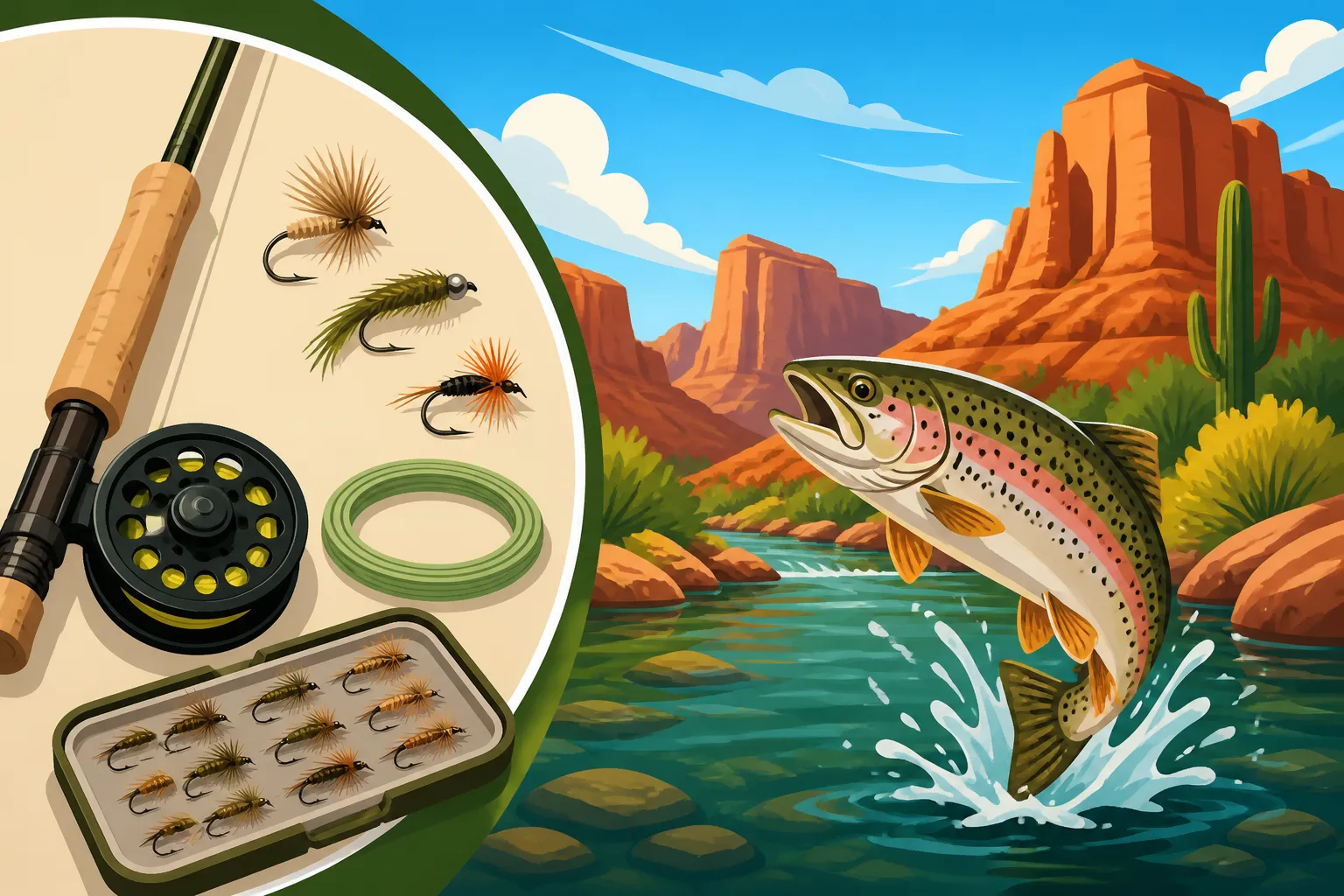
Arizona's trout waters are diverse, but a core set of fly patterns will serve you well. It's smart to carry a selection of dry flies (flies that float), nymphs (flies that imitate subsurface insects), and a few streamers (flies that imitate baitfish or larger insects).
Here's a breakdown of some essential patterns:
- Dry Flies:
- Adams: A classic general mayfly imitation, great in sizes 12-18.
- Parachute Adams: Similar to the Adams but floats lower and is often easier to see.
- Elk Hair Caddis: An excellent caddisfly imitation, sizes 12-16. Caddis are abundant in Arizona streams.
- Stimulator: A larger, bushier attractor pattern that can imitate stoneflies or caddis, also good for throwing to aggressive fish or as an indicator for a droppped nymph. Sizes 8-14.
- Ants/Beetles: Terrestrial patterns (ants, beetles, hoppers) are crucial, especially in warmer months when they fall into the water. Sizes 12-18.
- Renegade: A classic, simple attractor pattern that often works when nothing else does.
- Nymphs:
- Pheasant Tail Nymph: A versatile mayfly imitation, effective year-round. Sizes 14-20.
- Hare's Ear Nymph: Another fantastic general insect imitation. Sizes 12-18.
- Copper John: A flashy, weighted nymph that sinks quickly and attracts attention. Sizes 12-18.
- Zebra Midge: Midges are present in all trout waters year-round, and this simple pattern is deadly, especially in winter. Sizes 18-22.
- San Juan Worm: A classic "worm" pattern, highly effective, especially after rain or during high flows. Sizes 10-16.
- Streamers:
- Woolly Bugger: The most versatile streamer there is. Black, olive, or brown in sizes 6-12. Can imitate leeches, baitfish, or crayfish.
- Sculpzilla: Great for imitating sculpins, a favorite meal for larger trout.
Remember to vary sizes and colors based on the specific conditions and insect hatches you observe. You can find excellent selections of flies at local fly shops, or even online retailers like Amazon.
Leaders and Tippet for Stealth and Strength
We touched on leaders and tippet earlier, but it’s worth reiterating their importance in more detail. The leader's taper ensures a smooth transfer of energy, allowing your fly to land softly without "splashing" down and spooking the fish. For general trout fishing, a 9-foot leader is a great all-around choice. In extremely clear water or on very calm days, you might go up to a 12-foot leader for maximum stealth. For smaller, brushy streams, a 7.5-foot leader can be easier to manage.
Tippet is your sacrificial lamb – it's the part that gets frayed, broken, or needs to be changed as you switch flies. Always carry extra spools! Fluorocarbon tippet sinks faster and is nearly invisible underwater, making it excellent for nymphing. Monofilament tippet floats better, which is beneficial for dry fly fishing. Many anglers carry both. When connecting tippet to your leader, use a strong knot like a surgeon's knot or a blood knot. When attaching your fly to the tippet, a Clinch knot or an Improved Clinch knot are reliable choices. Getting proficient with these knots is paramount to success on the water.
Indicators, Split Shot, and Other Rigging Necessities
Beyond flies, a few small but mighty items will complete your terminal tackle arsenal for Arizona trout.
- Strike Indicators: These small, buoyant devices attach to your leader and act like a bobber, signaling when a fish has taken your subsurface nymph. There are many types, from foam balls to yarn indicators, each with pros and cons. They are absolutely crucial for effective nymph fishing.
- Split Shot: Small, lead-free weights (always opt for lead-free!) crimped onto your leader to help your nymphs sink faster and get to the fish's feeding zone. Carry a variety of sizes, from small "BB" shot to larger "AB" or "B" sizes. Adjust the amount and placement based on current speed and water depth.
- Forceps or Hemostats: Essential for safely removing hooks from fish, especially smaller trout. They also come in handy for crimping split shot.
- Nippers: Small clippers for trimming excess line when tying knots. A good pair often has a needle for clearing out clogged hook eyes.
- Fly Floatant: A liquid or gel applied to dry flies to help them float higher and longer. Absolutely necessary for dry fly fishing.
- Leader Straightener: A small rubber pad you pull your leader through to remove coils and memory, ensuring a straighter, more delicate presentation.
Having these small items organized in a small fly box or vest pocket will make your time on the water much more efficient and enjoyable. Consider exploring Fly Fishing Techniques for Trout for deeper insights into how to best use these tools.
Beyond the Basics: Fly Fishing Accessories for Comfort and Success
Fly fishing in Arizona means dealing with a variety of environments, from sun-baked desert canyon streams to chilly mountain lakes. The right accessories can make or break your trip, ensuring you're comfortable, safe, and prepared for anything our beautiful state throws at you.
Waders, Boots, and Clothing for Arizona's Varied Climate
Staying dry and comfortable is paramount, especially when you're spending hours in and around water.
- Waders: For most trout fishing, breathable chest waders are the way to go. They allow you to wade into the stream to reach prime fishing spots, stay dry, and offer some protection from the elements. Look for quality waders that fit well and are made from durable, breathable materials. Neoprene waders are warmer but less breathable, typically reserved for very cold conditions. In the peak of Arizona summer, some anglers opt for wet wading (just shorts and wading boots) in colder streams, but waders are a year-round essential for many.
- Wading Boots: Paired with your waders (which typically have neoprene booties), wading boots provide traction and ankle support. Felt soles offer excellent grip on slippery rocks, but they can be problematic in some areas if they transfer invasive species. Rubber soles with studs are a good all-around alternative, offering grip on various terrains. Make sure your boots are comfortable for hiking, as many prime Arizona trout spots require a walk.
- Layered Clothing: Arizona weather can change quickly. Dressing in layers is crucial. Start with a moisture-wicking base layer, add an insulating fleece or down layer, and top it with a waterproof/breathable outer shell. Even in summer, early mornings in the mountains can be chilly, and afternoon monsoons can bring sudden downpours. Don't forget a wide-brimmed hat and polarized sunglasses – the latter is essential for spotting fish and protecting your eyes from stray hooks and intense Arizona sun.
Tools and Gadgets Every Fly Angler Needs
A few additional tools can greatly enhance your fly fishing experience.
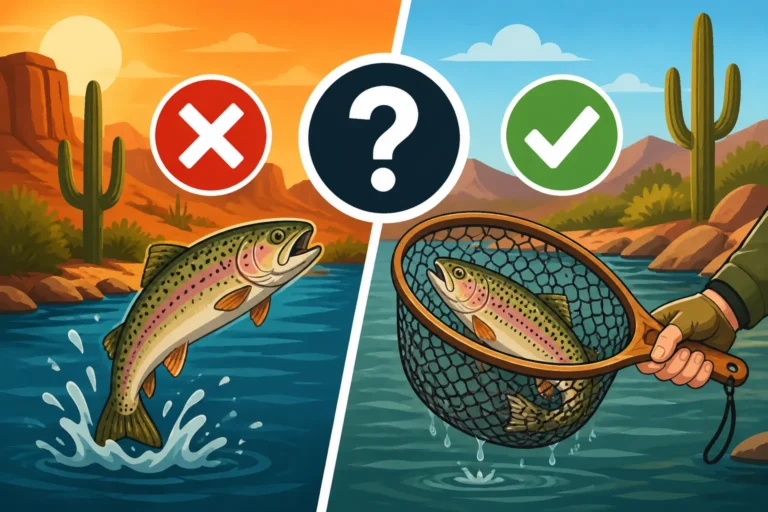
- Landing Net: A small, soft-mesh landing net is indispensable for safely landing and releasing trout. Rubberized mesh is gentler on the fish's slime coat and less likely to tangle hooks. A net with a magnetic release or bungee cord is convenient for keeping it out of the way until needed. Best Net for Landing Trout can give you more specific recommendations.
- Backpack or Vest: You'll need something to carry your fly boxes, tippet, water, snacks, extra layers, and other essentials. A specialized fishing vest or chest pack keeps everything organized and accessible. For longer hikes or days, a small backpack designed for fishing can carry more gear, hydration, and even a packed lunch.
- Water Bottle/Hydration Pack: This is non-negotiable in Arizona. Staying hydrated is critical, especially in our dry climate and intense sun.
- Camera: To capture those beautiful fish and scenic Arizona backdrops! Just make sure it's waterproof or in a dry bag.
- Sunscreen and Lip Balm: Protect yourself from the relentless Arizona sun. Reapply frequently.
Safety and Storage: Keeping You and Your Gear Protected
Beyond comfort, personal safety and gear protection are paramount.
- First Aid Kit: A compact first aid kit with basics like bandages, antiseptic wipes, pain relievers, and any personal medications is a must-have, especially when fishing remote areas.
- Multi-tool: A good multi-tool with pliers, knife, and other implements can be invaluable for unexpected repairs or tasks.
- Wading Staff: For navigating rocky, uneven, or swift currents, a collapsible wading staff provides crucial stability and helps you gauge water depth. This is especially important if you have any balance issues or are new to wading.
- Bear Spray/Air Horn: If you're venturing into remote high-country areas known for black bears, carrying bear spray and knowing how to use it is a wise precaution. An air horn can also deter wildlife.
- Dry Bags: For anything you absolutely cannot get wet (phone, wallet, car keys, extra clothing), a dry bag is essential. Even a quick slip and fall can drench your valuables.
- Fishing License and Trout Stamp: Don't forget your Arizona Fishing License Guide and the required Trout Stamp Requirements in Arizona! Always carry physical or digital proof of your valid license. Fishing without one can lead to significant fines.
Putting It All Together: Your First Arizona Fly Fishing Outing
Now that you have an understanding of the essential components, it's time to visualize your first trip. Think about the type of water you'll be fishing in Arizona. Are you heading to a small, pristine stream in the White Mountains for Apache trout? Or perhaps a larger, stocked lake in the lower desert for rainbow trout? Your setup should reflect that.
For a beginner wanting an all-around setup, I'd strongly recommend a 9-foot, 5-weight, medium-fast action rod. Pair this with a matching large-arbor reel spooled with a weight-forward floating line. Add a 9-foot 5X tapered leader, and spools of 5X and 6X tippet. Grab a few Pheasant Tail Nymphs (size 16), Hare's Ear Nymphs (size 14), Elk Hair Caddis (size 14), and a couple of black Woolly Buggers (size 8). Don't forget your strike indicators, lead-free split shot, forceps, nippers, and fly floatant.
Beyond the gear, education is your best friend. Consider taking a beginner fly fishing class offered by a local fly shop. There's so much to learn about casting, reading the water, and understanding insect hatches. These classes often cover Beginner Fishing Techniques for Arizona Desert Lakes and can accelerate your learning curve dramatically. Don't be afraid to ask experienced anglers for advice – most are happy to share their knowledge.
Remember, fly fishing is a journey, not a destination. There will be days you catch a lot of fish, and days you don't. The real joy often comes from the peacefulness of being outdoors, the challenge of the cast, and the connection to nature. Armed with the right setup and a willingness to learn, you're well on your way to enjoying the incredible fly fishing opportunities Arizona has to offer.
Disclaimer
This article is for general informational purposes only and does not constitute professional advice. Laws, prices and regulations vary by location and change over time. Consult a qualified professional for guidance on your specific situation.