Best Kayak Storage for Rods and Tackle
It's a familiar struggle for every kayak angler in Arizona: you're out on a stunning desert lake or a quiet stretch of river, the sun is shining, and the fish are biting. But then you need to switch lures, or grab your other rod, and suddenly your carefully arranged gear turns into a chaotic mess. Finding the best way to store your rods and tackle on a kayak isn't just about neatness; it's about efficiency, safety, and making sure your precious equipment is protected from the elements and unexpected splashes. This guide will walk you through practical, real-world solutions to keep your fishing gear organized, accessible, and secure on your next Arizona kayaking adventure.
The Unique Challenges of Kayak Storage for Anglers
Kayaks, while fantastic for stealth and accessing hard-to-reach fishing spots, present their own set of storage conundrums. Unlike a spacious bass boat or even a jon boat, every inch of space on a kayak is prime real estate. You’re often sitting close to the water, exposed to the sun, and sometimes even a little bit of spray, especially when those desert winds kick up on lakes like Lake Pleasant or Roosevelt. It’s not just about fitting everything; it’s about making it functional and protected.
Limited Space and Accessibility on the Water
The compact nature of a kayak means you can't just toss a huge tackle box in the corner and forget about it. Everything needs a designated, easily reachable spot. Imagine you're paddling against a current on the Colorado River, and suddenly you spot a prime fishing hole. You need to be able to quickly transition from paddling to fishing, meaning your rod should be within easy grasp, and your go-to tackle should be right at your fingertips. Fumbling around in a deep hatch or behind your seat can cost you precious fishing time and even lead to frustration, especially if you're trying to manage your paddle at the same time. The goal is a system where you can access what you need without major contortions or risking a tip-over.
Protecting Gear from the Elements and the Unexpected
Arizona's intense sun can wreak havoc on fishing gear, from fading lures to weakening monofilament lines. Dust from desert winds can get into reel mechanisms, and, of course, there's always the inevitable splash or even an accidental dunking. Protecting your rods and tackle from water, UV rays, and physical damage is paramount. A good storage system isn't just about organization; it’s about ensuring the longevity and reliability of your expensive equipment. This means thinking about waterproof solutions, UV-resistant materials, and secure tie-downs for everything. Losing a favorite rod or a box of expensive lures to the bottom of the lake because it wasn't properly secured is a heart-wrenching experience we all want to avoid.
Managing Rods While Paddling and Fishing
This is perhaps one of the biggest headaches for kayak anglers. You might start with one rod, then realize you want a different setup for the changing conditions. Where do you put the second (or third) rod while you’re actively casting? And what about when you’re just paddling from one spot to another, especially if you're navigating through tight coves or heavy brush on lakes like Canyon Lake? Rods can get tangled, tips can break, and they can even become a hazard if not stowed properly. The ideal solution allows you to transition seamlessly, keeping rods out of your way when paddling, but quickly ready when it's time to fish. Finding the sweet spot between security and accessibility is key, especially when you consider how many anglers like to have multiple Best Fishing Rods for Bass in Arizona ready to go.
Smart Rod Storage Solutions for Kayaks
When it comes to keeping your fishing rods safe and accessible on a kayak, you've got options ranging from built-in features to clever aftermarket additions. The best choice often depends on your kayak's design, how many rods you typically carry, and your fishing style.
Built-in vs. Aftermarket Rod Holders
Many fishing kayaks come equipped with flush-mount rod holders, which are essentially tubes molded into the kayak's deck, usually behind the seat. These are great for temporarily stowing rods when paddling or when you need both hands free, like landing a fish. They keep the rods out of the way and relatively secure.
However, flush mounts don't offer much adjustability. This is where aftermarket rod holders shine. Brands like Scotty and RAM Mounts offer a wide array of adjustable rod holders that can be mounted to track systems, gunwales, or even flush mount bases. These allow you to position your rod precisely where you need it, whether you're trolling, setting up a dead stick, or just keeping it within arm's reach for quick deployment. You can find a huge selection of these at retailers like Bass Pro Shops, offering various styles from horizontal to vertical, and with different locking mechanisms to suit your preference.
Here’s a quick comparison of common rod holder types:
| Rod Holder Type | Pros | Cons | Best Use Case |
|---|---|---|---|
| Flush Mount | Low profile, secure, out of the way | Not adjustable, difficult to access while seated | Storing extra rods, transport, general paddling |
| Deck Mount | Adjustable, easy to install, versatile | Can snag lines, takes up deck space | Trolling, holding active rods, quick access |
| Vertical Stand | Keeps rods upright, easy to grab | Can be bulky, less stable in rough water | Multiple rods, calm water, easy access to different setups |
Horizontal Rod Storage Systems
Sometimes, you need to keep your rods truly out of the way, especially if you're navigating tight spaces or launching from a tricky bank. Horizontal rod storage is perfect for this. Many kayaks feature bungee cords or paddle parks on the side of the hull, which can double as horizontal rod holders. You can slide a rod tip under a bungee and secure the butt in a paddle park or another bungee loop. This keeps your rod low and out of the way while you paddle.
For even more security, consider rod leashes. These are simple coiled cords that attach your rod to the kayak. If you accidentally drop a rod or capsize, the leash ensures it stays with your boat. This is crucial when fishing in deeper waters like Lake Powell or anywhere where recovery would be difficult. You can find various types of rod leashes on Amazon, ranging from simple coiled lanyards to more heavy-duty ones. Always leash your rods, especially if you're using flush mounts, as a bump can easily send an unsecured rod overboard.
Vertical Rod Storage for Quick Access
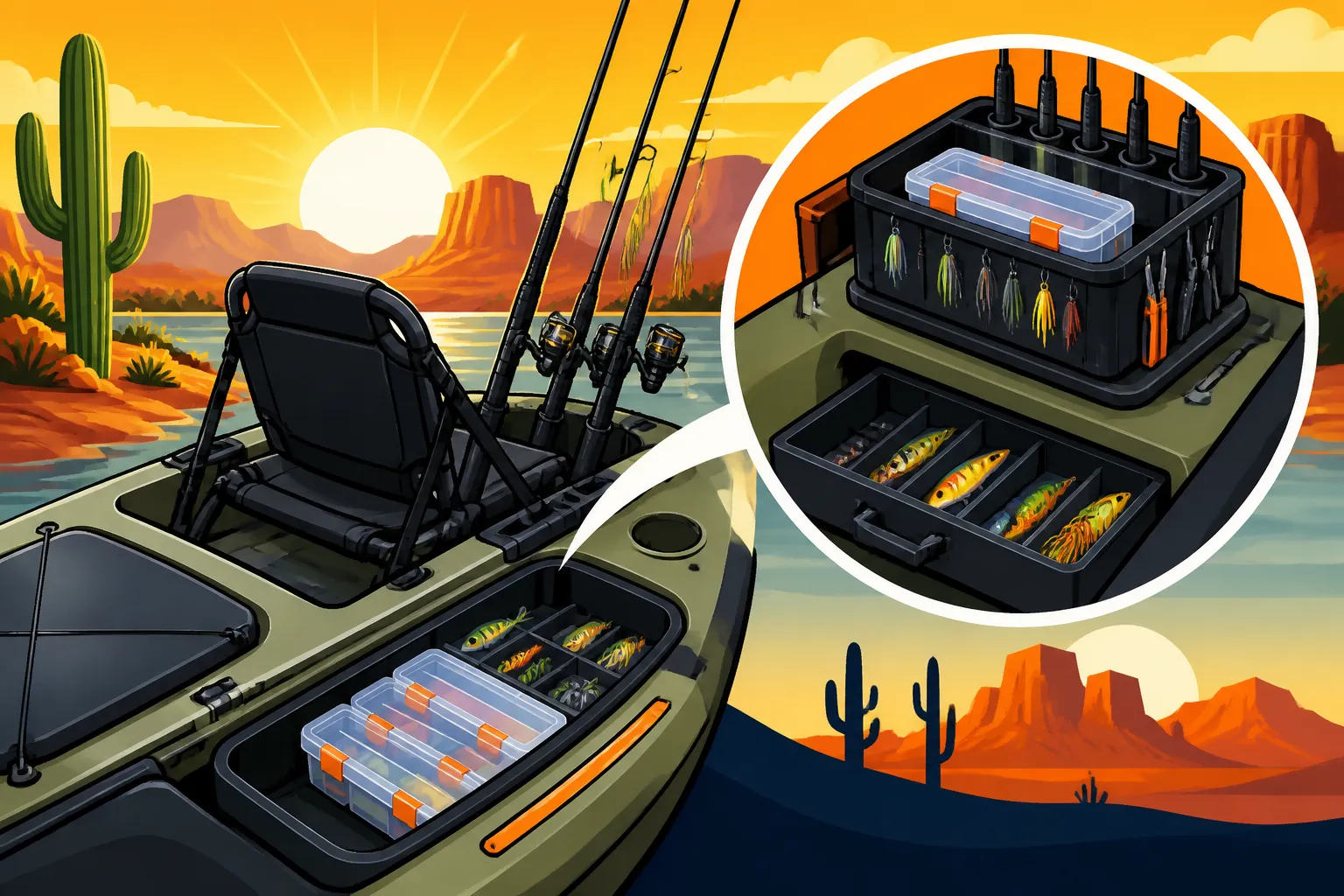
When you need multiple rods at the ready and want to switch between them quickly, vertical storage is often the answer. The classic solution here is the humble milk crate. Many kayak anglers customize a standard milk crate by drilling holes and inserting PVC pipes or tubes to create vertical rod holders. This crate then sits behind your seat, secured to the kayak. It allows you to stand multiple rods upright, making it incredibly easy to grab the one you need without turning around or fumbling.
These crate systems also often provide additional storage within the crate itself for tackle bags, soft plastics, or other frequently used items. They keep your rod butts off the deck, protecting them from standing water, and keep your reels elevated. Just remember to secure the entire crate to your kayak using bungee cords or straps, as a rogue wave or sudden movement could send your entire setup overboard. A well-rigged milk crate is an affordable and highly effective way to manage multiple rods and some tackle.
Maximizing Tackle Storage in a Kayak
Now that your rods are sorted, let's talk tackle. Lures, hooks, weights, pliers, line—the list goes on. Keeping all this organized, protected, and accessible in a kayak is an art form. The key is thinking compact, waterproof, and modular. You want to be able to grab a specific type of tackle without rummaging through a mountain of gear.
Waterproof Tackle Boxes and Bags
This is non-negotiable for Arizona kayak fishing. Whether it's splashes from paddling, rain during monsoon season, or simply the condensation inside a cooler on a hot day, water will find its way into your tackle if it's not protected. Hard-sided, O-ring sealed tackle boxes are fantastic for keeping individual lures and components dry. Brands like Plano or Flambeau offer many options, from small utility boxes to larger multi-tray designs.
For a more flexible approach, consider waterproof soft-sided tackle bags or dry bags. These can hold multiple smaller tackle boxes, spools of line, and other essentials. They often have external pockets for quick-access items like pliers or a knife. Many anglers prefer soft bags because they conform better to the irregular spaces within a kayak and are generally lighter. You can find a vast selection of these on Amazon, often with internal dividers and durable zippers, making it easy to grab exactly what you need. Just be sure to check reviews for true waterproofing! Remember to also think about how to carry your Best Baits and Lures for Arizona Fishing.
Crate Systems and Storage Bins
We talked about the milk crate for rod storage, but it's equally valuable for tackle. The beauty of the milk crate is its customizability. Inside the crate, you can place smaller waterproof tackle boxes, a soft-sided tackle bag, or even use dedicated storage bins that fit snugly. Some anglers even attach small waterproof bags to the outside of the crate for items they need constantly, like a measuring tape or small bait containers.
Beyond the classic milk crate, there are purpose-built kayak fishing crates and storage bins designed to fit standard kayak wells. These often come with integrated rod holders, comfortable handles, and tie-down points. They are generally more robust and durable than a standard milk crate and offer more refined organization features. They're an excellent solution for keeping your main tackle supply consolidated and secure directly behind your seat, making it a hero for your Essential Tackle Box Setup for Arizona Beginners.
Under-Seat and Hatch Storage
Don't forget the built-in storage your kayak offers! Many kayaks have storage hatches, often in the bow, stern, or even directly in front of the seat. These are perfect for items you don't need immediate access to but want to keep dry and secure, such as extra clothing, a first-aid kit, snacks, or larger pieces of tackle. Always use dry bags within these hatches for maximum water protection, as hatches are rarely completely watertight on their own.
Some kayaks also have under-seat storage areas, which can be surprisingly useful for small, flat items like leader material, a multi-tool, or a small box of terminal tackle. These spaces are often overlooked but can be ideal for items you need frequently without having to reach far. Think about using small, flat waterproof pouches that slide neatly into these otherwise wasted spaces.
Attachment Points and Rail Systems
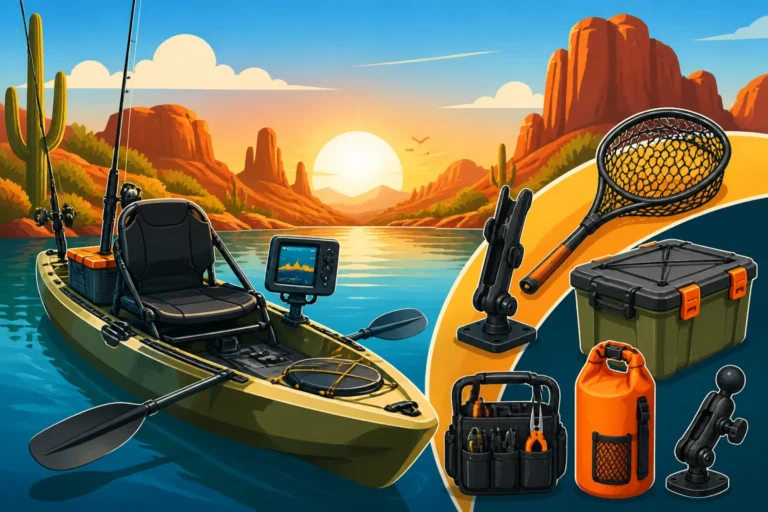
Modern fishing kayaks often come with track systems or mounting rails along the gunwales. These are game-changers for customizing your storage. You can attach a variety of accessories: tool holders, small tackle tray organizers, camera mounts, and even additional rod holders. These systems allow you to keep essential tools like pliers, line cutters, and a fish gripper easily accessible without taking up precious internal space.
If your kayak doesn't have a track system, consider adding one. It's usually a straightforward DIY project that can significantly expand your storage capabilities. You can find track mounts and compatible accessories at most outdoor retailers, including Bass Pro Shops, which will allow you to personalize your setup precisely to your fishing needs. Make sure to choose robust accessories that can withstand the rigors of frequent use and the Arizona sun.
Organization Tips and Tricks for Kayak Anglers
Getting all your gear into the kayak is one thing; keeping it usable and ready for action is another. A little foresight and some clever organizational habits can make a huge difference in your enjoyment on the water.
Go Minimalist But Prepared
This is perhaps the most important rule for kayak fishing. Every item you bring takes up space, adds weight, and presents another opportunity for clutter. Before each trip, think critically about what you really need. Are you targeting bass exclusively? Then leave the trout gear at home. Fishing a small community pond? You probably don't need five different rod setups. Pack only the lures and tackle that are relevant to your target species, the specific body of water, and the conditions you expect.
However, "minimalist" doesn't mean "unprepared." Always carry essential safety gear, such as a personal flotation device (PFD), a whistle, a first-aid kit, and enough water, especially when fishing in Arizona's heat. Remember to check Boating Safety Gear Requirements in Arizona before heading out. The goal is to be efficient with your space, not to sacrifice critical items. It’s about being smart with your Fishing Gear Checklist for Desert Lakes.
Color-Coding and Labeling Your Tackle
When you're out on the water, you don't want to waste time fumbling through identical-looking tackle boxes. Color-coding your tackle boxes or labeling them clearly can save you precious minutes. For instance, use a blue box for crankbaits, a green box for soft plastics, and a red box for terminal tackle. If you're using opaque dry bags, label them with a permanent marker.
This simple system allows you to quickly grab the right container without even opening it. It's especially useful if you have multiple small tackle boxes that fit into a larger crate or bag. Imagine you need a worm hook; instead of opening three different boxes, you know exactly which labeled box to reach for. This helps you stay focused on fishing, not on searching for gear.
Secure Everything You Bring
We've touched on this, but it bears repeating: tie down, leash, or secure absolutely everything. From your rods to your paddle, cooler, and tackle crate, if it can float away, it will. A sudden gust of wind, a boat wake, or even an excited fish can cause unsecured items to go overboard. Bungee cords, carabiners, and rod leashes are your best friends here.
Make it a habit to do a quick check before you launch and throughout your trip. Ensure that your rod tips aren't snagging on anything when you paddle and that your tackle boxes are firmly in place. This not only protects your gear but also prevents potential environmental hazards if items were to sink. Even items inside hatches should ideally be in dry bags, just in case the hatch seal fails. This kind of security is essential whether you're fishing a calm urban lake or the vast waters of Lake Havasu. Remember, an ounce of prevention is worth a pound of lost lures!
Disclaimer
This article is for general informational purposes only and does not constitute professional advice. Laws, prices and regulations vary by location and change over time. Consult a qualified professional for guidance on your specific situation.