Best Sinkers for Bottom Fishing
One of the most frustrating things for any angler, especially here in Arizona where conditions can vary wildly, is feeling like your bait isn't where it needs to be. You cast out, wait patiently, but nothing. Often, the culprit isn't your bait or your technique, but simply that your offering isn't anchored on the bottom where the fish are feeding. This comprehensive guide will dive deep into the world of sinkers, explaining how these unassuming pieces of tackle are absolutely vital for successful bottom fishing in our unique desert waters, and how to choose and use the best ones for your next outing.
The Crucial Role of Sinkers in Arizona Bottom Fishing
Arizona's fishing scene is incredibly diverse, from vast desert reservoirs like Lake Pleasant and Roosevelt Lake to cooler, flowing rivers such as the Salt and Verde, and even the numerous community fishing ponds. No matter where you drop a line, if your target species feeds near the bottom – and many of our most popular fish do – a properly selected and rigged sinker is your best friend. Without it, your bait might float aimlessly, drift away in the current, or simply not present naturally to the fish you're trying to entice.
Why Bottom Fishing is Popular in Arizona
Bottom fishing holds a special place in the hearts of many Arizona anglers because it's effective for a wide array of species, and it often means you can relax a bit more than constant casting and retrieving. Here in the Grand Canyon State, species like channel catfish, flathead catfish, carp, and even some species of bass and crappie are frequently found feeding along the lake and river bottoms. Catfish, in particular, are known bottom dwellers, scavenging for food, and presenting a juicy piece of cut bait right on their dinner table is often the most productive way to hook into a big one. It's a method that often yields consistent results, especially when conditions are tough, and fish are less active higher in the water column.
Imagine a sweltering Arizona summer day; the surface water temperatures are scorching. Where do the fish go? Deeper, cooler waters, often right down on the bottom, seeking refuge from the heat and finding their meals there. This is precisely when bottom fishing shines. You're not trying to tempt a sluggish bass with a fast-moving topwater lure; instead, you're placing a tantalizing meal directly in front of a fish that might be hunkering down.
How Sinkers Impact Your Success
A sinker's primary job is simple: get your bait down to the desired depth and keep it there. But its impact goes far beyond that. The right sinker helps in casting distance, especially when you need to reach that distant channel or structure. It provides stability, preventing your bait from being swept away by currents in rivers or even subtle undertows in lakes. More importantly, it helps in presenting your bait naturally. Whether you want your bait to lay still, tumble slowly, or bounce along the bottom, the sinker is key.
Think about fishing on the Colorado River. The current can be surprisingly strong, even in seemingly calm stretches. Without adequate weight, your precious bait, perhaps a large piece of shad for a flathead, would be carried downstream in seconds, never settling in a productive eddy or hole. Or consider a windy day on Lake Pleasant; waves can push lighter baits around, making it impossible for fish to find them. A heavy enough sinker ensures your bait stays put, giving the fish ample time to discover and take it. It’s about control and presentation, two cornerstones of successful angling.
Common Challenges in Arizona Bottom Fishing
Arizona presents some unique challenges that make sinker selection even more critical. First, the heat. Our desert lakes can get incredibly warm, influencing fish behavior and requiring you to fish deeper where the water is cooler. This often means needing heavier sinkers to quickly punch through warm surface layers to reach those deeper, cooler thermoclines where fish are holding.
Second, the varied terrain. You might be fishing a silty, muddy bottom in one spot, then move to a rocky, snag-filled area in another, especially in our impoundments like Canyon Lake or Apache Lake. A sinker that works perfectly on soft bottoms might get hopelessly snagged in rocks. Currents, even in seemingly still lakes, can be an issue, particularly near inflows or dam outflows. Then there's the wind, a constant companion on many Arizona lakes, which can create waves and drift that easily move lighter tackle. Understanding these challenges is the first step in mastering bottom fishing here, and it all begins with knowing your sinkers.
Exploring the Array of Sinkers for Arizona Waters
When you walk into a Bass Pro Shops or browse online through Amazon, the sheer variety of sinkers can be overwhelming. Each one is designed for a specific purpose, a particular type of water, or a certain presentation. Knowing the differences and when to use each one will make a significant difference in your catch rates.
Pyramid Sinkers: The Classic Choice
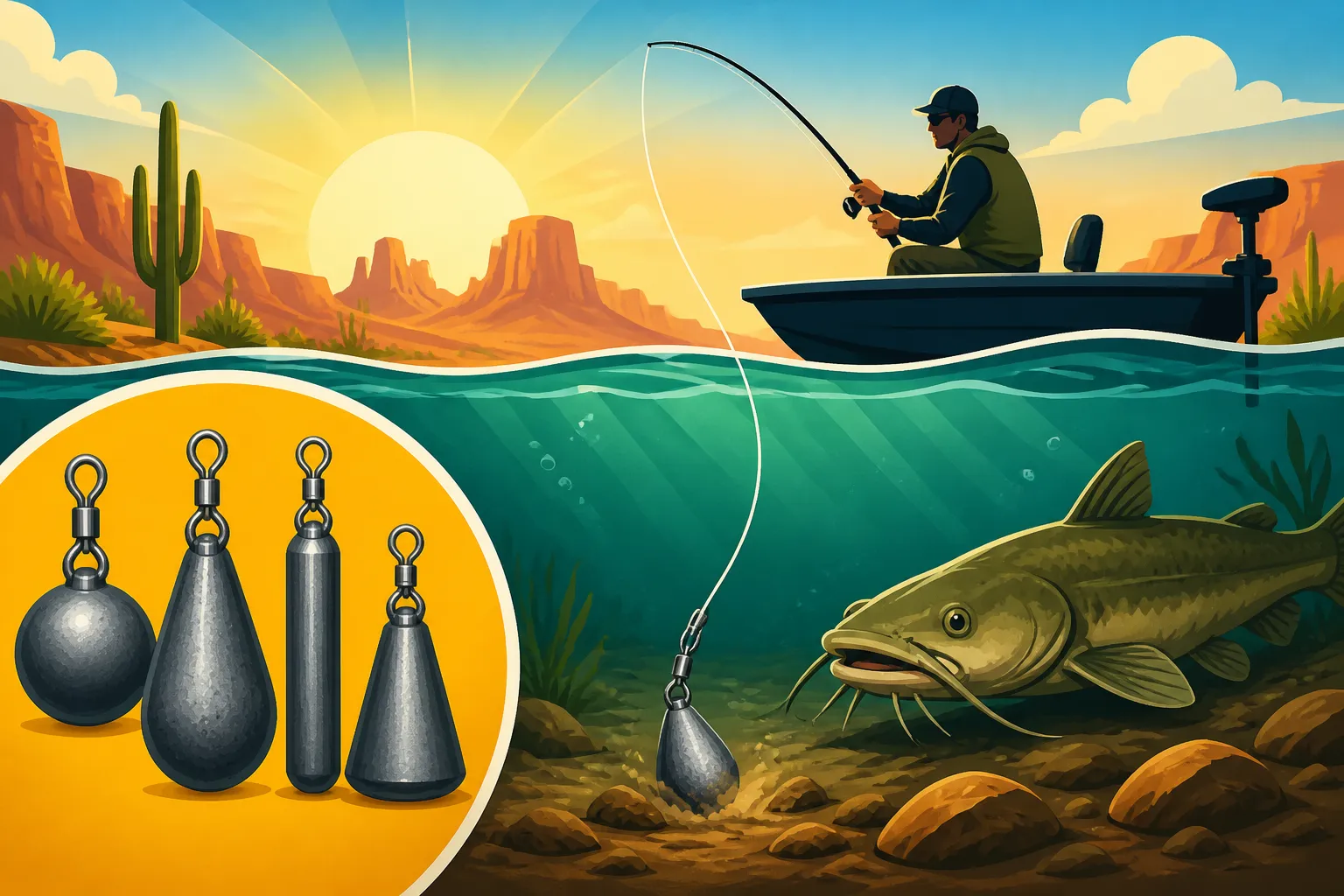
Pyramid sinkers are exactly what they sound like: shaped like a pyramid with a loop at the top for attaching your line. Their distinctive shape, with sharp edges and a flat base, makes them incredibly effective at digging into soft bottoms like sand, mud, or silt. This makes them excellent for holding steady in current or on windy days, preventing your bait from drifting.
They are a fantastic choice for areas with relatively clean, soft bottoms, common in many parts of Lake Havasu or some of the community fishing lakes. If you're fishing for catfish in a slow-moving river or a large reservoir where you want your bait to stay exactly where you cast it, a pyramid sinker is often your go-to option. They range in weight from a fraction of an ounce up to several ounces, allowing you to match the sinker to the current or depth you're targeting. Just be aware that their shape, while great for holding, can also make them prone to snagging if you're fishing over rocky or debris-strewn areas.
Egg Sinkers and Bullet Sinkers: Streamlined Options
Egg sinkers are oval or egg-shaped with a hole running through the center. They are designed to slide freely on your main line, which is why they're a cornerstone of the Carolina Rig. This sliding action allows a fish to pick up the bait and move away without immediately feeling the weight of the sinker, making for a more natural presentation and often leading to better hook sets. Bullet sinkers are similar but typically more elongated and pointed, specifically designed for Texas Rigging soft plastics for bass, allowing them to slip through weeds and cover with minimal resistance.
For bottom fishing with live bait or cut bait, egg sinkers are incredibly versatile. They are great for catfishing in a variety of conditions, from still lakes to moderate currents. The free-sliding nature means less resistance for a biting fish. Bullet sinkers, while primarily for bass fishing, can also be useful when you need a streamlined weight to get through light cover for other bottom-dwelling species. Their smooth profile means they are less likely to snag than pyramid sinkers when dragged over slightly rougher terrain.
Bank Sinkers and Bell Sinkers: Versatility on the Bottom
Bank sinkers are teardrop or pear-shaped, often with an eyelet at the narrower end. They are a workhorse sinker, very popular for general bottom fishing. Their shape helps them hold reasonably well in current without burying themselves excessively, and they tend to roll less than egg sinkers. Bell sinkers are similar, resembling a bell with a swivel built into the top. The swivel is a great feature, as it helps prevent line twist, especially when casting or retrieving in current.
These sinkers are excellent all-around choices for various bottom fishing scenarios in Arizona. Whether you're targeting carp in a canal, catfish in the Gila River, or panfish in a community pond, bank and bell sinkers offer a good balance of holding power and resistance to snagging. They come in a wide range of weights, making them adaptable for deep holes, moderate currents, or simple bank fishing setups.
Flat and Disc Sinkers: Holding Power in Current
Flat or disc sinkers, sometimes called "no-roll" sinkers, are designed specifically to resist rolling in strong currents. Their flat profile creates more surface area against the bottom, acting like an anchor. This makes them ideal for fishing in rivers or strong currents where you absolutely need your bait to stay in one spot. These are particularly useful on stretches of the Colorado River or the lower Salt River where the flow can be substantial.
While excellent for anchoring, their flat shape can sometimes make them prone to snagging in very rocky bottoms. However, if your primary concern is preventing your rig from being swept downstream, these are often the best solution. They are heavy, typically starting at an ounce or two and going up significantly, providing the necessary stability for robust water conditions.
Here's a quick comparison of common sinker types:
| Sinker Type | Best Use Case | Holding Power in Current | Snag Resistance | Primary Fish Species |
|---|---|---|---|---|
| Pyramid Sinker | Soft/sandy bottoms, strong current | Excellent | Low (in rocks) | Catfish, Carp |
| Egg Sinker | Carolina Rigs, still to moderate current | Moderate | Good | Catfish, Bass, Crappie |
| Bullet Sinker | Texas Rigs, heavy cover | Low | Excellent | Bass |
| Bank Sinker | General bottom fishing, moderate current | Good | Moderate | Catfish, Panfish, Carp |
| Bell Sinker | General bottom fishing, moderate current (swivel) | Good | Moderate | Catfish, Panfish, Carp |
| Flat/Disc Sinker | Strong currents, clean bottoms | Excellent | Low (in rocks) | Catfish, Stripers |
Matching Sinkers to Arizona's Diverse Fishing Environments
Arizona's landscapes offer a wide spectrum of fishing environments, each demanding a slightly different approach to sinker selection. What works in a placid urban pond will likely fail in a roaring river. Understanding the bottom composition, current, and depth is paramount to choosing the right weight and shape.
Still Water Lakes and Ponds
For fishing in still waters like many of our smaller community lakes (think Tempe Town Lake or the various urban ponds stocked through the Arizona Community Fishing Program Rules) or the calmer coves of larger reservoirs, you generally won't need extremely heavy sinkers. The main concerns here are casting distance and keeping your bait stationary on a calm day. Often, an egg sinker or a small bank sinker from 1/4 ounce to 1 ounce is sufficient.
If you're targeting catfish in these still waters, a sliding egg sinker on a Carolina rig often offers the most natural presentation, allowing the fish to mouth the bait without feeling the resistance of the weight. For panfish, a split shot or a tiny bell sinker might be all you need to get your bait down slowly. The key is to use just enough weight to get your bait to the bottom and hold it there, but not so much that it's an unnecessary drag on your cast or creates too much resistance for the fish. On a super calm day, you might even be able to get away with very light tackle, allowing your bait to flutter down more slowly, giving finicky fish more time to react.
Rivers and Moving Current
When you transition to Arizona's rivers, like the Verde, San Pedro, or certain sections of the Colorado River, the game changes entirely. Current is your biggest challenge, and it's where sinkers truly earn their keep. Here, you'll need sinkers that can dig in or have a shape designed to resist rolling. Pyramid sinkers are fantastic on sandy or silty river bottoms, their sharp edges gripping the substrate. Flat or disc sinkers also excel in strong currents, preventing your bait from being swept away.
The weight you'll need will depend directly on the speed of the current and the depth. A good rule of thumb is to use the lightest sinker that will still hold your bait in place. Start with an ounce or two, and if your bait is still drifting, slowly increase the weight until it holds. This minimizes the amount of resistance on your line and makes it easier to detect subtle bites. If you're fishing for larger species like flathead catfish in the main channel of a river, you might find yourself using very heavy weights, sometimes several ounces, to combat the powerful flow. Best Line for Catfish Fishing will also play a critical role here.
Rocky Bottoms and Snaggy Areas
Many of Arizona's most productive fishing spots, especially in our desert lakes, feature rocky bottoms, submerged timber, or brush piles – structures that hold fish but are also notorious for snagging tackle. Fishing these areas requires a strategic approach to sinker selection. Using a pyramid or flat sinker here is almost a guaranteed way to lose your rig.
Instead, opt for sinker shapes that are less prone to getting wedged. Egg sinkers, especially on a Carolina rig where they slide freely, tend to roll over obstructions rather than getting stuck. Another excellent option is a "slinky" sinker, which is essentially a lead weight encased in a piece of paracord or tough tubing. This flexible design allows it to bend and slide over rocks and through snags with remarkable efficiency. You can even make these yourself. The goal is to minimize protrusions that can grab onto underwater obstacles, allowing you to retrieve your bait, or at least your line, after a missed bite or a repositioning cast. Anglers targeting bass around deep rocky ledges or crappie in brush piles often prioritize snag resistance over absolute holding power.
Effective Rigging with Bottom Fishing Sinkers
Knowing your sinkers is one thing, but knowing how to rig them effectively for specific situations is where the real magic happens. The way you attach your sinker directly impacts your bait presentation, bite detection, and overall success, especially when targeting different species in Arizona's diverse waters.
Carolina Rig: A Popular Choice for Desert Lakes
The Carolina Rig is an absolute staple for bottom fishing, particularly popular in Arizona's desert lakes for species like largemouth bass, smallmouth bass, and even catfish. Its beauty lies in its simplicity and effectiveness. The setup involves an egg sinker (or sometimes a bullet sinker) threaded onto your main line, followed by a bead, and then a swivel. Your leader, typically 1 to 3 feet long, is then tied to the other end of the swivel, with your hook and bait at the end of the leader. The bead protects your knot from the sinker, while the swivel prevents line twist and, crucially, allows the sinker to slide freely up and down your main line.
This sliding action is what makes the Carolina Rig so deadly. When a fish picks up your bait, it feels very little resistance because the sinker remains stationary on the bottom while your line slides through it. This gives the fish more time to commit to the bait before it feels the weight of the sinker, often leading to more solid hookups. It's fantastic for covering open flats, submerged humps, or the gradual slopes of points at places like Roosevelt Lake or Lake Pleasant. For a detailed guide, check out How to Fish a Carolina Rig for Largemouth Bass.
Santee Cooper Rig: Adapting for Catfish
While the Carolina Rig is versatile, the Santee Cooper Rig offers a subtle but significant modification that makes it exceptionally effective for catfishing, especially when using cut bait or large chunks of bait. It's essentially a Carolina Rig with one key difference: a float is added to the leader, just above the hook. This float serves a critical purpose: it lifts your bait a few inches or even a foot off the bottom.
Why is this important for catfish? Catfish, particularly flatheads and large channel cats, are often cruising slightly above the very bottom, or they might be foraging in areas with soft, mucky bottoms where a bait laying directly on the mud might get overlooked or even buried. By suspending your bait just off the bottom, the Santee Cooper Rig makes it more visible, allows it to drift enticingly in subtle currents, and keeps it out of the deepest muck. This can make a huge difference in presentation, especially at night when catfish are on the prowl. Catfish Night Fishing Techniques often pair well with this rig.
Three-Way Swivel Rig: For Stronger Currents
When you're dealing with substantial current, like those found in larger rivers or even strong wind-driven flows in big lakes, the three-way swivel rig (also known as a dropper rig or Paternoster rig) becomes incredibly valuable. As the name suggests, it uses a three-way swivel. Your main line ties to one eyelet, a leader (typically shorter) to the sinker ties to a second eyelet, and a longer leader with your hook and bait ties to the third.
The advantage of this rig is that your sinker is tied to a separate, shorter line (the dropper line), often with a lighter breaking strength than your main line. If your sinker gets snagged, you're more likely to break off just the sinker, saving your main line, swivel, and sometimes even your hook and bait. This is a huge benefit when fishing rocky riverbeds or areas with significant debris. The main line runs directly to the swivel, and then your bait is presented on a leader that can swing more naturally above the bottom, keeping it visible even with the sinker anchored firmly. This rig allows for a very stable bait presentation in current and is popular for larger river species.
Materials, Sustainability, and Responsible Sinker Use
Beyond shape and weight, the material your sinker is made from is an increasingly important consideration for both performance and environmental responsibility. For decades, lead was the undisputed king of sinker materials, but as awareness grows about its potential impacts, alternatives are becoming more common.
Lead vs. Lead-Free Alternatives
Lead sinkers are inexpensive, readily available, and very dense, meaning you get a lot of weight in a small package. This density is a big advantage for casting distance and cutting through the water column quickly. However, lead is a toxic heavy metal. When lead sinkers are lost in the water (and every angler loses sinkers eventually), they can gradually degrade and leach lead into the environment, potentially impacting wildlife, especially birds like loons and swans who might ingest them, mistaking them for grit. While the impact in vast desert reservoirs is often less concentrated than in smaller, pristine lakes, it's still a consideration for responsible anglers.
In response to these concerns, a variety of lead-free sinker alternatives have emerged. These include:
- Tungsten: Extremely dense, even denser than lead, allowing for very small sinker profiles. It's more expensive than lead but is a top-tier performance alternative, particularly favored by bass anglers.
- Steel/Iron: A more affordable lead-free option, though less dense than lead, so sinkers will be bulkier for the same weight. Still effective and a good choice for general bottom fishing.
- Bismuth: A softer, lead-free metal that has a density similar to lead. It's also becoming more common as a non-toxic alternative.
- Brass: Another metal alternative, often used for bullet weights, offering good density and a hard, snag-resistant surface.
Many anglers are making the switch to lead-free options, especially for smaller weights that are more likely to be ingested by wildlife. While they might cost a bit more upfront, the environmental benefits are clear. Choosing lead-free alternatives is a simple way to practice responsible angling and help protect Arizona's beautiful aquatic ecosystems for future generations.
Minimizing Sinker Loss and Environmental Impact
No matter what material your sinkers are made from, losing them is part of fishing. However, there are things you can do to minimize loss and reduce your environmental footprint.
- Choose the Right Sinker for the Terrain: As discussed, using a pyramid sinker in a rocky area is asking for a snag. Selecting the appropriate sinker type for the bottom you're fishing will drastically reduce how many you lose.
- Use Breakaway Rigs: For extremely snaggy areas, consider a breakaway sinker system. This is often an adaptation of the three-way swivel rig where the line to the sinker is intentionally lighter, designed to break off easily if the sinker gets stuck, saving the rest of your rig.
- Retrieve Carefully: When fishing rocky areas, try to reel your line in slowly and lift your rod tip high to encourage the sinker to roll over obstacles rather than getting wedged. If you feel a snag, try pulling from a different angle or giving a few slack-line jerks to dislodge it.
- Recycle Old Sinkers: If you find old lead sinkers (or any fishing weights) on the bank, consider picking them up and disposing of them properly, or even recycling them if your local facilities accept lead. Many tackle shops, like those you might find at Bass Pro Shops, have programs for recycling old fishing line and sometimes tackle.
By being mindful of your sinker choices and practices, you're not just improving your fishing success but also contributing to the health of Arizona's stunning natural waters.
Pro Tips for Maximizing Your Bottom Fishing Success
So you've chosen your sinker, tied your rig, and you're out on the water. Now what? There are still a few invaluable tips and tricks that can elevate your bottom fishing game, from understanding the subtle takes of a fish to maintaining your gear.
Understanding the Bite and Setting the Hook
One of the biggest challenges in bottom fishing, especially with heavier sinkers, is detecting bites. Unlike aggressive surface strikes, a bottom bite can be incredibly subtle – a slight tap, a gentle pressure, or sometimes just a sudden slackening of the line. Your rod, reel, and line all play a role in bite detection. A sensitive rod with a fast tip will transmit those subtle bumps and pulls much better than a stiff, heavy rod. Using a braided line can also significantly improve sensitivity due to its lack of stretch.
When you suspect a bite, don't necessarily set the hook immediately. Many bottom feeders, especially catfish, will "mouth" the bait first, testing it out. If you feel a tap, drop your rod tip slightly to give some slack. If the fish is still there, you'll often feel a more confident pull or a steady movement. That's when you lay into a solid hook set, sweeping your rod upwards and reeling in any slack. The key is patience and paying close attention to your line and rod tip. In strong current, the "bow" in your line can make bites even harder to detect, so watch for any unnatural movement or twitch.
Sinker Storage and Maintenance
While sinkers might seem like indestructible pieces of metal, a little organization and care can go a long way.
- Organize by Type and Weight: Having your sinkers neatly organized in a tackle box or tray by type and weight will save you precious time on the water. Imagine needing a 1-ounce egg sinker and rummaging through a tangled mess of various sizes and shapes – frustrating! Using small compartmentalized boxes or even clear plastic bags labeled with weight and type, readily available on Amazon, can make a huge difference. Essential Tackle Box Setup for Arizona Beginners often emphasizes good organization.
- Prevent Rust: While most sinkers are made of lead or other metals that resist rust, the eyelets or swivels can sometimes corrode, especially if exposed to saltwater (not common in Arizona, but if you combine tackle) or left damp. Ensure your tackle is dry before storing it long-term.
- Check for Burrs: Occasionally, a sinker's eyelet or the hole through an egg sinker can develop a sharp edge or burr, especially after getting knocked around. These burrs can abrade and weaken your fishing line, leading to unexpected break-offs. Before tying on a new sinker, always run your fingernail or a piece of line through the eyelet/hole to check for any sharp spots. If you find one, you can often smooth it down with a small file or even a pair of pliers.
By taking these small steps, you'll ensure your sinkers are always ready for action and won't be the weakest link in your fishing setup, helping you enjoy more successful outings targeting all the fantastic species Arizona has to offer. Whether you're chasing Largemouth Bass Fishing Guide for Arizona in a desert lake or a monster catfish in the river, the right sinker makes all the difference.
Disclaimer
This article is for general informational purposes only and does not constitute professional advice. Laws, prices and regulations vary by location and change over time. Consult a qualified professional for guidance on your specific situation.