Best Fishing Reels for Beginner Anglers in Arizona
Stepping into the world of Arizona fishing can be exhilarating, but let's be honest, it can also feel a little overwhelming when you're just starting out. One of the first big hurdles is figuring out what fishing reel to choose. With so many options out there, it's easy to get lost in jargon and fancy features you don't yet understand. This guide is here to cut through the confusion and help beginner anglers in Arizona find the perfect reel to get started, ensuring your first few trips are filled with bites, not frustration.
Understanding the Basics: What Makes a Good Beginner Reel?
When you're new to fishing, your reel isn't just a tool; it's your main point of interaction with the water and the fish. A good beginner reel isn't necessarily the most expensive or the one with the most bells and whistles. It's the one that helps you learn, build confidence, and enjoy the experience without constantly battling your gear. In Arizona's unique fishing environment, with its desert lakes, community ponds, and occasional streams, specific factors become even more important.
Ease of Use and Learning Curve
For a beginner, simplicity is paramount. You want a reel that feels intuitive, one where casting and retrieving come naturally, allowing you to focus on the act of fishing itself—feeling the bites, understanding the water, and enjoying the outdoors. Nothing sours a new hobby faster than constantly fighting your equipment. Imagine trying to learn to drive a stick shift in rush hour traffic versus an automatic on a quiet back road; the latter is much less stressful and more conducive to learning.
A reel that requires minimal setup and troubleshooting means more time actually fishing. It means less chance of tangled lines, jammed spools, or complicated adjustments that can stop you dead in your tracks. When you're out there, whether at a bustling community lake or a serene high-country pond, you want to be able to pick up your rod, cast, and start fishing without a second thought. This ease of use allows you to absorb the other crucial elements of angling, like how different baits behave, how fish react to presentation, or how to identify good fishing spots.
Durability for Desert Conditions
Arizona's environment is beautiful, but it can be tough on gear. We're talking about scorching sun, abrasive sand and dust, and often, long walks over rocky terrain to get to your favorite fishing hole. A beginner reel needs to be robust enough to handle these conditions without falling apart after a few trips. It's not about having military-grade indestructible equipment, but rather something that can take a few bumps, resist the fine dust that seems to get everywhere, and stand up to the heat without seizing up.
Think about the reality of a beginner angler: gear might get dropped, bumped against a cooler, or even accidentally dragged in the sand. A flimsy plastic reel might not survive, leading to an unexpected and disheartening expense. Choosing a reel with a sturdy construction, perhaps from a reputable brand known for entry-level durability, can save you a lot of grief. This ensures that your investment, even if modest, will last long enough for you to truly decide if fishing is a passion you want to pursue further.
Value for Money: Getting Started Without Breaking the Bank
Let's face it, getting into any new hobby can be expensive, and fishing is no exception. As a beginner, you don't need the top-of-the-line, professional-grade equipment. Your first reel should offer a good balance of performance and affordability. The goal is to get a functional, reliable piece of gear that won't make you wince when you see the price tag, allowing you to allocate funds to other essentials like Essential Tackle Box Setup for Arizona Beginners or your Arizona Fishing License Guide.
There are plenty of fantastic entry-level reels that perform admirably without costing an arm and a leg. Many reputable brands offer excellent options in the beginner price range. Focusing on value means looking for reels that are well-constructed, easy to operate, and have a smooth retrieve, even if they don't boast the lightest materials or the highest number of bearings. Remember, this is your starting point, not your forever reel. You can always upgrade later once you've gained experience and figured out what kind of fishing you enjoy most in Arizona.
The Go-To for Beginners: Spinning Reels
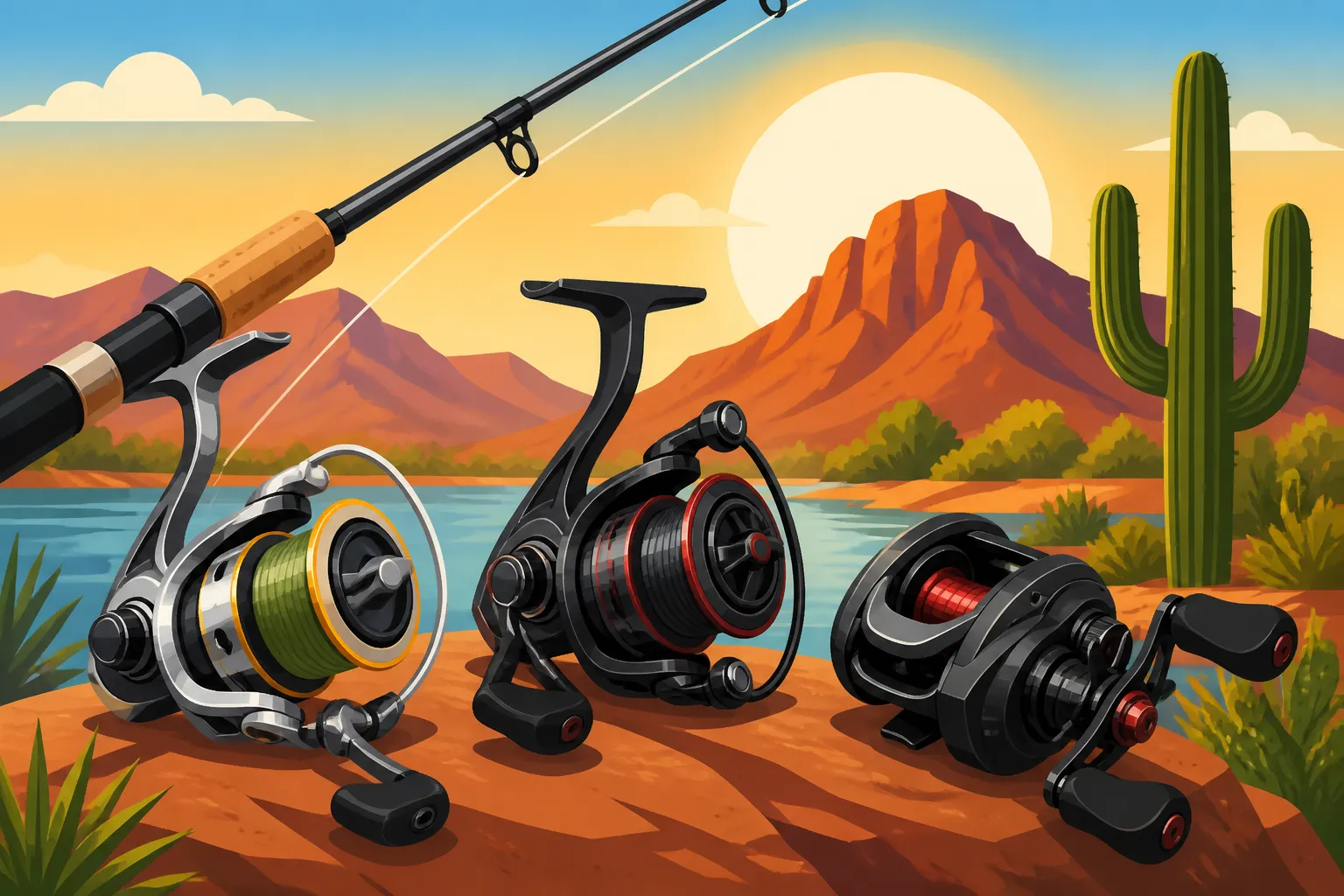
If there's one type of reel that truly stands out as the champion for beginner anglers, it's the spinning reel. You'll see them everywhere, from the small community ponds to the vast waters of Lake Pleasant. They are incredibly versatile and forgiving, making the learning process much smoother and more enjoyable.
Why Spinning Reels Shine for New Anglers
Spinning reels are designed with simplicity in mind. Unlike baitcasting reels, the spool doesn't rotate during the cast. Instead, the line comes off a fixed spool, making backlashes (those dreaded "bird's nests" of tangled line) far less common. To cast, you simply open the bail, hold the line with your finger, swing the rod, and release the line. It's a natural motion that most people pick up very quickly, which is why you'll often see beginners at urban lakes having great success with them.
Their versatility is another huge plus. A good spinning reel can handle a wide range of line sizes and lure weights, meaning you can fish for tiny bluegill with light tackle or switch to a slightly heavier setup for bass or catfish without needing a different reel. This makes them ideal for exploring various fishing techniques and target species in Arizona without constantly buying new gear. From delicate presentations for trout in cooler streams to casting jigs for bass in Best Fishing Lakes in Arizona, a spinning reel can do it all, giving you maximum flexibility.
Key Features to Look for in a Beginner Spinning Reel
While simplicity is key, a few features make a big difference even on an entry-level spinning reel. The drag system is crucial; this is the mechanism that allows line to be pulled off the spool when a fish pulls hard, preventing your line from breaking. A smooth, easily adjustable drag is vital. You want to be able to set it light enough for smaller fish, but tighten it down for a bigger fighter, all without it being jerky or sticky. A clunky drag can lead to lost fish and snapped lines, which is frustrating for anyone, let alone a beginner.
Next, consider the retrieve ratio. This indicates how many times the spool rotates for every turn of the handle. For general beginner fishing, a medium retrieve ratio (around 5.0:1 to 6.0:1) is a good starting point, offering a balance between power for reeling in larger fish and speed for working lures. Finally, a good anti-reverse feature is important. This prevents the handle from turning backward when you stop reeling, ensuring you have a solid hookset and can maintain tension on the line when fighting a fish. These might sound technical, but even budget-friendly reels often have decent versions of these features now.
Common Scenarios for Spinning Reels in Arizona
Spinning reels are truly the workhorses of Arizona fishing, especially for beginners. If you're planning a family trip to one of the many community fishing lakes, a spinning reel is perfect for tossing small baits for sunfish or trout. They excel in these situations because the casts are often shorter, and the targets are typically smaller fish that don't require heavy gear. Places like the various ponds in the Community Park Lakes in Phoenix are tailor-made for spinning gear.
They also shine when you're exploring the state's diverse waters, from the lower Salt River where trout are stocked, to the smaller reservoirs where you might encounter bass and crappie. Their ability to handle light line and small lures makes them ideal for finesse techniques often employed in clear desert waters. Furthermore, if you’re fishing from the bank or a pier, a spinning reel's ease of casting makes it incredibly efficient, allowing you to cover water effectively without complex movements.
Stepping Up: Spincast Reels (The Simplest Option)
For absolute newcomers, especially very young children or those who struggle with fine motor skills, the spincast reel offers an even simpler entry point than the spinning reel. It's the "point and shoot" camera of the fishing world.
The Utmost Simplicity of Spincast Reels
Spincast reels are designed for maximum ease of use. They feature a closed face cover that encloses the spool, protecting the line and preventing tangles. To cast, you simply press and hold a button on the back of the reel, make your casting motion, and release the button. That’s it! The line shoots out, and you then just turn the handle to retrieve. There's no bail to open, no line to hold with your finger, reducing the steps and potential for errors dramatically.
This enclosed design also means the line is less exposed to dirt and debris, which can be a small benefit in dusty Arizona environments. The minimal moving parts and straightforward operation mean less to go wrong and less to learn, making it truly ideal for that very first fishing experience. It allows a beginner to immediately experience the joy of casting and reeling without the frustration of tangled lines or complex mechanics.
Limitations and When to Consider Upgrading
While incredibly simple, spincast reels do come with some limitations. Their enclosed design typically means less line capacity and often a shorter casting distance compared to spinning reels. The drag systems, while functional, are generally less refined and harder to adjust precisely. This can become an issue when you hook into a larger, harder-fighting fish, where a smooth, consistent drag is crucial to preventing line breaks.
Another common drawback is the retrieve mechanism itself. Spincast reels tend to have slower retrieve speeds and can feel less powerful than spinning or baitcasting reels. This limits their effectiveness with certain lures that require a fast retrieve or when you need to quickly bring in a fish. You might find yourself upgrading once you gain confidence and want to cast further, use heavier lines, or target larger fish species that put up a significant fight.
Who Benefits Most from a Spincast Reel
Spincast reels are truly fantastic for introducing very young children to fishing. Their simple operation minimizes frustration and maximizes fun, making it easier for kids to feel successful and engaged. Imagine taking a four-year-old to a pond; a spincast reel is going to be far more intuitive for them than trying to teach them the intricacies of a spinning reel. It removes barriers, allowing them to focus purely on the excitement of casting, watching a bobber, and hopefully, feeling a tug.
They're also a great option for adults who may have physical limitations or simply want the absolute easiest, most foolproof fishing experience possible. If your primary goal is relaxed, casual fishing for panfish or small bass at a local park, and you prioritize ease above all else, a spincast reel can be a perfect choice. It's a stepping stone, a gateway into the sport, and a tool that ensures those initial experiences are positive, laying the groundwork for a lifelong love of angling.
The Next Level: Baitcasting Reels (For When You're Ready)
Once you've mastered the spinning reel and perhaps even the spincast, and you're starting to get serious about specific techniques or target larger fish, you might hear whispers about baitcasting reels. These are the tools of choice for many experienced anglers, offering a different level of control and power, but they come with a significant learning curve.
What Makes Baitcasting Reels Different
Baitcasting reels operate on a different principle than spinning reels. When you cast, the spool itself rotates, directly letting out the line. This direct connection to the line means increased sensitivity, which can be fantastic for feeling subtle bites or what your lure is doing underwater. They also typically offer more power for cranking in larger fish and more precision when casting to specific targets, especially with heavier lures. This precision is key when you're trying to hit a small pocket of water next to submerged timber or a specific rock formation at Roosevelt Lake Arizona Fishing Guide.
The design of a baitcaster means your line comes straight off the reel in line with the rod, reducing friction and allowing for heavier lines and more powerful retrieves. This makes them excellent for targeting big bass with heavy jigs or crankbaits, or for fighting large catfish on the Colorado River. They're built for power and accuracy, which can be a game-changer once you get the hang of them.
The Learning Curve: Avoiding the Dreaded "Birds Nest"
Here's the real talk about baitcasting reels: they have a steep learning curve. The biggest challenge for beginners is preventing the "birds nest" or "backlash." Because the spool rotates freely, if the lure slows down in flight faster than the spool is rotating, the line will continue to pile up on the spool, creating a massive, tangled mess. This usually happens when you try to cast too hard, use too light of a lure, or don't properly thumb the spool (applying light pressure to slow it down).
It can be incredibly frustrating, especially when you're just starting. Many anglers have thrown their baitcaster into the tackle box in despair after battling a tangle for twenty minutes. However, with practice, proper adjustment of the magnetic or centrifugal braking system, and learning to "thumb" the spool during the cast, you can master it. It takes patience and a willingness to spend time practicing casts in your backyard before hitting the water, but the rewards in terms of control and power are well worth it for many anglers.
When a Baitcaster Becomes Advantageous in Arizona
Once you've put in the time and conquered the learning curve, a baitcasting reel can become a serious asset for fishing in Arizona. They excel in situations where you need to throw heavier baits and lures, such as large spinnerbaits, deep-diving crankbaits, or heavy jigs for bass in dense cover. The power they offer means you can muscle fish out of thick brush or submerged trees without fear of breaking your reel or straining its components. This is especially true for fishing lakes like Bartlett and San Carlos, which are known for their big bass.
Baitcasters also provide superior accuracy for pinpoint casting, which is crucial when you're trying to hit specific targets like a shaded pocket under an overhanging tree or a small crevice in a rocky bluff. When you're fishing for largemouth bass, especially, the ability to make precise casts to structure can greatly increase your success. While a spinning reel can certainly catch bass, a baitcaster allows for a level of control and presentation that many experienced bass anglers prefer.
Combo Kits: A Smart Start for Arizona Beginners
For many beginner anglers, the sheer number of choices—rod length, power, action, and then all the different reels—can be intimidating. This is where a rod and reel combo kit truly shines, offering a convenient and often cost-effective solution to get you out on the water faster.
The Convenience of Rod and Reel Combos
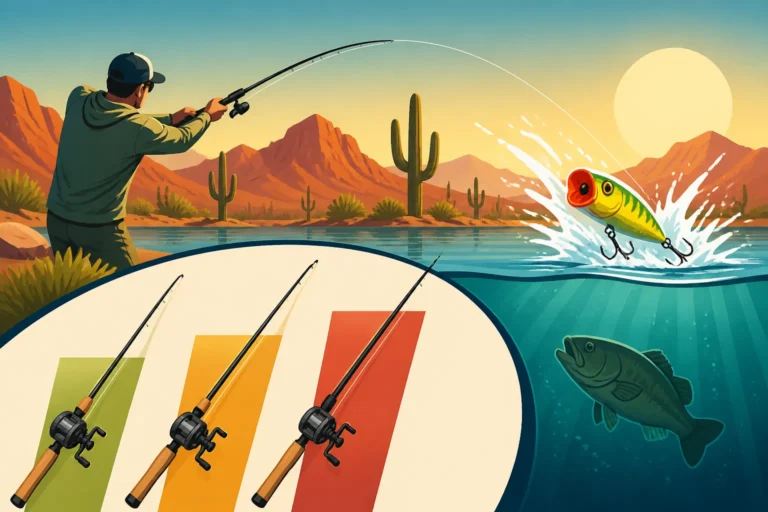
Combo kits are pre-matched sets that include a fishing rod and a reel, often spooled with line, all designed to work together harmoniously. The biggest advantage here is that the guesswork is taken out of the equation. You don't have to worry about whether your reel is too big or too small for your rod, or if the rod's action is suitable for the type of fishing the reel is designed for. The manufacturers have already done that pairing for you. This means you get a balanced setup right out of the box, allowing you to focus immediately on casting and fishing rather than on compatibility issues.
They also tend to be quite budget-friendly compared to buying a rod and reel separately, making them an excellent value proposition for someone just dipping their toes into the angling world. Many of these combos are perfectly adequate for catching common Arizona species like bass, catfish, and trout at community lakes or smaller reservoirs. You can find a wide range of options at retailers like Bass Pro Shops or even online at Amazon, catering to various budgets and target species.
What to Look for in a Quality Combo
While convenience is great, not all combos are created equal. When selecting a combo, look for a reputable brand known for producing quality fishing gear, even at the entry level. While you won't get premium components, you should still expect a smooth retrieve and a functional drag system from the reel. The rod should feel comfortable in your hand and have a decent amount of flexibility (action) suitable for general-purpose fishing. For most Arizona beginners, a medium-light or medium power rod with a fast or moderate-fast action will be a versatile choice.
Check the reel's specifications, even in a combo. Does it have a decent number of ball bearings (more isn't always better, but too few can make it feel clunky)? Is the drag easily adjustable? For the rod, consider the handle material (cork or EVA foam is comfortable) and the guides (they should be smooth and securely attached). A good combo might not have the absolute best of everything, but it should feel sturdy and perform reliably without any obvious hitches or cheap-feeling components. Remember, this setup is about giving you a positive first experience, so avoid anything that feels flimsy or poorly assembled.
Popular Beginner Combos for Arizona Fishing
For general-purpose fishing in Arizona's diverse waters, a 6-foot to 7-foot spinning combo with a medium-light or medium action rod and a 2500 or 3000 series spinning reel is an excellent starting point. This setup is versatile enough for targeting bass, trout, panfish, and even smaller catfish in places like the numerous community fishing program lakes or the Lower Salt River. Many brands offer great value in this category. For example, some manufacturers will have entire lines dedicated to beginner combos, often clearly labeled for general fishing.
If you know you're primarily going after panfish with very light baits, a shorter, lighter action combo (5 to 6 feet, ultra-light or light action) would be more sensitive and fun. Conversely, if you plan to target larger catfish or heavier bass from the get-go, a slightly heavier medium-heavy combo might be more appropriate. However, for true beginners, the general-purpose spinning combo is almost always the safest bet, offering the broadest range of applications for various Fish Species Guide for Arizona Lakes.
| Reel Type | Ease of Use | Learning Curve | Common Use Case in AZ | Pros | Cons |
|---|---|---|---|---|---|
| Spincast | Easiest | Very Low | Kids, casual panfishing, absolute beginners | Simple "point and shoot" operation, few tangles | Limited casting distance, less precise drag |
| Spinning | Easy | Low | General purpose, bass, trout, panfish, light lures | Versatile, easy casting, good for various species | Can get line twist if not spooled correctly |
| Baitcasting | Difficult (initially) | High | Heavy lures, large bass, precision casting | Powerful, accurate, high sensitivity | Prone to backlashes, takes practice to master |
Essential Reel Maintenance for Arizona Anglers
You've invested in your first reel, you're catching fish, and you're loving it! To keep that positive experience going and ensure your reel lasts for many seasons to come, a little bit of maintenance goes a very long way. Especially in Arizona, where dust, extreme heat, and sometimes muddy waters are common, proper care is not just a suggestion—it's essential.
Cleaning Your Reel After Each Trip
This is perhaps the most crucial step, especially in our dusty desert environment. After every fishing trip, take a few minutes to wipe down your reel. Use a damp cloth to remove any visible dirt, sand, mud, or fish slime. Pay close attention to the bail arm and the line roller on spinning reels, as well as any exposed gears or the line guide on baitcasting reels. These areas collect debris easily and can cause friction or sluggish performance if not cleaned. Imagine fine Arizona dust grinding away at delicate components; it's a recipe for premature wear.
For a deeper clean, a soft toothbrush can help get into crevices. Never submerge your reel in water unless it's specifically designed for it (most aren't). Saltwater anglers are often diligent about rinsing their gear, but even freshwater lakes in Arizona can have some mineral content or fine silt that can accumulate. A quick wipe-down and air dry in a shaded area will extend the life of your reel significantly and keep it running smoothly.
Lubrication and Basic Care
Beyond cleaning, occasional lubrication is vital for maintaining the internal mechanisms of your reel. After a few trips, or certainly after a dusty or rainy outing, a small drop of reel oil on moving parts like the handle knob, line roller (on spinning reels), and level wind (on baitcasting reels) can make a huge difference. For the internal gears, a very thin layer of reel grease might be appropriate, but be careful not to over-lubricate, as this can attract more dirt.
Always use lubricants specifically designed for fishing reels. Household oils or general-purpose greases can often contain chemicals that might damage plastic or rubber components, or they might be too thick or too thin for the precision gears of a fishing reel. Check your reel's manual for specific lubrication points and recommended types of oil or grease. This simple step reduces friction, prevents corrosion, and keeps your retrieve feeling smooth and effortless.
Line Management: Spooling and Changing Line
Your fishing line is a direct extension of your reel, and proper line management is critical for optimal performance. First, when spooling new line onto your reel, ensure it's done correctly to avoid line twist, especially with spinning reels. Line twist can lead to knots, tangles, and frustrating casting issues. Most spools of line will have directions, or a quick search online can show you the proper technique. Overfilling or underfilling your spool can also cause problems, so aim for a fill level that's about 1/8 inch below the rim of the spool.
Over time, fishing line degrades due to sun exposure, abrasion, and stretching from fighting fish. For most beginner anglers, especially with monofilament line, it's a good practice to change your line at least once a season, or more frequently if you fish a lot or notice signs of wear and tear. Old, brittle line is a sure way to lose fish. Learning how to properly tie basic knots and regularly checking your line for nicks and abrasions will also save you headaches and heartbreak when that trophy fish finally bites. Good line management is as important as the reel itself for successful angling.
Where to Find Your First Fishing Reel in Arizona
You're armed with knowledge, and now it's time to actually get your hands on a reel! Deciding where to make your purchase is almost as important as choosing the reel itself, as different retailers offer different experiences and advantages.
Local Outdoor and Sporting Goods Stores
Visiting a local sporting goods store is an excellent option for beginners. Places like Bass Pro Shops often have a wide selection of fishing gear, from entry-level combos to more advanced setups. The biggest advantage here is the ability to physically hold the reels, feel their weight, test the retrieve, and see how they balance with different rods. This "hands-on" experience is invaluable, as what feels good to one person might not feel right to another. You can pick up a few different models, test the drag system, and get a sense of the overall quality.
Beyond the physical interaction, these stores usually employ knowledgeable staff who can offer personalized advice. You can explain your budget, what kind of fishing you plan to do (e.g., "I want to fish for trout at Goldwater Lake" or "I want to catch bass at Lake Pleasant"), and they can guide you toward suitable options. They might even offer tips on Beginner Fishing Techniques for Arizona Desert Lakes or local hotspots. This expert advice, combined with the tactile experience, makes local stores a fantastic resource for making an informed first purchase.
Online Retailers: Selection and Deals
Online retailers, such as Amazon, offer an unparalleled selection of fishing reels at competitive prices. You'll often find a wider variety of brands and models online than in any single physical store, giving you more options to compare. This can be particularly useful if you've done your research and know exactly which model you want, or if you're looking for specific features that might be harder to find locally. The convenience of shopping from home, anytime, is also a major draw.
However, buying online means you can't physically inspect the reel before it arrives. You rely heavily on product descriptions, reviews, and images, which sometimes don't tell the whole story. While customer reviews can be very helpful for gauging general satisfaction, they don't replace the feeling of a reel in your hand. If you choose to buy online, make sure to purchase from reputable sellers with good return policies, just in case the reel isn't what you expected when it arrives. For beginners, it might be a good strategy to first visit a local store to get a feel for different reel types and sizes, then use that knowledge to confidently purchase online if you find a better deal.
Disclaimer
This article is for general informational purposes only and does not constitute professional advice. Laws, prices and regulations vary by location and change over time. Consult a qualified professional for guidance on your specific situation.