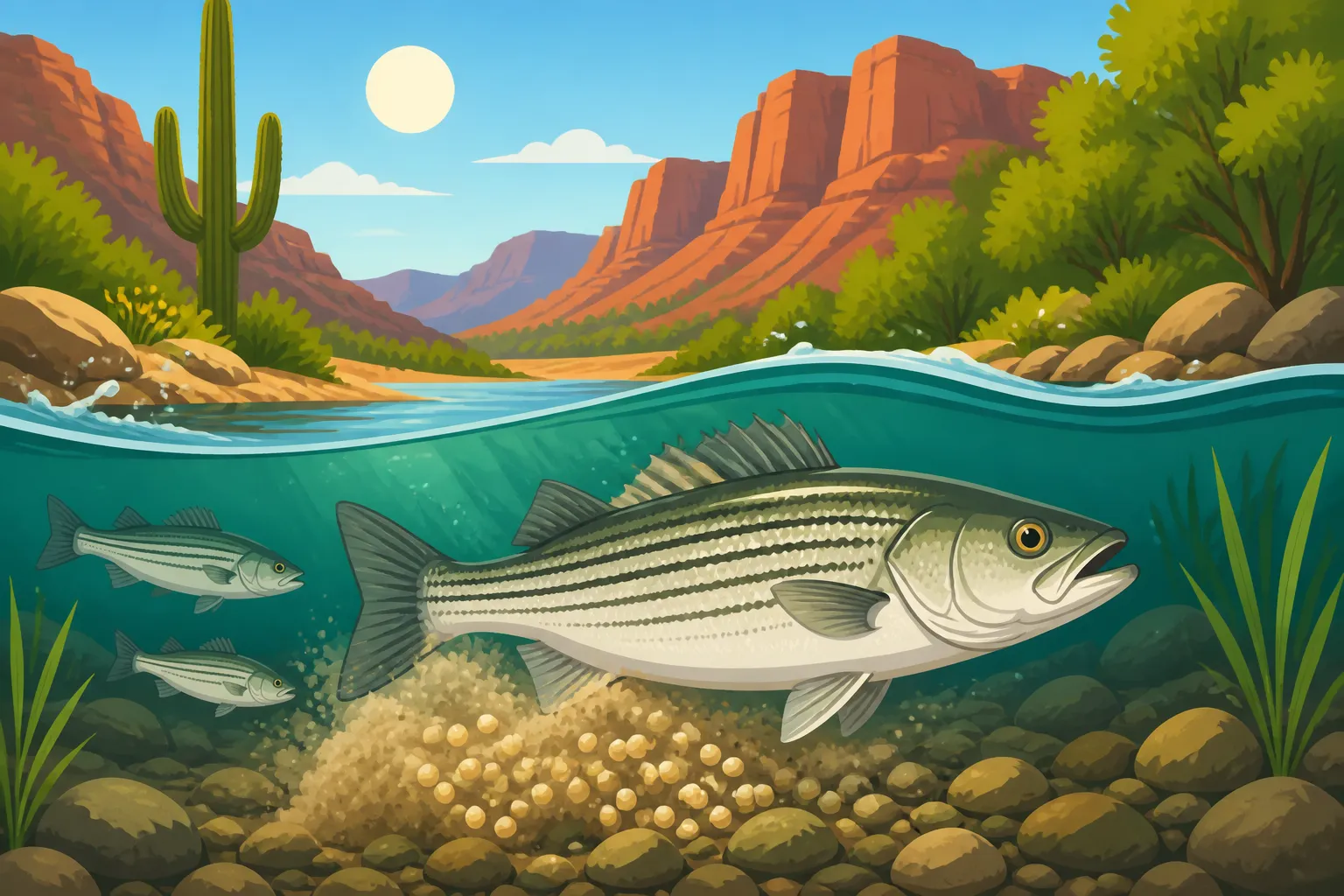
Spawning Behavior of Striped Bass in Rivers
It's always fascinating to dive into the lives of the fish we love to catch, and striped bass are no exception. For many Arizona anglers, the image of a massive striper breaking the surface or tugging hard on the line from a vast reservoir like Lake Powell is what comes to mind. But have you ever wondered how these impressive fish actually reproduce, especially when they're landlocked so far from the ocean? This guide will pull back the curtain on the unique and intricate spawning behavior of striped bass, specifically focusing on their critical need for flowing river environments right here in Arizona.
The Unique Requirements for Striped Bass Spawning
Striped bass, often called "stripers," have a fascinating reproductive strategy that hearkens back to their anadromous roots – meaning they historically lived in saltwater and migrated to freshwater rivers to spawn. Even when landlocked in huge reservoirs like Lake Powell, that fundamental need for a river environment doesn't change. It's not just about finding a quiet spot; it's about a very specific set of conditions that trigger and support the entire spawning process.
The Importance of Flowing Water and Current
Imagine trying to raise a family in a washing machine – that's a bit like what a striped bass egg needs from a river. Unlike many other fish species that lay their eggs in nests or attach them to submerged vegetation, striped bass eggs are semi-buoyant. This means they're designed to drift with the current, staying suspended in the water column as they develop. If the current isn't strong enough, or if the water is too still, those eggs will sink to the bottom. Once on the bottom, they quickly suffocate, becoming deprived of the vital oxygen they need to hatch.
This is why a consistent, moderate to strong flow is absolutely crucial. Think of the mighty Colorado River or other significant tributaries feeding into our larger lakes. These rivers provide the necessary "conveyor belt" for striped bass eggs, keeping them tumbling and oxygenated for the critical 2-3 days it takes for them to hatch. Without this continuous movement over a significant distance, the reproductive cycle simply can't complete successfully. It's a key factor that differentiates striped bass from many other fish in our Arizona waters, like our various sunfish or bass species, which are perfectly content to build a bed and guard their eggs in calmer lake waters.
Ideal Water Temperatures for Reproduction
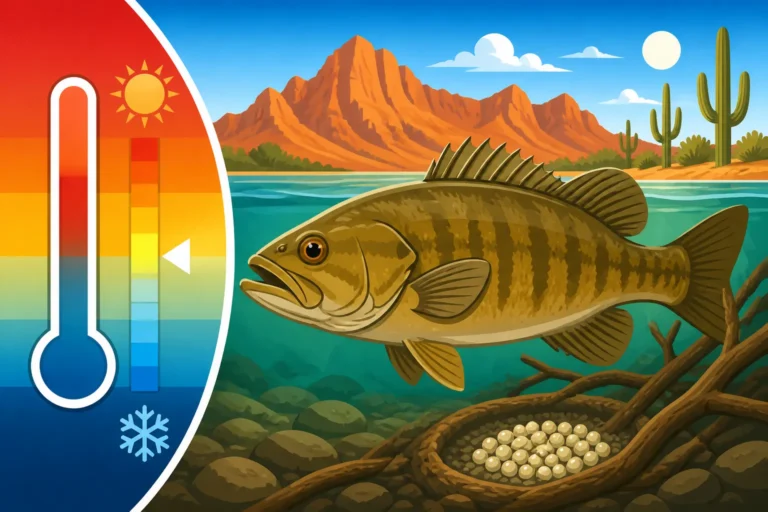
Water temperature acts as the ultimate alarm clock for striped bass spawning. They don't just wake up one day and decide it's time; rather, specific temperature ranges trigger their instincts and prepare their bodies for the arduous process of reproduction. Generally, striped bass begin to spawn when water temperatures consistently reach somewhere between 58 to 70 degrees Fahrenheit (approximately 14-21 degrees Celsius).
Within this range, there's a sweet spot, often around 60-65 degrees Fahrenheit, where activity peaks. If the water stays too cold for too long, spawning might be delayed, impacting the overall success rate. Conversely, if temperatures rise too quickly and shoot past this ideal window, the spawning event can be cut short or even skipped, especially if other conditions aren't perfect. Anglers often pay close attention to water temperatures because it not only tells them when the fish might be thinking about spawning, but also informs them about post-spawn recovery and feeding patterns. Knowing these temperatures is a huge part of understanding Arizona Fishing Seasons Explained and how fish behave.
The Role of Salinity and Freshwater Environments
As mentioned, striped bass are naturally anadromous. This genetic blueprint means that even after generations of being landlocked, their bodies are still programmed to seek out freshwater environments for spawning, free from the higher salinity they might encounter in some tidal estuary systems or even slightly mineral-rich lake waters. In Arizona, this primarily means the major river systems feeding our reservoirs, like the upper reaches of the Colorado River system that feeds Lake Powell, or components of the Salt River chain for other populations if they exist.
The eggs and larvae are incredibly sensitive to their environment, and freshwater is non-negotiable for successful development. While adult stripers are perfectly adapted to live and thrive in the vast, freshwater expanses of our reservoirs, their reproductive cycle is strictly a freshwater affair. This dependency creates a natural bottleneck: even with millions of stripers in a lake, if there isn't an accessible, flowing freshwater river with the right conditions, successful natural reproduction won't occur, and populations would eventually dwindle without stocking efforts.
The Spawning Ritual: From Courtship to Fertilization
The spawning ritual of striped bass is a truly wild and spectacular event, though often unseen by human eyes. It's a chaotic, energy-intensive process that stands in stark contrast to the more territorial and protective spawning habits of many other popular game fish. Forget neat nests or careful guarding of eggs; this is a full-throttle, open-water affair.
The Pre-Spawn Gathering and Migration
As spring progresses and river temperatures begin to climb into that ideal range, adult striped bass in our Arizona reservoirs feel the irresistible pull of their spawning instinct. They begin to migrate upstream, leaving the wide-open waters of the lakes and heading into the confines of the tributary rivers. This isn't a quiet, solitary journey; rather, it's often a massive congregation of fish, sometimes forming huge schools as they push against the current.
In systems like the Colorado River arm of Lake Powell, you might find thousands of stripers making this journey. These pre-spawn aggregations can sometimes make for incredible fishing opportunities for anglers who know where to look, although the fish might be more focused on their biological imperative than on feeding aggressively. Understanding these seasonal movements is key to successful How to Fish for Striped Bass strategies.
The "Broadcast Spawning" Event
Once they reach suitable spawning grounds – typically stretches of river with good current and depth – the actual spawning event is what's known as "broadcast spawning." This means there's no nest building, no fanning of eggs, and absolutely no parental care. Instead, it's a dynamic and almost frenzied spectacle.
A single female, often quite large, will be pursued by several smaller males. As she releases her eggs directly into the water column, the males simultaneously release their milt (sperm), creating a milky cloud in the water. The eggs are fertilized as they drift freely. It's an explosion of life, with a large female capable of releasing hundreds of thousands, if not millions, of eggs in a single spawning season. This strategy relies on sheer numbers to overcome the incredible odds against survival. The scene can be quite active, with fish thrashing at the surface, which is sometimes referred to as a "striper boil" (though typically boils are feeding events, this thrashing can resemble it).
Fertilization and the Start of a New Life Cycle
Once the eggs and milt are released, fertilization happens almost immediately in the swirling river currents. The newly fertilized eggs are designed to absorb water, which causes them to swell and become semi-buoyant. This characteristic is critical for their survival, as it ensures they stay suspended in the water column and continue their downstream journey.
The clock starts ticking the moment fertilization occurs. These delicate eggs need constant movement to prevent them from settling onto the riverbed, where they would quickly perish due to lack of oxygen and siltation. The river acts as both incubator and transportation system, carrying the future generation of striped bass to their destiny, hopefully, in the calmer nursery waters of the main lake. It's a precarious start to life, highlighting the absolute reliance of these fish on healthy, flowing river systems.
The Incredible Journey of Striped Bass Eggs and Larvae
The moment those tiny, fertilized eggs are released into the river, they embark on one of the most incredible, yet perilous, journeys in the natural world. From a microscopic speck to a voracious predator, every stage is fraught with challenges, and only a tiny fraction will ever make it to adulthood.
Buoyancy and Downstream Drift
As we've discussed, the fertilized striped bass eggs absorb water and become semi-buoyant, essentially making them tiny, water-filled spheres. They don't float to the surface, nor do they sink like stones. Instead, they remain suspended in the water column, entirely dependent on the river's current to keep them in motion. For roughly two to three days, depending on water temperature, these eggs drift downstream, carried by the flow.
During this drift, the eggs are constantly exposed to oxygen, which is vital for their development. If the current weakens too much, or if they encounter a stagnant pool or backwater, they're likely to sink to the bottom and quickly perish. This is why a sustained stretch of flowing river, often many miles long, is necessary for successful striped bass reproduction. Imagine the lower Colorado River, where these fish historically spawned; the journey would have been significant.
Hatching and Early Larval Development
After those crucial few days of drifting, the tiny striped bass larvae hatch from their eggs. At this stage, they are incredibly small and vulnerable, often appearing as little more than a pair of eyes attached to a translucent wisp of a body. They typically still have a yolk sac attached to their underside, which provides their initial nourishment.
Even after hatching, these larvae continue to drift with the current. They aren't strong enough to swim against the flow or seek out food immediately. Their primary goal is simply to survive the drift, absorbing their yolk sac and developing enough to become free-swimming and start feeding on their own. This larval stage is another period of intense vulnerability, where many succumb to predators or unfavorable environmental conditions.
Finding Nursery Grounds and Surviving the Odds
Eventually, if they survive the initial drift and hatching, the tiny striped bass larvae are carried out of the main river current and into the calmer, more sheltered waters of the reservoir or larger river sections. These areas, often shallow coves or protected embayments with abundant plankton and microscopic organisms, serve as critical nursery grounds. Here, the young stripers can begin to feed actively and grow.
However, the attrition rate is staggering. Out of the hundreds of thousands, or even millions, of eggs released by a single female, only a tiny percentage will survive to become juvenile fish, and even fewer will reach adulthood. Predators, lack of food, unfavorable water conditions, and physical obstacles all contribute to this massive natural selection process. This high mortality rate is precisely why striped bass employ a broadcast spawning strategy, relying on sheer numbers to ensure that at least some of their offspring survive.
Implications for Anglers and Conservation in Arizona
Understanding the intricate spawning behavior of striped bass isn't just a fascinating biological lesson; it has real-world implications for how we fish and how we approach conservation efforts in Arizona's unique desert aquatic environments.
Timing Your Fishing Around Spawning Seasons
For dedicated anglers, knowing when and where stripers spawn can significantly impact your fishing strategy. During the pre-spawn migration, fish are often concentrated in river channels leading into the main lake. While their primary focus isn't feeding, they can still be tempted by well-presented baits or lures. This might be a good time to try larger swimbaits or crankbaits that imitate their natural forage, like those found on Amazon.
Once active spawning begins, fish behavior can become erratic. Some anglers report that stripers become less interested in feeding, while others find that the sheer number of fish in a localized area can still present opportunities. Post-spawn, as the fish recover from the energy drain of reproduction, they often move back into the main lake and begin to feed aggressively to regain their strength. This recovery period can offer some of the year's best fishing for active, hungry stripers. Always be mindful of local regulations and consider catch-and-release practices, especially during sensitive spawning periods, to help sustain the population. You can learn more about specific rules in the Arizona Fishing Regulations Explained guide.
Conservation Efforts and Habitat Protection
The unique spawning requirements of striped bass highlight their vulnerability, even in a system as vast as Lake Powell. For natural reproduction to occur, there must be a sustained, long stretch of flowing river with appropriate water temperatures. This means that factors affecting river flow, such as dam operations, water diversions, and drought conditions, can have a profound impact on the success of a spawning season.
Conservation efforts for striped bass often focus on maintaining suitable river flows during the critical spring spawning window. While many of Arizona's striped bass populations are sustained through stocking programs, natural reproduction contributes to genetic diversity and resilience. Protecting these vital riverine spawning habitats ensures that these incredible sport fish can continue to thrive for generations of Arizona anglers. It's a delicate balance, especially in an arid state where water resources are constantly managed for multiple uses. Anglers are often the first to notice changes in fish populations or behavior, and reporting observations to the Arizona Game and Fish Department can contribute to ongoing monitoring and research.
Ethical Considerations for Angling During Spawn
As anglers, we have a responsibility to be good stewards of our natural resources. While fishing during the spawn isn't explicitly prohibited for striped bass in Arizona, it's worth considering the impact of our actions. Fish, particularly the large females, are under immense stress during the spawning process. Catching and handling them during this period can add to that stress and potentially impact their ability to successfully reproduce or recover.
Many anglers choose to practice catch-and-release with extra care during the spawn, or even target other species during this sensitive time. If you do catch spawning or post-spawn stripers, try to minimize fight time, handle them gently, keep them in the water as much as possible, and ensure a quick and safe release. Being aware of the fish's life cycle fosters a deeper appreciation for the species and contributes to sustainable fishing practices for all. Always make sure you understand Fishing Bag and Possession Limits Explained for all species you target.
Summary of Striped Bass Spawning Requirements
To help visualize the key factors influencing striped bass reproduction in Arizona's rivers, here's a quick overview:
| Requirement | Description | Why it's Critical |
|---|---|---|
| Flowing River | Continuous, sustained current (moderate to strong). | Keeps semi-buoyant eggs suspended and oxygenated for 2-3 days; prevents suffocation. |
| Freshwater | Water free from significant salinity. | Essential for egg and larval development, inherent genetic requirement. |
| Ideal Temperature | Consistently 58-70°F (14-21°C), with peak activity often around 60-65°F. | Triggers spawning, allows for proper egg development and hatching. |
| Sufficient Distance | A long enough stretch of river for eggs to drift and hatch before settling or reaching still water. | Ensures complete development cycle before larvae enter nursery grounds. |
| Nursery Grounds | Calm, sheltered areas in the main lake or lower river with abundant food. | Provides safe haven for larvae to grow into juveniles. |
Understanding these specific needs helps us appreciate the intricate life cycle of the striped bass and the delicate balance required to maintain healthy populations in our Arizona waters. Whether you're targeting trophy stripers or simply enjoying a day on the water, knowing about their spawning habits adds another layer to the rich experience of Arizona Fishing.
Disclaimer
This article is for general informational purposes only and does not constitute professional advice. Laws, prices and regulations vary by location and change over time. Consult a qualified professional for guidance on your specific situation.