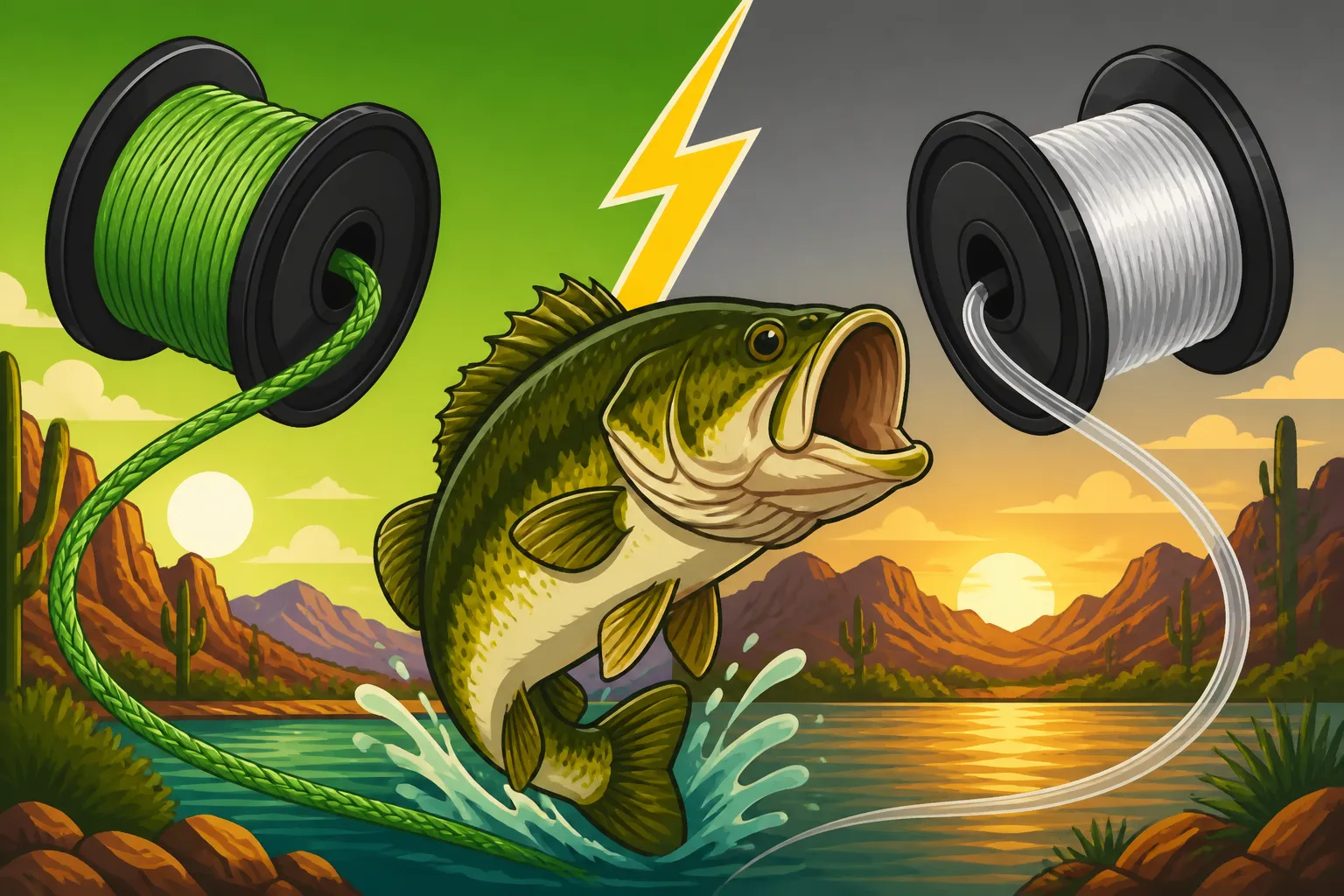
Is Braided Line Better Than Monofilament for Bass?
One of the biggest head-scratchers for any bass angler, especially here in Arizona with our diverse and often challenging waters, is deciding what fishing line to spool up with. The age-old debate between braided line and monofilament can feel like choosing between two completely different tools for the same job, leaving many of us wondering if we're making the right call. This comprehensive guide is designed to cut through the confusion, helping you understand the unique strengths and weaknesses of each line type so you can confidently pick the best option for your Arizona bass fishing adventures.
Understanding Your Lines: Braided vs. Monofilament Fundamentals
Before we dive into specific scenarios, it's crucial to understand the foundational differences between monofilament and braided fishing lines. Each has a distinct personality, and recognizing these characteristics is the first step to making an informed choice for your Arizona bass fishing strategy.
The Lowdown on Monofilament Line
Monofilament, often just called "mono," is likely the first type of fishing line many of us ever used. It's a single strand of nylon, and its simplicity belies its enduring effectiveness in many situations. Here in Arizona, where the fishing can range from clear mountain lakes to murky desert reservoirs, understanding mono is key.
Mono's defining characteristic is its stretch. It’s like a built-in shock absorber, which can be a huge advantage when a bass makes a sudden, powerful run or when you're setting the hook on a fast-moving fish. This stretch also helps prevent hooks from tearing out of a bass's mouth, especially if you're using treble hooks on a crankbait. Plus, mono is generally more forgiving with knots, holding them exceptionally well, which is a big relief for beginners or those who prefer simpler rigging. It's also typically less expensive than braided line, making it a budget-friendly option for getting started or for spools you change out frequently. You can often find great deals on bulk spools of monofilament on Amazon if you're looking to stock up.
However, monofilament isn't without its drawbacks. It suffers from "memory," meaning it tends to retain the shape of the spool, leading to coils that can make casting a bit trickier and more prone to tangles, especially with lighter line weights. Over time, UV light can degrade nylon, making it weaker, and it's also less sensitive than braid due to its stretch. This can make it harder to detect subtle bites or feel the bottom composition when you're fishing deep structure. While generally good, its abrasion resistance can be a concern around sharp rocks or submerged timber, which are common features in many Arizona lakes.
Consider a scenario where you're casting a topwater popper or a subtle floating worm on a calm morning at a clear lake like Canyon Lake. The bass might be a bit wary, and a less visible line is ideal. The stretch of monofilament allows for a more natural presentation, and when a bass explodes on your lure, the mono's shock absorption helps prevent the fish from throwing the hook during its initial thrashing. It’s a classic choice for these specific situations, offering a level of forgiveness that can be very reassuring.
Getting to Grips with Braided Line
Braided line is a completely different animal, constructed from multiple strands of synthetic fibers woven together. Think of it like a miniature rope, and this construction gives it entirely different properties from monofilament. Anglers often turn to braid for its unique advantages, especially when tackling tough fishing conditions.
The most celebrated quality of braided line is its near-zero stretch. This translates into incredible sensitivity, allowing you to feel every bump, tick, and subtle bite as if you were holding the lure in your hand. This is invaluable when fishing deep water or when bass are gently mouthing a bait. The lack of stretch also means more powerful hook sets, as all the force from your rod immediately transfers to the hook. Braided line also boasts superior strength-to-diameter ratio; a 10-pound test braid is significantly thinner than a 10-pound test monofilament, which can improve casting distance and allow more line on your spool. Its woven construction also makes it incredibly resistant to abrasion, a huge plus when you’re fishing around jagged rocks, brush piles, or dense aquatic vegetation in places like Roosevelt Lake.
However, braided line isn't a magic bullet. Its highly visible nature can be a deterrent in clear water or when targeting pressured fish, as bass might shy away from the line. While incredibly strong, it can be prone to knot slippage if not tied correctly, requiring specific knots. The cost is also generally higher than monofilament, although its durability can often make up for the initial investment over time. And while super strong, braid can be surprisingly difficult to cut in the field without sharp scissors or line clippers, sometimes leading to frustrated anglers trying to bite through it (don't recommend that!).
Imagine you're punching through thick mats of weeds or flipping jigs into dense mesquite bushes along the shore of Lake Pleasant. This is where braid truly shines. Its incredible strength and abrasion resistance allow it to slice through vegetation and withstand contact with rough cover without breaking. The no-stretch property ensures that when a bass inhales your jig, you feel the subtlest "thump" and can deliver a powerful, instantaneous hook set that pulls the fish out of the cover before it can wrap you up. This brute force capability is unmatched, making it the top choice for such heavy cover applications. You'll definitely want a robust braid for this kind of work, and there are many great options available on Amazon.
Arizona Bass Fishing Scenarios: When to Choose Which Line
The diverse fishing environments across Arizona—from vast desert impoundments to smaller, clearer urban lakes—mean that a one-size-fits-all approach to fishing line just won't cut it. Your choice between braided and monofilament should heavily depend on where you're fishing, what type of cover you're encountering, and the specific techniques you're employing for bass.
Heavy Cover and Structure Fishing
When you're faced with heavy cover like submerged timber, dense brush piles, rocky ledges, or thick vegetation, braided line becomes your best friend. Arizona's desert lakes are famous for their fluctuating water levels, which often leave entire forests of mesquite, palo verde, and ironwood trees submerged, creating formidable bass habitat. Fishing these areas demands a line that can withstand constant abuse and provide the power needed to extract big fish.
Braided line excels here because its incredible abrasion resistance means it can rub against sharp branches, rocks, and thick weed stalks without fraying or breaking easily. The low diameter-to-strength ratio allows you to use incredibly strong lines (e.g., 50-65lb test) that can cut through vegetation or hold up against gnarly structure, giving you a fighting chance to land that bass. Furthermore, the absence of stretch is paramount when you need to quickly get a fish out of heavy cover. When you hook a bass deep in a brush pile, you can't afford any give in your line; you need to turn its head immediately and pull it away from danger. This is why techniques like punching thick mats of hydrilla or flipping jigs into dense cattails rely almost exclusively on braid. For deeper structure, consider tactics like those described in Deep Water Structure Fishing Techniques.
Monofilament, on the other hand, often struggles in these extreme conditions. Its stretch, while sometimes beneficial, becomes a liability when trying to wrench a fish out of heavy cover. It also tends to fray more easily against abrasive surfaces, increasing your risk of breaking off a trophy bass. While it might be cheaper, the cost of lost lures and frustrating break-offs quickly outweighs any initial savings. If you're tackling dense Arizona cover, especially on lakes known for significant timber like Apache Lake or Roosevelt Lake, make braid your primary choice. Techniques such as How to Fish a Texas Rig Around Brush are almost always best done with braided line for maximum success.
Open Water and Finesse Presentations
Moving away from the thick stuff, when you're fishing open water, clearer areas, or need a more subtle presentation, monofilament often takes the lead. Arizona has numerous lakes, including many of our urban community fishing lakes, where water clarity can be high, and bass might be more line-shy.
In these situations, monofilament's lower visibility compared to standard braid is a distinct advantage. While not completely invisible, it blends into the water column better, making your bait look more natural to discerning bass. This is particularly important for topwater fishing, where the line can often be seen by fish looking up, or for slow, finesse presentations with weightless worms or flukes where you want the bait to suspend and flutter naturally. The inherent stretch of monofilament also comes into play here, providing a slight cushioning effect that can be beneficial. When a bass takes a topwater lure, the mono's stretch helps absorb the sudden shock of the strike, preventing the fish from tearing the hooks out of its mouth during its violent head shakes. This is especially true for treble hook baits. For surface action, you'll want to review Topwater Fishing Techniques for Bass.
Consider a bright, sunny day on Lake Pleasant, targeting bass holding on subtle transitions or rock piles in clearer water. You're throwing a shaky head or a drop shot with a small plastic worm. Here, the subtle action and natural fall are paramount. While you can use a braided mainline with a fluorocarbon leader (which we'll discuss next), pure monofilament can also be highly effective for simpler setups, providing sufficient sensitivity for these lighter bites while maintaining that critical low visibility. It can also be great for throwing crankbaits, as the stretch allows the lure to work more freely and gives the bass a moment to fully engulf the bait before you feel the tension.
Deep Water and Long Casts
Fishing deeper water, whether targeting bass suspended over open water or relating to deep structure, presents another set of considerations where braided line generally holds a significant edge. Our large Arizona reservoirs often have vast expanses of deep water, and bass will follow baitfish into these depths, or hold on underwater points and humps.
Braided line's almost complete lack of stretch is a game-changer for deep-water presentations. When your lure is 30, 40, or even 60 feet down, monofilament's stretch would create a significant delay between a fish bite and you feeling it, leading to missed hook sets. Braid transmits even the slightest "thump" or "tick" directly to your hand, allowing for quicker reactions. This sensitivity also helps you accurately "read" the bottom—feeling rocks, gravel, mud, or subtle changes in depth—which is crucial for presenting your lure effectively in deep structure. Techniques like deep cranking, jigging spoons, or fishing heavy Texas rigs and football jigs in deep water are all enhanced by braid's sensitivity and instantaneous power transfer for hook sets. Learn more about these methods in Deep Water Structure Fishing Techniques.
Furthermore, braid's thinner diameter for its given strength means less resistance in the water, allowing your lures to sink faster and run deeper. This also contributes to longer casting distances, which can be critical when you need to cover a lot of water or reach distant schooling bass. While monofilament can cast well, its thicker diameter will reduce casting distance slightly compared to braid of similar strength, and its stretch makes it less effective for feeling those subtle deep-water bites.
The Hybrid Approach: Leaders and Combining Lines
Sometimes, the best solution isn't to pick one line over the other, but to combine their strengths. This is where the tactic of using a braided mainline with a leader comes into its own, offering anglers a versatile setup that can adapt to a wider range of Arizona fishing conditions.
The Benefits of a Braided Mainline with a Fluorocarbon Leader
The concept behind this hybrid approach is simple: you spool your reel with braided line for all its advantages—incredible sensitivity, strength-to-diameter ratio, and excellent casting. Then, you tie a length of fluorocarbon line to the end of the braid as a leader. This fluorocarbon leader provides the crucial element that braid lacks: near invisibility underwater.
Fluorocarbon is denser than mono or braid, making it sink faster, and its refractive index is very close to that of water, making it virtually undetectable to fish. This combination means you get the best of both worlds: the immediate feedback and powerful hook sets of a braided mainline, coupled with the stealth and excellent abrasion resistance of a fluorocarbon leader. Fluorocarbon is also highly abrasion resistant, often more so than monofilament, which is a bonus when fishing around rocky bottom or light cover. This setup allows you to fish clear Arizona lakes with confidence, knowing your line won't spook wary bass.
The critical piece of this puzzle is the knot used to join the braid to the fluorocarbon leader. There are several popular options, such as the FG knot, Alberto knot, or uni-to-uni knot. Mastering one of these knots is essential for a reliable connection that can withstand the stress of casting and fighting fish. You'll typically want a leader that is anywhere from 3 to 10 feet long, depending on the specific application and water clarity. Shorter leaders are great for heavier cover, while longer ones are better for extremely clear water and finesse presentations.
When and Where to Use a Leader in Arizona
The braided mainline with a fluorocarbon leader setup is incredibly versatile and can be used in almost any bass fishing scenario in Arizona where you want maximum sensitivity but also need stealth. This is especially true on our clearer desert lakes like Bartlett Lake, Canyon Lake, or Saguaro Lake, where fish can be quite line-shy.
For finesse techniques, such as drop-shotting, shaky heads, or Neko rigs, a braided mainline with a lighter fluorocarbon leader (e.g., 8-12lb test) is often the go-to choice. The braid allows you to feel the most subtle bites when bass are barely breathing on your bait, while the invisible fluorocarbon ensures the bass commits to the strike. This setup is also fantastic for deep-water jigging or throwing spoons, where the braid's sensitivity is critical for feeling the bottom and detecting deep bites, but the fluoro leader provides a natural presentation as the lure descends.
Even for heavier applications, a leader can be beneficial. If you're flipping or pitching jigs into moderately clear cover, a 15-20lb fluorocarbon leader on a 50lb braided mainline can offer a more subtle presentation than straight braid, while still providing ample strength and abrasion resistance. This blend allows for greater versatility, letting you switch between different presentations without re-spooling your entire reel. It’s a great option for anglers who want to maximize their chances in varied conditions. Many anglers purchase bulk spools of fluorocarbon leader material from Amazon to keep their costs down for this common rigging technique. For a full breakdown of specific bass behaviors, see Seasonal Movement Patterns of Arizona Bass.
Making the Call: Factors Beyond Line Type
While understanding the core properties of braided and monofilament lines is crucial, several other practical considerations will influence your ultimate decision when bass fishing in Arizona. It's not just about the line itself, but how it interacts with the environment, your gear, and your personal fishing style.
Water Clarity and Visibility
Arizona's lakes and rivers can vary dramatically in water clarity, and this is a huge factor in line selection. In many of our larger desert reservoirs like Lake Pleasant, Roosevelt Lake, or Alamo Lake, water clarity can range from murky after a rain or a major wind event, to moderately clear, especially in certain arms or depths. Then you have exceptionally clear impoundments like Canyon Lake or the upper Colorado River sections, where visibility can extend for many feet.
When water is stained or murky, line visibility becomes less of an issue. In these conditions, straight braided line often performs exceptionally well, offering its full benefits without the drawback of spooking fish. The bass are relying more on lateral line senses and scent, so the line itself isn't as critical. However, in crystal-clear waters, especially when targeting pressured fish or using finesse baits, line visibility can make or break your day. This is where the use of a fluorocarbon leader on a braided mainline, or even straight monofilament for certain presentations, becomes paramount. Many anglers will carry multiple setups, or at least leader material, to adapt to changing water conditions throughout the day. Paying attention to water clarity when you arrive at a spot can save you a lot of frustration.
Angler Experience and Budget
For beginners just getting into bass fishing in Arizona, the choice of line can be simplified by considering ease of use and cost. Monofilament is generally more forgiving to learn with. It's easier to tie knots, less prone to wind knots (those frustrating tangles that happen during casting), and its stretch can absorb some mistakes in hook sets or fish fighting. It's also typically the most budget-friendly option, making it an excellent starting point for someone who isn't ready to invest heavily in specialized gear. A basic spinning reel spooled with 8-12lb monofilament is a fantastic entry-level setup for many Arizona lakes.
As anglers gain experience, they often gravitate towards braided line, either straight or with a leader, for its performance advantages. However, braided line does have a steeper learning curve. Knot tying requires more precision, and its lack of stretch means mistakes in fighting a fish can lead to hooks tearing out or line breakage if the drag isn't set correctly. The initial cost of braid is higher, but its durability means it doesn't need to be replaced as frequently as mono, potentially balancing out the long-term expense. For those looking to upgrade their gear without breaking the bank, there are many affordable, high-quality braided lines available on Amazon that offer excellent value. Don't feel pressured to jump straight into the most expensive options; start with what feels comfortable and then experiment as your skills grow.
Rod, Reel, and Lure Pairing
The type of fishing line you choose should also be compatible with your rod, reel, and the specific lures you're using. These components work together as a system, and mismatched elements can hinder your effectiveness.
- Rod: A rod's action (how much it bends) and power (how much force it takes to bend) should complement your line. For example, when using braided line with no stretch, a rod with a more moderate action can help absorb some of the shock of a fish strike, preventing hooks from tearing out. Conversely, if you're using monofilament with a lot of stretch, a faster action, heavier power rod might be needed to achieve a solid hook set. The Best Fishing Rods for Bass in Arizona article can provide more insights on matching your rod to your fishing style.
- Reel: Spinning reels are generally more forgiving with monofilament and lighter braids, making them popular for finesse applications. Baitcasting reels, with their greater power and control, are often preferred for heavier braided lines and larger lures, especially when fishing heavy cover. However, braided line can sometimes "dig in" on a baitcaster spool if not spooled tightly, leading to potential backlashes.
- Lures: Certain lures naturally pair better with specific line types. Topwater lures, especially those with treble hooks, often benefit from monofilament's buoyancy and stretch to keep them riding high and prevent hook tears. Crankbaits also frequently get spooled with monofilament or fluorocarbon to enhance their diving depth and action. Jigs, Texas rigs, and other bottom-contact baits, particularly in heavy cover, benefit from braid's sensitivity and power. Thinking about the bait first often helps narrow down the line choice significantly.
Ultimately, the goal is to create a balanced system that maximizes your chances of success. Don't be afraid to experiment with different combinations to find what works best for you and the specific bass fishing challenges you face here in Arizona.
| Feature | Monofilament Line | Braided Line |
|---|---|---|
| Material | Single strand of nylon | Multiple woven strands of synthetic fibers |
| Stretch | High (15-25%) | Very Low (3-5%) |
| Sensitivity | Low to Moderate (due to stretch) | Very High (due to no stretch) |
| Visibility | Moderate (clear and green options blend somewhat) | High (visible, often requires a leader) |
| Abrasion Resist. | Moderate (can nick/fray) | High (very tough, cuts through weeds) |
| Knot Strength | Excellent (easy to tie reliable knots) | Good (requires specific knots to prevent slippage) |
| Memory | High (coils off spool) | Very Low (lays flat on spool) |
| Casting | Good (can be affected by memory) | Excellent (thin diameter, long casts) |
| Cost | Low to Moderate | Moderate to High |
| Best For | Topwater, crankbaits, finesse (clear water), beginners | Heavy cover, deep water, jigs, punching, sensitivity |
| Worst For | Heavy cover, deep sensitivity, rapid hook sets | Clear water (straight braid), beginners (knot tying) |
Disclaimer
This article is for general informational purposes only and does not constitute professional advice. Laws, prices and regulations vary by location and change over time. Consult a qualified professional for guidance on your specific situation.