What Is the Best Bait for Bass in Arizona?
Oh, the age-old question that keeps many an Arizona angler up at night: "What is the best bait for bass in Arizona?" It’s a puzzle, isn't it? Our desert lakes present such unique challenges, with their clear, often warm waters and rocky structures. Trying to figure out what those finicky bass are munching on can feel like a guessing game sometimes, especially when you're just starting out or visiting from a place with different conditions. But don't you worry, because this guide is all about cutting through the confusion to help you pick the perfect bait for bass, no matter where you're casting your line in the Grand Canyon State.
Understanding Arizona Bass Behavior and Diet
Before we even dive into specific baits, it's crucial to understand the bass themselves and what makes them tick in Arizona's distinct environments. Bass aren't just one type of fish; we have several popular species, and their habits and preferences can vary quite a bit. Knowing what they naturally prey on helps us choose the most effective offerings.
Largemouth Bass: The Classic Arizona Target
Largemouth bass are probably what most people picture when they think of bass fishing, and they thrive in many of Arizona's warmer desert lakes. From the vast expanses of Lake Pleasant to the more intimate coves of Canyon Lake, these green giants are often ambush predators, lurking in submerged brush, standing timber, rock piles, or shaded banks, waiting to surprise their next meal. Their diet is incredibly varied, consisting largely of whatever forage fish are abundant in their particular lake, such as shad, sunfish, and even smaller bass. They'll also aggressively strike at crayfish, frogs, and large insects. Because they're opportunistic, a wide array of baits can be effective. If you're really looking to hone your skills for these beauties, check out our Largemouth Bass Fishing Guide for Arizona.
We've all been there, staring at a tackle box overflowing with options, wondering if that bright chartreuse spinnerbait is going to cut it, or if you should stick to a natural-colored plastic worm. When targeting largemouth in Arizona, think about replicating their primary food sources. The clearer water conditions often mean that baits with natural colors and realistic profiles tend to perform exceptionally well. However, in low light or stained water, a bait with a bit more flash or vibration can be the ticket to getting their attention. It's all about observing the conditions and being ready to adapt.
Smallmouth Bass: Rocky Dwellers of Northern Waters
While largemouth dominate the warmer, lower elevation lakes, smallmouth bass prefer cooler, clearer, and rockier habitats. You'll find them in places like Lake Powell, sections of the Colorado River, and some of the higher elevation reservoirs. Smallmouth are known for their fierce fighting spirit and tend to be less interested in heavy cover compared to largemouth, favoring rocky points, ledges, humps, and current breaks. Their primary diet often revolves around crayfish, minnows, and insect larvae. Mimicking these specific food items is key to success. For a deep dive into these feisty fish, our Smallmouth Bass Fishing Guide for Arizona has you covered.
Smallmouth bass are often more particular about what they eat and how it's presented. Finesse techniques, which involve lighter lines, smaller baits, and subtle presentations, often shine when targeting smallmouth, especially in the clear waters they inhabit. Think about baits that imitate a fleeing crayfish or a darting minnow – something that looks natural and moves with convincing action. These fish are also quite sensitive to water temperature and light conditions, so understanding their seasonal movements and feeding patterns can dramatically increase your chances.
Striped Bass: The Open Water Predators
And then there are the striped bass, often simply called "stripers." These aren't true bass in the same family as largemouth and smallmouth, but they're incredibly popular sport fish in Arizona, particularly in massive reservoirs like Lake Powell and Lake Mead. Stripers are pelagic, meaning they roam open water, often in large schools, chasing huge schools of shad. They are powerful, aggressive, and can grow to impressive sizes. When you hook into a striper, you'll know it! They're less structure-oriented than their black bass cousins and more focused on finding and ambushing baitfish in open water. Learn more about these formidable fighters in our Striped Bass Fishing Guide for Arizona.
Targeting stripers is a different game altogether. While largemouth and smallmouth might hang near cover or structure, stripers are often found by locating bait balls on your fish finder or spotting "boils" where they aggressively feed on the surface. Therefore, the best baits for stripers are almost always those that effectively imitate schools of shad. This often means larger profile lures, or even live bait, that can be cast long distances or trolled through open water. They are typically less concerned with finesse and more interested in a substantial meal that they can ambush.
Top Live Bait Choices for Arizona Bass
There's something incredibly satisfying about fishing with live bait. It just feels… primal, doesn't it? And for good reason! Live bait often provides the most natural presentation possible, triggering instinctive strikes from bass that might ignore even the most expertly presented artificial lure. When bass are being finicky, live bait can be a true game-changer.
Shad and Other Forage Fish
If you ask seasoned Arizona anglers about the best live bait for bass, many will point directly to shad. Threadfin shad and gizzard shad are abundant in many of our reservoirs and are a primary food source for all types of bass, especially largemouth and stripers. Using live shad, either purchased from a bait shop or caught with a cast net, is incredibly effective. The erratic, natural swimming action of a live shad is almost irresistible to a hungry bass. You can fish them free-lined, under a bobber, or even slow-trolled behind a boat.
The key to success with live shad is keeping them lively. This means having a good aerated bait tank, especially during Arizona's hotter months. Shad can be delicate, and a healthy, active bait will always outperform a sluggish one. When rigging, consider a small circle hook lightly through the nose or back, allowing the shad to swim naturally. This method works wonders for larger bass and is particularly deadly when you're targeting big stripers that are keying in on schools of baitfish. Many local bait shops or even larger retailers like Amazon sell equipment specifically designed for keeping baitfish healthy, which can be a real lifesaver on a long day on the water.
Crawfish and Other Invertebrates
Another superstar of the live bait world, particularly for smallmouth bass and even some largemouth, is the humble crawfish (also called crayfish or crawdad). These crustaceans are a staple in the diet of bass in many Arizona lakes and rivers. Bass often key in on crawfish, especially during certain times of the year, like spring and fall, when they're more active. Their hard shell and erratic scurrying movement make them a high-protein, attractive meal.
You can fish live crawfish on the bottom with a Carolina rig, allowing them to crawl around naturally, or under a bobber near rocky banks and drop-offs. The bass will often pick them up and carry them away before you even feel a solid strike, so be prepared to set the hook quickly! Like shad, healthy, active crawfish are best, so store them in a cool, damp environment. Even something as simple as a wet towel over a bucket can work in a pinch for a short trip, but for longer excursions, a proper bait container is a good investment.
Worms and Nightcrawlers
When it comes to versatility and ease of use, you can't beat the classic worm. Whether it's a garden worm, a red wiggler, or a chunky nightcrawler, these squiggly baits are fish magnets. While perhaps not the top choice for trophy bass in all situations, they are incredibly effective for catching smaller bass, especially eager young largemouth and even panfish that often inhabit the same waters. They are also fantastic for introducing kids to fishing, as they almost guarantee some action.
Worms can be fished in countless ways: on a simple hook under a bobber, on a Texas rig (more on that later), or even on a Carolina rig. They emit natural scents that bass find appealing and their constant movement creates an irresistible target. Nightcrawlers are particularly good for larger bass due to their size and durability. You can find them at virtually any bait shop, many convenience stores, or even online retailers like Amazon, making them one of the most accessible and reliable live baits out there. For beginners looking to get started with the basics, worms are always a good bet, especially if you're exploring Arizona Fishing Rules for Beginners at one of the urban lakes.
Effective Artificial Lures for Arizona Bass
For those who love the challenge and satisfaction of tricking a fish with a piece of plastic or metal, artificial lures are where it's at. The beauty of artificials is their reusability, their ability to mimic various forage, and the sheer variety that lets you adapt to almost any fishing condition. Plus, there’s no need to keep them alive!
Soft Plastics: Versatility is Key
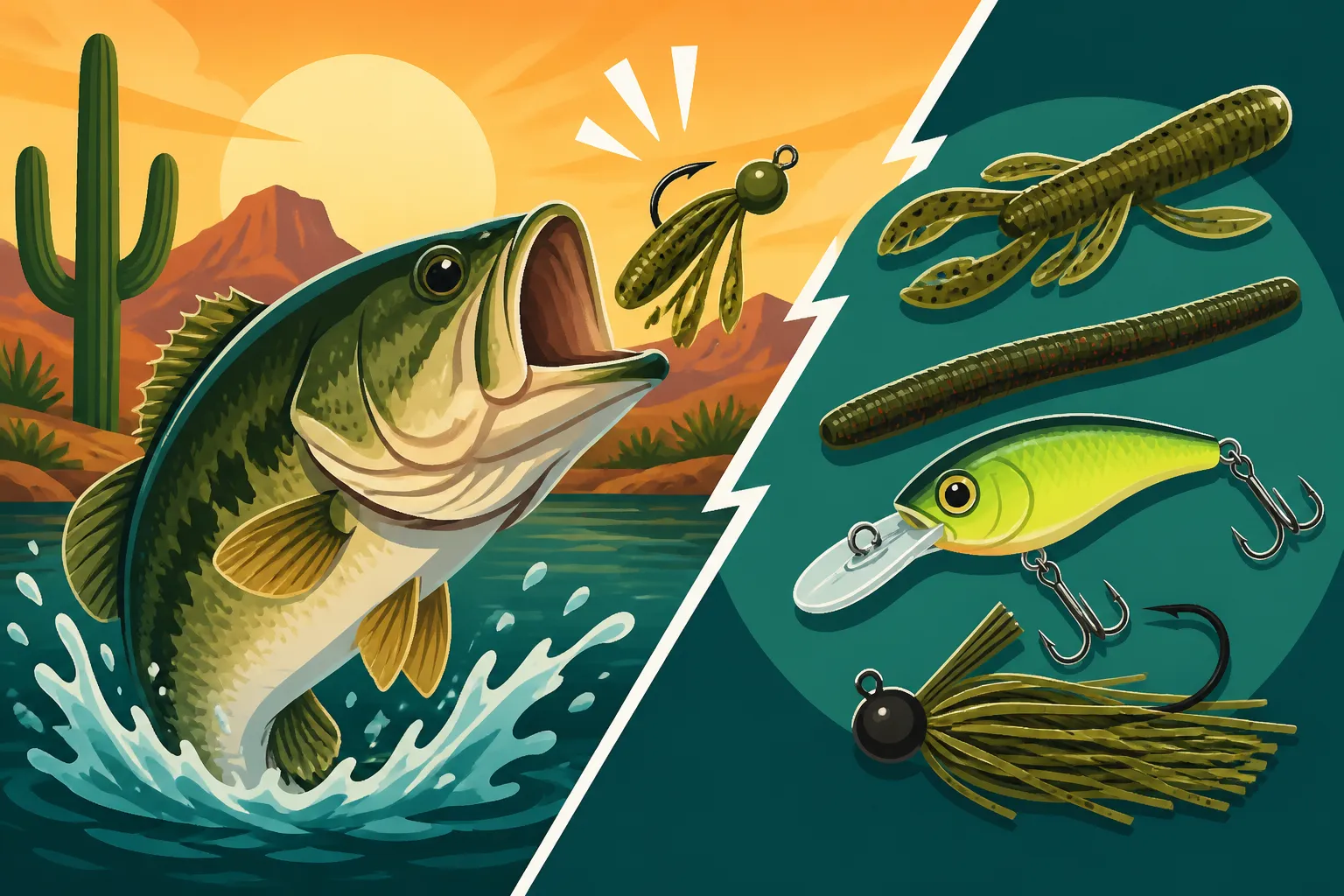
If there's one category of artificial lures that every Arizona bass angler should have in their arsenal, it's soft plastics. These come in an astonishing array of shapes, sizes, and colors, designed to imitate everything from worms and crawfish to minnows and creatures. Their soft, pliable texture feels natural to a bass, causing them to hold on longer, giving you more time to set the hook.
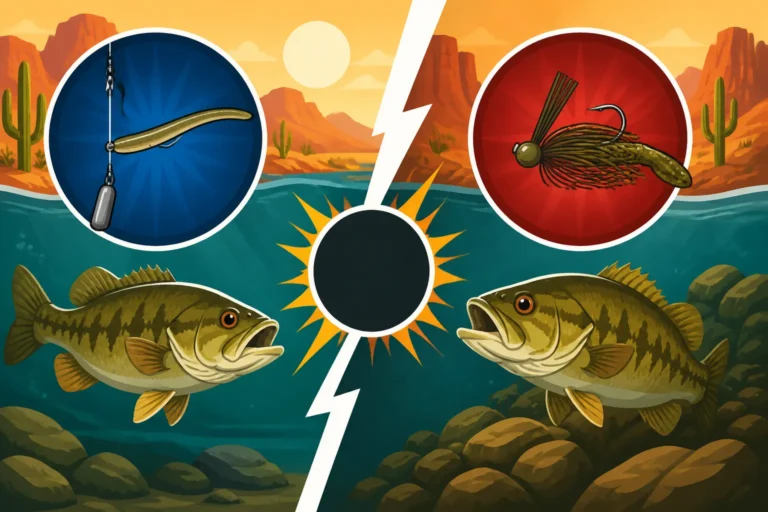
- Plastic Worms: The ubiquitous plastic worm is a must-have. Rigs like the Texas rig (where the hook is threaded through the worm to make it weedless) and the Carolina rig (a weight and swivel above the worm, allowing it to float freely) are incredibly effective for largemouth bass around submerged cover or along gradual sloping banks. For smallmouth, a finesse worm on a drop shot rig can be absolutely deadly in deeper, clear waters, mimicking a dying baitfish or a foraging crawfish. If you want to dive deeper into specific tactics, check out our guide on Best Lures for Largemouth Bass in Arizona Lakes.
- Creature Baits and Jigs: These bulkier soft plastics, often rigged on a jig head or as a trailer on a skirted jig, are fantastic for imitating crawfish or other larger prey. They create a significant profile in the water and can be worked through heavy cover or hopped along the bottom, triggering aggressive reaction strikes. The action of their appendages waving as they fall is often what seals the deal.
Crankbaits and Spinnerbaits: Covering Water
When you need to search a lot of water quickly, or when bass are actively feeding, crankbaits and spinnerbaits are incredibly effective. They create a lot of flash, vibration, and displacement, drawing attention from a distance.
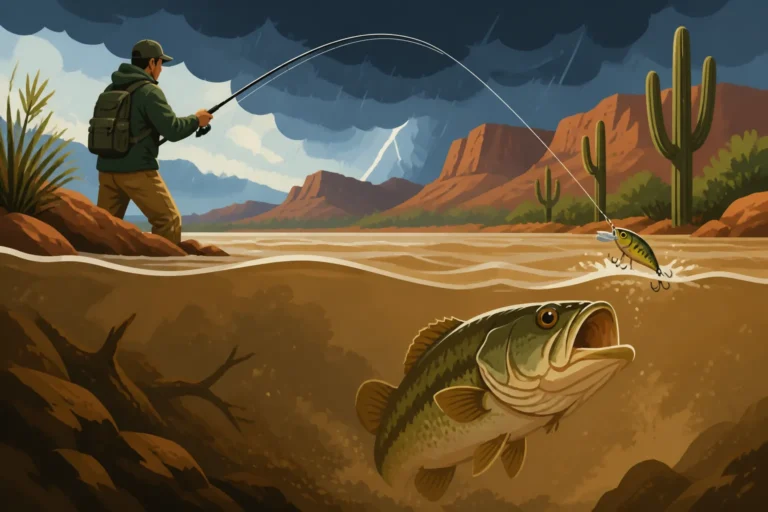
- Crankbaits: These hard-bodied lures dive to various depths depending on their lip size and retrieve speed. They mimic fleeing baitfish and are excellent for targeting bass holding near ledges, points, or submerged humps. Shallow-diving crankbaits work well around weed lines or rocky shorelines, while deep-diving versions can reach those suspended fish or bass hiding on deep structure. The erratic, wobbling action of a crankbait is often too much for an aggressive bass to ignore. Learning How to Fish a Crankbait Around Drop-Offs can be a game-changer for deeper bites.
- Spinnerbaits: Characterized by their wire frame, skirt, and rotating blades, spinnerbaits are incredibly versatile. They can be slow-rolled along the bottom, burned quickly near the surface, or even jigged vertically. The flash and vibration of the blades are fantastic for attracting bass in stained water or low light conditions, and their weedless design makes them ideal for fishing through brush, trees, and other cover where bass love to hide.
Topwater Lures: Excitement at the Surface
For sheer excitement, nothing beats a topwater strike. When a bass explodes on a lure fished on the surface, it’s an adrenaline rush like no other. Topwater lures are generally best used during low light conditions—dawn, dusk, or overcast days—or when bass are actively feeding near the surface.
- Poppers, Walk-the-Dog baits, and Frogs: Poppers create a "chugging" noise and splash, mimicking a struggling baitfish or insect. Walk-the-dog baits have a side-to-side gliding action that looks incredibly natural. Frog imitations are fantastic for fishing over matted vegetation or lily pads, areas where bass often hide. The key to successful topwater fishing is often patience and varying your retrieve to find what the fish want on a given day. Our Topwater Fishing Techniques for Bass guide has even more tips for these thrilling bites. The violent strikes are addicting, and when a big bass blows up on your lure, it's a moment you won't soon forget!
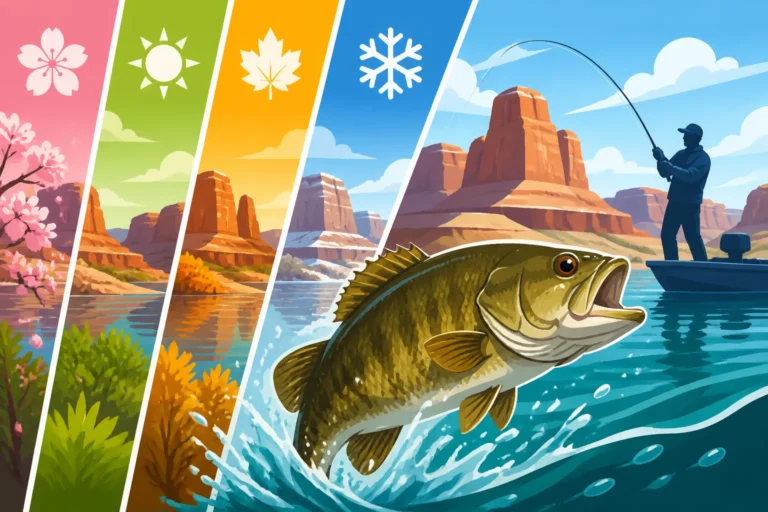
Matching Bait to Conditions and Seasons
Arizona's weather patterns and water temperatures can fluctuate wildly throughout the year, and this has a massive impact on where bass are, what they're doing, and what they'll eat. The "best" bait isn't static; it changes with the seasons and the specific conditions you encounter on the water.
Spring Spawning and Post-Spawn Tactics
Spring is often hailed as one of the best times to catch big bass in Arizona. As water temperatures rise, bass move into shallower areas to spawn. During the pre-spawn phase, they are aggressive and feeding heavily to build energy for spawning. This is an excellent time for crankbaits, spinnerbaits, and soft plastics like jigs and creature baits fished near transition areas and points. Once on the beds, sight fishing with soft plastics or jigs can be effective, though many anglers prefer to leave spawning fish undisturbed.
Post-spawn, bass are recovering and often move slightly deeper but remain near areas where they spawned. They can be a bit sluggish initially but quickly become active feeders again. Smaller soft plastics, topwater lures during early morning and late evening, and light tackle presentations often work well. For more targeted advice on this period, check out Spring Bass Fishing Tactics in Arizona. Remember that bass can be found in a wide range of depths during this season, so having a versatile tackle box is crucial.
Summer Heat and Deep Water Strategies
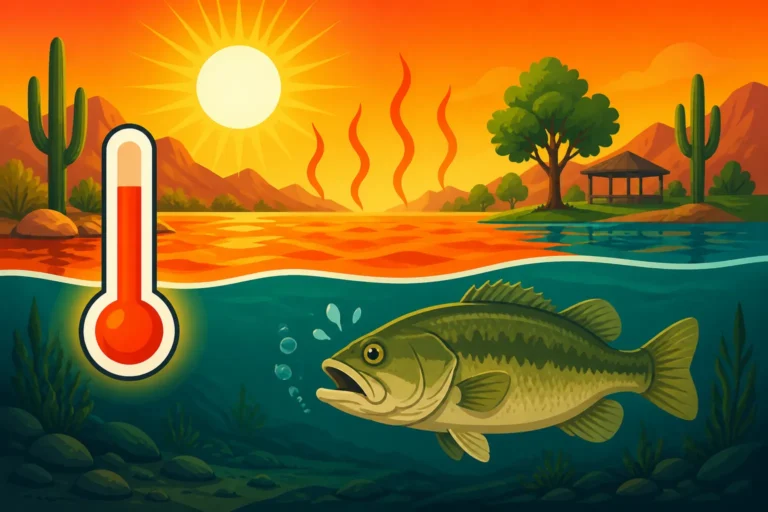
Arizona summers are no joke, and the scorching heat significantly impacts bass behavior. As surface water temperatures soar, bass will often retreat to deeper, cooler waters where oxygen levels are more stable. This means targeting deep structure like ledges, humps, creek channels, and submerged timber becomes paramount. Drop-shot rigs with finesse worms, deep-diving crankbaits, heavy jigs, and Carolina rigs are your best friends during this time.
Early mornings, late evenings, and even night fishing become incredibly effective during the summer, as bass move shallower to feed under the cover of darkness or cooler temperatures. Topwater action can be explosive at first light, and catfish often become more active at night. For the intrepid angler, mastering Summer Bass Fishing Tactics in Arizona means learning to read your fish finder, understanding contour maps, and being prepared to fish vertically or in low-light conditions. Don't forget your hydration and sun protection!
Fall Feeding Frenzy Techniques
As autumn arrives and water temperatures begin to cool, bass become incredibly active, often exhibiting a "feeding frenzy" as they stock up for the leaner winter months. They'll chase baitfish aggressively, making this a prime time for reaction baits. Crankbaits, spinnerbaits, and jerkbaits worked along points, flats, and creek channels can be extremely productive. You'll often find bass schooling up, making it possible to catch multiple fish from one spot.
Topwater lures can still be very effective in the fall, especially on calm, overcast mornings. As the baitfish start to migrate into the backs of coves, the bass will follow. Keep an eye out for schooling fish and look for active baitfish, as this is a strong indicator that bass are nearby and ready to eat. Our guide on Fall Bass Fishing Tactics in Arizona offers even more insights into this exciting season.
Winter Slow Downs and Finesse Fishing
Winter fishing in Arizona can be surprisingly good, but it often requires a change in tactics. Bass metabolism slows down in colder water, making them less willing to chase fast-moving lures. This is when finesse techniques truly shine. Slowly dragged jigs, subtle dropshot presentations, and slowly worked plastic worms or grubs can entice lethargic bass. They're often found tightly grouped on deep structure, so once you find them, you can sometimes catch several from the same spot.
Look for bass relating to vertical drops, deep points, and the warmest parts of the lake (often main lake channels or sun-exposed rock formations). Blade baits and spoons can also be effective when jigged vertically over deep schools of fish. While the bites might be more subtle, the fish you catch in winter can often be some of the largest, as big bass still need to eat. Don't shy away from fishing in cooler weather; just adjust your presentation. Delve into Winter Bass Fishing Tactics in Arizona for more advice specific to this chillier season.
| Bait Type | Pros | Cons | Ideal Conditions/Uses | Target Species |
|---|---|---|---|---|
| Live Shad | Highly natural action, strong bass attractant | Requires specialized care, can be delicate, harder to obtain | Open water, active fish, especially for stripers | Largemouth, Striped |
| Live Crawfish | Natural movement, high protein | Can be harder to rig, may attract non-target species | Rocky areas, clear water, smallmouth bass | Largemouth, Smallmouth |
| Worms/Nightcrawlers | Versatile, easy to use, effective for all sizes | Less selective, smaller fish may steal bait | All conditions, beginner-friendly, various rigging options | All Bass, Panfish |
| Soft Plastics | Highly versatile, mimic various prey, weedless | Requires skill to present naturally, scent often needed | All seasons, various depths, structure, finesse fishing | Largemouth, Smallmouth |
| Crankbaits | Covers water quickly, strong vibration/flash | Can get snagged easily, depth-specific | Active fish, searching for fish, specific depth ranges | Largemouth, Striped |
| Spinnerbaits | Excellent in stained water, weedless, versatile | Less natural appearance than other lures | Cover, stained water, windy conditions | Largemouth |
| Topwater Lures | Exciting strikes, visible action | Limited to specific conditions (low light, calm water) | Early morning/late evening, overcast days, shallow water | Largemouth, Smallmouth, Striped |
Ultimately, the "best" bait for bass in Arizona is the one that the fish are willing to eat on any given day. Success comes from understanding the bass, their environment, and being adaptable. Keep a variety of baits in your tackle box, pay attention to the conditions, and don't be afraid to experiment. Happy fishing!
Disclaimer
This article is for general informational purposes only and does not constitute professional advice. Laws, prices and regulations vary by location and change over time. Consult a qualified professional for guidance on your specific situation.