Arizona Fishing License Exemptions and Discounts
Navigating the ins and outs of fishing regulations can often feel like trying to untangle a particularly stubborn fishing line – frustrating, confusing, and sometimes, you just want to give up before you even start. Many anglers, whether seasoned pros or hopeful beginners, scratch their heads wondering if they actually need a license to cast a line in Arizona, or if there are any special considerations that could save them a few bucks. This comprehensive guide is here to untangle all that confusion, breaking down Arizona's fishing license exemptions and discounts so you can hit the water with confidence, knowing exactly where you stand.
Understanding Who is Exempt from Needing an Arizona Fishing License
Let's start with the good news: not everyone needs an Arizona fishing license to enjoy the state's beautiful waterways. There are specific situations and demographics that allow anglers to fish legally without purchasing a state license. Knowing these can save you time and money, making your fishing adventures even more enjoyable.
Young Anglers and Their First Casts
One of the most heartwarming exemptions is for our youngest aspiring anglers. In Arizona, children under the age of 10 do not need a state fishing license to fish. This is a fantastic initiative by the Arizona Game and Fish Department (AZGFD) to encourage kids to get outdoors and develop a love for fishing early on, without placing an extra financial burden on families.
Imagine taking your 7-year-old niece on her very first fishing trip to Lake Pleasant, hoping to catch some panfish or maybe even a small bass. She's full of excitement, and you're envisioning that priceless moment when she feels her first tug on the line. The great thing is, you won't need to worry about purchasing a separate license for her. She can fish freely, exploring the joys of the sport. However, it’s crucial to remember that while she might be exempt from needing a license, all other Arizona fishing regulations, such as bag limits, tackle restrictions, and season dates, still apply to her catch. It’s the adult’s responsibility to ensure these rules are followed, so you'll want to be well-versed in the specifics. For a deeper dive into age-related rules, you might want to check out our guide on Fishing License Age Requirements in Arizona.
Fishing on Private Land You Own or Lease
Another common scenario where a state fishing license might not be required is when you're fishing on private property. If you own the land, or have a bona fide lease agreement for it, and the water body you're fishing is entirely contained within that property (meaning it doesn't flow in from or out to public waters), then you, as the landowner or lessee, generally don't need an Arizona fishing license to fish that specific body of water.
Think about it: you have a sprawling ranch outside of Prescott, and there's a lovely stock pond that's fed entirely by groundwater and stays completely on your property. You've stocked it with bass and catfish, and it's your private oasis. In this particular instance, fishing your own private pond for personal consumption or recreation wouldn't necessitate an AZGFD fishing license. This exemption makes perfect sense, as the state typically regulates public resources. However, it's vital to understand the nuances. If that pond connects to a creek that eventually flows into a river, or if it's publicly accessible in any way, the exemption might not apply. Always double-check with the AZGFD if you're unsure about the exact classification of your water body, especially if there's any public access or connection to public waterways. Our guide on Do You Need a License to Fish a Private Pond on Your Own Property in Arizona? delves into this in more detail.
Arizona's Annual Free Fishing Day
Perhaps one of the most widely celebrated exemptions is Arizona's annual Free Fishing Day. Typically held on the first Saturday in June, this special day allows everyone – residents and non-residents alike, of all ages – to fish in Arizona's public waters without needing a state fishing license. It's a fantastic opportunity for individuals or families to try fishing for the first time without the upfront cost of a license, or for seasoned anglers to introduce a friend to the sport.
Imagine you've been wanting to introduce your neighbor to the joys of fishing but they've been hesitant about the cost of a license. Free Fishing Day is the perfect opening! You can head out to a local community lake, like Tempe Town Lake, or even up to a mountain lake, and cast a line without any license requirements. While the license requirement is waived for this one day, it's critically important to remember that all other fishing regulations remain in effect. This includes bag and possession limits, size restrictions, specific gear rules, and any special regulations for particular water bodies. For instance, if the daily limit for trout is four, you still can't keep more than four, even on Free Fishing Day. The AZGFD enforces these rules year-round to protect fish populations and ensure sustainable angling for everyone. For more details on the specific regulations that apply, be sure to consult our Arizona Free Fishing Day Rules guide.
Special Licenses and Discounts for Arizona Residents
Beyond outright exemptions, Arizona offers several valuable discounts and special licenses tailored to specific resident groups. These programs recognize the contributions of certain individuals and aim to make fishing more accessible and affordable for them.
The Arizona Pioneer License for Long-Term Residents
Arizona truly appreciates its long-time residents, and the Pioneer License is a testament to that gratitude. This special license is available to Arizona residents who are 70 years of age or older AND have resided in Arizona for a continuous period of 25 years or more. Once approved, this is essentially a lifetime combination hunting and fishing license, offered at a significantly reduced, one-time fee. It's a fantastic benefit for those who've called Arizona home for decades.
Think of an elderly couple, both over 70, who moved to Phoenix in the 1960s. They’ve spent countless weekends enjoying the outdoors, perhaps fishing for bass at Roosevelt Lake or trout in the White Mountains. Now, with the Pioneer License, they can continue to pursue their passion without the worry of annual renewals or rising costs. This license covers both general fishing and hunting privileges, making it an incredible value. To apply, you’ll need to provide proof of age and, crucially, verifiable documentation of your continuous 25-year residency, which can sometimes be a bit of a paperwork trail. It's worth the effort, though, for the lifetime of outdoor enjoyment it grants. Dive deeper into the eligibility and benefits with our Arizona Pioneer License for Seniors article.
The Discounted Disabled Veteran Fishing License
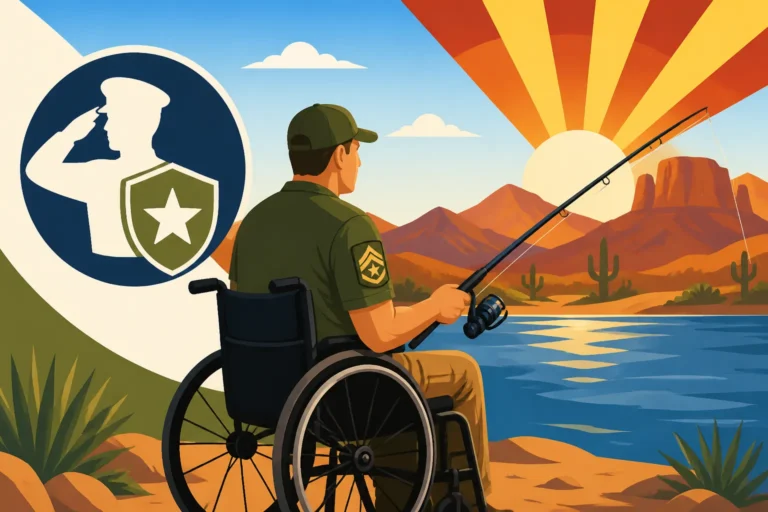
Arizona extends a significant thank you to its disabled veterans through a special fishing license program. Arizona residents who are disabled veterans can qualify for a discounted Class A or combo hunting/fishing license. The exact discount and eligibility criteria often depend on the percentage of service-connected disability and other factors, as verified by the U.S. Department of Veterans Affairs. This program aims to honor the sacrifices made by our veterans by making outdoor recreation more accessible.
Imagine a veteran who has served our country with distinction and now finds solace and healing in the quiet contemplation of fishing. Having access to a discounted license makes this therapeutic activity more attainable. The process typically involves presenting official VA documentation confirming your disability status when applying for the license. This isn't just a small token; it can represent substantial savings over the years, allowing veterans to focus on the enjoyment of the sport rather than the cost. We have a dedicated resource on Arizona Disabled Veteran Fishing License Requirements that can walk you through the specifics of eligibility and application, ensuring veterans get the benefits they've earned.
Combo Hunting and Fishing Licenses
While not an exemption in itself, opting for a combo hunting and fishing license can be a significant cost-saving measure for residents who enjoy both activities. Rather than purchasing separate annual licenses for hunting and fishing, the Arizona Game and Fish Department offers a combined license at a reduced total price. It’s an efficient way to cover all your bases if you're an avid outdoors person who likes to pursue both fish and game throughout the year.
Consider an angler who loves chasing largemouth bass at Lake Pleasant in the spring and fall, but also enjoys dove hunting in September. Buying two separate licenses can add up. The combo license provides a convenient and more economical solution. It's a streamlined approach that simplifies your licensing needs and keeps more money in your pocket for other essential gear, like a new tackle box or a reliable fishing rod, which you can easily find on Amazon. This bundling strategy is a smart choice for many active Arizona residents. For a full breakdown of the benefits and costs, refer to our Arizona Combo Hunt and Fish License Guide.
Fishing Privileges for Native Americans and Tribal Lands
The state of Arizona is home to numerous Native American tribes, each with its own rich history and sovereign rights. This unique aspect of the state means that fishing regulations can differ significantly when it comes to tribal lands, presenting both exemptions and additional permit requirements.
Understanding Tribal Sovereign Rights
Federally recognized Native American tribes in Arizona often possess inherent sovereign rights that predate statehood. For enrolled members of these tribes, fishing within their own tribal lands is typically governed by tribal law, not state law. This means that a tribal member fishing on their tribe's reservation may not need an Arizona state fishing license. Their right to fish stems from their tribal affiliation and treaty rights, and they adhere to the regulations set forth by their specific tribal game and fish departments.
This is a crucial distinction and one that reflects the unique legal landscape of the American Southwest. For example, an enrolled member of the White Mountain Apache Tribe fishing on the Fort Apache Indian Reservation would follow the fishing regulations established by the White Mountain Apache Tribe, and would not need an AZGFD state license to do so. This acknowledges and respects the deep cultural and historical connection that tribal members have to their ancestral lands and resources.
Specific Tribal Permits for Non-Members
For non-tribal members, fishing on tribal lands in Arizona is a different story. While you may be exempt from the state fishing license requirement, you will almost always need to purchase a specific tribal fishing permit issued by that particular tribe. These permits are essential for gaining legal access to fish the often pristine and well-managed waters found within tribal reservations. Each tribe sets its own rules, permit fees, and regulations, which can vary widely.
Take the San Carlos Apache Reservation, for instance, which is famous for its excellent fishing at San Carlos Lake. If you're not an enrolled member of the San Carlos Apache Tribe, you'll need to purchase a San Carlos Apache fishing permit to fish there. Similarly, if you want to fish some of the incredible waters on the White Mountain Apache Reservation, you’ll need to acquire a White Mountain Apache Tribe fishing permit. These permits often come with their own set of regulations regarding bag limits, species, and fishing methods. It is absolutely critical to research and understand the specific tribal regulations before planning a trip to any tribal waters, as they can differ significantly from state rules. Our article on Tribal Land Fishing Permits in Arizona provides a broader overview, and you can find specific details for popular spots in Do You Need a Separate Permit to Fish San Carlos Lake?. Always purchase your tribal permit from authorized tribal vendors or offices, as a state license is simply not valid on these sovereign lands.
Reciprocal Agreements and Border Water Exceptions
Arizona shares borders with several states, and along these borders, particularly on major waterways like the Colorado River and Lake Powell, you might encounter reciprocal agreements that affect fishing license requirements. These agreements are designed to simplify things for anglers fishing shared waters, allowing a single state's license to be valid across state lines in certain designated areas.
Fishing the Colorado River with Out-of-State Licenses
The mighty Colorado River forms a significant portion of Arizona's western border with California and Nevada. To make fishing these shared waters less complicated, reciprocal agreements are often in place. What this usually means is that if you have a valid fishing license from Arizona, California, or Nevada, you might be able to fish the main stem of the Colorado River and its connected waters (like Lake Havasu, Lake Mohave, and Lake Mead) that form the boundary between these states, regardless of which side you're on.
For example, if you're fishing for striped bass on Lake Havasu, a valid Arizona fishing license would typically cover you even if your boat drifts into the California side, and vice-versa for a California license holder. However, there's a crucial caveat: while your license might be valid, you are generally required to adhere to the more restrictive regulations (like bag limits, size limits, and specific gear rules) of the state whose waters you are currently fishing, or sometimes of the state where you launched your boat. It sounds a bit complicated, but the spirit of the agreement is to avoid needing two licenses for one body of water. Always carry your license and be aware of where you are on the water. For more specific details on what applies where, check out our guide on Arizona License Coverage on the California Side of the Colorado River. It's always a good idea to consult the most current AZGFD regulations handbook or the regulations of the bordering state if you plan to fish these boundary waters.
Lake Powell's Unique Multi-State Licensing
Lake Powell, a vast reservoir stretching across the Arizona-Utah border, offers another excellent example of a reciprocal agreement designed for angler convenience. Due to its sheer size and the fact that it straddles two states, fishing here could be a bureaucratic nightmare without such agreements. Thankfully, for Lake Powell, the rule is refreshingly simple: if you possess a valid fishing license from either Arizona or Utah, you are legally permitted to fish the entire lake, regardless of which state's waters you find yourself in.
This means you don't have to worry about whether you're in Arizona or Utah as you chase those famous Lake Powell striped bass or smallmouth bass through canyons like Navajo Canyon or Antelope Canyon. One license covers the whole magnificent body of water. This is a huge relief for anglers, as the state line is often unmarked and irrelevant to the fish. So, whether you bought your license online through the AZGFD portal or grabbed it from a local vendor near Page, Arizona, you’re good to go for the whole lake. This streamlined approach makes planning a multi-day fishing trip to Lake Powell much less stressful. For those wondering about the intricacies of fishing this massive lake, our article Do You Need Two Licenses to Fish Lake Powell? explains this agreement in full.
Special Circumstances and Limited Exemptions
Beyond the more common exemptions, there are a few other specific situations and special licenses that cater to unique circumstances, ensuring that more people can enjoy the sport of fishing in Arizona.
Anglers with Qualifying Disabilities (Class A Disabled License)
While there isn't a blanket exemption for all individuals with disabilities, Arizona does offer a significantly discounted "Class A Disabled" license for qualifying residents. This isn't a free license, but it provides a substantial reduction in cost, making fishing more accessible for those facing certain challenges. To qualify, an Arizona resident must have a severe, permanent disability that meets specific criteria established by the AZGFD, typically requiring a physician's certification. This includes disabilities that substantially impair major life activities, such as mobility.
Consider someone who has a permanent mobility impairment that makes navigating uneven terrain or standing for long periods incredibly difficult. While they might still enjoy the tranquility and challenge of fishing, the cost of an annual license, coupled with other adaptive equipment, can sometimes be a barrier. The Class A Disabled license is designed to ease that burden, offering an affordable option for these dedicated anglers. The application process will require documentation from a medical professional confirming the nature and permanence of the disability. This license is a testament to Arizona's commitment to inclusive outdoor recreation, allowing more residents to connect with nature through fishing.
Documented Native American Ancestry (General Fishing)
This is an area where there can be some confusion, so it's important to clarify. While enrolled members of federally recognized tribes have specific fishing rights on their tribal lands without a state license, simply having Native American ancestry (without being an enrolled member of a federally recognized Arizona tribe) does not typically exempt an individual from needing an Arizona state fishing license to fish in public state waters.
Many people wonder about this, especially given the rich Native American heritage across the state. However, state laws are distinct from tribal laws and apply to all individuals fishing on public lands and waters within Arizona's jurisdiction, unless a specific, documented exemption applies (like those mentioned for youth or Free Fishing Day). So, if you have Native American ancestry but are not an enrolled member fishing on your tribe's land, you would still need to purchase a standard Arizona fishing license for state waters. It's a common misconception, and understanding this distinction is key to staying compliant with regulations when planning your next fishing adventure to spots like Bartlett Lake or Canyon Lake.
How to Navigate and Apply for Arizona Fishing Exemptions and Discounts
Understanding that you might qualify for an exemption or discount is the first step; the next is successfully navigating the application process. While it might seem daunting, the AZGFD has made efforts to streamline these procedures, whether you’re applying online or in person.
Gathering Necessary Documentation
Regardless of whether you’re seeking a Pioneer License, a Disabled Veteran’s discount, or simply proving your child’s age, gathering the correct documentation is paramount. The AZGFD relies on official records to verify eligibility for any special license or exemption.
For the Pioneer License, you’ll need proof of age (like a driver's license or birth certificate) and, critically, verifiable documentation of 25 consecutive years of Arizona residency. This might include old tax returns, utility bills, property deeds, or a combination of documents that demonstrate continuous residency over that long period. For disabled veterans, current and official documentation from the U.S. Department of Veterans Affairs outlining your service-connected disability status is a must-have. For youth anglers, while a license isn't needed, having an ID to confirm their age if asked by a game warden is always a good idea, though often not strictly required unless there's doubt. Taking the time to collect these documents before you start the application process will save you immense frustration later on. Think of it like packing your fishing gear; you wouldn't head to the lake without all your rods, reels, and tackle, so don't approach the license application without all your paperwork. While you can't buy your license on Amazon, you can easily find file organizers and document protectors there to keep all your important papers in order!
Purchasing and Renewing Special Licenses
Once you have all your documentation in order, the actual process of applying for and purchasing your special license is relatively straightforward. The AZGFD provides multiple avenues to do this, catering to different preferences and needs.
The most convenient way for many is to apply online through the official AZGFD licensing portal. This platform allows you to submit applications, upload necessary documents, and purchase licenses from the comfort of your home. It's available 24/7, meaning you can take care of your licensing needs even outside of regular business hours. For those who prefer a more personal touch or need assistance with the application, you can visit any AZGFD office across the state. Their knowledgeable staff can guide you through the process, answer questions, and help ensure your application is correctly submitted. Additionally, many authorized license dealers (sporting goods stores, bait shops, etc.) can process certain license types, though complex applications like the Pioneer or Disabled Veteran licenses might require an AZGFD office visit. While you can't buy the license itself on Amazon, you can easily order a waterproof wallet to keep your new digital or physical license safe while you're out on the water. Remember that even special licenses have renewal periods (unless it's a lifetime license), so keep an eye on expiration dates to avoid any lapses. Our guide on How to Buy an Arizona Fishing License Online offers step-by-step instructions, and you can find local options in Finding Arizona Fishing License Dealers Near You. For renewal specifics, refer to Fishing License Renewal Rules in Arizona.
Common Misconceptions About Arizona Fishing Licenses
Even with clear rules and helpful guidelines, certain myths and misunderstandings persist around fishing license requirements. It’s important to debunk these common misconceptions to ensure all anglers are fishing legally and responsibly.
"I'm only catch-and-release, so I don't need a license."
This is perhaps one of the most widespread myths in the angling community, and it's absolutely false. In Arizona, if you are actively engaged in fishing, meaning you are attempting to catch fish by any method (rod and reel, fly fishing, etc.), you are required to possess a valid fishing license, regardless of your intention to keep or release your catch. The act of fishing itself is what triggers the license requirement, not the outcome.
Think of it this way: the license fee contributes to the conservation efforts of the AZGFD, funding habitat restoration, fish stocking programs, research, and enforcement that benefit all anglers and ensure healthy fish populations for the future. Whether you're meticulously practicing catch-and-release with delicate trout flies in a mountain stream or aggressively targeting largemouth bass at Lake Pleasant with large crankbaits, your activity has an impact on the fishery. Therefore, contributing to its sustainability through a license is a requirement for everyone who participates. Fishing without a license, even if you release every fish, can result in fines and penalties. Our article Is an Arizona Fishing License Required for Catch and Release? delves deeper into why this regulation is in place.
"My friend has a license, so I'm covered."
Another common misconception, particularly among groups of friends or families, is the idea of a "shared" license. Unfortunately, this is not how fishing licenses work. An Arizona fishing license is an individual permit, issued to a specific person, and it is not transferable. Each individual actively participating in fishing must possess their own valid license, unless they fall under one of the specific exemptions (like being under 10 years old).
Picture this: you and your buddy head out for a day of bass fishing on Roosevelt Lake. You've got your annual license, but he figures since you have one, he's good to go. This is a risky assumption. If a game warden checks your licenses, your friend would be found in violation, even if you are fully licensed. It's similar to having a driver's license – each driver needs their own. It's a fundamental principle of wildlife management that individual participation requires individual authorization. So, encourage your friends to get their own licenses; it's the right thing to do for conservation and for staying on the right side of the law.
"It's a small pond, surely I don't need one."
The size or perceived insignificance of a body of water does not automatically exempt you from needing a fishing license in Arizona. If the water body is considered public water, or if it's private but has connections to public waterways, a license is almost always required. This applies to everything from large reservoirs and rivers down to smaller community fishing ponds and urban lakes, which are often stocked by the AZGFD.
A perfect example is fishing at one of the many community fishing program lakes in Phoenix or Tucson, like Cortez Park Lake or Kennedy Lake. These are relatively small, often man-made ponds, but they are publicly accessible and actively managed and stocked by the AZGFD. Therefore, a state fishing license is mandatory to fish in them (unless it's Free Fishing Day or you're under 10). The only scenario where you likely wouldn't need a license for a small pond is if it's entirely contained on your own privately owned or leased property, with no public access or connection to state waters. Otherwise, assume a license is needed. Don't let the modest size of a fishing spot fool you into thinking the rules don't apply!
Disclaimer
The information provided in this guide is intended for general informational purposes only and does not constitute legal advice. Fishing regulations in Arizona can change, and specific situations may require clarification. Always consult the most current Arizona Game and Fish Department (AZGFD) regulations handbook or visit their official website for the most accurate and up-to-date information regarding fishing licenses, exemptions, discounts, and regulations before engaging in any fishing activities.