How to Fish Submerged Timber for Bass
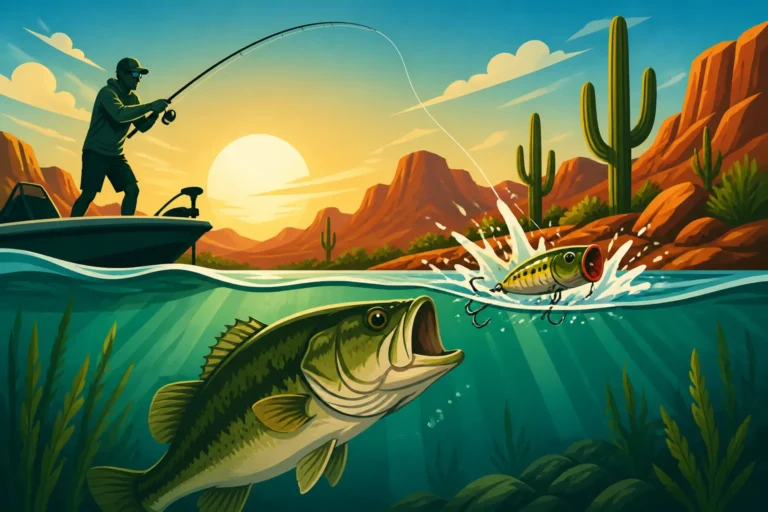
There's nothing quite as frustrating as casting your favorite lure into what looks like a prime bass spot, only to have it immediately snagged in a hidden underwater jungle. Fishing submerged timber in Arizona's desert lakes can feel like a constant battle against snags, but trust me, it's where the big bass live. This guide will walk you through everything you need to know to confidently tackle those sunken trees and pull out some trophy-worthy largemouth.
Understanding the Bass Habitat of Submerged Timber
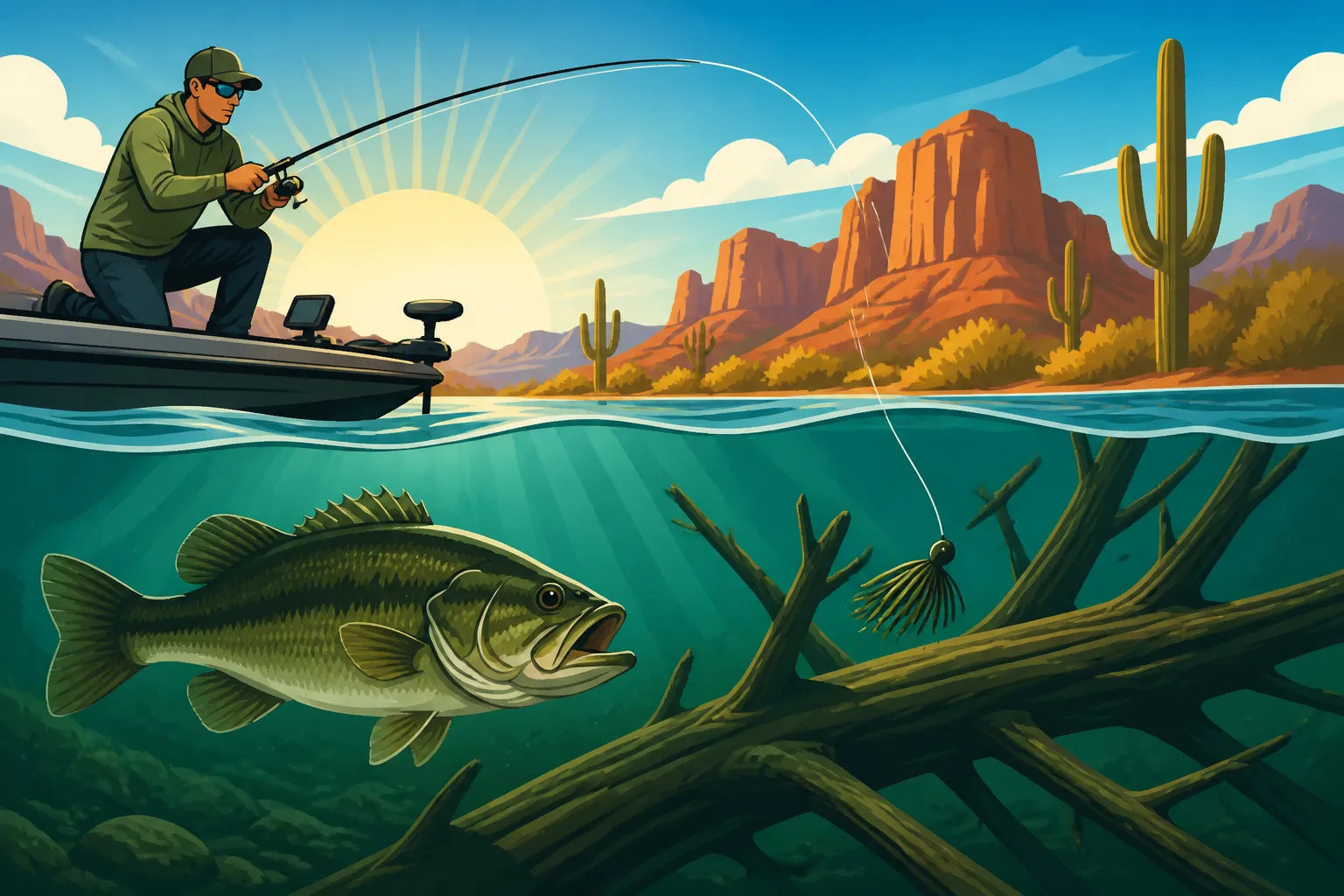
When we talk about submerged timber, we're really talking about a bass angler's dream come true, even if it often feels like a nightmare of lost lures. These underwater structures, whether they're full trees, fallen logs, old stumps, or even brush piles, are absolute magnets for bass. In Arizona's desert reservoirs, where natural cover can be sparse, timber provides crucial ambush points, shade from the intense sun, and prime hiding spots for baitfish.
Why Bass Love Submerged Timber
Think about it from a bass's perspective. They are ambush predators, and dense cover like submerged timber offers the perfect camouflage. A bass can tuck itself deep into the branches of a sunken mesquite or palo verde, waiting for an unsuspecting shad or bluegill to swim by. The intricate network of branches also provides shelter from larger predators, a place to spawn in the spring, and a comfortable spot to retreat to when water temperatures fluctuate. This isn't just a preference; it's a matter of survival and efficiency for these fish. You'll often find bass nestled right in the thickest part of the cover, sometimes even suspending just above the horizontal limbs, making them tricky targets.
In many Arizona lakes, like the vast expanses of Roosevelt Lake or the numerous arms of Lake Pleasant, timber stands as an aquatic forest, providing miles of diverse habitat. These are not just random logs; they are entire ecosystems teeming with life, and the bass know it. Understanding this attraction is the first step to successfully fishing these areas.
Identifying Different Types of Submerged Timber
Not all timber is created equal, and knowing what you're fishing can make a big difference in your approach. Arizona lakes offer a variety of submerged structures, each with its own quirks.
- Standing Timber: These are trees that were submerged when a lake was filled, often still rooted in place and extending from the bottom towards the surface, sometimes even breaking the water line. These can be particularly challenging due to their height and density. Bass might hold at any depth along the trunk or in the canopy, depending on the season and time of day. Areas with standing timber can be found prominently in places like Alamo Lake, especially in its upper reaches.
- Fallen Logs and Laydowns: These are trees that have fallen into the water from the shoreline, often with one end still on land. Bass love to position themselves along the trunk, especially near where branches meet the main body or at the submerged root ball. These are often easier to fish from the bank or a boat, as their structure is usually more horizontal.
- Stumps and Root Balls: After years of being submerged, larger trees can break down, leaving only their resilient stumps and massive root balls. These offer concentrated cover, creating perfect ambush spots close to the bottom. They are often found on old creek channels or former shorelines that are now deep underwater.
- Brush Piles: Sometimes created naturally by erosion or by anglers intentionally sinking Christmas trees or other woody debris, brush piles are dense clusters of smaller branches. They are excellent for crappie but also hold plenty of bass, especially when they're fresh and packed with intricate cover. They often attract baitfish, which in turn attracts the bass.
Each type of timber requires a slightly different approach, but the common thread is that they all hold fish. Knowing what your sonar is showing you, or what you're casting into, helps you choose the right lure and technique.
Essential Gear and Tackle for Fishing Submerged Timber
Alright, let's get down to the brass tacks: what do you actually need to rig up to tackle this challenging but rewarding environment? Fishing timber isn't for light tackle; you need robust gear that can handle tough bites and the inevitable snags. Trying to fish a finesse setup in heavy timber is a recipe for heartbreak and lost lures.
Rods and Reels for Heavy Cover
When you're dealing with the dense, unforgiving nature of submerged timber, your rod and reel setup needs to be up to the task. This is not the time for ultralight action.
For rods, think heavy or medium-heavy action with a fast tip. A heavy action rod gives you the backbone necessary to pull a bass out of thick cover before it can wrap your line around a branch. The fast tip, on the other hand, provides the sensitivity to feel subtle bites and the quick responsiveness needed for powerful hook sets. Look for rods in the 7-foot to 7-foot-6-inch range, as the extra length provides better casting distance and leverage. Brands like Ugly Stik or St. Croix offer durable options that can stand up to the abuse of timber fishing.
When it comes to reels, a baitcasting reel is almost universally preferred for timber fishing, especially when targeting larger bass. You need a reel with a strong drag system and a fast retrieve ratio (7.1:1 or higher is ideal). The fast retrieve helps you quickly take up slack line after a cast and get the fish moving away from the cover once it bites. A robust drag system is non-negotiable, allowing you to apply enough pressure to keep a hard-fighting bass from diving back into the snags. Shimano and Daiwa both make excellent baitcasting reels that can handle the stress of this kind of fishing. If you're looking to upgrade your setup, you can find a wide variety of options on Amazon, making it easy to compare specs and read reviews before committing.
Line Choices and Their Advantages
Your fishing line is literally your lifeline to the fish, and in timber, it's often the weakest link if you choose incorrectly. This is not the place for light monofilament.
- Braided Line: This is arguably the best choice for fishing submerged timber. Braided line has virtually no stretch, which gives you incredible sensitivity to feel those light bites, and more importantly, it provides immense strength for setting the hook and horsing a bass out of the thick stuff. Its abrasion resistance is also superior to monofilament, allowing it to rub against wood with less chance of breaking. I recommend 30-65 lb test braid for most timber applications. While it's visible, the other advantages far outweigh this in heavy cover.
- Fluorocarbon Line: While not quite as abrasion-resistant as braid, high-quality fluorocarbon line (15-25 lb test) offers excellent abrasion resistance compared to mono, along with low stretch and superb sensitivity. The biggest advantage of fluorocarbon is its near invisibility underwater, which can be a game-changer in clearer Arizona lakes or when bass are particularly spooky. Many anglers will use braided mainline with a 2-3 foot fluorocarbon leader, combining the strengths of both lines. This setup can be particularly effective when fishing the clearer waters of Canyon Lake.
Using a combination of braid and fluorocarbon leader is a popular and effective strategy, giving you the power of braid with the subtlety of fluorocarbon. Whatever you choose, check your line frequently for frays and nicks, especially after a snag or a tough fight.
Lures and Rigging for Timber
This is where things get really interesting! The right lure can make all the difference, and rigging it correctly is paramount to minimizing snags.
When it comes to lures for bass in submerged timber, you want options that are designed to be as "weedless" as possible. Here are some of the go-to choices:
- Jigs: Flipping and pitching jigs are timber fishing staples. They have a heavy lead head and a stiff weed guard that helps them slide over branches and through brush. Pair them with a bulky soft plastic trailer (like a craw or creature bait) to add bulk and action. Black and blue, green pumpkin, and brown are excellent color choices.
- Texas-Rigged Soft Plastics: Worms, creature baits, and craws rigged Texas-style are incredibly effective. The hook point is buried in the plastic, making it virtually snag-proof. Use a heavy tungsten weight (3/8 to 1 ounce) to quickly get your bait to the bottom and through the cover. This is a versatile presentation for probing all levels of the timber.
- Bladed Jigs (ChatterBaits): While not as weedless as a Texas rig, bladed jigs can be surprisingly effective in moderately dense timber. The vibration and flash can entice strikes from aggressive bass. Just be prepared for the occasional snag.
- Spinnerbaits: Similar to bladed jigs, spinnerbaits can be fished through sparser timber, especially along the edges. The thumping blades and flash are great for attracting reaction strikes. Use heavier wire spinnerbaits to prevent bending out the frame on a snag.
When rigging, always ensure your hook point is truly buried in the soft plastic for Texas rigs, and that your jig's weed guard is robust. A small detail like a slightly exposed hook can lead to endless frustration. For a complete collection of tackle, Amazon offers a wide selection of hooks, weights, and soft plastics specifically designed for heavy cover fishing.
| Lure Type | Ideal Conditions | Key Features for Timber Fishing |
|---|---|---|
| Jigs (Flipping/Pitching) | Dense timber, deep cover, close-quarters fishing | Heavy head, stiff weed guard, bulky trailer |
| Texas-Rigged Soft Plastics | All types of timber, probing depths, versatile | Buried hook point, heavy tungsten weight |
| Bladed Jigs | Moderate timber density, aggressive bass, reaction bites | Strong vibration, flash, heavier wire |
| Spinnerbaits | Sparser timber edges, searching cover, reaction bites | Dual blades for vibration, heavier wire |
Effective Techniques for Fishing Submerged Timber
Now that you've got the right gear, it's time to talk strategy. Simply casting into a tree and hoping for the best isn't going to cut it. You need deliberate techniques that get your lure where the fish are while minimizing hang-ups. Patience and precision are your best friends here.
Flipping and Pitching Precision
Flipping and pitching are cornerstone techniques for fishing submerged timber, allowing for quiet, accurate presentations in tight spaces. These aren't long-distance casting methods; they're about surgical precision.
- Flipping: This technique involves using a long rod (7'6" to 8') to swing a short amount of line and lure directly into the cover with a pendulum motion. You stand close to your target, typically within 10-20 feet. The lure barely touches the water, minimizing splash and noise. It’s perfect for dropping a jig or Texas-rigged creature bait vertically into a small opening in a dense brush pile or right next to a prominent log. The goal is a quiet entry and a rapid descent to the strike zone, often just a few inches from where you suspect a bass is holding. The lack of a big splash means less spooking and more strikes from wary bass nestled deep in the wood. This method is incredibly effective when you are dissecting specific, visible pieces of cover in close proximity.
- Pitching: Similar to flipping but designed for slightly longer distances (20-40 feet), pitching uses a gentle, underhand lob to send your lure skipping or softly landing in precise spots. Instead of a full overhead cast, you let out a short amount of line, then swing your rod tip forward, releasing the line to guide the lure. It's fantastic for reaching pockets in flooded trees or placing your bait under overhanging branches without crashing it into the water. Both techniques demand practice, but once mastered, they unlock incredible accuracy and stealth, which are vital for success in these high-pressure bass environments. When fishing specific stands of trees at places like Lake Havasu, where bass often hold tight to the wood, these precision casts can be the difference-maker.
Slow Rolling and Cranking the Edges
While flipping and pitching are for the heart of the timber, sometimes bass position themselves on the outer edges or slightly above the canopy. This is where moving baits come into play.
- Slow Rolling Spinnerbaits and Bladed Jigs: For timber that isn't excessively dense, or along the visible edges of a submerged tree line, slow rolling a spinnerbait or bladed jig can be deadly. Cast your bait past the cover and retrieve it slowly, just fast enough to keep the blades turning or the blade vibrating. The goal is to tick the branches without getting hung up. The erratic deflections off the wood can often trigger a reaction strike from a bass that might not hit a stationary bait. Use heavier spinnerbaits (3/4 to 1 ounce) to help them sink deeper and maintain better contact with the bottom or middle layers of the cover. This approach is particularly effective when bass are actively feeding or during periods of lower light. It’s a great way to cover water and find active fish that are less concerned about being deep inside the structure.
- Crankbait Fishing the Outermost Timber: Deep-diving crankbaits can be used effectively on the very outermost edges of submerged timber, especially when the cover is a bit more sparse or consists of fewer, larger logs rather than dense branches. The trick is to choose a crankbait that dives just deep enough to "kiss" the tops of the submerged branches or roots. When your crankbait deflects off the wood, pause briefly, then resume your retrieve. This deflection often triggers strikes. However, this is a high-risk, high-reward technique, as snags are still very possible. For areas with less dense submerged timber, like some of the deeper points at Bartlett Lake, this can be an exciting way to find active bass. It's crucial to use crankbaits with strong hooks that can handle the stress of hitting wood, and to be prepared for those inevitable hang-ups.
These moving bait techniques are excellent for covering larger areas around the periphery of timber, helping you locate aggressive fish that are cruising the edges looking for an easy meal.
Navigating the Challenges of Submerged Timber
Let's be real: fishing submerged timber is tough. Snags are an unfortunate, inevitable part of the game. But with the right mindset and some clever tactics, you can minimize frustration and maximize your time with a line in the water. It’s about being proactive to prevent snags and having a plan for when they do occur.
Strategies to Minimize Snags
The best defense against snags is a good offense, meaning choosing the right approach and always being mindful of your lure's position.
One of the most crucial elements is using weedless presentations. As mentioned, Texas-rigged soft plastics and jigs with robust weed guards are your best friends. Always ensure the hook point on your Texas rig is fully embedded in the plastic, creating a truly weedless profile. A small piece of plastic hanging out or a slightly exposed hook will catch on every branch. For jigs, regularly check that the weed guard hasn't been bent or compromised, as this can dramatically increase snags.
Another key strategy is maintain constant contact with your lure. This doesn't mean reeling super fast, but rather keeping just enough tension in your line to feel the timber. When you feel your lure touch a branch, don't just pull harder. Instead, try to "walk" it over the obstruction. Gently lift your rod tip, shake it slightly, or even give a quick slack-line pop to try and free it. Many snags happen when you lose feel and simply drag your lure into a V-shape in the branches.
Consider your entry angle. When flipping or pitching, try to drop your lure straight down into openings rather than at an angle that might cause it to slide into branches on the way down. If you're fishing a standing tree, try to work around its perimeter first, then gradually move closer to the denser core. Using a boat with a trolling motor allows you to position yourself precisely for the best entry angles, making it much easier to target specific pockets within the timber.
Retrieving Snagged Lures and Preventing Break-Offs
Despite your best efforts, you're going to get snagged. It's part of the deal. The difference between a minor inconvenience and a costly break-off often lies in how you react.
The first rule: don't just yank! A hard yank often buries the hook deeper into the wood, making retrieval nearly impossible. Instead, try a few gentler approaches. First, point your rod tip directly at the snag. This reduces the angle and gives you a straight pull. Then, try popping the line with your thumb and forefinger like a bowstring. This sudden shock can often dislodge the lure. Another effective method is to engage your reel, reel down until there’s no slack, and then give a series of quick, sharp snaps upwards with your rod tip. The sudden movement can sometimes bounce the lure free.
If those don't work, and you're in a boat, you can try to move to the other side of the snag. Sometimes pulling from a different angle will free the lure. If you can get directly over the snag, gently work your rod tip down toward the lure and try to physically push it free. This is often the most successful method when you're in a boat.
For bank anglers or those who can't move their boat, a lure retriever can be a lifesaver. These devices typically consist of a heavy chain or weighted cone that slides down your line, knocking or snagging onto your lure to pull it free. They are well worth the small investment, especially if you're regularly fishing expensive jigs or crankbaits. You can easily find a range of reliable lure retrievers on Amazon that can pay for themselves after just one saved lure. Losing a favorite lure not only costs money but can also interrupt your rhythm, so having a good retriever in your tackle box is a smart move.
Finally, always be prepared to break off your line intentionally if a snag is truly hopeless. Trying to pull a heavy snag free with too much force can damage your rod, reel, or even cause injury. Better to re-tie than replace expensive gear. This is why having extra terminal tackle on hand, including hooks, weights, and leader material, is crucial. Taking a moment to re-tie correctly is always better than fishing with a compromised line or frustrating yourself with a lure that's simply not coming back.
Targeting Specific Bass Species in Timber
While largemouth bass are the most common residents of dense submerged timber in Arizona, other species might also be found lurking in or around these underwater structures. Understanding their preferences can help you refine your approach and increase your catch rate.
Largemouth Bass and Their Timber Strongholds
Largemouth bass are the kings of timber. They absolutely thrive in these environments, using the dense cover for ambush, protection, and spawning. You'll find them in almost any lake with significant submerged timber, from the sprawling Roosevelt Lake to the more intimate Apache Lake.
When targeting largemouth in timber, focus on the densest parts of the cover. These fish prefer to be tucked deep, often right on the bottom or suspended slightly within the branches. Look for irregular points of structure within a timber field – a cluster of stumps, a particularly large fallen log, or where two different types of timber meet. These "sweet spots" often hold multiple fish. During colder months, largemouth will often move to the deepest timber available, still preferring that cover for warmth and stability. In the warmer months, they might move higher in the water column within the timber, seeking shade and cooler water. Pay close attention to water depth and clarity; in clearer lakes, they might hold a bit deeper or tighter to the cover. Bass will often position themselves on the leeward side of the timber, protected from current or strong winds, waiting for baitfish to be swept past.
Your primary lures for largemouth in timber will be jigs, Texas-rigged soft plastics (worms, creature baits, craws), and sometimes heavy spinnerbaits or bladed jigs worked along the edges. The key is to present your lure silently and get it deep into their living room. A slow, methodical retrieve, often involving pauses and subtle shakes, is usually best to tempt these cover-loving fish.
Other Species That Utilize Submerged Timber
While largemouth dominate, other fish species, including other types of bass and even catfish, will also congregate around submerged timber, often for similar reasons of cover and food.
- Smallmouth Bass: While smallmouth typically prefer rocky points and clear water, in lakes like Lake Powell, where vast areas of the original landscape were flooded, you'll find them relating to submerged timber, especially if it's mixed with rock structure. They might not be as deep within the densest parts as largemouth, often preferring the outer edges or where timber meets a hard bottom. Dropshot rigs with small worms or tubes can be effective for these more finicky timber residents. Look for them on points or ledges that also feature some scattered timber.
- Crappie: Oh, crappie love brush piles and submerged timber! If you're fishing a timber field, especially one with a lot of smaller branches, you're almost certainly going to encounter crappie. They school tightly around these structures, often suspending within the branches. Small jigs, tiny spinnerbaits, or live minnows fished on a bobber or vertically jigged around the timber are highly effective. If you find a dense brush pile, it's often a crappie hotspot, and you might pull a bass or two from the bottom layers of the same cover. In Arizona's warmer lakes, crappie use timber as their primary refuge.
- Catfish: Channel catfish and even flathead catfish will use submerged timber, particularly the large, complex root balls and fallen logs on the bottom. They are scavengers and predators that will hide in these areas, especially during the day, waiting for an easy meal. Bottom-fishing with cut bait, chicken liver, or stink baits positioned right next to a sunken log can attract a big catfish. While not your primary target when fishing timber for bass, don't be surprised if a chunky channel or flathead inhales your jig or soft plastic. You can find out more about the different species in Arizona with our Fish Species Guide for Arizona Lakes.
Understanding these overlaps can help you broaden your horizons while fishing timber. Sometimes, targeting crappie in a brush pile can inadvertently lead to a nice bass, or a patient bottom-fished rig for catfish near a heavy log might yield an unexpected largemouth. The underwater world of submerged timber is a complex and vibrant ecosystem.
Seasonal Considerations for Fishing Timber
Just like bass move with the seasons in open water, their relationship with submerged timber changes throughout the year. Understanding these seasonal patterns is key to consistently finding fish. What works in spring won't necessarily be effective in the dead of summer or the chilly depths of winter.
Spring Spawn and Timber
Spring is a magical time for bass fishing, and submerged timber plays a huge role in the spawning process for largemouth. As water temperatures begin to rise (typically in the 60-70°F range), bass move from their deeper wintering grounds to shallower areas to spawn.
Timber, especially denser brush piles and fallen trees, provides ideal cover for bass to build their nests. The branches protect eggs and fry from predators and harsh weather conditions. During the pre-spawn phase, bass will stage on the outer edges of timber lines, feeding aggressively as they prepare for the spawn. This is an excellent time for moving baits like spinnerbaits and bladed jigs around the timber periphery, as bass are actively looking for food. As the spawn progresses, bass will move into the thickest parts of the timber, often in shallower water, guarding their nests. This is when flipping and pitching jigs or Texas-rigged creature baits directly into the heart of the cover becomes incredibly effective. You're trying to provoke a strike from a territorial bass guarding its domain. After the spawn, bass will often linger in the timber to recover before dispersing to summer patterns. Lakes like Saguaro Lake, with its abundant submerged mesquite, become prime hunting grounds during the spring.
Summer Heat and Deep Timber
Arizona summers are brutal, and the scorching sun can drive bass deep to seek cooler, more stable water temperatures. This is when deep submerged timber becomes an absolute sanctuary for them.
During the peak of summer, especially mid-day, bass will often hold in the deepest, densest timber they can find, sometimes suspending in the middle of a flooded tree or hunkering down on the deepest submerged logs. Look for timber fields adjacent to deep creek channels or steep drop-offs. Your electronics become invaluable here to identify these deeper timber structures. Vertical presentations are key: dropping heavy jigs or Texas-rigged worms straight down into the cover, working them slowly and methodically. This isn't about covering water quickly; it's about painstakingly dissecting each piece of deep timber. Early mornings and late evenings might see bass moving to the shallower, shadier parts of the timber to feed, making topwater or spinnerbait presentations viable again for a short window. Knowing How to Beat the Heat Fishing in Arizona Summer is crucial for both you and finding the fish.
Fall Turnover and Timber Transitions
Fall can be a fantastic time to fish timber as bass become more active, feeding aggressively in preparation for winter. As water temperatures cool and lakes experience turnover, baitfish often become more scattered, and bass use timber as ambush points along their feeding routes.
During early fall, bass might still be found relating to deeper timber, but as temperatures drop, they'll start to move shallower, following baitfish that are often pushed to the surface or along shoreline cover. They'll use timber that's near points, humps, or creek channels as staging areas. This is a great time for a mix of techniques: slow rolling spinnerbaits and bladed jigs along the timber edges, but also flipping and pitching jigs into the denser sections where fish are hiding and ambushing. As late fall progresses, bass will often retreat to deeper, more vertical timber structures, similar to their winter patterns, but they remain more active and willing to chase. The key is to find the timber that is closest to current baitfish populations.
Winter Stillness and Vertical Timber
Winter fishing in Arizona's desert lakes might not sound appealing to everyone, but it can be incredibly rewarding, especially for timber fanatics. Bass metabolism slows down, so they become less active and more reluctant to chase. However, they still need food and shelter.
In winter, bass will often relate to the deepest, most vertical timber available. They might suspend within a flooded standing tree or hold tight to the bottom near large stumps or root balls in deep water. Look for timber on main lake points, ledges, or deep creek channels. Vertical jigging a spoon, a blade bait, or a heavy jig-and-trailer directly over or into the deepest part of the timber can be effective. The key is a slow, subtle presentation. Bass aren't going to chase far, so your lure needs to be right in their face. Electronics are absolutely critical for finding these deep, suspended fish within the timber. You're looking for bait balls in or around the timber, and those tell-tale arches of bass suspended nearby. Winter fishing in timber requires immense patience and a meticulous approach, but it often yields some of the biggest bass of the year. For specific insights, check out our guide on Winter Bass Fishing Tactics in Arizona.
Final Thoughts on Conquering Submerged Timber
Fishing submerged timber in Arizona is undeniably one of the most challenging, yet rewarding, ways to catch bass. It demands patience, precision, and the right gear, but the payoff can be incredible. There's a certain satisfaction that comes from coaxing a big bass out of what seems like an impenetrable fortress of branches. Remember, every lost lure is a lesson learned, and every successful retrieve is a testament to your growing skill. So, gear up, embrace the challenge, and get ready to pull some serious lunkers from the depths of Arizona's timber-filled lakes.
Disclaimer
Please note that fishing conditions and regulations can change. Always consult the latest Arizona Game and Fish Department regulations before heading out. Safety should always be your top priority, especially when boating or fishing in remote areas.