Do You Need Two Licenses to Fish Lake Powell?
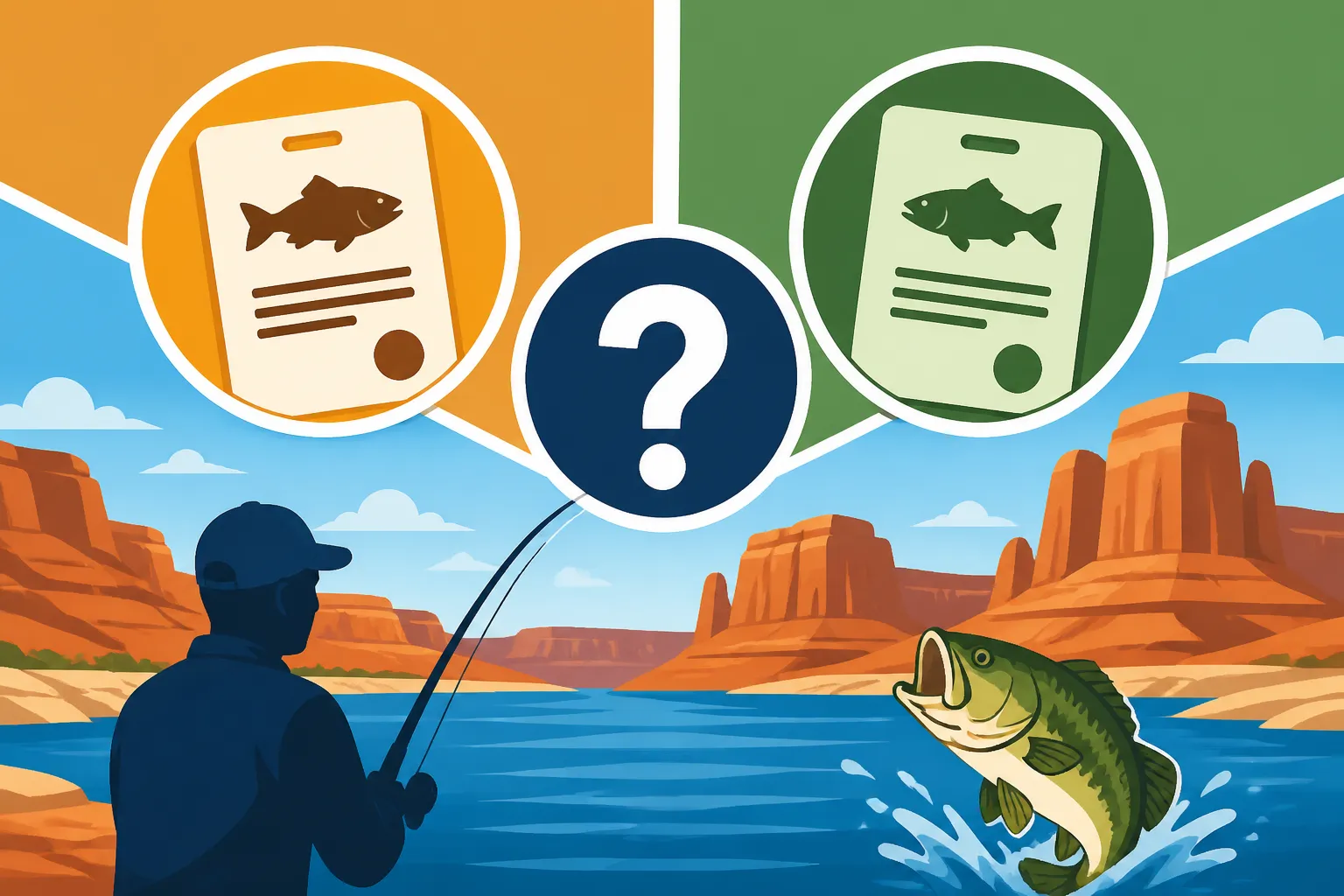
The thought of fishing Lake Powell often conjures up images of vast, blue waters and incredible fishing opportunities, but it can also bring a nagging question to the forefront for many anglers: "Do I actually need two fishing licenses for this one lake?" The confusion is completely understandable given that Lake Powell straddles the Arizona and Utah state lines. This comprehensive guide is here to untangle the complexities and give you a clear understanding of the licensing requirements for enjoying one of the Southwest's premier fishing destinations.
Navigating the Arizona and Utah Border on Lake Powell
Lake Powell is truly a marvel, an immense reservoir formed by the Glen Canyon Dam on the Colorado River. Its sheer size and stunning red rock canyons make it a bucket-list destination for many, not just anglers. What makes the licensing situation unique, and honestly a bit perplexing, is that the lake itself spans two states: Arizona and Utah. You might launch your boat in one state, fish for hours, and inadvertently cross into the waters of the other without even realizing it. This geographical reality is precisely why the question of needing one or two licenses comes up so frequently and causes so much head-scratching.
The Interstate Boundary Line Explained
The official state line between Arizona and Utah runs right through Lake Powell. For recreational boaters, this might not seem like a big deal, but for anglers, it's critical. Imagine you're chasing a hot striper boil in Padre Bay, and one minute you're legally fishing under your Arizona license, but a few minutes later, your boat might drift into Utah waters. Without a clear understanding, you could technically be fishing illegally without even knowing it, leading to potential fines or issues with game wardens from either state. The boundary isn't marked with buoys or signs on the water, making it a constant point of mental navigation for those who want to ensure they're always compliant.
Why This Border Creates Licensing Confusion
The primary source of confusion stems from the general rule of thumb that you need a fishing license for the specific state you are fishing in. Most lakes are entirely within one state, making the choice straightforward. Lake Powell, however, is a massive exception. The sheer volume of water and the intricate canyon systems mean that it's nearly impossible to stay exclusively within one state's jurisdiction for an entire fishing trip, especially if you're exploring different coves and arms of the lake. Anglers naturally worry about being caught on the "wrong" side of an invisible line and facing consequences. This perfectly valid concern often leads people to consider buying two licenses, just to be safe, even if it adds extra cost.
The Lake Powell Reciprocal Fishing Agreement
Thankfully, for the sanity and convenience of anglers, the states of Arizona and Utah recognized this unique challenge a long time ago. They established a reciprocal agreement specifically for Lake Powell. This agreement is a game-changer and directly addresses the common worry about needing separate licenses. It's designed to simplify things, allowing you to enjoy the entirety of the lake with fewer administrative hurdles.
How the Reciprocity Works in Practice
Under the Lake Powell Reciprocal Fishing Agreement, you only need one valid fishing license from either Arizona or Utah to fish the entire main body of Lake Powell. That's right, just one! If you have a current Arizona fishing license, you can legally fish in both the Arizona and Utah portions of the lake. The same goes if you hold a current Utah fishing license – it covers you for the entire lake, including the Arizona side. This agreement means you don't have to constantly check GPS coordinates or worry about drifting over an unmarked state line while you're trying to land that trophy fish. It truly simplifies the experience for everyone involved.
For a deeper dive into general licensing, you might find our guide on the Arizona Fishing License Guide helpful.
Key Exceptions and Important Clarifications
While the reciprocal agreement is wonderfully straightforward for the main lake, there are a couple of crucial exceptions and clarifications you need to be aware of to avoid any unexpected issues:
- Tributaries and Inflowing Rivers: The reciprocal agreement generally applies to the open waters of Lake Powell itself. If you decide to venture far up a tributary river that feeds into Lake Powell and fish those riverine sections, you might be leaving the "reciprocal zone." For example, if you fish far up the Escalante River or San Juan River arms in Utah, or similar deep canyon areas on the Arizona side, you should confirm if your single license still covers you. Generally, if you're a significant distance from the main body of the lake, you should assume state-specific rules for those rivers may apply, meaning you'd need the appropriate state's license if you're outside the recognized reciprocal boundaries. Always check the latest regulations from both the Arizona Game and Fish Department (AZGFD) and the Utah Division of Wildlife Resources (UDWR) if you plan on fishing these specific areas. Additionally, if you're specifically targeting trout in certain designated waters, remember that Trout Stamp Requirements in Arizona might apply, regardless of the reciprocal agreement for the general fishing license.
- State-Specific Regulations: While your single license covers where you can fish, it doesn't always supersede what rules you must follow. This is where it gets a little nuanced. Bag limits, possession limits, size restrictions, and specific gear restrictions (like bait rules or tackle types) are still often dictated by the state you are physically in at that moment, or sometimes by the state that issued your license. For simplicity, most anglers choose to adhere to the regulations of the state whose license they hold. However, it's wise to carry a copy of both states' regulations or at least be familiar with them, especially if you plan to keep fish. For a general understanding, exploring Arizona Fishing Regulations Explained can give you a solid foundation.
- Youth and Age Requirements: The reciprocal agreement also applies to youth anglers. In Arizona, for instance, kids generally don't need a license until they turn 10. However, Utah's age requirements might differ. If your child is fishing the Utah side with an Arizona license, and they are, for example, 10 years old (requiring a license in Arizona but not in Utah), they would be covered. Conversely, if an Arizona-licensed adult is fishing with a child from Utah, the child's licensing requirements are typically based on the state in which they reside and where the license would be acquired. Always double-check Fishing License Age Requirements in Arizona or Utah's equivalent rules.
Acquiring Your Lake Powell Fishing License
Since you only need one license, the choice often comes down to personal preference, residency, or convenience. Many Arizona residents naturally opt for an Arizona license, while Utah residents choose a Utah license. Non-residents can purchase either.
Purchasing an Arizona Fishing License
If you're an Arizona resident or a nonresident who prefers to deal with the AZGFD, acquiring an Arizona fishing license is pretty straightforward. You have several convenient options:
- Online: The Arizona Game and Fish Department website is the easiest way to buy your license. You can print it out immediately or save it digitally to your phone. This is a great option for last-minute trips or for those who prefer digital convenience. Check out How to Buy an Arizona Fishing License Online for a detailed guide.
- Retailers: Many sporting goods stores, bait shops, and even some general stores across Arizona are authorized license dealers. This is often the preferred method for those who like to ask questions in person or pick up some last-minute tackle. Brands like Walmart and Bass Pro Shops typically have licensing counters, and many smaller, local tackle shops will also be equipped to help you out.
- AZGFD Offices: You can also visit an Arizona Game and Fish Department office during business hours. While less common for most anglers, it's an option if you need specific assistance or have complex questions.
An Arizona license is valid for 365 days from the date of purchase, which is a fantastic feature for year-round anglers. For those coming from outside the state, our Arizona Nonresident Fishing License Guide provides all the necessary details.
Purchasing a Utah Fishing License
Similarly, obtaining a Utah fishing license is just as easy:
- Online: The Utah Division of Wildlife Resources (UDWR) website is the quickest and most efficient way to purchase a Utah license. Like Arizona, you can print a copy or keep it on your mobile device.
- Retailers: Across Utah, numerous sporting goods stores, independent bait shops, and even some large retailers like Sportsman's Warehouse sell Utah fishing licenses.
- UDWR Offices: You can also purchase licenses directly from Utah Division of Wildlife Resources offices.
Utah fishing licenses are typically valid for one year from the date of purchase, or you can opt for short-term licenses (e.g., 1-day, 3-day) if you're just visiting for a brief trip.
Which License Should You Choose?
For most recreational anglers heading to Lake Powell, the choice of an Arizona or Utah license usually comes down to:
- Residency: If you're a resident of either state, that's typically your most cost-effective option. Resident licenses are always cheaper than nonresident ones.
- Convenience: Where are you starting your trip from? If you're driving up from Phoenix, getting an Arizona license beforehand or on the way makes sense. If you're coming down from Salt Lake City, a Utah license might be more convenient.
- Trip Duration: If you're a nonresident planning a short trip, compare the cost of a short-term Utah license against a 365-day Arizona nonresident license. Sometimes, the annual Arizona license can be a better value even for a single trip, depending on potential future visits or other Arizona fishing plans.
For general advice on fishing in this region, our Lake Powell Arizona Fishing Guide provides comprehensive information.
Essential Gear and Practical Tips for Lake Powell
Beyond the license, a successful and enjoyable trip to Lake Powell requires some specific planning and gear, given its vastness and desert environment.
Recommended Fishing Tackle
Lake Powell is primarily known for its incredible striped bass and smallmouth bass fishing, but you'll also find largemouth bass, catfish, and even crappie. Your gear should be versatile enough to handle these various species.
Here's a quick rundown of essential tackle:
- Rods and Reels: Medium-heavy spinning or baitcasting combos are great all-around choices. For stripers, consider a slightly heavier setup.
- Line: 10-15 lb fluorocarbon or monofilament, or 20-30 lb braided line with a fluorocarbon leader.
- Lures:
- Striped Bass: Spoons (e.g., Kastmasters, War Eagle), swimbaits (e.g., Keitech, Zoom), topwater lures during boils (e.g., Whopper Plopper, Zara Spook), and crankbaits. Cut bait (anchovies, shad) is also incredibly effective.
- Bass (Largemouth & Smallmouth): Jigs, drop shots, Texas-rigged worms, crankbaits, spinnerbaits. Smallmouth particularly love tubes and grubs fished on rocky points and ledges.
- Terminal Tackle: Assorted hooks (worm hooks, treble hooks, circle hooks), sinkers (bullet weights, drop shot weights), swivels.
- Bait: Live minnows or shad can be deadly, but check regulations for specific areas. Artificial baits are always a safe bet.
- Tools: Pliers, line cutters, a good net (especially for larger stripers or bass), and a measuring tape.
For more detailed information on what to use, check out our guide on Best Fishing Techniques for Arizona Waters.
Safety and Comfort on the Lake
Lake Powell is stunning, but it's also a serious environment. The desert sun can be intense, and the lake is vast and unforgiving if you're unprepared.
- Sun Protection: High SPF sunscreen, wide-brimmed hats, and UV-protective clothing are non-negotiable. The sun reflecting off the water intensifies exposure.
- Hydration: Bring plenty of water – more than you think you'll need. Dehydration is a real risk, especially in summer. Consider a high-capacity cooler filled with ice.
- Navigation: A reliable GPS unit or a chart plotter is essential. The lake has countless canyons and coves that can look very similar, making it easy to get disoriented, especially in low light. Paper maps are a good backup.
- Boating Safety: Ensure your boat is in good working order, with all required safety gear (life jackets, fire extinguisher, horn/whistle). The nearest assistance can be a long way off.
- Weather Awareness: Storms can blow up quickly on Lake Powell, especially during monsoon season. Keep an eye on the forecast, and if you see dark clouds or feel strong winds coming, head to a safe harbor immediately.
Finding the right gear can often be made easier by browsing online. For example, you can find a huge selection of fishing gear, from rods to reels and tackle boxes, on Amazon. Many anglers use Amazon for convenience and competitive pricing on everything from lures to sun protection clothing.
Seasonal Considerations for Fishing Lake Powell
The best time to fish Lake Powell depends heavily on what species you're targeting and what kind of weather you can tolerate.
- Spring (March-May): Excellent for bass as they move into shallower waters for spawning. Stripers start to become more active. The weather is generally pleasant.
- Summer (June-August): Hot, hot, hot! But this is prime time for striper boils, especially early mornings and late evenings. Bass move to deeper, cooler waters. Night fishing for catfish can be fantastic.
- Fall (September-November): A favorite for many. Temperatures cool down, fish are actively feeding, and fewer crowds. Stripers and bass are very aggressive.
- Winter (December-February): Cold, but can offer some fantastic deep-water fishing for stripers and bass, especially on warmer, sunny days. Fewer amenities are open, but solitude is guaranteed.
Understanding the yearly patterns can dramatically improve your success. For more information about fishing at different times of the year, explore Arizona Fishing Seasons Explained.
Table of Lake Powell Fishing License Options
To help visualize your options, here's a summary of license types that cover Lake Powell:
| License Type | Residency | Coverage Area | Typical Validity | Where to Buy (Examples) | Notes |
|---|---|---|---|---|---|
| Arizona General Fishing License | Resident & Nonresident | All Arizona waters, incl. all of Lake Powell | 365 Days | AZGFD Online, Authorized Dealers, AZGFD Offices | Most common choice for AZ residents. Non-residents can purchase this. |
| Utah Combination Fishing License | Resident & Nonresident | All Utah waters, incl. all of Lake Powell | 365 Days (or short-term options) | UDWR Online, Authorized Dealers, UDWR Offices | Most common choice for UT residents. Non-residents can purchase this, often with short-term flexibility. |
Remember, a single, valid license from either Arizona or Utah is all you need to legally fish the main body of Lake Powell thanks to the reciprocal agreement. No need to stress about multiple purchases for one incredible body of water. Just focus on getting out there and enjoying the world-class fishing Lake Powell has to offer! When preparing for your trip, don't forget to pack plenty of water and snacks; sometimes you can even find durable, insulated water bottles and snack containers for sale on Amazon that are perfect for a day out on the lake.
Disclaimer
The information provided in this guide is for general informational purposes only and is subject to change. Fishing regulations, license requirements, and reciprocal agreements can be updated by state wildlife agencies. Always consult the most current regulations published by the Arizona Game and Fish Department (AZGFD) and the Utah Division of Wildlife Resources (UDWR) before planning your fishing trip to Lake Powell to ensure compliance.