Best Reel Drag Setting for Big Catfish
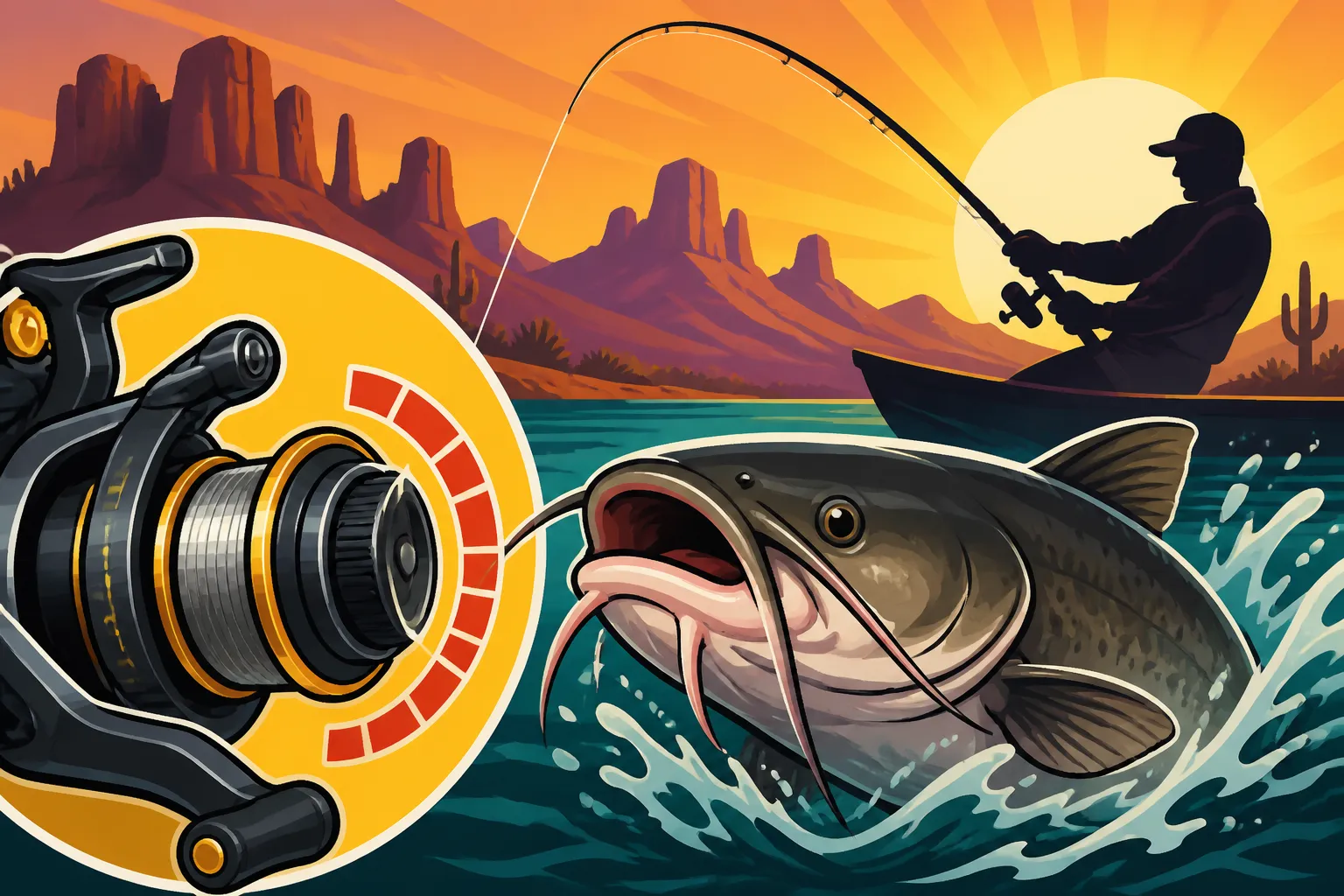
There’s nothing quite like the feeling of a massive Arizona catfish taking your bait and peeling line off your reel. That sudden, powerful surge can be exhilarating, but it can also quickly turn into heartbreak if your reel's drag isn't set correctly. Many anglers, even experienced ones, struggle with finding that sweet spot between too tight and too loose, often leading to lost fish, broken lines, or even damaged gear. This guide is here to demystify the art of drag setting, ensuring you're perfectly prepared for that next trophy flathead or hard-fighting channel cat in Arizona's lakes and rivers.
Understanding Your Reel's Drag System
Before you can set your drag effectively, it’s really helpful to understand what drag is and how it works within your fishing reel. It's not just a knob you twist; it's a critical component that literally connects you to the fish.
What is Drag and Why is it Critical for Catfish?
Think of your reel's drag system as a controlled braking mechanism. When a fish pulls on your line, the drag allows the line to slip off the spool under a certain amount of tension, rather than snapping. This is absolutely crucial, especially when you’re targeting big catfish. These aren't dainty little panfish; Arizona's flatheads and monster channel cats can weigh dozens of pounds and possess incredible power and endurance. When one of these behemoths hits, it often makes an initial, explosive run. If your drag is locked down too tight, that sudden force will either snap your line instantly, rip the hook out of the fish's mouth, or, in the worst-case scenario, put undue stress on your rod and reel, potentially causing damage.
Conversely, if your drag is too loose, the fish will take line effortlessly, running into snags, tiring itself out in the wrong direction, or simply making it impossible for you to gain any ground. It's a delicate balance. A properly set drag allows the fish to take line when it needs to, absorbing those powerful surges, while still maintaining enough pressure for you to slowly but surely bring it closer. This controlled release of line protects your gear, conserves your energy, and most importantly, keeps the fish hooked until it’s in your net. It’s the unsung hero of big fish battles.
Types of Drag Systems
Not all reel drag systems are created equal, and understanding the differences can help you get the most out of your gear. Most anglers targeting big catfish will primarily use spinning or baitcasting reels, both of which feature different approaches to drag.
Spinning reels typically have either a front drag or a rear drag system. Front drag systems, located at the top of the spool, tend to offer larger drag washers, which generally translates to smoother and more powerful drag performance. They are often preferred by serious anglers for their reliability and fine-tuning capabilities. Rear drag systems, located at the back of the reel body, can be more convenient for quick, on-the-fly adjustments during a fight since your hand is already there, but they usually have smaller drag washers, which might not be as smooth or powerful under extreme pressure. For the sheer power of Arizona's largest catfish, a high-quality front drag spinning reel is often a wise choice. You can find excellent options for both at places like Bass Pro Shops or even through online retailers like Amazon.
Baitcasting reels, on the other hand, often feature a "star drag" or, in more heavy-duty models, a "lever drag." Star drag systems get their name from the star-shaped knob located next to the reel handle. Turning this star tightens or loosens the drag, and it's highly effective. The key with star drag is that once you set it, it generally stays put unless you manually adjust it. Lever drag systems, common on conventional reels often used for large saltwater species or very heavy freshwater applications, offer a different experience. They have a lever that allows you to quickly move through different drag settings – usually "free," "strike," and "full." This gives you incredibly fast and precise control over drag pressure, which can be a huge advantage when battling a monster cat that makes unpredictable runs. For the truly massive flatheads found in the Colorado River or Alamo Lake, some anglers might even opt for a lever drag conventional reel, especially if they are fishing from a boat.
The "Just Right" Drag Setting for Big Catfish
Finding that perfect drag setting for big catfish isn't a science that comes out of a textbook, but more of an art form honed by experience. However, there are some excellent starting points and principles that can guide you to success on the water.
The 25% Rule and Initial Setting Guidance
A widely accepted guideline, particularly for beginners or when rigging up a new setup, is the "25% Rule." This rule suggests that your drag should be set to approximately 25% of your main fishing line's breaking strength. For example, if you're spooled up with 20-pound test monofilament line, your drag should ideally be set to about 5 pounds of pressure. If you're using 50-pound braided line, aim for around 12.5 pounds of drag.
How do you measure this practically? It's easier than it sounds. Simply tie your main line to a small, handheld scale (a digital fishing scale works perfectly). With your rod bent in a natural fishing arc (as if a fish were pulling on it), pull the line directly away from the rod tip, watching the scale. Adjust your drag knob until the scale reads the desired poundage, roughly 25% of your line's rating. This provides a baseline that protects your line from snapping under a sudden, powerful surge, while still giving you enough stopping power to turn a fish. Remember, this is a starting point. It’s designed to keep you from instantly breaking off, but real-world conditions often call for dynamic adjustments. You can pick up a reliable fishing scale at a tackle shop or check out options on Amazon to help you get this setting just right.
Factors Influencing Your Ideal Drag Setting in Arizona
While the 25% rule is a fantastic foundation, fishing in Arizona means dealing with a variety of unique conditions that can influence your actual ideal drag setting. It's never a "set it and forget it" situation, especially when big catfish are involved.
- Line Type and Strength: Different lines behave differently. Monofilament has stretch, which acts as a shock absorber, often allowing for a slightly higher initial drag setting. Braided line, with its near-zero stretch, transmits every head shake and pull directly to your rod. This means you might need to back off your drag slightly when using braid to prevent hooks from tearing out, or ensure your rod has enough flex to compensate. The breaking strength, of course, dictates your maximum safe drag.
- Rod Action and Power: Your rod is an integral part of your drag system. A fast-action, heavy-power rod designed for big cats can handle more drag pressure and leverage than a medium-light rod. A more forgiving, moderate-action rod will absorb more of the fish’s shock, potentially allowing you to fish a slightly heavier drag because the rod itself is doing more of the work. Always match your rod to the line and the target species.
- Water Conditions and Structure: This is huge in Arizona. Are you fishing in open water, like the vast expanse of Lake Pleasant, where a fish can run freely? Or are you in a snag-filled section of the Verde River, or near submerged timber in Roosevelt Lake? In open water, you can afford a lighter drag and let the fish run to tire itself out. But if you’re fishing near heavy cover, submerged trees, or rocky ledges—common haunts for big flatheads—you’ll need a heavier drag to try and turn that fish before it gets into an impenetrable snag. This might mean pushing your drag a bit past the 25% mark, but it comes with a higher risk of line breakage, so proceed with caution and rely on your rod's backbone.
- Fish Size and Species: A 5-pound channel cat is a different fight than a 40-pound flathead. While a 25% setting works for general catfish, if you are specifically targeting trophy-sized fish, you might opt for a heavier setup overall—stronger line, heavier rod—and thus a higher drag setting to begin with. Also, different species fight differently. Flatheads are known for their initial powerful, deep dives and stubborn tug-of-war, while channel cats can be more erratic and make faster runs.
- Angler Experience: Frankly, experience plays a role. A seasoned angler might be able to effectively fight a big fish with a slightly lighter drag by expertly "thumbing" the spool or making rapid, precise adjustments. A beginner might benefit from a slightly heavier, more consistent drag setting that reduces the chance of accidental overtightening or losing control.
On-the-Water Drag Adjustments and Fighting Techniques
Setting your drag before you start fishing is essential, but the real magic happens during the fight itself. Battling a big Arizona catfish isn't a static event; it's a dynamic dance, and your drag needs to be your most responsive partner.
Adjusting Drag During the Fight
The fight with a big catfish is rarely linear. It starts with a powerful strike, often followed by an initial blistering run. This is where your pre-set drag comes into play, allowing the fish to take line without snapping it. But what happens next? The fish might surge again, dive deep, or try to head for a snag. This is precisely when you need to make intelligent, on-the-fly adjustments.
- Loosen When Running: When a fish is making a strong, sustained run, peeling line off your spool at a high rate, it's often wise to slightly loosen your drag. This allows the fish to take line more freely, expending its energy without putting excessive stress on your line or knot. Just a quarter-turn counter-clockwise on a spinning reel drag knob can make a big difference.
- Tighten When Gaining Line: As the fish tires and its runs become shorter or less powerful, you can gradually tighten your drag. This increases the pressure you're putting on the fish, helping you gain line more effectively and turn its head. Be careful not to overtighten, especially if the fish suddenly surges again. You want to maintain just enough pressure to keep the fish coming towards you without inviting a break-off.
- Near Structure: This is where it gets tricky, especially in places like the heavily wooded banks of Apache Lake or the rocky bottom of the Colorado River. If a big flathead is heading straight for a submerged tree, you might need to momentarily increase your drag significantly, even beyond your initial setting, to try and physically turn its head. This is a high-risk, high-reward move. Be prepared to immediately back off the drag if you manage to turn the fish, or if your line starts to groan under the strain. Sometimes, briefly using your thumb on the spool to add extra, temporary pressure can be effective, giving you a quick burst of stopping power without locking the drag entirely.
- Smoothness is Key: All adjustments should be smooth and controlled. Jerking the drag knob can lead to inconsistent pressure, which can snap a line just as easily as locking it down. Think of it as feathering a brake.
Pairing Drag with Rod and Line
Your drag doesn't work in isolation; it's part of a complete system that includes your rod, line, and even your knots. A well-matched system enhances performance and prevents failures.
- Rod as a Shock Absorber: A good catfish rod, especially one with a moderate or moderate-fast action, acts as a secondary drag system. As the rod bends, it absorbs some of the fish's shock and helps to tire it out. If your drag is set too tight, you negate this benefit, potentially putting all the stress on your line. If your rod is heavily loaded, try to lift it less vertically and let the rod's arc do the work.
- Line Stretch vs. No-Stretch: Monofilament line has inherent stretch, which provides a forgiving cushion during powerful runs. This means your drag setting can be a bit more aggressive, as the line itself offers some give. Braided line, on the other hand, has almost no stretch. While this provides incredible sensitivity and hook-setting power, it means your reel's drag system and your rod's flexibility are the only shock absorbers. With braid, many anglers prefer to err on the side of a slightly lighter initial drag setting and rely more on the rod's action and careful, dynamic adjustments to prevent break-offs.
- Knots Matter: A perfectly set drag and balanced rod won't help if your knots are weak. Always use strong, reliable knots for both your main line and any leaders. Test your knots before each trip, as they are often the weakest link in the system. Learning a few good knots like the Palomar or Snell can dramatically improve your chances against a strong fish. If you're looking for new line or knot-tying tools, places like Bass Pro Shops have a great selection.
Maintenance and Best Practices for Drag Systems
Your drag system is the workhorse of your reel, especially when you're battling the kind of powerful fish found in Arizona's waters. Just like any crucial piece of equipment, it needs a little love and attention to perform its best. Neglecting your drag can lead to frustrating failures when you least expect them.
Keeping Your Drag Smooth and Reliable
The performance of your drag system hinges on the condition of its drag washers. These small, stacked discs (often made of felt, carbon fiber, or composite materials) are what create the friction that allows line to slip under tension.
- Cleanliness is Godliness: Over time, especially in dusty, sandy Arizona environments or after contact with water, dirt, salt, and old grease can accumulate in your drag washers. This contamination leads to jerky, inconsistent drag, which is a nightmare when a big catfish is making a run. A jerky drag can cause sudden spikes in tension, leading to snapped lines or pulled hooks. Regularly (at least once a season, or more if you fish frequently) disassemble your drag system. This usually involves removing the spool and carefully taking out the washers.
- Appropriate Greasing: For felt washers, a light application of specific drag grease (never use automotive grease!) is essential to keep them smooth and prevent sticking. Carbon fiber washers often perform best dry or with a very minimal amount of specialized carbon fiber drag grease. Consult your reel's manual or the manufacturer's recommendations for the type of grease to use. Too much grease, or the wrong kind, can actually reduce drag performance.
- Replacement When Worn: Drag washers don't last forever. If they become grooved, brittle, or simply lose their effectiveness even after cleaning and re-greasing, it's time to replace them. Many reel manufacturers and aftermarket companies offer replacement drag washer kits. Investing a small amount in fresh washers can revive an old reel and ensure reliable performance. You can often find these kits or the right drag grease on Amazon or at your local tackle shop.
Storage Habits and Preventing Drag Issues
How you store your reels after a day on the water can have a significant impact on the longevity and performance of your drag system. It’s a simple habit that can save you a lot of headache down the line.
- Back Off Your Drag!: This is perhaps the single most important maintenance tip. After every fishing trip, always remember to loosen your drag completely. Leave the drag knob as loose as it can go without falling off. What happens if you leave it tight? The constant compression on the drag washers can cause them to become permanently flattened or "set." This leads to inconsistent drag pressure and can significantly shorten the life of your drag washers, making them sticky or rough when you need them to be smooth.
- Clean and Dry: Before storing, give your reel a quick wipe-down to remove any dirt or moisture. For reels used in extreme conditions or if they've been splashed heavily, a more thorough cleaning with fresh water (avoiding direct high-pressure spray) followed by thorough drying is recommended. Never store a reel wet.
- Protective Storage: Store your reels in a cool, dry place. Using reel covers can protect them from dust and accidental bumps, ensuring they're ready to go when that next Arizona fishing adventure calls.
By taking these simple steps, you're not just maintaining your reel; you're investing in successful future fishing trips and ensuring that when that giant catfish finally bites, your gear will be up to the challenge.
Here's a quick comparison of drag settings based on common line strengths and target catfish species:
| Line Type & Strength | Recommended Initial Drag Setting (Approx. 25%) | Primary Target Catfish Species | Typical Arizona Water Conditions | Notes on Adjustments |
|---|---|---|---|---|
| 15 lb Mono | 3.75 lbs | Smaller Channel Catfish (3-10 lbs) | Community Lakes, Open Rivers | Good for finesse, may need to loosen on strong runs. |
| 20 lb Mono | 5 lbs | Medium Channel Catfish (5-15 lbs) | Medium Rivers, Smaller Lakes | Balanced approach, rod absorbs shock well. |
| 30 lb Mono | 7.5 lbs | Larger Channel, Smaller Flatheads (10-25 lbs) | Larger Lakes (e.g., Roosevelt Lake), Open Colorado River | Good stopping power, slight stretch helps. |
| 40 lb Braid | 10 lbs | Medium Flatheads, Trophy Channel (15-35 lbs) | Snaggy Rivers, Structure-Rich Lakes (e.g., Alamo Lake) | Use a softer rod; braid has no stretch, so fine-tune during fight. |
| 50 lb Braid | 12.5 lbs | Trophy Flatheads (30+ lbs) | Heavy Cover, Deep Structure, Strong Current (Colorado River Fishing Guide in Arizona) | Maximize rod power; be ready to bump up drag for snags, then back off. |
| 65 lb Braid+ | 16 lbs+ | Monster Flatheads (40+ lbs) | Extremely Heavy Cover, Large Reservoirs (e.g., Lake Pleasant Arizona Fishing Guide) | Heavy tackle only; advanced technique required to prevent break-offs. |
Remember, these are starting points. Always test your drag before fishing and be prepared to make adjustments based on the specific situation. For the largest cats in Arizona, don't be afraid to go with heavier line and a correspondingly higher drag setting, especially if you're fishing near known snags or heavy cover.
Disclaimer
This article is for general informational purposes only and does not constitute professional advice. Laws, prices and regulations vary by location and change over time. Consult a qualified professional for guidance on your specific situation.