Best Bass Boats for Reservoir Fishing
Trying to find the perfect bass boat for tackling Arizona's vast, often windy, and sometimes intimidating reservoirs can feel like searching for a needle in a haystack. You've got these incredible lakes like Roosevelt, Pleasant, and Powell, offering world-class bass fishing, but they also demand a lot from your vessel. This guide is all about helping you navigate the options and choose a bass boat that's truly up to the unique challenges and exciting opportunities of Arizona reservoir fishing.
Understanding Arizona's Reservoirs and Their Demands
Let's be real, fishing in Arizona isn't like fishing a calm, tree-lined pond in the Midwest. Our desert reservoirs are beasts of their own, each with distinct personalities and challenges. Before you even think about what kind of boat you want, it's crucial to understand the environment you'll be putting it in. These aren't small waters; they're often massive, open expanses that can change from glass-smooth to white-capping chop in a matter of minutes.
The Unique Challenges of Arizona Lakes
Think about the sheer size of Lake Powell or Roosevelt Lake. You're covering huge distances, often in direct sunlight and sometimes facing unpredictable winds that whip across miles of open water. This isn't just uncomfortable; it can be downright dangerous in the wrong boat. Many anglers get frustrated when their smaller, less stable boat gets tossed around, making it impossible to focus on fishing, let alone run safely. Lake Pleasant, for example, is notorious for its afternoon wind chop that can easily turn a pleasant morning into a bumpy ride back to the ramp. You might be targeting big largemouth bass around submerged brush, but if your boat can't handle the journey there or stay stable once you arrive, it's all for naught.
Water levels are another huge factor. Our reservoirs fluctuate, sometimes dramatically, leaving stumps, rocks, and other hazards just below the surface that weren't there last month. A boat with too deep a draft or a hull not designed for occasional bumps can quickly turn a great day into an expensive repair. This environment demands a boat that's not just fast, but resilient, stable, and capable of operating safely across a variety of conditions that might change on a dime. The last thing you want is to be miles from the nearest ramp on a massive body of water like Lake Havasu when conditions turn sour, wishing you had chosen a more robust vessel.
Common Fish Species and Fishing Styles
Arizona's reservoirs are famous for their bass fishing, particularly largemouth, smallmouth, and striped bass. Each of these species, and the techniques used to catch them, influences what you need in a bass boat.
- Largemouth Bass: These guys love structure – submerged trees, brush piles, rocky points, and weed lines. Fishing for largemouth often involves casting jigs, crankbaits, or soft plastics directly into heavy cover. You'll need a boat with excellent casting platforms, plenty of storage for a wide array of Best Lures for Largemouth Bass in Arizona Lakes, and a quiet, powerful trolling motor to sneak into those prime spots without spooking fish. When you're trying to fish a specific laydown at Canyon Lake, precise boat control is paramount.
- Smallmouth Bass: Often found in clear, rocky environments like those at Lake Powell or the upper sections of Lake Roosevelt, smallmouth respond well to drop-shotting, jigging, and sometimes even topwater presentations. These areas can be windy, requiring a boat that can hold its position effectively, even in choppy conditions. You'll want a stable platform for sight fishing in clear water, and ample space for electronics to pinpoint those deeper rock piles.
- Striped Bass: Ah, stripers! These schooling predators often chase baitfish on the surface, creating thrilling "boils" where they feed voraciously. This type of fishing often means running long distances to find the action, then quickly getting into position to cast swimbaits or topwater lures. For striper fishing, speed to get to the boils and a stable platform to cast from, especially when multiple anglers are fishing simultaneously, are crucial. A powerful outboard, like those often found on high-performance bass boats, makes a world of difference when you're racing to a distant boil on Lake Powell. Our Striped Bass Fishing Guide for Arizona goes into more detail on how exciting this can be.
The variety of fishing styles for these species means your boat needs to be versatile. You might be flipping docks one moment and running ten miles across open water to chase schooling stripers the next. The right bass boat will accommodate all these demands without compromising safety or fishing effectiveness.
Key Features to Look for in a Bass Boat for Arizona
When you're shelling out for a dedicated bass boat, you want to make sure it's packed with the right features to handle Arizona's unique aquatic playgrounds. This isn't just about bells and whistles; it's about practical design elements that make your fishing experience safer, more comfortable, and ultimately, more successful.
Hull Design and Stability in Rough Water
This is arguably one of the most critical aspects for Arizona reservoir fishing. Forget the notion that all bass boats are created equal when it comes to rough water. Our lakes can get downright nasty, and a poorly designed hull will make for a miserable, bone-jarring, and potentially unsafe day.
- Deep-V and Modified-V Hulls: While some pure tournament bass boats feature flatter hulls for blistering speed, a deeper V-hull or a modified V-hull design is often preferred for Arizona's larger, wind-prone reservoirs. A deeper V at the bow helps cut through waves, reducing pounding and spray, while a flatter section toward the stern can aid in stability at rest and provide better lift for speed. You need a boat that will give you a smooth, dry ride when you're running across a choppy Lake Powell or navigating the wakes of pleasure boats on Lake Pleasant. Without this, you'll be drenched, sore, and wishing you'd stayed home.
- Beam (Width) and Weight: A wider beam generally equates to more stability, both when running and when stationary. This is invaluable when you have multiple anglers moving around on the casting deck, or when you're fishing in a crosswind. Similarly, a heavier boat tends to handle chop better, maintaining its momentum through waves rather than getting bounced around. While you don't want an overly heavy boat that sacrifices speed or fuel efficiency, a substantial build offers a more comfortable and predictable ride. When the winds kick up on Roosevelt Lake, that extra stability can mean the difference between casting comfortably and struggling to stay upright.
Engine Power and Fuel Efficiency
Navigating the vastness of Arizona's major reservoirs requires an engine that can get you where you need to go quickly and reliably. These aren't small ponds where a little 25 HP kicker will do.
- Horsepower for Performance: You'll often cover long distances between fishing spots on lakes like Bartlett or San Carlos. A powerful outboard motor – think 150 HP to 300 HP, depending on boat size – is essential not just for speed, but for safety. It allows you to outrun approaching storms, get back to the ramp efficiently, and reach distant fishing grounds quickly, maximizing your actual fishing time. Imagine chasing a striper boil that's two miles away; a strong engine gets you there while the fish are still feeding. However, speed isn't the only factor. The ability to plane quickly and run efficiently at various RPMs is also crucial.
- Fuel Capacity and Efficiency: High horsepower engines, especially when run hard, can be thirsty. Given the vastness of our lakes and sometimes limited on-water fuel options, a generous fuel tank capacity is a must. You don't want to cut a trip short because you're worried about running dry miles from the nearest marina. While you won't get sedan-like mileage, modern outboards are significantly more fuel-efficient than their predecessors. When you're planning a full day exploring the remote canyons of Lake Powell, adequate fuel is non-negotiable. Always check your fuel gauge and know your boat's consumption rate per hour.
Deck Layout and Storage
A well-thought-out deck and ample storage are critical for efficiency and comfort on the water, especially during long days under the Arizona sun.
- Spacious Casting Platforms: Bass fishing often involves standing and casting for hours. Both the bow and stern should offer wide, uncluttered casting decks, preferably with comfortable padded surfaces to reduce fatigue. This allows for freedom of movement, easier hooksets, and better visibility for spotting fish or structure. When you're trying to make a precise pitch to a brush pile at Apache Lake, you need room to maneuver.
- Rod Lockers and Tackle Storage: You'll accumulate a lot of gear. Integrated, lockable rod lockers that can accommodate rods up to 8 feet or more are invaluable. These keep your expensive Best Fishing Rods for Bass in Arizona secure and organized. Additionally, dedicated tackle storage compartments, often with drainage, are essential for keeping your lures, soft plastics, and tools dry and accessible. Some boats even feature specialized compartments for things like soft plastics or spinnerbaits. You don't want your gear sliding around or getting soaked.
- Livewells and Cooler Space: If you participate in tournaments or simply enjoy keeping your catch fresh, a well-aerated, properly sized livewell system is a must. Look for dual livewells with recirculating pumps, timers, and oxygenation systems. Beyond fish, you'll also need space for refreshments. Integrated coolers or dedicated cooler locations keep your drinks and snacks cool throughout the hot Arizona day, preventing dehydration.
Electronics and Trolling Motors
In modern bass fishing, electronics are your eyes and ears underwater, and a robust trolling motor is your silent guide.
- Fish Finders and GPS: High-quality fish finders with side-imaging, down-imaging, and 2D sonar capabilities are crucial for locating fish, identifying structure, and understanding bottom contours. Large, bright screens are beneficial for visibility in harsh sunlight. Integrating this with GPS allows you to mark waypoints, track your path, and navigate safely across vast lakes. Most serious anglers will have multiple units, often a large one at the console for navigation and mapping, and another on the bow for detailed fish and structure identification while fishing. Brands like Lowrance and Garmin offer excellent units that you can find at Bass Pro Shops or through online retailers like Amazon. Having the ability to see fish holding on a submerged ledge at Lake Pleasant can completely change your fishing strategy.
- Bow-Mount Trolling Motors: A powerful, reliable bow-mount trolling motor is indispensable for precise boat positioning. Look for models with high thrust (e.g., 80 lbs or more for larger boats) and a long shaft to handle wave action. Features like GPS-anchoring (often called "spot-lock") are game-changers, allowing the motor to automatically hold your boat in a specific spot, even in wind and current, freeing you up to focus on fishing. This is a huge advantage when you're dissecting a brush pile or slowly working a rocky bank. Without a good trolling motor, you'll spend more time fighting the wind than catching fish. For more on essential tech, check out Best Fish Finders for Bass Fishing in Arizona.
Types of Bass Boats Suited for Arizona Reservoir Fishing
When you walk into a boat dealership or browse online, you'll quickly realize there isn't just one "bass boat." There are different philosophies, materials, and designs, each with its own set of advantages and disadvantages. Understanding these distinctions is key to finding the perfect match for your Arizona fishing adventures.
Traditional Fiberglass Bass Boats
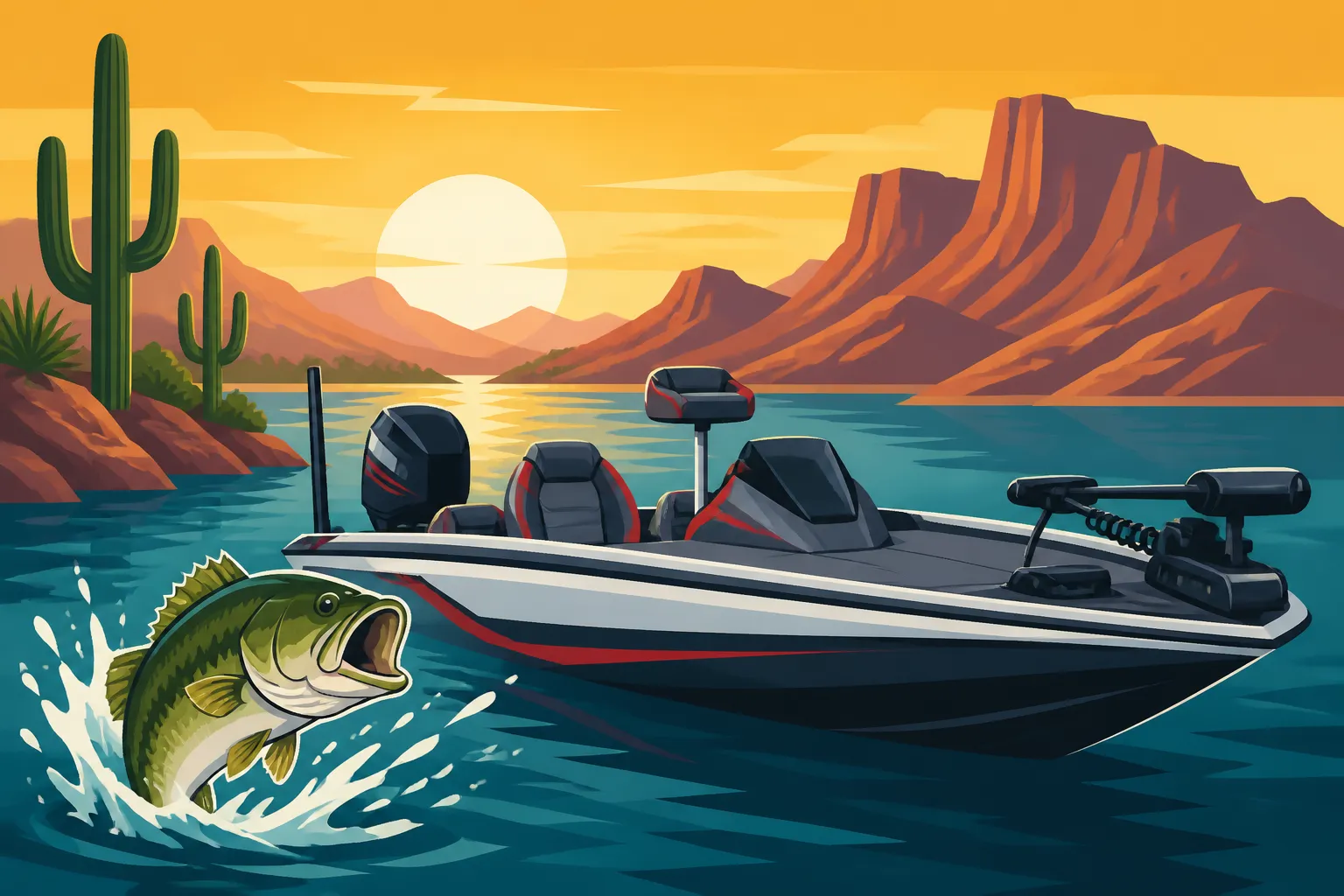
These are the sleek, often brightly colored speed demons you typically see zipping across the lake in fishing tournaments. They are synonymous with professional bass fishing and for good reason.
- Pros:
- Speed and Performance: Fiberglass hulls are designed for maximum speed and excellent handling, allowing you to cover vast distances quickly. This is a huge advantage on expansive reservoirs like Lake Mead or Lake Mohave, where the fish might be miles apart.
- Smooth Ride in Chop: Many fiberglass bass boats feature well-engineered deep-V or modified-V hull designs that cut through waves, providing a remarkably smooth and dry ride even in significant chop. This translates to less fatigue and more comfort, especially on long runs.
- Dedicated Layout: These boats are purpose-built for bass fishing. They offer expansive casting decks, numerous large, organized storage compartments (including massive rod lockers), multiple livewells, and integrated electronics mounting points. Everything is designed with the serious angler in mind.
- Comfort and Amenities: Often equipped with comfortable seating, sometimes even suspension seats, and well-finished interiors, fiberglass boats provide a premium experience on the water.
- Cons:
- Higher Cost: Fiberglass bass boats are typically the most expensive option, both to purchase and to insure. This is a significant investment for many anglers.
- Heavier and Deeper Draft: Being heavier, they require a more capable tow vehicle. Their deeper draft can also be a concern in extremely shallow areas or at low water boat ramps, which we sometimes encounter in Arizona's fluctuating reservoirs.
- Maintenance: While durable, fiberglass can be susceptible to gel coat scratches and dings, requiring more specialized repair than aluminum.
- Learning Curve: Operating a high-performance fiberglass bass boat, especially at speed, can have a steeper learning curve than a simpler aluminum boat.
For an angler who prioritizes speed, comfort in rough water, and a highly specialized fishing platform for places like Lake Pleasant or Roosevelt, a fiberglass bass boat is often the top choice.
Aluminum Bass Boats (Tin Rigs)
Often referred to as "tin rigs," aluminum bass boats have come a long way from their utilitarian roots. Modern aluminum bass boats offer many of the features of their fiberglass counterparts but in a lighter, often more rugged package.
- Pros:
- More Affordable: Generally, aluminum bass boats are less expensive than comparable fiberglass models, making them an excellent choice for anglers on a tighter budget.
- Lighter Weight: Being lighter, they are easier to tow with a wider range of vehicles and can be launched and recovered more easily, especially at less-developed ramps.
- Shallow Draft: Aluminum boats typically have a shallower draft, allowing them to access shallower water where fiberglass boats might get stuck. This can be a huge advantage when fishing stump fields or skinny water.
- Durability and Lower Maintenance: Aluminum is very forgiving. Minor bumps and scrapes that might damage fiberglass often just dent aluminum. They are generally easier and cheaper to maintain.
- Ruggedness: Many anglers feel more comfortable bumping against a rocky bank or navigating through submerged timber in an aluminum boat.
- Cons:
- Rougher Ride: While designs have improved, aluminum boats generally don't offer as smooth a ride as fiberglass in heavy chop. The lighter weight can cause them to "slap" waves more, resulting in a wetter and bumpier experience.
- Slower Speed: While still plenty fast, they typically won't match the top-end speed of fiberglass boats with comparable horsepower.
- Noise: Aluminum hulls can be noisier than fiberglass when running or when objects drop on the deck.
- Less Storage Space: While modern aluminum boats have good storage, they often don't have the sheer volume or specialized compartments found in larger fiberglass models.
Aluminum bass boats are fantastic for anglers who want a robust, capable fishing platform without the premium price tag. They excel in versatility, offering excellent performance for most Arizona reservoirs while being easier on the wallet and simpler to maintain. They are particularly popular for lakes with varying access points and where knocking around a bit isn't a huge concern. You can find a great selection of aluminum fishing boats at Bass Pro Shops, perfectly suited for reservoir adventures.
Multi-Species Boats
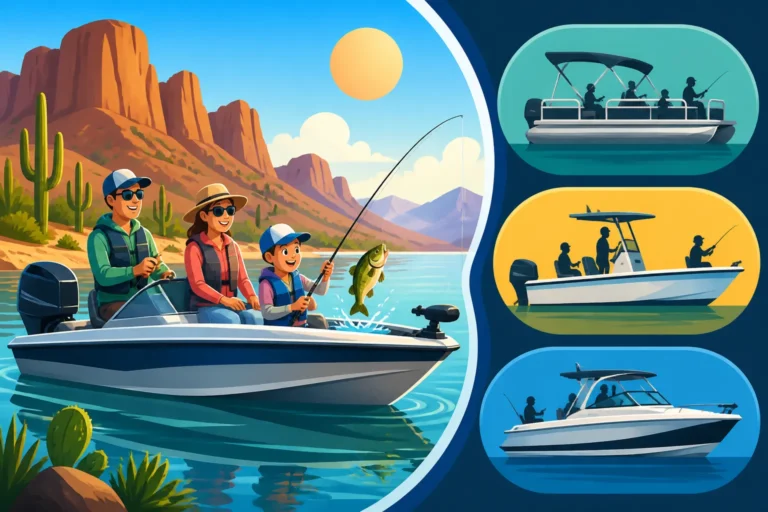
While not strictly "bass boats," multi-species boats offer a compelling compromise for the Arizona angler who doesn't only fish for bass. These boats are designed to be versatile, capable of handling everything from bass to crappie, trout, and even big stripers.
- Pros:
- Versatility: As the name suggests, these boats are built to handle various fishing styles and species. They often have higher gunwales (sides) for safety in rough water and when fighting bigger fish, making them a great option for Crappie Fishing Guide for Arizona or even trout fishing in deeper lakes.
- Comfort in Rough Water: Many multi-species boats feature deep-V hulls, offering an exceptionally smooth and dry ride in choppy conditions, sometimes even surpassing traditional bass boats in this regard. This is excellent for lakes like Lake Powell or Lake Havasu.
- Family Friendly: Their deeper, more secure cockpits make them safer and more comfortable for families, especially with younger children, compared to the open, low-sided design of many bass boats.
- Storage and Seating: They often have a good balance of storage, livewells, and comfortable seating for multiple passengers, not just two anglers on casting decks.
- Cons:
- Less Dedicated Bass Layout: While capable, they don't always have the sprawling, unobstructed casting decks or the highly specialized tackle storage of a pure bass boat.
- Slower Top-End Speed: Their deeper hulls and heavier build typically mean they won't achieve the same blistering top speeds as a fiberglass bass boat.
- Can Be More Expensive: While often less than high-end fiberglass bass boats, they can still be a significant investment, especially for larger models.
- Higher Profile: The deeper sides can make them more susceptible to wind, potentially affecting boat control with the trolling motor.
If you enjoy chasing How to Fish for Striped Bass one weekend and then taking the family out for crappie or just a cruise the next, a multi-species boat could be the ideal choice. It offers the flexibility to pursue diverse fishing opportunities across Arizona's varied waters.
| Feature / Boat Type | Fiberglass Bass Boat | Aluminum Bass Boat | Multi-Species Boat |
|---|---|---|---|
| Initial Cost | High | Moderate | Moderate to High |
| Rough Water Ride | Excellent (Smooth) | Good (Can be Bumpy) | Excellent (Smooth) |
| Top Speed | Very High | Moderate to High | Moderate |
| Draft | Moderate | Shallow | Moderate |
| Durability | Good | Excellent | Excellent |
| Maintenance | Higher (gel coat) | Lower | Moderate |
| Towing Ease | More Challenging | Easier | Moderate |
| Deck Space | Extensive (Casting) | Good (Casting) | Moderate (Versatile) |
| Family Friendliness | Moderate | Good | Excellent |
Budgeting and Ownership Considerations for a Bass Boat
Buying a bass boat, especially one suitable for Arizona's reservoirs, is a significant financial commitment. It's not just the sticker price you see; there's a whole world of ongoing expenses that can surprise a new boat owner. Being realistic about your budget from the get-go will help you avoid buyer's remorse and ensure you can actually enjoy your time on the water.
Initial Purchase Costs
The price of a bass boat can vary wildly, from a few thousand for a used aluminum rig to well over six figures for a brand-new, fully rigged fiberglass monster.
- New vs. Used:
- New Boats: Offer the latest technology, warranties, and customization options. You get peace of mind knowing the boat's history. However, they depreciate quickly. You can often explore new models at dealerships like Bass Pro Shops to get a feel for current offerings.
- Used Boats: Represent significant savings, but come with the risk of hidden problems. A thorough inspection by a qualified marine mechanic is absolutely essential. Consider the age of the motor, hours on the engine, condition of the hull, and functionality of all electronics and pumps. A good used boat can be a fantastic value if you do your homework.
- Cost Drivers: The main factors influencing price are boat size, engine size and brand, material (fiberglass generally costs more), and the level of installed electronics (fish finders, trolling motors). A basic 18-foot aluminum rig with a 115 HP motor will be vastly different in price than a 21-foot fiberglass boat with a 250 HP engine and dual 12-inch graphs. Financing options are available from banks and marine lenders, but remember that longer loan terms mean more interest paid over the life of the loan.
Ongoing Expenses
The purchase price is just the beginning. Owning a boat involves a continuous stream of expenses that need to be factored into your budget.
- Fuel: This is often the biggest variable cost. As discussed, our reservoirs are huge, and running across them at speed consumes a lot of gas. Calculate your estimated fuel consumption per trip and multiply it by your planned outings.
- Maintenance: Like any vehicle, boats require regular maintenance. Outboard engines need annual servicing, oil changes, spark plug replacements, and water pump inspections. Trailers need bearing checks, tire maintenance, and light repairs. Factor in costs for winterization (if applicable, though less critical in much of Arizona) and any unexpected repairs to electronics, pumps, or the hull. Proper maintenance, like that detailed for keeping your boat in top shape in Arizona Fishing Seasons Explained, prevents bigger problems down the line.
- Insurance: Boat insurance is crucial, especially for higher-value boats and those operating on large bodies of water. Policies cover damage, liability, and sometimes even equipment theft. Rates vary based on boat value, engine size, your boating history, and where you store the boat.
- Registration and Licensing: You'll need to register your boat with the Arizona Game and Fish Department. There are fees associated with initial registration and renewals. Plus, if you don't have a Boating and Fishing Combo License Requirements, you'll need an Arizona Fishing License Guide. Remember to factor in your trailer's registration as well. For specifics, see Boat Registration Rules in Arizona.
- Storage: If you don't have space at home, you'll need to budget for storage fees at a marina or storage facility. This can range from uncovered outdoor spots to enclosed, climate-controlled units. On-water slip rentals at lakes like Pleasant or Roosevelt can be quite expensive.
Trailer and Tow Vehicle Requirements
This is an often-overlooked but critical component of boat ownership. You can't just throw a bass boat on any old hitch.
- Trailer Match: Your boat needs a properly sized and rated trailer. This means it must be capable of supporting the full weight of your boat, motor, fuel, and gear. Tandem-axle trailers are common for bass boats, offering better weight distribution and stability for highway travel. Ensure the trailer has proper brakes (surge or electric) and working lights.
- Tow Vehicle Capacity: Your tow vehicle (truck or SUV) must have a towing capacity that exceeds the total weight of your loaded boat and trailer. Don't underestimate this! Exceeding your vehicle's capacity is unsafe, can damage your vehicle, and is illegal. Also, consider the tongue weight and the need for a proper hitch receiver. Many Arizona boat ramps can be steep and require good traction, so a 4×4 or AWD vehicle can be a significant asset. It's frustrating to arrive at the launch only to realize your vehicle isn't up to the task of pulling your pride and joy out of the water.
Maintenance and Gear for Arizona Bass Boats
Owning a bass boat in Arizona means dealing with unique environmental factors – intense heat, UV radiation, and often dusty conditions. Proper maintenance and smart gear choices aren't just about preserving your investment; they're about ensuring your boat is always ready for action and that you stay safe and comfortable on the water.
Essential Maintenance Tips for Desert Climates
The Arizona desert is beautiful, but it's tough on boats. Your maintenance routine needs to reflect that.
- Engine Care and Flushing: The extreme heat and often dusty conditions can put extra strain on your engine. Regular oil changes and filter replacements are non-negotiable. After every outing, especially if you've been in silty water, thoroughly flush your outboard motor with fresh water. This prevents mineral buildup and corrosion in the cooling system, which is vital for engine longevity. A well-maintained engine is a reliable engine, and you don't want to break down miles from the ramp on a vast lake like Lake Powell.
- UV Protection for Upholstery and Gel Coat: The Arizona sun is relentless. Protect your boat's upholstery, console, and gel coat from UV damage. Use marine-grade protectants regularly on seats and exposed plastic/vinyl. Keep your boat covered when not in use, preferably with a high-quality, breathable boat cover. If stored outdoors, consider a cover that reflects sunlight. This proactive approach prevents cracking, fading, and deterioration.
- Trailer Maintenance: Your trailer works hard, often on rough roads. Check tire pressure and condition regularly, including the spare. Inspect wheel bearings and re-grease them annually, or more frequently if you dunk them deep in water often. Ensure all trailer lights are working before every trip, as faulty lights are a common cause of roadside stops. Check your brake fluid (for surge brakes) and overall brake function. Arizona's long stretches of highway and sometimes steep boat ramps demand a trailer in top condition.
- Hull Inspection: Regularly inspect your hull for dings, scratches, or more serious damage, especially after navigating potentially rocky or shallow areas. Minor gel coat repairs can often be done yourself, but deeper damage should be addressed by a professional to prevent water intrusion. Aluminum boats, while more forgiving, should still be checked for cracks, especially around welds.
Must-Have Safety Gear and Accessories
Safety is paramount on the water, especially on large, open reservoirs where help might not be immediately available. Many of these items are legally required. For a full breakdown, consult Boating Safety Gear Requirements in Arizona.
- Personal Flotation Devices (PFDs): You need one Coast Guard-approved PFD for every person on board. Children typically have specific PFD Requirements for Kids in Arizona, often requiring them to wear a PFD at all times when the boat is underway. Ensure PFDs are accessible and in good condition. You can find comfortable and practical PFDs designed for anglers at Bass Pro Shops.
- First-Aid Kit: A well-stocked marine first-aid kit is essential for treating minor injuries, cuts, or bites.
- Fire Extinguisher: A marine-rated fire extinguisher must be readily accessible.
- Sound-Producing Device: A horn, whistle, or air horn is required for signaling.
- Visual Distress Signals: Flares (day and night signals) or an electronic visual distress signal are legally required for night operation on certain waters, but it's wise to have them even for day trips on large lakes.
- Anchor and Rope: A suitable anchor (sized for your boat and the lake bottom) and ample anchor rope are crucial for holding position or in case of engine trouble.
- Tool Kit and Spare Parts: A basic tool kit, spare prop, prop wrench, and extra spark plugs can get you out of a bind.
- Paddle or Oars: Even with a powerful engine, having a backup propulsion method for emergencies is smart.
- Navigation Lights: Ensure all navigation lights are functional, especially if there's any chance you'll be out around dawn, dusk, or after dark.
Customizing for Arizona Fishing
While many bass boats come well-equipped, there are often ways to enhance them for the specific demands of Arizona fishing.
- Shade Solutions: The Arizona sun is no joke. Consider adding a Bimini top or a custom T-top (for center console boats) for shade, especially if you spend long hours on the water. Some anglers even use specialized shade covers over their bow casting decks. This significantly improves comfort and reduces sun exposure.
- Extra Rod Holders: Depending on your fishing style, you might want additional flush-mount or rail-mounted rod holders beyond what the boat came with. This is particularly true if you do a lot of trolling for stripers or crappie.
- Battery Management: With modern electronics and powerful trolling motors, battery life is crucial. Consider upgrading to high-capacity deep-cycle batteries and potentially adding a dedicated electronics battery. A good on-board charger is a must for convenient recharging after each trip.
- Water Management: On hot days, staying hydrated is critical. Think about adding a dedicated fresh water tank and pump for rinsing hands or even a deck shower. Having a large, high-quality cooler, like those you can find on Amazon, that can truly keep ice all day in 100+ degree weather is also invaluable for drinks and keeping your catch fresh. Our Best Coolers for Hot-Weather Fishing in Arizona guide dives deeper into this.
- Personal Touches: From custom rod wraps to specialized cup holders or additional lighting, making the boat truly yours will enhance your enjoyment. Just remember to keep safety and functionality at the forefront of any modifications.
By paying attention to these maintenance tips and gearing up smartly, your bass boat will serve you well for countless Arizona fishing adventures. It's an investment that pays off with more time on the water and fewer headaches.
Disclaimer
This article is for general informational purposes only and does not constitute professional advice. Laws, prices and regulations vary by location and change over time. Consult a qualified professional for guidance on your specific situation.