Best Boat Size for Family Fishing Trips
Figuring out the perfect boat size for a family fishing trip in Arizona can feel like trying to land a trophy bass with ultralight tackle – overwhelming and a little daunting! There are so many factors to consider, from how many people you plan to bring along to the types of fishing you enjoy, not to mention the specific challenges of Arizona's diverse waters. This guide is here to cut through the confusion and help you navigate the murky waters of boat selection, ensuring your family's next outing on an Arizona lake is nothing short of fantastic.
Understanding Your Family's Fishing Style and Needs
Before you even start looking at boat specs, take a moment to really think about your family's unique dynamics and what a "successful" fishing trip looks like for all of you. It's not just about the biggest fish; it's about the entire experience, from comfort to convenience. Trying to squeeze a family of five, plus gear, into a boat designed for two serious anglers can lead to a cramped, frustrating day on the water, no matter how good the bite is.
Consider the age range of your family members. Are you bringing along toddlers who need room to play and nap, or teenagers who might want to try tubing when the fish aren't biting? These considerations will dramatically influence your ideal boat size and type. A serene day of casting lines with a spouse is a far cry from a boisterous adventure with a few grandkids, all requiring snacks, drinks, and a place to stretch out.
How Many Anglers and Passengers Will You Have?
This is perhaps the most fundamental question to answer. A boat's stated capacity isn't just a legal limit; it's a practical guide to comfort. While a boat might be rated for six people, trying to fish with six adults actively casting can quickly become a tangle of lines and elbows. Think about who will actually be fishing at any given time, and who might just be along for the ride, enjoying the scenery or swimming.
For a true family fishing trip, especially with younger children, you want enough space for everyone to move around safely and comfortably. This means room to sit, room to stand, and enough deck space so that multiple lines can be cast without constant entanglement. If you have several kids, they often need more perceived space than adults, and the ability to wander a bit without falling overboard is a huge plus. This is where larger, more stable platforms really shine.
If your family is small – say, two adults and one child – you might find a 16 to 18-foot boat perfectly adequate. But as soon as you add another child, or invite grandparents along, that space shrinks quickly. For families of four or more, especially if everyone wants to fish or enjoy other activities, you're likely looking at a boat in the 20-foot range or larger to maintain a sense of calm and prevent arguments over who gets the prime casting spot. Remember, sunny Arizona days mean folks will want to stretch out, not be crammed together like sardines.
What Activities Will You Enjoy Beyond Fishing?
Arizona's lakes aren't just for fishing; they're playgrounds for all sorts of water activities. If your family enjoys a mix of angling, swimming, tubing, wakeboarding, or simply cruising and picnicking on the water, your boat choice needs to reflect that versatility. A pure bass boat, while fantastic for dedicated fishing, often lacks the comfortable seating, shaded areas, or swim platforms that make other activities enjoyable for the whole family.
Consider whether you need a dedicated ski tow pylon for tubing, or comfortable lounge seating for sunbathing. A good swim ladder is a must for easy re-entry after a dip in the cool waters of Lake Pleasant or Roosevelt Lake. If you plan to spend full days out, you'll also need space for coolers, towels, extra clothes, and maybe even a portable grill. This means looking beyond just the fishing features to the "lifestyle" amenities of the boat.
For families who want to do it all, a larger deck boat or a spacious pontoon boat often hits the sweet spot. These boats are designed with comfort and multi-purpose use in mind, offering plenty of seating, storage, and open deck space. They might not be as nimble or fast as a dedicated fishing machine, but they excel at providing a comfortable and enjoyable platform for a variety of family adventures on the water.
Where Do You Plan to Fish in Arizona?
Arizona is incredibly diverse, from the vast expanses of Lake Powell and the Colorado River to the smaller urban fishing lakes and high mountain reservoirs. The size and type of boat that works perfectly for one location might be entirely unsuitable, or even unsafe, for another. Don't fall into the trap of buying a boat that only fits one niche if you plan to explore widely.
For instance, a smaller jon boat might be ideal for cruising the calm waters of a community lake near Phoenix, but it would be completely out of its depth (literally and figuratively) on the open, often windy waters of Lake Havasu or Canyon Lake. Larger lakes and reservoirs require boats that can handle rougher conditions, which generally means more length, a deeper hull, and more powerful engines. Best Fishing Lakes in Arizona provides a great overview of the different environments you might encounter.
Conversely, if your primary goal is to fish the more secluded coves of Apache Lake or navigate shallow rivers like parts of the Salt River, a smaller, more maneuverable boat with a shallower draft might be more appropriate. Think about the launch ramps you'll be using too – some smaller, unimproved ramps might not be suitable for launching a very large, heavy boat. Match your boat's capabilities not just to the fish, but to the water it will live on most often.
Evaluating Different Boat Types and Sizes for Family Fishing
Once you have a clear picture of your family's needs, it's time to explore the various types of boats available. Each type offers different advantages and disadvantages when it comes to balancing fishing prowess with family comfort and versatility. It's often a compromise, so understanding what each boat brings to the table is crucial.
You'll see a lot of different styles out there, from sleek fiberglass fishing machines to roomy, flat-decked cruisers. No single boat does everything perfectly, so it's about finding the best blend for your family. Many families find themselves needing a boat that can handle both a serious fishing session in the morning and a leisurely swim or tube ride in the afternoon.
Pontoon Boats: The Family Fun Workhorse
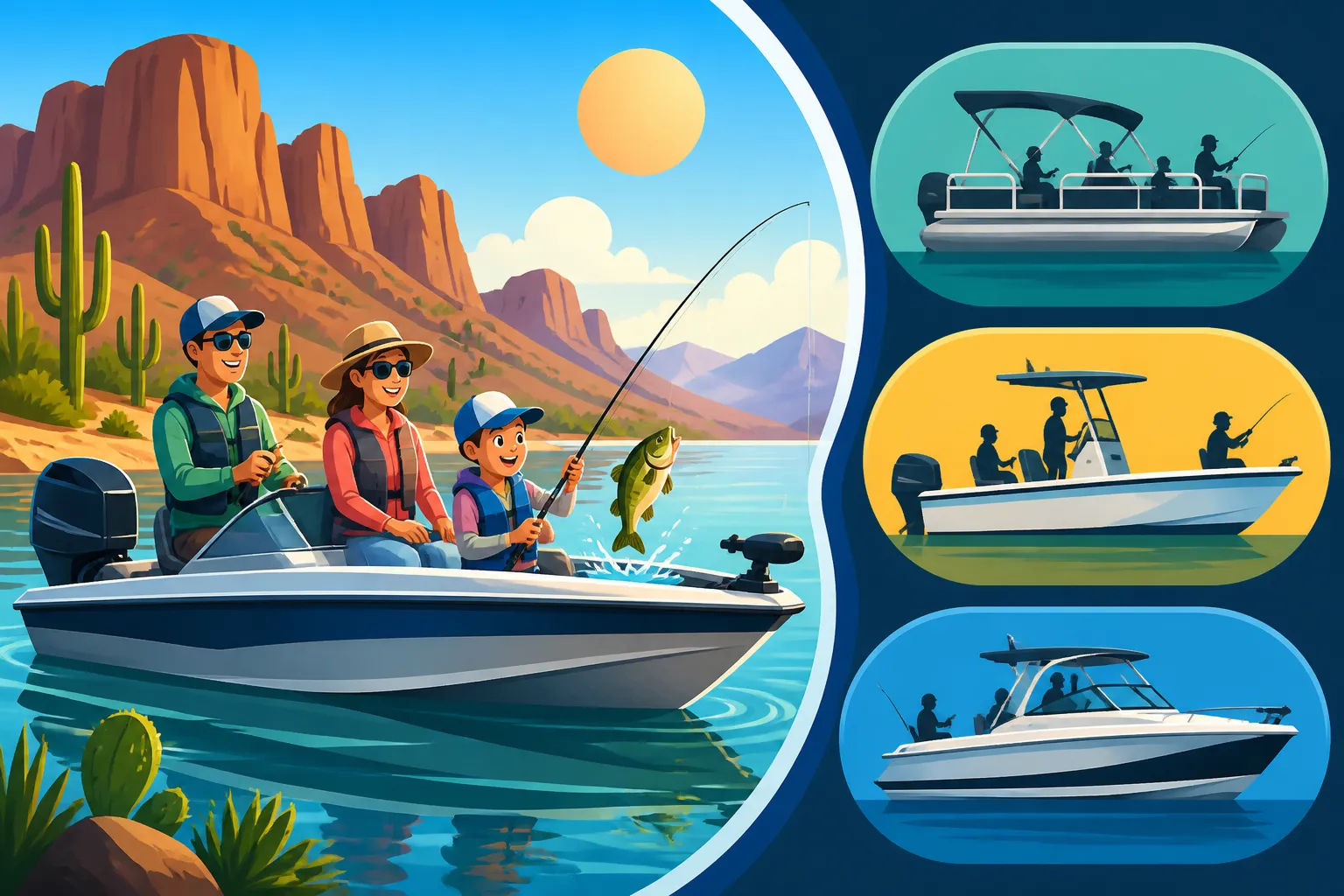
Pontoon boats have exploded in popularity for family use, and for good reason. They are essentially floating platforms built on two or three pontoons, offering incredible stability, vast amounts of deck space, and comfortable lounge seating. For families, especially those with young children or elderly members, the flat, open deck and high railings provide a safe and secure environment.
Pros for Family Fishing:
- Space & Comfort: Unmatched deck space for moving around, multiple seating areas, sunbathing, and picnics. You can easily fit a cooler, tackle boxes, and personal bags without feeling cramped.
- Stability: Very stable on the water, reducing seasickness and making it easy for everyone to walk around. Great for bank fishing from the boat.
- Versatility: Many modern pontoons come equipped for both fishing (livewells, rod holders, trolling motors) and recreation (ski tow bars, swim ladders, changing rooms).
- Shade Options: Bimini tops are standard, offering crucial protection from the intense Arizona sun.
Cons for Family Fishing:
- Speed & Rough Water: Generally slower than V-hull boats and can get bouncy in very rough water conditions, especially on large, windy lakes.
- Fishing Access: While versatile, the wide, flat deck isn't always ideal for casting into tight spots or quickly maneuvering for a fast-moving fish.
- Storage: While they have a lot of deck space, integrated storage can sometimes be less than in a dedicated fishing boat.
Typical Sizes for Families: For most families of 4-6 people, a 20 to 24-foot pontoon boat offers an excellent balance of space and maneuverability. Larger families or those planning frequent group outings might consider 26-foot or longer models. These sizes allow for dedicated fishing areas at the bow or stern, while still providing ample lounge space in the middle. You'll find a huge selection at places like Bass Pro Shops, where you can walk through different layouts and imagine your family onboard.
Deck Boats and Runabouts: Versatility for Water Sports and Fishing
Deck boats and runabouts represent a popular compromise for families who want a sportier boat that can still handle some serious fishing. These boats typically feature a V-hull design for better performance in choppy water and higher speeds, combined with a wider, more open bow area compared to traditional speedboats.
Pros for Family Fishing:
- Performance: Faster and handle choppy water better than pontoons, making them great for covering large lakes like Lake Powell or for pulling tubers.
- Versatility: Designed to be multi-purpose, often with comfortable bow seating, swim platforms, and optional fishing packages (livewells, rod holders).
- Aesthetics: Generally have a sleeker, more "boat-like" appearance than pontoons, which appeals to some.
Cons for Family Fishing:
- Deck Space: While good, they offer less open, flat deck space than a pontoon, which can feel more confined with multiple anglers.
- Stability at Rest: Not as stable as a pontoon when anchored or drifting, which can be a concern with very active kids.
- Shade: Standard bimini tops provide some shade, but often less extensive coverage than a pontoon.
Typical Sizes for Families: A 19 to 23-foot deck boat or runabout is often a sweet spot for families of 3-5. This size provides enough room for seating, some casting space, and the power to enjoy water sports. Larger models, 24 feet and up, offer even more room and are excellent for larger families or those who prioritize speed and performance on big bodies of water like Lake Mead. These are great options if you're looking for a boat that truly blends recreational activities with solid fishing capabilities.
Bass Boats and Multi-Species Rigs: For the Serious Angling Family
If the primary focus of your family outings is serious fishing, and perhaps only one or two family members are primarily interested in other water sports, then a dedicated bass boat or a multi-species fishing boat might be your best bet. These boats are designed from the ground up for angling efficiency.
Pros for Family Fishing (if fishing is paramount):
- Fishing Features: Equipped with livewells, spacious casting decks, multiple rod lockers, powerful trolling motors, and advanced fish finders. Perfect for targeting specific species like bass at Lake Pleasant.
- Speed & Maneuverability: Excellent for quickly moving between fishing spots and navigating tight coves.
- Shallow Water Access: Many can operate in shallower water, giving you access to areas other boats can't reach.
Cons for Family Fishing (if general recreation is also a priority):
- Comfort: Seating is often limited and less comfortable for long periods, especially for non-fishing passengers. There's usually less open deck space for lounging or playing.
- Versatility: Less suitable for swimming, tubing, or other water sports due to their design. Swim ladders are often an afterthought, if present at all.
- Safety for Young Children: The high casting decks can be less secure for very young children compared to the enclosed nature of a pontoon.
Typical Sizes for Families: Bass boats typically range from 17 to 22 feet. For a family where fishing is the main event, a 19 to 21-foot model can accommodate two serious anglers and perhaps one or two smaller children comfortably, provided the kids are content to sit during most of the trip. Multi-species boats tend to be a bit more versatile, often with deeper hulls and more seating options, making a 18 to 20-foot model a good choice if you're often targeting trout in cooler waters as well as bass. Best Boats for Arizona Lakes delves deeper into specific models suitable for different water bodies.
Aluminum Jon Boats and Utility Boats: Budget-Friendly and Functional
For families on a tighter budget, or those who primarily fish smaller, calmer lakes and ponds, aluminum jon boats or simple utility boats can be a fantastic entry point. These are no-frills, robust boats known for their durability and ease of maintenance.
Pros for Family Fishing:
- Affordability: Significantly less expensive to purchase, maintain, and operate than larger fiberglass boats.
- Durability: Aluminum construction is tough and can withstand bumps and scrapes better than fiberglass, perfect for rocky Arizona shorelines.
- Shallow Draft: Can easily access very shallow water, opening up more fishing opportunities.
- Ease of Transport: Lighter weight makes them easier to tow with smaller vehicles and launch at less developed ramps.
Cons for Family Fishing:
- Comfort & Features: Very basic, with minimal seating, storage, or amenities. Rough water can be a very wet and bumpy experience.
- Stability: Less stable than pontoons or larger V-hulls, especially when standing or moving around.
- Capacity: Generally smaller, limiting the number of family members you can comfortably bring along.
Typical Sizes for Families: For a family of two adults and one or two small children, a 14 to 16-foot jon boat can work. You'll want to prioritize wider beam models for increased stability. These are often used as simple fishing platforms for community lakes or small reservoirs where calm conditions prevail. If your family enjoys a more rustic, no-frills fishing experience, and you're keen on exploring places where bigger boats can't go, this could be a great choice. You can find basic models and accessories to outfit them on platforms like Amazon or at local hardware stores.
Key Considerations Beyond Length: Storage, Power, and Towing
While boat length is an easy metric to focus on, it's really just one piece of a much larger puzzle. Many other practical considerations will heavily influence your satisfaction with a family fishing boat, especially when dealing with the unique environment of Arizona. Ignoring these can lead to unexpected frustrations down the line, turning what should be a relaxing day into a logistical headache.
Think about how you'll actually use the boat, not just how it looks on the showroom floor or in an online listing. Where will all your gear go? Can your vehicle even tow it? Will it fit in your garage? These often overlooked details are critical to long-term enjoyment and convenience.
Storage Space for Gear and Family Essentials
When you're out on the water with the family, you don't just bring fishing rods and tackle. You've got coolers full of drinks and snacks, sunblock, towels, extra clothes, life jackets for everyone, maybe a first-aid kit, and all the personal items that come with a day out. A boat might look spacious, but if it lacks integrated storage, all that gear ends up cluttering the deck, creating trip hazards and making movement difficult.
Look for boats with ample dry storage compartments, especially under seats or in the deck. A dedicated anchor locker is a huge plus, keeping a wet, muddy anchor off your clean deck. Built-in coolers or insulated compartments can also be incredibly convenient for keeping drinks chilled. Consider how many rod holders are available – not just for fishing, but also for safely storing extra rods out of the way when cruising or swimming. Best Coolers for Hot-Weather Fishing in Arizona is also a crucial read to make sure your provisions stay fresh.
For families with younger kids, easy-to-access storage for toys, floaties, or even a change of clothes can be a lifesaver. You don't want to be digging through bags on a rocking boat to find a spare diaper or a dry shirt. A well-designed boat anticipates these family needs and provides solutions that keep the deck clear and the experience smooth.
Engine Power and Performance
The right engine for your boat depends entirely on how you plan to use it and where. A smaller engine might be perfectly adequate for leisurely cruises on calm community lakes, saving you fuel and purchase costs. However, if you're planning to run long distances across Lake Powell, navigate strong currents on the Colorado River, or pull tubers and skiers, you'll need significantly more horsepower.
Underpowering your boat is a common mistake that leads to frustration. An underpowered boat struggles to get on plane, burns more fuel trying to maintain speed, and can feel sluggish and unresponsive, especially when loaded with family and gear. On large, windy Arizona lakes, having enough power to safely get back to the ramp when conditions change can be a critical safety factor.
For families prioritizing water sports, look for a boat with enough horsepower to quickly get skiers or tubers out of the water. If fishing is the main goal, but you still want to cover ground quickly, a mid-range outboard will suffice. Always check the boat's maximum horsepower rating and try to get as close to it as your budget allows, especially if you foresee carrying full loads or operating on larger waters. Remember to account for the weight of your family, fuel, and all that gear!
Trailering and Storage Logistics
This is the hidden cost and headache many first-time boat owners overlook. A fantastic 24-foot pontoon boat won't do you much good if your family SUV can't safely tow it, or if it doesn't fit in your garage or driveway. The overall length of the boat on its trailer is often much longer than the boat itself, and the combined weight of the boat, motor, fuel, and trailer can be substantial.
Before committing to a boat, verify your tow vehicle's maximum towing capacity. Don't just guess; consult your vehicle's owner's manual. Remember that manufacturers' tow ratings often assume ideal conditions, and you'll want some buffer. You'll also need a suitable trailer, which often adds to the overall cost. Think about where you'll store the boat between trips. Will it be at home, requiring garage space or a dedicated spot in the driveway, or will you need to pay for storage at a marina or storage facility?
Launching and retrieving the boat should also be a consideration. A very large boat can be intimidating to maneuver at busy public ramps, especially for novice boaters. Some Arizona lakes have very busy ramps during peak season, so ease of handling the boat on and off the trailer can significantly impact your stress levels at the end of a long day. Factor in the learning curve for trailering and launching, and perhaps start with something a bit more manageable if you're entirely new to boating.
Making the Right Choice: Balancing Comfort, Capability, and Cost
Choosing the best boat for your family is truly a balancing act. You want enough comfort for everyone, the capability to enjoy your favorite activities (both fishing and recreational), and all within a budget that makes sense for your family. It's easy to get caught up in wanting the biggest or fastest boat, but the "best" boat is ultimately the one that gets used most often and creates the most cherished family memories.
Don't be afraid to test different boat types. Many marinas and dealerships offer demonstrations or rentals. This can be an invaluable way to experience how different boat sizes and styles perform with your family on board before making a significant investment. Consider how your family might grow or change over the years – a boat is a long-term purchase.
The Sweet Spot for Most Arizona Families
For the majority of Arizona families looking for a boat that balances fishing, recreational activities, and comfort, a 20 to 24-foot pontoon boat or a 19 to 23-foot deck boat often hits the sweet spot.
- Pontoons in this size range offer unparalleled space and stability. They can comfortably accommodate 6-10 people, provide excellent shade, and many models now come with fishing packages that include livewells, rod holders, and even dedicated fishing chairs. They are perfect for cruising, swimming, and relaxed fishing sessions on lakes like Roosevelt Lake, Lake Pleasant, or Canyon Lake. They're also incredibly social boats, allowing for easy conversation and movement amongst family members.
- Deck boats in this size range provide a more dynamic experience. They handle rougher water better than pontoons, are generally faster, and are excellent for water sports like tubing or wakeboarding, in addition to fishing. They usually offer good seating arrangements and swim platforms, making them a versatile choice for active families. If your family leans more towards watersports but still wants to fish seriously, a deck boat might be the better option. You'll want to check out the selection at retailers like Bass Pro Shops for a comprehensive look at what's available.
Both these categories provide enough room for multiple coolers, tackle bags, and personal belongings without feeling overly cluttered. They strike a good balance between being manageable to tow and launch for an average family, while still offering plenty of comfort and capability for a full day of fun on the water.
Renting vs. Buying: A Practical Look
Let's be honest, boat ownership is a significant investment, not just in the purchase price, but in ongoing maintenance, insurance, storage, and fuel. For some families, especially those who only plan a few outings a year, renting might be the more practical and cost-effective solution.
Renting a Boat:
- Pros: No long-term commitment, no maintenance worries, access to different boat types for different trips, no storage fees, lower upfront cost. Great for trying out various boat sizes and types before you buy. You can rent a pontoon for a big family gathering and a smaller fishing boat for a quick solo trip.
- Cons: Availability can be an issue during peak seasons, daily rental costs can add up if used frequently, limited flexibility on spontaneous trips, no personalization of the boat.
Buying a Boat:
- Pros: Complete freedom and flexibility to go whenever you want, pride of ownership, ability to customize the boat to your exact needs, can be more cost-effective over many years of frequent use.
- Cons: High initial cost, ongoing expenses (maintenance, insurance, storage, fuel), time commitment for cleaning and upkeep, depreciation, requires a suitable tow vehicle and storage solution.
Consider how often you realistically plan to use the boat. If it's only a handful of times a year, the math often favors renting from a marina near your favorite fishing spot. However, if you envision frequent weekend trips to the lake, making boating a core family activity, then the investment in ownership can certainly pay off in terms of convenience and personalized enjoyment. Many families start with rentals to get a feel for what works before taking the plunge into ownership. Arizona Fishing License Guide is a key resource whether you rent or buy, as everyone on board will need to follow licensing regulations.
Ultimately, the best boat size for your family fishing trips in Arizona is one that inspires excitement, offers comfort, and fits both your practical needs and your budget. Think through these factors carefully, and you'll be well on your way to creating unforgettable memories on Arizona's beautiful waters.
Disclaimer
This article is for general informational purposes only and does not constitute professional advice. Laws, prices and regulations vary by location and change over time. Consult a qualified professional for guidance on your specific situation.