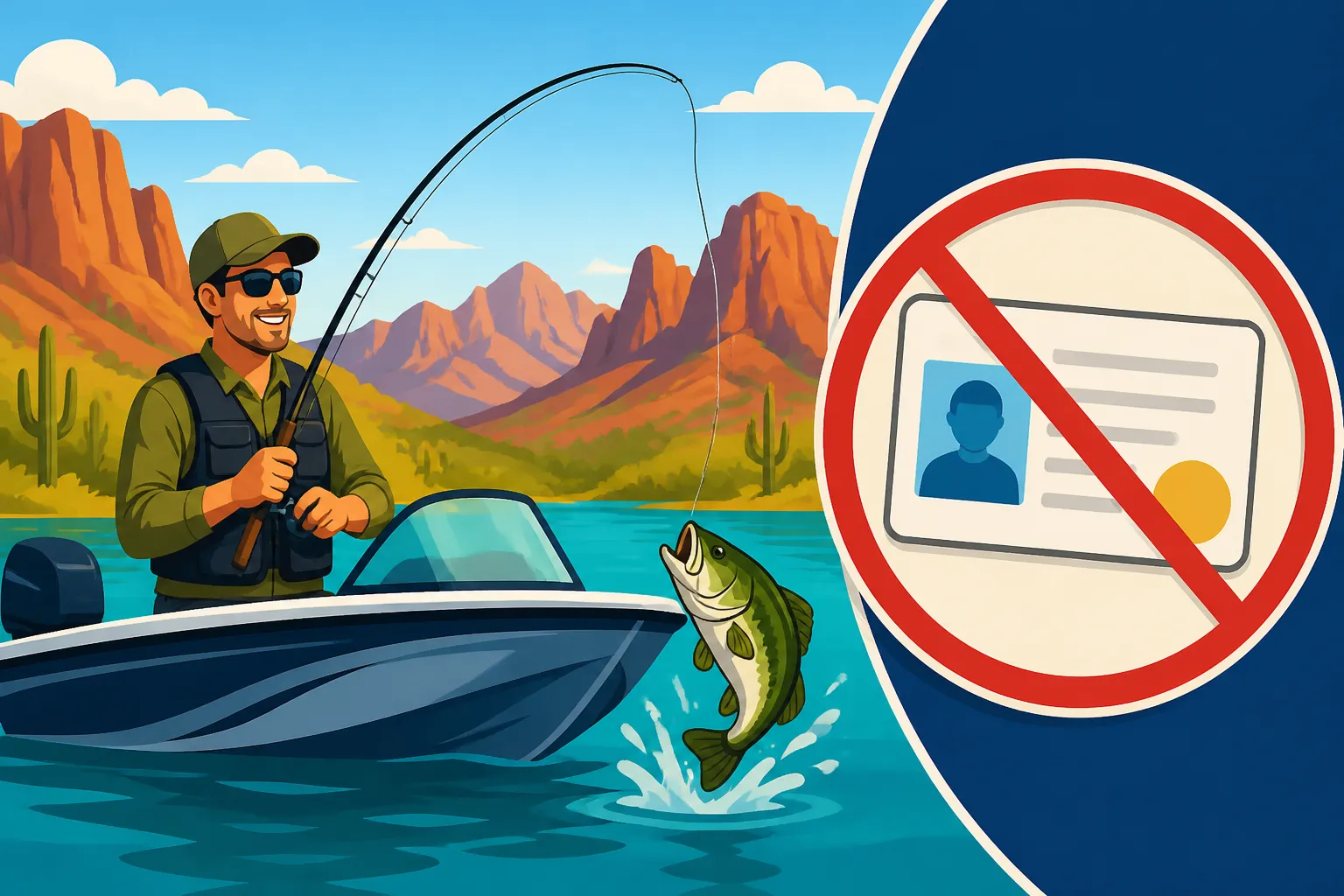
Do You Need a Boat License to Fish in Arizona?
It’s a really common point of confusion for anglers, especially those just starting out or coming to Arizona from other states: do you need a boat license just to fish from a boat? Many folks assume that if they’re getting out on the water, there’s a special license for the vessel itself that they personally need to obtain to operate it while fishing. This guide aims to clear up that exact misunderstanding, explaining the nuances of Arizona’s boating and fishing regulations so you can hit the water with confidence.
Fishing License Versus Boat Registration: Understanding the Difference
Let's cut right to the chase because this is where most of the confusion stems from. When people ask "do you need a boat license to fish in Arizona?", they're often mixing up two very distinct things: a personal fishing license that allows you to legally catch fish, and boat registration, which pertains to the vessel itself and its ability to be operated on public waters.
Think of it this way: your driver's license lets you drive a car, but the car itself needs to be registered with the DMV. You don't get a "car license" for yourself. It's similar with fishing and boating. You, the angler, need a fishing license. Your boat, if it meets certain criteria, needs to be registered.
For any angler aged 10 and older in Arizona, a valid fishing license is an absolute must, no matter if you're casting from the shore of Lake Pleasant, wading the Lower Salt River, or trolling for stripers on Lake Powell. This license grants you the legal right to engage in fishing activities within the state's public waters. It's all about your personal authorization to pursue and harvest fish. We'll dive into the specifics of fishing licenses in a bit, but for now, just remember: if you're holding a rod and reel in Arizona and you're 10 or older, you need a fishing license. You can learn more about the various options in our comprehensive guide to the Arizona Fishing License Guide.
On the other hand, boat registration is about the vessel itself. It's a legal requirement for certain types of watercraft to be recorded with the Arizona Game and Fish Department (AZGFD). This process ensures that the state has a record of the vessel and that it meets certain safety and environmental standards. The key takeaway here is that boat registration doesn't grant you a personal license to operate the boat. Instead, it legitimizes the boat's presence on public waterways. If your boat is properly registered, any person who meets the general requirements for safe boating (which typically means not being under the influence and understanding basic navigation rules) can operate it. There isn't a separate "boat operator's license" required in Arizona for general recreational boating, unlike a driver's license for a car.
Arizona Fishing License Requirements for Anglers
Now that we've cleared up the distinction between boat registration and your personal fishing authorization, let's focus on the fishing license side of things. This is the requirement that applies directly to you as an angler, regardless of your chosen fishing platform.
Who Needs a Fishing License
The rules are pretty straightforward when it comes to who needs an Arizona fishing license. Anyone aged 10 years or older who intends to fish in Arizona's public waters must possess a valid fishing license. This includes residents and non-residents alike. It doesn't matter if you plan to keep your catch or practice catch and release; the act of fishing itself requires the license.
Children under 10 years old are the lucky ones; they can fish without a license. This is fantastic for introducing youngsters to the joys of angling without the immediate hurdle of purchasing a permit. However, even though they don't need a license, they are still subject to all other Arizona fishing regulations, such as bag limits, length limits, and legal fishing methods. It’s always a good idea to ensure the adults guiding them are fully aware of these rules. Our article on Fishing License Age Requirements in Arizona provides more specific details on this.
Types of Fishing Licenses Available
Arizona offers a variety of fishing licenses designed to fit different needs and budgets. The most common is the annual resident or non-resident license, which is valid for 365 days from the date of purchase. These are perfect for dedicated anglers who plan to hit the water multiple times throughout the year.
For those visiting Arizona for a short trip or only planning one or two outings, short-term options are available. The one-day fishing license is a popular choice for non-residents or residents just wanting a quick fishing fix. While these are convenient, it's worth doing the math; sometimes, purchasing an annual license can be more cost-effective if you anticipate fishing more than a couple of times. You can explore the Arizona One-Day Fishing License Cost to see if it makes sense for your plans.
For the multi-sport enthusiast, Arizona also offers combo hunt and fish licenses. These are fantastic value if you enjoy both hunting and fishing throughout the year, consolidating your permits into one convenient package. These combined licenses often represent significant savings compared to buying separate licenses for each activity. For a deeper dive into these options, check out our guide on the Arizona Combo Hunt and Fish License Guide.
Where and How to Purchase Your Fishing License
Obtaining your Arizona fishing license is usually a simple process. The Arizona Game and Fish Department (AZGFD) website is the easiest and most common way to buy your license online. It's quick, efficient, and you can often print a temporary license right from home, or save it to your phone, allowing you to fish almost immediately.
Additionally, licenses can be purchased in person at any of the numerous authorized license dealers across the state. These dealers include many sporting goods stores, bait and tackle shops, and even some general retail stores. Finding an Arizona Fishing License Dealers Near You can be incredibly convenient if you prefer a physical license or need to pick one up last minute before heading to the lake. While you can’t buy a fishing license itself on Amazon, you can certainly load up on all the gear you’ll need once you have that license in hand, from new lures to a comfortable fishing hat.
Table: Fishing License vs. Boat Registration at a Glance
To summarize the key differences and requirements, here's a helpful table:
| Feature | Fishing License | Boat Registration |
|---|---|---|
| What it Covers | The individual's right to fish | The vessel's authorization to operate |
| Who Needs It | Anglers aged 10 and older | Most motorized vessels; sailboats over 12 ft |
| Issued By | Arizona Game and Fish Department (AZGFD) | Arizona Game and Fish Department (AZGFD) |
| Required For | Any fishing activity on public waters | Operating specified vessels on public waters |
| Personal vs. Vessel | Personal | Vessel |
| Typical Validity | 365 days from purchase (annual) or short-term | 1-year or 3-year options |
| Exceptions | Children under 10; Arizona Free Fishing Day | Human-powered vessels (kayaks, canoes, SUPs w/o motor) |
When Your Vessel Absolutely Needs Registration in Arizona
Alright, let's talk about your boat. While you don't need a "boat license" to fish, your vessel very well might need to be registered with the state of Arizona. This is where many kayak anglers, in particular, get tripped up when they add a small electric motor to their craft.
What Types of Vessels Require Registration
In Arizona, virtually all motorized vessels are required to be registered. This isn't just for big powerboats; it includes anything with a motor, regardless of its size or power source. So, if you have a fishing boat, a pontoon boat, a personal watercraft (PWC), or even a small jon boat with a tiny outboard motor, it needs to be registered.
Here's the kicker for many: if you've strapped an electric trolling motor onto your kayak, canoe, or stand-up paddleboard (SUP), that vessel is now considered motorized and must be registered. This often comes as a surprise to those who think "motorized" only applies to gasoline engines. Electric motors, even very small ones, fall under this requirement. Failing to register a motorized vessel can lead to fines and other penalties, so it's crucial to be aware. Our guide on Boat Registration Rules in Arizona offers a comprehensive breakdown of these specific requirements.
Sailboats that are 12 feet or longer in length also require registration. Shorter sailboats, or those propelled purely by wind and manual effort, are typically exempt.
Vessels Exempt from Registration
Thankfully, not every floatation device needs to be registered. The primary exemptions are for human-powered vessels that do not have any motor attached. This includes:
- Canoes: If you're paddling or rowing your canoe, no registration needed.
- Kayaks: A pure paddle-powered kayak is exempt. However, as mentioned, add even a small electric motor, and you're in registration territory. For more on this, check out our piece on Kayak Registration Rules in Arizona.
- Stand-up Paddleboards (SUPs): These are considered human-powered and do not require registration unless, you guessed it, a motor is added.
- Rowboats and Inflatables: As long as they're not propelled by a motor.
- Vessels under 12 feet and propelled solely by sail: If your sailboat is smaller than 12 feet and doesn't have a motor, it's typically exempt.
It’s important to remember that even if your vessel is exempt from registration, you still need to adhere to all other boating safety regulations, which we'll discuss next.
The Boat Registration Process
Registering a boat in Arizona involves a few steps and typically goes through the AZGFD. You'll need proof of ownership, such as a title or bill of sale, and you'll complete an application form. There are associated fees, and the registration is usually valid for one or three years, after which it needs to be renewed.
Once registered, your vessel will be assigned a unique registration number, which must be displayed prominently on the bow (front) of your boat. You'll also receive a validation decal that needs to be affixed near the registration number. This allows law enforcement to quickly verify your vessel's compliance. Keeping your registration certificate on board your vessel while operating is also a good practice, as officers may ask to see it.
Essential Boating Safety and Gear Beyond Licenses
Even if your specific vessel doesn't require registration, or you're fishing from the bank or a pier, there are still critical safety considerations and essential gear you should always have when on or near the water in Arizona. The desert environment can be unforgiving, and water safety is paramount.
Personal Flotation Devices (PFDs)
This is a non-negotiable. While you don't need a "boat license," you absolutely need to prioritize safety. The Arizona Game and Fish Department mandates that there must be a U.S. Coast Guard-approved Personal Flotation Device (PFD), commonly known as a life jacket, for every person on board a vessel. Furthermore, children 12 years of age and younger are required to wear a PFD at all times when the vessel is underway. Even if you're an adult and a strong swimmer, wearing a PFD is a smart move, especially in unfamiliar waters or during adverse conditions. You can find excellent, comfortable PFDs specifically designed for anglers on Amazon, many with extra pockets for tackle or tools. For more specific details, our article on PFD Requirements for Kids in Arizona is a must-read.
Sound-Producing Devices and Signaling
Depending on the size of your vessel, you might be required to carry a sound-producing device, such as a whistle or horn, to signal other boats or in emergencies. For smaller vessels like kayaks, a simple whistle often suffices. It's a small item that can make a big difference if you encounter fog, need to alert another boater, or signal for help.
When on larger, open waters, especially at night, proper navigation lights are crucial. While smaller, human-powered vessels are generally exempt from displaying navigation lights when not actively underway, if you're out after sunset or before sunrise, you must have an all-around white light visible from 360 degrees to avoid collisions.
Sun Protection and Hydration
Arizona's sun is no joke, even in cooler months. Prolonged exposure can lead to severe sunburn and dehydration, which can quickly turn a fun fishing trip into a dangerous situation. Essential items for any Arizona angler include:
- Wide-brimmed hat: To protect your face, ears, and neck.
- Sunscreen: High SPF, waterproof sunscreen applied liberally and reapplied often.
- UV-protective clothing: Long-sleeved shirts and pants made from lightweight, breathable, UPF-rated fabric.
- Polarized sunglasses: Not only do they protect your eyes from harmful UV rays, but they also cut glare off the water, helping you spot fish or underwater structure.
- Plenty of water or electrolyte drinks: Far more than you think you'll need. Consider bringing a cooler packed with ice and drinks, as even a short trip can lead to significant fluid loss. Many anglers swear by robust, insulated coolers from brands like Yeti or Engel, which are readily available on Amazon. Our guide to Best Coolers for Hot-Weather Fishing in Arizona offers some great suggestions.
First-Aid Kit
A basic first-aid kit should always be part of your fishing gear. Minor cuts from hooks, scrapes from rocks, or even a sudden headache can be easily managed with a well-stocked kit. Include band-aids, antiseptic wipes, pain relievers, and any personal medications. It's a small investment that offers huge peace of mind.
By understanding the clear distinction between a fishing license (for you) and boat registration (for your vessel, if applicable), and by always prioritizing safety, you'll be well-prepared to enjoy the incredible fishing opportunities Arizona has to offer.
Disclaimer
Please note that fishing and boating regulations can change. While this guide aims to provide accurate and up-to-date information, it is always your responsibility to consult the most current regulations published by the Arizona Game and Fish Department before heading out. This content is for informational purposes only and should not be considered legal advice.