Do You Need a License to Fish a Private Pond on Your Own Property in Arizona?
It’s a question that trips up so many anglers, especially those lucky enough to have a little slice of fishing paradise right in their backyard: "Do I really need an Arizona fishing license to drop a line in my own private pond?" The rules can seem like a tangled mess, particularly when it comes to the nuances of private property. This guide is here to untangle that confusion, providing clarity on when you absolutely need a license and when you can fish freely on your own land in Arizona.
Understanding Arizona's Fishing License Basics
Before we dive into the specifics of private ponds, it's really helpful to get a handle on why Arizona even has fishing licenses in the first place and what the general rules are. It’s not just a bureaucratic hurdle; there’s a genuine purpose behind it all.
Who Needs a License in Arizona Generally
Typically, if you're 10 years old or older and plan to fish in any public waters in Arizona – think rivers, streams, community lakes, or the big reservoirs like Lake Pleasant or Roosevelt Lake – you absolutely need an Arizona fishing license. This isn't just a suggestion; it's a legal requirement. These licenses are your passport to enjoying the incredible angling opportunities across our diverse state, from the high mountain lakes to the warm desert impoundments. If you're visiting from out of state, the rules for out-of-state anglers in Arizona are pretty clear too – you'll need a nonresident license. The Arizona Game and Fish Department (AZGFD) manages all these regulations, and they're pretty serious about enforcing them to protect our natural resources.
Why Licenses Exist for Public Waters
The fees collected from fishing licenses are super important. They don't just disappear into some black hole; they go directly back into conservation efforts. These funds support fish stocking programs, habitat restoration projects, research into fish populations, and the management of Arizona's vast network of waterways. When you buy a license, you're directly contributing to ensuring that future generations can enjoy the same fantastic fishing experiences we do today. It's a small investment with a huge return for the health and sustainability of our aquatic ecosystems. Without these funds, many of the stocked lakes and robust fish populations we enjoy simply wouldn't exist. This also covers the costs associated with things like managing Arizona Fishing Regulations Explained and ensuring proper enforcement.
The Specifics of Private Property Fishing in Arizona
Now, let's get to the heart of the matter: what about fishing on your own land? This is where the rules start to diverge from the general public water requirements.
Fishing Your Own Private Pond: The Core Rule
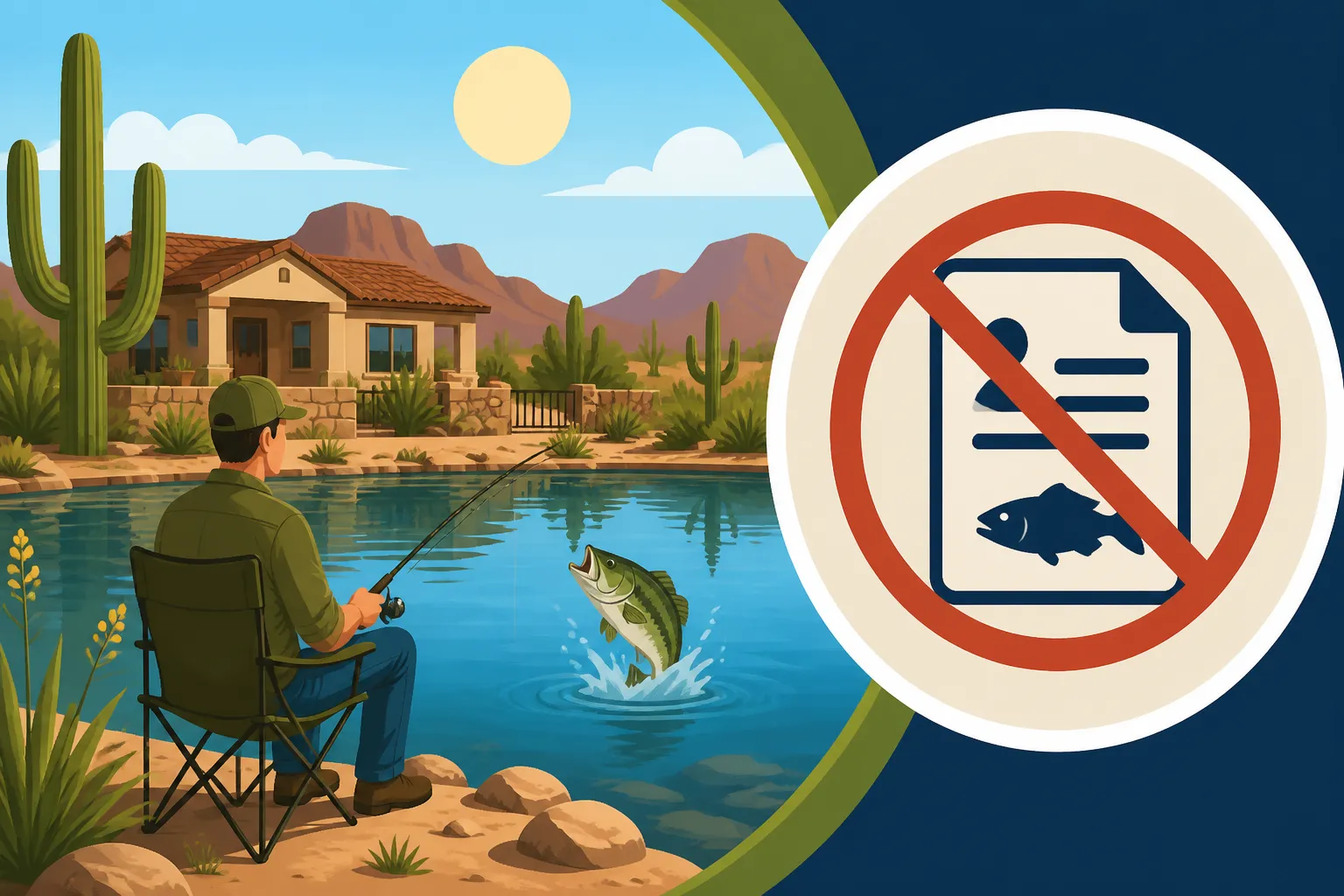
Alright, here's the straightforward answer you've been waiting for: In Arizona, you generally do not need a state fishing license to fish on your own private property, in a pond or lake that is entirely enclosed within your private land and has no connection to public waters. This is a huge relief for many landowners who cherish the idea of stepping out their back door and casting a line without jumping through hoops. Imagine a small, man-made pond in your backyard, filled with fish that you've personally stocked or that have naturally occurred within that contained system. As long as that pond is truly isolated and doesn't receive water from or drain into public waterways, you're in the clear. You can enjoy your fishing paradise without worrying about state licensing requirements for yourself. This includes fishing with simple gear you might grab from a local sporting goods store or even a quick order from Amazon if you're looking for new tackle.
Key Definitions: "Private Property" and "Private Pond"
It's critical to understand what "private property" and "private pond" actually mean in the eyes of Arizona Game and Fish.
- Private Property: This refers to land that is legally owned by an individual or private entity, not government-owned or publicly accessible land. The key here is exclusive control and access.
- Private Pond/Lake: This is where it gets a little trickier. For it to be considered truly private for license exemption purposes, the body of water must be entirely self-contained within the boundaries of your private property. This means no inflows from public streams, no outflows into public rivers, and no shared access points with neighboring properties unless a specific agreement is in place. Think of it as a closed system. If your "pond" is actually a section of a natural stream that flows through your property, that's generally not considered a private pond in the same context, as that stream is likely part of a public waterway system. The rules can get complicated, so it's always better to err on the side of caution and check if there's any ambiguity.
Important Considerations for Stocked Ponds
Even if your pond is entirely private and doesn't require a fishing license for you to fish it, there are still some important considerations, especially if you're planning to stock it with fish. While you don't need a fishing license, you might need a private pond fish stocking permit from AZGFD, particularly if you're introducing non-native species or species that could potentially escape into public waters. The goal is to prevent ecological disruptions and protect native fish populations in Arizona's diverse aquatic environments. It’s always best to contact AZGFD directly to understand the specific requirements for your situation before introducing any fish. They can guide you on approved species and sources. This proactive step helps maintain the ecological balance and ensures you're not inadvertently creating a problem down the line. You can find more information about this by looking up Arizona Fishing Regulations Explained on the AZGFD website.
When a License Might Still Be Necessary on Private Land
While the general rule is that you don't need a license on your own private, enclosed pond, there are several scenarios where a state fishing license, or at least careful consideration of state rules, becomes absolutely essential. It's not always as simple as "it's my land, so I do what I want."
Ponds Connected to Public Waters
This is the biggest caveat to the "no license needed" rule. If your private pond or lake has any direct or indirect connection to public waters, then state fishing license requirements almost certainly apply. What constitutes a connection? It could be a stream that feeds into your pond and then continues on, a drainage ditch that eventually empties into a public river, or even a subsurface connection that allows fish to move between your pond and a public waterway.
Imagine you have a beautiful pond fed by a seasonal wash that eventually flows into the Salt River during monsoon season. Even if the connection is intermittent, it's still considered connected. In such cases, the fish in your pond are often seen as part of the public fishery, and therefore, you and anyone fishing it would need the appropriate Arizona fishing license. The Arizona Game and Fish Department is keen on preventing the spread of disease or invasive species, and connections like these are a prime pathway. If you're unsure if your pond is connected, it’s always prudent to contact the AZGFD for clarification rather than risk a fine. Ignorance of the law isn't a valid defense.
When Guests Fish on Your Private Property
This is another common area of confusion. You, as the property owner, might be exempt from needing a license for your truly private pond. However, if you invite friends, family, or other guests to fish on your property, those guests will generally need an Arizona fishing license if they are 10 years or older. This is because the exemption typically applies to the owner of the land and the private, enclosed nature of the water, not to every individual who sets foot on it.
So, while you might be enjoying a peaceful afternoon without a license, your buddy casting next to you likely needs one. It's your responsibility as the property owner to inform your guests of these rules. The last thing you want is for a friendly fishing trip to turn into a legal headache for your friends because they didn't know they needed to check the Arizona Fishing License Guide. It’s a good practice to have some fishing information handy, perhaps a copy of the regulations booklet (often available on Amazon or AZGFD website) or a simple sign indicating the need for a license.
Specific Circumstances for Fish Stocking Permits
We briefly touched on this, but it’s worth a deeper dive. While the act of fishing might be exempt on your private, enclosed pond, the act of stocking it often isn't. If you’re introducing fish into your pond, especially species not native to Arizona, or even native species from non-approved sources, you will likely need a permit from the Arizona Game and Fish Department. This isn't just about controlling what fish end up where; it’s about disease prevention and genetics. Bringing in fish from unknown sources can introduce pathogens that could devastate your pond and potentially spread to public waters if there's any connectivity.
For instance, if you wanted to stock your pond with rainbow trout, you'd need to ensure they come from an approved hatchery and that you have the necessary permits. This also applies to species like bass or catfish. The AZGFD has stringent rules to protect the genetic integrity of wild populations and prevent the spread of aquatic invasive species. Failing to get a proper stocking permit can lead to serious fines and even forced removal of the illegally stocked fish. It's a prime example of where private property rights meet broader ecological responsibility.
Best Practices for Private Pond Owners
Having a private pond is a fantastic amenity, but it also comes with a bit of responsibility. Adhering to best practices ensures you protect your investment, comply with regulations, and contribute positively to Arizona's natural environment.
Verifying Your Pond's Status
The absolute first step for any private pond owner is to confidently determine if their pond is truly "private" in the eyes of the law. This means investigating its hydrological connections. Does it have an inlet from a natural stream? Does it drain into a ditch that leads to a public waterway, even during heavy rains? Is it fed by a well, or does it rely entirely on rainwater runoff collected on your property?
If there's any doubt at all, the best course of action is to contact the Arizona Game and Fish Department directly. They can often provide guidance, and in some cases, might even offer a site visit if the situation is complex. It’s far better to clarify your pond's status upfront than to risk a citation later. Think of it as a proactive check-up for your water feature. Understanding the Arizona Fishing Regulations Explained booklet can also provide some initial insights.
Educating Guests and Signage
If you confirm your pond is truly private and exempt for yourself, you'll still need to manage expectations and compliance for any guests. As mentioned, your guests will likely need a fishing license. A polite sign near your pond or at your property entrance is a simple, effective way to communicate this. Something like: "Welcome Anglers! This is private property. While the property owner is exempt, guests aged 10 and over require a valid Arizona Fishing License."
You can also offer information about where to purchase licenses, such as referring them to the AZGFD website for How to Buy an Arizona Fishing License Online or suggesting they visit a local dealer. Having a few spare copies of the AZGFD regulations booklet, easily downloadable or found on Amazon, can also be a helpful resource for your visitors. Clear communication prevents awkward situations and ensures everyone enjoys their time without legal worries.
Supporting Arizona's Fisheries
Even if you're exempt from buying a license for your private pond, consider this: purchasing an Arizona Resident Fishing License Cost or even a short-term license for yourself, even occasionally, is a fantastic way to support Arizona's incredible fisheries. The money from these licenses directly funds the conservation efforts that benefit all of us, including the quality of the fish stocked in nearby public waters.
Many private pond owners choose to do this as a way of giving back, or perhaps they also fish public waters regularly anyway. It's a conscious choice to contribute to the health of our state's aquatic ecosystems. Beyond licenses, consider responsible pond management: avoid introducing invasive species, properly dispose of fishing line and litter, and practice catch-and-release responsibly, especially for larger breeding fish, to maintain a healthy fish population in your private waters. Protecting fish habitats, whether public or private, benefits everyone who loves to fish in Arizona.
Here's a quick summary of the common scenarios:
| Scenario | Property Owner Needs License? | Guest (10+ yrs old) Needs License? | Notes |
|---|---|---|---|
| Fishing public Arizona waters | Yes | Yes | Standard state requirement. |
| Own private pond (no public connection) | No | Yes | Guests are not exempt. Stocking may require a permit. |
| Own private pond (connected to public) | Yes | Yes | Pond is treated as part of public fishery. |
| Fishing on another's private pond | Yes (as a guest) | Yes | Always assume a license is needed unless explicitly told otherwise by AZGFD. |
Disclaimer
This article is for general informational purposes only and does not constitute professional advice. Laws, prices and regulations vary by location and change over time. Consult a qualified professional for guidance on your specific situation.